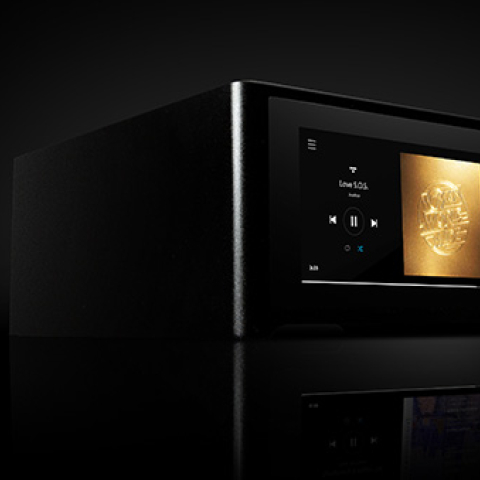
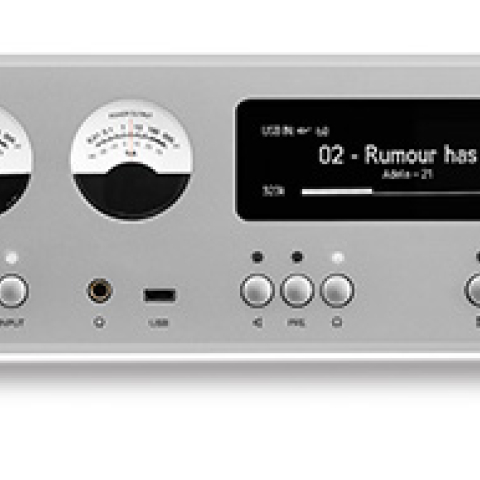
When you swipe on the HiFi Rose's inertial-scrolling display, the graphics roll by as smoothly as on any late-model tablet. No surprise: HiFi Rose is a division of Citech, a Seoul-based company that's a leader in ticket-issuing machines and information kiosks.
Traces of the RS520's Koreanness surfaced occasionally. Tap on the RosePodcast icon and then on Genres, and you get a screenful of Hangul characters (the Korean alphabet). RoseFM attempts to pull in Korean stations as the factory default, although changing that to the US or another country is trivial. One of the icons on the display is for launching Bugs, an unfortunately named pay-to-play Asian streaming service headquartered in South Korea. Tapping the icon results in a message that says "It is not a service area."
Ah, language quirks. At times, the HiFi Rose RS520 reminded me of the Russian translator in the movie Tetris, who tries out her best English on an American businessman in Moscow. "Do you require succor?" she chirps, offering her assistance. "Esteemed to meet you!" We know what she means even if the choice of words isn't impeccable.
Because HiFi Rose is an engineering-centric company (footnote 8), niceties like translation and spelling sometimes seem to get short shrift. On the RS520, linguistic quirks were never particularly enigmatic, but perfection is a ways off. When connecting to Bluetooth, the message you get is the slightly off-kilter "Execute [Bluetooth] to search for available devices." The screen that lets you choose among three font sizes for streaming music says, by way of instruction, "Enlarge a Playback information." Even the company's official English-language website (footnote 9) states, "Before the sudden change, the tool until yesterday is meaningless." Jon Derda says HiFi Rose has been "making small changes with each iteration of [the RS520's] firmware (footnote 10), to Americanize the product further." Importantly, the 64-page product manual is written in rock-solid English, no complaints.
I'm all ears
Surprisingly, break-in wasn't necessary. Although I'd received a factory-fresh RS520, its sound didn't change over the three-plus months I spent with the unit. For convenience, I kept it powered on almost the whole time (though I turned off the screen a lot, including at bedtime). But when I did shut everything down for a spell, then returned to listening, I detected no difference between the RS520 cold and after it had warmed up. This may be one of the advantages of well-built class-D amplification, as class-A and class-AB amps tend to sound better at full operating temperature. The HiFi Rose RS520 vaults to that point straight away. Extended kneeling in front of a component isn't my idea of a good time, so after 15 minutes of setup and half an hour of playing around with the front-panel menus and controls, I interacted with the unit via the excellent, drama-free Rose HiFi smartphone app. The dedicated remote control wasn't for me, as its volume up and down buttons dramatically overshot the intended stopping point: If I wanted to turn down the volume from 70 to 50, and I took my thumb off the button the moment it reached that number, the volume continued downward, stopping at 35 or even 30. It worked the same in the opposite direction but with scarier results: Unintentionally raising the volume to 95 or higher—practically full-blast—is friendly to neither speakers nor ears (footnote 11). Thankfully, the app had no such issues, and of course, Roon doesn't either.
I was impressed when I hooked the RS520 up to my Tekton Moabs ($4500/pair), then my Focal Scala Utopia EVOs ($53,000/pair), and finally the Raidho TD3.8s ($119,000/pair) I have in for review. With each combination, there was weight, control, authority, clarity, and palpability. I heard sweet detail up top that didn't become brittle even on borderline sibilant recordings, such as Emmylou Harris's "Deeper Well" (24/44.1 FLAC, Nonesuch/ Tidal). In the delicate pas de deux between each set of speakers and the streaming amp, the HiFi Rose got out of the way and let the speakers take the principal role, allowing each to express its own personality.
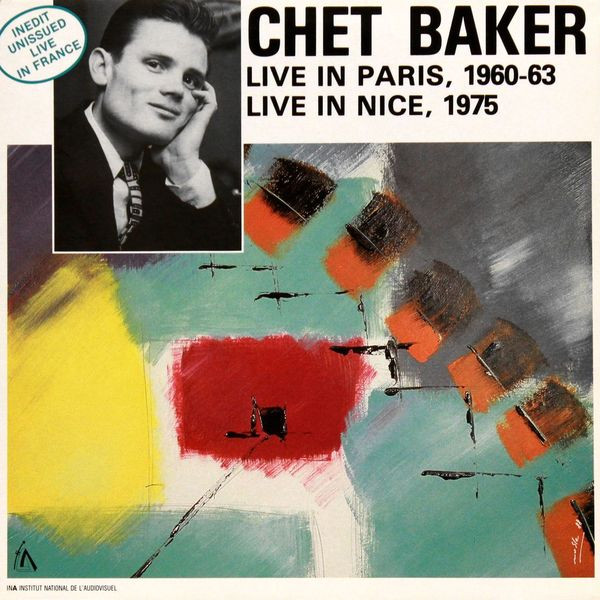 Chet Baker's Live in Paris 1960-1963 (24/96 WAV) isn't an audiophile-grade recording. Ray Mosca's drums have a lamentable cardboard-box quality, and he sounds as if he's using knitting needles instead of wooden sticks. The trumpet is another story. Baker's beautiful, burnished sound comes through gloriously, each note suffused with ache and melancholy even on the tracks that would seem upbeat if you were reading the sheet music. To listen to him play this material is to go on a trip of love and loss. The HiFi Rose did a first-rate job of rendering it down to the tiniest timbral details.
Next, on Two Feet's "Love Is a Bitch" (16/44.1 FLAC, Casual Majestic/Qobuz) and Me'shell Ndegéocello's Peace Beyond Passion (16/44.1 FLAC, Maverick/Qobuz), I learned that the RS520 is undaunted by a good bottom-octave challenge, producing taut, grippy bass.
The RS520 strikes a smart balance between liquidity and detail. Its sonics tip ever so slightly forward, but that's what makes it revealing. Speakers that tilt heavily analytical might be best avoided as partners—unless you pull down the top end a touch with a parametric equalizer like the one built into Roon. (You'll also find an equalizer in the 520, with five frequency bands, adjustable Q, eight factory presets, and three memory banks to save your settings.)
Chet Baker's Live in Paris 1960-1963 (24/96 WAV) isn't an audiophile-grade recording. Ray Mosca's drums have a lamentable cardboard-box quality, and he sounds as if he's using knitting needles instead of wooden sticks. The trumpet is another story. Baker's beautiful, burnished sound comes through gloriously, each note suffused with ache and melancholy even on the tracks that would seem upbeat if you were reading the sheet music. To listen to him play this material is to go on a trip of love and loss. The HiFi Rose did a first-rate job of rendering it down to the tiniest timbral details.
Next, on Two Feet's "Love Is a Bitch" (16/44.1 FLAC, Casual Majestic/Qobuz) and Me'shell Ndegéocello's Peace Beyond Passion (16/44.1 FLAC, Maverick/Qobuz), I learned that the RS520 is undaunted by a good bottom-octave challenge, producing taut, grippy bass.
The RS520 strikes a smart balance between liquidity and detail. Its sonics tip ever so slightly forward, but that's what makes it revealing. Speakers that tilt heavily analytical might be best avoided as partners—unless you pull down the top end a touch with a parametric equalizer like the one built into Roon. (You'll also find an equalizer in the 520, with five frequency bands, adjustable Q, eight factory presets, and three memory banks to save your settings.)
 On almost every track, the soundstage was wide and convincing, not only left to right but also front to back. On David Bowie's "Bring Me the Disco King," a track from Reality (16/44.1 MQA, ISO/Tidal), I could hear the snare drum precisely placed 5–6' to the Thin White Duke's back left and well behind him. The ping-pong panning effects and assorted soundstage frippery on Bear Project's "Punch," from the gorgeously trippy ambient album OHM (16/44.1 FLAC, NL/Qobuz), were a delight to follow, appearing as they did all over the room. Cerebral electronica doesn't get much better than this.
This is the end
On almost every track, the soundstage was wide and convincing, not only left to right but also front to back. On David Bowie's "Bring Me the Disco King," a track from Reality (16/44.1 MQA, ISO/Tidal), I could hear the snare drum precisely placed 5–6' to the Thin White Duke's back left and well behind him. The ping-pong panning effects and assorted soundstage frippery on Bear Project's "Punch," from the gorgeously trippy ambient album OHM (16/44.1 FLAC, NL/Qobuz), were a delight to follow, appearing as they did all over the room. Cerebral electronica doesn't get much better than this.
This is the end
I loved my time with the RS520; this Rose is blessedly free of thorns. It's a serious piece of cutting-edge technology, uniquely outfitted with a user interface that's infused with playfulness. The Rose is free of glare, grain, and tizziness, unlike most class-D amplifiers of 10–12 years ago. Audiophiles of a certain vintage tend to swear by class-A or class-AB amps, but their knees may be jerking. D may have once stood for "Don't"; now, perhaps we can settle on "Delectable."
Returning to automotive terms, the HiFi Rose is a fast, impressively appointed sports car for the price of a Volkswagen Golf. Fahrvergnügen indeed!
Footnote 8: The numbers can fluctuate, but US distributor Jon Derda told me that the last employee headcount he's aware of was 27, "with only two people handling sales and marketing, the rest being engineers." Footnote 9: See eng.hifirose.com. Footnote 10: Updates are frequent, and they are downloaded and installed automatically via the network. Footnote 11: Inexplicably, two years earlier, I'd had almost the same problem with the NAD Masters M33 and its volume control. Maybe I have a poltergeist who dislikes powerful streamer/amps ... or who is very hard of hearing.
Surprisingly, break-in wasn't necessary. Although I'd received a factory-fresh RS520, its sound didn't change over the three-plus months I spent with the unit. For convenience, I kept it powered on almost the whole time (though I turned off the screen a lot, including at bedtime). But when I did shut everything down for a spell, then returned to listening, I detected no difference between the RS520 cold and after it had warmed up. This may be one of the advantages of well-built class-D amplification, as class-A and class-AB amps tend to sound better at full operating temperature. The HiFi Rose RS520 vaults to that point straight away. Extended kneeling in front of a component isn't my idea of a good time, so after 15 minutes of setup and half an hour of playing around with the front-panel menus and controls, I interacted with the unit via the excellent, drama-free Rose HiFi smartphone app. The dedicated remote control wasn't for me, as its volume up and down buttons dramatically overshot the intended stopping point: If I wanted to turn down the volume from 70 to 50, and I took my thumb off the button the moment it reached that number, the volume continued downward, stopping at 35 or even 30. It worked the same in the opposite direction but with scarier results: Unintentionally raising the volume to 95 or higher—practically full-blast—is friendly to neither speakers nor ears (footnote 11). Thankfully, the app had no such issues, and of course, Roon doesn't either.
Chet Baker's Live in Paris 1960-1963 (24/96 WAV) isn't an audiophile-grade recording. Ray Mosca's drums have a lamentable cardboard-box quality, and he sounds as if he's using knitting needles instead of wooden sticks. The trumpet is another story. Baker's beautiful, burnished sound comes through gloriously, each note suffused with ache and melancholy even on the tracks that would seem upbeat if you were reading the sheet music. To listen to him play this material is to go on a trip of love and loss. The HiFi Rose did a first-rate job of rendering it down to the tiniest timbral details.
Next, on Two Feet's "Love Is a Bitch" (16/44.1 FLAC, Casual Majestic/Qobuz) and Me'shell Ndegéocello's Peace Beyond Passion (16/44.1 FLAC, Maverick/Qobuz), I learned that the RS520 is undaunted by a good bottom-octave challenge, producing taut, grippy bass.
On almost every track, the soundstage was wide and convincing, not only left to right but also front to back. On David Bowie's "Bring Me the Disco King," a track from Reality (16/44.1 MQA, ISO/Tidal), I could hear the snare drum precisely placed 5–6' to the Thin White Duke's back left and well behind him. The ping-pong panning effects and assorted soundstage frippery on Bear Project's "Punch," from the gorgeously trippy ambient album OHM (16/44.1 FLAC, NL/Qobuz), were a delight to follow, appearing as they did all over the room. Cerebral electronica doesn't get much better than this.
This is the endI loved my time with the RS520; this Rose is blessedly free of thorns. It's a serious piece of cutting-edge technology, uniquely outfitted with a user interface that's infused with playfulness. The Rose is free of glare, grain, and tizziness, unlike most class-D amplifiers of 10–12 years ago. Audiophiles of a certain vintage tend to swear by class-A or class-AB amps, but their knees may be jerking. D may have once stood for "Don't"; now, perhaps we can settle on "Delectable."
Footnote 8: The numbers can fluctuate, but US distributor Jon Derda told me that the last employee headcount he's aware of was 27, "with only two people handling sales and marketing, the rest being engineers." Footnote 9: See eng.hifirose.com. Footnote 10: Updates are frequent, and they are downloaded and installed automatically via the network. Footnote 11: Inexplicably, two years earlier, I'd had almost the same problem with the NAD Masters M33 and its volume control. Maybe I have a poltergeist who dislikes powerful streamer/amps ... or who is very hard of hearing.