Photo: Matthew Rivera
Last night, I sat on a bright yellow velveteen sofa eating red beans and rice while listening for three hours to blues and jazz from rare 78rpm records. I walked out feeling gospel-level raised up, with a head full of dreams and cultural memories.
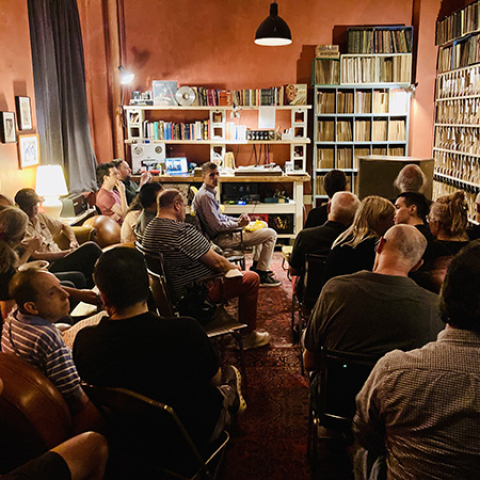
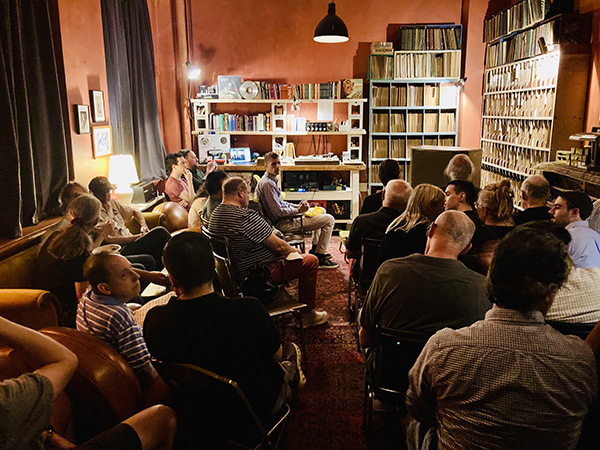
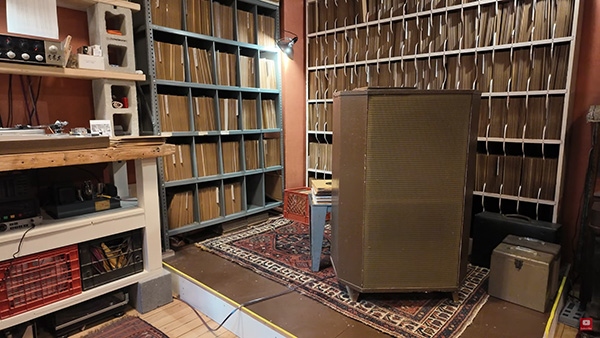
The Hot Club of New YorkMatthew Rivera's Hot Club of New York is on the third floor of an old commercial building at 20 W 20th Street, across from what used to be the Limelight Club (footnote 1). The walk from the F Train at 23rd Street generated a Rolodex of memories from watching this neighborhood evolve during my 50 years traipsing the streets above Union Square. But those memories didn't prepare me for Matthew's passionately curated mise-en-scène inside the Hot Club of New York. The listening room was fitted with stuffed brown leather chairs, a famous yellow sofa, and period-correct Asian rugs. The lighting was shadowy, like in movies from the 1930s. The walls were lined with black discs in brown sleeves. Matthew fit the scene perfectly in his sleeveless argyle sweater. Right away, my brain locked on to the room's sensuous feel. How could every detail be so hip style-wise and so cozy comfortwise? I could not stop focusing on the wall color, so I asked Matthew, what is that? "It's actually three colors that we layered in different washes. First a terracotta color was rolled on, then a reddish wash was sponged over that. Then finally a brown wash was rubbed on. It should be mentioned that my friends Clare Fentress and Andrew Billingsley are truly responsible for the look of the space. They run a New York–based design collective called Acritarchy. I gave my input, but their expertise, which they gave pro bono, not to mention labor and commitment, really pulled it all together in a matter of about one month! We started with a blank canvas on April 15 and opened on May 28."
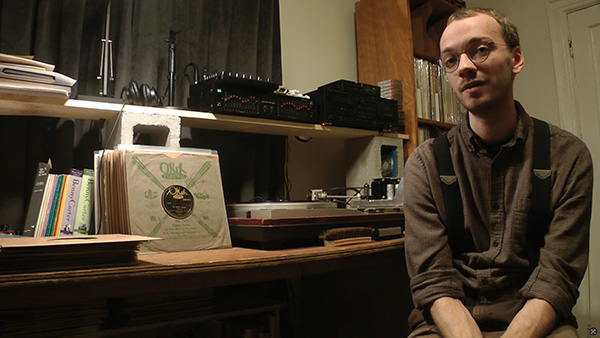 Matthew (above) is a natural-born presenter, a pro-level radio deejay/historian/storyteller with charm and sharp intellect. He worked with and was mentored by Phil Schaap at Columbia University's jazz-focused radio station WKCR (footnote 3).
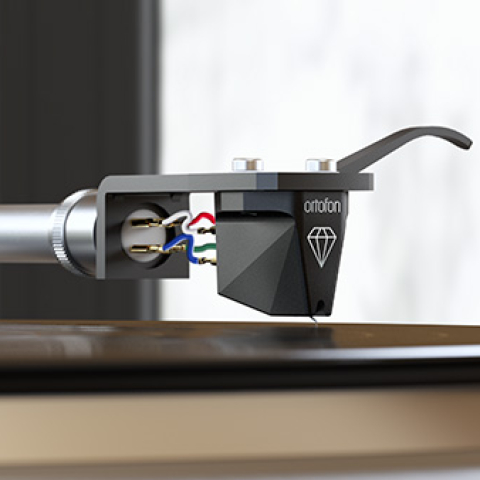
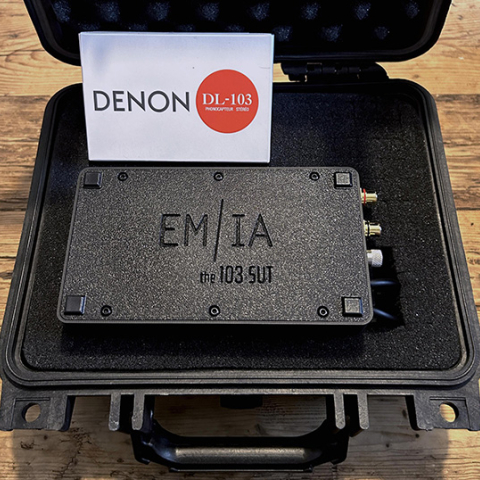
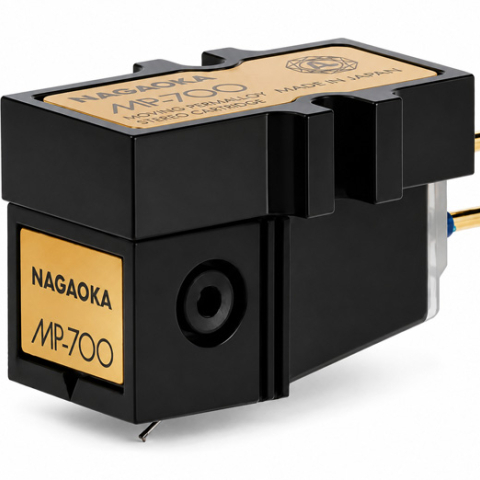
 His record player isn't period. It's a professional-grade Technics SP-1510 (ca 1980) with a 12" SME 3012 tonearm and a new Miyajima Laboratory Kotetu mono moving coil cartridge ($655), which has a 0.4mil conical stylus and a 4 ohm internal impedance. He is using a Robyatt Audio MC-2 mono step-up transformer. Before the Miyajima, Matthew was using a Stanton 500 with swappable stylus tips measuring from 1.5mil to 3.5mil.
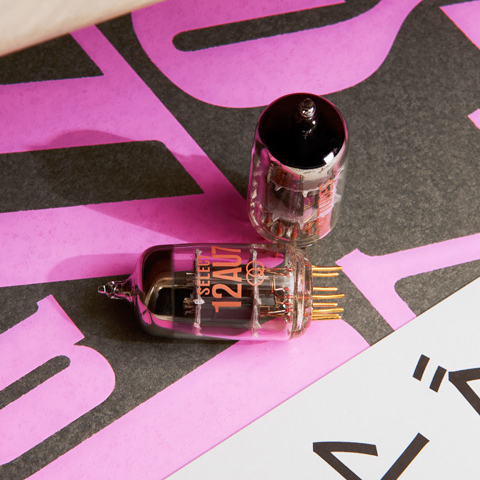
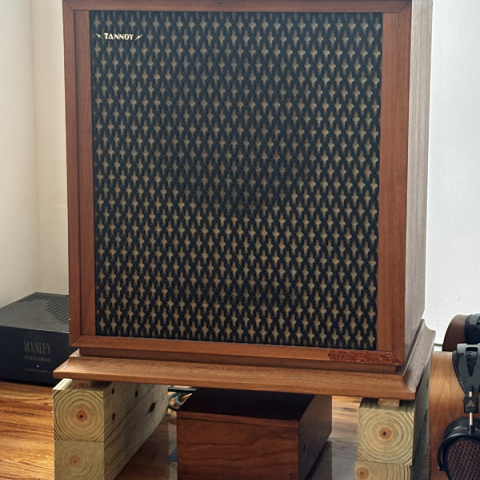
Matthew runs the MC-2's output into a McIntosh C20 preamp from 1960 then on to an RCA SP-20 MI-12191 power amplifier, which sports four period-correct 6V6 RCA tubes. Chief Audio Wizard Harry Olson designed this push-pull, parallel-feedback amplifier to power RCA's original LC-1 coaxial speakers. One of those speakers, also designed by Olson, was the source of this night's sound. Neither of these professional-grade components were released for home use.
His record player isn't period. It's a professional-grade Technics SP-1510 (ca 1980) with a 12" SME 3012 tonearm and a new Miyajima Laboratory Kotetu mono moving coil cartridge ($655), which has a 0.4mil conical stylus and a 4 ohm internal impedance. He is using a Robyatt Audio MC-2 mono step-up transformer. Before the Miyajima, Matthew was using a Stanton 500 with swappable stylus tips measuring from 1.5mil to 3.5mil.
Matthew runs the MC-2's output into a McIntosh C20 preamp from 1960 then on to an RCA SP-20 MI-12191 power amplifier, which sports four period-correct 6V6 RCA tubes. Chief Audio Wizard Harry Olson designed this push-pull, parallel-feedback amplifier to power RCA's original LC-1 coaxial speakers. One of those speakers, also designed by Olson, was the source of this night's sound. Neither of these professional-grade components were released for home use.
Matthew is an experienced deejay, so he knew in advance that the first two discs he played, "Daybreak Express" by Duke Ellington (1934) and "I Cover the Waterfront" by Tony Scott (1953), would smoke craniums and trounce expectations about what 100-year-old recordings might sound like. I swear to you, when he played "Boodle Am Shake" by the Dixieland Jug Blowers (1926) and "Feather Bed" by Cannon's Jug Stompers (1928), my cheeks were soaked in "oh my God" tears, marveling at these artists' creative powers as well as the uncanny immediacy of both group's blowing, singing, and stoned-out stomping. These discs prompted waves of crazy cultural memories. For example, during "Boodle Am Shake," I remembered being at a big Sound by Singer demo, trying my best to block out some vapid female vocalist by imagining 1920s jug band music with dirty lyrics, kazoos, washtub bass, washboard rhythms, and clay-jug fart sounds coming out of Andy's gillion-dollar audiophile system. It was fun. When Matthew asked what kind of blues I liked, I told him "country blues," but I also bragged that I remembered playing Howlin' Wolf 78s in my basement when I was 15. "So, if you've got any of those ..." Matthew responded by spinning Wolf 's "I Asked for Water" from 1956. Compared to suave male vocalists like Frank Sinatra and Johnny Hartman, Howlin' Wolf is a too-tall raging beast from Chicago. That night at the Hot Club, the Wolf-beast was in the room, stomping the floor in front of the speaker for four unforgettable minutes. When this Wolf side finished, the room remained respectfully silent.
I am struggling to find words to describe to readers the character of the sound that came out of Matthew's Hot Club system (see this video). I've experienced a lot of serious-level vintage audio, but never a system that could more accurately portray what went down in front of the microphones. A voice in my head kept repeating, "That music sounds as real as it possibly can." I should mention in closing that, compared to playing mono via two speakers, which projects images backwards and between the speakers, the single, direct-radiating LC-1 presented performers' images near to but distinctly in front of its grille cloth: life-sized, extraordinarily solid, and—as Ken Micallef said—Big bang alive!
Footnote 1: The Hot Club of New York, 20 W. 20th St., Ste. 307, New York, NY 10011. Email: contact@hotclubny.com. Footnote 2: Eames is also the author of Historical Jazz Conversations and other books and hosts The JaRon Eames Show on the Manhattan Neighborhood Network's—MNN for short—Culture Channel. It streams Saturday nights at 11:30pm. See mnn.org/tv-schedule.