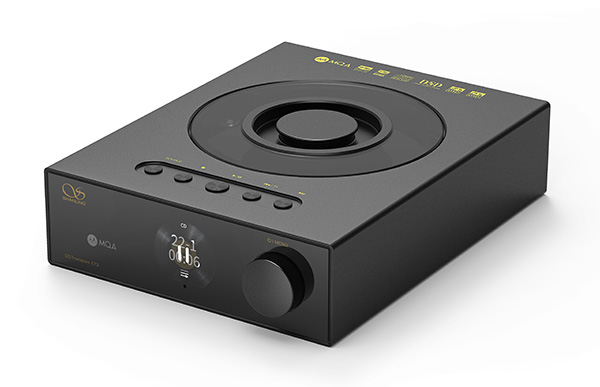
Costing just $899, Shanling's top-loading ET3 CD transport (footnote 1) appears to have been designed by people who recognize the multitude of big and small fails (or lost opportunities) of previous CD transports. In use, the ET3 felt like a distillation of what I've always wanted in a transport: strong, solid, compact, cool-looking, and feels good to use. Everyone knows I like pro-audio cool with no froufrou. This Shanling deck looked so damn smart and felt so good to touch that it kept my mind repeating, "Yep! That's how a CD transport should be built!"
The ET3 uses Philips's notoriously musical SAA7824 CD drive and a Sanyo HD850 laser pickup. It can play "Red Book" CDs and their R/RW variations, plus MQA CDs. It cannot read SACD discs.
The ET3 has multiple inputs and outputs and features I never imagined seeing on a CD transport. For example, it has a USB port so you can connect an output socket, and it can output I2S via an HDMI cable. Marketing suits call components like this "high-end digital transports" or "digital transport hubs" because in addition to pulling data off pitted discs, the ET3 supports Wi-Fi streaming, AirPlay, and Bluetooth, and it inputs and outputs audio via a pair of USB-A interfaces, one for connecting an external SSD and one that's a wide-band, asynchronous digital music output. In addition to all these choices, the ET3 offers TosLink, AES3, and S/PDIF (RCA) digital outputs. There is no streaming input, so if you utilize a streaming service, you'll need to use a computer or a streamer.
According to the ET3's Quick Start Guide, the USB input can even act as a server for NAS drives up to 2TB; FAT32-formatted drives are preferred. Via the USB input, you can play DSD files up to DSD512 and PCM files up to 768kHz. All the usual formats are supported.
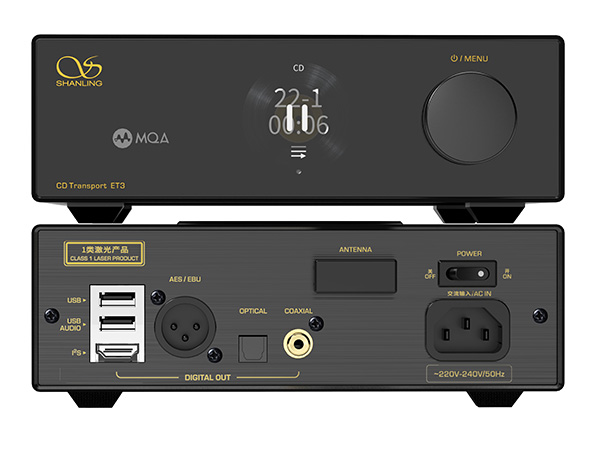 On top of all that, there is a Bluetooth 5.0 input with support for LDAC, AAC, and SBC audio codecs. The Wi-Fi/Bluetooth antenna connects to the back panel in the usual way.
Unlike any CD transport I've ever seen or heard of, there is also a CT7302CL upsampling chip that converts "all outputs" to DSD or high-rez PCM. Using the front-panel menu, I bypassed upsampling (called SRC) on my first day with the ET3. According to Shanling, this upsampling mechanism includes built-in DSP for "error correction and noise reduction," ensuring "accurate playback even from less-than-perfect discs."
True to its "digital transport hub" calling, Shanling offers a music player—the "Eddict Player"—for Android and Apple iOS. I downloaded the latter directly to my iPhone by scanning the code on the back of the Eddict User's Manual. On its first page, that manual informed me that "The Eddict player is a professional hi-fi lossless music player suitable for enthusiasts. It supports a range of audio formats, song classification management, plus sorting and playback of internal and external storage devices. Eddict allows users to browse based on Album, Artist, Genre, or resolution and to view, control, and play music."
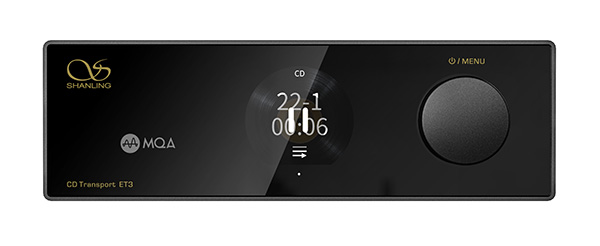
The ET3 doesn't present faux-pro, dorky-Euro, or glitzy-Vegas style. Its solid, nicely proportioned, CNC-machined chassis measures 7.4" (188mm) wide × 10" (255mm) deep × 2.7" (68mm) high and weighs 5.5lb (2.5kg). It presents as a thoroughly considered audio device whose understated style may make it a better match with a dresser or bureau than a technical-looking equipment rack. The round front-panel display is just the right size and color. Also just right was the ET3's smoked tempered-glass dust cover, which also functions as vibration-damping CD puck. Kudos for the remote-controlled dimmer!
As I said at the beginning, the ET3 felt like a distillation of what I've always wanted but never completely got. Every time I used it, it felt smartly designed with a just-right size, weight, and color.
On top of all that, there is a Bluetooth 5.0 input with support for LDAC, AAC, and SBC audio codecs. The Wi-Fi/Bluetooth antenna connects to the back panel in the usual way.
Unlike any CD transport I've ever seen or heard of, there is also a CT7302CL upsampling chip that converts "all outputs" to DSD or high-rez PCM. Using the front-panel menu, I bypassed upsampling (called SRC) on my first day with the ET3. According to Shanling, this upsampling mechanism includes built-in DSP for "error correction and noise reduction," ensuring "accurate playback even from less-than-perfect discs."
True to its "digital transport hub" calling, Shanling offers a music player—the "Eddict Player"—for Android and Apple iOS. I downloaded the latter directly to my iPhone by scanning the code on the back of the Eddict User's Manual. On its first page, that manual informed me that "The Eddict player is a professional hi-fi lossless music player suitable for enthusiasts. It supports a range of audio formats, song classification management, plus sorting and playback of internal and external storage devices. Eddict allows users to browse based on Album, Artist, Genre, or resolution and to view, control, and play music."
The ET3 doesn't present faux-pro, dorky-Euro, or glitzy-Vegas style. Its solid, nicely proportioned, CNC-machined chassis measures 7.4" (188mm) wide × 10" (255mm) deep × 2.7" (68mm) high and weighs 5.5lb (2.5kg). It presents as a thoroughly considered audio device whose understated style may make it a better match with a dresser or bureau than a technical-looking equipment rack. The round front-panel display is just the right size and color. Also just right was the ET3's smoked tempered-glass dust cover, which also functions as vibration-damping CD puck. Kudos for the remote-controlled dimmer!
As I said at the beginning, the ET3 felt like a distillation of what I've always wanted but never completely got. Every time I used it, it felt smartly designed with a just-right size, weight, and color.
 Listening
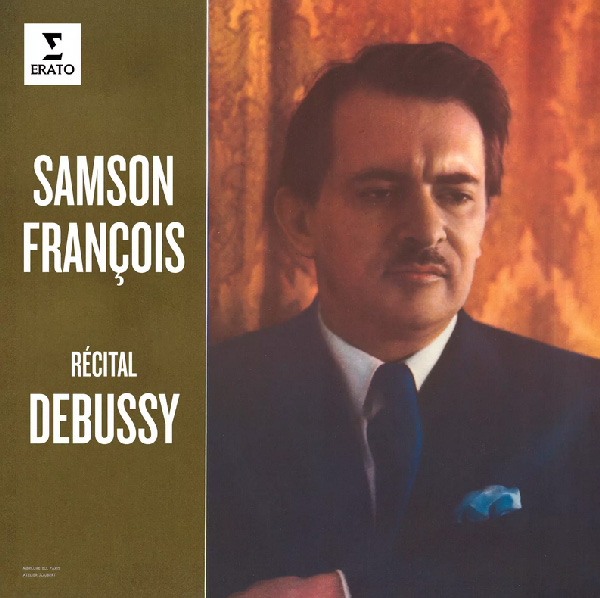
When I played Samson François's Debussy Préludes and L'Isle Joyeuse (3 CDs, Warner Classics 50999 638754 2 3), my conscious mind dropped into another place in space and time, near and inside a grand piano, into a world of felt-on-wood hammers, metal strings, and pedals, plus wood and metal tones to savor for their flavor. With SRC disengaged, the Shanling transport played these Erato CDs meticulously, with alluring transparency and a smidgen of magic. I was hoping for just such an experience when I chose this set to play, but what I heard with the ET3 transport and the Denafrips Terminator Plus DAC was a piano sound of a much higher order than I expected. The two devices were connected by a length of AudioQuest Cinnamon S/PDIF cable. The ET3 came with a handsome well-made length of coaxial cable, which I thought sounded at least as full and tonally correct as AudioQuest's Cinnamon coax, but I stuck with the Cinnamon to minimize the number of variables. The Terminator's analog output was connected to a Linear Tube Audio Z10e integrated amplifier with AudioQuest Pegasus interconnects. The Z10e drove my Falcon Gold Badge LS3/5as with Cardas Clear Beyond cables. Whichever cables I chose, at both ends of the keyboard and in the middle, notes announced themselves as complete and well-formed, with properly saturated colors and fully realized overtones. In concert, such satisfying sounds caused me to regard Samson François as the Debussy interpreter I get the most out of, as the one I paid closest attention to.
The Shanling ET3 made the Debussy CDs sound like my gone-but-never-to-be-forgotten Stax SR-007 headphones, with that same Kodacolor warmth and detail. Its sunshine-bright sky was polarized, UV-filtered, and cloudless. TEAC's VRDS-701T ($2699.99) was crisper and more analytical, but not by much. Maybe 20%. I doubt most audiophiles could separate either transport in a blind comparison.
This was all the sound quality I'd ever hoped for—almost. All that was left to wish for was larger scale and more psychedelic colors.
Then I made the system even more transparent. I replaced the Denafrips Terminator Plus DAC with the dCS Lina DAC and its Master Clock and swapped in the most transparent amplification combination I know, the HoloAudio Serene preamp and the Pass Labs XA25 amplifier, now driving the Radiant Acoustics Clarity 4.2 loudspeakers. I tested the results by playing Tom Waits's Blood Money with the TEAC, followed by the Shanling.
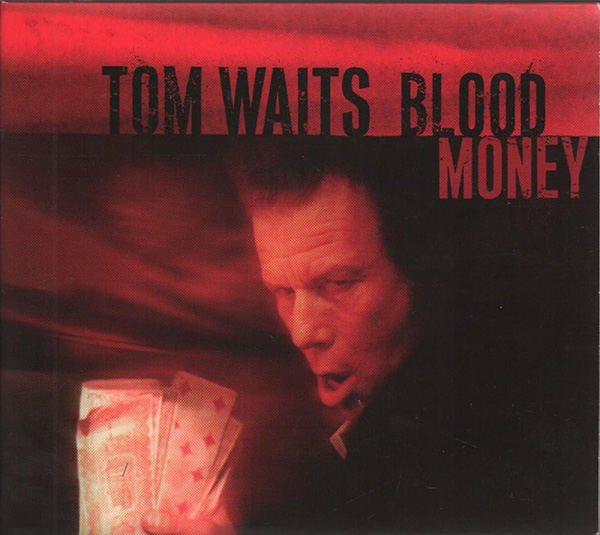 This was when this $900 transport blew the lid off my expectations. With the Shanling, most of that Stax SR-007 effect disappeared. The ET3 got neutral and down to business. With its upsampling bypassed, the Shanling played just-right crisp. Detail was beguiling. Vocal and instrumental riffs I'd never noticed before now preened for attention. This difficult-to-sort album came through feeling better organized, more detailed, and more solidly formed with the ET3 driving the Lina DAC than it did driving the Terminator Plus, which, in NOS mode, presents recordings with a beautiful, ethereal glimmer I never tire of.
With the TEAC 701T disc spinner and the Lina DAC, Blood Money became a Broadway-stage spectacle, which I imagine is how Tom Waits envisioned it. This album came out in 2000, and on it Waits is doing his best Martyn Jacques/Tiger Lillies imitation. That year, both artists were using their face-painted, crusty-voiced talents to make small-stage 1930s cabaret satire ready for brighter lights and bigger stages. In its heyday, folks called this genre Brechtian Punk Cabaret. I called it urban folk music.
As I mentioned earlier, the TEAC 701T transport doesn't emphasize anything. It just shoots out data straight and presents it completely sorted with dense, full-intensity detail under a very even light. The 701T's inherent beauty and raison d'être lay in the quality of form it imparts to recordings. It is against this quality of form that I judged the ET3's form. I found it to be very close to that of the TEAC—with, again, its SRC oversampling disabled.
Finally, I decided to try Shanling's SRC-DSP settings. The first upsampling experiment I tried, to 24/192, brought all my cattle to the window. They stood there staring in at me, worried about what was happening.
At 192kHz, the sound became bigger, bassier, and more punchy-plucky. More glossy and edgy. Some Stereophile readers might like this upsampled sound enough to leave it set like this forever. But to me it seemed fake and unevenly lit—more Diane Arbus carnival than Brechtian cabaret. Still, I dug it. That Tom Waits disc was playing Broadway big, and Blood Money's second track, "Everything Goes to Hell," was a riotous frolic. I played it over and over.
Next, I sampled the ET3's DSD oversampling. The different DSD levels sounded more alike than different, but I would describe their effect as enjoyable enough but nothing special compared to the vivid precision of the ET3's NOS output.
As a fun experiment, I played the François Debussy through the Lina using my $349 Onkyo C-7030 CD player as transport. I was not surprised by the 7030's soft, transient-challenged bass. I was surprised by how the Onkyo's low-register limpidity buried the dynamic nuance and melodic invention of Charlie Parker, on Charlie Parker – The Complete Savoy & Dial Master Takes (Savoy Jazz 3 CDs SVY 17149), his late-1940s Savoy-Dial sessions. Parker's brainy bop was engineered to raise his overtly serious improvisations above the commonality of danceable popular music. These discs document Parker's process of creating new jazz forms, but the little Onkyo (used as a transport) approached those rad inventions with yawning indifference. In contrast, Shanling's ET3 transport played these Parker takes with a charged vehemence that put nuanced energy, intense detail, and melodic invention in the foreground. The difference was obvious, yawning indifference vs turbo-charged vehemence, and all I changed was the transport. Hmmm.
This was when this $900 transport blew the lid off my expectations. With the Shanling, most of that Stax SR-007 effect disappeared. The ET3 got neutral and down to business. With its upsampling bypassed, the Shanling played just-right crisp. Detail was beguiling. Vocal and instrumental riffs I'd never noticed before now preened for attention. This difficult-to-sort album came through feeling better organized, more detailed, and more solidly formed with the ET3 driving the Lina DAC than it did driving the Terminator Plus, which, in NOS mode, presents recordings with a beautiful, ethereal glimmer I never tire of.
With the TEAC 701T disc spinner and the Lina DAC, Blood Money became a Broadway-stage spectacle, which I imagine is how Tom Waits envisioned it. This album came out in 2000, and on it Waits is doing his best Martyn Jacques/Tiger Lillies imitation. That year, both artists were using their face-painted, crusty-voiced talents to make small-stage 1930s cabaret satire ready for brighter lights and bigger stages. In its heyday, folks called this genre Brechtian Punk Cabaret. I called it urban folk music.
As I mentioned earlier, the TEAC 701T transport doesn't emphasize anything. It just shoots out data straight and presents it completely sorted with dense, full-intensity detail under a very even light. The 701T's inherent beauty and raison d'être lay in the quality of form it imparts to recordings. It is against this quality of form that I judged the ET3's form. I found it to be very close to that of the TEAC—with, again, its SRC oversampling disabled.
Finally, I decided to try Shanling's SRC-DSP settings. The first upsampling experiment I tried, to 24/192, brought all my cattle to the window. They stood there staring in at me, worried about what was happening.
At 192kHz, the sound became bigger, bassier, and more punchy-plucky. More glossy and edgy. Some Stereophile readers might like this upsampled sound enough to leave it set like this forever. But to me it seemed fake and unevenly lit—more Diane Arbus carnival than Brechtian cabaret. Still, I dug it. That Tom Waits disc was playing Broadway big, and Blood Money's second track, "Everything Goes to Hell," was a riotous frolic. I played it over and over.
Next, I sampled the ET3's DSD oversampling. The different DSD levels sounded more alike than different, but I would describe their effect as enjoyable enough but nothing special compared to the vivid precision of the ET3's NOS output.
As a fun experiment, I played the François Debussy through the Lina using my $349 Onkyo C-7030 CD player as transport. I was not surprised by the 7030's soft, transient-challenged bass. I was surprised by how the Onkyo's low-register limpidity buried the dynamic nuance and melodic invention of Charlie Parker, on Charlie Parker – The Complete Savoy & Dial Master Takes (Savoy Jazz 3 CDs SVY 17149), his late-1940s Savoy-Dial sessions. Parker's brainy bop was engineered to raise his overtly serious improvisations above the commonality of danceable popular music. These discs document Parker's process of creating new jazz forms, but the little Onkyo (used as a transport) approached those rad inventions with yawning indifference. In contrast, Shanling's ET3 transport played these Parker takes with a charged vehemence that put nuanced energy, intense detail, and melodic invention in the foreground. The difference was obvious, yawning indifference vs turbo-charged vehemence, and all I changed was the transport. Hmmm.
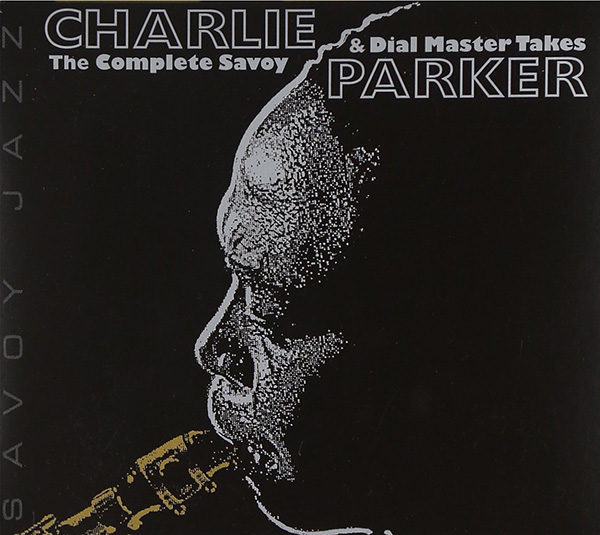 When I spun the Parker with the TEAC VRDS-701T transport, the sound was more transparent, with detail more explicitly focused, deeper soundspaces, and tighter, stronger, more push-forward bass than what I had heard with the ET3. With the ET3, most of the 701T's positive attributes were present but rendered less noticeable by the force of the Shanling's carbon arc immediacy.
Carbon arcs generated the high-temperature luminosity that charged up the vibrancy of black-and-white film in the early "talking" cinemas. You can't overestimate how much of pre-code cinema's seductive power was rooted in the physical and psychological experience of sitting in a dark room with strangers being whole-body stimulated by the flickering light of carbon arcs. Before 1960, the lighting on movie sets and the lamps in film projectors were all carbon arcs. Their light was bright color rich and forceful, but far from even. Carbon arc lamps make light I can feel on my skin.
Compared to the Shanling, the TEAC 701T displayed performances under a lower temperature, more evenly dispersed light, like that from the xenon gas lamps that replaced carbon arcs. To a casual moviegoer, the change from carbon to xenon arcs probably went unnoticed. With the Shanling and TEAC, this difference in light energy was similarly subtle, but it was easy to notice when I listened for it. This carbon arc vibrancy is the chief performance trait that makes the ET3 sound different from the TEAC.
With the above-mentioned Charlie Parker, I felt that the ET3's extra vibrancy was not a deviation from accuracy or neutrality. Rather, I felt that the Shanling was somehow showing more of the energy and information pressed into the pits and lands of these remastered CDs. This is not to say the ET3 was picking up more information altogether. It means that the ET3's processing emphasized this category of data more than some other data category.
Decades of experience tell me that some of the sound differences I heard were caused by the different transport mechanisms, the Philips in the ET3 vs the TEAC in the TEAC. I've known about this difference for 40 years, since I bought my first CD player, which, by the way, was a TEAC VRDS-10.
Or maybe it's the servo chip that operates the motor assembly and tells the laser what to read. Or maybe the ET3's Sanyo laser finds more data that corresponds to force and immediacy. Or maybe it's something obvious, like clock and jitter issues. I wish I knew, but!
If I were a betting man, I'd bet my neighbor's cats that the ET3's jump-punch and immediacy are manufactured in its receiver chip, which I've been told by knowers controls the servo chip, while sorting and preparing datastream protocols.
If it's not the receiver chip, then I'll bet all my Mercedes and some of my cattle that the sound differences I observed were rooted in each player's power supply. You know, everything sounds like its power supply.
When I spun the Parker with the TEAC VRDS-701T transport, the sound was more transparent, with detail more explicitly focused, deeper soundspaces, and tighter, stronger, more push-forward bass than what I had heard with the ET3. With the ET3, most of the 701T's positive attributes were present but rendered less noticeable by the force of the Shanling's carbon arc immediacy.
Carbon arcs generated the high-temperature luminosity that charged up the vibrancy of black-and-white film in the early "talking" cinemas. You can't overestimate how much of pre-code cinema's seductive power was rooted in the physical and psychological experience of sitting in a dark room with strangers being whole-body stimulated by the flickering light of carbon arcs. Before 1960, the lighting on movie sets and the lamps in film projectors were all carbon arcs. Their light was bright color rich and forceful, but far from even. Carbon arc lamps make light I can feel on my skin.
Compared to the Shanling, the TEAC 701T displayed performances under a lower temperature, more evenly dispersed light, like that from the xenon gas lamps that replaced carbon arcs. To a casual moviegoer, the change from carbon to xenon arcs probably went unnoticed. With the Shanling and TEAC, this difference in light energy was similarly subtle, but it was easy to notice when I listened for it. This carbon arc vibrancy is the chief performance trait that makes the ET3 sound different from the TEAC.
With the above-mentioned Charlie Parker, I felt that the ET3's extra vibrancy was not a deviation from accuracy or neutrality. Rather, I felt that the Shanling was somehow showing more of the energy and information pressed into the pits and lands of these remastered CDs. This is not to say the ET3 was picking up more information altogether. It means that the ET3's processing emphasized this category of data more than some other data category.
Decades of experience tell me that some of the sound differences I heard were caused by the different transport mechanisms, the Philips in the ET3 vs the TEAC in the TEAC. I've known about this difference for 40 years, since I bought my first CD player, which, by the way, was a TEAC VRDS-10.
Or maybe it's the servo chip that operates the motor assembly and tells the laser what to read. Or maybe the ET3's Sanyo laser finds more data that corresponds to force and immediacy. Or maybe it's something obvious, like clock and jitter issues. I wish I knew, but!
If I were a betting man, I'd bet my neighbor's cats that the ET3's jump-punch and immediacy are manufactured in its receiver chip, which I've been told by knowers controls the servo chip, while sorting and preparing datastream protocols.
If it's not the receiver chip, then I'll bet all my Mercedes and some of my cattle that the sound differences I observed were rooted in each player's power supply. You know, everything sounds like its power supply.
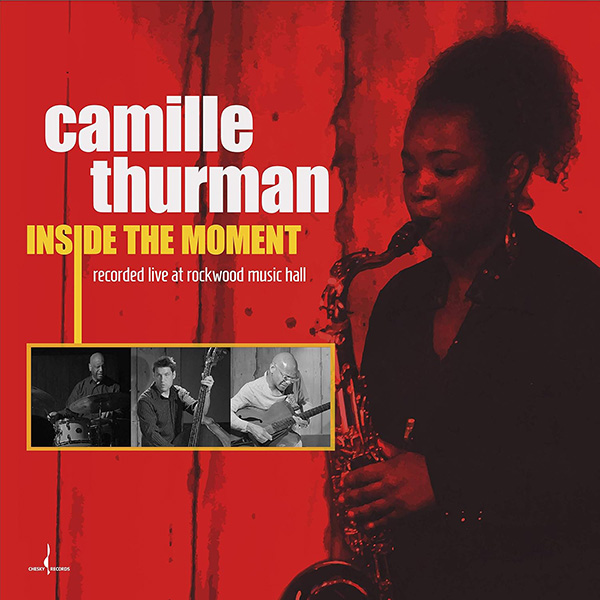 My taste in cinema leans toward dreamy philosophical fantasy. My taste in audio recordings leans toward cinema verité. I like what's coming out of my speakers to sound real, for the artists (or their recorded ghosts) to project authenticity. That's why I collect simple one-or-two-mike field recordings that document an identifiable place and time. I relish the sense of being there—somewhere, anywhere (ideally with a Nagra III and an omnidirectional microphone)—as the recording was made. That's why I consider David Chesky's recording of jazz saxophonist Camille Thurman, Inside the Moment (Chesky Records CD JD397), a masterpiece of cinema verité, and why this binaural recording, processed with Studio-Level MQA, may be the most I-am-there real I have ever experienced.
Inside the Moment was recorded live at Rockwood Music Hall on New York's Lower East Side. David used a B&K binaural recording head sitting on a small table by the stage, no more than 20' from Camille Thurman, who was singing and playing tenor sax with Ben Allison backing her on bass, Mark Whitfield on guitar, and my favorite skins-'n'-brass master, Billy Drummond, on drums.
When I listened to this recording driving the Lina DAC, the ET3's front panel lit up a blue MQA symbol, and I could hear the romantic couple at the next table whispering and cutting their food. That's audio verité. And it shows what I've loved most about MQA objectors. This recording proves they never listened, because if they listened to what's on this disc, they'd have to admit they'd never heard applause sound more flesh-and-bones real or an intimate music venue sound more solid and three-dimensional.
When MQA was a hot topic, I didn't care if it failed or succeeded as a business plan. But I had almost unlimited access to MQA files recorded with minimalist miking by David Chesky and Peter McGrath. In some cases, I had both the raw mike feed and the MQA-processed files for comparison. I remember joking to everyone about how these MQA-enhanced files sounded completely remastered, with all the dodgy parts filtered out. Somehow MQA made the tone colors more saturated and the edges of forms seem more natural. What I liked most about MQA was how it exposed the luminosity the microphones observed.
That lighting is what I enjoy most on this Camille Thurman disc. Its reddish glow, plus the dramatic dimensionality of the room, the tables, and the stage, make this recording unforgettable. No matter if you're a techie-knower and an MQA-hater, in a blind test, I am certain you'd applaud this MQA disc for its vivid night-at-the-jazz-club realism.
Listening with HiFiMan's new better built, better looking, easier-to-drive Susvara Unveiled planar magnetic headphone (review in process), I could see the body language of that whispering couple through the microphone's eyes. I could feel myself sitting alone at a little round table near the stage.
I don't know how bits in packets sound, or how many bits it would take to make recordings sound real. But I know perfectly well the sound of David Chesky's voice. When David climbed onto the stage to introduce Thurman's band, I could hear him moving toward the microphone. When he spoke, I heard the exact David voice I've walked the streets of the world with for almost 40 years. For me, that's proof of high fidelity.
With the Lina DAC, when I spun this Chesky on the TEAC 701T it sounded indistinguishable from what I heard with Shanling's ET3.
My taste in cinema leans toward dreamy philosophical fantasy. My taste in audio recordings leans toward cinema verité. I like what's coming out of my speakers to sound real, for the artists (or their recorded ghosts) to project authenticity. That's why I collect simple one-or-two-mike field recordings that document an identifiable place and time. I relish the sense of being there—somewhere, anywhere (ideally with a Nagra III and an omnidirectional microphone)—as the recording was made. That's why I consider David Chesky's recording of jazz saxophonist Camille Thurman, Inside the Moment (Chesky Records CD JD397), a masterpiece of cinema verité, and why this binaural recording, processed with Studio-Level MQA, may be the most I-am-there real I have ever experienced.
Inside the Moment was recorded live at Rockwood Music Hall on New York's Lower East Side. David used a B&K binaural recording head sitting on a small table by the stage, no more than 20' from Camille Thurman, who was singing and playing tenor sax with Ben Allison backing her on bass, Mark Whitfield on guitar, and my favorite skins-'n'-brass master, Billy Drummond, on drums.
When I listened to this recording driving the Lina DAC, the ET3's front panel lit up a blue MQA symbol, and I could hear the romantic couple at the next table whispering and cutting their food. That's audio verité. And it shows what I've loved most about MQA objectors. This recording proves they never listened, because if they listened to what's on this disc, they'd have to admit they'd never heard applause sound more flesh-and-bones real or an intimate music venue sound more solid and three-dimensional.
When MQA was a hot topic, I didn't care if it failed or succeeded as a business plan. But I had almost unlimited access to MQA files recorded with minimalist miking by David Chesky and Peter McGrath. In some cases, I had both the raw mike feed and the MQA-processed files for comparison. I remember joking to everyone about how these MQA-enhanced files sounded completely remastered, with all the dodgy parts filtered out. Somehow MQA made the tone colors more saturated and the edges of forms seem more natural. What I liked most about MQA was how it exposed the luminosity the microphones observed.
That lighting is what I enjoy most on this Camille Thurman disc. Its reddish glow, plus the dramatic dimensionality of the room, the tables, and the stage, make this recording unforgettable. No matter if you're a techie-knower and an MQA-hater, in a blind test, I am certain you'd applaud this MQA disc for its vivid night-at-the-jazz-club realism.
Listening with HiFiMan's new better built, better looking, easier-to-drive Susvara Unveiled planar magnetic headphone (review in process), I could see the body language of that whispering couple through the microphone's eyes. I could feel myself sitting alone at a little round table near the stage.
I don't know how bits in packets sound, or how many bits it would take to make recordings sound real. But I know perfectly well the sound of David Chesky's voice. When David climbed onto the stage to introduce Thurman's band, I could hear him moving toward the microphone. When he spoke, I heard the exact David voice I've walked the streets of the world with for almost 40 years. For me, that's proof of high fidelity.
With the Lina DAC, when I spun this Chesky on the TEAC 701T it sounded indistinguishable from what I heard with Shanling's ET3.
 In sum
TEAC's VRDS-701T plays neat and martini dry. It's my reference transport because it exposes clearly the sound character of whatever DAC it's connected to. In contrast, Shanling's ET3 plays wetter, with florid detail and a little splash-in-the-puddle exuberance, which may or may not be accurate, but I found its punchy vigor, spirited momentum, and carbon arc lighting quite seductive.
Despite what these comparisons may have led you to imagine (I exaggerate comparisons to make them clearer), Shanling's ET3 sounded more like TEAC's VRDS-701T than it had any right to at its under-$1k price.
On an added note, Shanling has scores of prestigious North American dealers, which should make auditioning the ET3 easy and rewarding. You are invited.
Footnote 1: Shanling, #10, 1701 and 1705 Time Square, Taizi Rd., Zhaoshang St., Nanshan District Shenzhen, Guangdong, China Postal Code: 518068. E-mail: info@shanling.com/. Facebook: Shanling. US distributor: Forté Art et Musique Inc. (DBA Forte Distribution), B302-1788 Canal St., Montreal, Quebec, H3K 3E6, Canada. Web: forte-distribution.com.
On top of all that, there is a Bluetooth 5.0 input with support for LDAC, AAC, and SBC audio codecs. The Wi-Fi/Bluetooth antenna connects to the back panel in the usual way.
Unlike any CD transport I've ever seen or heard of, there is also a CT7302CL upsampling chip that converts "all outputs" to DSD or high-rez PCM. Using the front-panel menu, I bypassed upsampling (called SRC) on my first day with the ET3. According to Shanling, this upsampling mechanism includes built-in DSP for "error correction and noise reduction," ensuring "accurate playback even from less-than-perfect discs."
ListeningWhen I played Samson François's Debussy Préludes and L'Isle Joyeuse (3 CDs, Warner Classics 50999 638754 2 3), my conscious mind dropped into another place in space and time, near and inside a grand piano, into a world of felt-on-wood hammers, metal strings, and pedals, plus wood and metal tones to savor for their flavor. With SRC disengaged, the Shanling transport played these Erato CDs meticulously, with alluring transparency and a smidgen of magic. I was hoping for just such an experience when I chose this set to play, but what I heard with the ET3 transport and the Denafrips Terminator Plus DAC was a piano sound of a much higher order than I expected. The two devices were connected by a length of AudioQuest Cinnamon S/PDIF cable. The ET3 came with a handsome well-made length of coaxial cable, which I thought sounded at least as full and tonally correct as AudioQuest's Cinnamon coax, but I stuck with the Cinnamon to minimize the number of variables. The Terminator's analog output was connected to a Linear Tube Audio Z10e integrated amplifier with AudioQuest Pegasus interconnects. The Z10e drove my Falcon Gold Badge LS3/5as with Cardas Clear Beyond cables. Whichever cables I chose, at both ends of the keyboard and in the middle, notes announced themselves as complete and well-formed, with properly saturated colors and fully realized overtones. In concert, such satisfying sounds caused me to regard Samson François as the Debussy interpreter I get the most out of, as the one I paid closest attention to.
This was when this $900 transport blew the lid off my expectations. With the Shanling, most of that Stax SR-007 effect disappeared. The ET3 got neutral and down to business. With its upsampling bypassed, the Shanling played just-right crisp. Detail was beguiling. Vocal and instrumental riffs I'd never noticed before now preened for attention. This difficult-to-sort album came through feeling better organized, more detailed, and more solidly formed with the ET3 driving the Lina DAC than it did driving the Terminator Plus, which, in NOS mode, presents recordings with a beautiful, ethereal glimmer I never tire of.
With the TEAC 701T disc spinner and the Lina DAC, Blood Money became a Broadway-stage spectacle, which I imagine is how Tom Waits envisioned it. This album came out in 2000, and on it Waits is doing his best Martyn Jacques/Tiger Lillies imitation. That year, both artists were using their face-painted, crusty-voiced talents to make small-stage 1930s cabaret satire ready for brighter lights and bigger stages. In its heyday, folks called this genre Brechtian Punk Cabaret. I called it urban folk music.
As I mentioned earlier, the TEAC 701T transport doesn't emphasize anything. It just shoots out data straight and presents it completely sorted with dense, full-intensity detail under a very even light. The 701T's inherent beauty and raison d'être lay in the quality of form it imparts to recordings. It is against this quality of form that I judged the ET3's form. I found it to be very close to that of the TEAC—with, again, its SRC oversampling disabled.
When I spun the Parker with the TEAC VRDS-701T transport, the sound was more transparent, with detail more explicitly focused, deeper soundspaces, and tighter, stronger, more push-forward bass than what I had heard with the ET3. With the ET3, most of the 701T's positive attributes were present but rendered less noticeable by the force of the Shanling's carbon arc immediacy.
Carbon arcs generated the high-temperature luminosity that charged up the vibrancy of black-and-white film in the early "talking" cinemas. You can't overestimate how much of pre-code cinema's seductive power was rooted in the physical and psychological experience of sitting in a dark room with strangers being whole-body stimulated by the flickering light of carbon arcs. Before 1960, the lighting on movie sets and the lamps in film projectors were all carbon arcs. Their light was bright color rich and forceful, but far from even. Carbon arc lamps make light I can feel on my skin.
My taste in cinema leans toward dreamy philosophical fantasy. My taste in audio recordings leans toward cinema verité. I like what's coming out of my speakers to sound real, for the artists (or their recorded ghosts) to project authenticity. That's why I collect simple one-or-two-mike field recordings that document an identifiable place and time. I relish the sense of being there—somewhere, anywhere (ideally with a Nagra III and an omnidirectional microphone)—as the recording was made. That's why I consider David Chesky's recording of jazz saxophonist Camille Thurman, Inside the Moment (Chesky Records CD JD397), a masterpiece of cinema verité, and why this binaural recording, processed with Studio-Level MQA, may be the most I-am-there real I have ever experienced.
Inside the Moment was recorded live at Rockwood Music Hall on New York's Lower East Side. David used a B&K binaural recording head sitting on a small table by the stage, no more than 20' from Camille Thurman, who was singing and playing tenor sax with Ben Allison backing her on bass, Mark Whitfield on guitar, and my favorite skins-'n'-brass master, Billy Drummond, on drums.
When I listened to this recording driving the Lina DAC, the ET3's front panel lit up a blue MQA symbol, and I could hear the romantic couple at the next table whispering and cutting their food. That's audio verité. And it shows what I've loved most about MQA objectors. This recording proves they never listened, because if they listened to what's on this disc, they'd have to admit they'd never heard applause sound more flesh-and-bones real or an intimate music venue sound more solid and three-dimensional.
In sumTEAC's VRDS-701T plays neat and martini dry. It's my reference transport because it exposes clearly the sound character of whatever DAC it's connected to. In contrast, Shanling's ET3 plays wetter, with florid detail and a little splash-in-the-puddle exuberance, which may or may not be accurate, but I found its punchy vigor, spirited momentum, and carbon arc lighting quite seductive.
Footnote 1: Shanling, #10, 1701 and 1705 Time Square, Taizi Rd., Zhaoshang St., Nanshan District Shenzhen, Guangdong, China Postal Code: 518068. E-mail: info@shanling.com/. Facebook: Shanling. US distributor: Forté Art et Musique Inc. (DBA Forte Distribution), B302-1788 Canal St., Montreal, Quebec, H3K 3E6, Canada. Web: forte-distribution.com.