Frederich Nietzsche distinguished between two approaches to culture: The Apollonian, which is characterized by order and rationality, and Dionysian, which is about chaos, intoxication, and vitality. Apollo was the god of Music, Art, Light, and Knowledge, and to Nietzsche, the Apollonian impulse was the main source of beauty. It is characterized by order, clarity, individuation, and measured restraint. To me, Greek sculpture and the paintings of the Great Masters best represent this impulse. It's not just their classical forms—there's a strength to it, a solidity. Also think of the great Classical composers: Haydn. Mozart. Beethoven to a point.
Dionysus, on the other hand, was the god of wine, religious ecstasy, and ritual madness. The Dionysian view of culture is quite the opposite of the Apollonian view. The impulse is—quite different. In classical music terms, I think of Robert Schumann and his Florestan and Eusebius. And Meister Raro, who tried to bridge the gap decades before Nietzsche.
Nietzsche wrote about this in the context not of music but of theater, in his first book, The Birth of Tragedy, from 1872. Western culture, the youthful Nietzsche argued, had been biased toward the Apollonian impulse since the ancient Greeks, to its detriment. He wasn't aiming for a Dionysian makeover but for a rebalancing. In that pursuit, he made a case for setting aside ethics, order, even consciousness and the sense of self as a way of recovering authenticity and deeper meaning. At the time, Nietzsche was under the spell of Richard Wagner and Wagner's soon-to-be wife, Cosima.
As a college kid, I was fascinated by the Dionysian—as I think many college kids are, though many fewer intellectualize it. In an essay published 14 years after The Birth of Tragedy, Nietzsche wrote that it was "badly written, ponderous, embarrassing, image-mad and image-confused." Some three years after that, he went insane. Draw your own conclusions.
I'll return later to the Apollonian/Dionysian dichotomy.
Goldmund SA
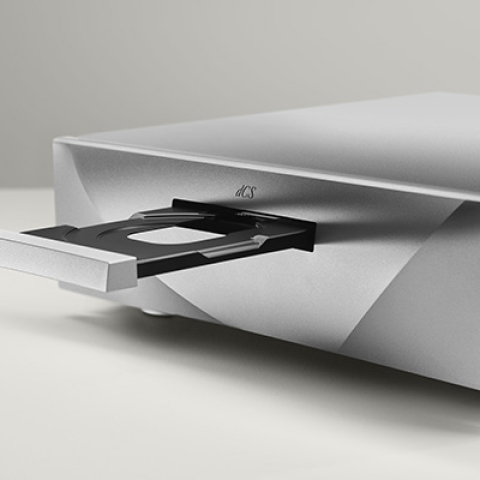
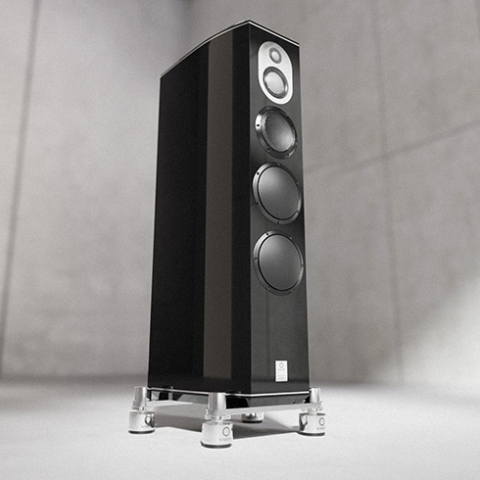
Goldmund was born in France, out of Architectures et Physiques Appliquées, the company that invented the first tangential-tracking tonearm; that arm became Goldmund's first product, the T3. Michel Reverchon, a hi-fi enthusiast and IBM employee, got involved in marketing the T3 through Mark Levinson. In 1980, Reverchon acquired Goldmund and relocated it to Switzerland, "to benefit from the country's local precision craftsmanship." (That and subsequent quotes are from an unnamed but obviously knowledgeable Goldmund source, supplied via Randy Bingham of Rhythm Distribution.) In Switzerland, Reverchon "surrounded himself with experts in acoustics, electronics, and mechanics. They developed legendary products such as the Reference turntable with turntable specialist Pierre Lurné and the Apologue." The Apologue is the classic multibox Goldmund loudspeaker, which was "designed by Claudio Rotta Loria with electroacoustic guidance from Christian Yvon." Goldmund still makes and sells Apologue speakers, no doubt much revised.
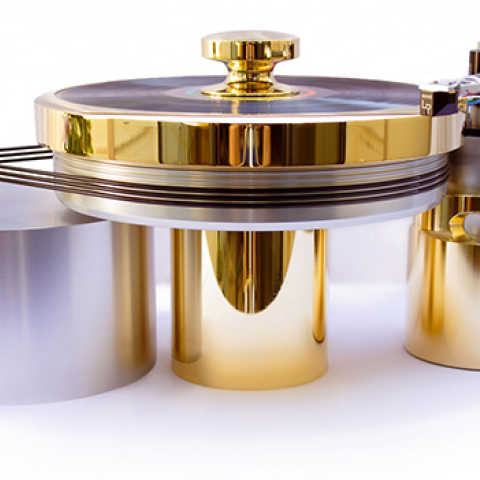
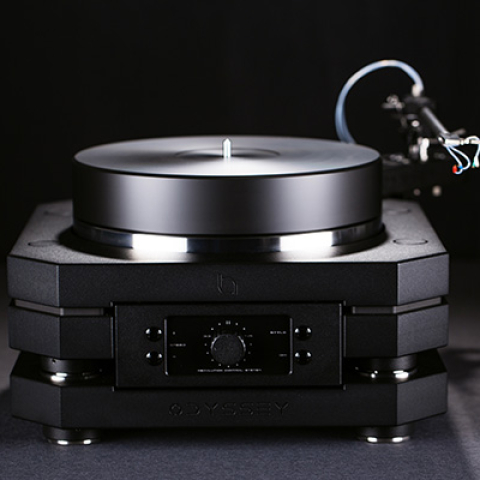
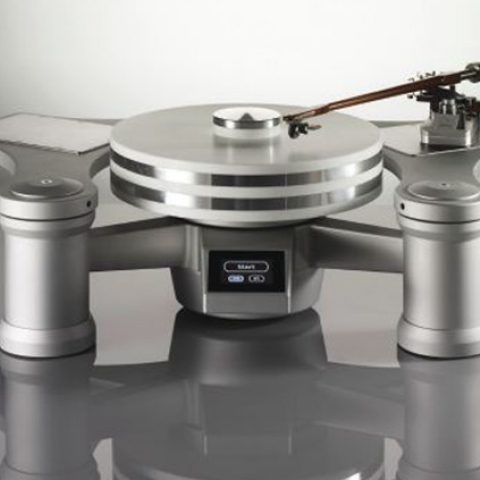
Speaking of Reference turntables: In 2007, to celebrate the 25th anniversary of the original Reference, Goldmund introduced the Reference II, which sold for an astounding $300,000, making it surely the most expensive turntable sold to that time, probably by a large increment. (This was five years before TechDAS released the Air Force One and 12 years before the Swedish Audio Technology XD1, both of which were considerably cheaper at introduction than the Goldmund.) Goldmund has a long history of selling expensive, luxury-class hi-fi.
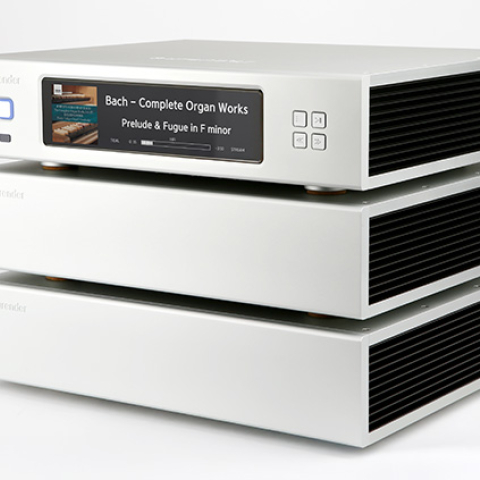
In the late 1980s, Goldmund turned to amplifiers. For many years, Goldmund amplifiers (and other electronics) bore the "Mimesis" brand. A Mimesis 3 amplifier was used in the notorious Stereophile blind comparison of the Audio Research SP9 and SP11 preamps (footnote 1). John Atkinson reviewed the Mimesis 8 in 1991 (footnote 2).
In 2018, Goldmund's management, then its ownership, passed from Reverchon, who was ill, to Johan Segalia, his son-in-law. The company moved to a new facility in Geneva. Goldmund named Rhythm its North American distributor in January 2024. Earlier this year, on April 8, "three young, longtime friends"—Marius Chapel, CEO; Gaspar Baldunciel, CCO; and Paul Tétaz, COO—took over the company. The three share ownership and serve on the executive board.
Then about a month ago—on October 1, 2025—the ailing Michel Reverchon passed away. It's a new era for Goldmund.
Telos
The Greek word télos means "end, purpose, goal." To Aristotle, it was the final cause and ultimate reason a thing exists or is done. The word is interesting in the way it combines origins and outcomes: télos is both goal and cause. It suggests a destiny to be fulfilled, standing at once for the destiny and its fulfillment. When télos is capitalized and loses its accent, it gains two Goldmund-related meanings. Telos is a core Goldmund amplifier technology and the line of Goldmund amplifiers that utilize it.
Telos—the technology—was launched in the 1990s and has been refined for 30 years since. Telos-based amplifiers "exert precise speaker control in two key ways." First, they deliver ample, clean power. Second, they "actively" control low-frequency loudspeaker drivers, in part by "drastically lowering the output impedance, allowing the amplifier to enhance microdynamics and prevent large woofer overshoot, hence eliminating unnaturally 'boomy' and uncontrolled low frequencies, maintaining absolute sonic transparency."
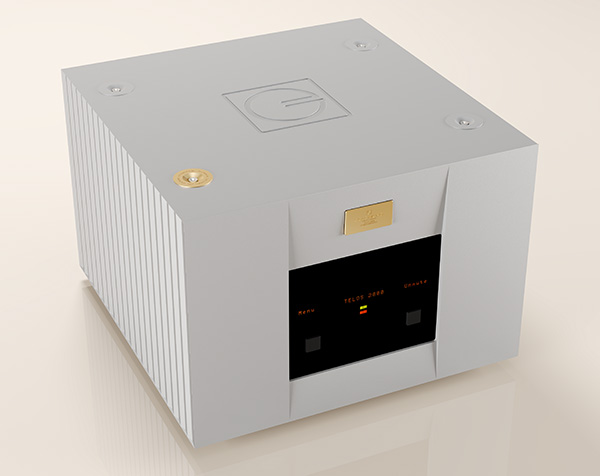 The Telos 2800
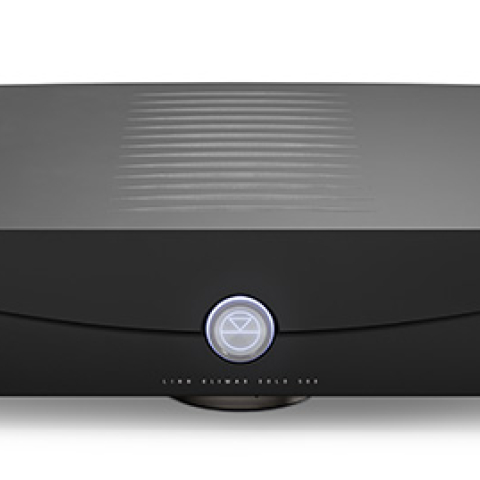
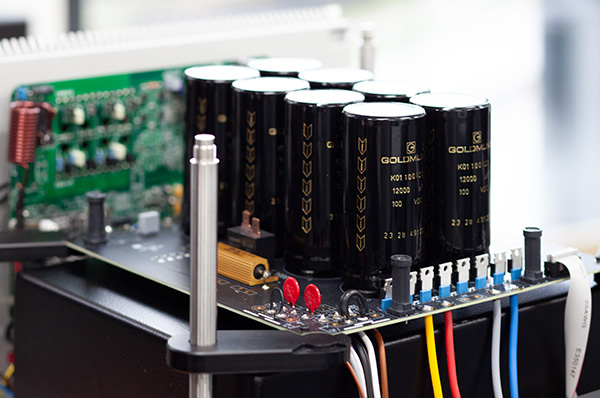
A pair of Goldmund Telos 2800 amplifiers, which I have been listening to for several weeks, costs $290,000. What is most remarkable about that is that it is exactly in the middle of the Goldmund monoblock line, which was recently upgraded: The flagship 8800 costs a stunning $790,000/pair. The 8800 is rated at 1400W into an 8 ohm load. The Telos 2800 is the successor to the Telos 2500 NextGen. The biggest change with this new generation—the 2800 and the other amplifiers—is the power supply, which "has been optimized for greater efficiency, increased power output, and significantly larger energy reserves." The specifications say that each 2800 monoblock has 109,600µF of capacitance, which is robust though not the highest in the industry. The power supply enhancement "ensures smooth transient response between high and low sonic levels resulting in improved dynamic range. As a result, the amplifier can handle rapid increases and decreases in volume with precision, without risk of saturation. This eliminates unwanted distortion and ensures that the amplifier faithfully reproduces the music with absolute clarity and control, preserving the purity of the original sound."
Some of the adjectives in that quote—faithfulness, clarity, control—remind me again of the Apollonian–Dionysian divide, coming down firmly on the Apollonian side.
 The 2800 operates in class-AB. Setting aside various "sliding bias" approaches, class-AB circuits are characterized by a bias current that determines the power range over which the amplifier remains in class-A. Goldmund wouldn't share that number, instead pointing to the distortion specifications: "What we guarantee is minimal [total harmonic] and [intermodulation] distortion, regardless of the speaker's power amplitude." Distortion, then—harmonic and intermod—is expected to remain low at all output powers up to clipping. Goldmund specifies unloaded THD+N as less than 0.05%, 20Hz–20kHz at 30V output and unloaded intermodulation distortion (SMPTE) also at 0.05%. Values into finite loads are not specified. I look forward to JA's measurements.
At a time when many manufacturers are selling vibration-isolation devices to be used with their products, Goldmund employs a "mechanical grounding" concept, which traces back to the Studio turntable from the 1970s. If I understand it—and it seems simple enough—mechanical grounding means ensuring strong mechanical coupling with the ground (the earth) which greatly increases the amplifier's effective mass so that the amplitude of vibrations is much diminished. Such an approach works best (this is me commenting, not Goldmund) when a product is placed on solid ground—not, for example, on a vibrating suspended wood floor, because mechanical grounding means vibrations can flow both ways.
Admirably, Goldmund's sonic objective is no sound, "the epitome of absolute transparency. This means that our sound systems' objective is to not introduce any artificial coloration, noise, or distortion to the audio signal. They do not amplify or subdue certain frequencies to create a warmer or brighter sound, nor do they mask imperfections with artificial enhancements. Instead, they act as a perfectly neutral medium, faithfully reproducing every nuance, texture, and detail exactly as it was captured in the original recording. This is achieved via effective thermal management and near-zero levels of noise, vibration, and harmonic and intermodulation distortion, and an extremely wide dynamic range." This is what I would hope for from a pair of amplifiers at this level and price. Perfection itself is an Apollonian concept.
The 2800 operates in class-AB. Setting aside various "sliding bias" approaches, class-AB circuits are characterized by a bias current that determines the power range over which the amplifier remains in class-A. Goldmund wouldn't share that number, instead pointing to the distortion specifications: "What we guarantee is minimal [total harmonic] and [intermodulation] distortion, regardless of the speaker's power amplitude." Distortion, then—harmonic and intermod—is expected to remain low at all output powers up to clipping. Goldmund specifies unloaded THD+N as less than 0.05%, 20Hz–20kHz at 30V output and unloaded intermodulation distortion (SMPTE) also at 0.05%. Values into finite loads are not specified. I look forward to JA's measurements.
At a time when many manufacturers are selling vibration-isolation devices to be used with their products, Goldmund employs a "mechanical grounding" concept, which traces back to the Studio turntable from the 1970s. If I understand it—and it seems simple enough—mechanical grounding means ensuring strong mechanical coupling with the ground (the earth) which greatly increases the amplifier's effective mass so that the amplitude of vibrations is much diminished. Such an approach works best (this is me commenting, not Goldmund) when a product is placed on solid ground—not, for example, on a vibrating suspended wood floor, because mechanical grounding means vibrations can flow both ways.
Admirably, Goldmund's sonic objective is no sound, "the epitome of absolute transparency. This means that our sound systems' objective is to not introduce any artificial coloration, noise, or distortion to the audio signal. They do not amplify or subdue certain frequencies to create a warmer or brighter sound, nor do they mask imperfections with artificial enhancements. Instead, they act as a perfectly neutral medium, faithfully reproducing every nuance, texture, and detail exactly as it was captured in the original recording. This is achieved via effective thermal management and near-zero levels of noise, vibration, and harmonic and intermodulation distortion, and an extremely wide dynamic range." This is what I would hope for from a pair of amplifiers at this level and price. Perfection itself is an Apollonian concept.
 In use
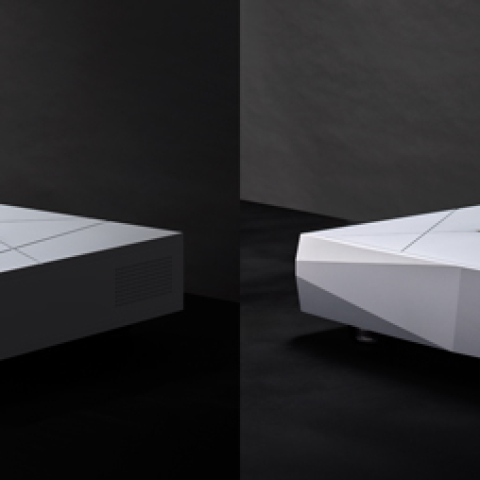
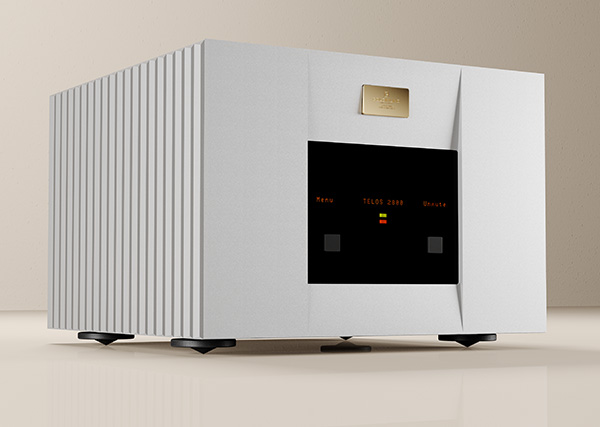
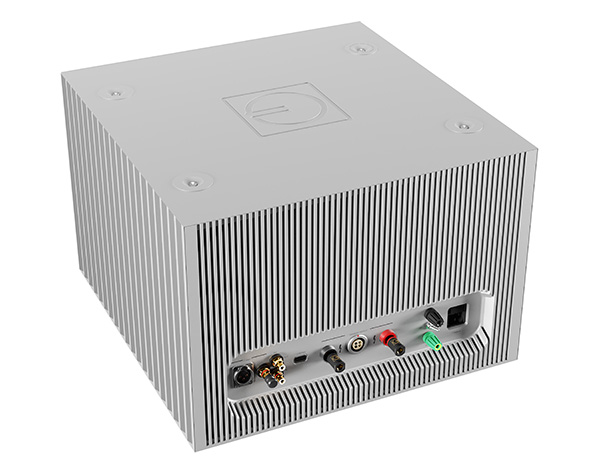
The Telos 2800 is notable for its heft and solidity: When I learned that the serial number was on the bottom, meaning I'd have to tilt them far enough to read a number underneath, I became worried for my health (footnote 3). Though they're less tall than they are wide and deep, on a perfectly sized amp stand they seem almost cubic. It's probably not the first time I've written this about a monoblock, but their angularity and edifice-like mass make me think of the monolith in 2001: A Space Odyssey. (What could be more Apollonian?) The centimeter-thick aluminum walls seem dead, resonance-free. Assuming proper grounding, those walls will also shield EMI. Immediately noticeable upon hooking up the amplifier is a heatsink that covers the rear of the chassis except for a narrow panel where connections are made; that arrangement makes connecting spades slightly tricky, but it's manageable. Together with the class-AB operation, the heatsink configuration worked well at dissipating heat: At rest or in operation, the amplifiers' tops remained cool—so cool that I left records on top without concern. Except for one region, which got a bit warm, even the back-panel heatsink remained cool to the touch.
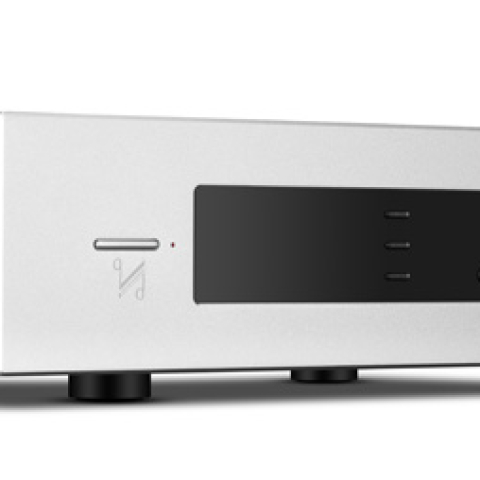
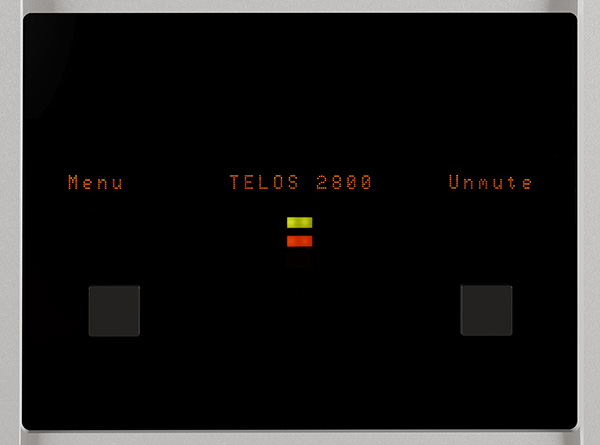
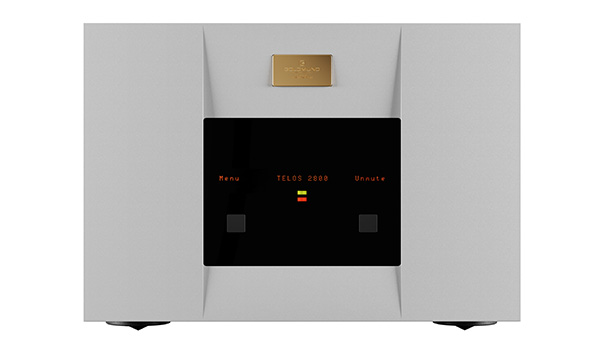
The most obvious feature of the front panel is a simple display panel featuring pointilistic orange text and a pair of rectangles, one green, one orange. The brightness of the panel is adjustable from 100% (which is not too bright) down to 20%; it cannot be turned off completely, which is fine. I like to see some indication that a product is on, when it's on.
To start up a Telos 2800, you simultaneously hold down two square, shallow buttons. The buttons are black, against a black background: They are difficult to see in dim light. That's okay because, as the 2800 runs very cool, and seems economical in energy use, you can leave it on all the time. A simple menu lets you choose the input and adjust the gain level for each input in 3dB steps, from –9dB to 9dB. You can also mute the output.
The most surprising feature of the Telos 2800 is that one of those input choices is digital. There's an S/PDIF input and output via RCA on the rear panel. Goldmund believes in keeping a signal digital as long as possible. Here's an explanation in Goldmund's own words: "Our preamplifiers feature configurable digital outputs that can feed amplifiers with digital inputs. Since an S/PDIF signal carries two channels, one digital cable can connect from the processor to one amplifier, and the amplifier's digital output can daisy-chain the signal to the second amplifier. This design minimizes cabling, maintains clock accuracy, and avoids additional digital-to-analog conversions."
 Listening
What's Nietzsche got to do with the price of beans or monoblock amplifiers? The Apollonian tendency is characterized by order, individuation, beauty, reason, restraint. I've read that Nietzsche considered all music Dionysian, but that seems wrong to me: Wasn't Apollo the god of music after all? Mozart, Haydn, early Beethoven are characterized by order and restraint. To me that's pure Apollo. (Later Beethoven, it seems to me, is about this very dichotomy, seeking its resolution, though Nietzsche himself found "Ode to Joy" the apotheosis of the Dionysian impulse; footnote 4.) Nietzsche sought a rebalancing, but the Telos 2800 mono amplifiers are, to me, pure Apollo: Authority. Control. Order. Restraint. To my mind's eye and ear, there's something godlike about the Apollonian, a pure strength, a crystalline imperviousness. Diamond. Granite. Mozart sounds superb through these amplifiers—but don't mistake me as saying that these amplifiers are only good with Mozart or Haydn, or even classical music. (In fact, most Mozart and Haydn fails to take full advantage of these amps' formidable bass.) The Telos amplifiers present every type of music with that same sense of order and control—and restraint—seemingly carving the music from solid, transparent crystal. Setting aside Goldmund's commitment to transparency, these amplifiers do more than render music honestly and accurately. They elevate it, solidify it, render it in quartz. Maybe that is transparency, and I've just never heard it that way before. I'm reminded of Herb Reichert's notion of different flavors of transparency. This is transparency that sharpens and solidifies while maintaining basic character.
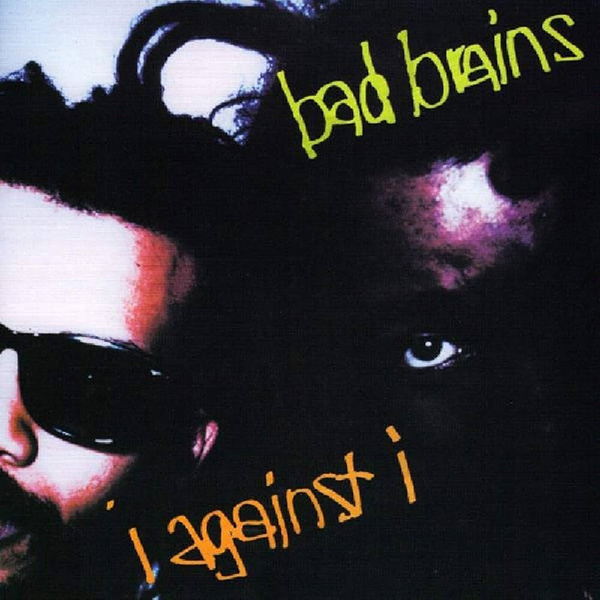 As a test, I listened to I Against I from Bad Brains, an early vinyl reissue of SST 065. (The original I Against I was mastered by Bob Ludwig.) That crystalline quality, the full bass, and the sense of authority—of confidence—plus the articulate playing of the musicians renders this wonderful mess more accessible than it is with less accomplished amplification. An Apollonian system can render Dionysian music just fine.
Certain pop singers maintain that it's all about that bass. Female anatomy aside, this is where restraint—a word I've used more than once—comes in. The bass delivered by this system, with the 2800s in command, is measured, with a sense of restrained power. If you attend the symphony often and have good seats, you will know exactly what I mean.
There was a time when the pursuit of power required a tradeoff: Speed and authority did not go hand in hand. Often, they still don't. But the Telos 2800 strikes me as fast—very fast—in two respects: It never slows the music pace (footnote 5) and it renders transients absolutely crisp.
Sonic memory is notoriously poor, yet these are the quietest amplifiers I recall hearing in my system. It's fascinating how lowering the noisefloor (if that is what I'm not hearing) even beyond levels that should already be inaudible can make music sound better.
But it can. What's more, the Telos 2800 possesses the rare quality of making loud music seem less loud; in big music, you get all the advantages of extra volume—scale, authority, the sense of awe—without the irritation of loud.
If you've read a few of my reviews of high-end electronics, you know that one aspect of sound I'm sensitive to is an electronicky character that can get in the way of realism, especially with well-recorded acoustic music. It's one of the key ways you can tell you're listening to recorded music—not live. That character is often baked into the recording in the studio—but how often? Throughout the review period, I found myself noticing the naturalness—the absence of any electronic character—in recordings unfamiliar and familiar, recordings I assumed had it baked in. In this respect, too, the Goldmund Telos 2800 was the best I've experienced.
As a test, I listened to I Against I from Bad Brains, an early vinyl reissue of SST 065. (The original I Against I was mastered by Bob Ludwig.) That crystalline quality, the full bass, and the sense of authority—of confidence—plus the articulate playing of the musicians renders this wonderful mess more accessible than it is with less accomplished amplification. An Apollonian system can render Dionysian music just fine.
Certain pop singers maintain that it's all about that bass. Female anatomy aside, this is where restraint—a word I've used more than once—comes in. The bass delivered by this system, with the 2800s in command, is measured, with a sense of restrained power. If you attend the symphony often and have good seats, you will know exactly what I mean.
There was a time when the pursuit of power required a tradeoff: Speed and authority did not go hand in hand. Often, they still don't. But the Telos 2800 strikes me as fast—very fast—in two respects: It never slows the music pace (footnote 5) and it renders transients absolutely crisp.
Sonic memory is notoriously poor, yet these are the quietest amplifiers I recall hearing in my system. It's fascinating how lowering the noisefloor (if that is what I'm not hearing) even beyond levels that should already be inaudible can make music sound better.
But it can. What's more, the Telos 2800 possesses the rare quality of making loud music seem less loud; in big music, you get all the advantages of extra volume—scale, authority, the sense of awe—without the irritation of loud.
If you've read a few of my reviews of high-end electronics, you know that one aspect of sound I'm sensitive to is an electronicky character that can get in the way of realism, especially with well-recorded acoustic music. It's one of the key ways you can tell you're listening to recorded music—not live. That character is often baked into the recording in the studio—but how often? Throughout the review period, I found myself noticing the naturalness—the absence of any electronic character—in recordings unfamiliar and familiar, recordings I assumed had it baked in. In this respect, too, the Goldmund Telos 2800 was the best I've experienced.
 A gradual attachment
Whether you are a reviewer or a hi-fi consumer—or both—it is usual to have your interest in music renewed when you add something new to your system. It's a combination of real sonic improvement and the endorphin surge we get from new things. Part of that feeling—presumably the endorphin-induced part—fades over time, while the real improvement continues to give us pleasure. With these Goldmund amplifiers, I had an experience that was interestingly different. When I introduced them to the system, I heard changes, and I heard excellent sound, but I didn't get that tingle. Then, over time—weeks—an addiction developed. More each day, I found I didn't want to turn the music off. I'd leave it on in the background, playing at low or moderate levels. Even at background levels, the music offered ... peace? Solace? Relief from tension? Perhaps this is why I left the system on the night before that morning "Ode to Joy" experience. (See footnote 4.) I cannot rule out the possibility that this change involved another kind of biology—some hormone level rising or falling slowly over time—but the attraction to my system and whatever music it was playing seemed real enough, and it remains. Even if the proximate cause was not the amplifiers, they were part of a system that facilitated this addiction.
A few readers will dismiss this review and product outright because of the very formidable price. In a way, I get it: I just renovated a house for not much more, adding a whole floor. I don't share it, though, because I know that although I can't afford hi-fi components at this price, someone can, and they judge value differently than I do; for most of the population, what I routinely spend for improved music reproduction is ludicrous. Everyone has a limit, and it's set partly by our means.
There are also people out there—hi-fi aficionados—who think products like these Telos amplifiers are pretty things for the rich, not meant for serious audiophiles. They're wrong. Value is a question of values, but regardless of which side you come down on, the quality is here.
Footnote 1: Short version: J. Gordon Holt had criticized the SP9—which was less expensive than the SP11—but in a blind comparison of the two preamps, JGH picked the wrong amplifier 100% of the time. JA also took the test and got it right 50% of the time, as predicted by chance if they sounded the same.
Footnote 2: JA's review suggests that the Mimesis 8 sounds best with ... Apollonian music!
Footnote 3: Fortunately, the serial number was also on the flight case the amps arrived in—a very nice one—so I didn't have to lift them after all.
Footnote 4: One day during the audition period, while my wife was away, I woke early. The previous night, rather than turn the system off, I'd turned the volume down and left it streaming, utilizing the "radio" feature in Innuos Sense. When I emerged from my bedroom that morning, the "Ode to Joy" was at its peak. Even playing at such a low level, the music was joyous, intense. That was a good day.
Later in his life, Nietzsche's views evolved. He became critical of German culture's tendency to elevate sentimentality—in a sense this was a rejection of the Dionysian, or at least a redefinition. But he always celebrated Beethoven for breaking classicism.
Footnote 5: Objectivist critics will call this comment nonsense. Careful listeners will know exactly what I mean.
Goldmund was born in France, out of Architectures et Physiques Appliquées, the company that invented the first tangential-tracking tonearm; that arm became Goldmund's first product, the T3. Michel Reverchon, a hi-fi enthusiast and IBM employee, got involved in marketing the T3 through Mark Levinson. In 1980, Reverchon acquired Goldmund and relocated it to Switzerland, "to benefit from the country's local precision craftsmanship." (That and subsequent quotes are from an unnamed but obviously knowledgeable Goldmund source, supplied via Randy Bingham of Rhythm Distribution.) In Switzerland, Reverchon "surrounded himself with experts in acoustics, electronics, and mechanics. They developed legendary products such as the Reference turntable with turntable specialist Pierre Lurné and the Apologue." The Apologue is the classic multibox Goldmund loudspeaker, which was "designed by Claudio Rotta Loria with electroacoustic guidance from Christian Yvon." Goldmund still makes and sells Apologue speakers, no doubt much revised.
The Greek word télos means "end, purpose, goal." To Aristotle, it was the final cause and ultimate reason a thing exists or is done. The word is interesting in the way it combines origins and outcomes: télos is both goal and cause. It suggests a destiny to be fulfilled, standing at once for the destiny and its fulfillment. When télos is capitalized and loses its accent, it gains two Goldmund-related meanings. Telos is a core Goldmund amplifier technology and the line of Goldmund amplifiers that utilize it.
The Telos 2800A pair of Goldmund Telos 2800 amplifiers, which I have been listening to for several weeks, costs $290,000. What is most remarkable about that is that it is exactly in the middle of the Goldmund monoblock line, which was recently upgraded: The flagship 8800 costs a stunning $790,000/pair. The 8800 is rated at 1400W into an 8 ohm load. The Telos 2800 is the successor to the Telos 2500 NextGen. The biggest change with this new generation—the 2800 and the other amplifiers—is the power supply, which "has been optimized for greater efficiency, increased power output, and significantly larger energy reserves." The specifications say that each 2800 monoblock has 109,600µF of capacitance, which is robust though not the highest in the industry. The power supply enhancement "ensures smooth transient response between high and low sonic levels resulting in improved dynamic range. As a result, the amplifier can handle rapid increases and decreases in volume with precision, without risk of saturation. This eliminates unwanted distortion and ensures that the amplifier faithfully reproduces the music with absolute clarity and control, preserving the purity of the original sound."
The 2800 operates in class-AB. Setting aside various "sliding bias" approaches, class-AB circuits are characterized by a bias current that determines the power range over which the amplifier remains in class-A. Goldmund wouldn't share that number, instead pointing to the distortion specifications: "What we guarantee is minimal [total harmonic] and [intermodulation] distortion, regardless of the speaker's power amplitude." Distortion, then—harmonic and intermod—is expected to remain low at all output powers up to clipping. Goldmund specifies unloaded THD+N as less than 0.05%, 20Hz–20kHz at 30V output and unloaded intermodulation distortion (SMPTE) also at 0.05%. Values into finite loads are not specified. I look forward to JA's measurements.
At a time when many manufacturers are selling vibration-isolation devices to be used with their products, Goldmund employs a "mechanical grounding" concept, which traces back to the Studio turntable from the 1970s. If I understand it—and it seems simple enough—mechanical grounding means ensuring strong mechanical coupling with the ground (the earth) which greatly increases the amplifier's effective mass so that the amplitude of vibrations is much diminished. Such an approach works best (this is me commenting, not Goldmund) when a product is placed on solid ground—not, for example, on a vibrating suspended wood floor, because mechanical grounding means vibrations can flow both ways.
In useThe Telos 2800 is notable for its heft and solidity: When I learned that the serial number was on the bottom, meaning I'd have to tilt them far enough to read a number underneath, I became worried for my health (footnote 3). Though they're less tall than they are wide and deep, on a perfectly sized amp stand they seem almost cubic. It's probably not the first time I've written this about a monoblock, but their angularity and edifice-like mass make me think of the monolith in 2001: A Space Odyssey. (What could be more Apollonian?) The centimeter-thick aluminum walls seem dead, resonance-free. Assuming proper grounding, those walls will also shield EMI. Immediately noticeable upon hooking up the amplifier is a heatsink that covers the rear of the chassis except for a narrow panel where connections are made; that arrangement makes connecting spades slightly tricky, but it's manageable. Together with the class-AB operation, the heatsink configuration worked well at dissipating heat: At rest or in operation, the amplifiers' tops remained cool—so cool that I left records on top without concern. Except for one region, which got a bit warm, even the back-panel heatsink remained cool to the touch.
ListeningWhat's Nietzsche got to do with the price of beans or monoblock amplifiers? The Apollonian tendency is characterized by order, individuation, beauty, reason, restraint. I've read that Nietzsche considered all music Dionysian, but that seems wrong to me: Wasn't Apollo the god of music after all? Mozart, Haydn, early Beethoven are characterized by order and restraint. To me that's pure Apollo. (Later Beethoven, it seems to me, is about this very dichotomy, seeking its resolution, though Nietzsche himself found "Ode to Joy" the apotheosis of the Dionysian impulse; footnote 4.) Nietzsche sought a rebalancing, but the Telos 2800 mono amplifiers are, to me, pure Apollo: Authority. Control. Order. Restraint. To my mind's eye and ear, there's something godlike about the Apollonian, a pure strength, a crystalline imperviousness. Diamond. Granite. Mozart sounds superb through these amplifiers—but don't mistake me as saying that these amplifiers are only good with Mozart or Haydn, or even classical music. (In fact, most Mozart and Haydn fails to take full advantage of these amps' formidable bass.) The Telos amplifiers present every type of music with that same sense of order and control—and restraint—seemingly carving the music from solid, transparent crystal. Setting aside Goldmund's commitment to transparency, these amplifiers do more than render music honestly and accurately. They elevate it, solidify it, render it in quartz. Maybe that is transparency, and I've just never heard it that way before. I'm reminded of Herb Reichert's notion of different flavors of transparency. This is transparency that sharpens and solidifies while maintaining basic character.
As a test, I listened to I Against I from Bad Brains, an early vinyl reissue of SST 065. (The original I Against I was mastered by Bob Ludwig.) That crystalline quality, the full bass, and the sense of authority—of confidence—plus the articulate playing of the musicians renders this wonderful mess more accessible than it is with less accomplished amplification. An Apollonian system can render Dionysian music just fine.
Certain pop singers maintain that it's all about that bass. Female anatomy aside, this is where restraint—a word I've used more than once—comes in. The bass delivered by this system, with the 2800s in command, is measured, with a sense of restrained power. If you attend the symphony often and have good seats, you will know exactly what I mean.
There was a time when the pursuit of power required a tradeoff: Speed and authority did not go hand in hand. Often, they still don't. But the Telos 2800 strikes me as fast—very fast—in two respects: It never slows the music pace (footnote 5) and it renders transients absolutely crisp.
A gradual attachmentWhether you are a reviewer or a hi-fi consumer—or both—it is usual to have your interest in music renewed when you add something new to your system. It's a combination of real sonic improvement and the endorphin surge we get from new things. Part of that feeling—presumably the endorphin-induced part—fades over time, while the real improvement continues to give us pleasure. With these Goldmund amplifiers, I had an experience that was interestingly different. When I introduced them to the system, I heard changes, and I heard excellent sound, but I didn't get that tingle. Then, over time—weeks—an addiction developed. More each day, I found I didn't want to turn the music off. I'd leave it on in the background, playing at low or moderate levels. Even at background levels, the music offered ... peace? Solace? Relief from tension? Perhaps this is why I left the system on the night before that morning "Ode to Joy" experience. (See footnote 4.) I cannot rule out the possibility that this change involved another kind of biology—some hormone level rising or falling slowly over time—but the attraction to my system and whatever music it was playing seemed real enough, and it remains. Even if the proximate cause was not the amplifiers, they were part of a system that facilitated this addiction.
Footnote 1: Short version: J. Gordon Holt had criticized the SP9—which was less expensive than the SP11—but in a blind comparison of the two preamps, JGH picked the wrong amplifier 100% of the time. JA also took the test and got it right 50% of the time, as predicted by chance if they sounded the same.