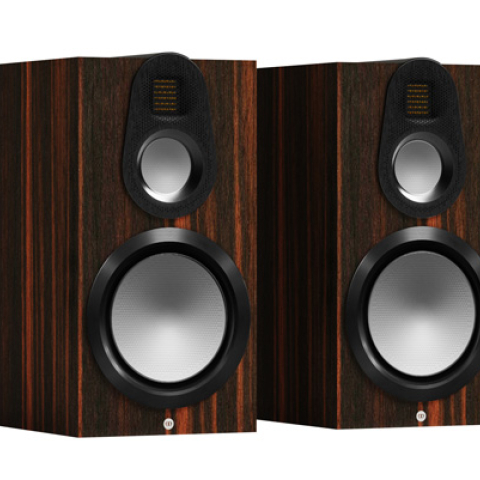
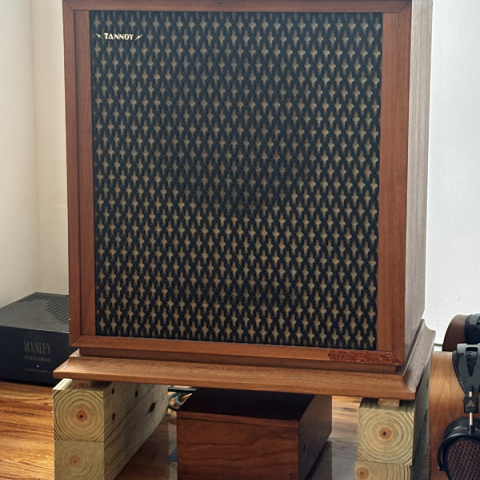
 That was through the super-transparent Voxativs. Now seemed like a good time to try the Fezz through my forever reference Falcon Gold Badges. Every time I go back to these speakers, it feels more like a marriage, with decades of memories to use as comparison fodder.
I turned twenty-one in prison doing life without parole
That was through the super-transparent Voxativs. Now seemed like a good time to try the Fezz through my forever reference Falcon Gold Badges. Every time I go back to these speakers, it feels more like a marriage, with decades of memories to use as comparison fodder.
I turned twenty-one in prison doing life without paroleYou can blame it on the sound quality of the Fezz Equinox or the persuasiveness of Alex Halberstadt—take your pick—but during this review period I climbed off my high horse and accepted Merle Haggard as my three-in-the-morning savior. Alex helped me recognize Merle as a singer-songwriter at the Hank Williams–Johnny Cash level of divinity. When I decided to buy a Merle LP, I went on Qobuz to see which album I wanted to start with. Naturally, I chose the one with the most songs I already knew and liked, Mama Tried/Pride in What I Am (16/44.1 FLAC Capital Nashville/Qobuz). Via streaming, I expected that remastered Merle would not show all the biting, edgy darkness of the LP (Capital ST 2972), but the Merle sound I heard from Qobuz was smooth and deliciously balanced. Via the Fezz, "streamed from my computer" Merle Haggard was livelier, more engaging, and more transparent than I imagined it ever could be.
 Through Elekit 300Bs
The more components I audition, the more I recognize how much system-based variables affect my perceptions. For example, when I switched from the First Watt SIT-4 to the Elekit TU-8900, that extra plumpness I observed with the Spring 3 went away. Now, the Equinox felt meatier and fuller-toned than the HoloAudio DAC. Go figure. I'm switching things around so much because I'm trying to find those Fezz-DAC performance characteristics that might float above the variables and transfer to your system. The Fezz trait that has stood out with every combination I tried was its fit, well-toned clarity, which hangs recorded sounds on a distinctly architectural matrix—a lot like the dCS Lina DAC. The chief difference was that the Fezz Equinox presented recorded data on a starker, simpler matrix than the dCS Ring DAC, which puts more vital microdetailed energy in the empty spaces.
 To examine this energy-in-empty-spaces phenomenon more closely, I played one of Kavichandran Alexander's supreme accomplishments, from 1992: his recording Kalyani on his record label Water Lily Acoustics (WLA-ES-19-CD). Kalyani features two examples of Karnãtak music from South India. In the accompanying notes, Kavi describes these passionately executed compositions as "a micro-tonal, modal art form built upon a highly developed theoretical foundation, with melody and rhythm as its two vectors. Stemming primarily from a vocal tradition rooted in mystical poetry and consisting of a vast body of art songs of a religious nature known as krti, Kalyani embodies a purely South Indian ethos." Regular readers know how much I admire Kavi's ability to make analog recordings with pinnacle-level sound quality using custom-built microphones and electronics by the late Tim de Paravicini including a custom-built, 1", two-track recorder.
Spun on Teac's VRDS-701T CD transport and processed inside the Fezz Equinox, this was the sound and art moment that showed me what an extraordinary value this processor brings to home audio. It costs $2995, and it played people's music from India, California, and New York like a five-figure processor.
Playing Karnãtak music, the level and intensity of vital energy was completely as it should be: mesmeric. With electrifying, high-speed momentum that through the Equinox sounded as finely and expressively rendered as I've ever heard on a dynamic—not electrostatic—loudspeaker.
To examine this energy-in-empty-spaces phenomenon more closely, I played one of Kavichandran Alexander's supreme accomplishments, from 1992: his recording Kalyani on his record label Water Lily Acoustics (WLA-ES-19-CD). Kalyani features two examples of Karnãtak music from South India. In the accompanying notes, Kavi describes these passionately executed compositions as "a micro-tonal, modal art form built upon a highly developed theoretical foundation, with melody and rhythm as its two vectors. Stemming primarily from a vocal tradition rooted in mystical poetry and consisting of a vast body of art songs of a religious nature known as krti, Kalyani embodies a purely South Indian ethos." Regular readers know how much I admire Kavi's ability to make analog recordings with pinnacle-level sound quality using custom-built microphones and electronics by the late Tim de Paravicini including a custom-built, 1", two-track recorder.
Spun on Teac's VRDS-701T CD transport and processed inside the Fezz Equinox, this was the sound and art moment that showed me what an extraordinary value this processor brings to home audio. It costs $2995, and it played people's music from India, California, and New York like a five-figure processor.
Playing Karnãtak music, the level and intensity of vital energy was completely as it should be: mesmeric. With electrifying, high-speed momentum that through the Equinox sounded as finely and expressively rendered as I've ever heard on a dynamic—not electrostatic—loudspeaker.
 Things are changing
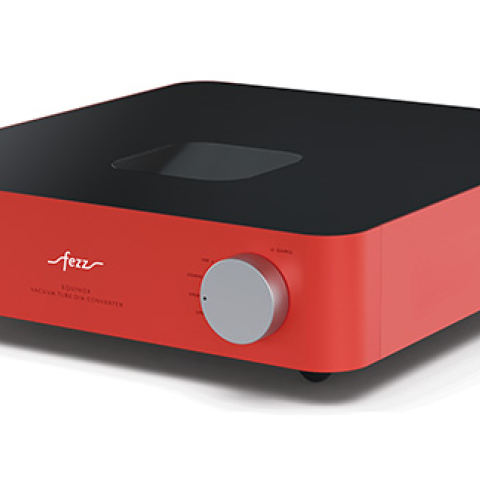
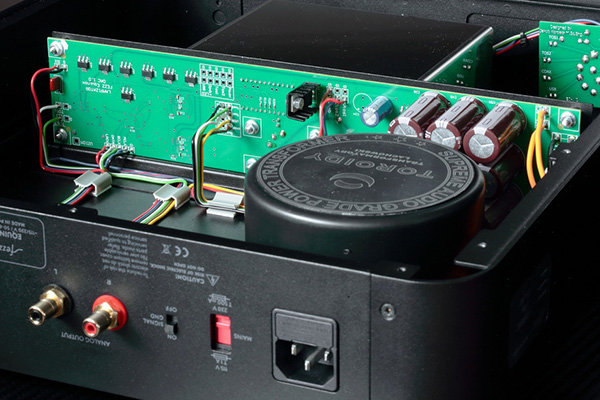
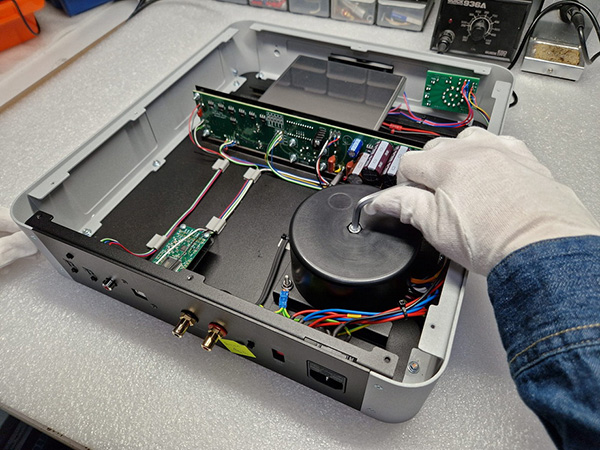
Fezz Audio's Equinox DAC, which was designed by Lampizator's Łukasz Fikus, is the kind of forward-thinking product I am beginning to see as digital audio's next wave. It's a price-conscious reimagining of what an audiophile D/A converter needs to be. It is built to last and hold its value. It is simple to use, fashionable looking, and it delivers 80% (or more) of the sound quality you'd get with a DAC with a five-figure price tag. That's not bad for an amplifier company's first DAC.