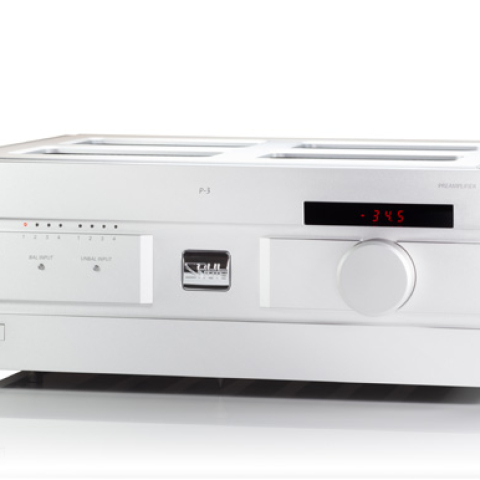
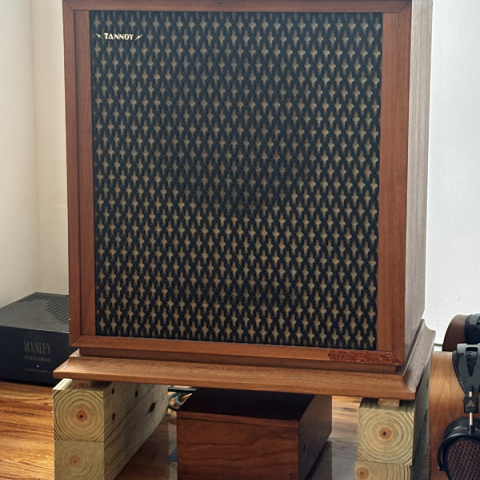
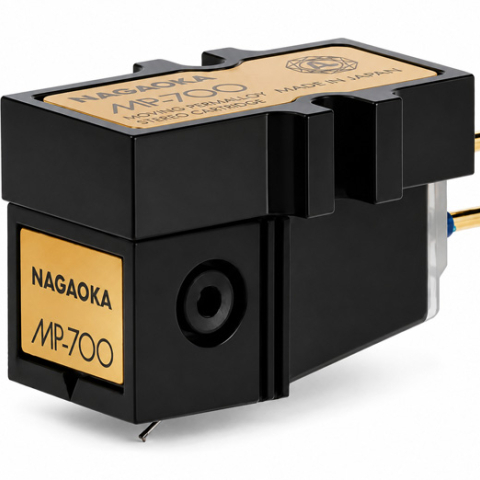
McIntosh, which is based in my home state of New York, has long been in my audio life. It was the "house sound" where I grew up. My parents' stereo system was powered by a pair of MC75 tubed amplifiers (fed by a Marantz 7B preamp, driving Bozak Concert Grand speakers). In my father's recording studio (footnote 1), McIntosh amplifiers powered the monitors (most likely MC60s), and stereo records were cut using modified MI-200 power amps (footnote 2). Today, my office system is built around an early 2000s MA6500 solid state integrated amp.
In this decade, Stereophile has reviewed a few McIntosh components. Larry Greenhill reviewed the MAC7200 receiver in December 2020; it is still in McIntosh's product line. Sasha Matson reviewed the C12000 preamplifier in October 2023 and the ML1 Mk II loudspeaker in June 2024. And, this past June, Alex Halberstadt time-traveled back to the 1960s and spent some time with a vintage MC225 power amplifier.
The MAC7200 receiver Greenhill reviewed included the DA1 digital audio module; that was the last time Stereophile reviewed a McIntosh DAC. So when the company announced its new "cast"-streaming DAC, the DS200, it was a convergence of my streaming-centric audio pursuits and my interest in McIntosh's present-day offerings.
"Casting": the new way to stream
The ground is moving—again—under streaming. The new emphasis is on "connecting" and "casting" direct from streaming apps running on smartphones/tablets and away from device-specific server-streamer apps. This idea is not exactly new: Spotify Connect and Tidal Connect have been around for at least a couple of years. But movement is clearly in the direction of casting music from the Qobuz, Tidal, and Spotify apps directly to a streaming device via one or the other of the "Connect" services. The (somewhat) recent rollout of Qobuz Connect is great news for audiophiles. Qobuz joins Tidal (footnote 3) in offering the ability to use the streamers' own apps on your phone, tablet, or computer to search, find, and play high-resolution music. Crucially, the streaming device then interfaces directly to the streaming service's servers; no music flow from the device running the streaming app. (After this issue went to press, McIntosh announced that the RS-200 would support Qobuz Connect and Tidal Max.) Now there is no need for a manufacturer of an audiophile-focused streaming device to develop a proprietary app that integrates playback from any major streaming platforms. What about the local networked music libraries that those proprietary apps also search and play? The minority of audiophiles who both stream and maintain digital libraries can subscribe to Roon, JPlay, Audirvana, or one of the other services that serve both needs.
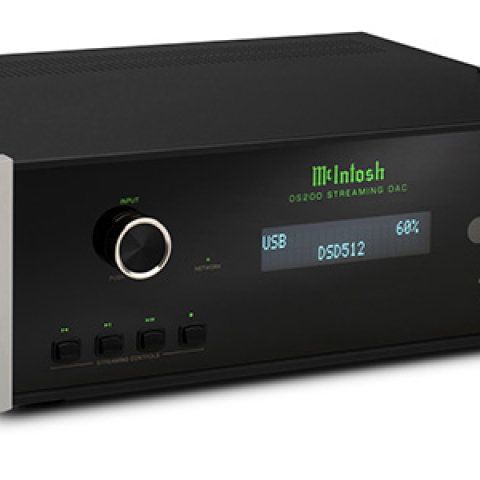
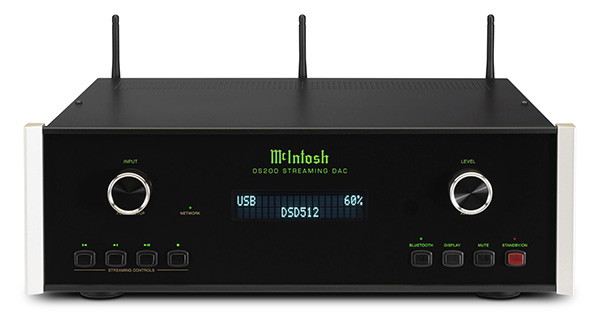
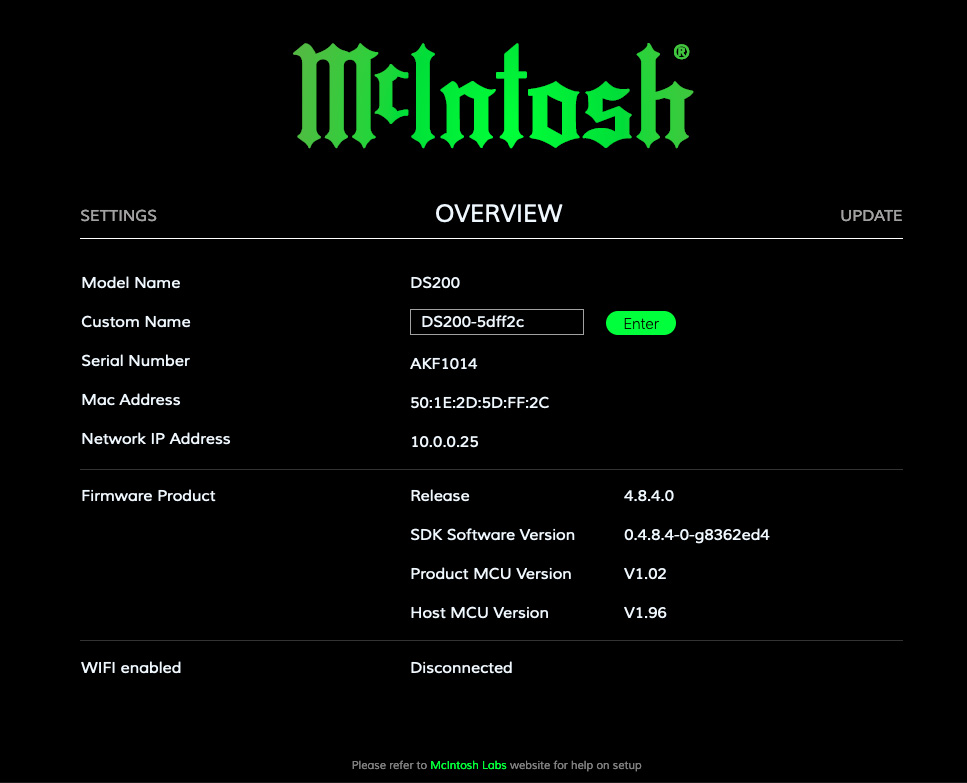
The DS200 is born to this new world. McIntosh doesn't provide an app for it. At first, you set parameters via menu trees, pushbuttons, and knobs on the front panel. Once the DS200 is on your network, you can set some parameters via a webpage accessible at an IP address. There is a primitive (by 2025 standards) two-row "Alphanumeric Fluorescent Display" in McIntosh green in the middle of the panel, providing rudimentary information for parameter setting and, during regular use, telling you which input is selected. I'll have more to say later about the information the display does and doesn't provide.
 The McIntosh M.O.: features, flexibility, and the look
In keeping with McIntosh's modus operandi dating from at least the 1960s, the DS200 features a large chassis and a black-glass front panel with green backlighting of the brand and function descriptors. The pushbuttons and knobs are of a style very similar to my circa-2000 integrated amplifier. Modern McIntosh gear (aside from nostalgic products like the MC275 tubed power amp) features an indirect control interface—gone are potentiometers and switches wired directly into the audio circuit—and wireless remote controls. Included in the box with the DS200 is a thin, ergonomic plastic remote. The battery cover is magnetic, so there are no fussy plastic tabs to break off. Yeah, it's plastic, but its fit and finish suggest it should work well for many years. This (except the plastic part) is true of the DS200 itself: The build quality is super-solid. It feels, to me at least, as permanent as audio components can be. McIntosh is known for keeping models in production for decades, and the company's gear retains decent value in the second-hand market, though this varies depending on the model and component type. The "Connect" apps mentioned above are not the only way(s) of getting music to the DS200. Indeed, its M.O. revolves around its diversity of streaming methods. For Roon users, the DS200 is a Roon Ready streaming DAC. It supports Apple's AirPlay2, Google's Chromecast, and of course Bluetooth—though its Bluetooth is 5.0 (not the current 5.3), which does not support the lossless Bluetooth data transmission available in the aptX Adaptive and LDAC codecs. When I wrote this, Apple's AAC Bluetooth wasn't listed in the Specifications on the McIntosh website, but McIntosh assured me that it is supported.
 The DS200 is a pure streamer-DAC: Consistent with its M.O., there's no storage for digital music data and no place on the back panel to connect a flash drive or SSD.
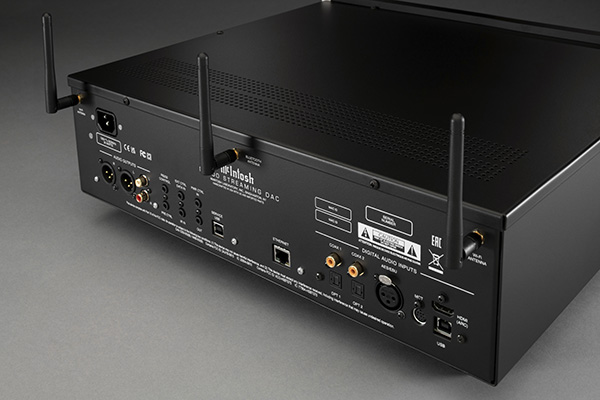
The DS200 user manual is online (footnote 4), so I won't describe the front panel controls and rear-panel connections in detail. Suffice to say, the front panel is intuitive, and the parameter-setting menu tree (accessed by pushing and holding the left-hand button-knob) is easy to use as these things go. Kudos to McIntosh's engineers for using clear, plain English in the menu settings. On the rear panel are facilities for up to four S/PDIF sources (two coaxial and two optical), a USB connection for a computer, HDMI-ARC for a compatible TV, an AES3 digital input, a DIN socket for McIntosh's MCT interface (which sends data from SACD and other HD 5" discs to the DS200 for DAC'ing), and both wired (Ethernet) and wireless (via two of the three supplied antennas; the other is for Bluetooth) networking. Analog outputs are both balanced (XLR) and single-ended (on RCA).
Also notable: The DS200's front panel includes a volume control, described in the manual as "a new precision digitally controlled attenuator system with a tracking accuracy of 0.5dB." The menu tree allows it to be disabled for when the DS200 is used as a pure streamer-DAC. There are also parameters to control the default volume level and output voltage. All-digital users—perhaps the modern majority of serious music consumers—can connect all their digital sources to the DS200 (including an SACD player if it's MCT-compatible), allowing their digital physical media and streaming to all be integrated in one place, to be operated with a simple, old-school wireless remote. Add a power amp and speakers and let the party begin.
The heart of the DAC is an ESS ES9028PRO eight-channel SABRE chip (footnote 5), which remains state-of-the-art nine years after its introduction. That DAC chip, though, is only as good as its implementation; here, McIntosh takes its usual careful approach. "The eight-channel 32-bit digital-to-analog converter is used in a stereo quad balanced mode, assuring the music is reproduced with a wide dynamic range and extremely low distortion," McIntosh said. There's no menu setting to change the DAC's filter type. What you get is what the McIntosh engineers decided was best.
A McIntosh spokesperson who insisted on anonymity said that the DS200 has a "high-end analog output stage [that] delivers ~100dB dynamic range and 0.005% THD, ensuring highly neutral and detailed output."
The DS200 is a pure streamer-DAC: Consistent with its M.O., there's no storage for digital music data and no place on the back panel to connect a flash drive or SSD.
The DS200 user manual is online (footnote 4), so I won't describe the front panel controls and rear-panel connections in detail. Suffice to say, the front panel is intuitive, and the parameter-setting menu tree (accessed by pushing and holding the left-hand button-knob) is easy to use as these things go. Kudos to McIntosh's engineers for using clear, plain English in the menu settings. On the rear panel are facilities for up to four S/PDIF sources (two coaxial and two optical), a USB connection for a computer, HDMI-ARC for a compatible TV, an AES3 digital input, a DIN socket for McIntosh's MCT interface (which sends data from SACD and other HD 5" discs to the DS200 for DAC'ing), and both wired (Ethernet) and wireless (via two of the three supplied antennas; the other is for Bluetooth) networking. Analog outputs are both balanced (XLR) and single-ended (on RCA).
Also notable: The DS200's front panel includes a volume control, described in the manual as "a new precision digitally controlled attenuator system with a tracking accuracy of 0.5dB." The menu tree allows it to be disabled for when the DS200 is used as a pure streamer-DAC. There are also parameters to control the default volume level and output voltage. All-digital users—perhaps the modern majority of serious music consumers—can connect all their digital sources to the DS200 (including an SACD player if it's MCT-compatible), allowing their digital physical media and streaming to all be integrated in one place, to be operated with a simple, old-school wireless remote. Add a power amp and speakers and let the party begin.
The heart of the DAC is an ESS ES9028PRO eight-channel SABRE chip (footnote 5), which remains state-of-the-art nine years after its introduction. That DAC chip, though, is only as good as its implementation; here, McIntosh takes its usual careful approach. "The eight-channel 32-bit digital-to-analog converter is used in a stereo quad balanced mode, assuring the music is reproduced with a wide dynamic range and extremely low distortion," McIntosh said. There's no menu setting to change the DAC's filter type. What you get is what the McIntosh engineers decided was best.
A McIntosh spokesperson who insisted on anonymity said that the DS200 has a "high-end analog output stage [that] delivers ~100dB dynamic range and 0.005% THD, ensuring highly neutral and detailed output."
 Getting set up and playing music
The DS200 arrived double boxed; the packaging weighs more than half as much as the device itself. Inside the inner box, in addition to the DS200, was that remote—it requires a single AAA battery—a hardcopy user manual, a power cord, and the three antennas. Unpacking and setup took all of five minutes. I attached the antennas, but first I plugged it into my hardwired Ethernet network. I then attached the power cord, plugged it in, and mated it to the McIntosh MA6500 integrated amp in my office using a pair of old Monster Cable RCA cables. It then took less than a minute of finger-pecking on my iPhone 15 to get Spotify Connect working and playing. Voilà, music! Lossy, yes, but music. And actually, it didn't sound too bad. The DS200 front panel read "NETWORK" on the display's top line and "Spotify Connect" on the bottom line.
Next, I opened the Roon app on my office computer, which serves as my Roon server or "core." Under Roon's Audio settings, I found "McIntosh DS200" as a Roon Ready option and clicked "Enable." I then selected it as the streaming destination or "Endpoint," at the lower right of the app. Just like that, I was streaming full-resolution (CD-rez and hi-rez PCM) from my music library master drive or from my Qobuz account via Roon. The DS200 display now read "NETWORK" and "Roon Ready."
To emphasize how user-friendly this process was: I had the DS200 unpacked from its shipping box, set up, and streaming either Spotify lossy content, Qobuz lossless HD content via Roon, or lossless content from my music library, in less than 10 minutes. Connecting it to my Wi-Fi network was quick and easy too, thanks to the clear-English instructions in the manual and Apple AirPlay. The DS200 sent a request to join the Wi-Fi network to my iPhone 15, which took a single finger-poke to approve, and it was done.
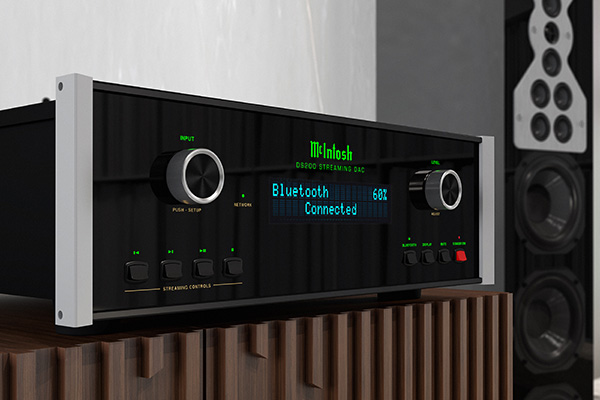 Downsides? The green screen on the front of the DS200 doesn't display useful information like song title or playback resolution. The song title, etc., is of course available via the device you're using, but what about the resolution? Once, the Qobuz app informed me that the resolution of music I was playing was 24/192, but I was using AirPlay 2, which doesn't go that high.
The only surefire way I had to play full-resolution Qobuz—the only way I could be sure—was with Roon, which helpfully displays this information in detail in its Signal Path section. JPlay allowed me to make music, but again there was no way to be sure the displayed bitrate was what the device was actually processing. AirPlay works for sure up to CD resolution. Bluetooth worked great, too, but as previously mentioned, as implemented on the DS200, it establishes a lossy connection. However, Bluetooth remains a convenient way to send music from a phone or tablet to your hi-fi system, and it sounds pretty good.
The sample rate and bit depth is shown for wired sources, such as music played from a transport connected to the DS200's S/PDIF inputs or a computer connected via the USB port—but not when the music is delivered over the internet (wired or not) using, eg, one of the Connect apps. Advice to McIntosh: In your next update, add to the display critical information like the bit depth and sample rate that the DS200 is actually processing regardless of the music source or connection.
Listening with the reference system
Downsides? The green screen on the front of the DS200 doesn't display useful information like song title or playback resolution. The song title, etc., is of course available via the device you're using, but what about the resolution? Once, the Qobuz app informed me that the resolution of music I was playing was 24/192, but I was using AirPlay 2, which doesn't go that high.
The only surefire way I had to play full-resolution Qobuz—the only way I could be sure—was with Roon, which helpfully displays this information in detail in its Signal Path section. JPlay allowed me to make music, but again there was no way to be sure the displayed bitrate was what the device was actually processing. AirPlay works for sure up to CD resolution. Bluetooth worked great, too, but as previously mentioned, as implemented on the DS200, it establishes a lossy connection. However, Bluetooth remains a convenient way to send music from a phone or tablet to your hi-fi system, and it sounds pretty good.
The sample rate and bit depth is shown for wired sources, such as music played from a transport connected to the DS200's S/PDIF inputs or a computer connected via the USB port—but not when the music is delivered over the internet (wired or not) using, eg, one of the Connect apps. Advice to McIntosh: In your next update, add to the display critical information like the bit depth and sample rate that the DS200 is actually processing regardless of the music source or connection.
Listening with the reference system
After a brief shakeout cruise in my office, the DS200 moved upstairs to the reference system, where it stayed for the rest of the time I had it. I connected it to my Benchmark LA4 preamp using XLR balanced cables, DIY by me with Mogami wire. Streaming was by Wi-Fi. I also tried sending CD-resolution audio from the Qobuz app on my iPhone using AirPlay (it worked fine).
I played a few CDs, connecting my Oppo UDP-203 universal disc player using, alternately, both optical and coaxial connections. Everything worked as expected. I noticed right away that the DS200 had a "sound," which is in line with what I believe McIntosh aims for: a bit warm in the upper midrange, not overdone in the lowest octaves. It's a bit "vintage" in that it's not "neutral" or "clinical," and it's pleasing with many types of music, at least through my system. I heard these same qualities from the DS200 no matter what the input source. It will play well with a modern, neutral-leaning amplifier, adding some extra humanity to voices and body to acoustic instruments, though it may not work as well in a system that is already tipped-up bright.
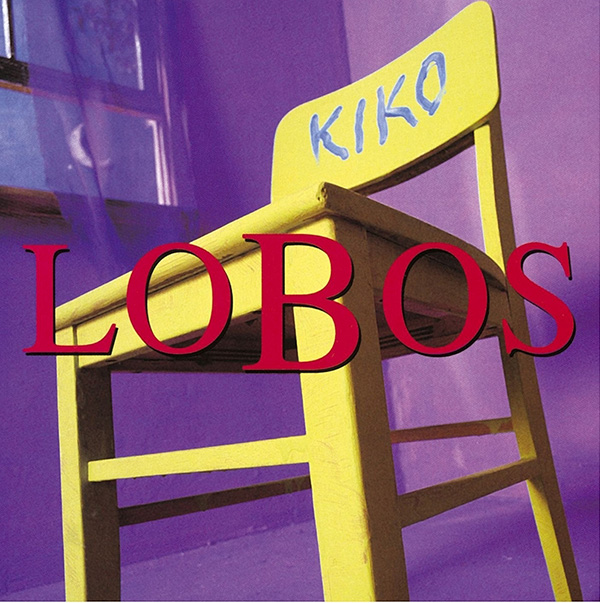 Streaming Qobuz through Roon, I spent some time listening to familiar tracks on my Bass Test (footnote 6) and Imaging Test (footnote 7) playlists. Through the DS200, I heard some sounds emphasized more than I hear with my dCS Bartók APEX streaming DAC. For instance, on Los Lobos' "Kiko and the Lavender Moon," from the album Kiko, which (the track, not the album) is on my Imaging Test playlist, I heard more clanging cowbell ("more cowbell!"), more of the higher-frequency tones of the accordion in the left channel, and less of the deep bass beat. It wasn't a better or worse presentation, just different.
With male vocals, for instance Ronnie Lane's on "April Fool"—from Rough Mix with Pete Townshend, also on my Imaging Test playlist—I heard more breath and nasal tone and less chest resonance. In some cases, this sound quality improved the clarity of lyrics; in other cases it thinned out the voice a bit.
The Bass Test playlist also presented some new sonic perspectives. Yello's "Electrified II" (from Toy) had more click-clack percussiveness to it and less gut-shaking bottom end. Charlie Watts's kickdrum on the Rolling Stones' "Honky Tonk Women" (Forty Licks version) was less pounding powerful but rang out with a very realistic resonance from the drum body. Again, not better or worse, just different.
I spent days listening to favorite albums, hearing new details and sometimes getting new ideas about old musical friends. Over about 100 hours of streaming Qobuz via Roon, the DS200 never did anything weird or needed a reboot. Nor did its sound change appreciably—no apparent run-in or break-in. Its stability was matched by its consistently enjoyable sound.
It also looked quite sharp in the rack. I'm a fan of the McIntosh look; some audiophiles aren't, based on chatter on the interwebs.
Streaming Qobuz through Roon, I spent some time listening to familiar tracks on my Bass Test (footnote 6) and Imaging Test (footnote 7) playlists. Through the DS200, I heard some sounds emphasized more than I hear with my dCS Bartók APEX streaming DAC. For instance, on Los Lobos' "Kiko and the Lavender Moon," from the album Kiko, which (the track, not the album) is on my Imaging Test playlist, I heard more clanging cowbell ("more cowbell!"), more of the higher-frequency tones of the accordion in the left channel, and less of the deep bass beat. It wasn't a better or worse presentation, just different.
With male vocals, for instance Ronnie Lane's on "April Fool"—from Rough Mix with Pete Townshend, also on my Imaging Test playlist—I heard more breath and nasal tone and less chest resonance. In some cases, this sound quality improved the clarity of lyrics; in other cases it thinned out the voice a bit.
The Bass Test playlist also presented some new sonic perspectives. Yello's "Electrified II" (from Toy) had more click-clack percussiveness to it and less gut-shaking bottom end. Charlie Watts's kickdrum on the Rolling Stones' "Honky Tonk Women" (Forty Licks version) was less pounding powerful but rang out with a very realistic resonance from the drum body. Again, not better or worse, just different.
I spent days listening to favorite albums, hearing new details and sometimes getting new ideas about old musical friends. Over about 100 hours of streaming Qobuz via Roon, the DS200 never did anything weird or needed a reboot. Nor did its sound change appreciably—no apparent run-in or break-in. Its stability was matched by its consistently enjoyable sound.
It also looked quite sharp in the rack. I'm a fan of the McIntosh look; some audiophiles aren't, based on chatter on the interwebs.
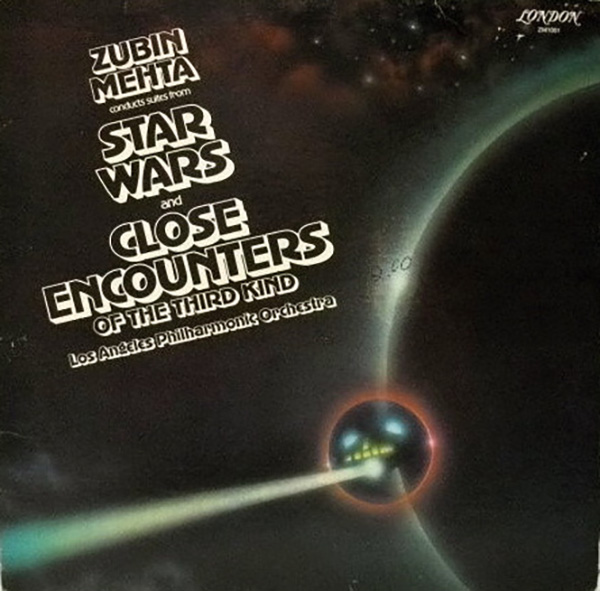 Using Roon to play files from my NAS music library, I tried some of the dozens of SACDs I've ripped to DSF files. I was pleased by what I heard. I've heard several chip-based DACs that don't bring out the best in DSD; the DS200 does a very good job. In fact, its "sound" complements the sometimes vague or "soft" top end of DSD. "The Cantina Band" from John Williams's Star Wars Suite, performed by Zubin Mehta and the Los Angeles Philharmonic (ripped from Decca Japan SACD UCGD 9038), sounded perfectly clangy, jazzy, and faux-alien. It put me in the sci-fi Western saloon on the planet of Tatooine, with Luke Skywalker and Han Solo at a table nearby. From the same SACD, "Neptune, the Mystic," the final movement of Holst's The Planets, sounded beautifully ethereal; I closed my eyes and floated through inner space.
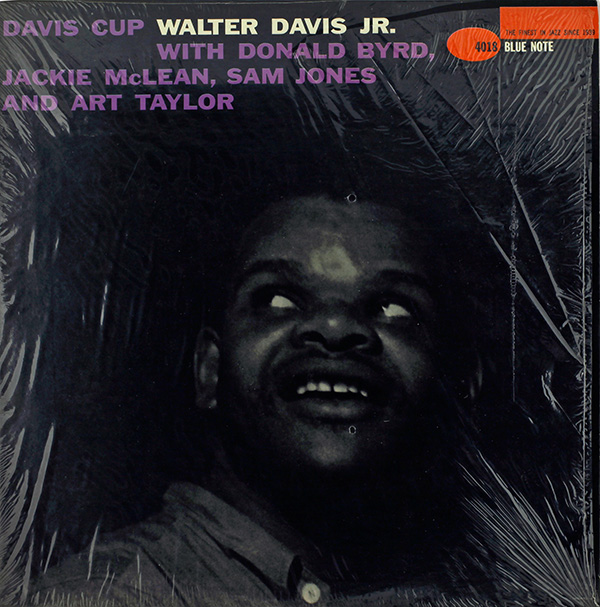
A while back, I snapped up a bunch of Blue Note/Analogue Productions jazz SACDs on sale and ripped them into my digital library. One of my favorites is Walter Davis's Davis Cup, the first jazz album recorded at Rudy Van Gelder's then-new studio in Englewood Cliffs, New Jersey, August 2, 1959 (footnote 8). The classic, stereo-era Van Gelder sound was still developing, and Davis's album captures the spirit of new ideas in a new place. The SACD has a relaxed, older-style sound, very much in contrast to the "RVG Edition" CD version. It sounded first-person realistic through the DS200 and my reference system.
Using Roon to play files from my NAS music library, I tried some of the dozens of SACDs I've ripped to DSF files. I was pleased by what I heard. I've heard several chip-based DACs that don't bring out the best in DSD; the DS200 does a very good job. In fact, its "sound" complements the sometimes vague or "soft" top end of DSD. "The Cantina Band" from John Williams's Star Wars Suite, performed by Zubin Mehta and the Los Angeles Philharmonic (ripped from Decca Japan SACD UCGD 9038), sounded perfectly clangy, jazzy, and faux-alien. It put me in the sci-fi Western saloon on the planet of Tatooine, with Luke Skywalker and Han Solo at a table nearby. From the same SACD, "Neptune, the Mystic," the final movement of Holst's The Planets, sounded beautifully ethereal; I closed my eyes and floated through inner space.
A while back, I snapped up a bunch of Blue Note/Analogue Productions jazz SACDs on sale and ripped them into my digital library. One of my favorites is Walter Davis's Davis Cup, the first jazz album recorded at Rudy Van Gelder's then-new studio in Englewood Cliffs, New Jersey, August 2, 1959 (footnote 8). The classic, stereo-era Van Gelder sound was still developing, and Davis's album captures the spirit of new ideas in a new place. The SACD has a relaxed, older-style sound, very much in contrast to the "RVG Edition" CD version. It sounded first-person realistic through the DS200 and my reference system.
 The value proposition
At $4000, the DS200 is moderately pricey as far as high-end streaming DACs go. However, it sports a robust feature set, fits in and plays well with the McIntosh look and sound, and is built to last a long time. At press time, Qobuz Connect was still missing (footnote 9), but Mac streaming products were gaining that feature via firmware updates one by one. The DAC chip is among the best available and begs the question whether there's much room for improvement.
Obsolescence is a question with any digital gear, but here I don't think it's a serious risk. In fact, this device is likely to outlast many disc-spinning components connected to it, and you'll certainly swap out a few NAS drives before the solidly built DS200 shows signs of age.
I was impressed by the DS200 because it was easy to use, sounded good, and presented no exotic or annoying issues. Its refined fit and finish and high-quality sound contrasted with yet also complemented its "meat and potatoes" usability and sturdy looks.
If McIntosh continues to release products like this under its new Bose ownership, its brand and tradition are secure.
Footnote 1: Fine Recording, located in NYC; see tinyurl.com/3xet5294. Footnote 2: This video shows many MI-200 details and a pair's restoration: youtu.be/I767mSvv-0A. Footnote 3: Spotify finally announced that it was going lossless for premium members just as this issue was going to press. Spotify will move to 24/44.1 resolution Footnote 4: See tinyurl.com/yve68k95. Footnote 5: See the datasheet at tinyurl.com/mr32y7yk. Footnote 6: See open.qobuz.com/playlist/21395182. Footnote 7: See open.qobuz.com/playlist/22204090. Footnote 8: Davis Cup is mentioned in Part 5 of a superb, detailed interview with Rudy Van Gelder at tinyurl.com/3e4whcmf.
Footnote 9: Compatibility with Qobuz Connect was announced after this review had been prepared for publication.
The ground is moving—again—under streaming. The new emphasis is on "connecting" and "casting" direct from streaming apps running on smartphones/tablets and away from device-specific server-streamer apps. This idea is not exactly new: Spotify Connect and Tidal Connect have been around for at least a couple of years. But movement is clearly in the direction of casting music from the Qobuz, Tidal, and Spotify apps directly to a streaming device via one or the other of the "Connect" services. The (somewhat) recent rollout of Qobuz Connect is great news for audiophiles. Qobuz joins Tidal (footnote 3) in offering the ability to use the streamers' own apps on your phone, tablet, or computer to search, find, and play high-resolution music. Crucially, the streaming device then interfaces directly to the streaming service's servers; no music flow from the device running the streaming app. (After this issue went to press, McIntosh announced that the RS-200 would support Qobuz Connect and Tidal Max.) Now there is no need for a manufacturer of an audiophile-focused streaming device to develop a proprietary app that integrates playback from any major streaming platforms. What about the local networked music libraries that those proprietary apps also search and play? The minority of audiophiles who both stream and maintain digital libraries can subscribe to Roon, JPlay, Audirvana, or one of the other services that serve both needs.
The McIntosh M.O.: features, flexibility, and the lookIn keeping with McIntosh's modus operandi dating from at least the 1960s, the DS200 features a large chassis and a black-glass front panel with green backlighting of the brand and function descriptors. The pushbuttons and knobs are of a style very similar to my circa-2000 integrated amplifier. Modern McIntosh gear (aside from nostalgic products like the MC275 tubed power amp) features an indirect control interface—gone are potentiometers and switches wired directly into the audio circuit—and wireless remote controls. Included in the box with the DS200 is a thin, ergonomic plastic remote. The battery cover is magnetic, so there are no fussy plastic tabs to break off. Yeah, it's plastic, but its fit and finish suggest it should work well for many years. This (except the plastic part) is true of the DS200 itself: The build quality is super-solid. It feels, to me at least, as permanent as audio components can be. McIntosh is known for keeping models in production for decades, and the company's gear retains decent value in the second-hand market, though this varies depending on the model and component type. The "Connect" apps mentioned above are not the only way(s) of getting music to the DS200. Indeed, its M.O. revolves around its diversity of streaming methods. For Roon users, the DS200 is a Roon Ready streaming DAC. It supports Apple's AirPlay2, Google's Chromecast, and of course Bluetooth—though its Bluetooth is 5.0 (not the current 5.3), which does not support the lossless Bluetooth data transmission available in the aptX Adaptive and LDAC codecs. When I wrote this, Apple's AAC Bluetooth wasn't listed in the Specifications on the McIntosh website, but McIntosh assured me that it is supported.
The DS200 is a pure streamer-DAC: Consistent with its M.O., there's no storage for digital music data and no place on the back panel to connect a flash drive or SSD.
The DS200 user manual is online (footnote 4), so I won't describe the front panel controls and rear-panel connections in detail. Suffice to say, the front panel is intuitive, and the parameter-setting menu tree (accessed by pushing and holding the left-hand button-knob) is easy to use as these things go. Kudos to McIntosh's engineers for using clear, plain English in the menu settings. On the rear panel are facilities for up to four S/PDIF sources (two coaxial and two optical), a USB connection for a computer, HDMI-ARC for a compatible TV, an AES3 digital input, a DIN socket for McIntosh's MCT interface (which sends data from SACD and other HD 5" discs to the DS200 for DAC'ing), and both wired (Ethernet) and wireless (via two of the three supplied antennas; the other is for Bluetooth) networking. Analog outputs are both balanced (XLR) and single-ended (on RCA).
Also notable: The DS200's front panel includes a volume control, described in the manual as "a new precision digitally controlled attenuator system with a tracking accuracy of 0.5dB." The menu tree allows it to be disabled for when the DS200 is used as a pure streamer-DAC. There are also parameters to control the default volume level and output voltage. All-digital users—perhaps the modern majority of serious music consumers—can connect all their digital sources to the DS200 (including an SACD player if it's MCT-compatible), allowing their digital physical media and streaming to all be integrated in one place, to be operated with a simple, old-school wireless remote. Add a power amp and speakers and let the party begin.
Getting set up and playing musicThe DS200 arrived double boxed; the packaging weighs more than half as much as the device itself. Inside the inner box, in addition to the DS200, was that remote—it requires a single AAA battery—a hardcopy user manual, a power cord, and the three antennas. Unpacking and setup took all of five minutes. I attached the antennas, but first I plugged it into my hardwired Ethernet network. I then attached the power cord, plugged it in, and mated it to the McIntosh MA6500 integrated amp in my office using a pair of old Monster Cable RCA cables. It then took less than a minute of finger-pecking on my iPhone 15 to get Spotify Connect working and playing. Voilà, music! Lossy, yes, but music. And actually, it didn't sound too bad. The DS200 front panel read "NETWORK" on the display's top line and "Spotify Connect" on the bottom line.
Downsides? The green screen on the front of the DS200 doesn't display useful information like song title or playback resolution. The song title, etc., is of course available via the device you're using, but what about the resolution? Once, the Qobuz app informed me that the resolution of music I was playing was 24/192, but I was using AirPlay 2, which doesn't go that high.
After a brief shakeout cruise in my office, the DS200 moved upstairs to the reference system, where it stayed for the rest of the time I had it. I connected it to my Benchmark LA4 preamp using XLR balanced cables, DIY by me with Mogami wire. Streaming was by Wi-Fi. I also tried sending CD-resolution audio from the Qobuz app on my iPhone using AirPlay (it worked fine).
Streaming Qobuz through Roon, I spent some time listening to familiar tracks on my Bass Test (footnote 6) and Imaging Test (footnote 7) playlists. Through the DS200, I heard some sounds emphasized more than I hear with my dCS Bartók APEX streaming DAC. For instance, on Los Lobos' "Kiko and the Lavender Moon," from the album Kiko, which (the track, not the album) is on my Imaging Test playlist, I heard more clanging cowbell ("more cowbell!"), more of the higher-frequency tones of the accordion in the left channel, and less of the deep bass beat. It wasn't a better or worse presentation, just different.
With male vocals, for instance Ronnie Lane's on "April Fool"—from Rough Mix with Pete Townshend, also on my Imaging Test playlist—I heard more breath and nasal tone and less chest resonance. In some cases, this sound quality improved the clarity of lyrics; in other cases it thinned out the voice a bit.
Using Roon to play files from my NAS music library, I tried some of the dozens of SACDs I've ripped to DSF files. I was pleased by what I heard. I've heard several chip-based DACs that don't bring out the best in DSD; the DS200 does a very good job. In fact, its "sound" complements the sometimes vague or "soft" top end of DSD. "The Cantina Band" from John Williams's Star Wars Suite, performed by Zubin Mehta and the Los Angeles Philharmonic (ripped from Decca Japan SACD UCGD 9038), sounded perfectly clangy, jazzy, and faux-alien. It put me in the sci-fi Western saloon on the planet of Tatooine, with Luke Skywalker and Han Solo at a table nearby. From the same SACD, "Neptune, the Mystic," the final movement of Holst's The Planets, sounded beautifully ethereal; I closed my eyes and floated through inner space.
A while back, I snapped up a bunch of Blue Note/Analogue Productions jazz SACDs on sale and ripped them into my digital library. One of my favorites is Walter Davis's Davis Cup, the first jazz album recorded at Rudy Van Gelder's then-new studio in Englewood Cliffs, New Jersey, August 2, 1959 (footnote 8). The classic, stereo-era Van Gelder sound was still developing, and Davis's album captures the spirit of new ideas in a new place. The SACD has a relaxed, older-style sound, very much in contrast to the "RVG Edition" CD version. It sounded first-person realistic through the DS200 and my reference system.
The value propositionAt $4000, the DS200 is moderately pricey as far as high-end streaming DACs go. However, it sports a robust feature set, fits in and plays well with the McIntosh look and sound, and is built to last a long time. At press time, Qobuz Connect was still missing (footnote 9), but Mac streaming products were gaining that feature via firmware updates one by one. The DAC chip is among the best available and begs the question whether there's much room for improvement.
Footnote 1: Fine Recording, located in NYC; see tinyurl.com/3xet5294. Footnote 2: This video shows many MI-200 details and a pair's restoration: youtu.be/I767mSvv-0A. Footnote 3: Spotify finally announced that it was going lossless for premium members just as this issue was going to press. Spotify will move to 24/44.1 resolution Footnote 4: See tinyurl.com/yve68k95. Footnote 5: See the datasheet at tinyurl.com/mr32y7yk. Footnote 6: See open.qobuz.com/playlist/21395182. Footnote 7: See open.qobuz.com/playlist/22204090. Footnote 8: Davis Cup is mentioned in Part 5 of a superb, detailed interview with Rudy Van Gelder at tinyurl.com/3e4whcmf.