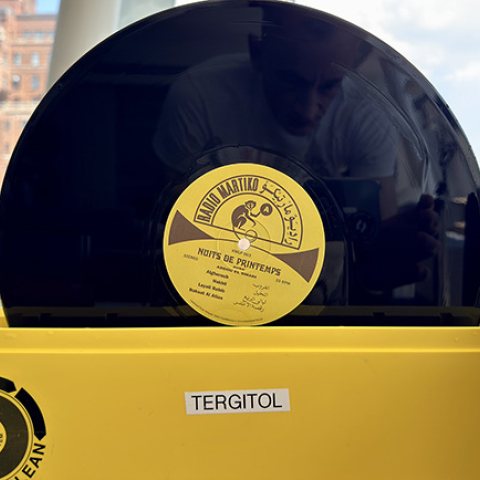
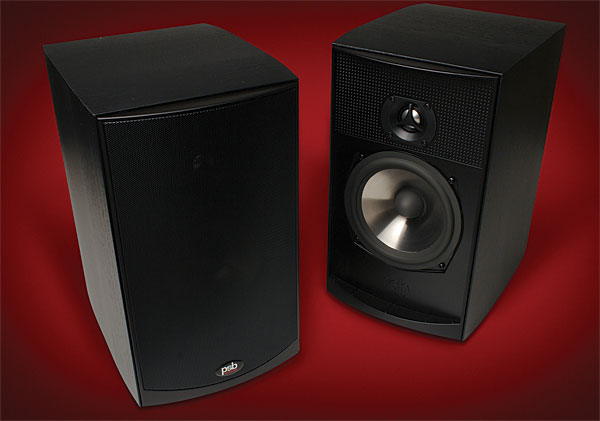
Dinner with Natalie and Nicole was still three hours away and, thanks to the Okki Nokki record-cleaning machine that I wrote about last month, I had a half-dozen newly cleaned LPs begging to be played. A gray and listless day had somehow blossomed into a clear, brilliant night filled with promise and anticipation. Outside, tattooed against the dark violet sky, a strange, enormous moon hovered over Jersey City, and flooded my listening room with enchanting white light. It was time to enjoy my new records and better acquaint myself with the Wharfedale Diamond 10.1 loudspeakers ($350/pair), and the only way to do that would be to compare the latter to a known quantity: the PSB Alpha B1 ($279/pair). John Atkinson had reviewed the PSBs in our May 2007 issue, and admired their naturally balanced treble and superb midrange. Soon after, the PSBs won our "Budget Product of the Year" award, and I could not resist the urge to buy a pair. I've lived happily with them ever since, most appreciating their ability to make sense of the densely arranged, sometimes poorly recorded noise- and psych-rock albums I tend to lust after. How would the Wharfedales compare?
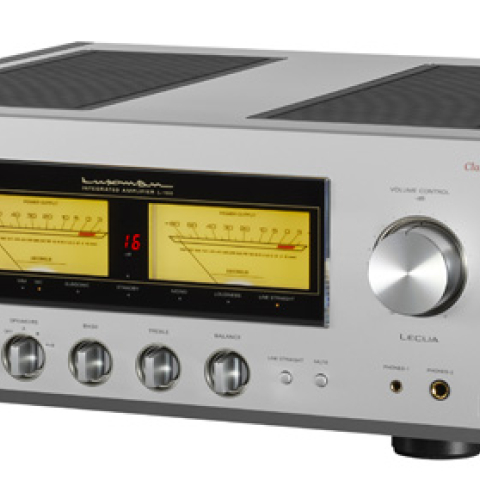
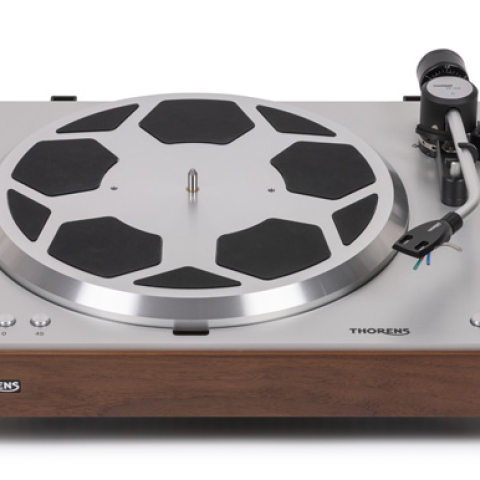
On this occasion, because I was especially curious to go back in time to Robert Wyatt's days with the Soft Machine and hear the sound of his strange voice 40 years younger, I decided to start with that band's Volume Two, originally released in 1969 (LP, Probe/ABC CPLP 4505). I placed the PSB Alpha B1s where the Wharfedales had been, on 24"-high stands, secured by small globs of Blu-Tack, and positioned exactly 27" from the sidewalls, 5' from the front wall, and 7' from my listening position. The rest of the system comprised the Rega RP-1 turntable, NAD PP 3 USB phono preamp, Cambridge Audio Azur 340A integrated amplifier, and RadioShack Megacable speaker wire (which, I now confess, I ache to replace). With the PSBs connected in phase and angled so that I could see nothing of their cabinets but their clean front baffles, I turned down the lights, cued up the record, and raced to my seat.
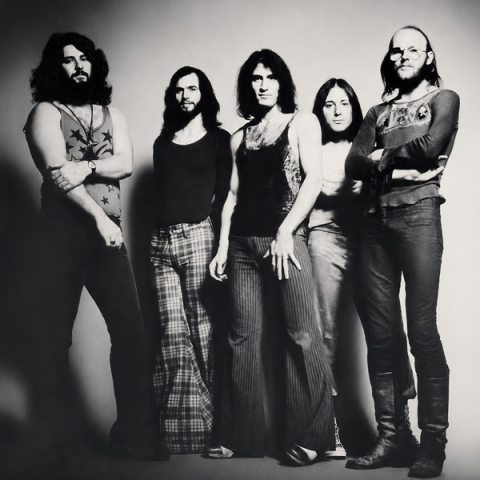
 Side 1, Rivmic Melodies, opens with "Pataphysical Introduction, Pt.1": In unison and without warning, drums, bass, and piano strike a couple of odd notes and then, in a sort of Joycean maneuver, pause—as if the band is starting at the end of a line—before moving forward with a jaunty, rollicking sway. Cymbals splash loosely, the bass riff descends, the piano offers a catchy little jingle like the theme to some Saturday-night sitcom, and Wyatt's voice emerges from the right channel to wish us "Good evening." He's playing emcee, introducing us to something, but I found his words difficult to comprehend. Too many years and too many plays of this used LP are blocking my way to Wyatt's meaning, but now the band is heating up—as Wyatt recites the British alphabet, from A to Zed. As I grope through the veils of age and use, the band comes to a sudden halt, and I'm struck by a guitar lead that emerges at center stage. How did Hugh Hopper get such a fuzzy tone? The sound is almost disturbing—a buzz saw in a funhouse—but it's solidly placed in the center of a wide soundstage, and it's captivating.
The system conveyed that momentary break in the music with clarity and precision, so that when the full band returns, I'm swept up in what has become a funk explosion. Swift brushwork against snare drum and agile guitar leads are anchored by Hopper's bass guitar, which now mirrors Wyatt's voice, reflecting every lilt, rise, and fall. Though I can't quite make out Wyatt's lyrics, I can easily follow the sound of both voice and bass guitar. The PSBs bring the voices to the front of the stage while allowing the bass guitar to settle in the rear. In "Hibou, Anemone, and Bear," a misty cloud of cymbal spray seems to hover above the speakers, while a metallic tapping keeps time at center stage. And finally, in "Out of Tunes," I can almost see Wyatt running back and forth between the speakers, a naughty child with a drumstick in one hand and a crash cymbal in the other, setting off alarms. Rivmic Melodies ends with purposely indecipherable voices shooting across the stage, banging about the walls of a madman's skull, and the sound of Wyatt's howls fading into darkness just as the jaunty music tries to return. It's kind of crazy, and I wonder how it was received back in 1969. Even for today, and perhaps more today than then, the Soft Machine's Volume Two is an adventurous, confounding, enchanting trip.
In a slight daze, I got up from my orange couch, cued up the side again, and listened through to the end. I then switched from the PSB Alpha B1s to the Wharfedale Diamond 10.1s and once more returned the stylus to the beginning of the groove. Through the Wharfedales, I was surprised to hear greater overall clarity and resolution. I could more easily hear the reverb around Wyatt's voice, and the ringing, fading trails left in the wake of percussion strokes. Similarly, guitars sounded more expressive, with more tonal color and subtle harmonics shining through the mix. There was slightly less bite and rhythmic snap to percussive sections, but more body—those metallic taps in "Hibou, Anemone, and Bear" were made of more wood and less steel. Bass guitar, too, was more fully expressed, which made more apparent subtle nuances of technique, such as Hopper sliding his fingers carefully along the fretboard from note to note. Happily, I could make better sense of Wyatt's first few spoken words: "And now we have a choice selection of Rivmic Melodies . . ." Spatial effects were just as thrilling through the Wharfedales as they'd been through the PSBs, if perhaps a bit less precisely rendered, but in general, the Wharfedales presented a better behaved, more relaxed sound.
Side 1, Rivmic Melodies, opens with "Pataphysical Introduction, Pt.1": In unison and without warning, drums, bass, and piano strike a couple of odd notes and then, in a sort of Joycean maneuver, pause—as if the band is starting at the end of a line—before moving forward with a jaunty, rollicking sway. Cymbals splash loosely, the bass riff descends, the piano offers a catchy little jingle like the theme to some Saturday-night sitcom, and Wyatt's voice emerges from the right channel to wish us "Good evening." He's playing emcee, introducing us to something, but I found his words difficult to comprehend. Too many years and too many plays of this used LP are blocking my way to Wyatt's meaning, but now the band is heating up—as Wyatt recites the British alphabet, from A to Zed. As I grope through the veils of age and use, the band comes to a sudden halt, and I'm struck by a guitar lead that emerges at center stage. How did Hugh Hopper get such a fuzzy tone? The sound is almost disturbing—a buzz saw in a funhouse—but it's solidly placed in the center of a wide soundstage, and it's captivating.
The system conveyed that momentary break in the music with clarity and precision, so that when the full band returns, I'm swept up in what has become a funk explosion. Swift brushwork against snare drum and agile guitar leads are anchored by Hopper's bass guitar, which now mirrors Wyatt's voice, reflecting every lilt, rise, and fall. Though I can't quite make out Wyatt's lyrics, I can easily follow the sound of both voice and bass guitar. The PSBs bring the voices to the front of the stage while allowing the bass guitar to settle in the rear. In "Hibou, Anemone, and Bear," a misty cloud of cymbal spray seems to hover above the speakers, while a metallic tapping keeps time at center stage. And finally, in "Out of Tunes," I can almost see Wyatt running back and forth between the speakers, a naughty child with a drumstick in one hand and a crash cymbal in the other, setting off alarms. Rivmic Melodies ends with purposely indecipherable voices shooting across the stage, banging about the walls of a madman's skull, and the sound of Wyatt's howls fading into darkness just as the jaunty music tries to return. It's kind of crazy, and I wonder how it was received back in 1969. Even for today, and perhaps more today than then, the Soft Machine's Volume Two is an adventurous, confounding, enchanting trip.
In a slight daze, I got up from my orange couch, cued up the side again, and listened through to the end. I then switched from the PSB Alpha B1s to the Wharfedale Diamond 10.1s and once more returned the stylus to the beginning of the groove. Through the Wharfedales, I was surprised to hear greater overall clarity and resolution. I could more easily hear the reverb around Wyatt's voice, and the ringing, fading trails left in the wake of percussion strokes. Similarly, guitars sounded more expressive, with more tonal color and subtle harmonics shining through the mix. There was slightly less bite and rhythmic snap to percussive sections, but more body—those metallic taps in "Hibou, Anemone, and Bear" were made of more wood and less steel. Bass guitar, too, was more fully expressed, which made more apparent subtle nuances of technique, such as Hopper sliding his fingers carefully along the fretboard from note to note. Happily, I could make better sense of Wyatt's first few spoken words: "And now we have a choice selection of Rivmic Melodies . . ." Spatial effects were just as thrilling through the Wharfedales as they'd been through the PSBs, if perhaps a bit less precisely rendered, but in general, the Wharfedales presented a better behaved, more relaxed sound.
Side 1, Rivmic Melodies, opens with "Pataphysical Introduction, Pt.1": In unison and without warning, drums, bass, and piano strike a couple of odd notes and then, in a sort of Joycean maneuver, pause—as if the band is starting at the end of a line—before moving forward with a jaunty, rollicking sway. Cymbals splash loosely, the bass riff descends, the piano offers a catchy little jingle like the theme to some Saturday-night sitcom, and Wyatt's voice emerges from the right channel to wish us "Good evening." He's playing emcee, introducing us to something, but I found his words difficult to comprehend. Too many years and too many plays of this used LP are blocking my way to Wyatt's meaning, but now the band is heating up—as Wyatt recites the British alphabet, from A to Zed. As I grope through the veils of age and use, the band comes to a sudden halt, and I'm struck by a guitar lead that emerges at center stage. How did Hugh Hopper get such a fuzzy tone? The sound is almost disturbing—a buzz saw in a funhouse—but it's solidly placed in the center of a wide soundstage, and it's captivating.