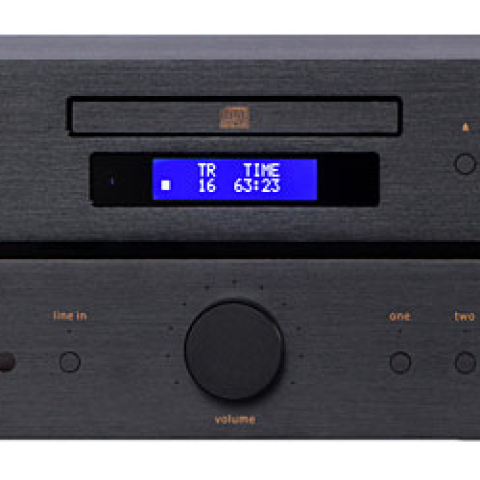
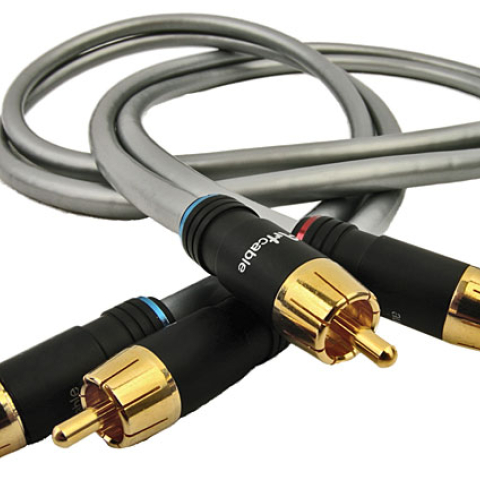
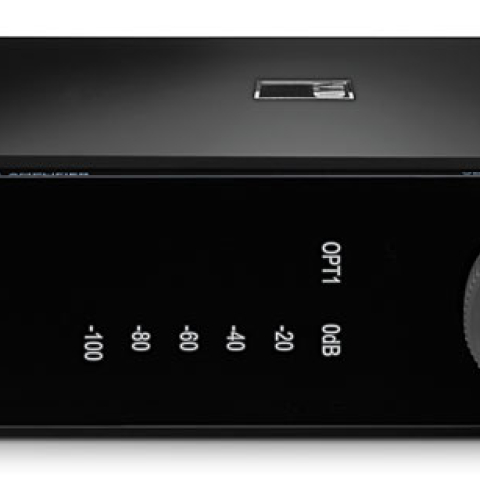
Today, the system sounds better than usual—in fact, amazing: warm, detailed, powerfully present, remarkably true. But how can this be? Isn't it more likely that my system, a well-considered but nevertheless inanimate, unfeeling collection of boxes and wires—NAD C 316BEE CD player, Arcam FMJ A19 integrated amplifier, KEF LS50 loudspeakers, AudioQuest Big Sur interconnects and Rocket 33 speaker cables—sounds today exactly as it did yesterday?
The system hasn't changed, but something has. How else can I make sense of the fact that, today, my experience of listening to music through the hi-fi is different from what it was yesterday? Does it have something to do with the suddenly cold, gray weather? Or that I've been fighting the flu? Is it because I'm sitting at a desk, on an old orange elementary-school chair, off to one side of the right-channel speaker? Or because a scented candle is burning? Does it have something to do with the new pair of Levi's I'm wearing? Or is it because Ms. Little is at her parents' house, trying on wedding dresses for our ceremony (this October)? Is it because the cats have been peacefully napping? Or does it have something to do with the music—first Matteah Baim, then Lorde, now Beyoncé, and later Wild Beasts?
I suppose it must be some combination of all these things, plus others I haven't yet considered. I suppose the system is might be really good, too.
It's strange that I even try to come up with an easy answer. Music, after all, is one of the arts—a representation or embodiment or performance of beauty, form, perspective. And of the many factors involved in the appreciation of art, perhaps none is more significant or variable than the state of mind of the person doing the appreciating—in the case of music, the listener. I think it's important to remember that, even when the goal is pure enjoyment or simple understanding, work must be done—that we must, in fact, try to connect with the artist. Because while it's true that any artist, musician, or engineer can fail at the job of delivering an artistic message, it's just as true that we—the audience, the listeners—can fail at the job of receiving that message. We're better at it some days than other days.
"Learning how to listen to music—how to identify and understand various elements of composition, how to distinguish good playing technique from bad, and so forth—is a lifelong journey of considerable value." Art Dudley's words, taken from this issue's "As We See It," can be repeated until memorized like song. We can all be better listeners.
Today, perhaps, I'm listening well.
Informed appreciation of something beautiful
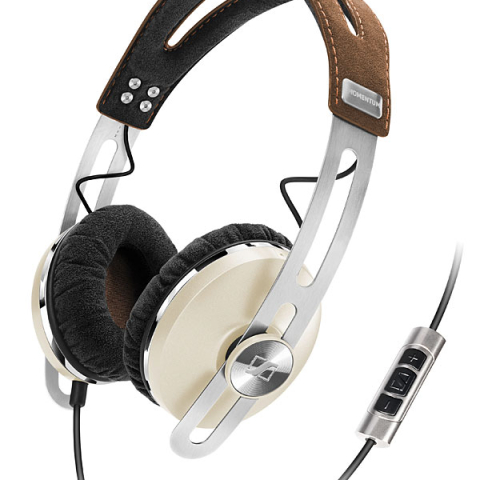
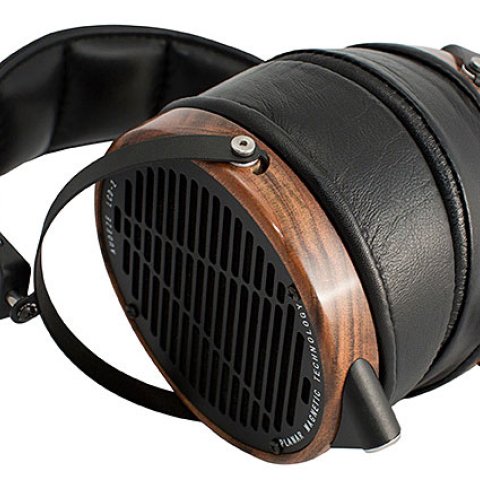
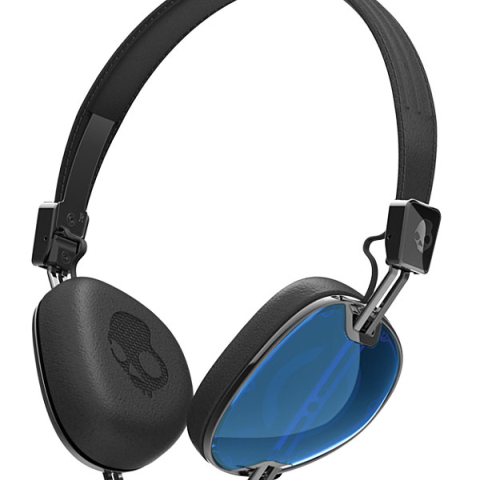
Or maybe I'm just imagining things. In "Placebo-philes," a recent posting to his entertaining blog Anxious Machine (footnote 1), Robert McGinley Myers discusses his brief experience as a headphone enthusiast. Myers buys one set of headphones, then a better (more expensive) set, then adds a headphone amplifier, then a better (more expensive) headphone amplifier. With these tools, he escapes into his music: "I had moments . . . when I heard things inside songs I swore I'd never heard before, when I felt as if parts of the music were two dimensional backdrops and then three dimensional shapes would leap out of the picture towards me, or the music would drizzle over my head, or crackle like lightning, or I'd swear I could smell the studio where the song had been recorded, or something."
To me, this sounds very familiar. It sounds real. I bet it does for you, too. However, in retrospect, McGinley Myers finds it simply "absurd."
"I was an idiot," he writes. "Because on other nights, usually after I'd owned that same set of gear for a little while, I wouldn't hear those things any more, and I'd start thinking that I needed better gear."
After browsing online forums and discovering that other headphone enthusiasts had plunged down the same "rabbit hole," Myers, despite having enjoyed many nights of happy listening, realized that he was "listening to his equipment rather than the music" and decided to sell it all. He attributes his experience to the placebo effect—the improvement in health or behavior following a treatment (in this case, "better" headphones) that arises not from the treatment itself but most likely from expectations about the treatment. And though for a while he felt ashamed of being "its victim," Myers now realizes that the placebo effect should be embraced for the happiness it provides.
Myers quotes from a recent Reuters piece by Felix Salmon, on the nature of the placebo effect in wine tasting:
"The more you spend on a wine, the more you like it. It really doesn't matter what the wine is at all. But when you're primed to taste a wine which you know a bit about, including the fact that you spent a significant amount of money on [it], then you'll find things in that bottle which you love. . . . After all, what you see on the label, including what you see on the price tag, is important information which can tell you a lot about what you're drinking. And the key to any kind of connoisseurship is informed appreciation of something beautiful."
Myers wonders if listening to high-end headphones, like drinking expensive wine, is "really about ritualizing a sensory experience." In performing such a ritual, you are telling yourself, I am going to focus on this moment. I am going to savor this event.
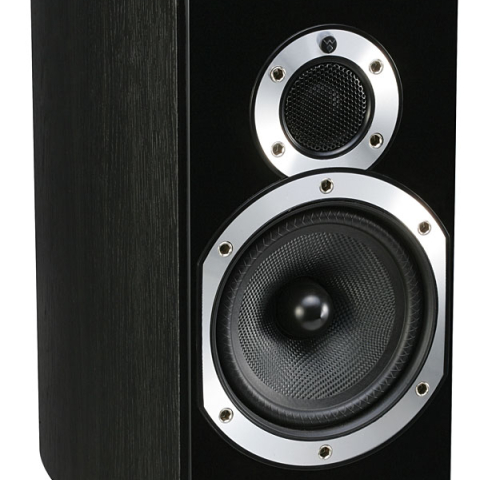
There are indeed great pleasure and value to be found in dropping a needle onto a record, properly positioning a pair of loudspeakers, or carefully placing a set of headphones over one's ears and being transported by music. And I have nothing against happiness—real, perceived, or otherwise manufactured. But I think Robert McGinley Myers and Felix Salmon place too much emphasis on price. Informed appreciation doesn't necessarily have to come at high cost. For instance, knowing all there is to know about a loudspeaker—whether it's the Wharfedale Diamond 10.1 ($349/pair) or the Wilson Audio Specialties Alexandria XLF ($200,000/pair)—will inevitably enhance the experience of listening to that speaker. The owner of the Wilsons isn't necessarily having more fun than the owner of the Wharfedales.
Myers is probably correct when he says that he stopped listening to his music and started listening to his equipment. It's hard for me to accept, however, that he ever actually stopped hearing the magic in his favorite recordings. The magic was there; I suspect he simply became inured to it. After time and with increased familiarity, even the magic—the crack of lightning, the smell of the studio, whatever—can become commonplace. If you stick long enough with this hobby, you may very well come to a point along the way when you find yourself listening more to the equipment than to the music.
This is okay. There's nothing inherently wrong with listening for differences between two or more components. In fact, the practice can be as educational, entertaining, and even as insightful as listening to music. The gear has its own story to tell. But if you find that focusing primarily on equipment drains the hobby of its joy, then take some time to reevaluate your values and priorities. New, more expensive gear can certainly help re-create the magic, but it's not our only salve. New music—the best tweak for any old system—can also help.
Audioengine D3 USB DAC–headphone amplifier
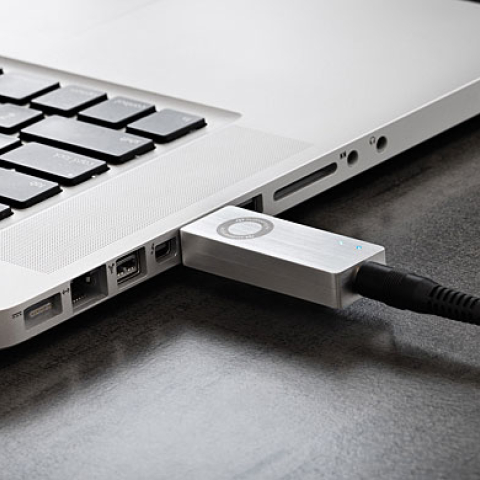
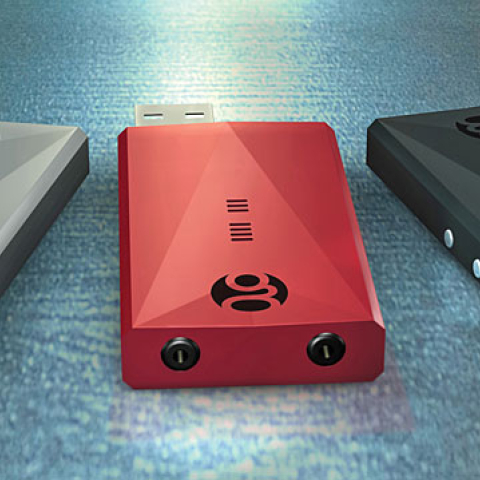
Similar in size, shape, and functionality to AudioQuest's popular DragonFly (version 1.2, $149), the Audioengine D3 ($189) is a very small USB DAC–headphone amplifier with a USB plug at one end and a ¼" jack at the other. It comes neatly packed with a light-gray felt case, a ¼" adapter cable, and a well-written setup guide. You can plug the D3 into a USB port on a Mac or PC, then plug a set of headphones into the D3's ¼" jack. Or, if you'd prefer to listen in open space, you can use a cable with a ¼" connector to mate the D3 to a pair of powered loudspeakers or a component hi-fi system. (Have I mentioned that the USB DAC–headphone amplifier is a brilliant component category?) Essentially, the D3 replaces the computer's highly compromised audio circuitry to deliver a cleaner, purer audio signal to headphones or speakers, thus transforming the computer into a legitimate music-playback source.
Footnote 1: My thanks to Stereophile reader Marshall Bolton for directing me to Anxious Machine.
Or maybe I'm just imagining things. In "Placebo-philes," a recent posting to his entertaining blog Anxious Machine (footnote 1), Robert McGinley Myers discusses his brief experience as a headphone enthusiast. Myers buys one set of headphones, then a better (more expensive) set, then adds a headphone amplifier, then a better (more expensive) headphone amplifier. With these tools, he escapes into his music: "I had moments . . . when I heard things inside songs I swore I'd never heard before, when I felt as if parts of the music were two dimensional backdrops and then three dimensional shapes would leap out of the picture towards me, or the music would drizzle over my head, or crackle like lightning, or I'd swear I could smell the studio where the song had been recorded, or something."
Similar in size, shape, and functionality to AudioQuest's popular DragonFly (version 1.2, $149), the Audioengine D3 ($189) is a very small USB DAC–headphone amplifier with a USB plug at one end and a ¼" jack at the other. It comes neatly packed with a light-gray felt case, a ¼" adapter cable, and a well-written setup guide. You can plug the D3 into a USB port on a Mac or PC, then plug a set of headphones into the D3's ¼" jack. Or, if you'd prefer to listen in open space, you can use a cable with a ¼" connector to mate the D3 to a pair of powered loudspeakers or a component hi-fi system. (Have I mentioned that the USB DAC–headphone amplifier is a brilliant component category?) Essentially, the D3 replaces the computer's highly compromised audio circuitry to deliver a cleaner, purer audio signal to headphones or speakers, thus transforming the computer into a legitimate music-playback source.
Footnote 1: My thanks to Stereophile reader Marshall Bolton for directing me to Anxious Machine.