 Doing it my way
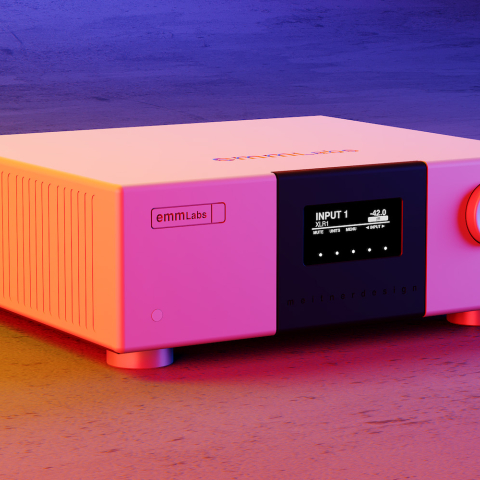
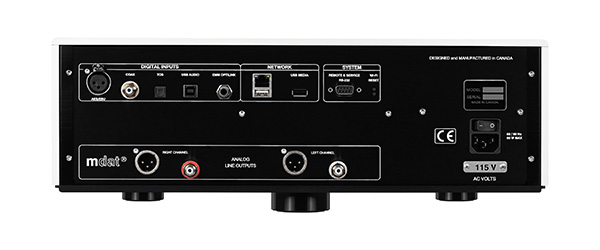
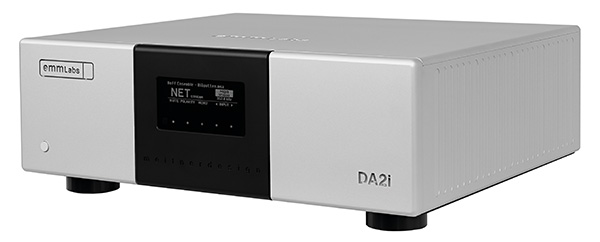
Thanks to the internet, everything you might ever want to know about front and back panels of the EMM Labs DA2i is a mere click away (footnote 5). Five small buttons on the front panel, or the handy metal infrared remote control, allow you to mute the output, change polarity, adjust front-panel brightness settings, choose the screen saver option, or reset the unit or its network settings to factory defaults. If you choose sufficient illumination for the front panel display, it's easy to view most of your setting choices (including input and file format) from as much as 12' away. The front panel also includes a larger button for switching between "Power Save" (standby) and "Power On." Assuming the unit is left in "Power Save" mode when not in use, virtually no warmup time is required to hear the DA2i at its best. The back panel's inputs include AES3, coax S/PDIF, TosLink, USB-B, EMM's proprietary OptiLink, RJ45 Ethernet, and USB-A for connecting a thumb drive or SSD. Only the USB-B, Ethernet, and USB-A inputs support DXD and 2×DSD (footnote 6); the others (which I had no occasion to use) are limited to 24/192 and DSD. You'll also find RS232 remote and service ports for diagnostics and firmware upgrades, and a network-settings reset. RCA and XLR outputs are widely spaced and sufficiently separated from the 15A IEC inlet and main power switch to make cable installation easy.
 Let the music play!
"The theme is so beautiful. Everything sounds so beautiful. The cello's lower tones are gorgeous and ultrasmooth. Resolution is so good that you can easily tell which of the short pieces—those accompanied solely by piano—were more closely miked than those with orchestra." That's what I scribbled down as I used the DA2i to decode cellist Edgar Moreau's new recording, Rococo, with pianist David Kadouch and the Luzerner Sinfonieorchester, Michael Sanderling conducting (24/96 WAV download/Erato). As I reviewed that recording for the February issue, the sound was so complete and of a piece that I felt completely confident that my evaluation of the performance and the recording's sound quality was accurate.
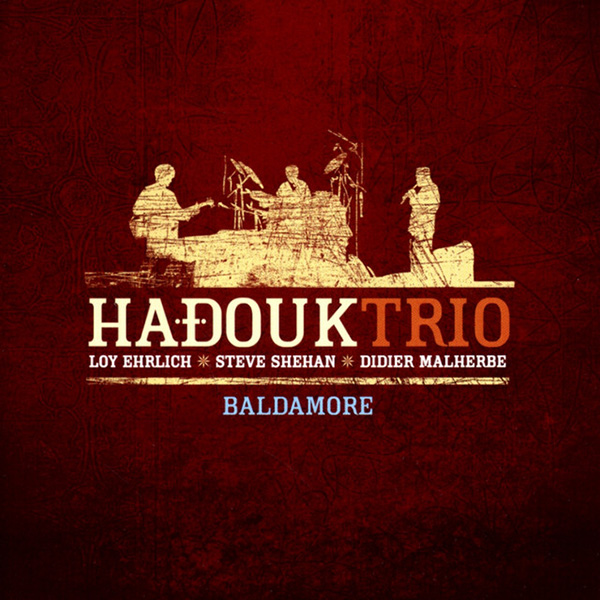 Next, I turned to some of the tracks that Soulution's Cyril Hammer favors for his listening tests. On the Hadouk Trio's "Parasol Blanc 2" from their 2007 release, Baldamore: Live at Cabaret Sauvage (16/44.1 FLAC, Naïve Jazz/Qobuz), bass response was excellent, and the soundstage gratifyingly wide. Resolution was such that it was easy to distinguish the electric guitars that could have just as easily blended into the background. The quality of bass reproduction stood out on Renaud Garcia-Fons Trio's "Berimbass," from their 2005 album, Arcoluz (24/48 FLAC, Galileo Music Communication/Qobuz), and on Yello's "'Til Tomorrow," from Touch Yello (Deluxe) (16/44.1 FLAC, Tidal/ Polydor). Bass notes were as solid as it gets and at least as impactful as I've ever heard through the D'Agostino Relentless preamp/Momentum M400 MxV monoblocks, one of my current references.
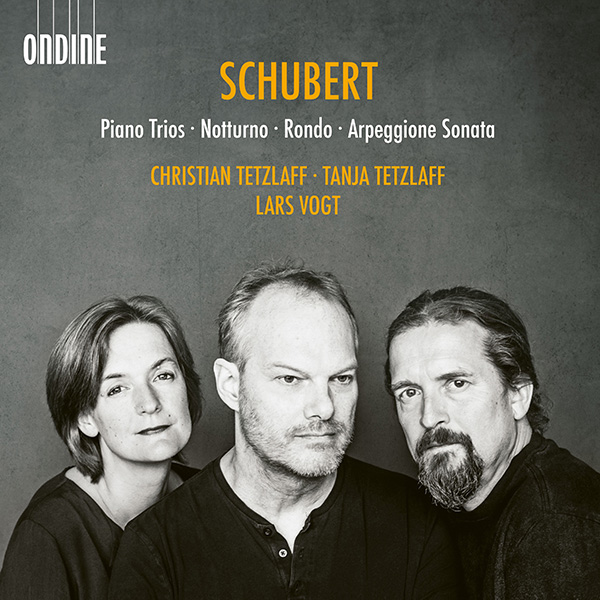 This is a precious recording—one of the last Vogt recorded before cancer took his life. The performances are so deeply felt that they make you wish you could have been present in the studio to witness the bond between the musicians as they recorded music by a man who, like Vogt, died much too early. Because the DA2i accurately reproduced the timbres of violin, cello, and piano, I was able to sink deep into the trio's collective soul. My sincere thanks to the musicians, Franke, Ondine, and everyone at EMM Labs for the experience.
Streaming with Roon
This is a precious recording—one of the last Vogt recorded before cancer took his life. The performances are so deeply felt that they make you wish you could have been present in the studio to witness the bond between the musicians as they recorded music by a man who, like Vogt, died much too early. Because the DA2i accurately reproduced the timbres of violin, cello, and piano, I was able to sink deep into the trio's collective soul. My sincere thanks to the musicians, Franke, Ondine, and everyone at EMM Labs for the experience.
Streaming with RoonFirst I streamed far more music via the Innuos Statement NextGen music streamer and PhoenixNET switch than I have time and room to discuss. Then I bypassed the Innuos duo and plugged my network's Ethernet directly into the DA2i. After changing the DA2i's input setting from USB to Ethernet, I was ready to test the DA2i's sound using Roon—which the EMM Labs folks urged me to use—without an outboard server.
 Final listens and comparison
Shortly before I began to write this review, I spent an evening at the Seattle Chamber Music Festival reviewing, for Classical Voice North America, violinist James Ehnes and pianist Orion Weiss's performance of Beethoven's Violin Sonatas Nos.1–5 (footnote 8). To prepare, I streamed the same five sonatas from two recordings: Antje Weithaas and Dénes Várjon's extremely transparent Beethoven: Violin Sonatas Nos.1, 5, 6, & 10 (24/48 FLAC, Cavi-music/Qobuz), and Lorenzo Gatto and Julien Libeer's less transparent but musically excellent Beethoven Violin Sonatas (24/96 FLAC, Alpha Classics/Qobuz). My concert seat was smack in the middle of the acoustic sweet spot of Seattle's 536-seat Nordstrom Recital Hall: row N center. The live presentation was of course different from what I heard on my system—Ehnes's Stradivarius sounded larger, the piano less resonant in its low range—yet timbres remained consistent between the concert and the DA2i's reproduction of two different studio performances. That, to me, was validation aplenty that the DA2i's sound is remarkably true to life.
 In conclusion
The EMM Labs DA2i D/A Converter is one of those all-too-rare components whose every sound speaks truth. No matter what recording I played through it, I felt secure that I was hearing what the artists, producers, and engineers who made the recording hoped to share. There are many windows on truth. The DA2i's is among the clearest and least tinted windows I've listened through in my music room. It does music proud. Most highly recommended.
Footnote 5: See bit.ly/DA2iManual. Footnote 6: Despite its apparent evocation of DSD, DXD is 24/352.8 or 24/384 PCM. Footnote 7: If you do use the supplied power cable and wish to upgrade, check out Kimber's top-level PK14 Palladian PowerKord, which delivers far more realistic bass and weight than Kimber's middle- and entry-level kords. Footnote 8: See bit.ly/49Yppmx.