Herb Reichert wrote about the Excite X14 in February 2016 (Vol.39 No.2):
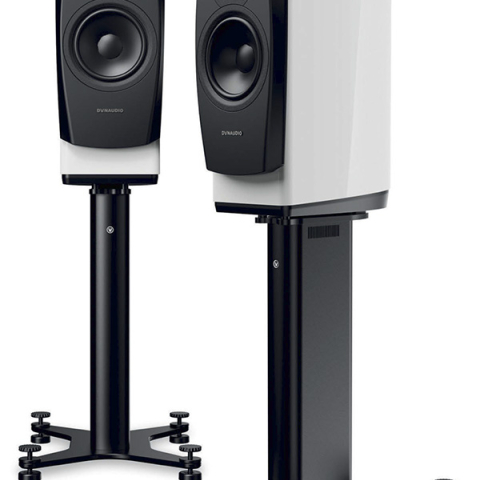
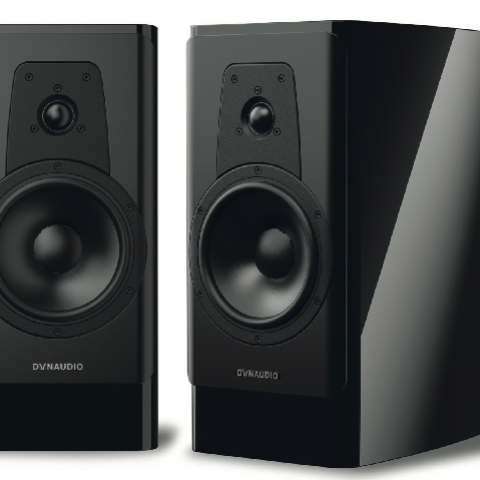
I never met the late Robert J. Reina, but, sadly, I can see his face as I type these words. I can see his byline on the pages of the countless BJR reviews I've read. Right now, in my tiny Brooklyn crib, I'm listening to the giant, slow, fugal opening of Philip Glass's score for the 1982 film Koyaanisqatsi (UK LP, Island ISTA 4). I'm hearing and feeling the same "dramatic passages in the lower bass" and guttural voices I imagine Bob experienced while writing his review of Dynaudio's Excite X14 loudspeaker (price recently reduced to $1299/pair) for the October 2014 issue.
Bob described the sound of Koyaanisqatsi through the X14 as "blooming, airy, and powerful, with no overhang or loss of definition in the lower notes." While "blooming, airy, and powerful" seems a bit of an overstatement—I found the X14 a bit constrained and closed-in with this bass-heavy music—"no overhang or loss of definition" seems extremely understated. I sit here, repeatedly pausing to look at the diminutive Dynaudios in quizzical wonderment. Could these little things really be playing this recording with this level of control and wideband resolution? Obviously, they could. But—become obstreperous? Distort or overbloom? The Excite X14 would prefer not to: It is, like Melville's willful Bartleby, steadfast and not excitable. I was immediately impressed with the X14's restraint and tonal impartiality.
BJR described the midrange of this little (11.2" high by 6.7" wide by 10" deep), tiger-striped, rosewood-veneered speaker as "dead-neutral, detailed, and holographic." I would call it studio-monitor neutral (footnote 1). Be aware that when a reviewer uses the word neutral, it can mean a range of things on the spectrum between boring and fun: Boring neutral is typically bland, colorless sound; fun neutral implies lively and colorful, but ostensibly uncolored. Very different things. The Excite X14's sound was fun neutral.
After reading BJR's reviews of the Excite X14 and the Audio Research Reference 75 power amplifier—in the latter he "heard no shortcomings whatsoever . . . never noticed a single coloration"—I wondered: the Dynaudio X14's progenitor, the X12, had a nominal impedance of 4 ohms, but the X14 is rated at 8 ohms and seems never to drop below 6 ohms. How would the X14 handle less power? I had to investigate what the new Excites could accomplish with a couple of low-powered tubed amplifiers: my reference Line Magnetic LM-518IA (22Wpc), and PrimaLuna's ProLogue Premium (36Wpc, review in progress).
Speaker World
To hear just how uncolored, loose or tight, open or closed, big or small the X14 actually sounded, I began with my No.1 yardstick for audio and musical truth, pianist Artur Schnabel playing Beethoven, Piano Music, Vol.5 (LP, EMI RLS 769). While Schnabel's basic tone, impact, touch, and gradations of force were presented extremely well, I continually heard some of what I call short notes: notes whose leading and trailing edges haven't been softened or rounded, but just shaved off a little. Not surprisingly, distortion by subtraction usually makes a speaker sound cleaner and more accurate. But the sound of real music can often be messy. On a piano, each treble note is actually sounded by three strings, simultaneously struck by that note's single hammer. The extra strings are there to add power to the note's voice and to sculpt the note's harmonic decay. The tenor notes have two strings each, and each bass note's single steel string is wrapped in copper wire to add mass, lower the pitch, and generate richer tones.
The best speakers elucidate each note's precise moment of attack and its complex decay. Curious to hear if my perception of short notes was accurate, I switched to Todd Garfinkle's luxurious recording of Ito Ema playing J.S. Bach's Goldberg Variations (CD, MA Recordings M024A). This beautifully packaged disc is surely one of the most luminous and colorful piano recordings ever, every note a feast for ears and mind. The Dynaudio Excites loved Ema's Bach. Notes opened and closed with a glorious richness, and the upper registers were incandescent, highly present, and totally fleshed out—but as Ema's left hand descended to those thick, copper-wound strings, the notes became shortened. Bass tone was pitch perfect, but it sounded as if individual notes had been tailored rather than expressed. Pedal work felt attenuated at times.
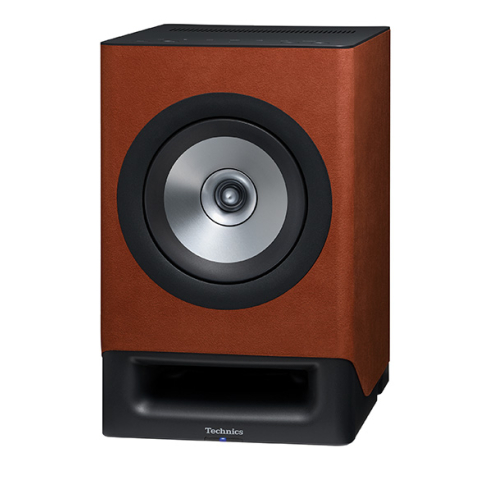
KEF's LS50 ($1500/pair) did this too, but only below about 90Hz, and nowhere near as noticeably. Technics' new SB-C700 ($1700/pair), which I reviewed last month, gave no evidence of this effect.
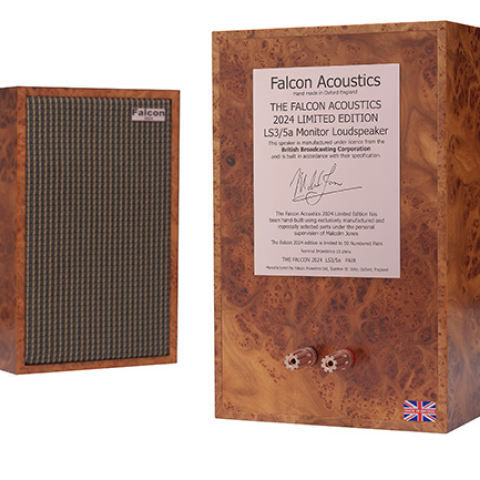
In direct comparisons, the KEF and Technics loudspeakers displayed more low-frequency weight and body than the Excite X14, which in turn displayed more weight and body than my Falcon Acoustics LS3/5a. The KEF, Falcon, and Technics speakers all made more color, richer tones, and a bigger soundspace. But! The X14s dug deeper and more precisely into the textures and detail structure of music's harmonic architecture. The Excite X14s let my mind follow jazz bass and solo violin better than any of my other reference speakers. Similar to my beloved Falcon LS3/5a, the X14 always worked as a kind of "magic microscope"—a magnifying lens that showed me the rhythms, textures, and viscosity of music's inner workings. (I could never have examined such issues as the lengths of notes without this effect.)
Here, now, in my disheveled Brooklyn lean-to, I would be hard-pressed to declare one of these speakers a clear "best"—each does so many musical things exceedingly well.
Konklusion
The Dynaudio Excite X14 reproduces music with a sober precision that reminds me of the Ortofon 2M Black moving-magnet cartridge. Both have a kind of Danish Modern aesthetic. Both seem engineered not to editorialize, but to get everything just right: The bass is taut, fast, and detailed; the midrange lacks a bit of color and plushness, but I doubt that anyone other than yours truly will notice that; high frequencies are beautifully articulated, and never too wet or too dry. The X14 presents electric and acoustic basses with extraordinarily good tone, detail, and forward momentum. It likes Nico, the Unthanks, and Edith Piaf. And a pair of X14s disappear easily. Nevertheless. . . I'm hoping I can keep the Excite X14s for a while, because what I like most about them is that they're good ear and mind calibrators—a sort of sonic axis mundi, if you will. I'm certain they'll assist me in becoming a more accurate, truthful, and—perhaps—restrained reviewer.—Herb Reichert
Footnote 1: Michael Lavorgna reviewed the active version of the X14 in his September 2015 "Audio Streams" column.—John Atkinson
To hear just how uncolored, loose or tight, open or closed, big or small the X14 actually sounded, I began with my No.1 yardstick for audio and musical truth, pianist Artur Schnabel playing Beethoven, Piano Music, Vol.5 (LP, EMI RLS 769). While Schnabel's basic tone, impact, touch, and gradations of force were presented extremely well, I continually heard some of what I call short notes: notes whose leading and trailing edges haven't been softened or rounded, but just shaved off a little. Not surprisingly, distortion by subtraction usually makes a speaker sound cleaner and more accurate. But the sound of real music can often be messy. On a piano, each treble note is actually sounded by three strings, simultaneously struck by that note's single hammer. The extra strings are there to add power to the note's voice and to sculpt the note's harmonic decay. The tenor notes have two strings each, and each bass note's single steel string is wrapped in copper wire to add mass, lower the pitch, and generate richer tones.
The Dynaudio Excite X14 reproduces music with a sober precision that reminds me of the Ortofon 2M Black moving-magnet cartridge. Both have a kind of Danish Modern aesthetic. Both seem engineered not to editorialize, but to get everything just right: The bass is taut, fast, and detailed; the midrange lacks a bit of color and plushness, but I doubt that anyone other than yours truly will notice that; high frequencies are beautifully articulated, and never too wet or too dry. The X14 presents electric and acoustic basses with extraordinarily good tone, detail, and forward momentum. It likes Nico, the Unthanks, and Edith Piaf. And a pair of X14s disappear easily. Nevertheless. . . I'm hoping I can keep the Excite X14s for a while, because what I like most about them is that they're good ear and mind calibrators—a sort of sonic axis mundi, if you will. I'm certain they'll assist me in becoming a more accurate, truthful, and—perhaps—restrained reviewer.—Herb Reichert
Footnote 1: Michael Lavorgna reviewed the active version of the X14 in his September 2015 "Audio Streams" column.—John Atkinson