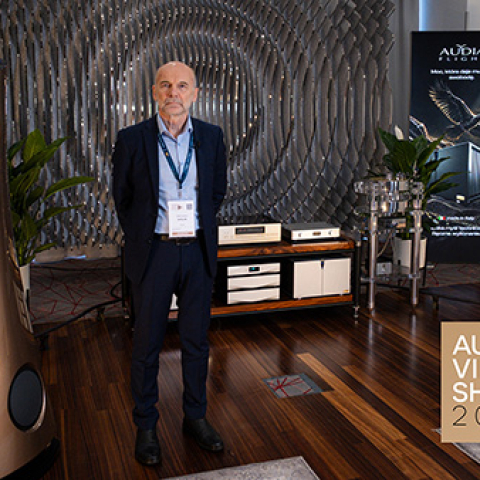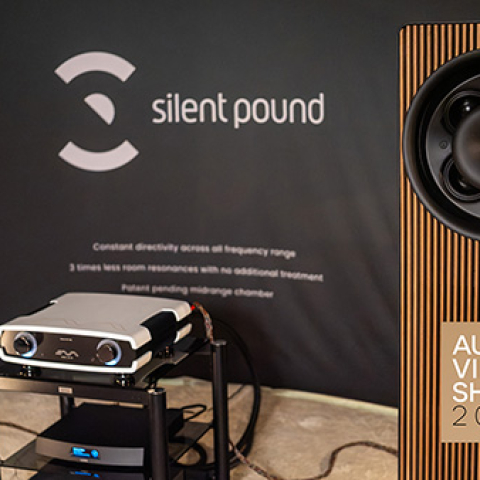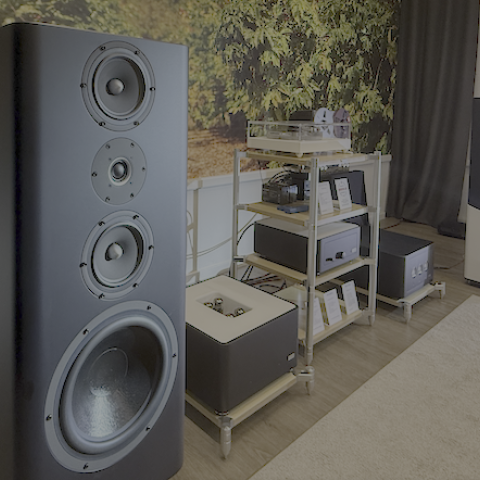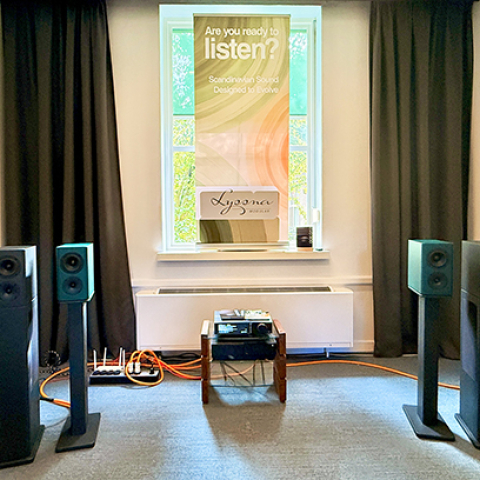
"You should come to CAF," Ken Micallef said. He has been saying this for what seems like decades. "It's cool, smaller and more manageable than AXPONA. You'll like it." I explained to Ken that I don't like crowds. Or airports. That trying to listen while people are talking loudly over the music aggravates my Generalized Anxiety Disorder. And that having to sit through anything at all by Dire Straits rubs me even wronger than it did in high school. But this year my curiosity got the best of me, and on a crisp November night I rode the Acela to Washington's Union Station, then took the Red Line to North Bethesda, and at long last, tired and already regretting my Amtrak dinner, trudged toward the twinkling lights of a Canopy by Hilton.
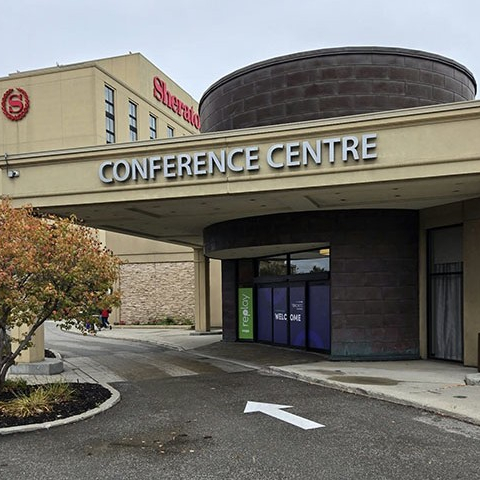
The following morning, at another Hilton five minutes away, I walked into my first US audio show. The global, all-ages vibe of High End Munich was nowhere to be found, nor were the airy digs of its MOC convention center. Under fluorescent lighting, the crowd was overwhelmingly male and distinctly American. During my first 15 minutes at the 2025 Capitol AudioFest, I spotted at least five pairs of sweatpants, four hearing aids, three yellow-gold Rolex Submariners, two tiger-themed Ed Hardy jackets, and one hairpiece. I was also surprised to find myself on the younger end of the CAF age spectrum. As a fellow audio journalist tartly noted, the Rockville Hilton sported "more canes than women."
If Capital Audiofest had once been a scrappy local show that attracted some of the more colorful characters from around the DC area, it has become an international showcase for many of hi-fi's bigger players, and during my visit I heard no shortage of the kind of shock-and-awe systems aimed at the kidnap-insurance crowd. But I'm happy to say that I listened to plenty of fascinating, keenly priced, great-sounding gear while mostly managing to remain civil and keep my blood alcohol level under 0.08.
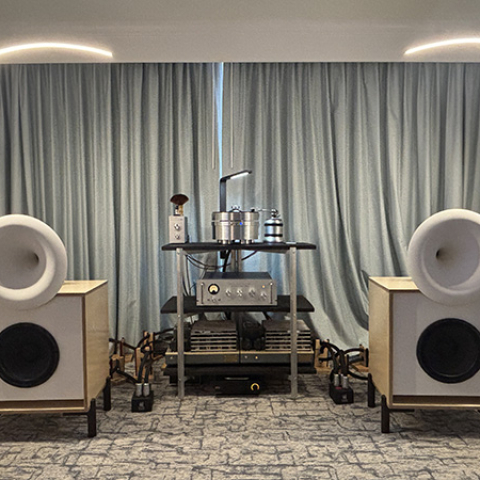
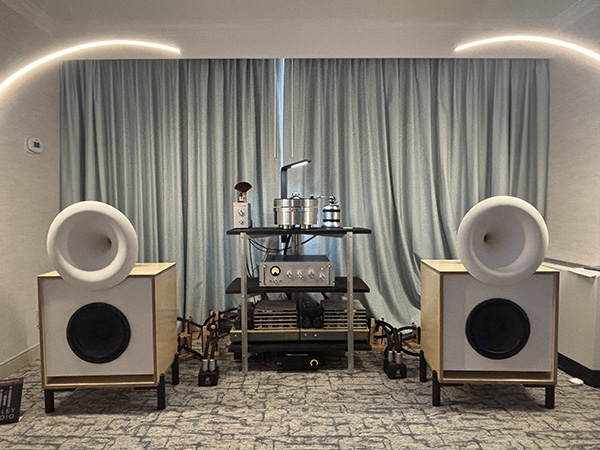
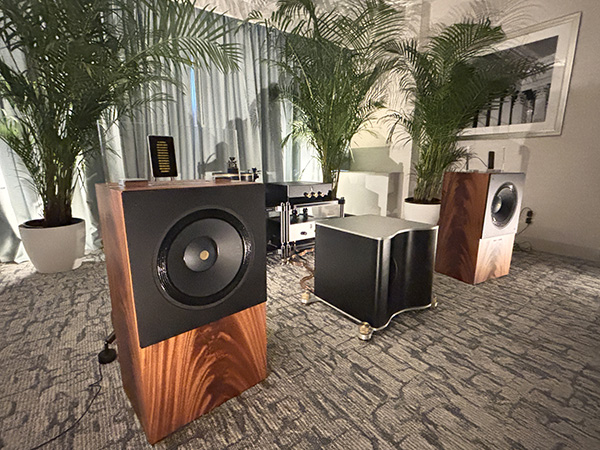
On the seventh floor, I had my first in-person encounter with importer Robin Wyatt. The British accent I recognized from our phone conversations was cologned, accessorized, and wrapped in a neon-hued Hawaiian shirt. Wyatt was showing a pair of Simco ONE speakers ($15,500; top photo). Designed by a pair of 20-something engineering students from Manchester, England, the Simcos consist of a 12" woofer in a 23" × 23" × 15" front-ported bass cabinet topped with a compression driver firing into a spherical fiberglass Le Cléac'h 450 horn. The ONEs are relatively compact (for horns), and with their 95dB sensitivity and 8 ohm impedance, they will happily make music with micro-powered tube amplifiers.
Fed by a VPI direct-drive turntable and cartridges and amplification from Miyajima, and playing "That Don't Make It Junk" from Leonard Cohen's Ten New Songs, the Simcos sounded promising, producing a massive sense of scale, big dynamics, and very good color. I'm not sure whether the very slight hollowness I heard was attributable to the room, the ancillary components, or to the speakers themselves. Regardless, the Simcos struck me as original and utterly lovely, and made me itchy to listen to a pair at home.
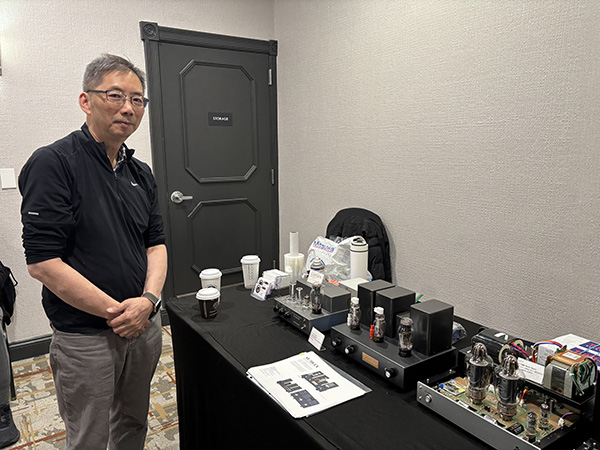
Take the Sunvalley SV-S1645, an all-tube stereo power amp that squeezes a couple of gorgeous, single-ended watts from one 45 triode per channel. Stocked with perfectionist parts like V-Caps, WBT binding posts, Hashimoto output transformers, and a smart-looking metal chassis, the amp buys a lot of sound with your $3047. Though they were on static display, Kung's wares were a joyful reminder that during the early postwar years, kits were a mainstay of our hobby, offered by dozens of companies including Heath, Dynaco, Fisher, and H.H. Scott. And that hi-fi began its life as something it must continue to be in order to thrive—a middle-class pastime.
Speaking of which, I took a listen to the new standmount monitors from Chesky Audio, the LC2s ($1995/pair), which were driven by Schiit electronics. These 3D-printed cubes of black polymer won't win anyone over with their looks, but given their modest size and price, they played with surprising dynamics, transparency, and bass extension while throwing a massive soundstage.
The company's 19-year-old CEO Lucca Chesky, an engineering student at Carnegie Mellon in Pittsburgh, told me that he thought of the LC2 as a remedy for the kind of desktop and computer speakers his peers tend to rely on. To scale up a pair of LC2s into a full system, he suggested, they simply need to add an inexpensive streaming integrated amp. Given what I heard, I think he's on to something.
 Nearby, in a pricier spread assembled by Nashville's Gestalt Audio Design, I spotted the petite but big-sounding Wolf von Langa Ultima field-coil speakers that had impressed me so much in Munich. Well, they looked like Ultimas, but these were their little brothers, the SONs ($21,995/pair). The odd-looking squat wooden boxes, which can sit directly on the floor, are topped with a slightly reclined panel of clear Perspex that acts as a baffle for an AMT folded diaphragm tweeter. Their sensitivity is specified as 94dB, so feel free to pull out your 2A3s, 45s, and other ancient thermionic devices.
Like the higher-priced Ultimas, the SONs left me with an impression of resolution and delicacy, like a photograph taken with a top-notch Leica lens. In tandem with lovely-looking electronics from the UK's SW1X, a record player from TW Acustic, and a Fuuga cartridge, they kept drawing me into the music with a light but persistent pull. I hope to have a pair in Brooklyn sometime in the coming year for an extended listen.
My favorite room was put together by fellow New Yorker Jeff Catalano. The High Water Sound system consisted entirely of gear I hadn't previously come across; much of it was fairly new to Catalano as well. That he was able to assemble these components into such an effective music-playing machine is a tribute to his ears, some of the keenest I know.
Nearby, in a pricier spread assembled by Nashville's Gestalt Audio Design, I spotted the petite but big-sounding Wolf von Langa Ultima field-coil speakers that had impressed me so much in Munich. Well, they looked like Ultimas, but these were their little brothers, the SONs ($21,995/pair). The odd-looking squat wooden boxes, which can sit directly on the floor, are topped with a slightly reclined panel of clear Perspex that acts as a baffle for an AMT folded diaphragm tweeter. Their sensitivity is specified as 94dB, so feel free to pull out your 2A3s, 45s, and other ancient thermionic devices.
Like the higher-priced Ultimas, the SONs left me with an impression of resolution and delicacy, like a photograph taken with a top-notch Leica lens. In tandem with lovely-looking electronics from the UK's SW1X, a record player from TW Acustic, and a Fuuga cartridge, they kept drawing me into the music with a light but persistent pull. I hope to have a pair in Brooklyn sometime in the coming year for an extended listen.
My favorite room was put together by fellow New Yorker Jeff Catalano. The High Water Sound system consisted entirely of gear I hadn't previously come across; much of it was fairly new to Catalano as well. That he was able to assemble these components into such an effective music-playing machine is a tribute to his ears, some of the keenest I know.
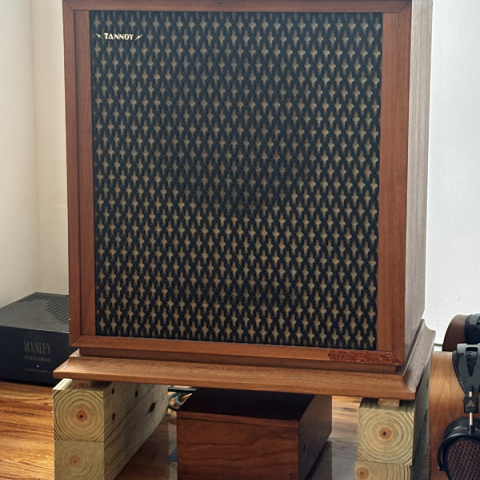
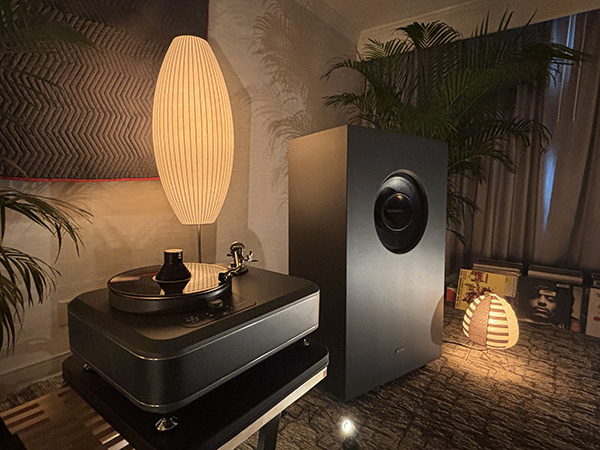 The gear included looming, handsomely retro SP-01 speakers from Zeiler Audio, which from a distance looked like vintage Tannoys and use a 15" driver with an elliptical waveguide to cover the entire audible range. They were driven by the Zurich-based company's equally striking tube electronics. But for me, the showstopper was a new-production idler-drive (!) turntable from Torqueo Audio of Pescara, Italy. Unlike many idler-drive decks, the Torqueo Audio Exclusive ($25,000) isn't a rebuilt or reengineered vintage unit but an entirely new design with jaw-dropping fit and finish. Matched with a Glanz tonearm and a selection of Ortofon SPU cartridges, it was the single most covetable object I saw and heard at the Hilton.
Catalano's room was a study in the many factors that go into transforming a generic hotel suite into a compelling listening environment. Instead of the usual vinyl-tarp displays printed with marketing copy under ceiling-mounted spotlights, the room was pleasantly dim and decorated with (real) plants. Lighting came courtesy of strategically placed Isamu Noguchi light sculptures and George Nelson Cigar Lotus floor lamps; the gear was arranged on a Nelson Platform bench, all icons of 20th century design.
And then there was the music, much of it recent and all of it fascinating. Catalano is a relentless record fiend, and when I listen with him, I always learn about something new. This time was no different: During my brief stay in the High Water Sound room, I heard Mutable Set by producer and songwriter Blake Mills, a set of gorgeously hushed songs from 2020 that I'm chasing down on vinyl.
The most fun part of going to an audio show is having my assumptions and beliefs turned upside down or at least seriously challenged. In this respect, CAF certainly didn't disappoint. In the room of Virginia retailer Command Performance AV, I sat down to listen to a smallish system anchored by Nick Doshi's electronics and Joseph Audio's Pulsar2 Graphene speakers. Based on looks and specifications alone, I wasn't all that excited by Jeff Joseph's conventional-looking standmounts. Then I heard them. Fed by a J.Sikora turntable and Aidas moving coil cartridge, the system blew me away with its locked-in, superbly coherent way with music and its robust bass. The sound was a bit glossier than I would have preferred, but for me the room was one of CAF's highlights.
I did a double take when I passed a door with a sign that read "Altec Lansing." In common with other vintage American brands, the California company's name and assets have been passed around like a bong. So it was fascinating to discover that Altec, now owned by the same company that owns the Le Tigre brand of polo shirts, is back in the hi-fi business. Their current offering—an enormous pair of planar speakers called the Ribbonacci Reference—didn't make much of an impression: They were playing what sounded like sound effects in a room bathed in blue light that could have passed for a Boston nightclub circa 1994. But according to Altec's James Harvell, the company is working on a reissue of the iconic 604 duplex driver in a new cabinet, news that struck me as genuinely exciting.
The gear included looming, handsomely retro SP-01 speakers from Zeiler Audio, which from a distance looked like vintage Tannoys and use a 15" driver with an elliptical waveguide to cover the entire audible range. They were driven by the Zurich-based company's equally striking tube electronics. But for me, the showstopper was a new-production idler-drive (!) turntable from Torqueo Audio of Pescara, Italy. Unlike many idler-drive decks, the Torqueo Audio Exclusive ($25,000) isn't a rebuilt or reengineered vintage unit but an entirely new design with jaw-dropping fit and finish. Matched with a Glanz tonearm and a selection of Ortofon SPU cartridges, it was the single most covetable object I saw and heard at the Hilton.
Catalano's room was a study in the many factors that go into transforming a generic hotel suite into a compelling listening environment. Instead of the usual vinyl-tarp displays printed with marketing copy under ceiling-mounted spotlights, the room was pleasantly dim and decorated with (real) plants. Lighting came courtesy of strategically placed Isamu Noguchi light sculptures and George Nelson Cigar Lotus floor lamps; the gear was arranged on a Nelson Platform bench, all icons of 20th century design.
And then there was the music, much of it recent and all of it fascinating. Catalano is a relentless record fiend, and when I listen with him, I always learn about something new. This time was no different: During my brief stay in the High Water Sound room, I heard Mutable Set by producer and songwriter Blake Mills, a set of gorgeously hushed songs from 2020 that I'm chasing down on vinyl.
The most fun part of going to an audio show is having my assumptions and beliefs turned upside down or at least seriously challenged. In this respect, CAF certainly didn't disappoint. In the room of Virginia retailer Command Performance AV, I sat down to listen to a smallish system anchored by Nick Doshi's electronics and Joseph Audio's Pulsar2 Graphene speakers. Based on looks and specifications alone, I wasn't all that excited by Jeff Joseph's conventional-looking standmounts. Then I heard them. Fed by a J.Sikora turntable and Aidas moving coil cartridge, the system blew me away with its locked-in, superbly coherent way with music and its robust bass. The sound was a bit glossier than I would have preferred, but for me the room was one of CAF's highlights.
I did a double take when I passed a door with a sign that read "Altec Lansing." In common with other vintage American brands, the California company's name and assets have been passed around like a bong. So it was fascinating to discover that Altec, now owned by the same company that owns the Le Tigre brand of polo shirts, is back in the hi-fi business. Their current offering—an enormous pair of planar speakers called the Ribbonacci Reference—didn't make much of an impression: They were playing what sounded like sound effects in a room bathed in blue light that could have passed for a Boston nightclub circa 1994. But according to Altec's James Harvell, the company is working on a reissue of the iconic 604 duplex driver in a new cabinet, news that struck me as genuinely exciting.
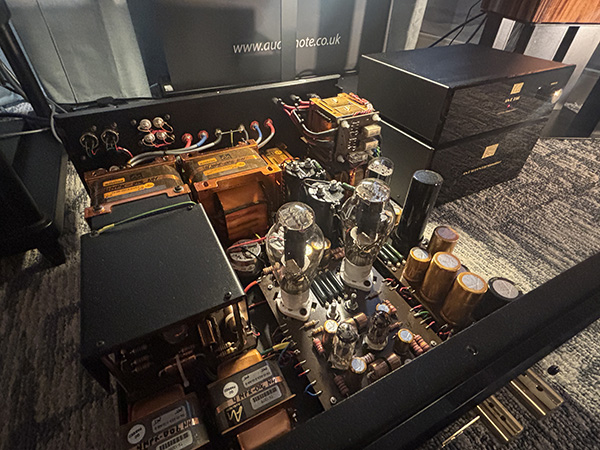 CAF also marked the first time I've been able to hear music through a hi-fi made entirely of equipment from Audio Note UK. Featuring some of the company's top components and costing as much as a three-bedroom cottage on Fire Island, it didn't disappoint. Sources included the new Izvor ladder DAC (price TBA) and the nearly new three-motor TT-Three Reference turntable ($63,000), which reproduced an LP of Duke Ellington's Far East Suite with precision, grace, and insight. Many of the electronics had their top panels removed, and the room resembled a jewelry showroom for Audio Note's silver-foil signal capacitors, silver tantalum resistors, and pure silver output transformers. A long conversation with the company's tremendously named Adrian Ford-Crush made it clear to me that what I really wanted to hear was the Cobra integrated amp, a unit that retails for $5950, which should be making its way to Brooklyn any day now.
Unexpectedly, the room I had the most fun in was named after the third US president and put together by Cliffwood, New Jersey's VPI Industries. I hadn't had much experience with the company's turntables nor met any member of the Weisfeld clan. But there stood paterfamilias Harry Weisfeld, playing LPs from the 1950s on an eye-popping hi-fi made up of a VPI record player, Audio Research tube electronics, and the enormous, and enormously rare, JBL Everests. Unlike most exhibitors at CAF—who seemed understandably stressed out—Weisfeld seemed to be having bathtubs of fun.
CAF also marked the first time I've been able to hear music through a hi-fi made entirely of equipment from Audio Note UK. Featuring some of the company's top components and costing as much as a three-bedroom cottage on Fire Island, it didn't disappoint. Sources included the new Izvor ladder DAC (price TBA) and the nearly new three-motor TT-Three Reference turntable ($63,000), which reproduced an LP of Duke Ellington's Far East Suite with precision, grace, and insight. Many of the electronics had their top panels removed, and the room resembled a jewelry showroom for Audio Note's silver-foil signal capacitors, silver tantalum resistors, and pure silver output transformers. A long conversation with the company's tremendously named Adrian Ford-Crush made it clear to me that what I really wanted to hear was the Cobra integrated amp, a unit that retails for $5950, which should be making its way to Brooklyn any day now.
Unexpectedly, the room I had the most fun in was named after the third US president and put together by Cliffwood, New Jersey's VPI Industries. I hadn't had much experience with the company's turntables nor met any member of the Weisfeld clan. But there stood paterfamilias Harry Weisfeld, playing LPs from the 1950s on an eye-popping hi-fi made up of a VPI record player, Audio Research tube electronics, and the enormous, and enormously rare, JBL Everests. Unlike most exhibitors at CAF—who seemed understandably stressed out—Weisfeld seemed to be having bathtubs of fun.
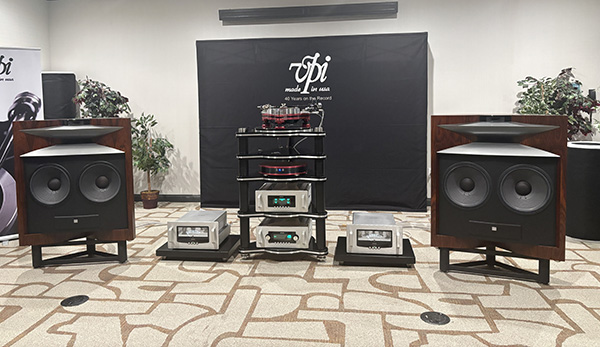 When he saw my excitement at spotting an original pressing of Marty Robbins's Gunfighter Ballads and Trail Songs on the original Columbia vinyl, Weisfeld nearly jumped in the air and shouted, "Do you want to hear it?!" Did I ever. The sound that blasted out of the vintage Everests was as big as David Geffen's superyacht, excelling in every conceivable high-fidelity parameter and totally spiking the fun meter. After I nearly wept at hearing "They're Hanging Me Tonight," which sounded the way my heart has always wanted it to, and got up to leave, Weisfeld blocked my exit, pleading with me to listen to "Big Iron." He and I and Ken Micallef nearly danced during the ballad about an aging Arizona ranger's gunfight with a 24-year-old outlaw, which may have added a year to my life. Thank you, Harry!
 One of my dearest friends, Lavorgna rarely leaves his central–New Jersey barn, and it felt good to corner him for a long dinner at an establishment called Founding Farmers in nearby Potomac. We enjoyed the lovingly prepared food while sipping our Penicillins and trading stories that were, conservatively speaking, about 60% bullshit. Great to see you, Michael—another job well done!
 Sometimes, buying a vinyl reissue is about filling a gap in a musical collection. Or it might involve self-indulgent curiosity about how a familiar recording might sound in the hands of another mastering engineer. But in some cases, an unexpected discovery makes the reissue irresistible, particularly when the recording is dear to one's heart and mind.
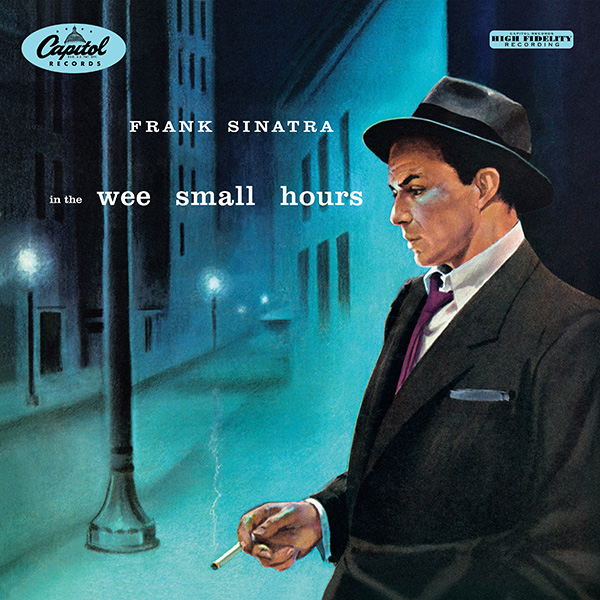
The last of these situations describes Blue Note's recent vinyl reissue of Frank Sinatra's In the Wee Small Hours of the Morning, part of its popular Tone Poet series, which was mastered from a newly discovered tape. As producer Joe Harley told my colleague Sasha Matson, two tape decks ran during the session. One master was used hundreds of times for the album's LP releases, while the other, which was made to issue singles, was filed away and never played again. Until now. Before I could blink twice, a copy was on its way to my apartment.
I discovered In the Wee Small Hours when I was in college, in a bin of a used record store in Lorain, Ohio, and it's no exaggeration to say that it changed the way I listen to music. Much has been written about this record's candidacy as the first-ever concept album, about the psychological effects of Sinatra's fraying marriage to Ava Gardner, and about the young Nelson Riddle's brilliantly inventive orchestral arrangements. But what first moved me about the album is Sinatra's singing. I'd never heard a recording where the meaning of every word had been considered so thoroughly and sung with so much feeling. And the material—ballads about loneliness and heartbreak by Cole Porter, Duke Ellington, and Rodgers and Hart—gave him plenty to work with.
The 1955 release is especially poignant when you consider the unusual arc of Sinatra's career. When he arrived at Capitol the previous year, what distinguished him from all other singers of the era was the deliberate humility of his approach: the total focus on the lyric and the refusal to sweeten performances with vocal mannerisms or displays of power. In this he was reminiscent of Dietrich Fischer-Dieskau, another baritone whose recordings were austere in their vocal delivery yet interpretively and emotionally scintillating. How sad then that by the 1970s, Sinatra had become almost the opposite of the artist you hear on this album: given to bellowing and swagger, drawn to second-rate material, and coming to lyrics with less and less curiosity.
Even the string of masterpieces Sinatra made at Capitol never managed to equal the performances on In the Wee Small Hours. Seemingly every choice made by the singer and the band hits its intended mark, and there's an arresting tension between Sinatra's rigorous, finely shaded vocal control and the wrenching quality of his interpretations.
It was serendipity that the arrival of the high-fidelity era coincided with Sinatra's artistic peak. In the Wee Small Hours was recorded live in ravishing, crystal-clear mono by John Palladino, and if he remains less well-known than peers like Rudy Van Gelder or Roy DuNann, it's through no fault of his own. The session, with Sinatra singing into a Neumann U47 condenser, surrounded by the orchestra, is difficult to imagine today. The result, heard under optimal conditions, leaves little room for improvement, so I was curious to hear what the Tone Poet remaster might add to the conversation.
When it arrived, I got together with a recording engineer friend whose ears I trust more than my own. We listened to both the Tone Poet and a gray-label first pressing using a Fairchild 225 mono and Supex 900 stereo cartridges. The amount of information on Joe Harley's and Kevin Gray's Tone Poet reissue is, frankly, stunning. Compared to the original, I could hear orchestral and vocal details with more clarity, especially given the fact that the record was about as perfectly pressed as any I've handled: totally quiet, centered, and flat.
We noticed other differences. Kevin Gray told Sasha Matson that during mastering, he "added a smidgen of EQ on the bottom." Whether due to this EQ-ing or to the calibration of Gray's mastering chain, there's audibly more bass on the reissue. There's no doubt that the fulsome, plush bass I hear on many of Harley and Gray's jazz reissues appeals to a great many audiophiles and casual listeners. But to my ears, the bass response on this reissue sometimes blurs the line between the string bass's attack and decay and has the additional effect of weighing down and darkening Sinatra's still-youthful voice, making him sound more like he did a decade later, during the days of Summer Wind and Las Vegas. For me, this choice put a damper on some of this music's transport and drama.
Of course I'm splitting hairs. Having access to both of these superb-sounding versions of Sinatra's masterwork is gravy, especially when the widely available reissue offers pristine, noiseless playback for so little outlay. Has there ever been a better time to love vinyl?
Sometimes, buying a vinyl reissue is about filling a gap in a musical collection. Or it might involve self-indulgent curiosity about how a familiar recording might sound in the hands of another mastering engineer. But in some cases, an unexpected discovery makes the reissue irresistible, particularly when the recording is dear to one's heart and mind.
The last of these situations describes Blue Note's recent vinyl reissue of Frank Sinatra's In the Wee Small Hours of the Morning, part of its popular Tone Poet series, which was mastered from a newly discovered tape. As producer Joe Harley told my colleague Sasha Matson, two tape decks ran during the session. One master was used hundreds of times for the album's LP releases, while the other, which was made to issue singles, was filed away and never played again. Until now. Before I could blink twice, a copy was on its way to my apartment.
I discovered In the Wee Small Hours when I was in college, in a bin of a used record store in Lorain, Ohio, and it's no exaggeration to say that it changed the way I listen to music. Much has been written about this record's candidacy as the first-ever concept album, about the psychological effects of Sinatra's fraying marriage to Ava Gardner, and about the young Nelson Riddle's brilliantly inventive orchestral arrangements. But what first moved me about the album is Sinatra's singing. I'd never heard a recording where the meaning of every word had been considered so thoroughly and sung with so much feeling. And the material—ballads about loneliness and heartbreak by Cole Porter, Duke Ellington, and Rodgers and Hart—gave him plenty to work with.
The 1955 release is especially poignant when you consider the unusual arc of Sinatra's career. When he arrived at Capitol the previous year, what distinguished him from all other singers of the era was the deliberate humility of his approach: the total focus on the lyric and the refusal to sweeten performances with vocal mannerisms or displays of power. In this he was reminiscent of Dietrich Fischer-Dieskau, another baritone whose recordings were austere in their vocal delivery yet interpretively and emotionally scintillating. How sad then that by the 1970s, Sinatra had become almost the opposite of the artist you hear on this album: given to bellowing and swagger, drawn to second-rate material, and coming to lyrics with less and less curiosity.
Even the string of masterpieces Sinatra made at Capitol never managed to equal the performances on In the Wee Small Hours. Seemingly every choice made by the singer and the band hits its intended mark, and there's an arresting tension between Sinatra's rigorous, finely shaded vocal control and the wrenching quality of his interpretations.
It was serendipity that the arrival of the high-fidelity era coincided with Sinatra's artistic peak. In the Wee Small Hours was recorded live in ravishing, crystal-clear mono by John Palladino, and if he remains less well-known than peers like Rudy Van Gelder or Roy DuNann, it's through no fault of his own. The session, with Sinatra singing into a Neumann U47 condenser, surrounded by the orchestra, is difficult to imagine today. The result, heard under optimal conditions, leaves little room for improvement, so I was curious to hear what the Tone Poet remaster might add to the conversation.
When it arrived, I got together with a recording engineer friend whose ears I trust more than my own. We listened to both the Tone Poet and a gray-label first pressing using a Fairchild 225 mono and Supex 900 stereo cartridges. The amount of information on Joe Harley's and Kevin Gray's Tone Poet reissue is, frankly, stunning. Compared to the original, I could hear orchestral and vocal details with more clarity, especially given the fact that the record was about as perfectly pressed as any I've handled: totally quiet, centered, and flat.
We noticed other differences. Kevin Gray told Sasha Matson that during mastering, he "added a smidgen of EQ on the bottom." Whether due to this EQ-ing or to the calibration of Gray's mastering chain, there's audibly more bass on the reissue. There's no doubt that the fulsome, plush bass I hear on many of Harley and Gray's jazz reissues appeals to a great many audiophiles and casual listeners. But to my ears, the bass response on this reissue sometimes blurs the line between the string bass's attack and decay and has the additional effect of weighing down and darkening Sinatra's still-youthful voice, making him sound more like he did a decade later, during the days of Summer Wind and Las Vegas. For me, this choice put a damper on some of this music's transport and drama.
Of course I'm splitting hairs. Having access to both of these superb-sounding versions of Sinatra's masterwork is gravy, especially when the widely available reissue offers pristine, noiseless playback for so little outlay. Has there ever been a better time to love vinyl?
Victor Kung with some finished SunValley "kits.
While walking around the first floor, I heard the unmistakable sound of Herb Reichert's voice. Following it led me to find Herb holding Victor Kung of Vancouver-based VK Music in a modified bear hug. Kung was showing amplification from Japan's Elekit and Sunvalley Audio. These components, available as kits or fully assembled, offer serious engineering and spectacular value even in these tariff-plagued times.
Nearby, in a pricier spread assembled by Nashville's Gestalt Audio Design, I spotted the petite but big-sounding Wolf von Langa Ultima field-coil speakers that had impressed me so much in Munich. Well, they looked like Ultimas, but these were their little brothers, the SONs ($21,995/pair). The odd-looking squat wooden boxes, which can sit directly on the floor, are topped with a slightly reclined panel of clear Perspex that acts as a baffle for an AMT folded diaphragm tweeter. Their sensitivity is specified as 94dB, so feel free to pull out your 2A3s, 45s, and other ancient thermionic devices.
Like the higher-priced Ultimas, the SONs left me with an impression of resolution and delicacy, like a photograph taken with a top-notch Leica lens. In tandem with lovely-looking electronics from the UK's SW1X, a record player from TW Acustic, and a Fuuga cartridge, they kept drawing me into the music with a light but persistent pull. I hope to have a pair in Brooklyn sometime in the coming year for an extended listen.
My favorite room was put together by fellow New Yorker Jeff Catalano. The High Water Sound system consisted entirely of gear I hadn't previously come across; much of it was fairly new to Catalano as well. That he was able to assemble these components into such an effective music-playing machine is a tribute to his ears, some of the keenest I know.
The gear included looming, handsomely retro SP-01 speakers from Zeiler Audio, which from a distance looked like vintage Tannoys and use a 15" driver with an elliptical waveguide to cover the entire audible range. They were driven by the Zurich-based company's equally striking tube electronics. But for me, the showstopper was a new-production idler-drive (!) turntable from Torqueo Audio of Pescara, Italy. Unlike many idler-drive decks, the Torqueo Audio Exclusive ($25,000) isn't a rebuilt or reengineered vintage unit but an entirely new design with jaw-dropping fit and finish. Matched with a Glanz tonearm and a selection of Ortofon SPU cartridges, it was the single most covetable object I saw and heard at the Hilton.
Catalano's room was a study in the many factors that go into transforming a generic hotel suite into a compelling listening environment. Instead of the usual vinyl-tarp displays printed with marketing copy under ceiling-mounted spotlights, the room was pleasantly dim and decorated with (real) plants. Lighting came courtesy of strategically placed Isamu Noguchi light sculptures and George Nelson Cigar Lotus floor lamps; the gear was arranged on a Nelson Platform bench, all icons of 20th century design.
And then there was the music, much of it recent and all of it fascinating. Catalano is a relentless record fiend, and when I listen with him, I always learn about something new. This time was no different: During my brief stay in the High Water Sound room, I heard Mutable Set by producer and songwriter Blake Mills, a set of gorgeously hushed songs from 2020 that I'm chasing down on vinyl.
CAF also marked the first time I've been able to hear music through a hi-fi made entirely of equipment from Audio Note UK. Featuring some of the company's top components and costing as much as a three-bedroom cottage on Fire Island, it didn't disappoint. Sources included the new Izvor ladder DAC (price TBA) and the nearly new three-motor TT-Three Reference turntable ($63,000), which reproduced an LP of Duke Ellington's Far East Suite with precision, grace, and insight. Many of the electronics had their top panels removed, and the room resembled a jewelry showroom for Audio Note's silver-foil signal capacitors, silver tantalum resistors, and pure silver output transformers. A long conversation with the company's tremendously named Adrian Ford-Crush made it clear to me that what I really wanted to hear was the Cobra integrated amp, a unit that retails for $5950, which should be making its way to Brooklyn any day now.
When he saw my excitement at spotting an original pressing of Marty Robbins's Gunfighter Ballads and Trail Songs on the original Columbia vinyl, Weisfeld nearly jumped in the air and shouted, "Do you want to hear it?!" Did I ever. The sound that blasted out of the vintage Everests was as big as David Geffen's superyacht, excelling in every conceivable high-fidelity parameter and totally spiking the fun meter. After I nearly wept at hearing "They're Hanging Me Tonight," which sounded the way my heart has always wanted it to, and got up to leave, Weisfeld blocked my exit, pleading with me to listen to "Big Iron." He and I and Ken Micallef nearly danced during the ballad about an aging Arizona ranger's gunfight with a 24-year-old outlaw, which may have added a year to my life. Thank you, Harry!
The Archival Turntable by Fern & Roby (and Technics and SME).
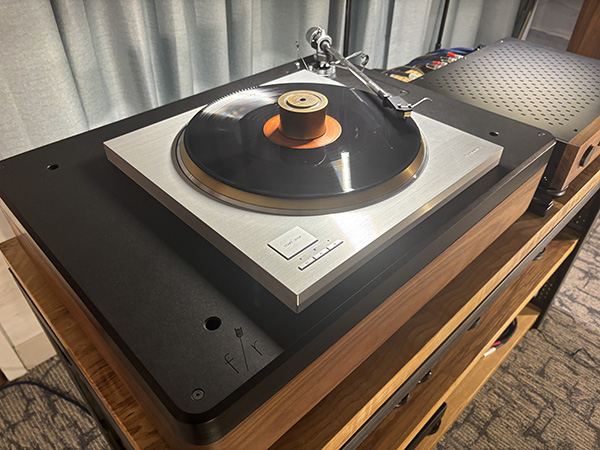
As always at audio shows, the fondest moments involved seeing friends old and new. AudioQuest's Stephen Mejias and fellow writer Michael Lavorgna introduced me to Fern & Roby's delightful Christopher Hildebrand. His The Archival Turntable, consisting of a Technics SP-10R record spinner, SME M2-12 tonearm, and a walnut and Richlite plinth, sounded as terrific as it looked, especially when playing Kraftwerk at a wall-shaking volume. It didn't surprise me to learn that a sample of this record player resides in the National Audio-Video Conservation Center at the Library of Congress.
Sometimes, buying a vinyl reissue is about filling a gap in a musical collection. Or it might involve self-indulgent curiosity about how a familiar recording might sound in the hands of another mastering engineer. But in some cases, an unexpected discovery makes the reissue irresistible, particularly when the recording is dear to one's heart and mind.
The last of these situations describes Blue Note's recent vinyl reissue of Frank Sinatra's In the Wee Small Hours of the Morning, part of its popular Tone Poet series, which was mastered from a newly discovered tape. As producer Joe Harley told my colleague Sasha Matson, two tape decks ran during the session. One master was used hundreds of times for the album's LP releases, while the other, which was made to issue singles, was filed away and never played again. Until now. Before I could blink twice, a copy was on its way to my apartment.