If you go to Tokyo, there's a good chance you'll develop a new appreciation for shopping malls. The Japanese know malls. They know just what to do with them. Inside a Tokyo mall, you can peruse the usual handbags and shoes in their unending variety. But you can also stare at Fuji apples as large as a baby's head swaddled in tissue paper, flip through the world's most exquisite stationery, stock up on fabric from the 1920s, and taste things that will haunt you well into retirement.
I remember having my first serious sushi in Tokyo on the top floor of a Ginza mall. My partner and I were led into a private room where a chef who didn't speak a word of English prepared one of the four or five best meals I'd eaten. Everything we needed to know was conveyed by the languid movements of his $2000 sashimi blade and the look of pride on his face. There was snow crab as sweet as a Georgia peach, a sliver of tuna belly as intense as foie gras, buttery amberjack, upsettingly fresh salmon roe. The sea urchin that the chef took out of a cedar box and placed in front of me was so explosively flavorful that it rang in my head like a bell. But the thing I remember best was the first course, a small, lacquered bowl of miso soup. Unlike the watery, yellowish stuff you might know from your neighborhood sushi joint, this miso soup was the color of blackstrap molasses and suffused with umami flavor of such depth that it lingered in my mouth for the rest of the meal.
The savory, deeply satisfying flavor that is umami was scientifically identified in 1908 by Kikunae Ikeda, a professor at Tokyo Imperial University. Ikeda noticed that a broth made from kombu, a seaweed, had a flavor that was distinct from the four basic tastes: sweet, sour, bitter, and salty. When evaporated, the broth left behind brown crystals, which he identified as glutamic acid. Ikeda named the flavor umami and, later, patented a method of mass-producing the crystals in the form of a food additive called monosodium glutamate.
Umami is more subtle than the other tastes, but it imbues food with body, depth, complexity, and richness. It's the element that gives a dish a primal savor, the thing that makes you think about it in the middle of the night the way you might think about a former lover. For years, I experienced nighttime cravings for a $7 dish served at a restaurant on Mott Street in Manhattan's Chinatown, recalling how the deep umami of the black bean and scallion sauce embraced the sweetness of the nearly-still-alive blue crabs.
I believe that something similar exists in the realm of listening. I began thinking about this while auditioning a tube amplifier from Japan, my first encounter with the work of Atsushi Miura and his son Yutaka of Air Tight. Much has been written about this nearly 40-year-old outfit, founded by the former head of Luxman when that company decided to phase out tube components in favor of cheaper, easier-to-manufacture solid state gear. Among a certain segment of tube-loving audio fanatics, Air Tight has been talked about with a measure of fascination and even mystery, and only in part because its products are expensive and can be difficult to hear stateside (footnote 1).
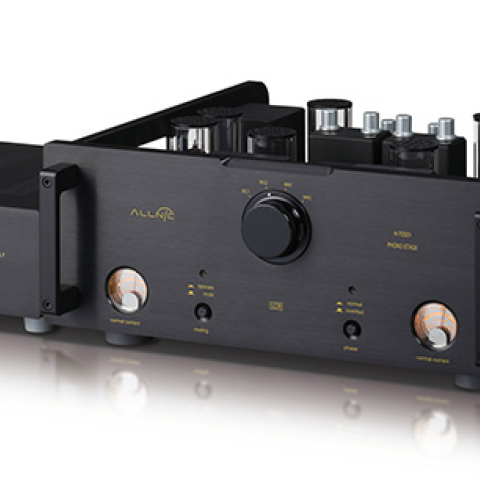
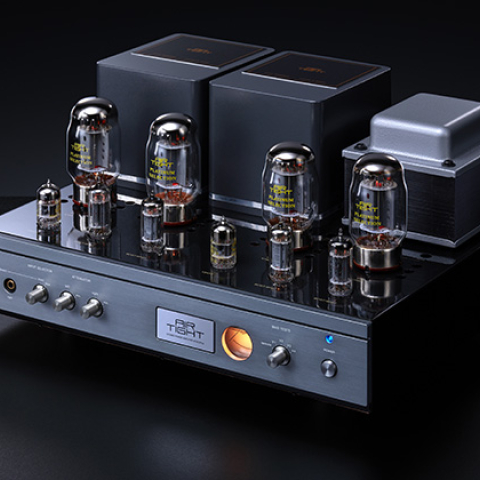
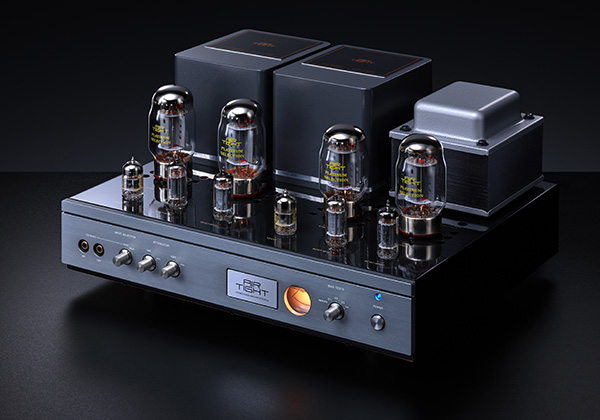
 The ATM-2Plus is a replacement for the ATM-2, which was introduced in 1988 and phased out in 2018, the longest run of any Air Tight component. Both amps use KT88 beam tetrodes to produce 70W per channel. According to the company, the main reason for the new model is the disappearance from the market of new old stock British KT88s made by the Marconi-Osram Valve company and marketed under the GEC, Genalex, and Gold Lion labels. (These tubes can still occasionally be found for sale, but rarely in NOS condition or as matched quads. The prices of the exceptions tend to be extortionate.) Air Tight engineers found that new-production KT88s from Russia and China simply weren't as reliable or long-lived as the originals, and so the ATM-2Plus operates its quartet of output tubes—Electro Harmonix KT88EHs, unfortunately made in Russia—at a lower plate voltage than its predecessor.
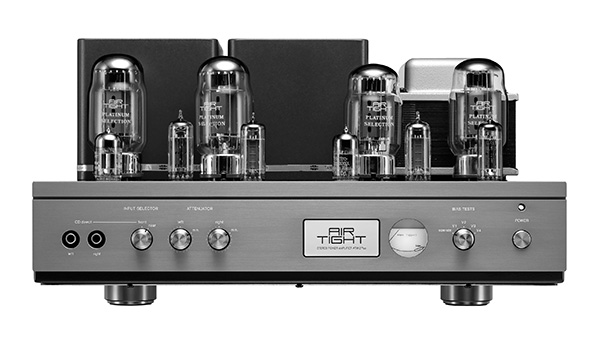
The ATM-2Plus ($24,975) is a 73lb beast that features huge potted output transformers from Tamura rated at 100W, an even larger hammertone-capped, hand-wound power transformer, and a monocoque chasis without a screw in sight. Each channel sees a 12AX7 input tube and two 6CG7s acting as a driver/ phase inverter and a cathode follower, respectively. The power supply is solid state. Bias is set manually with the help of an illuminated meter on the front panel. Nearby are dials allowing gain to be adjusted for each channel—huzzah! Inside, the Air Tight dispenses with printed circuit boards and is wired point-to-point. Because my time on earth is finite, I will direct readers interested in learning about this amplifier's other knobs, inputs, switches, and specifications to the company's website.
The ATM-2Plus is a replacement for the ATM-2, which was introduced in 1988 and phased out in 2018, the longest run of any Air Tight component. Both amps use KT88 beam tetrodes to produce 70W per channel. According to the company, the main reason for the new model is the disappearance from the market of new old stock British KT88s made by the Marconi-Osram Valve company and marketed under the GEC, Genalex, and Gold Lion labels. (These tubes can still occasionally be found for sale, but rarely in NOS condition or as matched quads. The prices of the exceptions tend to be extortionate.) Air Tight engineers found that new-production KT88s from Russia and China simply weren't as reliable or long-lived as the originals, and so the ATM-2Plus operates its quartet of output tubes—Electro Harmonix KT88EHs, unfortunately made in Russia—at a lower plate voltage than its predecessor.
The ATM-2Plus ($24,975) is a 73lb beast that features huge potted output transformers from Tamura rated at 100W, an even larger hammertone-capped, hand-wound power transformer, and a monocoque chasis without a screw in sight. Each channel sees a 12AX7 input tube and two 6CG7s acting as a driver/ phase inverter and a cathode follower, respectively. The power supply is solid state. Bias is set manually with the help of an illuminated meter on the front panel. Nearby are dials allowing gain to be adjusted for each channel—huzzah! Inside, the Air Tight dispenses with printed circuit boards and is wired point-to-point. Because my time on earth is finite, I will direct readers interested in learning about this amplifier's other knobs, inputs, switches, and specifications to the company's website.
 With its seamlessly finished gray, black, and chrome surfaces, the ATM-2Plus looks lovely in a way that strikes me as very Japanese and not quite captured by dowdy adjectives such as "sophisticated," "subtle," and "sedate." Whatever you may think of its aesthetics, the Air Tight is certainly not vying to look like it belongs in the summer home of a Serbian hitman.
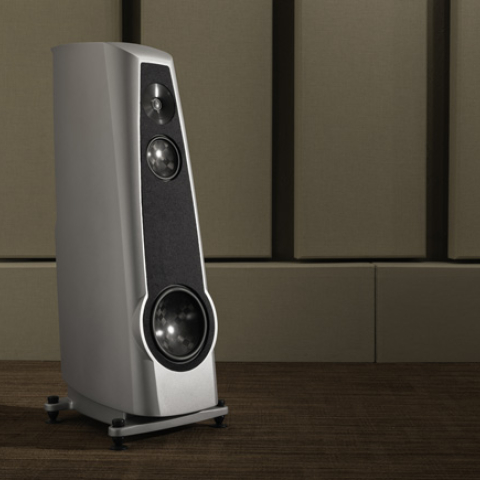
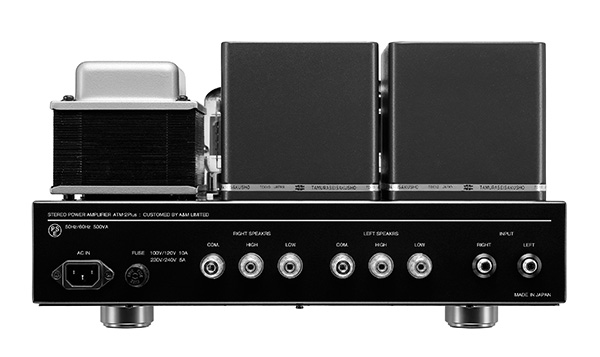
Finally, binding posts on the back offer an option of 4- or 8 ohm impedance. Connected to the Klipsch La Scalas using the 8 ohm tap, the Air Tight sounded a bit too constrained and rigid, like a brand-new pair of leather shoes. When I switched to the 4 ohm tap, dance music began to dance and folk music began to folk, so I kept things there for the remainder of our time together.
Listening
With its seamlessly finished gray, black, and chrome surfaces, the ATM-2Plus looks lovely in a way that strikes me as very Japanese and not quite captured by dowdy adjectives such as "sophisticated," "subtle," and "sedate." Whatever you may think of its aesthetics, the Air Tight is certainly not vying to look like it belongs in the summer home of a Serbian hitman.
Finally, binding posts on the back offer an option of 4- or 8 ohm impedance. Connected to the Klipsch La Scalas using the 8 ohm tap, the Air Tight sounded a bit too constrained and rigid, like a brand-new pair of leather shoes. When I switched to the 4 ohm tap, dance music began to dance and folk music began to folk, so I kept things there for the remainder of our time together.
Listening
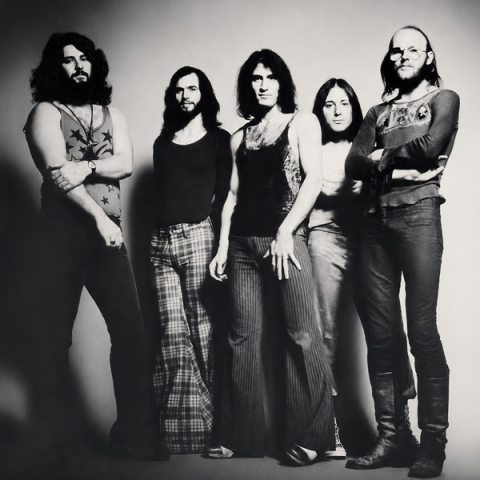
Some records are particularly good at capturing a place and time in music history. One is Third, Soft Machine's double-LP prog-jazz-skronk opus from 1970. Its cadinal quality is its messiness, which is to say freedom, both from genre conventions and commercial considerations (which is perhaps odd for a record that ended up charting on the UK Top 20). Each composition takes up an entire side of an LP, and each is radically different. My favorite is "The Moon in June," composed by the brilliantly strange Robert Wyatt, who also sings and plays every instrument on much of the track. This exuberant, poorly shaped, occasionally silly, and utterly enchanting piece of music suggests hybrids of jazz, rock, and pop that lean into songwriting, tempo variation, tape loops, and textural effects, and exist quite apart from the shredding and slickness that made so much contemporaneous fusion so deadening. It also boasts a sense of place, influenced by British artists like Ian Carr, Keith Tippett, and even Marc Bolan.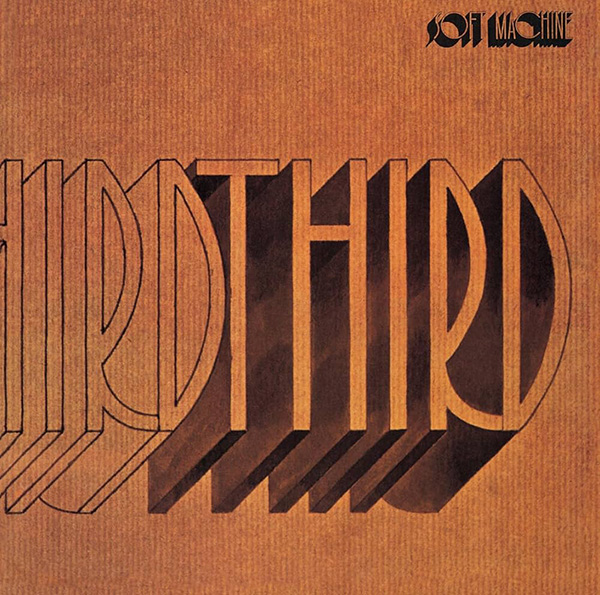 Listening to "The Moon in June," I noticed that unlike some more eager-sounding amps, the Air Tight didn't jump onto my lap and start licking my face like a sheepdog. The Manley Mahi monoblocks are sheepdog amps, and they are terrific. But the Air Tight played with a composure and even a certain reticence that made me lean forward and pay attention in a different way than I'm accustomed to.
I also noticed its big-tetrode dynamics, panoramic staging, and fulsome low-end response that made Hugh Hopper's electric bass tones massage my diaphragm in a most pleasant manner. To be honest, though, I expected these things from a well-built KT88 amp, which brings me to a confession.
In my experience, as an amp's wattage goes up, my tendency to enjoy it goes down. I've had particularly crap luck enjoying amps based on KT88s, 6550s, and higher-powered variants like KT120s and 150s. Many of these amps sound either glassy and hard or thick and congested. And because the big horns I've been listening to can play loud and tight with 7W, I rarely require these muscle amps' wattage.
So it was low-key blowing my mind that the ATM-2Plus played with delicacy and grace. On the Soft Machine album—hardly an audiophile recording—it was remarkable at capturing the ambient information that tells us about the studio space (though "The Moon in June" was spliced together from recordings made at several studios), equaling some single-triode amps in this area. The Air Tight also excelled at portraying depth, layering the sounds front to back with as much dimension as my room allowed. And it played bass with a tunefulness and pitch specificity unusual for any 70Wpc amp, capable of making dancing bass lines and crunchy electronic beats equally convincing.
But what compelled me most about the ATM-2Plus was its way of making music appear to be as manifestly physical and richly textured as I've heard. The Hammond organ played by Wyatt on "The Moon in June" was startling in the way it seemed to compress and vibrate the air in the room in the manner of an actual Hammond organ.
Listening to "The Moon in June," I noticed that unlike some more eager-sounding amps, the Air Tight didn't jump onto my lap and start licking my face like a sheepdog. The Manley Mahi monoblocks are sheepdog amps, and they are terrific. But the Air Tight played with a composure and even a certain reticence that made me lean forward and pay attention in a different way than I'm accustomed to.
I also noticed its big-tetrode dynamics, panoramic staging, and fulsome low-end response that made Hugh Hopper's electric bass tones massage my diaphragm in a most pleasant manner. To be honest, though, I expected these things from a well-built KT88 amp, which brings me to a confession.
In my experience, as an amp's wattage goes up, my tendency to enjoy it goes down. I've had particularly crap luck enjoying amps based on KT88s, 6550s, and higher-powered variants like KT120s and 150s. Many of these amps sound either glassy and hard or thick and congested. And because the big horns I've been listening to can play loud and tight with 7W, I rarely require these muscle amps' wattage.
So it was low-key blowing my mind that the ATM-2Plus played with delicacy and grace. On the Soft Machine album—hardly an audiophile recording—it was remarkable at capturing the ambient information that tells us about the studio space (though "The Moon in June" was spliced together from recordings made at several studios), equaling some single-triode amps in this area. The Air Tight also excelled at portraying depth, layering the sounds front to back with as much dimension as my room allowed. And it played bass with a tunefulness and pitch specificity unusual for any 70Wpc amp, capable of making dancing bass lines and crunchy electronic beats equally convincing.
But what compelled me most about the ATM-2Plus was its way of making music appear to be as manifestly physical and richly textured as I've heard. The Hammond organ played by Wyatt on "The Moon in June" was startling in the way it seemed to compress and vibrate the air in the room in the manner of an actual Hammond organ.
 This apparition made me pull out a vinyl copy of Big Boss Man! by Charlie Rich, a maverick whose countrypolitan smash hits from the 1970s were preceded by country-soul sides that failed to win much public attention but remain my favorite among his recordings. Not even Chet Atkins's "Nashville Sound" production, featuring a string section and a choir conducted by Anita Kerr, could dampen the charisma and emotiveness of Rich's voice, which rivals Ray Charles's. Rich was also a first-class songwriter of classics like "Who Will the Next Fool Be" and much of the material on this 1966 compilation.
His version of "Nice' N' Easy" is more louche, raw, and Southern than Sinatra's, dripping with swagger and longing. Through the Air Tight, Rich's voice and piano sounded as vividly colored and harmonically complete as I've heard it, with a tone that brought to mind Pappy Van Winkle 13-year-old rye. It's true that some of these qualities can be extracted from, say, a vintage Acrosound amp, but with the Air Tight, all that organic goodness doesn't come with plodding bass, wooly textures, or glossed-over detail.
So I began to think of the Air Tight as having a high-umami sound: imbued with off-the-charts body, depth, complexity, and richness while maintaining admirable speed, resolution, and transparency. Then there's that difficult-to-articulate rightness and grace. Add that its 70Wpc can drive a plurality of speakers in a majority of rooms, and it was difficult for me to see how to appreciate this amp more than I already did.
But I found one. While the ATM-2Plus was designed to work its magic with a meager diet of inexpensive new-production tubes, I had an inkling it might sound even better when outfitted with some of the best tubes ever made. My stash wasn't nearly big enough, so I asked around. Neighbor and vintage maven Adam Wexler of Resolution Audio Video lent me a stash of NOS treasures, and Kevin Deal of Upscale Audio sent a pair of rare Mullard 12AX7s. As a baseline, all of the tubes in this comparison smoked their stock Russian counterparts in just about every parameter. When you're ready, please step this way.
This apparition made me pull out a vinyl copy of Big Boss Man! by Charlie Rich, a maverick whose countrypolitan smash hits from the 1970s were preceded by country-soul sides that failed to win much public attention but remain my favorite among his recordings. Not even Chet Atkins's "Nashville Sound" production, featuring a string section and a choir conducted by Anita Kerr, could dampen the charisma and emotiveness of Rich's voice, which rivals Ray Charles's. Rich was also a first-class songwriter of classics like "Who Will the Next Fool Be" and much of the material on this 1966 compilation.
His version of "Nice' N' Easy" is more louche, raw, and Southern than Sinatra's, dripping with swagger and longing. Through the Air Tight, Rich's voice and piano sounded as vividly colored and harmonically complete as I've heard it, with a tone that brought to mind Pappy Van Winkle 13-year-old rye. It's true that some of these qualities can be extracted from, say, a vintage Acrosound amp, but with the Air Tight, all that organic goodness doesn't come with plodding bass, wooly textures, or glossed-over detail.
So I began to think of the Air Tight as having a high-umami sound: imbued with off-the-charts body, depth, complexity, and richness while maintaining admirable speed, resolution, and transparency. Then there's that difficult-to-articulate rightness and grace. Add that its 70Wpc can drive a plurality of speakers in a majority of rooms, and it was difficult for me to see how to appreciate this amp more than I already did.
But I found one. While the ATM-2Plus was designed to work its magic with a meager diet of inexpensive new-production tubes, I had an inkling it might sound even better when outfitted with some of the best tubes ever made. My stash wasn't nearly big enough, so I asked around. Neighbor and vintage maven Adam Wexler of Resolution Audio Video lent me a stash of NOS treasures, and Kevin Deal of Upscale Audio sent a pair of rare Mullard 12AX7s. As a baseline, all of the tubes in this comparison smoked their stock Russian counterparts in just about every parameter. When you're ready, please step this way.
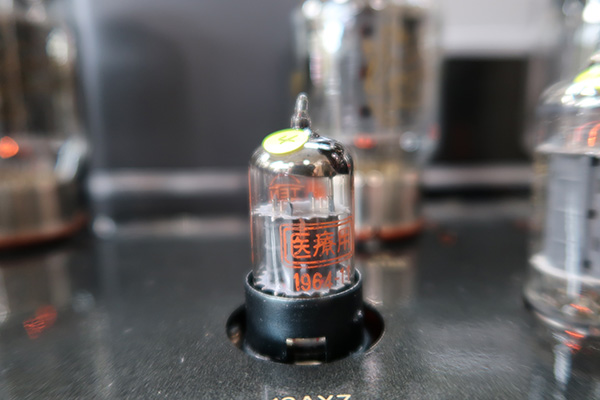 12AX7s
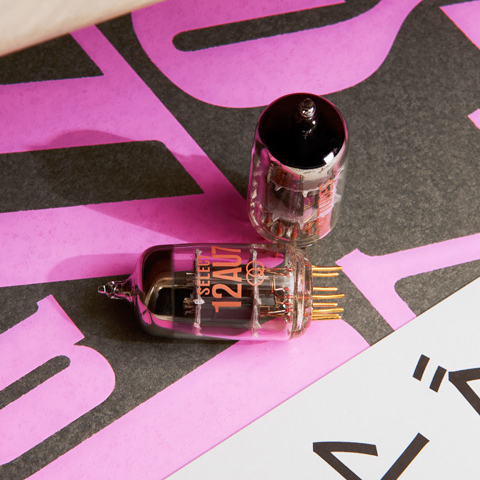
Amperex Bugle Boy 12AX7s with long plates and D getters, Holland, 1958: That lovely Amperex song: mellow and extended highs, an inviting midrange, and tight bass. Staggering soundstage, but not the last word in dynamics, definition, or body, with a slightly contoured sound. Lemon chiffon to Mullard's flourless chocolate. Telefunken 12AX7s with smooth plates and diamond bottoms, West Germany, 1960s: Neutral and clear, with a smooth and slightly thin sound. Controversially, I've always found these popular tubes boring. I did again in the Air Tight. A taupe Toyota Camry at Benz prices.
Siemens 12AX7s (branded Telefunken), West Germany, 1963: This is how it's done! The linear German sound but with excitement, standout dynamics, and vivid color. New to me and undeniably impressive.
Mullard 12AX7s with long plates and round getters, UK, 1958: Not the warm Mullard signature of the later series but beautifully balanced and organic, with nothing to criticize. But in this exalted company, these old Mullards brought a knife to a gunfight and came off as a bit forgettable.
Mullard 12AX7s with short plates and solid dimpled getters, UK, 1960s: These quite rare tubes take the classic short-plate Mullard sound—punchy bass, a low-mid emphasis, and slightly reticent highs—and turn it up to 11. Gorgeously expressive, singing tone with uncommonly muscular dynamics and sledgehammer bass. Woo!
Raytheon 5751s with triple mica and D getters, US, 1950s: Unexpectedly, my two favorite input tubes were made in the good old US of A. The Raytheon has a subtlety and inner fire that gave me goosebumps and lacked any obvious frequency-response shenanigans. Mystical sound and still a relative bargain.
RCA 7025s with black plates, US, 1960s: These combine richness, linearity, detail, texture, and Wurlitzer-style chunk. Like the short-plate Mullards above but with more body. Bordeaux to the Raytheons' burgundy.
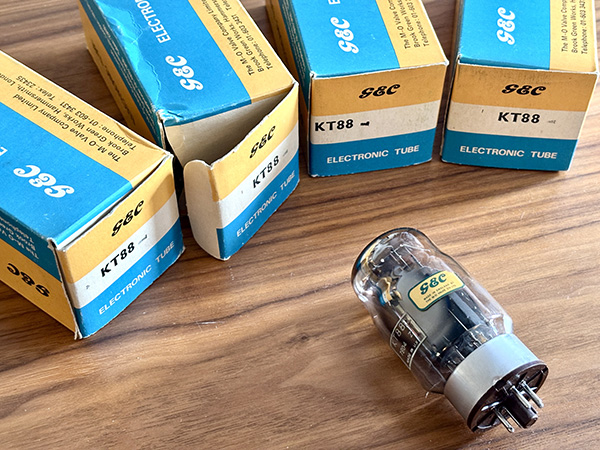 KT88s
KT88s
Ray Tubes Reserve KT88s, China, 2025: These new-production tubes sound gorgeous: monster dynamics, detail, smoothness, and wonderfully vivid textures. A matched quad costs $1127, but these beat the stock tubes to death with a ball peen hammer.
Genalex KT88s branded Gold Monarch, UK, 1960s: It would be nice to imagine the mythical reputation of these nearly unobtainable tubes to be another case of undeserved hype. It would also be bullshit. These have tone and body to die for, a sound as natural as a creek in the Cotswolds, and a sense of presence that's downright unnerving. I hated writing that.
Where does that leave us? With its stock tubes, the ATM-2Plus is among a handful of the finest and most memorable tube amps I've heard, and certainly the best one putting out anything like 70Wpc. Outfitted with some of the tubes above, it's palpably, obviously better. Though I will never be able to afford the Air Tight, it is my Hanukkah wish that you might.
Joni's Mitchell's Hejira
There are good records, great records, and records that are stitched into the lining of one's soul. In that last group are the ones that become building blocks of our identities, records that, for better or worse, we can't do without.
For me, one of these is Hejira, Joni Mitchell's farewell to the pop mainstream. Of course it has barely anything to do with pop in either structure or lyrical content. The confessional songwriting on Blue and Court and Spark had made Mitchell an arena-filling rock star, but she was too ambitious, and her art too restless and strange, to continue in that ingratiating vein. So she set a course for weirder territory.
 Released in November 1976, Hejira was a signpost of how far afield she had traveled. The arrangements are skeletal. Mitchell is using a C-G-D-F-G-C open tuning, and the guitar chords she plays sound disorienting and desolate. Whether there are melodies at all is debatable. It's difficult to imagine a rock band being able to hang with this material, and so it makes sense that the other participants are jazz players accustomed to the complex harmonies and relative lack of structure. Key among them is Jaco Pastorius, whose unmistakably high, melodic bass playing functions as a duet partner to Mitchell's voice, which had grown darker and huskier since her previous outing.
Stranger yet are the lyrics. Unlike the autobiographical essays on Blue, the stories here explore the existential tug between connection and freedom, loneliness and dependence. The romantic complications of the earlier albums have given way to spiritual ones. "Refuge of the Roads" sketches Mitchell's encounter with the controversial Buddhist teacher Chögyam Trungpa; describing him as "a friend of spirit who drank and womanized," Mitchell embraces the uncomfortable truth of human imperfection and of our eternal dissatisfaction. The album's themes are brought to life by the superb writing and Mitchell's way with metaphor. Reflecting on wanting to be known fully and its ultimate impossibility, she sings:
I have to admit that I've had decidedly mixed experiences with MoFi's vinyl (and not because of the fuss around the "digital step"). While all of it sounds some variety of terrific, I've been less convinced by some releases' ideas about the music. Take 2019's double-disc reissue of Miles Smiles. The glossy, high-resolution mastering somehow allows the music's rhythmic structure to drift. When I compared it to the 1967 Columbia original, I heard the playing of Miles Davis's quintet as notably less incisive and communicative.
So I slid the new Hejira out of its heavy sleeve and turned the Garrard's speed dial to 45 with a bit of trepidation. When I sat down to listen, the music that came out of the speakers dazzled me. The MoFi team has somehow excavated a whole new layer of musically relevant information: not only more distinct notes from the guitar and bass and a closer, less murky acoustic but also tons of ambient sounds I'd never heard. And far more body, making Mitchell and the band present in a way I hadn't experienced.
Best of all, the music made it through this extreme makeover unscathed. Listening to Mitchell and Pastorius's twining duet on "Refuge of the Roads" moved me as deeply as ever, but the experience was more lifelike and exciting. This Hejira delivers exactly what the marketing hype promises: a chance to hear not just polished sound but a significantly more complete iteration of a musical artwork.
I'd been listening to the four sides nearly nonstop when a friend remarked, unprompted, that I seemed "stretched thin and weirdly philosophical." I guess it's time to give Hejira a rest.
Released in November 1976, Hejira was a signpost of how far afield she had traveled. The arrangements are skeletal. Mitchell is using a C-G-D-F-G-C open tuning, and the guitar chords she plays sound disorienting and desolate. Whether there are melodies at all is debatable. It's difficult to imagine a rock band being able to hang with this material, and so it makes sense that the other participants are jazz players accustomed to the complex harmonies and relative lack of structure. Key among them is Jaco Pastorius, whose unmistakably high, melodic bass playing functions as a duet partner to Mitchell's voice, which had grown darker and huskier since her previous outing.
Stranger yet are the lyrics. Unlike the autobiographical essays on Blue, the stories here explore the existential tug between connection and freedom, loneliness and dependence. The romantic complications of the earlier albums have given way to spiritual ones. "Refuge of the Roads" sketches Mitchell's encounter with the controversial Buddhist teacher Chögyam Trungpa; describing him as "a friend of spirit who drank and womanized," Mitchell embraces the uncomfortable truth of human imperfection and of our eternal dissatisfaction. The album's themes are brought to life by the superb writing and Mitchell's way with metaphor. Reflecting on wanting to be known fully and its ultimate impossibility, she sings:
I have to admit that I've had decidedly mixed experiences with MoFi's vinyl (and not because of the fuss around the "digital step"). While all of it sounds some variety of terrific, I've been less convinced by some releases' ideas about the music. Take 2019's double-disc reissue of Miles Smiles. The glossy, high-resolution mastering somehow allows the music's rhythmic structure to drift. When I compared it to the 1967 Columbia original, I heard the playing of Miles Davis's quintet as notably less incisive and communicative.
So I slid the new Hejira out of its heavy sleeve and turned the Garrard's speed dial to 45 with a bit of trepidation. When I sat down to listen, the music that came out of the speakers dazzled me. The MoFi team has somehow excavated a whole new layer of musically relevant information: not only more distinct notes from the guitar and bass and a closer, less murky acoustic but also tons of ambient sounds I'd never heard. And far more body, making Mitchell and the band present in a way I hadn't experienced.
Best of all, the music made it through this extreme makeover unscathed. Listening to Mitchell and Pastorius's twining duet on "Refuge of the Roads" moved me as deeply as ever, but the experience was more lifelike and exciting. This Hejira delivers exactly what the marketing hype promises: a chance to hear not just polished sound but a significantly more complete iteration of a musical artwork.
I'd been listening to the four sides nearly nonstop when a friend remarked, unprompted, that I seemed "stretched thin and weirdly philosophical." I guess it's time to give Hejira a rest.
Footnote 1: US distributor: AXISS Audio USA, 624 Grassmere Park, Suite 18 Nashville, TN 37211. Tel: (866) 295-4133. Email: sales@axissaudio.com. Web: axissaudio.com
The ATM-2Plus is a replacement for the ATM-2, which was introduced in 1988 and phased out in 2018, the longest run of any Air Tight component. Both amps use KT88 beam tetrodes to produce 70W per channel. According to the company, the main reason for the new model is the disappearance from the market of new old stock British KT88s made by the Marconi-Osram Valve company and marketed under the GEC, Genalex, and Gold Lion labels. (These tubes can still occasionally be found for sale, but rarely in NOS condition or as matched quads. The prices of the exceptions tend to be extortionate.) Air Tight engineers found that new-production KT88s from Russia and China simply weren't as reliable or long-lived as the originals, and so the ATM-2Plus operates its quartet of output tubes—Electro Harmonix KT88EHs, unfortunately made in Russia—at a lower plate voltage than its predecessor.
With its seamlessly finished gray, black, and chrome surfaces, the ATM-2Plus looks lovely in a way that strikes me as very Japanese and not quite captured by dowdy adjectives such as "sophisticated," "subtle," and "sedate." Whatever you may think of its aesthetics, the Air Tight is certainly not vying to look like it belongs in the summer home of a Serbian hitman.
Finally, binding posts on the back offer an option of 4- or 8 ohm impedance. Connected to the Klipsch La Scalas using the 8 ohm tap, the Air Tight sounded a bit too constrained and rigid, like a brand-new pair of leather shoes. When I switched to the 4 ohm tap, dance music began to dance and folk music began to folk, so I kept things there for the remainder of our time together.
Some records are particularly good at capturing a place and time in music history. One is Third, Soft Machine's double-LP prog-jazz-skronk opus from 1970. Its cadinal quality is its messiness, which is to say freedom, both from genre conventions and commercial considerations (which is perhaps odd for a record that ended up charting on the UK Top 20). Each composition takes up an entire side of an LP, and each is radically different. My favorite is "The Moon in June," composed by the brilliantly strange Robert Wyatt, who also sings and plays every instrument on much of the track. This exuberant, poorly shaped, occasionally silly, and utterly enchanting piece of music suggests hybrids of jazz, rock, and pop that lean into songwriting, tempo variation, tape loops, and textural effects, and exist quite apart from the shredding and slickness that made so much contemporaneous fusion so deadening. It also boasts a sense of place, influenced by British artists like Ian Carr, Keith Tippett, and even Marc Bolan.
Listening to "The Moon in June," I noticed that unlike some more eager-sounding amps, the Air Tight didn't jump onto my lap and start licking my face like a sheepdog. The Manley Mahi monoblocks are sheepdog amps, and they are terrific. But the Air Tight played with a composure and even a certain reticence that made me lean forward and pay attention in a different way than I'm accustomed to.
I also noticed its big-tetrode dynamics, panoramic staging, and fulsome low-end response that made Hugh Hopper's electric bass tones massage my diaphragm in a most pleasant manner. To be honest, though, I expected these things from a well-built KT88 amp, which brings me to a confession.
This apparition made me pull out a vinyl copy of Big Boss Man! by Charlie Rich, a maverick whose countrypolitan smash hits from the 1970s were preceded by country-soul sides that failed to win much public attention but remain my favorite among his recordings. Not even Chet Atkins's "Nashville Sound" production, featuring a string section and a choir conducted by Anita Kerr, could dampen the charisma and emotiveness of Rich's voice, which rivals Ray Charles's. Rich was also a first-class songwriter of classics like "Who Will the Next Fool Be" and much of the material on this 1966 compilation.
His version of "Nice' N' Easy" is more louche, raw, and Southern than Sinatra's, dripping with swagger and longing. Through the Air Tight, Rich's voice and piano sounded as vividly colored and harmonically complete as I've heard it, with a tone that brought to mind Pappy Van Winkle 13-year-old rye. It's true that some of these qualities can be extracted from, say, a vintage Acrosound amp, but with the Air Tight, all that organic goodness doesn't come with plodding bass, wooly textures, or glossed-over detail.
So I began to think of the Air Tight as having a high-umami sound: imbued with off-the-charts body, depth, complexity, and richness while maintaining admirable speed, resolution, and transparency. Then there's that difficult-to-articulate rightness and grace. Add that its 70Wpc can drive a plurality of speakers in a majority of rooms, and it was difficult for me to see how to appreciate this amp more than I already did.
12AX7sAmperex Bugle Boy 12AX7s with long plates and D getters, Holland, 1958: That lovely Amperex song: mellow and extended highs, an inviting midrange, and tight bass. Staggering soundstage, but not the last word in dynamics, definition, or body, with a slightly contoured sound. Lemon chiffon to Mullard's flourless chocolate. Telefunken 12AX7s with smooth plates and diamond bottoms, West Germany, 1960s: Neutral and clear, with a smooth and slightly thin sound. Controversially, I've always found these popular tubes boring. I did again in the Air Tight. A taupe Toyota Camry at Benz prices.
KT88sRay Tubes Reserve KT88s, China, 2025: These new-production tubes sound gorgeous: monster dynamics, detail, smoothness, and wonderfully vivid textures. A matched quad costs $1127, but these beat the stock tubes to death with a ball peen hammer.
There are good records, great records, and records that are stitched into the lining of one's soul. In that last group are the ones that become building blocks of our identities, records that, for better or worse, we can't do without.
Released in November 1976, Hejira was a signpost of how far afield she had traveled. The arrangements are skeletal. Mitchell is using a C-G-D-F-G-C open tuning, and the guitar chords she plays sound disorienting and desolate. Whether there are melodies at all is debatable. It's difficult to imagine a rock band being able to hang with this material, and so it makes sense that the other participants are jazz players accustomed to the complex harmonies and relative lack of structure. Key among them is Jaco Pastorius, whose unmistakably high, melodic bass playing functions as a duet partner to Mitchell's voice, which had grown darker and huskier since her previous outing.
Stranger yet are the lyrics. Unlike the autobiographical essays on Blue, the stories here explore the existential tug between connection and freedom, loneliness and dependence. The romantic complications of the earlier albums have given way to spiritual ones. "Refuge of the Roads" sketches Mitchell's encounter with the controversial Buddhist teacher Chögyam Trungpa; describing him as "a friend of spirit who drank and womanized," Mitchell embraces the uncomfortable truth of human imperfection and of our eternal dissatisfaction. The album's themes are brought to life by the superb writing and Mitchell's way with metaphor. Reflecting on wanting to be known fully and its ultimate impossibility, she sings:
I know no one's going to show me everythingBetween the forceps and the stone. That line captures the heady yet desolate experience of listening to Hejira, which feels like looking down at one's life from a dizzying height. Ever since encountering this album, I periodically reach a point when I listen to it so often that I begin to feel its icy breath on my skin and feel myself succumbing to its cosmic melancholy. Then I put it away, sometimes for many months, knowing that it's waiting when I'm ready to listen again. Unlike Blue, Hejira has never sounded great. The original Asylum vinyl plays relatively thin, distant, and grayish, and for years I accepted this as a fact of the recording process. So earlier this year, I was intrigued by news that Mobile Fidelity had given Hejira its marquee treatment: a limited one-step pressing sourced from the original Dolby-A tape, mastered at 45rpm on two hefty LPs by engineer Krieg Wunderlich and priced at a head-turning $125.
We all come and go unknown
Each so deep and superficial
Between the forceps and the stone
Footnote 1: US distributor: AXISS Audio USA, 624 Grassmere Park, Suite 18 Nashville, TN 37211. Tel: (866) 295-4133. Email: sales@axissaudio.com. Web: axissaudio.com