One of my foundational memories of becoming an audiophile was waiting to listen to a pair of speakers at Sound by Singer in Manhattan. Perhaps a more apt verb is loitering, because I was in my mid-20s and always felt on the verge of being thrown out. The store was patronized mainly by affluent-looking men in suits, and from time to time I'd see Jonathan Scull, the famous Stereophile reviewer, sweep into the place and step into a listening room as though it were his den. That afternoon, a salesman was demonstrating a pair of inexpensive speakers for a middle-aged customer who'd shown up before I did, and I was standing around while they finished their audition.
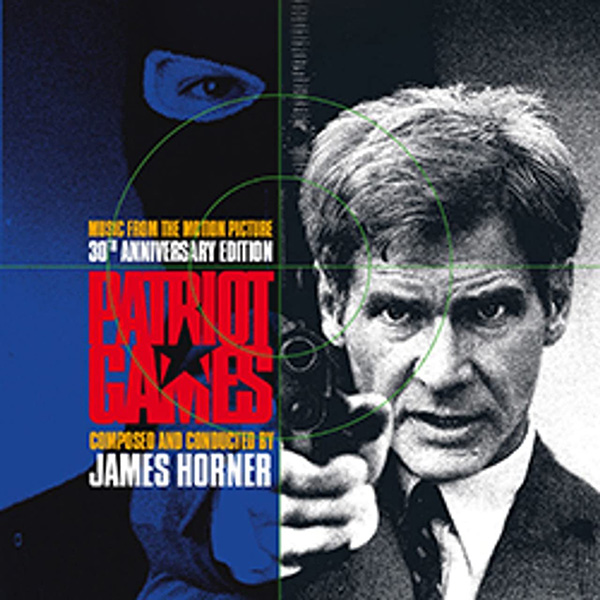
The customer handed the salesman a CD he wanted to listen to, which turned out to be the soundtrack to Patriot Games, composed by James Horner. "Play 'Assault on Ryan's House,'" he instructed. The music that blasted out of the speakers sounded like it was composed for a Coast Guard recruitment video, and at the customer's request, it was played at an arrhythmia-producing volume. He listened to four more interminable tracks before handing the salesman a second CD, this one the soundtrack to Casper, also by James Horner. Before I left, having decided that nothing was worth listening to more James Horner, I heard the customer tell the salesman, with no small amount of pride, "I've got about 30 CDs at home and every one sounds amazing."
 It hadn't occurred to me that someone might enjoy listening to audio gear but not have much interest in music. This seems naïve to me now. As it happens, in the early years of the high-fidelity era, audio enthusiasts like film-sound pioneer Peter Handford and Brad Miller, the founder of Mobile Fidelity Sound Lab, enjoyed making and listening to recordings of steam locomotives and other nonmusical things. (The first MoFi LP, Memories in Steam, released in 1958, was a recording of a Southern Pacific train.)
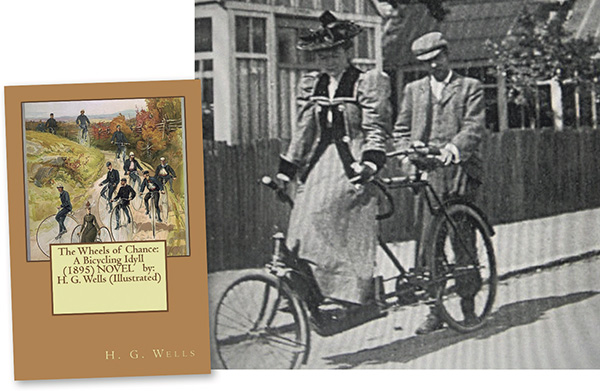
I suppose this is where I'm supposed to tell you that appreciating music is the entire point of listening to a hi-fi and that the gear is a mere conduit for its magic. Don't worry; I won't. Like most readers of this magazine, I love audio gear. And I don't mean for its sound. I love it for its material beauty, its purposefulness, its promise of transcendence. I like what it contributes to civilization. H.G. Wells is reported to have said, "Every time I see an adult on a bicycle, I no longer despair for the future of the human race." That's how I feel about turntables, tonearms, and phono cartridges (and come to think of it, bicycles). And then there are vacuum tubes, which I find to be objects of transfixing functional beauty. I enjoy holding them, reading about them, and watching them light up. That they exist at all feels like a small miracle, a triumph of humankind over the wilderness and chaos of the natural world.
And while I appreciate terms like "music-first audiophile," there's something about them that I find both condescending and a little dishonest. The fact is that no one needs specialized gear to appreciate music. I share a home with a professional musician who spends much of his day listening to classical music through the built-in speaker on his iPhone. Once, when I suggested that listening to my high-end sound system might help him discern more about these performances, he actually laughed, the way someone might laugh if you told them you had opened a restaurant for cats.
So let's be honest: Everyone reading these words loves hi-fi gear for its own sake, no matter how many Stockhausen LPs or field recordings from Senegal you might have in your home. Doesn't it feel refreshing to admit it? Doesn't it feel good to drop this I-read-Playboy-for-the-articles pretense and simply accept, at least to yourself, that all of us just really like playing with expensive stereos?
But here's the thing. In many cases, the gear can both enhance our appreciation of music and make it more difficult. The latter can be challenging to notice as it's happening but easier to recognize in its accrued effect. No matter how pure our intention to listen to all the music we enjoy, our love of gear—which is to say, our love of good sound—always takes a toll. Little by little, the records we love are winnowed to records that also sound amazing. I suppose this is unavoidable. The logical outgrowth of enjoying gear is playing things that will make it sound its best.
The narrowing of our musical libraries eventually begins to siphon joy from this pastime. When I moved apartments recently and had to pack about 3000 records, I was shocked to discover that I hadn't listened to many of them—maybe even most—in years. What had happened to my love of indifferently recorded '80s and '90s indie-rock classics like Sonic Youth's Sister and Slint's Spiderland? When was the last time I reveled in the sonically fuzzy delights of Blanton-Webster–era Duke Ellington or Lennie Tristano or the Delmore Brothers or that wonderful recording of Pierrot lunaire conducted by Schoenberg himself? Didn't I used to enjoy Led Zeppelin? And what about those 12" hip-hop remixes from Boogie Down Productions and Doug E. Fresh that sound like they were pressed on melted cafeteria trays?
It hadn't occurred to me that someone might enjoy listening to audio gear but not have much interest in music. This seems naïve to me now. As it happens, in the early years of the high-fidelity era, audio enthusiasts like film-sound pioneer Peter Handford and Brad Miller, the founder of Mobile Fidelity Sound Lab, enjoyed making and listening to recordings of steam locomotives and other nonmusical things. (The first MoFi LP, Memories in Steam, released in 1958, was a recording of a Southern Pacific train.)
I suppose this is where I'm supposed to tell you that appreciating music is the entire point of listening to a hi-fi and that the gear is a mere conduit for its magic. Don't worry; I won't. Like most readers of this magazine, I love audio gear. And I don't mean for its sound. I love it for its material beauty, its purposefulness, its promise of transcendence. I like what it contributes to civilization. H.G. Wells is reported to have said, "Every time I see an adult on a bicycle, I no longer despair for the future of the human race." That's how I feel about turntables, tonearms, and phono cartridges (and come to think of it, bicycles). And then there are vacuum tubes, which I find to be objects of transfixing functional beauty. I enjoy holding them, reading about them, and watching them light up. That they exist at all feels like a small miracle, a triumph of humankind over the wilderness and chaos of the natural world.
And while I appreciate terms like "music-first audiophile," there's something about them that I find both condescending and a little dishonest. The fact is that no one needs specialized gear to appreciate music. I share a home with a professional musician who spends much of his day listening to classical music through the built-in speaker on his iPhone. Once, when I suggested that listening to my high-end sound system might help him discern more about these performances, he actually laughed, the way someone might laugh if you told them you had opened a restaurant for cats.
So let's be honest: Everyone reading these words loves hi-fi gear for its own sake, no matter how many Stockhausen LPs or field recordings from Senegal you might have in your home. Doesn't it feel refreshing to admit it? Doesn't it feel good to drop this I-read-Playboy-for-the-articles pretense and simply accept, at least to yourself, that all of us just really like playing with expensive stereos?
But here's the thing. In many cases, the gear can both enhance our appreciation of music and make it more difficult. The latter can be challenging to notice as it's happening but easier to recognize in its accrued effect. No matter how pure our intention to listen to all the music we enjoy, our love of gear—which is to say, our love of good sound—always takes a toll. Little by little, the records we love are winnowed to records that also sound amazing. I suppose this is unavoidable. The logical outgrowth of enjoying gear is playing things that will make it sound its best.
The narrowing of our musical libraries eventually begins to siphon joy from this pastime. When I moved apartments recently and had to pack about 3000 records, I was shocked to discover that I hadn't listened to many of them—maybe even most—in years. What had happened to my love of indifferently recorded '80s and '90s indie-rock classics like Sonic Youth's Sister and Slint's Spiderland? When was the last time I reveled in the sonically fuzzy delights of Blanton-Webster–era Duke Ellington or Lennie Tristano or the Delmore Brothers or that wonderful recording of Pierrot lunaire conducted by Schoenberg himself? Didn't I used to enjoy Led Zeppelin? And what about those 12" hip-hop remixes from Boogie Down Productions and Doug E. Fresh that sound like they were pressed on melted cafeteria trays?
 For some of us, as the circle of acceptably amazing recordings shrinks to a few shelves of "demonstration-quality" disks or perhaps several dozen files, familiar references we use to judge and calibrate our systems eventually become the entirety of our musical diets. This very situation has led some of us to own a half-dozen vinyl pressings of Kind of Blue or Waltz for Debbie, jazz masterworks so unchallenging that they've become ubiquitous soundtracks to upscale food shopping and Sunday brunch. They sound terrific on just about any audio system, but isn't there something airless, if not altogether depressing, about having our hi-fis become shrines to pristine sound, suitable for playing back only the most extraordinarily lifelike recordings? Is this so different from listening to steam locomotives? Or James Horner?
The thing that helps me most to keep this musical constriction in check—to make listening an act of discovery rather than a form of escape—is to constantly listen to music that's new to me, preferably in concert. I'm writing down these thoughts after attending Ragas Live, a 24-hour, 24-set performance of South Asian classical music that takes place every year at Pioneer Works, an arts space in the industrial wastes of Red Hook, Brooklyn. About a thousand people camp out on blankets and rugs from Saturday to Sunday night watching the performers, while vendors in an outdoor garden provide simple food and hot chai. Ragas Live is now in its 14th year and makes me happy to be a New Yorker.
This year's installment featured performances by two of the greatest living sitar players. Abetted by the impeccable tabla work of Amit Kavthekar, Purbayan Chatterjee's playing was all about Hindustani music's rhythmic structures. He produced flights of notes so propulsive and exciting that the audience listened in a state of constant tension, hanging on every beat. The virtuosic fast sections never felt showy, remaining firmly tethered to the raga's arc and mood. In contrast, Shahid Parvez Khan wrung more harmonic content from a single note than possibly any musician I've heard. He refrained from the pyrotechnic solos often associated with the sitar, playing slow, contemplative passages that flowed like a river in August.
And then there was L. Shankar, the featured performer known best to Western audiences, having formed the groundbreaking fusion ensemble Shakti with John McLaughlin and worked with everyone from Talking Heads to Michael Jackson to U2. At 75, Shankar cut a startling figure on stage in dark sunglasses, with straight yellow hair that fell down his back. His singing remains as haunting as ever, but far stranger was his double-necked electric violin, which produced drones so alarmingly heavy and low that they must summon extraterrestrials or announce the Rapture.
I'd never heard Indian classical music performed live, and this deep immersion left me more dazzled than any concert had in years. So in the weeks that followed, I've watched dozens of YouTube videos about the structure of Hindustani and Carnatic music and immersed myself in South Asian classical recordings both streamed and on LP. Of course this has made me realize just how much I have left to learn, but it is also introducing me to enough wonderful music to occupy my hi-fi for the next decade. Most importantly, these discoveries have renewed my desire to listen.
One of the most delightful things about listening are its distinct seasons. Music that changes our lives at 22 sounds different when we are 40 and different again when we're 55. Modes of enjoyment and appreciation wax and wane with the passage of time. Some recordings that seemed profound to me as a young man now strike me as puerile or slight; others that failed to capture my attention for years one day unfurl in all their fascination and beauty.
But finding new music is a lot like finding love: You have to go out into the world looking for it or at least remain open to it happening. Go to a concert or a listening space, or buy a record you don't already know. Spend a few hours on YouTube sampling Georgian polyphonic singing or Javanese gamelan or South African Kwaito. Ask your weird little cousin what she is listening to. And try to choose components that will allow most of this music to sound vivid and fun. Your heart, and your hi-fi, will thank you.
For some of us, as the circle of acceptably amazing recordings shrinks to a few shelves of "demonstration-quality" disks or perhaps several dozen files, familiar references we use to judge and calibrate our systems eventually become the entirety of our musical diets. This very situation has led some of us to own a half-dozen vinyl pressings of Kind of Blue or Waltz for Debbie, jazz masterworks so unchallenging that they've become ubiquitous soundtracks to upscale food shopping and Sunday brunch. They sound terrific on just about any audio system, but isn't there something airless, if not altogether depressing, about having our hi-fis become shrines to pristine sound, suitable for playing back only the most extraordinarily lifelike recordings? Is this so different from listening to steam locomotives? Or James Horner?
The thing that helps me most to keep this musical constriction in check—to make listening an act of discovery rather than a form of escape—is to constantly listen to music that's new to me, preferably in concert. I'm writing down these thoughts after attending Ragas Live, a 24-hour, 24-set performance of South Asian classical music that takes place every year at Pioneer Works, an arts space in the industrial wastes of Red Hook, Brooklyn. About a thousand people camp out on blankets and rugs from Saturday to Sunday night watching the performers, while vendors in an outdoor garden provide simple food and hot chai. Ragas Live is now in its 14th year and makes me happy to be a New Yorker.
This year's installment featured performances by two of the greatest living sitar players. Abetted by the impeccable tabla work of Amit Kavthekar, Purbayan Chatterjee's playing was all about Hindustani music's rhythmic structures. He produced flights of notes so propulsive and exciting that the audience listened in a state of constant tension, hanging on every beat. The virtuosic fast sections never felt showy, remaining firmly tethered to the raga's arc and mood. In contrast, Shahid Parvez Khan wrung more harmonic content from a single note than possibly any musician I've heard. He refrained from the pyrotechnic solos often associated with the sitar, playing slow, contemplative passages that flowed like a river in August.
And then there was L. Shankar, the featured performer known best to Western audiences, having formed the groundbreaking fusion ensemble Shakti with John McLaughlin and worked with everyone from Talking Heads to Michael Jackson to U2. At 75, Shankar cut a startling figure on stage in dark sunglasses, with straight yellow hair that fell down his back. His singing remains as haunting as ever, but far stranger was his double-necked electric violin, which produced drones so alarmingly heavy and low that they must summon extraterrestrials or announce the Rapture.
I'd never heard Indian classical music performed live, and this deep immersion left me more dazzled than any concert had in years. So in the weeks that followed, I've watched dozens of YouTube videos about the structure of Hindustani and Carnatic music and immersed myself in South Asian classical recordings both streamed and on LP. Of course this has made me realize just how much I have left to learn, but it is also introducing me to enough wonderful music to occupy my hi-fi for the next decade. Most importantly, these discoveries have renewed my desire to listen.
One of the most delightful things about listening are its distinct seasons. Music that changes our lives at 22 sounds different when we are 40 and different again when we're 55. Modes of enjoyment and appreciation wax and wane with the passage of time. Some recordings that seemed profound to me as a young man now strike me as puerile or slight; others that failed to capture my attention for years one day unfurl in all their fascination and beauty.
But finding new music is a lot like finding love: You have to go out into the world looking for it or at least remain open to it happening. Go to a concert or a listening space, or buy a record you don't already know. Spend a few hours on YouTube sampling Georgian polyphonic singing or Javanese gamelan or South African Kwaito. Ask your weird little cousin what she is listening to. And try to choose components that will allow most of this music to sound vivid and fun. Your heart, and your hi-fi, will thank you.
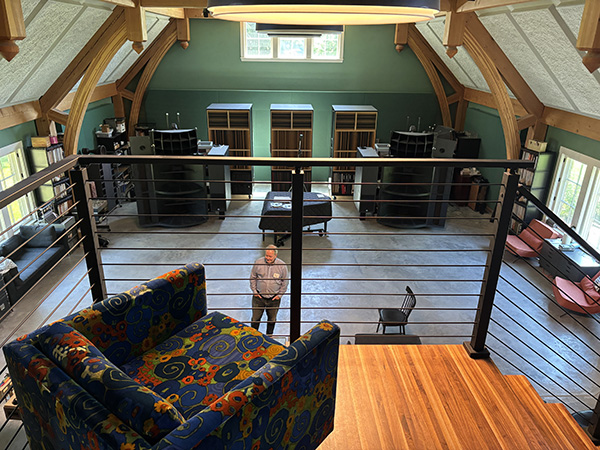 On a surprisingly brisk weekend this past June a few friends and I drove north to visit one of the world's most unusual listening rooms. Its owner wouldn't appreciate the publicity, so I will refrain from mentioning his name or location. Suffice it to say, he opens his home to friends and affiliated curiosity seekers once a year, and I felt lucky to be invited. I've experienced my share of far-out audio systems, yet walking into this room for the first time slackened my jaw like a handful of Percocets.
My friends and I found ourselves in a space large enough to be its own two-family house, with a soaring A-frame ceiling and a loft on the second floor containing enough vintage audio gear to fill a regional museum. The space was constructed recently and attached to an older house; it was conceived with the participation of an acoustician and concert-hall designer. A pair of RCA theater horns from the 1930s that stood at least 10' high dominated the cavernous interior. Their cabinets contained field-coil drivers. The amps that drove the whole shebang, powered by antiquated glowing triodes, were mounted to the speakers' rear panels.
While milling about before the listening commenced, I was overjoyed to meet two of my culture heroes, both former contributors to the long-gone but still influential underground audio magazine Sound Practices. Long Island resident Bruce Berman is the author of an article about his Type 76 preamp, which remains the most popular ever published in that magazine. He continues to design and build gear and graciously invited me to his home for a listen, an invitation I hope to honor in the intermediate future.
Next to him stood Joseph Esmilla, a Juilliard-trained violinist and audio experimenter whose JE Labs blog and YouTube channel continues to be a vital audio-experimenter resource for everything DIY, thermionic, and vintage. Esmilla's posts, like the man himself, stand out for their openness and generosity, and I excitedly told him that I built the open-baffle cabinets he designed for a pair of Altec 755s some two decades earlier. I don't find myself starstruck often, but meeting these guys made me feel like an 11-year-old girl at a One Direction concert.
Anyone who's heard music played through a pair of gigantic vintage theater horns (like the various Western Electrics often demonstrated by Silbatone Acoustics at High End Munich) can attest to how effortlessly they reproduce music, their transient speed, and their majestic scale. These were no different. Whether playing Schubert or Merle Haggard, they commanded the space with a sense of drama that felt almost irresistible, a phenomenon to which I happily submitted. They did a surprisingly decent job of imaging, too, though without the head-in-a-vice sweet spot created by many speakers intended for (relatively nearfield) home listening. In fact, the mammoth RCAs sounded terrifically coherent from just about anywhere in the room, including the second-floor loft.
Helping matters was the fact that nearly everything we heard was played on analog tape. Except for a few LPs courtesy of a vintage Fairchild record player, the source was an Ampex ATR-102 professional reel-to-reel tape recorder that bypassed the onboard solid state electronics and handed off its signal to one of two external tape preamps from Merrill or EMIA's Dave Slagle (who was in attendance).
I've heard a fair amount of music on analog tape. Much of the time, these are recent recordings, often made for release on audiophile labels. What made this experience stand out is our host's collection of hundreds of master tapes of well-known, classic recordings, many of which I was intimately familiar with. Sourcing copies of original studio recordings on the open market is chancy at best. Provenance is difficult to ascertain; some unscrupulous sellers sell tapes of digital files they try to pass off as pure analog. But according to our host, his tapes came mostly from studio engineers who have quietly dubbed copies of masters or safeties, presumably to supplement their incomes. Parsing the ethics of this is, as they say, beyond the scope of this column.
On a surprisingly brisk weekend this past June a few friends and I drove north to visit one of the world's most unusual listening rooms. Its owner wouldn't appreciate the publicity, so I will refrain from mentioning his name or location. Suffice it to say, he opens his home to friends and affiliated curiosity seekers once a year, and I felt lucky to be invited. I've experienced my share of far-out audio systems, yet walking into this room for the first time slackened my jaw like a handful of Percocets.
My friends and I found ourselves in a space large enough to be its own two-family house, with a soaring A-frame ceiling and a loft on the second floor containing enough vintage audio gear to fill a regional museum. The space was constructed recently and attached to an older house; it was conceived with the participation of an acoustician and concert-hall designer. A pair of RCA theater horns from the 1930s that stood at least 10' high dominated the cavernous interior. Their cabinets contained field-coil drivers. The amps that drove the whole shebang, powered by antiquated glowing triodes, were mounted to the speakers' rear panels.
While milling about before the listening commenced, I was overjoyed to meet two of my culture heroes, both former contributors to the long-gone but still influential underground audio magazine Sound Practices. Long Island resident Bruce Berman is the author of an article about his Type 76 preamp, which remains the most popular ever published in that magazine. He continues to design and build gear and graciously invited me to his home for a listen, an invitation I hope to honor in the intermediate future.
Next to him stood Joseph Esmilla, a Juilliard-trained violinist and audio experimenter whose JE Labs blog and YouTube channel continues to be a vital audio-experimenter resource for everything DIY, thermionic, and vintage. Esmilla's posts, like the man himself, stand out for their openness and generosity, and I excitedly told him that I built the open-baffle cabinets he designed for a pair of Altec 755s some two decades earlier. I don't find myself starstruck often, but meeting these guys made me feel like an 11-year-old girl at a One Direction concert.
Anyone who's heard music played through a pair of gigantic vintage theater horns (like the various Western Electrics often demonstrated by Silbatone Acoustics at High End Munich) can attest to how effortlessly they reproduce music, their transient speed, and their majestic scale. These were no different. Whether playing Schubert or Merle Haggard, they commanded the space with a sense of drama that felt almost irresistible, a phenomenon to which I happily submitted. They did a surprisingly decent job of imaging, too, though without the head-in-a-vice sweet spot created by many speakers intended for (relatively nearfield) home listening. In fact, the mammoth RCAs sounded terrifically coherent from just about anywhere in the room, including the second-floor loft.
Helping matters was the fact that nearly everything we heard was played on analog tape. Except for a few LPs courtesy of a vintage Fairchild record player, the source was an Ampex ATR-102 professional reel-to-reel tape recorder that bypassed the onboard solid state electronics and handed off its signal to one of two external tape preamps from Merrill or EMIA's Dave Slagle (who was in attendance).
I've heard a fair amount of music on analog tape. Much of the time, these are recent recordings, often made for release on audiophile labels. What made this experience stand out is our host's collection of hundreds of master tapes of well-known, classic recordings, many of which I was intimately familiar with. Sourcing copies of original studio recordings on the open market is chancy at best. Provenance is difficult to ascertain; some unscrupulous sellers sell tapes of digital files they try to pass off as pure analog. But according to our host, his tapes came mostly from studio engineers who have quietly dubbed copies of masters or safeties, presumably to supplement their incomes. Parsing the ethics of this is, as they say, beyond the scope of this column.
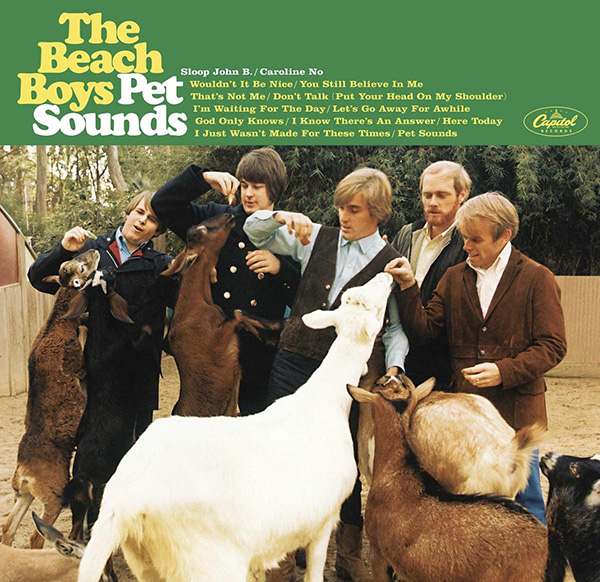 In any case, listening to the tapes suggested they had come from close to the source: Every one sounded superb. And they provided several opportunities to compare tape to LP. Listening to a reel of a stereo mix of The Beach Boys' Pet Sounds, one of a handful of records I love the most, proved unforgettable. This version possessed the most readily apparent quality of analog tape: the stability and rock-solid presence that distinguishes it from all other media. But there was also an uncanny sense of separation that made every event in Brian Wilson's uncommonly crowded soundscape clearly audible and distinct.
Listening deep to "Sloop John B," which I usually experience as a kind of pop concerto of massed sounds, I could hear every instrumental line and sound effect splayed out, as though I were looking at a diorama of the song at the Museum of Natural History. Under the celestial multitracked vocals, I could clearly distinguish the tinkling of Frank Capp's glockenspiel, the rhythmic huffing of Jack Nimitz's bass sax, Hal Blaine's cymbal and bass drum, Carol Kaye's electric bass, and Billy Strange's overdubbed 12-string guitar. But I swear I could also make out sounds I hadn't previously experienced as distinct, even through headphones: Lyle Ritz's acoustic bass and Steve Douglas's temple blocks. This was achieved without any clinical etch or strain; in fact, the stunningly colorful hi-fi sounded as relaxed and natural as I could wish for. Everything was just there.
I listened to the entire album, my breath shallow with excitement, and might have gotten a bit verklempt during "Caroline, No," sung by Brian Wilson himself over a stately harpsichord and bass flute; I remembered suddenly that Wilson had died two weeks earlier. This is the last song on Pet Sounds, and after the music faded, I heard the famous outro: the barking of a dog and the sound of a locomotive. I found out later that Wilson had taken the train sound from Mister D's Machine, an album recorded by Brad Miller and released in "stereomonic" sound in 1963 on Mobile Fidelity Records.
In any case, listening to the tapes suggested they had come from close to the source: Every one sounded superb. And they provided several opportunities to compare tape to LP. Listening to a reel of a stereo mix of The Beach Boys' Pet Sounds, one of a handful of records I love the most, proved unforgettable. This version possessed the most readily apparent quality of analog tape: the stability and rock-solid presence that distinguishes it from all other media. But there was also an uncanny sense of separation that made every event in Brian Wilson's uncommonly crowded soundscape clearly audible and distinct.
Listening deep to "Sloop John B," which I usually experience as a kind of pop concerto of massed sounds, I could hear every instrumental line and sound effect splayed out, as though I were looking at a diorama of the song at the Museum of Natural History. Under the celestial multitracked vocals, I could clearly distinguish the tinkling of Frank Capp's glockenspiel, the rhythmic huffing of Jack Nimitz's bass sax, Hal Blaine's cymbal and bass drum, Carol Kaye's electric bass, and Billy Strange's overdubbed 12-string guitar. But I swear I could also make out sounds I hadn't previously experienced as distinct, even through headphones: Lyle Ritz's acoustic bass and Steve Douglas's temple blocks. This was achieved without any clinical etch or strain; in fact, the stunningly colorful hi-fi sounded as relaxed and natural as I could wish for. Everything was just there.
I listened to the entire album, my breath shallow with excitement, and might have gotten a bit verklempt during "Caroline, No," sung by Brian Wilson himself over a stately harpsichord and bass flute; I remembered suddenly that Wilson had died two weeks earlier. This is the last song on Pet Sounds, and after the music faded, I heard the famous outro: the barking of a dog and the sound of a locomotive. I found out later that Wilson had taken the train sound from Mister D's Machine, an album recorded by Brad Miller and released in "stereomonic" sound in 1963 on Mobile Fidelity Records.
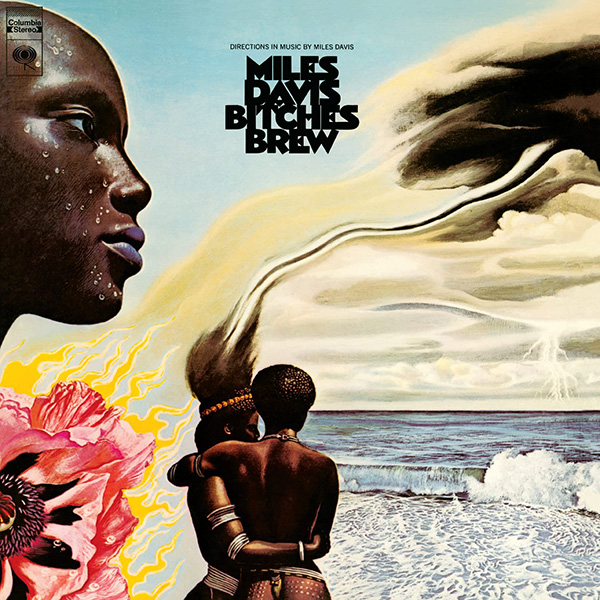 But what really broke my brain was one of the four reels that made up Bitches Brew. Possibly the thing most responsible for this revolutionary album's disorienting—or, if you prefer, psychedelic—charge is the claustrophobia-inducing density of its sound. On most systems, it comes across as a sinister sonic jumble. Take "Spanish Key," on which 13 musicians compete for your eardrums, including three on electric piano, two on bass, two on percussion, and two on drums. Unusually for a Miles Davis album, there isn't much silence. On the original vinyl pressing—which we were able to hear through the towering RCA horns—Davis's band sounds uncommonly compressed. In all likelihood, the compression was required to make this wild electric music trackable by an average phono cartridge.
It's no exaggeration to say that when played back on analog tape, Bitches Brew sounded like a different album. With the instruments restored to their proper dynamic range, separated in space, and clarified in their timbre, Davis's electric landmark sounded like ... a jazz record. Heard on this system, the electric pianos of Chick Corea, Joe Zawinul, and Larry Young, panned right, left, and center respectively, were suddenly no big deal, each sounding planted in space and easily discerned as individual instruments. Dave Holland's bass took on its proper heft, and Bernie Maupin's bass clarinet sounded as menacing as a growling coyote. Liberated from so much dynamic and spatial compression, the band actually swung. There were passages I could hardly identify as the same ones on the record I know and love so well.
Not far from this colossal hi-fi, guests had set up other, more modest systems where they auditioned each other's DIY creations and put away a lot of light beer. There were good bagels, excellent wine, and even better conversation. It was another reminder that hi-fi is best experienced in the company of others, as dependable a way as I am aware of to beat back audio neurosis and expose yourself to good music.
But what really broke my brain was one of the four reels that made up Bitches Brew. Possibly the thing most responsible for this revolutionary album's disorienting—or, if you prefer, psychedelic—charge is the claustrophobia-inducing density of its sound. On most systems, it comes across as a sinister sonic jumble. Take "Spanish Key," on which 13 musicians compete for your eardrums, including three on electric piano, two on bass, two on percussion, and two on drums. Unusually for a Miles Davis album, there isn't much silence. On the original vinyl pressing—which we were able to hear through the towering RCA horns—Davis's band sounds uncommonly compressed. In all likelihood, the compression was required to make this wild electric music trackable by an average phono cartridge.
It's no exaggeration to say that when played back on analog tape, Bitches Brew sounded like a different album. With the instruments restored to their proper dynamic range, separated in space, and clarified in their timbre, Davis's electric landmark sounded like ... a jazz record. Heard on this system, the electric pianos of Chick Corea, Joe Zawinul, and Larry Young, panned right, left, and center respectively, were suddenly no big deal, each sounding planted in space and easily discerned as individual instruments. Dave Holland's bass took on its proper heft, and Bernie Maupin's bass clarinet sounded as menacing as a growling coyote. Liberated from so much dynamic and spatial compression, the band actually swung. There were passages I could hardly identify as the same ones on the record I know and love so well.
Not far from this colossal hi-fi, guests had set up other, more modest systems where they auditioned each other's DIY creations and put away a lot of light beer. There were good bagels, excellent wine, and even better conversation. It was another reminder that hi-fi is best experienced in the company of others, as dependable a way as I am aware of to beat back audio neurosis and expose yourself to good music.
It hadn't occurred to me that someone might enjoy listening to audio gear but not have much interest in music. This seems naïve to me now. As it happens, in the early years of the high-fidelity era, audio enthusiasts like film-sound pioneer Peter Handford and Brad Miller, the founder of Mobile Fidelity Sound Lab, enjoyed making and listening to recordings of steam locomotives and other nonmusical things. (The first MoFi LP, Memories in Steam, released in 1958, was a recording of a Southern Pacific train.)
For some of us, as the circle of acceptably amazing recordings shrinks to a few shelves of "demonstration-quality" disks or perhaps several dozen files, familiar references we use to judge and calibrate our systems eventually become the entirety of our musical diets. This very situation has led some of us to own a half-dozen vinyl pressings of Kind of Blue or Waltz for Debbie, jazz masterworks so unchallenging that they've become ubiquitous soundtracks to upscale food shopping and Sunday brunch. They sound terrific on just about any audio system, but isn't there something airless, if not altogether depressing, about having our hi-fis become shrines to pristine sound, suitable for playing back only the most extraordinarily lifelike recordings? Is this so different from listening to steam locomotives? Or James Horner?
On a surprisingly brisk weekend this past June a few friends and I drove north to visit one of the world's most unusual listening rooms. Its owner wouldn't appreciate the publicity, so I will refrain from mentioning his name or location. Suffice it to say, he opens his home to friends and affiliated curiosity seekers once a year, and I felt lucky to be invited. I've experienced my share of far-out audio systems, yet walking into this room for the first time slackened my jaw like a handful of Percocets.
My friends and I found ourselves in a space large enough to be its own two-family house, with a soaring A-frame ceiling and a loft on the second floor containing enough vintage audio gear to fill a regional museum. The space was constructed recently and attached to an older house; it was conceived with the participation of an acoustician and concert-hall designer. A pair of RCA theater horns from the 1930s that stood at least 10' high dominated the cavernous interior. Their cabinets contained field-coil drivers. The amps that drove the whole shebang, powered by antiquated glowing triodes, were mounted to the speakers' rear panels.
While milling about before the listening commenced, I was overjoyed to meet two of my culture heroes, both former contributors to the long-gone but still influential underground audio magazine Sound Practices. Long Island resident Bruce Berman is the author of an article about his Type 76 preamp, which remains the most popular ever published in that magazine. He continues to design and build gear and graciously invited me to his home for a listen, an invitation I hope to honor in the intermediate future.
In any case, listening to the tapes suggested they had come from close to the source: Every one sounded superb. And they provided several opportunities to compare tape to LP. Listening to a reel of a stereo mix of The Beach Boys' Pet Sounds, one of a handful of records I love the most, proved unforgettable. This version possessed the most readily apparent quality of analog tape: the stability and rock-solid presence that distinguishes it from all other media. But there was also an uncanny sense of separation that made every event in Brian Wilson's uncommonly crowded soundscape clearly audible and distinct.
Listening deep to "Sloop John B," which I usually experience as a kind of pop concerto of massed sounds, I could hear every instrumental line and sound effect splayed out, as though I were looking at a diorama of the song at the Museum of Natural History. Under the celestial multitracked vocals, I could clearly distinguish the tinkling of Frank Capp's glockenspiel, the rhythmic huffing of Jack Nimitz's bass sax, Hal Blaine's cymbal and bass drum, Carol Kaye's electric bass, and Billy Strange's overdubbed 12-string guitar. But I swear I could also make out sounds I hadn't previously experienced as distinct, even through headphones: Lyle Ritz's acoustic bass and Steve Douglas's temple blocks. This was achieved without any clinical etch or strain; in fact, the stunningly colorful hi-fi sounded as relaxed and natural as I could wish for. Everything was just there.
But what really broke my brain was one of the four reels that made up Bitches Brew. Possibly the thing most responsible for this revolutionary album's disorienting—or, if you prefer, psychedelic—charge is the claustrophobia-inducing density of its sound. On most systems, it comes across as a sinister sonic jumble. Take "Spanish Key," on which 13 musicians compete for your eardrums, including three on electric piano, two on bass, two on percussion, and two on drums. Unusually for a Miles Davis album, there isn't much silence. On the original vinyl pressing—which we were able to hear through the towering RCA horns—Davis's band sounds uncommonly compressed. In all likelihood, the compression was required to make this wild electric music trackable by an average phono cartridge.
It's no exaggeration to say that when played back on analog tape, Bitches Brew sounded like a different album. With the instruments restored to their proper dynamic range, separated in space, and clarified in their timbre, Davis's electric landmark sounded like ... a jazz record. Heard on this system, the electric pianos of Chick Corea, Joe Zawinul, and Larry Young, panned right, left, and center respectively, were suddenly no big deal, each sounding planted in space and easily discerned as individual instruments. Dave Holland's bass took on its proper heft, and Bernie Maupin's bass clarinet sounded as menacing as a growling coyote. Liberated from so much dynamic and spatial compression, the band actually swung. There were passages I could hardly identify as the same ones on the record I know and love so well.