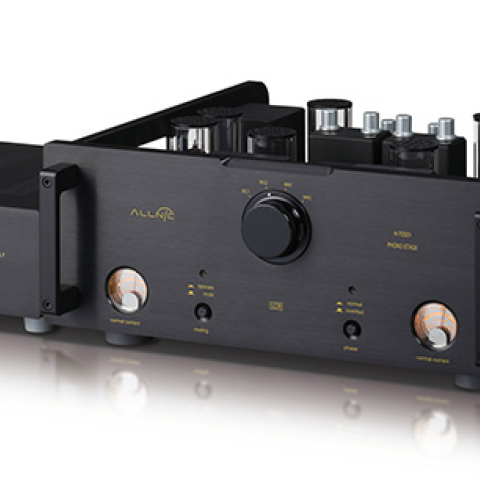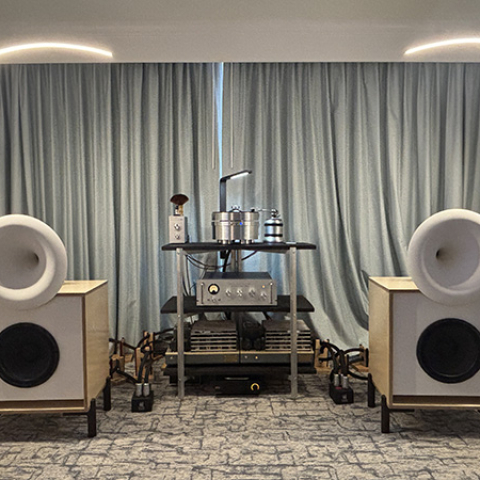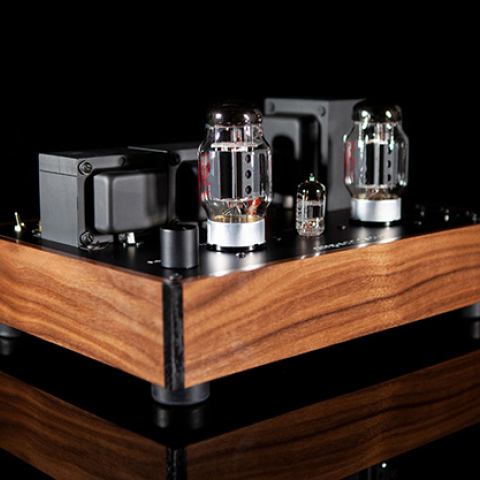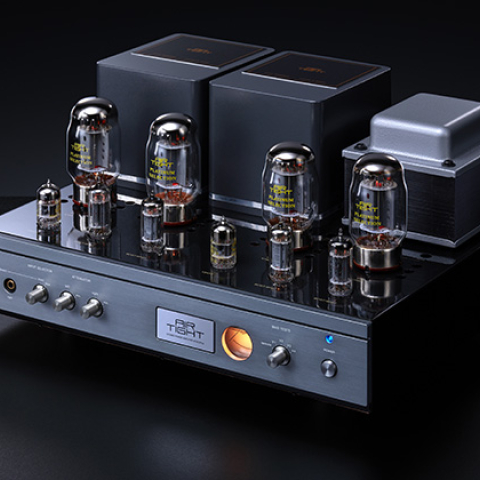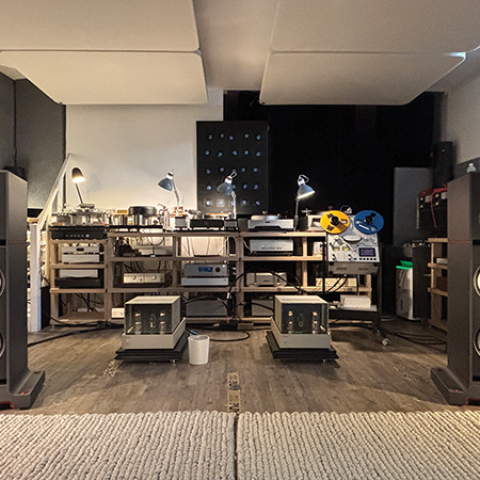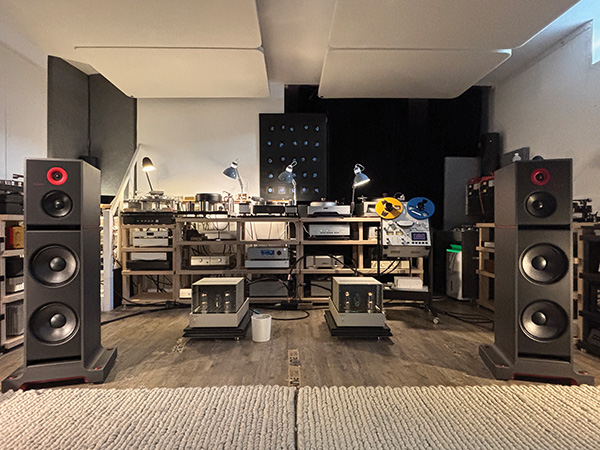
The Ana Mighty Sound system. (All photos in this report by Alex Halberstadt)
During the past decade and a half, the trips I've taken have tended to be for magazine stories. I love to travel, but as a New Yorker living on a writer's income, I figure it makes more sense to do it on someone else's dime and stay in nicer places than I could afford otherwise. The downside is that these trips don't feel like vacations, or even particularly restful: My time tends to be taken up with interviews, overly elaborate meals eaten (or tasted) in the company of chefs and winemakers, weeks when I sometimes stay in four hotels, and (gratefully infrequent) run-ins with publicists. I've gone years without taking an actual vacation, when all I want is to hole up in a beach town in the Yucatán and do nothing all day except read by the Windex-blue water of the Caribbean and eat shrimp ceviche washed down with two or three cold Carta Blancas.
Not so long ago, I both loved and resented these writing trips, but eventually came to appreciate that they lent my travel shape, purpose, and depth. Rather than wander from one guidebook attraction to another, I have people to see, places to visit, and locals to take me to do the things that are genuinely worth doing. I've learned how to pack enough for a two-week trip into my cheap Samsonite hardside suitcase (which has somehow lasted more than two decades), how to find a good dentist in Moldova, and how to renew a passport in 24 hours. I've also discovered a foolproof way of finding the best places to eat in an unfamiliar city: On your first night there, go to a good restaurant, sit at the counter or a bar, chat up the bartender or preferably the chef, and as the night winds down, ask where they like to eat. This gambit should have you covered for a week, and it works as reliably in Sapporo as it does in Denver.
The key to an interesting story is finding and teasing out aficionados: people who have given a major part of their life to an obsessive pursuit. This can mean shivering at 4am on the lower Volga aboard the boat of an angler hunting for 300lb catfish, or manically taking notes in the office of an MIT researcher dedicated to proving the existence of complex emotions in African grey parrots. Writing about audio and music is no different. Follow the whiff of obsession and you'll do fine.
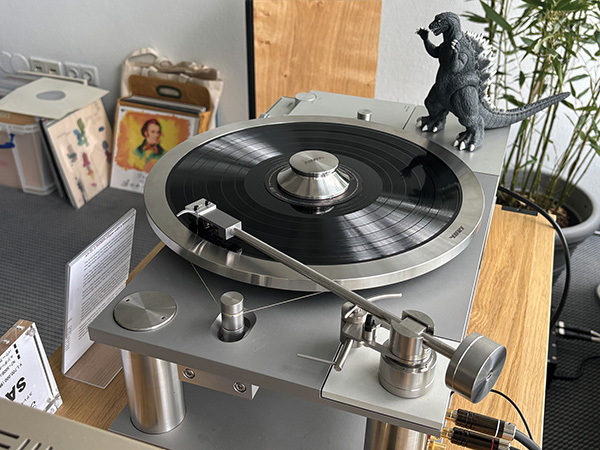
The Yukiseimitsu AP-01 turntable.
This hi-fi, which costs as much as a summer place on the Côte d'Azur, sounded, well, stunning. I asked to hear Black Sabbath's "War Pigs" from a recent vinyl reissue of Paranoid, and soon Ozzy, Tommy, Bill, and Geezer unfolded before me with rich color, admirable transparency, surgical resolution, and dynamics so close to lifelike that I may have gasped. Purveyors of truly memorable audio systems usually turn out to be music obsessives, and Saint-Gérand is no exception. During our listening session, he introduced me to the quietly transcendent work of British singer-songwriter Bill Fay; after recording a handful of cult albums in the 1970s, Fay had a celebrated second career during the last decade (he passed in February). Also new to me was the languid, intoxicating Live in London by Pakistani-American singer and composer Arooj Aftab, one of the best sounding live recordings I've heard. The session concluded with analog tape played back on an Analog Audio Design TP-1000; the highlight was a fresh-off-the-presses copy of Chris Cheek's Keepers of the Eastern Door, easily the most exciting version of this album.
For Saint-Gérand, extreme audio playback is part of a search for all kinds of extreme experiences, as we found out later that night at Cave Pétillance, a wine bar where we ate freshly steamed langoustines with our hands and a magnificently marbled piece of pork alongside sauteed morels and washed them down with enough old champagne to end a war. When we said our bleary goodbyes, I didn't realize that my adventures with Saint-Gérand weren't over.
High End Munich 2025Though it was well organized and briskly attended, the big show in the Bavarian capital was clouded with a slight pallor of melancholy. The MOC was hosting the last High End Munich ever, because beginning next year, the show will relocate to Vienna, a city I love. Yet there was something unmistakably sad about saying farewell to Munich's English Garden, its museums, and even the morning drinkers on the U-Bahn.
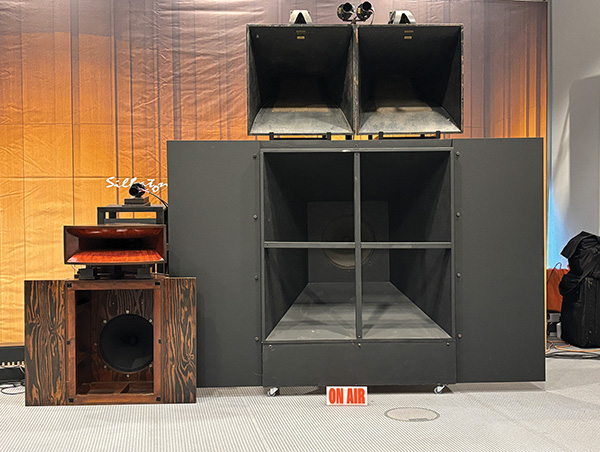
Speakers in the Silbatone system.
The caravan of strangeness that is Silbatone returned to Munich after a year off, bringing with it a pair of Western Electric speakers, each as big as a barn door, that were "conceptualized" for the show. Each speaker consisted of a TA-4181 woofer, two WE597 tweeters, and two 22b horns, with two WE555 drivers per horn. Got that? Most of these components date from the 1920s and '30s, but there was nothing dated about the sound, which was magisterial, ultravivid, and effortless. Silbatone head honcho Michael Chung explained that speakers like these were installed in movie theaters and designed to sound their best throughout that large space, a different paradigm from most home hi-fi speakers, which only show their full capabilities at a sweet spot accommodating a single listener. Chung delivered these remarks at the front of the room and even permitted himself a fleeting smile.
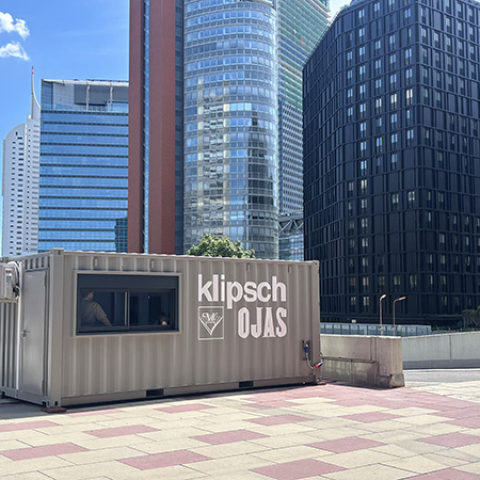
I happened to listen to one of Chung's demonstrations with Stereophile Editor Jim Austin, who looked suitably impressed and remarked how lucky the show's attendees were to hear such a remarkable system in a room where almost nothing was for sale. It was true: The giant Westerns haven't been commercially available for nearly a century, Silbatone does not seem particularly determined to market or even sell its electronics, and the room functioned more like an educational project and clubhouse for likeminded experimenters and assorted audio fanatics. During numerous visits, I chatted with Silbatone designer J.C. Morrison, tonearm designer Frank Schröder, Sound Practices founder and Philadelphia philosopher Joe Roberts, speaker designer John DeVore, audio journalist Christian Bayer, and artist and designer Devon Turnbull, who was demonstrating the speaker he collaborated on with Klipsch at an artist's studio elsewhere in Munich.
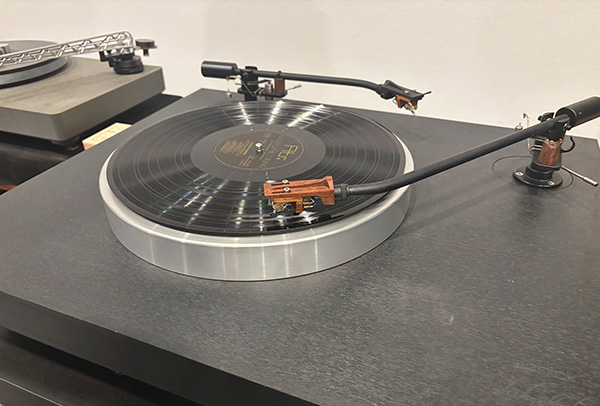
A Thomas Schick turntable with two Schick tonearms.
The few commercially available products that did reside in the Silbatone room caught my eye. Most of the demonstrations were played on one of two new direct-drive turntables from Thomas Schick; like his terrific tonearms, they featured an unfussy industrial design and sounded far more promising than their refreshingly affordable price tags might suggest. I hope to spend some time living with one later this year.
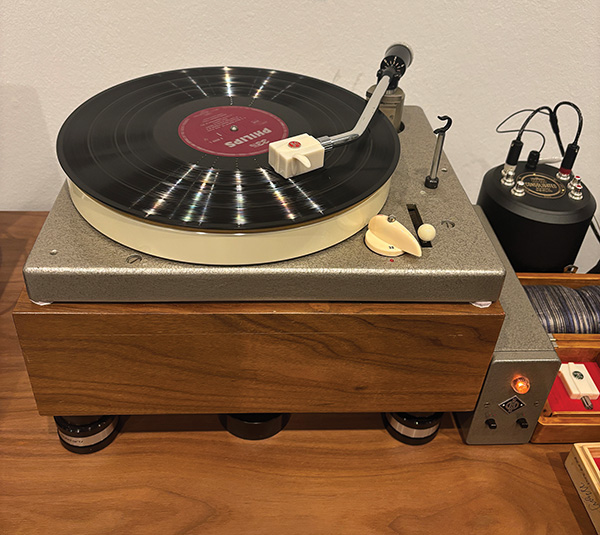
Daniel Kim's Neumann PA2 turntable featuring his own Analogtechnik cartridge, with a Consolidated Audio Monster Can step-up transformer.
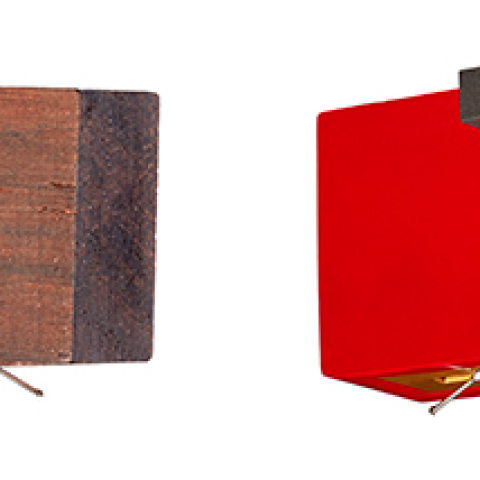
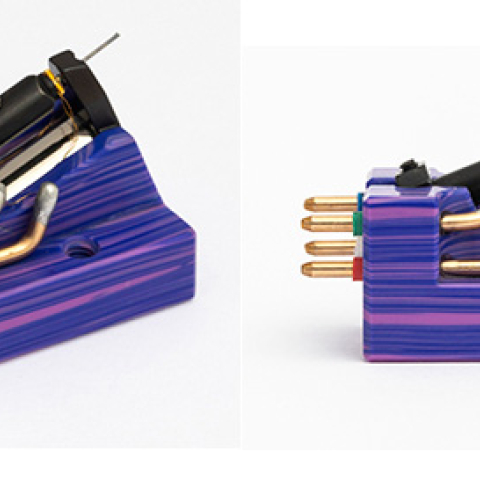
Then there was Daniel Kim, a young operatic tenor and cartridge repair specialist who has designed a series of pickups that may be the most exotic and impractical ever made. Based on the classic Neumann DST, Kim's Analogtechnik cartridges are built into hefty, vintage-accurate headshells, feature mammoth ivory cantilevers and meteorite-iron pole pieces, and operate at a vertical tracking force of more than 6gm. He demonstrated his DST15 Ice Age cartridge on an early-1960s Neumann PA2 turntable. Playing a live recording by Hungarian violinist Tibor Varga through the massive Westerns, this analog front end produced the most beautiful string tone I have ever heard. Two of Kim's cartridges—a stereo and a mono unit—are here for an audition.
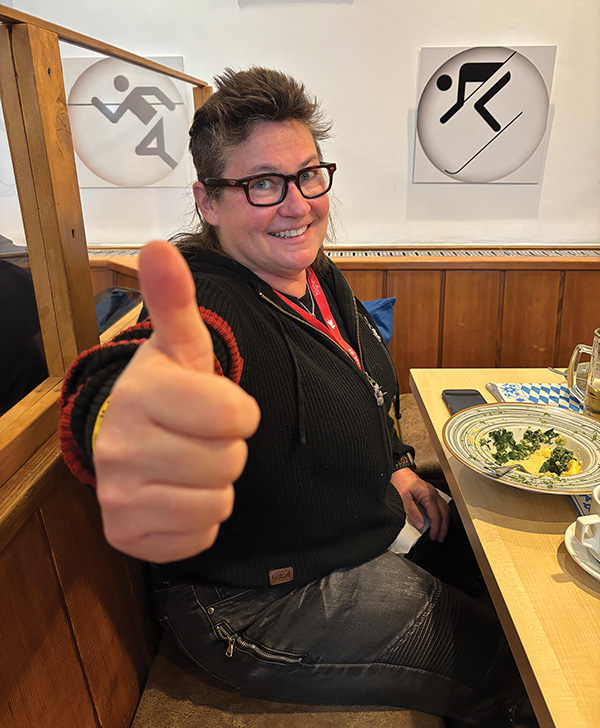
A thumbs-up from EveAnna Manley.
At lunchtime, most of the Silbatone crew skipped the MOC cafeteria and decamped to a biergarten a short walk away, and it was there that I was surprised to run into EveAnna Manley, whose equipment I've been using happily for the past several years. She and I had spoken many times but never met, and over schnitzel and Helles beer we talked about the California wildfires in January that nearly destroyed her home in Altadena; she showed me a photo of her next-door neighbor's house, which had burned down. Behind an infectious laugh and an upbeat attitude, Manley hides a particularly keen bullshit detector, and after much laughter and a little gossip, we agreed to do a better of job of keeping in touch.
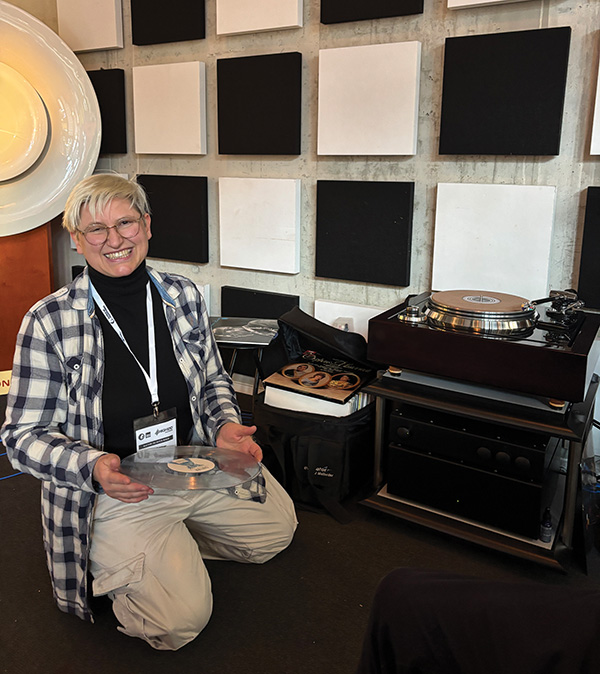
Martina Schoener
Manley also introduced me to Martina Schoener, who is probably best known for her popular L'Art du Son record cleaning fluid. As it turns out, she also makes the L'Art du Son Reference Turntable, which is almost certainly the most ambitious elaboration of the classic Garrard 301. Over lunch, Schoener told me about working on the Garrard 501—a kind of super 301—during her tenure at UK's Loricraft Audio, and later continuing to further refine the project on her own. Among other improvements, her turntable design focuses on nearly eliminating the vibration of the 301's massive motor by constructing a heroic power supply that's as large as many power amps.
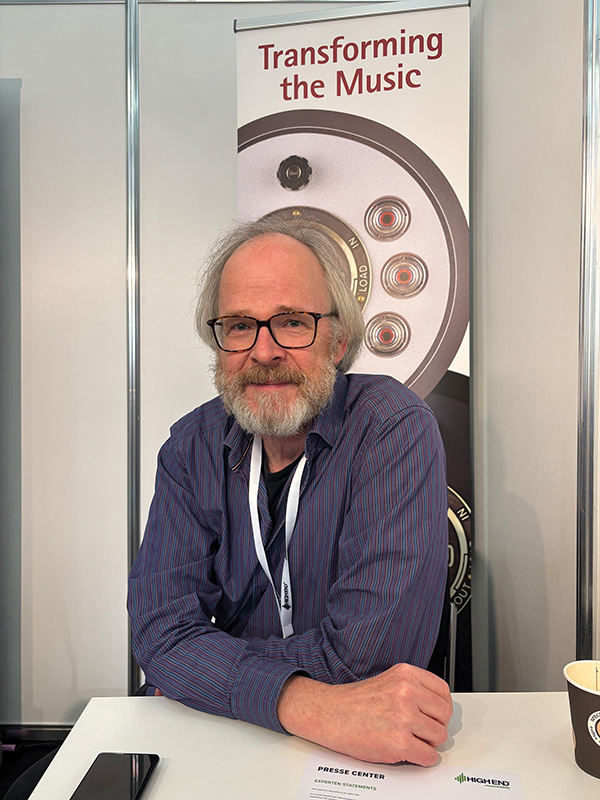
Michael Ulbrich
Wandering the MOC's mazelike first floor, I happened across the booth of Consolidated Audio's Michael Ulbrich, whose Monster Can remains my all-time favorite step-up transformer. Ulbrich has the appealing shyness of a botanist, which takes the edge off his high-luminance engineering mind. He was sharing the booth with a friend from Berlin, a guitarist named Hyun Lee, who along with his wife Francesca manufactures an entire boatload of beautiful moving coil cartridges under the Tedeska brand. Made by hand from various tonewoods, bone, and mother of pearl, the cartridges resemble a luthier's creations. According to several friends who own them, Tedeska pickups prioritize tone, color, and body. I hope to hear the Lees' work here in Brooklyn later this year.
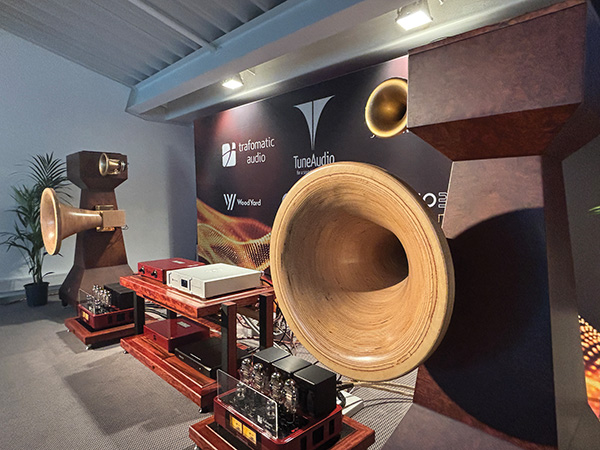
The all-Balkan system from Greece's Tune Audio.
One such room featured the large Anima horns from Greece's Tune Audio. The company's always gracious founder, Manolis Proestakis, joked that he had assembled an all-Balkan system, which also featured all-triode Rhapsody power amps from Serbia's Trafomatic Audio and a Rockna Audio Reference Signature DAC from Romania. With sincere apologies to Proestakis, I found the look of the Animas to be rather challenging ... but their sound to be captivating. The system played Tom Waits with dynamic assurance, high musical insight, and that certain big-horn swagger, adding up to one of the show's most satisfying rooms.
Munich is always a good place for having one's preferences challenged, or at least gently prodded, and this is what happened to me in the Harbeth room. That's where I sat listening to Billie Holiday's Songs for Distingué Lovers played over the company's tiny NLE-1 minimonitors. I may have assumed that, with their built-in class-D amps and DSP crossovers, they would hardly be my thing. But in the fairly large room, which also included Manley electronics and a Michell turntable, they sounded brilliantly coherent, stable, exciting, and big, well beyond what you might expect from their Lilliputian stature and sub-$4k/pair price.
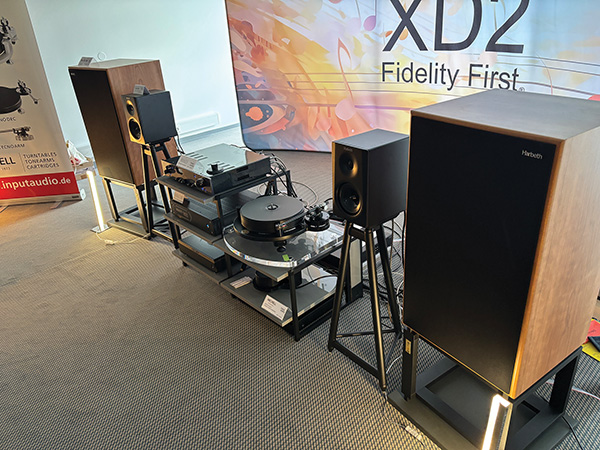
The Harbeth System with the NLE-1 minimonitors.
Another highlight took place in the VTL room, where Luke Manley and Bea Lam paired their new Lohengrin tube monoblocks—each capable of putting out a whopping 400W—with Wilson's Alexx V speakers. I didn't know what to expect from such a display of brute power, but on an LP of a Beethoven concerto played with a Kuzma Stabi R/Safir 9 record player and a Lyra Etna cartridge, the presentation was appropriately Wagnerian: commanding, vast, and compelling, if maybe a little ostentatious, with loads of presence, inner detail, and force. It almost made me want to add another x to my name.
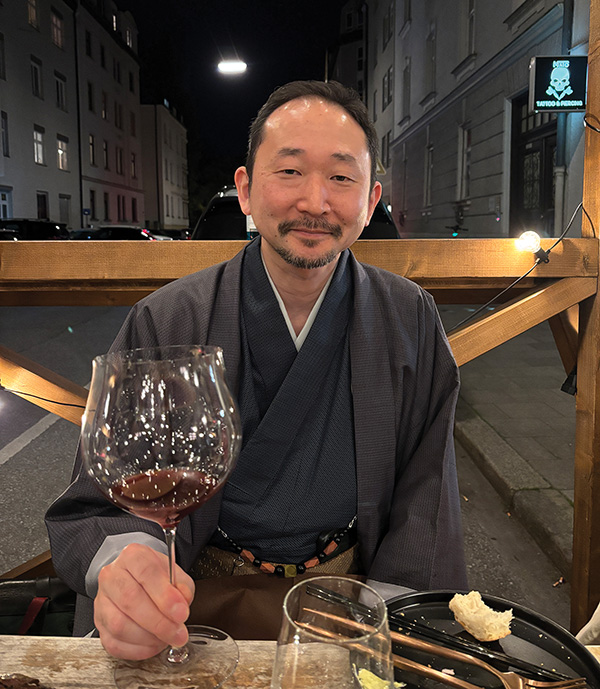
Jun Nagamatsu
I ran into Saint-Gérand in the Yukiseimitsu room, where he was spinning records on the gorgeous AP-01, with its exposed magnetic bearing, straight tonearm, and midcentury sci-fi control-panel aesthetic. There, he introduced me to its designer, Jun Nagamatsu, who turned out to be softspoken and thoughtful but not even slightly dour—he had decorated the AP-01's pristine, Bauhaus-inflected chassis with a plastic figurine of Godzilla. Also on hand were Phasemation's PP-2000 MC cartridge, EA-1200 phono preamplifier, and SA-1500 300B-powered integrated amplifier, as well as the Wolf Von Langa WVL 12639 SON field-coil loudspeakers. Playing an LP of Tarentule-Tarentelle by the Atrium Musicae de Madrid conducted by Gregorio Paniagua, this elegant, moderately sized system sounded as magical as a child's music box. It rendered the ancient Neapolitan folk dances with holographic, rock-stable imaging, all the detail and color you might want, a spritely pace, and a beauty that reminded me of a leaf emerging from a bud.
After the show closed for the day, several of us met in a sleepy residential neighborhood to go to Sticks and Stones, a wine bar run by a Canadian-born sommelier named Justin Leone. This rather weird establishment offers more bottles by the glass than any in the world but is even more remarkable for the depth of its cellars and Leone's almost neurodivergent level of knowledge. One of my favorite things about High End Munich is the way it throws together visitors from so many corners of the globe, and our outdoor table was no exception: Nagamatsu and his interpreter, Ayumi Kitano, had come from Chigasaki, Japan, Saint-Gérand lives in the French countryside, and saxophonist Jerome Sabbagh and I hail from the hills of Brooklyn.