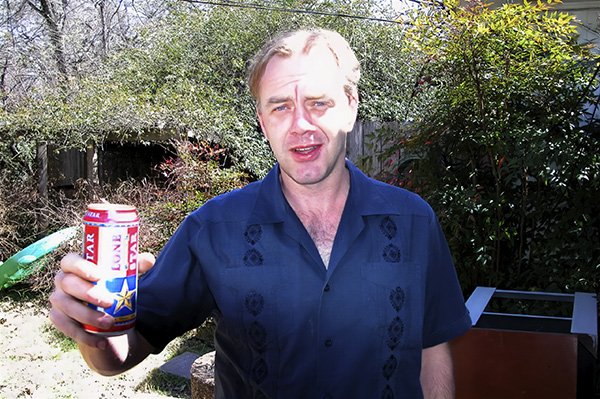
Joe Roberts, the one-man band behind Sound Practices. Photo by Christian Rintelen
In audio as in life, there are moments when you find your people and, if you're lucky, discover something about yourself. For me, one of these happy junctures took place in the mid-1990s when I came across an issue of
Sound Practices.
At the time I was a 20-something nerd haunting New York's audio stores for discounts and enviously reading the equipment reviews in
Stereophile and
The Absolute Sound. I made sure to keep this activity from my friends, many of whom collected punk and indie rock records and played in bands. To us, the world of high-end audio appeared criminally uncool. For one, it was full of things—like turntables that sucked the record to the platter with a noisy vacuum motor connected to said turntable with a length of thick hose—that most people I knew would be embarrassed to have in their homes. Then there were the salesmen with their well-worn vinyl copies of
Jazz at the Pawnshop and
Eagles Live, and the customers, some of whom resembled extras from
American Psycho and seemed to be having precious little fun.
It was around this time that I had a paradigm-changing experience with a Tannoy dual-concentric driver from the 1960s mounted in a homemade plywood box. It made most contemporary speakers sound colorless, congested, and boring and raised the possibility that components created prior to the verities of holographic soundstaging and high-frequency "sparkle" had something to offer. But in those pre-internet days, where could an interested party find more information?
For many of us, the answer became
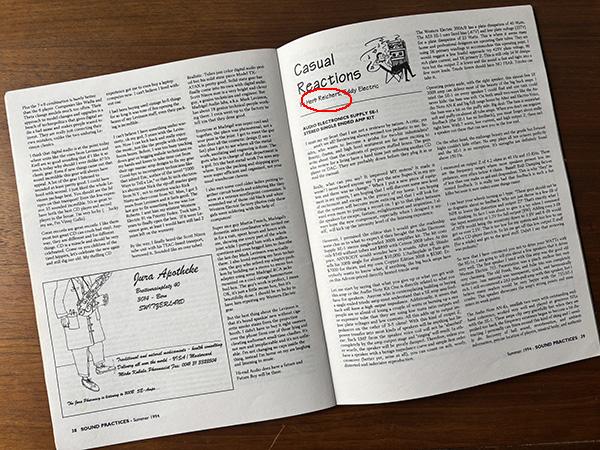
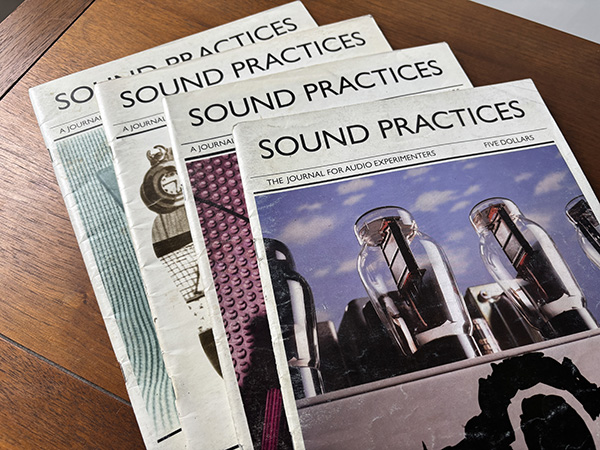
Sound Practices, a semiregular quarterly out of Austin, Texas. It ignored the high-end mainstream and covered vintage audio as well as the DIY creations of hi-fi experimenters from around the world, many of whom were looking back to the theater systems of the 1920s and '30s for inspiration. During its meager press run—just 16 issues published between 1992 and 1997—it introduced a generation of listeners to horn speakers, full-range drivers, idler-drive turntables, low-power triode amplifiers, and other items that had been nearly forgotten in the novelty-addled early years of high-end audio.
Better yet,
Sound Practices was not only cool but downright punk in its provocations. Whereas many audio manufacturers of the time tried to position their gear as luxury lifestyle accessories, like a Porsche or a cigar humidor, the magazine suggested that audio could be a form of self-expression as personal as one's taste in literature or art, and imbued with both meaning and a high degree of style. Its contributors—including J.C. Morrison, Gordon Rankin, Joseph Esmilla, J.C. Verdier, and, oddly, film actor and director Vincent Gallo—infused it with the irreverence and deep earnestness of the underground music zines of the time. "There is a universe of recorded music out there and the method of getting the music to your heart, feet and mind can and should be as distinctive as your character," wrote another contributor in the magazine's first issue, whose byline read "Herbert Reichert, Staten Island, NY."
The one-man band behind
Sound Practices was Joe Roberts. It was his writing—sarcastic, amused, and fiercely intelligent—and his ideas about sound reproduction that set the magazine's priorities and tone. Perhaps it's no wonder that he was an Ivy League–trained anthropologist, because he brought a social scientist's eye to chronicling audio's subcultures and history and to making his magazine not only an ebullient forum for like-minded listeners but also a well-researched resource.
The long-tailed influence of
Sound Practices has been apparent in everything from Art Dudley's
Listener magazine to Devon Turnbull's OJAS, and most of all in the proliferation of the kinds of products and voices that once had no place in mainstream audio. At this magazine, former editor John Atkinson was wise enough to add both
Dudley and
Herb Reichert to the masthead, vastly broadening its reach and scope as well as the formal possibilities of audio journalism.
Recently, I corresponded with Roberts by email about his short-lived experiment in magazine publishing and its ongoing legacy.
Alex Halberstadt: How did you get started in audio?
Joe Roberts: I was interested in electronics before I understood what audio really was. I was one of those kids who trash-picked TVs to take them apart. I studied ham radio books from the library and got my license in 8th grade. I had a couple of receivers and bookshelf speakers in high school. It was the '70s. You had to. I was just a total nerd.
I lasted one class as a physics major at Penn before switching to anthropology and communications. During freshman year, I picked up my first tube gear: a Dynaco preamp and ST-35 amp at a thrift shop. I continued to study electronics and read old audio magazines and books in the engineering library instead of doing my actual homework.
I also had a job recording the Philadelphia Orchestra with WFLN. We had the latest and greatest pro amps and monitoring speakers out in the work spaces, but I thought the best sound at the recording studio was a pair of
Dynaco A25s and an ST-70 in the electronics tech's lab. By the time I graduated, my studio apartment was a pile of tube gear, a folding table and chair, 100 books, 100 LPs, and a mattress on the floor. I had already sailed away from the lab-tested marina of
High Fidelity and
Audio magazines into a time-travel technological relativism that I guess I am still lost in.
Halberstadt: What was going on in your life when you started Sound Practices
?
Roberts: Five years later, I found myself totally unemployable with a graduate anthropology degree in DC, so I got a job at a high-end audio store in Alexandria, Virginia. I was so excited about playing with all the esoteric gear I read about in
The Absolute Sound and
Stereophile! I believed what they were writing. That is, until I had intimate relations with the equipment of my fantasies. The morning-after syndrome was jarring. Soon after, I had two storage lockers full of vintage electronics, tubes, speakers, and books. I studied audio history and fixed and evaluated vintage gear like it was my sacred duty. And I believed—no, I
knew—that the best of the old stuff I had at home was more satisfying, and certainly more diverse in terms of design and technology, than the sliver of audio possibility that the high end of 1987 offered the faithful.
There were lots of reasons for this. At that time there were few vacuum tubes in production, and the engineering ethos of the time took advantage of cheap solid state power supplies, massive banks of capacitors, and many other ill-advised modern tweaks to classic approaches. The designers thought that they were pushing the envelope, but in my view, they were bottom trawling both technically and aesthetically. For the most part, we were getting bastardized classic Heathkit and EICO circuits with thick faceplates. These were Chevy Impalas with fancy rims and dubious upgrades, not Lamborghinis.
I laid much of the blame on reviewers. The recasting of the audio experience within a visual metaphor, a powerful notion promoted by Harry Pearson and the
TAS mafia of the day, elevated imaging and soundstaging as the end-all goal of hi-fi. It was a fetishization of stereo, and it offered a superficially objective way to measure reproduction. Importantly, this analogy tapped into the vast language we already knew for discussing visual phenomena, when our descriptive grasp of sound was thin indeed.
Reviewers went totally bananas with poetic metaphors, outdoing each other in talking about film types, Leica lenses, f-stops. ... I didn't even own a camera, but I knew that audio systems weren't cameras or slide projectors. Musical sound is tactile and material, both physical and emotional, and yes, difficult to talk about, since it is a preverbal, primal experience.
Because reviewers seemed to like gear that offered enhanced imaging, designers chased this effect. Some of the tricks they used, such as suppressing dynamics so that everything lay in a finely ordered 3D tableau, and tipped-up tweeters to enhance localization, did musical aesthetics no favors. A lot of gear was bright and detailed to the point of being skeletal.
From my growing experience with vintage pro and consumer gear, I knew it didn't have to be that way. High-end audio was chasing an illusion of its own creation at the expense of musicality. Looking back, it was a very strange era.
 Halberstadt: Why start a magazine?
Roberts:
Halberstadt: Why start a magazine?
Roberts: You know how the furries only emerged as a thing after the internet provided a way for them to recognize that there were others like them and a platform to meet and coalesce into a functional subculture? Well, I thought we needed something like that for non-mainstream audio. I had a vision of an audio culture where control was yanked from a priestly class of reviewers and handed back to people who took an active role in creating their own audio universes. This was the world of DIYers and vintage "collectors"—my world—not of Recommended Components–list shoppers who sustained and reproduced the status quo.
I got a taste of this dynamic from participating in
Audiomart, a used-gear classified newsletter run out of Virginia by Walt Bender and Lennice Werth. Subscribers could identify others exploring the same dimensions, forge relationships, and exchange info by phone, mail, and at occasional meetups at hamfests and flea markets. We were the furries of the audio world.
When I decided to do a test issue of
Sound Practices, I called a few of these passionate freaks who I thought had something interesting to say. J.C. Morrison used the f-word and hung up on me after one sentence. But Herb Reichert was totally in, and instantly became an enthusiastic, professional, and dedicated author who has been impossible to silence ever since.
In short, my plan was to bypass the gatekeepers and create a virtual community that was more interesting and way cooler and more alive than the guardians of the temple could imagine: a bottom-up, grassroots revolution of the mind. And it worked, at least as a beacon of education, inspiration, and liberation for a select group of enthusiasts, if not as a sustainable business enterprise.
My editorial vision was to emphasize the journey of discovery and self-actualization that audio experimenting could be. I wanted to rekindle an ancestral spirit of the audio hobby as I imagined it to be back in the 1950s, when home audio was fresh and new, and hi-fi nuts built kits and put together speaker systems in their basements.
After writing some of the first positive articles on horn speakers in several decades (except for maybe nerdy DIY stuff in
Audio Amateur), I got a call late one night from a drunk old guy, possibly an engineer or an audio dealer, who said: "Roberts, you
blankety-blank, you're setting audio back 20 years!" I told him I was actually shooting for 40 or 50 years!
Today, the 100-year history of electrical audio technology reads like a menu, and professionals and hobbyists choose and mix topologies and techniques from the past and present as though time has dissolved. It's a retrospective and recursive salad of creativity that is productive and successful for the end users. Isn't this better?
Even audio journalism has gotten better, as a multiplicity of voices and a diversity of equipment choices and approaches have animated the landscape. There's more to write about and a decentering of authority, with free access to online expression. Each of us can be our own tastemaker, which is as it should be, and intelligent journalism and crowd-sourced commentary can help this process along.
Halberstadt: What was it like to be publisher, designer, typesetter, and editor?
Roberts: I was printing 8000 magazines in an expensive offset process on premium paper, and I needed money to mail them after paying the printer, and the cash flow simply wasn't adding up. Eventually I ran out of things to sell to finance publication. I never was much of an accountant, to put it mildly. I was busy focusing on information flow and some idealistic notion of audio-nerd social work.
Running a one-man show was a circus of endless labor, but if I were getting rich or even getting by, I probably would have continued publishing for a while longer. My wife Joyce was the organization behind the operation, but after our son was born, she had a higher calling to answer to. So the
Sound Practices empire ran into life's harsh realities.
On the other hand, I did achieve some of the social engineering goals I set for
Sound Practices. An emergent community of audio experimenters activated all around the globe. DIY became a respectable, even hip, thing to be involved with. New manufacturing enterprises sprang up, often founded by experimenters, offering tubes, transformers, efficient speakers, and tube electronics. Certain strains of vintage gear regained respect: Altec speakers, Garrard 'tables, Lowthers. The forgotten merged with the yet-to-be, and this dynamic made the present more interesting. Today, every audio show is loaded with horns, field coil speakers, exotic tube amps. It's not your father's audio world anymore, assuming your father was from the 1980s. Thank God for that!
And I must credit a profound accident of history for part of the lasting influence of
Sound Practices. It started in a dial-up modem era and ended with the internet exploding around us. As the internet came online and audio forums were created, lists of subforums included topics like high-efficiency speakers, DIY, vintage—the kinds of things we were promoting in
SP. Many audio-forum regulars were
SP readers, and many new people were drawn into these discussions. That snapshot in time became a living arena of, well,
sound practice, that continues to grow and evolve today.
Halberstadt: What did you do after the magazine folded?
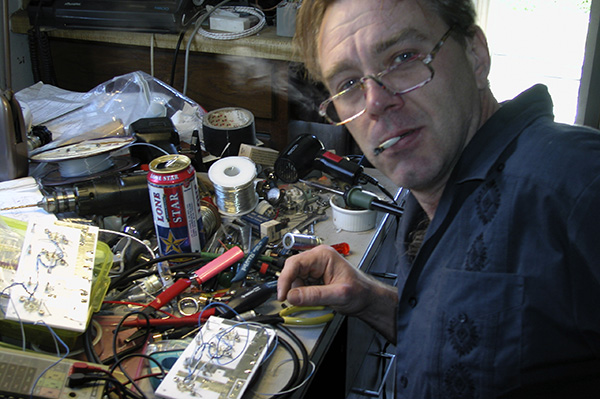
Photo by Christian Rintelen
Roberts: For a few years, I did as little as possible. I laid low, played records, built equipment, enjoyed the live music Austin had to offer.
I went back to school to study archaeology. I took my son to nursery school and hung out with the moms waiting to pick him up afterwards. I tried to lead a normal, productive life—"normal" being relative, right?
Around 2000, a good friend in Korea decided to start Silbatone Acoustics. We were vintage Western Electric collector buddies back in DC some years earlier and totally on the same wavelength. I joined up with this project to write brochures, network, and strategize our assault on the audio universe.
Silbatone was never intended to be a money-making enterprise. It was an expensive hobby for M.J. Chung, one of the craziest and most dedicated audio guys I ever encountered. Eventually it became the essence of its motivation, which is a tube audio R&D think tank and traveling Western Electric museum.
I recruited J.C. Morrison as a design engineer, and Mr. Chung found Dr. Stefano Bae, an engineer and materials scientist. They came up with a lot of extremely innovative, superhigh-performance circuits. They sold some items, mostly in the Korean audiomaniac market, but the real goal was to make the best possible electronics to demonstrate Western Electric theater systems.
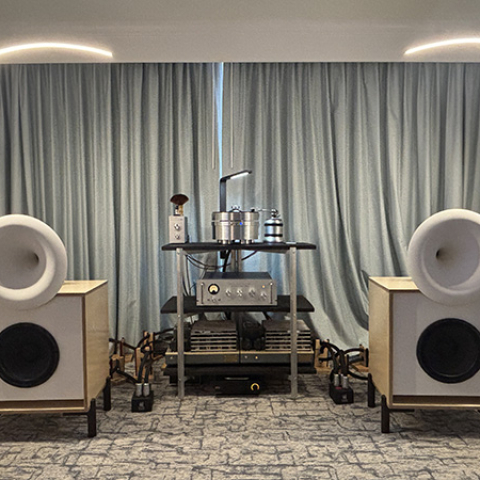
For the past 20 or so years, Silbatone has been shipping giant Western Electric theater horn systems from the early days of talking pictures to the High End Munich show, where we became a sort of institution. I refer to this project as "educational outreach and social entertainment." A few hundred regular visitors come by every year and enjoy the party.
The Silbatone room always gets a
lot of press and more than a fair share of best-of-show reactions, which is funny considering that this stuff is 90–100 years old—basically the first serious loudspeakers ever made. Some are from the first year of electrical recording! We showed the iconic Western Electric 12A and 13A Vitavox system built for
The Jazz Singer, the first "talking picture," circa 1927. And if you can't beat a century-old speaker, Mr. Manufacturer, what are you doing there? Yeah, it's a bit of a reality check. This year the High End show is moving to Vienna, and we'll be there carrying the torch. In the meantime, Mr. Chung opened Audeum, a spectacular museum in Seoul, to house his insane collection. It's one of the world's greatest listening destinations and well worth a visit.
Halberstadt: What are you working on now?
Roberts: I have YouTube and Tidal playing constantly on my PC and Fostex 6301–powered monitors. And I am making a push to actually listen to the collection of gear I have been dragging around the country for decades and use some of the treasury of tubes and parts I've accumulated. I've got some Western Electric 728s playing with push-pull triode amps I built, and a pair of cabinets for ersatz WE 757A studio monitors is coming my way from a friend who is a great cabinetmaker. There are lots of LPs to listen to before Joe Junior chucks everything in the dumpster after my hopefully none-too-soon demise.
I rarely go on audio forums anymore, but lately I've been popping in at
HiFi Haven, where a lot of old
SP cats hang out, and there's a lot of DIY action. They got me moving on building Western Electric 124 amps that I have been hoarding parts to construct for decades! Thanks, fellas!
And I've been contemplating the difference between how live music hits and hi-fi playback, something that has always occupied my thoughts. I still feel that systems have too much treble energy. This moves the experience toward a sort of curated
hyperreality, which is not necessarily a bad thing, but hi-fi has far more detail and a more blatant presentation than live music, like getting sprayed with a hose.
I find I have to listen to live music a lot more intently than with audio reproduction, reaching out to make human contact with the performers and engaging in a form of spiritual communication. Although I have to work harder when experiencing live music, sometimes putting in that effort does deliver special personal rewards that audio simply cannot touch.