"None of the amps I build are better than the others," Justin Weber of Ampsandsound told me not long after we met. "They are just different." I may have smirked inwardly. According to his company's website, Weber makes no fewer than 23 amplifier models, many capable of driving both headphones and speakers, ranging from the $2700 Kenzie OG to the $38,000 Arch Monos. Are they really all equally good? I wondered. Surely this was just a clever Buddhist ploy to distract us from some of his amps' high prices. Doesn't the extra $35k spent on the Arch Monos buy you something more desirable than the performance offered by the little Kenzie? Writing for an audio magazine means I hear a lot of marketing claims, some more risible than others, and I have learned to take them with an entire seabed worth of salt.
But then Weber is kind of weird. Besides operating a hi-fi company (footnote 1), he's a psychotherapist in private practice, a supervisor with the California Department of Corrections and Rehabilitation, a husband, a dad, a boat owner, an amateur photographer, and the host of a YouTube channel. He's upbeat and polite and goes through enough 16oz cans of Monster Energy Zero Ultra to worry a convention of endocrinologists. Given all that, you might imagine that he stuffs circuit boards in his basement on weekends to get away from his patients and lower his blood pressure.
But as it turns out, Weber's company is an entirely more serious enterprise. It is an outgrowth of years he spent as a home builder and appreciator of classic postwar tube circuits, and the products reflect these interests. The amplifiers are wired point to point in California—by a person with nontrivial soldering skills—and equipped with transformers designed and wound to Weber's specifications elsewhere in the Golden State by a mostly deaf magnet-wire virtuoso named Gery Gaetani. The amps' wiring is neat and really pretty and reminds me of the internal layouts of my now-gone Shindo gear. All of this is true even of the relatively affordable Kenzie OG, which ships with WWII-era new old stock 1626 output tubes that can be thought of as shrunk-down 45s. Not bad for a social worker.
Last year, when I wrote about the $19,000 Ampsandsound Red October XL, I was struck by that amp's astounding way of unraveling complex arrangements, precise recreation of musical textures, prismatic color palette, and unambiguous control of both my headphones and the Klipsch La Scala speakers. But given its price, I was as likely to own one as I was to take out a mortgage on a midsize castle in Upper Saxony.
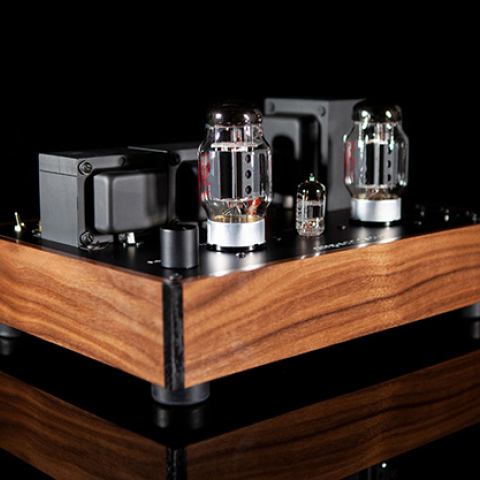
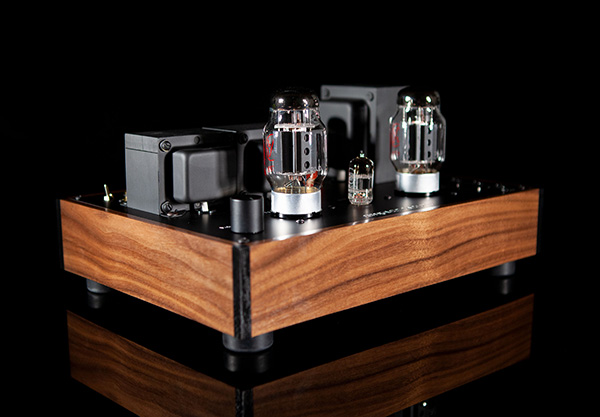
But I remained intrigued by Weber's provocative claim about his amps and spent much of the past year listening to the Mogwai SE. Like the Red October XL, it generates 8W from a single output tube per channel (though instead of the XL's 300B it uses a pentode or beam tetrode like an EL34, 6L6GC, KT66, KT77, or KT88). Like the larger amp, the Mogwai features class-A operation, zero negative feedback, tube rectification, a single 12AX7 driver, a volume control, and the ability to drive headphones as well as speakers. With its wooden base and relatively petite dimensions—14.75" wide × 10.75" deep and weighing under 30lb—I think it looks more attractive than a 100+lb industrial pituitary case like the Red October XL. Oh, and the Mogwai costs $3900, lending it far more relevance in my life.
 Honestly, I am not sure what I was expecting when I hooked up the Mogwai to comparatively massive double runs of AudioQuest's Thunderbird speaker cables, which were attached to the rear ends of the La Scalas. I must have been feeling evil, because rather than warming up Weber's little amplifier with a recording of a Scarlatti mandolin sonata, I decided to see how it would respond to Kraftwerk's Trans-Europe Express played stupid loud. I have to pause here to confess that this bit of early electronica, recorded in 1976, does not make me think about the encroachment of computers or modernity or even sedans whooshing down the autobahn. Instead, it sounds to me like the closest humans have come to recreating the music of the spheres: angelic harmonies that for some reason required a bank of analog synthesizers and a quartet of dorky German men to finally be realized on our lowly plane of existence.
Using the Mogwai as a stereo power amp, with the volume control wide open, I dropped the stylus on the title track. If I was expecting the Mogwai to miniaturize and domesticate Kraftwerk's chugging, pulsing tones, I was let down. The thick synth notes practically burst out of the big horns in a flying side kick to my eardrums. The music was loud, taut, and borderline scary. The bass hit hard and didn't lag. I could swear that the little Mogwai drove the La Scalas with nearly as much control and dynamic wallop as the far larger and costlier Red October XL. What? How?
That said, Weber's two amps sound nothing alike. The XL is all about harmonic density, liquidity, weight, and a richly contemplative portrayal of the music, which it surrounds with the dramatic dark backgrounds of a Rembrandt canvas. The Mogwai, on the other hand, is more like an April daffodil bursting out of the frozen ground, sounding fresh, spritely, bracingly pure, and irresistibly appealing. On "Helplessly Hoping," from a first vinyl pressing of Crosby Stills & Nash, the XL had drawn my attention to the harmonies, showing off the precise colors of each singer's voice and unraveling how each contributes to the whole. In contrast, the Mogwai focused my attention on the melody, propelling the song forward with tunefulness and momentum.
Honestly, I am not sure what I was expecting when I hooked up the Mogwai to comparatively massive double runs of AudioQuest's Thunderbird speaker cables, which were attached to the rear ends of the La Scalas. I must have been feeling evil, because rather than warming up Weber's little amplifier with a recording of a Scarlatti mandolin sonata, I decided to see how it would respond to Kraftwerk's Trans-Europe Express played stupid loud. I have to pause here to confess that this bit of early electronica, recorded in 1976, does not make me think about the encroachment of computers or modernity or even sedans whooshing down the autobahn. Instead, it sounds to me like the closest humans have come to recreating the music of the spheres: angelic harmonies that for some reason required a bank of analog synthesizers and a quartet of dorky German men to finally be realized on our lowly plane of existence.
Using the Mogwai as a stereo power amp, with the volume control wide open, I dropped the stylus on the title track. If I was expecting the Mogwai to miniaturize and domesticate Kraftwerk's chugging, pulsing tones, I was let down. The thick synth notes practically burst out of the big horns in a flying side kick to my eardrums. The music was loud, taut, and borderline scary. The bass hit hard and didn't lag. I could swear that the little Mogwai drove the La Scalas with nearly as much control and dynamic wallop as the far larger and costlier Red October XL. What? How?
That said, Weber's two amps sound nothing alike. The XL is all about harmonic density, liquidity, weight, and a richly contemplative portrayal of the music, which it surrounds with the dramatic dark backgrounds of a Rembrandt canvas. The Mogwai, on the other hand, is more like an April daffodil bursting out of the frozen ground, sounding fresh, spritely, bracingly pure, and irresistibly appealing. On "Helplessly Hoping," from a first vinyl pressing of Crosby Stills & Nash, the XL had drawn my attention to the harmonies, showing off the precise colors of each singer's voice and unraveling how each contributes to the whole. In contrast, the Mogwai focused my attention on the melody, propelling the song forward with tunefulness and momentum.
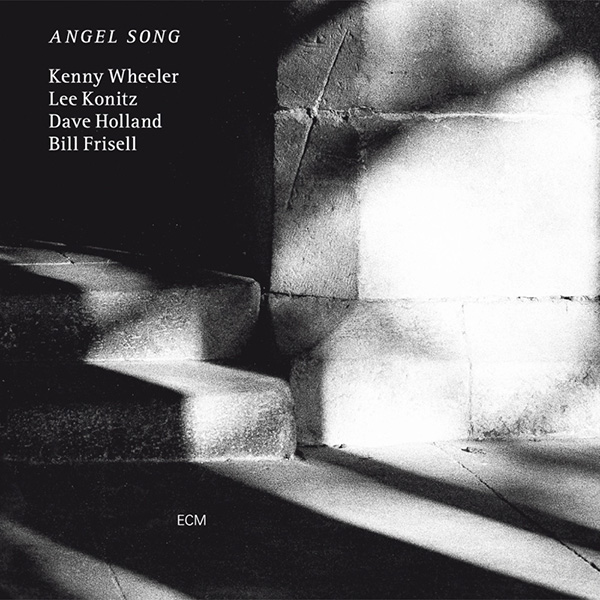 This is not to imply that the Mogwai lacks harmonic content or resolution. On "Kind Folk" from Kenny Wheeler's Angel Song, a wonderful 1997 recording of a drummer-less quartet consisting of Wheeler, Bill Frisell, Lee Konitz, and Dave Holland, there's a solo by Konitz I love. The 70-year-old saxophonist lays down what has to be one of the most expressive and emotionally concentrated improvisations in recent jazz history, shimmering with so many inflections of meaning that it feels opalescent. The Mogwai captured every shred of decay on this typically reverberant ECM recording without thinning out either Konitz's heady tone or the harmonic aura around Wheeler's gorgeously full trumpet sound. But rather than reveling in this density and sonic weight, it placed the accent on immediacy and directness.
The point I'm getting around to making is that the Mogwai SE proved just as compelling a listen as the Red October XL. If anything, the smaller amp's directness and joie de vivre reminds me more of the Manley Mahi than its much larger stablemate. Listening to it as a speaker amp, I never felt less than engaged or wished I were listening to something fancier. And it proved beautifully agnostic to genre, having plenty of speed, bass, and dynamic kick for rock; harmonic density and instrumental texture for jazz; and transparency and purity for classical. Apologies for the generalizations.
This is not to imply that the Mogwai lacks harmonic content or resolution. On "Kind Folk" from Kenny Wheeler's Angel Song, a wonderful 1997 recording of a drummer-less quartet consisting of Wheeler, Bill Frisell, Lee Konitz, and Dave Holland, there's a solo by Konitz I love. The 70-year-old saxophonist lays down what has to be one of the most expressive and emotionally concentrated improvisations in recent jazz history, shimmering with so many inflections of meaning that it feels opalescent. The Mogwai captured every shred of decay on this typically reverberant ECM recording without thinning out either Konitz's heady tone or the harmonic aura around Wheeler's gorgeously full trumpet sound. But rather than reveling in this density and sonic weight, it placed the accent on immediacy and directness.
The point I'm getting around to making is that the Mogwai SE proved just as compelling a listen as the Red October XL. If anything, the smaller amp's directness and joie de vivre reminds me more of the Manley Mahi than its much larger stablemate. Listening to it as a speaker amp, I never felt less than engaged or wished I were listening to something fancier. And it proved beautifully agnostic to genre, having plenty of speed, bass, and dynamic kick for rock; harmonic density and instrumental texture for jazz; and transparency and purity for classical. Apologies for the generalizations.
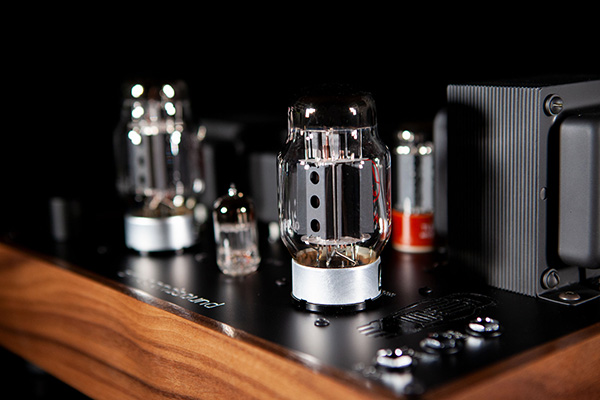 A note on tubes: While my sample of the Mogwai shipped with EL34 outputs and a 5U4G rectifier, a few substitutions will give you more headroom for listening through all but the most sensitive speakers. Swapping in a 5AR4 rectifier provided more punch, speed, and dynamic life while sacrificing a bit of sonic density and richness. A classic 1960s Mullard 5AR4 sounded as fine as ever, but I found that a 1950s Dutch-made Philips variant with double D getters provided a more exciting and spacious acoustic.
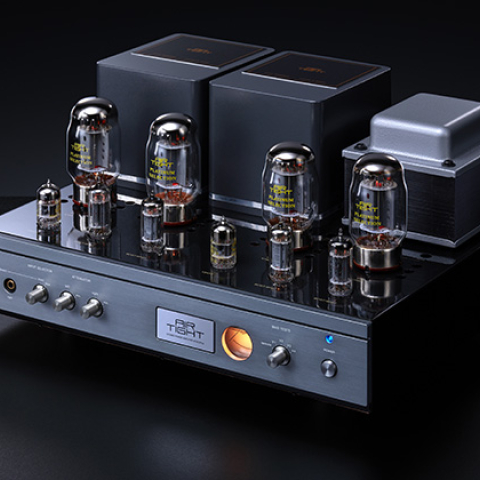
And though I tried nearly a dozen output tubes, for speaker listening I preferred KT88s, which offered the deepest and surest bass response, the most fleshed-out midrange, and the most dynamic sound. As with the Air Tight amp I wrote about last month, among the current-production contenders my favorites were the admittedly pricey Ray Tubes Reserves. Their carbon-coated gray glass, gold pins, and reassuringly solid construction are a treat for the eye and the hand, and the Rays sounded better than the competition in just about every respect.
How did the Mogwai perform with headphones? With its three ¼" outputs allowing for a range of headphone impedances and personal preferences, and all of its 8W on tap, it sounded quiet, powerful, refined, and lovely. No, it did not rocket me into the ionosphere of headphone enjoyment like the Red October XL did; the larger amp remains the finest headphone amp I've heard. But listening to cans through the Mogwai—whether the preternaturally comfortable Abyss JOAL or the fabulously transparent Meze Elite—proved hugely pleasurable. And like other good tube amps with speaker-level wattage, it worked the really fun trick of transforming my ancient Sennheiser HD 650 from a veiled, fairly mediocre can into a world-class transducer.
After months of enjoying the Mogwai SE, I'll grudgingly admit that Weber isn't entirely off base in suggesting that his amps offer different but equally valid flavors of musical enjoyment. The Mogwai SE presents an entirely satisfying version of my music, as well-rounded as that of any amp I've heard. Given its ability to drive just about any non-electrostatic headphone and many reasonably sensitive speakers, stellar build quality, vast tube-rolling opportunities, unfussy operation, and remarkably keen price, it is one of the most compelling bargains in audio.
A note on tubes: While my sample of the Mogwai shipped with EL34 outputs and a 5U4G rectifier, a few substitutions will give you more headroom for listening through all but the most sensitive speakers. Swapping in a 5AR4 rectifier provided more punch, speed, and dynamic life while sacrificing a bit of sonic density and richness. A classic 1960s Mullard 5AR4 sounded as fine as ever, but I found that a 1950s Dutch-made Philips variant with double D getters provided a more exciting and spacious acoustic.
And though I tried nearly a dozen output tubes, for speaker listening I preferred KT88s, which offered the deepest and surest bass response, the most fleshed-out midrange, and the most dynamic sound. As with the Air Tight amp I wrote about last month, among the current-production contenders my favorites were the admittedly pricey Ray Tubes Reserves. Their carbon-coated gray glass, gold pins, and reassuringly solid construction are a treat for the eye and the hand, and the Rays sounded better than the competition in just about every respect.
How did the Mogwai perform with headphones? With its three ¼" outputs allowing for a range of headphone impedances and personal preferences, and all of its 8W on tap, it sounded quiet, powerful, refined, and lovely. No, it did not rocket me into the ionosphere of headphone enjoyment like the Red October XL did; the larger amp remains the finest headphone amp I've heard. But listening to cans through the Mogwai—whether the preternaturally comfortable Abyss JOAL or the fabulously transparent Meze Elite—proved hugely pleasurable. And like other good tube amps with speaker-level wattage, it worked the really fun trick of transforming my ancient Sennheiser HD 650 from a veiled, fairly mediocre can into a world-class transducer.
After months of enjoying the Mogwai SE, I'll grudgingly admit that Weber isn't entirely off base in suggesting that his amps offer different but equally valid flavors of musical enjoyment. The Mogwai SE presents an entirely satisfying version of my music, as well-rounded as that of any amp I've heard. Given its ability to drive just about any non-electrostatic headphone and many reasonably sensitive speakers, stellar build quality, vast tube-rolling opportunities, unfussy operation, and remarkably keen price, it is one of the most compelling bargains in audio.
 Townshend Audio Seismic Isolation Products
Our obsessions begin with an insight. As I recounted in Brilliant Corners #26, one of the genuine aha moments in my listening life came after buying a pair of gel keyboard wrist pads at a local computer emporium. This happened about two-and-a-half decades ago, when such emporia proliferated in the land. Instead of using the pads for computing, I placed them on a shelf of my Target rack under the EAR 859 integrated amplifier. When I pushed on the amp with my finger, the EAR jiggled like an aspic.
More importantly, my system's sound was transformed. Suddenly I could hear more ambient sound, more detail, more harmonic content and color, a larger soundstage, and much longer decay. Everything sounded more tuneful and effortless, and the changes weren't remotely subtle. It was clear that without proper isolation, I'd been losing access to a whole realm of information. I'd begun imagining how much better things would sound if I isolated the entire system when, a day later, the memory gel pads hardened into their new shape and promptly stopped working.
Subsequent attempts to recreate that glorious-yet-brief experience devolved into black comedy. First, I tried bargain-bin solutions, not bothering to distinguish between coupling and isolation: I set my gear on a homemade sandbox topped with a floating shelf, an inner tube from a child's bicycle tire, an IKEA cutting board, even a thick slab of maple butcherblock. None of these helped much, and some, like the butcher block, made everything sound worse.
Later, I sampled scores of commercial products: pucks, roller balls, blocks, spikes, cones, bars, platforms, and shelves, many emphatically expensive. All of them did something, but mostly they changed the sound in ways I didn't enjoy. Inevitably, I would take them out of the system and deposit them in storage-room Siberia, where they remained. An exception are the four IsoAcoustics Orea Bordeaux footers under my Garrard 301, which effect a positive albeit quite subtle improvement.
Gradually, I began to lose hope in vibration control. So recently, when a friend raved about isolation products from UK's Townshend Audio (footnote 2), I felt unable to share his happiness, having been lulled into hopelessness and disbelief like a long-suffering heretic. Thankfully this didn't stop me from trying the products in my system.
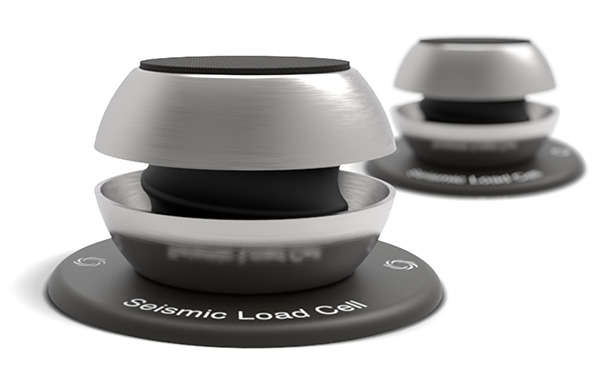
The basic building block of the Townshend range is the Seismic Load Cell—essentially an air-damped spring tuned to a specific weight range. According to the company's website, this suspension device acts as an omnidirectional low-pass filter, eliminating resonances down to 3Hz. (Each model is prefaced by a letter indicating its intended load.) Townshend Audio leans into the distinction between the attenuation offered by rigid coupling devices, which suppresses or boosts certain frequencies, and isolation through decoupling offered by products like the Load Cell. Floating audio gear on damped spring suspensions is intended to remove the sonically destructive vibration caused by the equipment itself, the room, the world outside the listening environment (think rumbling tractor trailers and subway trains), and even microtremors caused by the earth's constant seismic activity. But as with everything in this often-aggravating hobby, the proof resides in the listening.
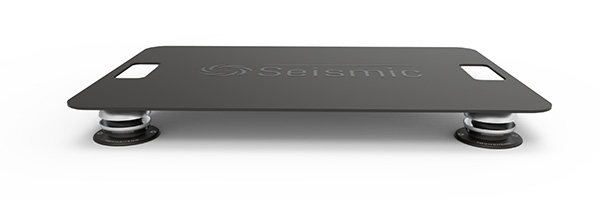 I began by auditioning the Seismic Platform (£838), a thin 20" × 16.5" steel shelf sitting on four attached C-type Load Cells, which match the 66lb weight of the Garrard 301 in its Box Furniture plinth. The platform is a reassuring, well-built thing that allows leveling by raising or lowering the feet. When I set the Garrard onto the Seismic platform and gently pushed on it, the record player wobbled benevolently, reminding me of the jiggle created by the mythical gel packs of yore.
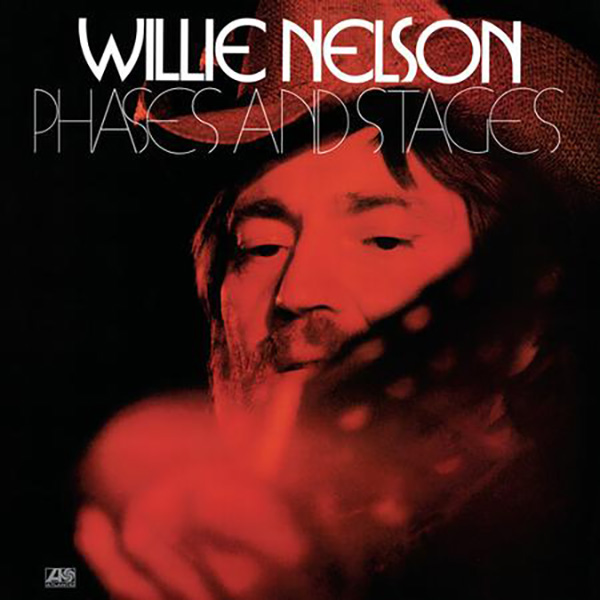
Now intrigued, I lowered the Schick tonearm with its SPU Royal N cartridge S onto a first pressing of Willie Nelson's Phases and Stages, my favorite among the troubadour's LPs. A recent issue of Texas Monthly rated all of Nelson's 154 albums. When I read the list to the end and discovered Phases and Stages at number one, I wanted to hug the entire city of Austin.
I began by auditioning the Seismic Platform (£838), a thin 20" × 16.5" steel shelf sitting on four attached C-type Load Cells, which match the 66lb weight of the Garrard 301 in its Box Furniture plinth. The platform is a reassuring, well-built thing that allows leveling by raising or lowering the feet. When I set the Garrard onto the Seismic platform and gently pushed on it, the record player wobbled benevolently, reminding me of the jiggle created by the mythical gel packs of yore.
Now intrigued, I lowered the Schick tonearm with its SPU Royal N cartridge S onto a first pressing of Willie Nelson's Phases and Stages, my favorite among the troubadour's LPs. A recent issue of Texas Monthly rated all of Nelson's 154 albums. When I read the list to the end and discovered Phases and Stages at number one, I wanted to hug the entire city of Austin.
 Listening to the sublime "(How Will I Know) I'm Falling in Love Again," which Nelson narrates from the point of view of a woman, I began smiling when I heard Johnny Gimble's fiddle soaring over the band. A former Texas Playboy, Gimble spent years pounding out raucous dance music for ballrooms of drunk fieldhands, yet here he plays with a quiet, almost bashful tenderness, embodying the protagonist's surprise at discovering the durability of her heart.
I'd listened to the recording hundreds of times, but now I became aware of a layer of ambient sound—what some listeners describe as "the room" and others as "plankton"—that I hadn't previously heard. The restoration of this acoustic micro-detail lent recordings a sense of being more complete, and there was an impression of the brain having to work a little less hard to fill in missing information. Plus, the music sounded more alive, less electronic, less like a facsimile, with an enhanced sense of flow. These changes weren't utterly shattering, but neither were they at all difficult to notice.
On recording after recording, this enhancement endured. With the Seismic Platform in place, I heard more of the instrumental halos, more of the studio space, more of the subtle sound of a live microphone before it begins recording, all with zero musical or sonic tradeoffs. Cool!
As it happens, the flat wood underside of the Garrard's plinth has four tiny felt feet, which do little besides preventing it from scratching the Box Furniture rack it usually sits on. So when I placed the Garrard on the Seismic Platform, I left the IsoAcoustics Orea footers in place. Strangely, taking them out later audibly decreased the positive effect of the Load Cells, so back the Oreas went. Go figure.
Next, I wanted to hear the Townshend effect under the Manley Mahis. I installed four Seismic Pods (£136 each)—essentially A-type Load Cells minus the steel shelf—between each 17lb mono amp and the Box Furniture amp rack they sit on. More jiggling ensued. Excitedly, I sat down and lowered the stylus onto the track I had listened to prior to installing the Pods and prepared myself for more magical improvements. What I heard was ... not very different. To my surprise, no matter the recording, under the amps the Load Cells didn't make much of a change, positive or otherwise. Cue the melancholy trombone.
Listening to the sublime "(How Will I Know) I'm Falling in Love Again," which Nelson narrates from the point of view of a woman, I began smiling when I heard Johnny Gimble's fiddle soaring over the band. A former Texas Playboy, Gimble spent years pounding out raucous dance music for ballrooms of drunk fieldhands, yet here he plays with a quiet, almost bashful tenderness, embodying the protagonist's surprise at discovering the durability of her heart.
I'd listened to the recording hundreds of times, but now I became aware of a layer of ambient sound—what some listeners describe as "the room" and others as "plankton"—that I hadn't previously heard. The restoration of this acoustic micro-detail lent recordings a sense of being more complete, and there was an impression of the brain having to work a little less hard to fill in missing information. Plus, the music sounded more alive, less electronic, less like a facsimile, with an enhanced sense of flow. These changes weren't utterly shattering, but neither were they at all difficult to notice.
On recording after recording, this enhancement endured. With the Seismic Platform in place, I heard more of the instrumental halos, more of the studio space, more of the subtle sound of a live microphone before it begins recording, all with zero musical or sonic tradeoffs. Cool!
As it happens, the flat wood underside of the Garrard's plinth has four tiny felt feet, which do little besides preventing it from scratching the Box Furniture rack it usually sits on. So when I placed the Garrard on the Seismic Platform, I left the IsoAcoustics Orea footers in place. Strangely, taking them out later audibly decreased the positive effect of the Load Cells, so back the Oreas went. Go figure.
Next, I wanted to hear the Townshend effect under the Manley Mahis. I installed four Seismic Pods (£136 each)—essentially A-type Load Cells minus the steel shelf—between each 17lb mono amp and the Box Furniture amp rack they sit on. More jiggling ensued. Excitedly, I sat down and lowered the stylus onto the track I had listened to prior to installing the Pods and prepared myself for more magical improvements. What I heard was ... not very different. To my surprise, no matter the recording, under the amps the Load Cells didn't make much of a change, positive or otherwise. Cue the melancholy trombone.
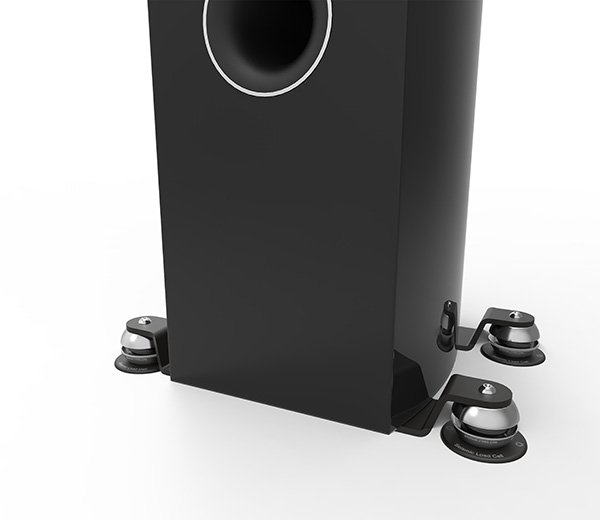 There was one more Townshend product to hear. A Seismic Bar, which is intended to go under your speakers and subwoofers, is an expandable steel ... bar with a Load Cell at each end. Two bars are intended to go under each speaker. (A set of four costs £1389–£1644, depending on size.) Mine came equipped with E-type Load Cells, four of which match the 200lb weight of each Klipsch La Scala.
Somewhat counterintuitively, installtion turned out to be a breeze, requiring me only to tip a La Scala forward, slide a Seismic Bar under the back of the speaker, then repeat the process in the opposite direction to insert the front Bar. Soon the big Klipsch horns were wobbling gently on their new supports, looking like they were quaking with laughter.
I'm happy to report that the Load Cells made the largest and most positive difference in this position. Rather than excavating lost ambient information, as they did under the record player, under the speakers they made music more tuneful, propulsive, and natural sounding. Now, the La Scalas already excel in these categories, but the improvement was unmistakable. Everything flowed better, made more sense, and sounded more correct. My impression was that with the Seismic Bars in place, the speakers had stopped subtly fighting themselves. While this description might be frustratingly subjective, the Seismic Bars' effect was something that just about any listener could hear instantly.
It seems that Max Townshend, an Australia-born electrical engineer who passed in 2021, knew something about listening. In addition to the Load Cell devices, he designed and manufactured cables, supertweeters, passive preamps, and the now-discontinued but still radical Rock Turntable. Placed in the right position, his company's isolation products make an easy-to-hear improvement to the sound of reproduced music, the most meaningful and unambiguous I've heard from any such devices. Though they cost more than an attic's worth of inner tubes and cutting boards, their prices strike me as appropriate to the magnitude of their sonic contribution. It appears that my long journey as a vibration control failure has finally reached its not-unhappy end.
There was one more Townshend product to hear. A Seismic Bar, which is intended to go under your speakers and subwoofers, is an expandable steel ... bar with a Load Cell at each end. Two bars are intended to go under each speaker. (A set of four costs £1389–£1644, depending on size.) Mine came equipped with E-type Load Cells, four of which match the 200lb weight of each Klipsch La Scala.
Somewhat counterintuitively, installtion turned out to be a breeze, requiring me only to tip a La Scala forward, slide a Seismic Bar under the back of the speaker, then repeat the process in the opposite direction to insert the front Bar. Soon the big Klipsch horns were wobbling gently on their new supports, looking like they were quaking with laughter.
I'm happy to report that the Load Cells made the largest and most positive difference in this position. Rather than excavating lost ambient information, as they did under the record player, under the speakers they made music more tuneful, propulsive, and natural sounding. Now, the La Scalas already excel in these categories, but the improvement was unmistakable. Everything flowed better, made more sense, and sounded more correct. My impression was that with the Seismic Bars in place, the speakers had stopped subtly fighting themselves. While this description might be frustratingly subjective, the Seismic Bars' effect was something that just about any listener could hear instantly.
It seems that Max Townshend, an Australia-born electrical engineer who passed in 2021, knew something about listening. In addition to the Load Cell devices, he designed and manufactured cables, supertweeters, passive preamps, and the now-discontinued but still radical Rock Turntable. Placed in the right position, his company's isolation products make an easy-to-hear improvement to the sound of reproduced music, the most meaningful and unambiguous I've heard from any such devices. Though they cost more than an attic's worth of inner tubes and cutting boards, their prices strike me as appropriate to the magnitude of their sonic contribution. It appears that my long journey as a vibration control failure has finally reached its not-unhappy end.
Footnote 1: Ampsandsound. Tel: (949) 636-9076. Email: sales@ampsandsound.com. Web: ampsandsound.com. Footnote 2: Townshend Audio, 7 Bridge Rd., East Molesey, Surrey, UK. Tel: +44 0208 979 2155. Email: mail@townshendaudio.com. Web: townshendaudio.com.
Honestly, I am not sure what I was expecting when I hooked up the Mogwai to comparatively massive double runs of AudioQuest's Thunderbird speaker cables, which were attached to the rear ends of the La Scalas. I must have been feeling evil, because rather than warming up Weber's little amplifier with a recording of a Scarlatti mandolin sonata, I decided to see how it would respond to Kraftwerk's Trans-Europe Express played stupid loud. I have to pause here to confess that this bit of early electronica, recorded in 1976, does not make me think about the encroachment of computers or modernity or even sedans whooshing down the autobahn. Instead, it sounds to me like the closest humans have come to recreating the music of the spheres: angelic harmonies that for some reason required a bank of analog synthesizers and a quartet of dorky German men to finally be realized on our lowly plane of existence.
This is not to imply that the Mogwai lacks harmonic content or resolution. On "Kind Folk" from Kenny Wheeler's Angel Song, a wonderful 1997 recording of a drummer-less quartet consisting of Wheeler, Bill Frisell, Lee Konitz, and Dave Holland, there's a solo by Konitz I love. The 70-year-old saxophonist lays down what has to be one of the most expressive and emotionally concentrated improvisations in recent jazz history, shimmering with so many inflections of meaning that it feels opalescent. The Mogwai captured every shred of decay on this typically reverberant ECM recording without thinning out either Konitz's heady tone or the harmonic aura around Wheeler's gorgeously full trumpet sound. But rather than reveling in this density and sonic weight, it placed the accent on immediacy and directness.
A note on tubes: While my sample of the Mogwai shipped with EL34 outputs and a 5U4G rectifier, a few substitutions will give you more headroom for listening through all but the most sensitive speakers. Swapping in a 5AR4 rectifier provided more punch, speed, and dynamic life while sacrificing a bit of sonic density and richness. A classic 1960s Mullard 5AR4 sounded as fine as ever, but I found that a 1950s Dutch-made Philips variant with double D getters provided a more exciting and spacious acoustic.
And though I tried nearly a dozen output tubes, for speaker listening I preferred KT88s, which offered the deepest and surest bass response, the most fleshed-out midrange, and the most dynamic sound. As with the Air Tight amp I wrote about last month, among the current-production contenders my favorites were the admittedly pricey Ray Tubes Reserves. Their carbon-coated gray glass, gold pins, and reassuringly solid construction are a treat for the eye and the hand, and the Rays sounded better than the competition in just about every respect.
Townshend Audio Seismic Isolation ProductsOur obsessions begin with an insight. As I recounted in Brilliant Corners #26, one of the genuine aha moments in my listening life came after buying a pair of gel keyboard wrist pads at a local computer emporium. This happened about two-and-a-half decades ago, when such emporia proliferated in the land. Instead of using the pads for computing, I placed them on a shelf of my Target rack under the EAR 859 integrated amplifier. When I pushed on the amp with my finger, the EAR jiggled like an aspic.
I began by auditioning the Seismic Platform (£838), a thin 20" × 16.5" steel shelf sitting on four attached C-type Load Cells, which match the 66lb weight of the Garrard 301 in its Box Furniture plinth. The platform is a reassuring, well-built thing that allows leveling by raising or lowering the feet. When I set the Garrard onto the Seismic platform and gently pushed on it, the record player wobbled benevolently, reminding me of the jiggle created by the mythical gel packs of yore.
Listening to the sublime "(How Will I Know) I'm Falling in Love Again," which Nelson narrates from the point of view of a woman, I began smiling when I heard Johnny Gimble's fiddle soaring over the band. A former Texas Playboy, Gimble spent years pounding out raucous dance music for ballrooms of drunk fieldhands, yet here he plays with a quiet, almost bashful tenderness, embodying the protagonist's surprise at discovering the durability of her heart.
I'd listened to the recording hundreds of times, but now I became aware of a layer of ambient sound—what some listeners describe as "the room" and others as "plankton"—that I hadn't previously heard. The restoration of this acoustic micro-detail lent recordings a sense of being more complete, and there was an impression of the brain having to work a little less hard to fill in missing information. Plus, the music sounded more alive, less electronic, less like a facsimile, with an enhanced sense of flow. These changes weren't utterly shattering, but neither were they at all difficult to notice.
There was one more Townshend product to hear. A Seismic Bar, which is intended to go under your speakers and subwoofers, is an expandable steel ... bar with a Load Cell at each end. Two bars are intended to go under each speaker. (A set of four costs £1389–£1644, depending on size.) Mine came equipped with E-type Load Cells, four of which match the 200lb weight of each Klipsch La Scala.
Somewhat counterintuitively, installtion turned out to be a breeze, requiring me only to tip a La Scala forward, slide a Seismic Bar under the back of the speaker, then repeat the process in the opposite direction to insert the front Bar. Soon the big Klipsch horns were wobbling gently on their new supports, looking like they were quaking with laughter.
I'm happy to report that the Load Cells made the largest and most positive difference in this position. Rather than excavating lost ambient information, as they did under the record player, under the speakers they made music more tuneful, propulsive, and natural sounding. Now, the La Scalas already excel in these categories, but the improvement was unmistakable. Everything flowed better, made more sense, and sounded more correct. My impression was that with the Seismic Bars in place, the speakers had stopped subtly fighting themselves. While this description might be frustratingly subjective, the Seismic Bars' effect was something that just about any listener could hear instantly.
Footnote 1: Ampsandsound. Tel: (949) 636-9076. Email: sales@ampsandsound.com. Web: ampsandsound.com. Footnote 2: Townshend Audio, 7 Bridge Rd., East Molesey, Surrey, UK. Tel: +44 0208 979 2155. Email: mail@townshendaudio.com. Web: townshendaudio.com.