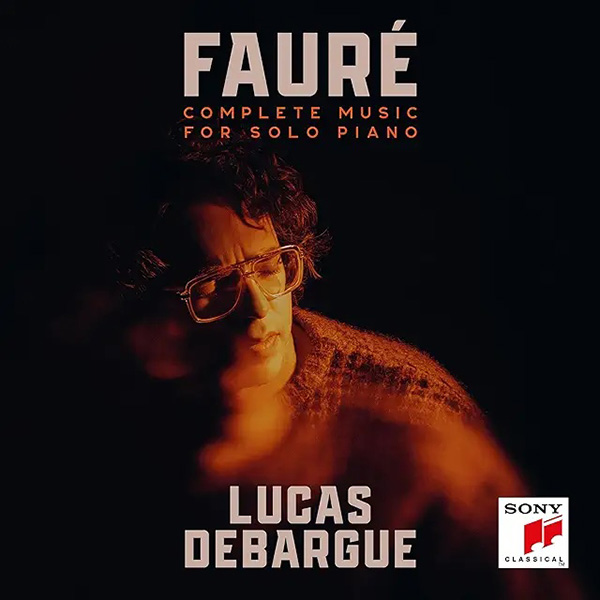
 I recall way back, when I first owned high-end audio gear, listening for realism in playback of piano recordings. The full range of dynamics and tone created by a fine piano is as good an acid test of hi-fi accuracy as anything. And boy did I come up with an awesome recording to put the sustain pedal to the metal! Browsing the Classical new releases category on Qobuz, I chanced on Fauré: Complete Music for Solo Piano (24/96 FLAC, Sony Classical/Qobuz). The pianist is Lucas Debargue, playing a new Opus 102 piano made by Stephen Paulello, which has 102 keys—14 more than a standard piano. I can't even begin to explain this design, so go check it out at stephenpaulello.com.
After sufficient burn-in time done, I began.
Pianos are percussion instruments, their sound produced by striking the strings with felt-covered wood hammers. The soundboard resonates, amplifying the initial sound, much like the top and bottom plates of a violin. In the case of this special Paulello piano, the huge dynamic range of a 9' concert grand is kicked into hyperspace by extra strings. It's piano on acid; musical colors seemed saturated in a way I have never heard before from a piano. The dynamic range is Grand Canyon–like. What a trip!
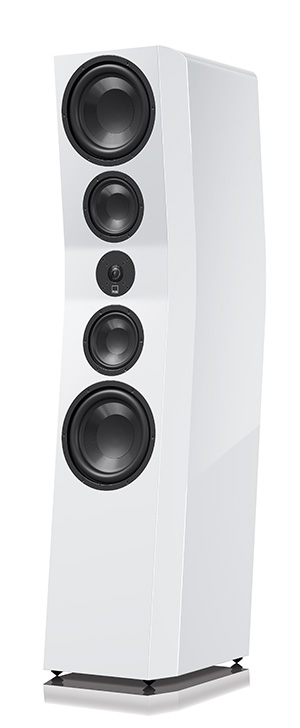
The flurry of pianistic fireworks that ends Faure's "Valse - Caprice No.2," Opus 38, made me hold my breath. This recording is quite closely miked, so the experience is in your face and in your ears. "Valse - Caprice No.3," Opus 59, runs the gamut from the most delicate of textures to cannon-like low-end chords. The SVS Ultra Evolutions kept up with all this; impressive indeed. This music, with its huge dynamic transients, never lacked impact. These speakers felt sensitive even though their sensitivity specs are nothing special.
I recall way back, when I first owned high-end audio gear, listening for realism in playback of piano recordings. The full range of dynamics and tone created by a fine piano is as good an acid test of hi-fi accuracy as anything. And boy did I come up with an awesome recording to put the sustain pedal to the metal! Browsing the Classical new releases category on Qobuz, I chanced on Fauré: Complete Music for Solo Piano (24/96 FLAC, Sony Classical/Qobuz). The pianist is Lucas Debargue, playing a new Opus 102 piano made by Stephen Paulello, which has 102 keys—14 more than a standard piano. I can't even begin to explain this design, so go check it out at stephenpaulello.com.
After sufficient burn-in time done, I began.
Pianos are percussion instruments, their sound produced by striking the strings with felt-covered wood hammers. The soundboard resonates, amplifying the initial sound, much like the top and bottom plates of a violin. In the case of this special Paulello piano, the huge dynamic range of a 9' concert grand is kicked into hyperspace by extra strings. It's piano on acid; musical colors seemed saturated in a way I have never heard before from a piano. The dynamic range is Grand Canyon–like. What a trip!
The flurry of pianistic fireworks that ends Faure's "Valse - Caprice No.2," Opus 38, made me hold my breath. This recording is quite closely miked, so the experience is in your face and in your ears. "Valse - Caprice No.3," Opus 59, runs the gamut from the most delicate of textures to cannon-like low-end chords. The SVS Ultra Evolutions kept up with all this; impressive indeed. This music, with its huge dynamic transients, never lacked impact. These speakers felt sensitive even though their sensitivity specs are nothing special.
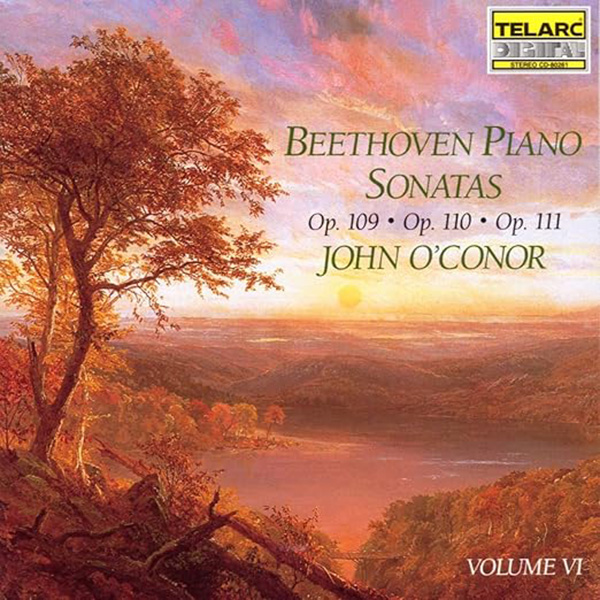 I can hear the comment writers now: "But Sasha, that is not a normal piano; you can't use it to evaluate those speakers." Okay, I get it: This wasn't so much a test of the speakers' ability to capture a piano's special subtlety (or subtle specialness) but an especially challenging test of loudspeaker dynamics. So I pulled out a few of my longtime fave piano recordings, ones I know well and that there's a good chance you're familiar with. Like pianist John O'Conor's outstanding set on Telarc, Beethoven: The Complete Piano Sonatas (Telarc CD80400, footnote 1). I've loved this set since I first heard it, so much so that I gave it to my dad, who was a very fussy listener. He loved it too. Here we get a medium-sized hall sound, with O'Conor playing a Hamburg Steinway. "Hamburg" Steinways have a more mellow, "European" sound than their New York cousins. This does not mean any lack of richness of timbre; it is just a less aggressive blend of sonic attributes.
I listened to a recording on Qobuz (16/44.1 FLAC Telarc/Qobuz) of the Sonata No.8, Pathetique." What a gorgeous sound the SVSs were giving me! I heard clarity and definition from the low-end notes and subtle, delicate highs. The declamatory power was there, as when O'Conor hits those great forte opening chords that define the piece with a single Beethovenian stroke.
I can hear the comment writers now: "But Sasha, that is not a normal piano; you can't use it to evaluate those speakers." Okay, I get it: This wasn't so much a test of the speakers' ability to capture a piano's special subtlety (or subtle specialness) but an especially challenging test of loudspeaker dynamics. So I pulled out a few of my longtime fave piano recordings, ones I know well and that there's a good chance you're familiar with. Like pianist John O'Conor's outstanding set on Telarc, Beethoven: The Complete Piano Sonatas (Telarc CD80400, footnote 1). I've loved this set since I first heard it, so much so that I gave it to my dad, who was a very fussy listener. He loved it too. Here we get a medium-sized hall sound, with O'Conor playing a Hamburg Steinway. "Hamburg" Steinways have a more mellow, "European" sound than their New York cousins. This does not mean any lack of richness of timbre; it is just a less aggressive blend of sonic attributes.
I listened to a recording on Qobuz (16/44.1 FLAC Telarc/Qobuz) of the Sonata No.8, Pathetique." What a gorgeous sound the SVSs were giving me! I heard clarity and definition from the low-end notes and subtle, delicate highs. The declamatory power was there, as when O'Conor hits those great forte opening chords that define the piece with a single Beethovenian stroke.
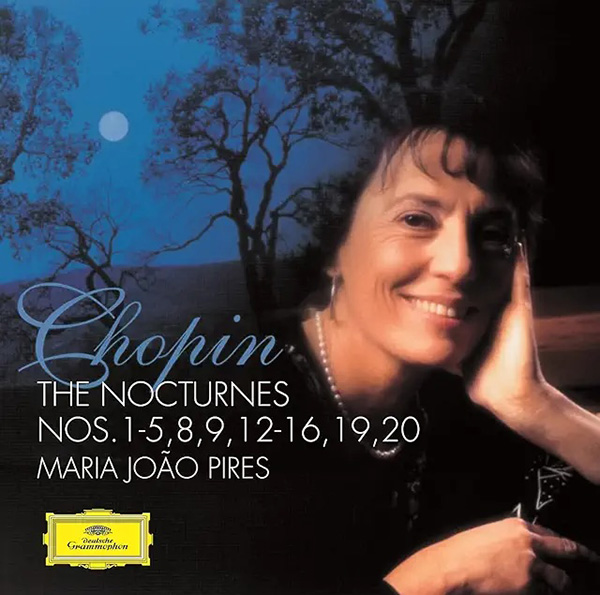 Another piano set that is beyond compare is Maria Joao Pires's Chopin: The Nocturnes on Deutsche Grammophon (CD, DG D216548). It was recorded in London and Munich, with no information provided about the pianos. I love Rubinstein's cycle, and performances from others, but for me it is Pires that I (re)turn to when I need to hear this music.
 Changing genres but not instruments, and expanding the tonal palette a bit, I pulled up Bill Evans: The Complete Riverside Recordings (16/44.1 FLAC, Riverside Records/Qobuz). One of the big pluses of streaming is the ability to do really deep dives into the discography of artists, groups, and composers. This Riverside set includes 147 tracks, 13 ½ hours of music. Over several days, I was fully submerged in the catalog of the greatest of jazz pianists:
There's Bill Evans and then there's all the rest. All the while, the Ultra Evolution Pinnacles helped me savor the varying recording dates, different personnel, different pianos. Bassist Scott LaFaro's time with Evans was particularly well-served; hearing the agile, crisp attack that LaFaro brought to his instrument, along with that singing quality. LaFaro was Evans's match when it comes to interpreting the American Songbook as no others had done before. Too marvelous for words.
Changing genres but not instruments, and expanding the tonal palette a bit, I pulled up Bill Evans: The Complete Riverside Recordings (16/44.1 FLAC, Riverside Records/Qobuz). One of the big pluses of streaming is the ability to do really deep dives into the discography of artists, groups, and composers. This Riverside set includes 147 tracks, 13 ½ hours of music. Over several days, I was fully submerged in the catalog of the greatest of jazz pianists:
There's Bill Evans and then there's all the rest. All the while, the Ultra Evolution Pinnacles helped me savor the varying recording dates, different personnel, different pianos. Bassist Scott LaFaro's time with Evans was particularly well-served; hearing the agile, crisp attack that LaFaro brought to his instrument, along with that singing quality. LaFaro was Evans's match when it comes to interpreting the American Songbook as no others had done before. Too marvelous for words.
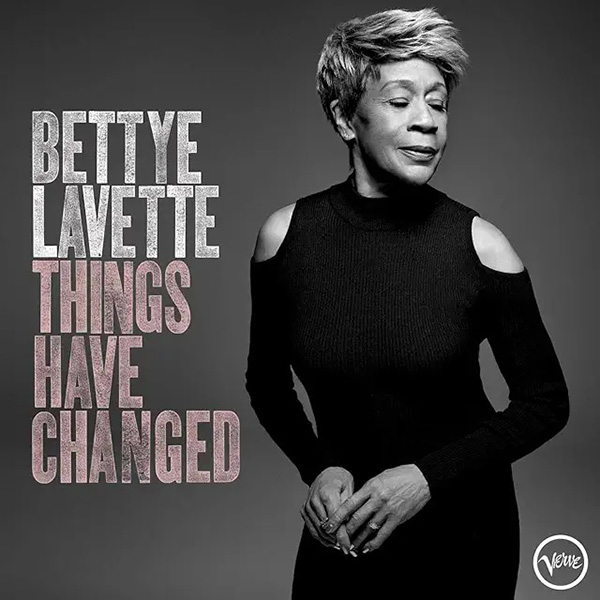 So the answer to Jim Austin's question is: Yes, the SVS Ultra Evolution Pinnacle loudspeaker can reproduce a well-recorded piano, and do that with the power and finesse I expect from speakers costing many times its price. What else can it do? What about some female vocals, with an electric band behind them? Got it right here: Bettye LaVette's smokin' 2018 album of Bob Dylan covers, Things Have Changed (CD, Verve B0027909-01). LaVette's paid some dues and then paid some more. She cut her first single, "My Man, He's a Lovin' Man," in 1962, when she was 16; it was picked up by Atlantic and became an R&B hit. When she sings now, her voice has an edge of age and experience that serves Dylan's catalog well. Usually, I prefer to hear the man himself sing his material, but this album is an exception. LaVette brings her soul chops to Dylan's lyrics, and these speakers communicated the dark timbre her voice now has in a way that speaks directly to the listener—this listener anyway. Ably backed by a band led by Dylan touring alum Larry Campbell, Bettye is joined on two cuts, "It Ain't Me Babe" and "Political World," by a guy named Keith Richards. Both tracks smoke. Backbeats? Kickdrums? Electric bass? You wanna rock? You will with a pair of these babies.
 Guest deejay
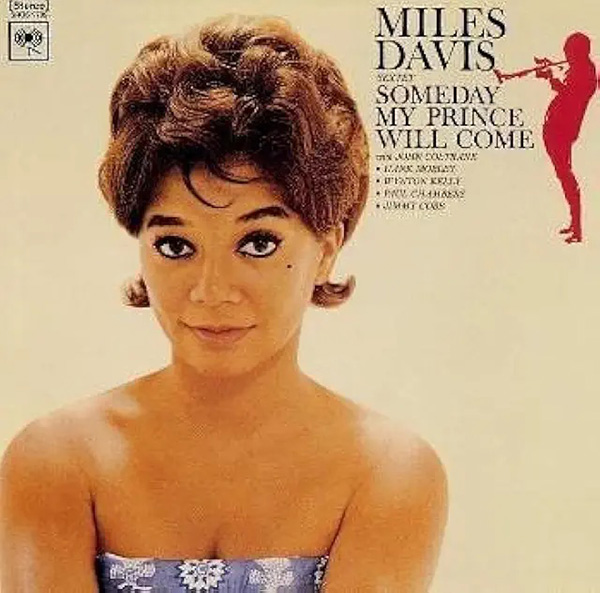
Whenever loudspeakers beyond a certain size and weight need measuring, Technical Editor John Atkinson takes a road trip. He visited me in Cooperstown to measure the Pinnacles so that he didn't have to wrangle these heavy speakers in and out of his measurements space. In preparation for John's visit, I moved the speakers upstairs, where my reference system is located. In terms of price, this is a major mismatch: The Pinnacles cost far less than the other main components and a small fraction of the speakers I usually use up there. When I spoke with SVS President Gary Yacoubian, I asked him what he listens to when voicing a speaker. He responded, "The goal is to be true to the content wherever you are in the room, not just gobs of bass. One of the tracks we use for auditioning is 'Someday My Prince Will Come,' with Miles Davis. And one of the things we listen for is Paul Chambers playing the bass. You can hear with a good speaker that every note he hits is at the same volume level experientially." So John and I carried out this same listening test, to see what we could hear. "Paul Chambers's bass was evenly balanced through the range, and nicely articulate," John said. "This recording was reproduced with enough top octave energy on the cymbals and the high-hat on Philly Joe Jones's kit. Miles sounded good—he always sounds good."
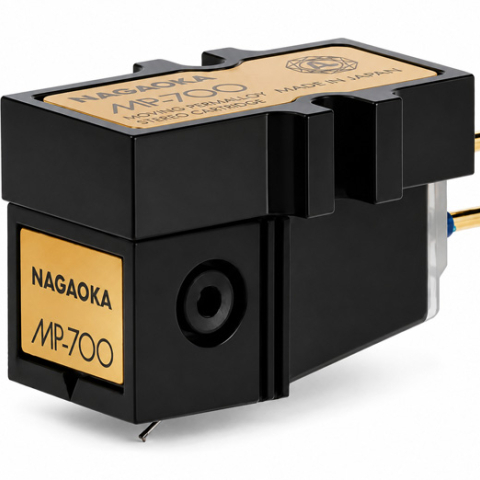
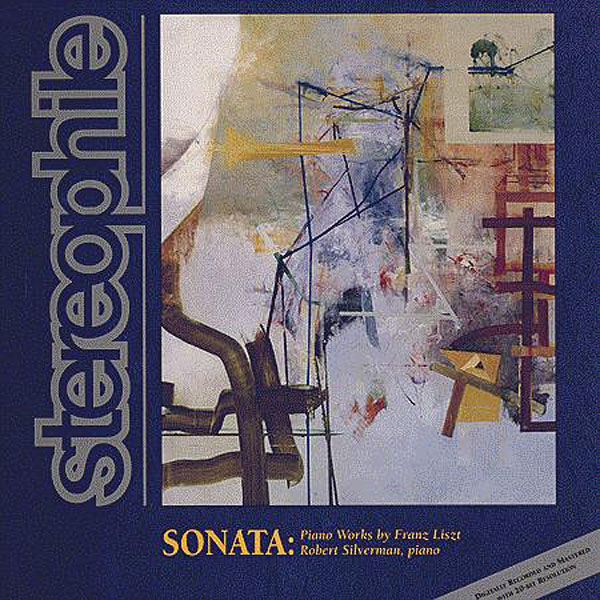
 I decided to end my session with John the same way I began this review: with solo piano. Sonata: Piano Works of Franz Liszt Stereophile STPH008-1) was recorded by John Atkinson, along with Robert Harley, in 1993 at the First United Methodist Church in Albuquerque. John recently gave me a nice, new, unopened (LP of this recording, and that's how we listened, from a new old stock LP on my VPI HW-40 turntable with a Lyra Etna λ Lambda cartridge. The featured work is Liszt's famous Sonata in B Minor. To me, pianist Robert Silverman and his Steinway D concert grand sounded superb. John commented, "These speakers love the piano. They get the force right. The sheer dynamics and articulation of the left hand—no distortion. Listening to this recording took me back 30 years."
 The sum of all things
Before I even listened to the SVS Ultra Evolution Pinnacles loudspeakers, it was clear that they offer a lot of high-quality hardware for the money. I asked company CEO Yacoubian how they could bring this design to market at the stated price. "Our mission has always been to surprise and delight people with the level of performance they get for what they pay," he answered. "That's a core value of SVS. We are a very lean machine. We don't have the margins of some other speaker companies. Our dealers have lean margins as well." With fine execution of a complex design, high-quality components, and spectacular musical performance, the Ultra Evolution Pinnacle SVS has raised the bar on what's possible at and near its price. For anyone aiming to assemble a first high-end music system with limited funds and a sufficiently large room, the Pinnacles are a game changer. The quality-to-cost ratio may be unprecedented. They are a true hi-fi bargain.
Footnote 1: I was present at one of the sessions for this album, which was recorded by my friend Tony Faulkner.—John Atkinson