

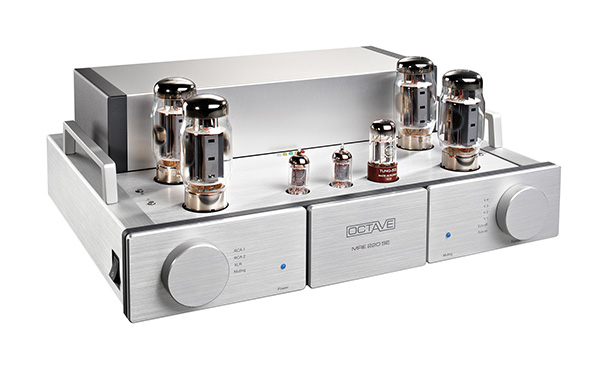
 What occasioned the redesign of his less expensive monoblocks? "The MRE 220 SE is a refinement of its predecessor, the MRE 220, which was available for close to eight years. After its release, as I worked with different systems and setups, I learned how to improve some aspects of the push-pull design that affected feedback and stability. A good amplifier is a stable amplifier that always has good sound, independent of the speaker. I've made the two signal passes for the plus and the minus push-pull transients as equal as possible. The midrange and even the high frequencies and bass sound clearer and more natural. Body and image size have improved."
XLR or RCA, that is a question
What occasioned the redesign of his less expensive monoblocks? "The MRE 220 SE is a refinement of its predecessor, the MRE 220, which was available for close to eight years. After its release, as I worked with different systems and setups, I learned how to improve some aspects of the push-pull design that affected feedback and stability. A good amplifier is a stable amplifier that always has good sound, independent of the speaker. I've made the two signal passes for the plus and the minus push-pull transients as equal as possible. The midrange and even the high frequencies and bass sound clearer and more natural. Body and image size have improved."
XLR or RCA, that is a questionThe answer is different than Hamlet's, and the consequences aren't tragic. The Octave MRE 220 SE, whose input stage is single-ended (unbalanced), offers users a choice between XLR (balanced) and RCA (single-ended) inputs. "Andreas feels the best way to design an amplifier's main amplification/power gain stage is to make it single-ended (unbalanced)," Quick said. "As a result, the balanced input includes an additional circuit that converts incoming signals from balanced to unbalanced. To Andreas's way of thinking, using a high-quality converter circuit based on an op-amp, which is the most linear, quiet, and consistent way to convert between single-ended and balanced, is the right solution." Hofmann affirmed Quick's explanation, offering that "The converter has a minor effect on the sound, but this can still be positive. You cannot say that sound gets worse with the op-amp, because ours is professional grade, not a cheap part, that acts as a professional balanced-to-unbalanced converter.
My sample arrived with KT150s and Super Black Boxes. Separately, I received a broken-in Filter 3-P that would accept XLR interconnects. Hofmann does not feel that Octave amplifiers need additional power conditioning. Nonetheless, if someone prefers the sound through their favored power product, he's okay with that. Because work with Edward DeVito of Audio-Ultra has greatly improved my electrical setup, I plugged the amps directly into the wall. I anticipate further work shortly that will upgrade the dedicated wiring and increase the number of circuits.
Quick spent several days in Port Townsend checking out my reference system, installing the amps, and listening. We took our first listen using XLR interconnects. A grand symphony by Mahler sounded anemic, skeletal, and stripped to the bone. Notes came through dimly, shorn of overtones, body, color, and musical essence. I feared I had no choice but to declare the Octave MRE 220 SE monoblocks system-incompatible. Stereophile's review policy is firm: Do not discuss what you hear with anyone supplying the gear, or anyone else. If you suspect something's wrong, say nothing, consult editor Jim Austin, and go from there. Which doesn't mean that I don't find it difficult to keep a straight face as I witness the desecration of music I love while an intelligent, discerning distributor I know well sits next to me, hearing what I was hearing.
 Let the music play
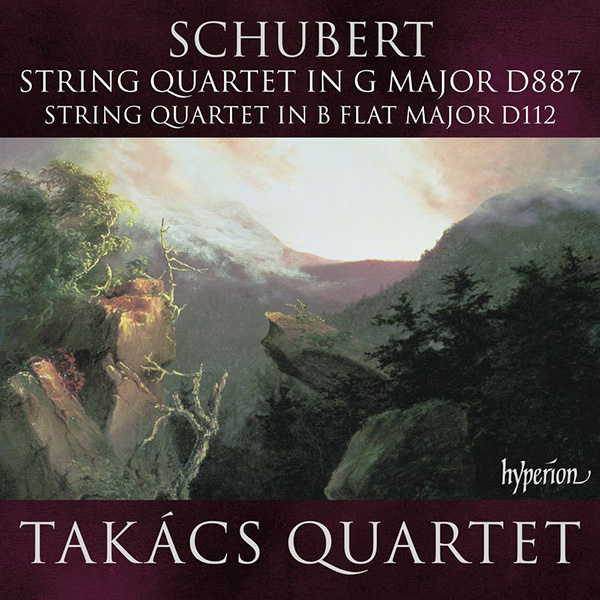
First on my musical agenda was a review of the new Takács Quartet recording of Schubert: String Quartet No.15 in G major D887 ù String Quartet No.8 in B flat major D112 (24/96 WAV download, Hyperion, available as CD). In No.15, written two years before the composer's death, the Takács's soft playing was remarkable for its control and sensitivity. Passages of heartbreaking tenderness washed over me, touching the core of my being. As Schubert's joy ceded to pain and came back again, I sat transfixed. Reviewer mode kicked in, and I couldn't stop myself from changing the interconnects to RCA. With RCA, the sound was more neutral—less overtly warm—than with XLR, and colors seemed more varied. Images weren't as big, nor the presentation as transparent as through my far more costly reference amplifiers, but the music's beauty and emotion came through clearly. I felt totally confident that I was hearing what I needed to hear—and feeling what I needed to feel—to assess the recording. Shortly after I reviewed (footnote 10) pianist Simon Trpčeski's fabulous performance of the Tchaikovsky Piano Concerto No.1, with the Seattle Symphony under guest conductor Osmo Vänskä, my blessed friend Scott arrived for a listen. I cued up a private recording by Peter McGrath of Trpčeski performing Prokofiev Sonata No.7 on May 2, 2023, in Miami (24/176.4 MQA). The interconnects were XLR, the soundstage was wide, and the sound was warm and inviting. Every note of the piano was solid.
 When we inserted Filter 3-P, it softened the piano's leading edge—great for bright systems—truncated harmonics, and lessened air, depth, and the rate of decay of those lovely reverb tails. When I played Mahler's "Revelge" from baritone Samuel Hasselhorn and the Poznan Philharmonic's new recording, Urlicht (24/96 WAV download, Harmonia Mundi), Filter 3-P seemed to muddy the orchestra's lowest notes. On the heavily overdubbed Maya Beiser × Terry Riley: In C (24/48 WAV download, Islandia Music), some lines were smudged, some colors diminished. Layers and textures clarified when I removed the filter.
 Nonetheless, with the Filter in, the tribal nature of some of the movements and a multilayered acoustic that invoked a huge gothic church came through strongly. Perhaps in systems burdened with electromagnetic interference, electrically conducted noise, and the like, the Filter 3-P's positive effects will outweigh other considerations. In my system, it seemed best to proceed without it.
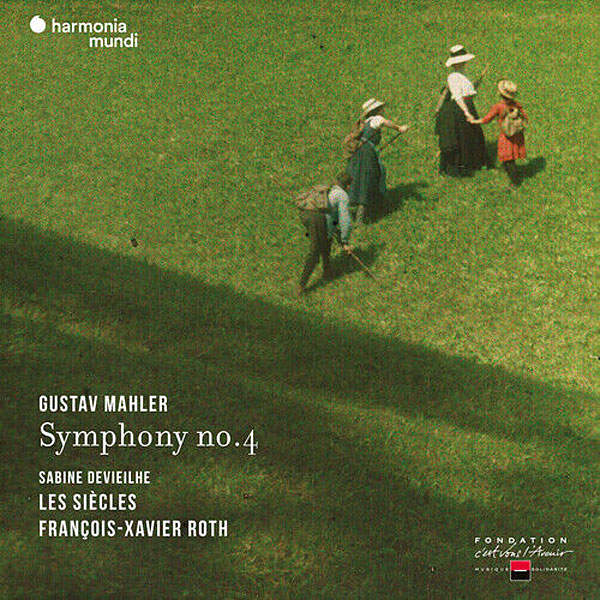
Time for a tried and true, Mahler Symphony No.4 performed on period-appropriate instruments by Les Siècles under François-Xavier Roth (24/96 WAV download, Harmonia Mundi). Through XLR, timbres were warm and colorful. All but the lowest bass was tightly focused. I loved what I heard. Yusef Lateef 's continually fascinating Eastern Sounds, remastered in 2023 (24/192 FLAC, Craft Recordings/Qobuz), made both Scott and me very happy.
Nonetheless, with the Filter in, the tribal nature of some of the movements and a multilayered acoustic that invoked a huge gothic church came through strongly. Perhaps in systems burdened with electromagnetic interference, electrically conducted noise, and the like, the Filter 3-P's positive effects will outweigh other considerations. In my system, it seemed best to proceed without it.
Time for a tried and true, Mahler Symphony No.4 performed on period-appropriate instruments by Les Siècles under François-Xavier Roth (24/96 WAV download, Harmonia Mundi). Through XLR, timbres were warm and colorful. All but the lowest bass was tightly focused. I loved what I heard. Yusef Lateef 's continually fascinating Eastern Sounds, remastered in 2023 (24/192 FLAC, Craft Recordings/Qobuz), made both Scott and me very happy.
 A few days later, as I sat at the computer at 9:15am, a series of rapid off/on electrical flickers—so quick that my computer didn't shut down or reboot—precipitated a 45-minute internet outage. When I visited the music room, I found the EtherREGEN at the end of my optical network fried and the Nordost QSource linear power supply that fed it so hot I needed gloves to move it.
With streaming temporarily off the table, I played files stored on the Innuos Statement NG's SSD. Thankfully, 4TB is a lot of music. Meanwhile, I took advantage of the disaster to speak with Dennis Bonotto of Nordost and John Giolas of dCS about optimal power cable connections.
On my first new listen, I felt as though I had entered a magical kingdom—as if I had passed through the Looking Glass into Wonderland. It was like listening through a crystal ball. The music sparkled. Voices were unusually clear, open, and lustrous. On DSD64 files of mezzo-soprano Alice Coote and the Netherlands Philharmonic under Marc Albrecht performing two songs from Mahler's Lieder eines fahrenden Gesellen (Songs of a Wayfarer), from Mahler Song Cycles (DSD64 download, Pentatone), the mezzo's voice sounded clearer than I'd ever heard it.
A few days later, as I sat at the computer at 9:15am, a series of rapid off/on electrical flickers—so quick that my computer didn't shut down or reboot—precipitated a 45-minute internet outage. When I visited the music room, I found the EtherREGEN at the end of my optical network fried and the Nordost QSource linear power supply that fed it so hot I needed gloves to move it.
With streaming temporarily off the table, I played files stored on the Innuos Statement NG's SSD. Thankfully, 4TB is a lot of music. Meanwhile, I took advantage of the disaster to speak with Dennis Bonotto of Nordost and John Giolas of dCS about optimal power cable connections.
On my first new listen, I felt as though I had entered a magical kingdom—as if I had passed through the Looking Glass into Wonderland. It was like listening through a crystal ball. The music sparkled. Voices were unusually clear, open, and lustrous. On DSD64 files of mezzo-soprano Alice Coote and the Netherlands Philharmonic under Marc Albrecht performing two songs from Mahler's Lieder eines fahrenden Gesellen (Songs of a Wayfarer), from Mahler Song Cycles (DSD64 download, Pentatone), the mezzo's voice sounded clearer than I'd ever heard it.
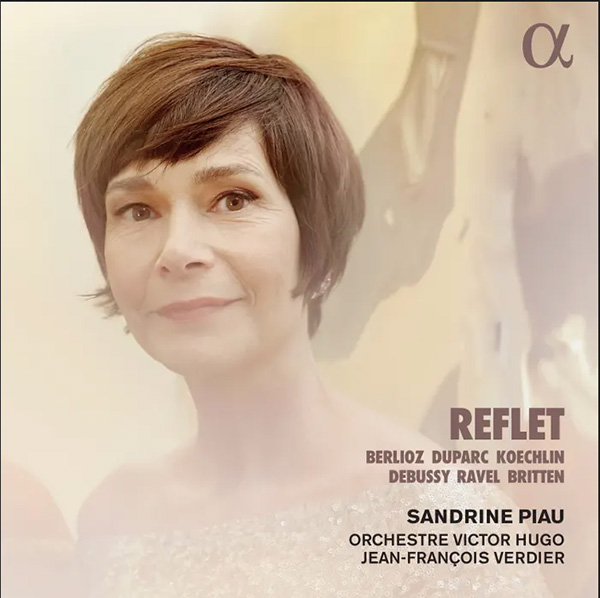 Finally, from Reflet (24/96 WAV download, Alpha), the wonderful soprano Sandrine Piau, with Orchestre Victor Hugo conducted by Jean-François Verdier, alchemically transformed each high note into a dew-kissed flower opening in the morning sun as it beckoned bees and poets to drink its nectar. Piau may not share Panzéra's gift of rallentando, but her voice matches it for beauty. I left the music room dazed, as if in a dream, to walk the dogs in the dark under a star-filled sky in the still-chilly early spring.
Time for a pause to evaluate the effects of the Super Black Box. Without it, instruments sounded smaller and less impactful. Air diminished, low bass became lighter in weight. It felt as though I was listening through an inferior amplifier. I suppose I was. It's irrefutable: The Super Black Box significantly elevates the Octave MRE 220 SE monoblocks' ability to deliver musical satisfaction.
Finally, from Reflet (24/96 WAV download, Alpha), the wonderful soprano Sandrine Piau, with Orchestre Victor Hugo conducted by Jean-François Verdier, alchemically transformed each high note into a dew-kissed flower opening in the morning sun as it beckoned bees and poets to drink its nectar. Piau may not share Panzéra's gift of rallentando, but her voice matches it for beauty. I left the music room dazed, as if in a dream, to walk the dogs in the dark under a star-filled sky in the still-chilly early spring.
Time for a pause to evaluate the effects of the Super Black Box. Without it, instruments sounded smaller and less impactful. Air diminished, low bass became lighter in weight. It felt as though I was listening through an inferior amplifier. I suppose I was. It's irrefutable: The Super Black Box significantly elevates the Octave MRE 220 SE monoblocks' ability to deliver musical satisfaction.
With my unique equipment configuration and setup, it felt as though I was reviewing two closely related albeit different monoblocks. Fed by XLR, the Octave MRE 220 SEs sounded warm, round, and full; fed by RCA, they sounded more neutral, with more varied colors but a bit less substantial. In both cases, their beauty of sound and ability to communicate music's transformative essence won out over other considerations. You'll definitely want to use the Super Black Box to hear all these babies can do. It absolutely lifts the amplifiers to a level that many components aspire to and few achieve: Easy on the ear, satisfying to mind and body, capable of reaching into music's heart and sharing it with all who listen. There's a palpable yet paradoxically intangible truth to the sound of the Octave MRE 220 SE mono tube amplifiers that makes them an easy, solid recommendation to music lovers of all stripes.
Footnote 9: Many manufacturers understand that their customers will likely use their favorite after-market footers regardless of what manufacturers provide; others insist that aftermarket footers not be used. Footnote 10: See classicalvoiceamerica.org/2024/03/25/as-orchestra-searches-for-helmsman-vanska-proves-its-not-adrift.















