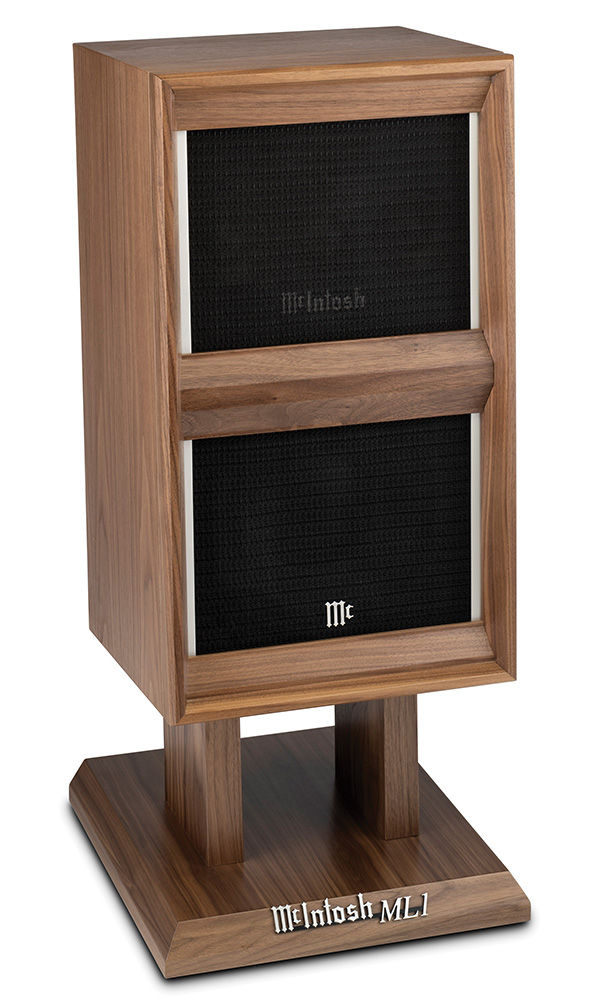
The ML1 Mk II's came to me new from the McIntosh plant in nearby Binghamton. When I first fired up the ML1 Mk II's, I picked something to play at random. I don't even recall what the recording was. My initial reaction: The upper-mids seemed a bit harsh and busy, very different than the two-way stand-mounted Harbeth C7's that usually occupy this space. Following my new resolution to be patient, I kept playing recordings without sitting in the sweet spot or taking notes. I did not fool around yet with placement or toe-in, and I left the handsome substantial grilles in place. My idea was to let the ML1s warm up to me and not the other way around.
Some days later, I was sitting in the dining room side of our double parlor, away from the hi-fi. I had cued up a new recording posted on Qobuz, Duruflé's oft-recorded Requiem with the Choir of Trinity College Cambridge conducted by Stephen Layton, with Harrison Cole on organ (24/96 FLAC, Hyperion/Qobuz). The music started to billow up and around the two rooms, as if I was sitting in the Church of Saint-Eustache in Paris, the recording venue. The second largest church in Paris, high-Gothic Saint-Eustache houses one of the largest organs in France. It sure sounded like it! This was a huge, magical presentation of a piece that I've heard a lot—who hasn't? It was a fine thing to experience Duruflé's big hit in a fresh, powerful way. The production team (producer Adrian Peacock and engineer David Hinnit) did a fantastic job of capturing a gigantic space. The choir shot up to the stars—and that organ! The McIntosh ML1 Mk II can do pedal points with the best of them.
An audiophile component should be a truth teller; everyone knows the saying "garbage in, garbage out."
The ML1 Mk II's came to me new from the McIntosh plant in nearby Binghamton. When I first fired up the ML1 Mk II's, I picked something to play at random. I don't even recall what the recording was. My initial reaction: The upper-mids seemed a bit harsh and busy, very different than the two-way stand-mounted Harbeth C7's that usually occupy this space. Following my new resolution to be patient, I kept playing recordings without sitting in the sweet spot or taking notes. I did not fool around yet with placement or toe-in, and I left the handsome substantial grilles in place. My idea was to let the ML1s warm up to me and not the other way around.
Some days later, I was sitting in the dining room side of our double parlor, away from the hi-fi. I had cued up a new recording posted on Qobuz, Duruflé's oft-recorded Requiem with the Choir of Trinity College Cambridge conducted by Stephen Layton, with Harrison Cole on organ (24/96 FLAC, Hyperion/Qobuz). The music started to billow up and around the two rooms, as if I was sitting in the Church of Saint-Eustache in Paris, the recording venue. The second largest church in Paris, high-Gothic Saint-Eustache houses one of the largest organs in France. It sure sounded like it! This was a huge, magical presentation of a piece that I've heard a lot—who hasn't? It was a fine thing to experience Duruflé's big hit in a fresh, powerful way. The production team (producer Adrian Peacock and engineer David Hinnit) did a fantastic job of capturing a gigantic space. The choir shot up to the stars—and that organ! The McIntosh ML1 Mk II can do pedal points with the best of them.
An audiophile component should be a truth teller; everyone knows the saying "garbage in, garbage out."
I moved the McIntosh ML1 Mk IIs upstairs and dropped them into the Upstairs System, which is my reference system. The most significant change, other than the generally higher quality of the components, was an increase in available power from 100Wpc to 450Wpc, the latter quantity emerging from my McIntosh MC462 solid state stereo amplifier. Upstairs, I run all separates, including the excellent McIntosh C12000 preamplifier and VPI HW-40 turntable. I positioned the ML1s in the spots usually occupied by my Wilson Sasha Vs, slightly toed in. I connected the speakers to the 8 ohm taps, ready for some serious listening.
 But first, I took off the grilles. I am not opposed to grilles on principle, as some audiophiles seem to be. In fact, grilles are in place on three of my four systems. Here, though, it was no contest. The ML1 Mk IIs sound better with the grilles off: more detail and soundstage information; more precise attacks; more, and more distinct, instrumental timbres. The grilles look great and provide real protection, so this is a lifestyle choice.
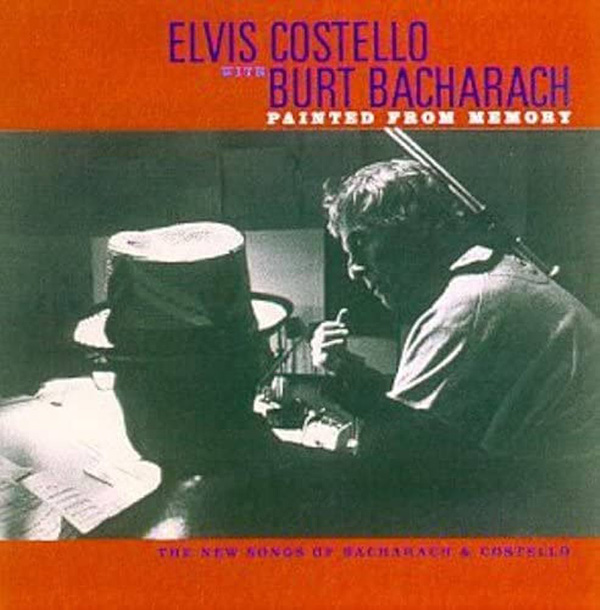
Reaching for something I knew should sound good, I spun Mobile Fidelity Sound Lab's outstanding 2017 LP pressing of Burt Bacharach and Elvis Costello's wonderful 1998 album, Painted from Memory (Mercury/Universal MFSL 1-475. 2017).
As heard from the McIntosh ML1 Mk IIs, Elvis's vocals were powerful and heartbreaking, with precise diction and texture in every syllable; the same was true of the background vocals. Many of the songs share the common subject, love that is ending or over, songs like "This House Is Empty Now" and "The Sweetest Punch." In some of these songs, it's time to move on, as in "Such Unlikely Lovers." I particularly adore one Elvis lyric in that song: "I'm not saying that there will be violins. / But don't be surprised if they appear"—then Bacharach hits the orchestration hard with exactly that: violins.
But first, I took off the grilles. I am not opposed to grilles on principle, as some audiophiles seem to be. In fact, grilles are in place on three of my four systems. Here, though, it was no contest. The ML1 Mk IIs sound better with the grilles off: more detail and soundstage information; more precise attacks; more, and more distinct, instrumental timbres. The grilles look great and provide real protection, so this is a lifestyle choice.
Reaching for something I knew should sound good, I spun Mobile Fidelity Sound Lab's outstanding 2017 LP pressing of Burt Bacharach and Elvis Costello's wonderful 1998 album, Painted from Memory (Mercury/Universal MFSL 1-475. 2017).
As heard from the McIntosh ML1 Mk IIs, Elvis's vocals were powerful and heartbreaking, with precise diction and texture in every syllable; the same was true of the background vocals. Many of the songs share the common subject, love that is ending or over, songs like "This House Is Empty Now" and "The Sweetest Punch." In some of these songs, it's time to move on, as in "Such Unlikely Lovers." I particularly adore one Elvis lyric in that song: "I'm not saying that there will be violins. / But don't be surprised if they appear"—then Bacharach hits the orchestration hard with exactly that: violins.
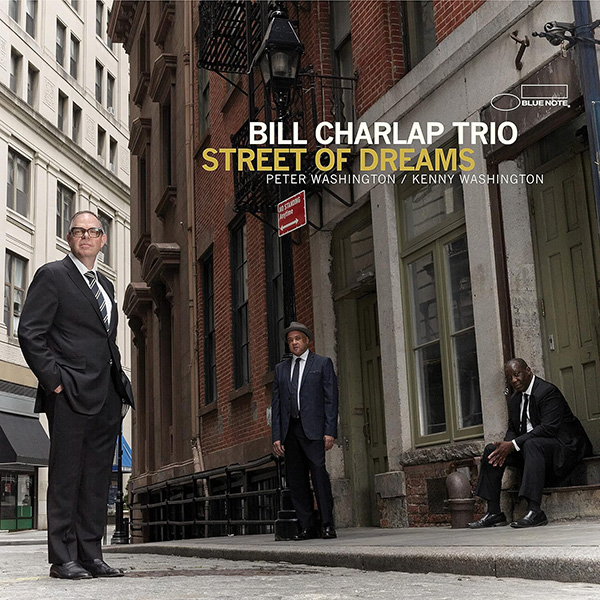 I listen to a lot of acoustic small-combo jazz recordings. Which state-of-the-art recording would provide an opportunity for the ML1s to sound their best? I tried a couple before it hit me: The Bill Charlap Trio's Street of Dreams (Blue Note B0033904-01), from 2021. Featuring Bill's longtime trio with bassist Peter Washington and drummer Kenny Washington, this is a definitive piano trio album. There are other great piano recordings on my shelf, but I can't think of a better one right now.
The sound of the Steinway B recorded in Studio C at Sear Sound in New York, by the great engineer James Farber, is as good as it gets. No matter how hard Bill hits the low notes or how delicately he caresses the very high ones, it's all there. (I have recently been recording in that same studio, with the same engineer and the same piano, so I know what it should sound like.) Peter Washington's bass also sounds fantastic, creating a rich foundation for Charlap to sit on, also singing when his lines go up high. Kenny Washington's drums never protrude here—they never do live, either; he's that kind of drummer—but they are always there, at the right place at the right time.
I listen to a lot of acoustic small-combo jazz recordings. Which state-of-the-art recording would provide an opportunity for the ML1s to sound their best? I tried a couple before it hit me: The Bill Charlap Trio's Street of Dreams (Blue Note B0033904-01), from 2021. Featuring Bill's longtime trio with bassist Peter Washington and drummer Kenny Washington, this is a definitive piano trio album. There are other great piano recordings on my shelf, but I can't think of a better one right now.
The sound of the Steinway B recorded in Studio C at Sear Sound in New York, by the great engineer James Farber, is as good as it gets. No matter how hard Bill hits the low notes or how delicately he caresses the very high ones, it's all there. (I have recently been recording in that same studio, with the same engineer and the same piano, so I know what it should sound like.) Peter Washington's bass also sounds fantastic, creating a rich foundation for Charlap to sit on, also singing when his lines go up high. Kenny Washington's drums never protrude here—they never do live, either; he's that kind of drummer—but they are always there, at the right place at the right time.
 What will it be?
When I picked myself up off the floor, it struck me that the McIntosh ML1 Mk II offers a unique, three-prong combination of effs: finesse, firepower, and fun. A pair of these speakers will recreate music in all its variety without blinking, with personality and style to spare. The ML1 Mk II occupies a unique spot in the McIntosh lineup. If you are looking for a more modern, floorstanding format, consider the sibling McIntosh XR100, one of McIntosh's line-array speakers, or a loudspeaker from some other company. But if you like what I've described here, I recommend the ML1 Mk II for your consideration.
Footnote 4: Keltner has been on drums for many of Bob Dylan's albums, and he's the regular drummer for Ry Cooder. He's perhaps best known, however, for drumming with three former Beatles, including drummer Ringo Starr. The best description of his drumming style I've seen comes—oddly—from the brief bio accompanying his induction to the Boy Scout Alumni Hall of Fame: It "melds deceptively simple drumming patterns and a loose, casual feel with extraordinary precision, as heard on songs including 'Jealous Guy' by John Lennon, 'Dream Weaver' by Gary Wright, and 'Josie' by Steely Dan."—Jim Austin