One of audio's great legacy brands, Wharfedale got its start in 1932 when founder Gilbert Briggs built his first loudspeaker in the basement of his Ilkley, Yorkshire, home. The landscape in the valley of the River Wharfe lent the fledgling company its name, and Wharfedale Wireless Works was born. It was a time when radio—wireless—had captured the imagination of enthusiasts across Britain and beyond. Hi-fi as we know it didn't exist yet.
From those humble basement beginnings, Briggs and his wife Doris moved Wharfedale into a small factory near Bradford, about 12 miles from the River Wharfe. There, the two Briggses assembled components by hand. Demand grew, employees were added, and by the start of World War II, Wharfedale was producing more than 9000 units per year. The company's main product was moving coil dynamic drivers primarily for use in radios and accessory radio speakers. Their first product was the Bronze Wharfedale. It was followed by the Blue Wharfedale, the De Luxe Golden Wharfedale, and others.
"Even wireless dealers agree that the Wharfedale Speaker hasn't an equal at the price, and dealers are not given to throwing bouquets at manufacturers, they would sooner heave brickbats," stated a Wharfedale ad of the time. "The Wharfedale produces every note. ... The secret lies in the unusually massive magnet and generously proportional transformer." Indeed, the magnet and transformer were almost larger than the driver itself, as shown in a period advert illustrating the "rigid chassis" and "moisture-proof cone." "Dust protection of the vital air-gap is a refinement which guarantees consistent quality."
By the mid-1940s, Wharfedale had expanded to loudspeakers and the US, offering Americans (and others) large two-way floorstanders in solid mahogany cabinets. These systems, with impedances ranging from 6 to 15 ohms, made plenty of music on the 10W of power that was widely available. Innovation continued apace, and by the 1960s, Wharfedale pioneered some of the earliest applications of ceramic magnets and roll surrounds. They had also branched out into turntable and tuner production.
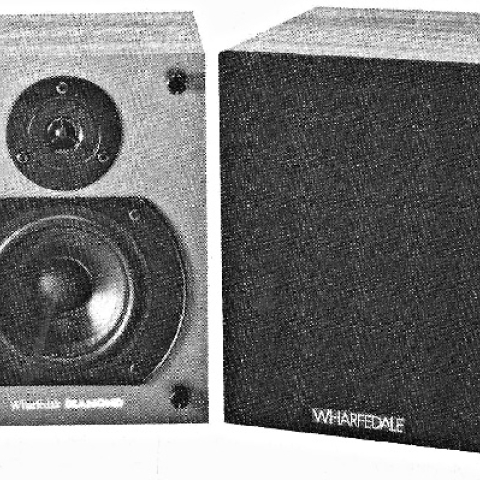
Wharfedale's Diamond line launched in 1982 with the Diamond bookshelf, a compact two-way that J. Gordon Holt, writing in Stereophile, deemed "the most inexpensive speaker I've come across that can be recommended."
The brand entered a new era in 1997 when it was acquired by the International Audio Group (IAG) along with Quad and Leak—all bought from the Verity Group, PLC. IAG added Mission, Audiolab, and Castle in the 2000s, lining up an impressive array of classic British brands. In an eastward turn, IAG added Japanese company Luxman late that same decade. Except for Luxman (footnote 1), IAG's model has been consistent: split engineering between Great Britain—at the IAG offices and labs in Huntingdon, UK—and R&D labs in Shenzhen, China, and do all manufacturing (except final assembly of a handful of premium models) in China (see Sidebar 1).
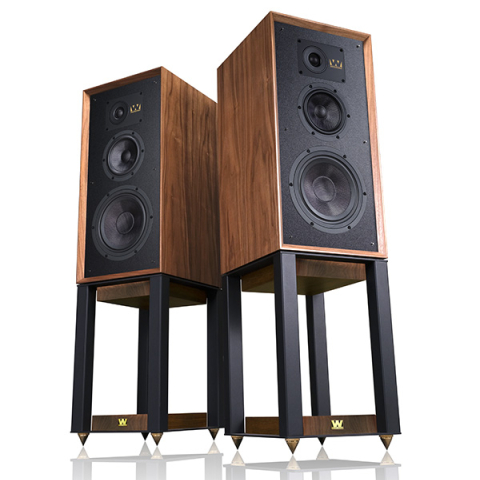
Wharfedale's rise through the decades finds a fitting parallel in the career of Peter Comeau, an audio legend and IAG's longtime director of acoustic design. Comeau founded Heybrook Hi-Fi in 1979, producing well-received speakers like the HB1 and HB2, before continuing his work in 1999 as director of acoustic design at another iconic British brand, Mission. Joining IAG in 2009, he has since produced the Wharfedale Linton Heritage, the Elysian series, the reworked Mission 770, and the subject of this review, the Wharfedale Super Linton ($2699/pair).
 Still a Linton, but more Super
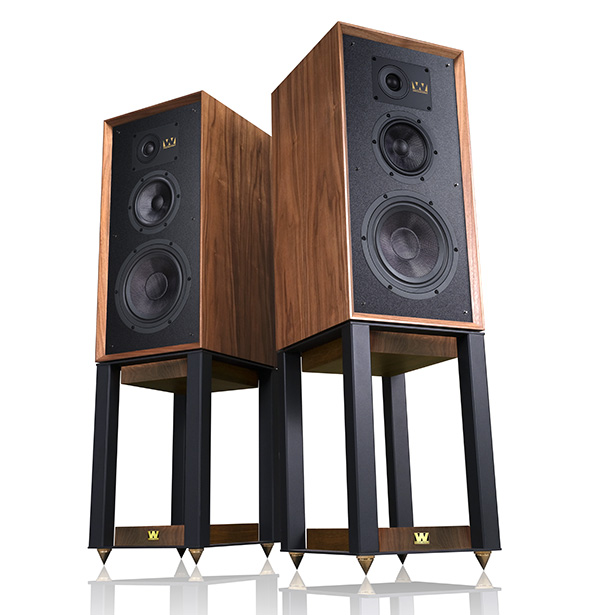
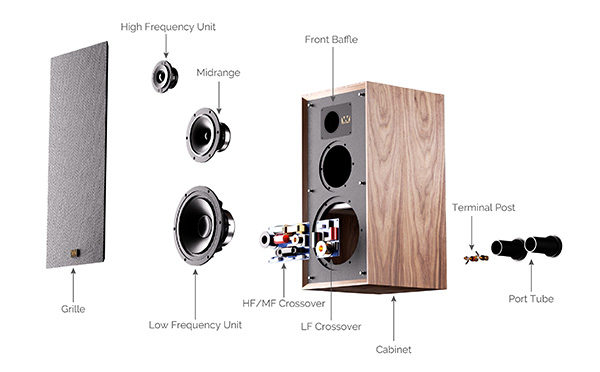
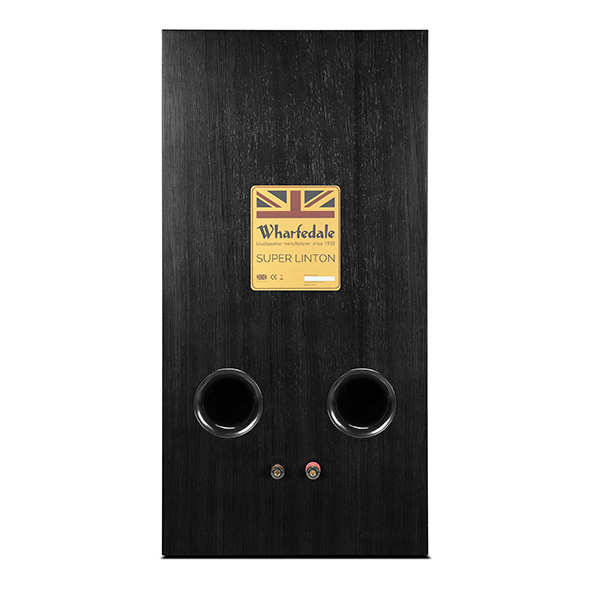
Designed by Comeau in collaboration with a team of engineers across IAG's Huntingdon, UK, and Shenzhen, China, R&D offices, the Super Linton is a substantial loudspeaker. My flat-black finish review samples stood 23.8" high × 11.8" wide × 13" deep, weighing a sturdy 43.7lb each. Reported sensitivity is 90dB/2.83V/1m), nominal impedance is 6 ohms, and minimum impedance is 3.9 ohms, with specified frequency response of 39Hz–20kHz ±3dB. Bass reaches –6dB at 32Hz . "The Super Linton cabinet is formed from two 9mm layers of MDF with a layer of latex-based damping glue between them," Comeau wrote over email. "This is an improvement on the Linton cabinet mainly due to the damping glue layer, which allows the two MDF layers to provide constrained layer damping—a feature which considerably reduces the audible effects of panel resonance."
The front baffle of the Super Linton, also MDF, is 25mm thick; all other panels are 18mm (not counting the thickness of the damping glue). The cabinet is braced internally with a horizontal brace between the bass and midrange drivers that locks together the front baffle, side panels, and rear panel.
Another obvious point of comparison—in fact the most obvious—is with the original Linton.
"When we looked at how users were positioning their Linton speakers in their homes," he wrote, "it was obvious that many preferred to position them near the front wall. For Super Linton, our aim was to optimize the bass performance for this preference, so we started the project by designing a bass driver that had an enhanced motor system to provide better control of cone movement. The result was a magnet and voice coil system featuring a substantially greater BL"—that's loudspeaker-dsigner speak for higher magnetic flux in the magnet gap—"yielding superior transient performance. This new bass unit required a larger internal cabinet volume to optimize the bass reflex tuning, so the decision was made to increase the cabinet height to provide this." The Super Linton stands 4cm taller than the original.
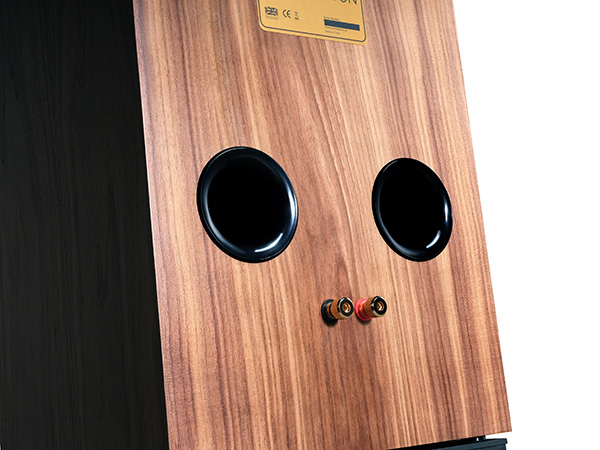 Along the rear of the Super Lintons sit a pair of generously sized gold-plated binding posts and two 3" round ports. Both the ports and the speaker's drivers are manufactured in-house by Wharfedale.
The tweeter is built around a 1" (25mm) soft dome with housing constructed in 11 layers, featuring a lightweight fabric weave coated with a special damping material, supported by a ceramic magnet motor system—a combination the company credits with the driver's "sweet and detailed character."
"The new front plate for this treble unit is made from aluminum, and the profile around the dome has been changed from Linton to offer a smoother and more extended high-frequency performance, with better directivity," Comeau elaborated.
"The Super Linton treble unit was refined from the Linton design, principally by utilizing a lighter fabric dome with a lower density coating which we found gives a more detailed treble performance, and by incorporating the damped rear chamber that was originally designed for the Dovedale system," Comeau stated. "For the Heritage series of speakers, in general, we prefer the sound of ceramic magnets to neodymium. The hysteresis curve of the traditional ceramic magnet is 'softer' than that of neodymium and, to our ears, sounds smoother and more 'easy on the ear.'"
The other two Super Linton drivers, the 5" (135mm) midrange and the new 8" (200mm) woofer, both use cones of black woven Kevlar.
Along the rear of the Super Lintons sit a pair of generously sized gold-plated binding posts and two 3" round ports. Both the ports and the speaker's drivers are manufactured in-house by Wharfedale.
The tweeter is built around a 1" (25mm) soft dome with housing constructed in 11 layers, featuring a lightweight fabric weave coated with a special damping material, supported by a ceramic magnet motor system—a combination the company credits with the driver's "sweet and detailed character."
"The new front plate for this treble unit is made from aluminum, and the profile around the dome has been changed from Linton to offer a smoother and more extended high-frequency performance, with better directivity," Comeau elaborated.
"The Super Linton treble unit was refined from the Linton design, principally by utilizing a lighter fabric dome with a lower density coating which we found gives a more detailed treble performance, and by incorporating the damped rear chamber that was originally designed for the Dovedale system," Comeau stated. "For the Heritage series of speakers, in general, we prefer the sound of ceramic magnets to neodymium. The hysteresis curve of the traditional ceramic magnet is 'softer' than that of neodymium and, to our ears, sounds smoother and more 'easy on the ear.'"
The other two Super Linton drivers, the 5" (135mm) midrange and the new 8" (200mm) woofer, both use cones of black woven Kevlar.
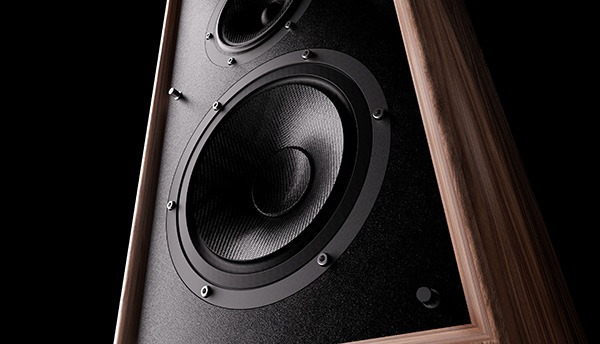 "The sealed enclosure for the midrange driver is formed from a heavy-duty, thick card tube running from the front baffle to the rear cabinet wall," Comeau explained. "It is filled with a graded amount of synthetic long-hair fiber. The damping increases in density toward the back wall to have more absorption in the lower midrange.
"The rubber surround ... for the midrange is optimized for its termination of the cone to yield a smooth, upper-midrange response, making it easier to blend its output into that of the treble unit via the crossover," Comeau continued. "By contrast, the rubber surround for the bass unit is optimized for linearity over the much greater displacement of its cone, and the larger dimensions of this surround profile allow for this."
Internal wiring is proprietary cable featuring LC-OFC—that's linear crystal oxygen-free copper—strands insulated by a polyethylene dielectric. Oxygen has been removed to very low levels, and the material has been cooled very slowly to allow the grains to align. It's "a combination that we have found gives improved clarity of the music signal transfer," Comeau said.
One way of looking at the Super Linton is that it's the result of Wharfedale paying close attention to its most faithful customers. "The Wharfedale Linton Heritage 85th Anniversary has been a runaway success for the brand and has gathered admirers worldwide and a substantial following on social media pages," Comeau wrote by email. "After some years of monitoring users' comments, we noticed that some owners were beginning to long for a performance that offered a more musically detailed output, perhaps closer to that provided by a monitor-class loudspeaker. There were many attempts at 'upgrading' crossover components and internal cabling—some successful to a moderate degree, others downright damaging to the original Linton concept of an 'easy-to-listen-to' and engaging speaker for home use."
The redesign went deeper than envisioned. "Initially we thought of producing a Wharfedale branded 'upgrade' kit to satisfy these users, but as we started to work on this project, we quickly realized that what we were really doing was designing a new loudspeaker," Comeau explained. "So, the idea of a 'Super' Linton was born.
"Once we had designed new bass and treble units to meet the improved performance requirements, we found that a new crossover design was required to offer improvements in the Directivity Index as well as superior phase integration of the drivers in order to yield the precision of stereo imaging and musical detailing that some customers were looking for.
"This also involved a new grille profile to suit the new drivers. We also auditioned advanced crossover components—super audiophile capacitors from sources such as Bevenbi and low-inductance resistors—and high-power coils—air core for midrange and treble, enlarged silicon-iron core with low resistance for bass—made in the Wharfedale factory. The crossover was housed on two PCBs, one for the LF driver and the other for the midrange/ treble, to remove the electromagnetic influence of the large bass inductors from the midrange and treble coils."
Setup and listening
"The sealed enclosure for the midrange driver is formed from a heavy-duty, thick card tube running from the front baffle to the rear cabinet wall," Comeau explained. "It is filled with a graded amount of synthetic long-hair fiber. The damping increases in density toward the back wall to have more absorption in the lower midrange.
"The rubber surround ... for the midrange is optimized for its termination of the cone to yield a smooth, upper-midrange response, making it easier to blend its output into that of the treble unit via the crossover," Comeau continued. "By contrast, the rubber surround for the bass unit is optimized for linearity over the much greater displacement of its cone, and the larger dimensions of this surround profile allow for this."
Internal wiring is proprietary cable featuring LC-OFC—that's linear crystal oxygen-free copper—strands insulated by a polyethylene dielectric. Oxygen has been removed to very low levels, and the material has been cooled very slowly to allow the grains to align. It's "a combination that we have found gives improved clarity of the music signal transfer," Comeau said.
One way of looking at the Super Linton is that it's the result of Wharfedale paying close attention to its most faithful customers. "The Wharfedale Linton Heritage 85th Anniversary has been a runaway success for the brand and has gathered admirers worldwide and a substantial following on social media pages," Comeau wrote by email. "After some years of monitoring users' comments, we noticed that some owners were beginning to long for a performance that offered a more musically detailed output, perhaps closer to that provided by a monitor-class loudspeaker. There were many attempts at 'upgrading' crossover components and internal cabling—some successful to a moderate degree, others downright damaging to the original Linton concept of an 'easy-to-listen-to' and engaging speaker for home use."
The redesign went deeper than envisioned. "Initially we thought of producing a Wharfedale branded 'upgrade' kit to satisfy these users, but as we started to work on this project, we quickly realized that what we were really doing was designing a new loudspeaker," Comeau explained. "So, the idea of a 'Super' Linton was born.
"Once we had designed new bass and treble units to meet the improved performance requirements, we found that a new crossover design was required to offer improvements in the Directivity Index as well as superior phase integration of the drivers in order to yield the precision of stereo imaging and musical detailing that some customers were looking for.
"This also involved a new grille profile to suit the new drivers. We also auditioned advanced crossover components—super audiophile capacitors from sources such as Bevenbi and low-inductance resistors—and high-power coils—air core for midrange and treble, enlarged silicon-iron core with low resistance for bass—made in the Wharfedale factory. The crossover was housed on two PCBs, one for the LF driver and the other for the midrange/ treble, to remove the electromagnetic influence of the large bass inductors from the midrange and treble coils."
Setup and listening
Positioning the Super Lintons on my Anthony Abbate–before–Box Furniture Co. stands was easy enough. I found they didn't need careful placement. For example, they didn't need to be close to the front wall to produce solid bass. Treble and midrange were easy to get on the good foot soundwise. The speakers ended up about 20" from the front wall, but this is likely room-dependent. It's rare to find speakers that are so forgiving, setup-wise.
One of my earliest Stereophile reviews, undertaken during the tenure of Editor-in-Chief John Atkinson and Deputy Editor Art Dudley, appraised the diminutive Wharfedale Diamond 225. I wrote that the 225 was "the epitome of transparent response to both source components and recordings, extracting every last iota of information from CDs and LPs in a nonclinical yet highly revealing fashion." I called it "an acute reproducer of music: tonally accurate, dynamic, and explicit."
I wondered: Would the considerably larger, three-way, ported Super Linton share any of the house sound with the smaller and less expensive Diamond 225?
 Though separated by decades, the Super Linton's substantive standmount proportions and three-way architecture invite comparison to one of my long-term in-house references, the all-round feel-good Spendor BC1. I wondered, too, if I might hear similarities between these two speakers.
I own thousands of records. Too many. Records for every mood, every season, every crazy itch. But when it comes to putting a piece of hi-fi through its paces, I keep returning to the same 100 or so titles. It's a rotating cast with new contenders muscling in and old reliables occasionally kicked out, but it's essentially the same shortlist. These are records that have surrendered their secrets over years of deep listening. I reach for them to test bass weight and punch, touch, and extension. Treble that either sings with clarity and texture or hardens into ice. Midrange that breathes transparent, or lushly rich, depending on what the music demands.
I know the soundstage each one inhabits. The burnished, beautiful crunch of a guitar pushing into distortion. The crack and thwack of a drummer who gets it. Orchestral strings layered with air and space or crushed into a single smear. Jazz that swings from the gut or gets neutered into background music. Dynamics that soar off a cliff or get squeezed into lifeless mush. Depth and scale handled with care or casually, criminally ignored.
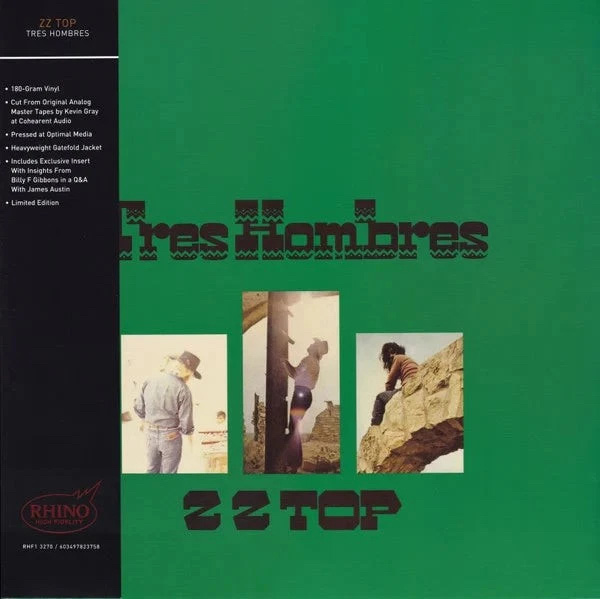
This listening session included the remastered version of ZZ Top's Tres Hombres (Rhino Records (2) RHF1 3270), Keith Jarrett's Standards Live (ECM Records ECM 1317), Roger Sessions's The Black Maskers (Mercury SR90103), and The John Scofield Quartet's Meant to Be (Blue Note 7565322). I played these records on a Benny Audio Odyssey turntable with the Ampsandsound Yellowstone preamp (using its exceptional phono stage) connected using a 1m run of Shindo interconnects to an Air Tight ATM-1 2024 amplifier.
Though separated by decades, the Super Linton's substantive standmount proportions and three-way architecture invite comparison to one of my long-term in-house references, the all-round feel-good Spendor BC1. I wondered, too, if I might hear similarities between these two speakers.
I own thousands of records. Too many. Records for every mood, every season, every crazy itch. But when it comes to putting a piece of hi-fi through its paces, I keep returning to the same 100 or so titles. It's a rotating cast with new contenders muscling in and old reliables occasionally kicked out, but it's essentially the same shortlist. These are records that have surrendered their secrets over years of deep listening. I reach for them to test bass weight and punch, touch, and extension. Treble that either sings with clarity and texture or hardens into ice. Midrange that breathes transparent, or lushly rich, depending on what the music demands.
I know the soundstage each one inhabits. The burnished, beautiful crunch of a guitar pushing into distortion. The crack and thwack of a drummer who gets it. Orchestral strings layered with air and space or crushed into a single smear. Jazz that swings from the gut or gets neutered into background music. Dynamics that soar off a cliff or get squeezed into lifeless mush. Depth and scale handled with care or casually, criminally ignored.
This listening session included the remastered version of ZZ Top's Tres Hombres (Rhino Records (2) RHF1 3270), Keith Jarrett's Standards Live (ECM Records ECM 1317), Roger Sessions's The Black Maskers (Mercury SR90103), and The John Scofield Quartet's Meant to Be (Blue Note 7565322). I played these records on a Benny Audio Odyssey turntable with the Ampsandsound Yellowstone preamp (using its exceptional phono stage) connected using a 1m run of Shindo interconnects to an Air Tight ATM-1 2024 amplifier.
 Out of the box, the speakers didn't impress, sounding shut in and dull. But after an extended break-in period—weeks—the Super Lintons (in the context of this system) were producing impressive scale, fast transients, a generous soundstage, and a shimmering, glistening, exacting presentation. Detail and resolution were first rate, mids were transparent, and bass was demonstrative if not the last word in weight or warmth. Snare drum ghost notes and cymbal finery were clean and enunciated with plenty of top-end air. Layering was practically pointillistic. Treble had fire and spit, guitars gleaming and energized. Music was forensically clean, surgically explicit, full scaled. The Super Lintons impressed with their transparency to the source, be it vinyl or equipment.
On the other hand, some hardness was evident in transients that grew clustered or confused when pushed dynamically. The music was sometimes a little too hot.
I replaced the Ampsandsound/Air Tight combination with an Allnic H-5500 phono preamp and a Unison Research S6 Black Edition integrated, connected by a pair of AudioQuest Pegasus interconnects. Counterintuitively, switching to less expensive components produced better sound: more saturated, more physical, more engaging. (It probably has nothing to do with the products' relative cost; the latter group just had better synergy.) This combination dug the best from the Super Lintons, producing deep, physical tone and texture, enveloping liquidity, rich mids, and bass that sunk low, deep, and weighty.
Out of the box, the speakers didn't impress, sounding shut in and dull. But after an extended break-in period—weeks—the Super Lintons (in the context of this system) were producing impressive scale, fast transients, a generous soundstage, and a shimmering, glistening, exacting presentation. Detail and resolution were first rate, mids were transparent, and bass was demonstrative if not the last word in weight or warmth. Snare drum ghost notes and cymbal finery were clean and enunciated with plenty of top-end air. Layering was practically pointillistic. Treble had fire and spit, guitars gleaming and energized. Music was forensically clean, surgically explicit, full scaled. The Super Lintons impressed with their transparency to the source, be it vinyl or equipment.
On the other hand, some hardness was evident in transients that grew clustered or confused when pushed dynamically. The music was sometimes a little too hot.
I replaced the Ampsandsound/Air Tight combination with an Allnic H-5500 phono preamp and a Unison Research S6 Black Edition integrated, connected by a pair of AudioQuest Pegasus interconnects. Counterintuitively, switching to less expensive components produced better sound: more saturated, more physical, more engaging. (It probably has nothing to do with the products' relative cost; the latter group just had better synergy.) This combination dug the best from the Super Lintons, producing deep, physical tone and texture, enveloping liquidity, rich mids, and bass that sunk low, deep, and weighty.
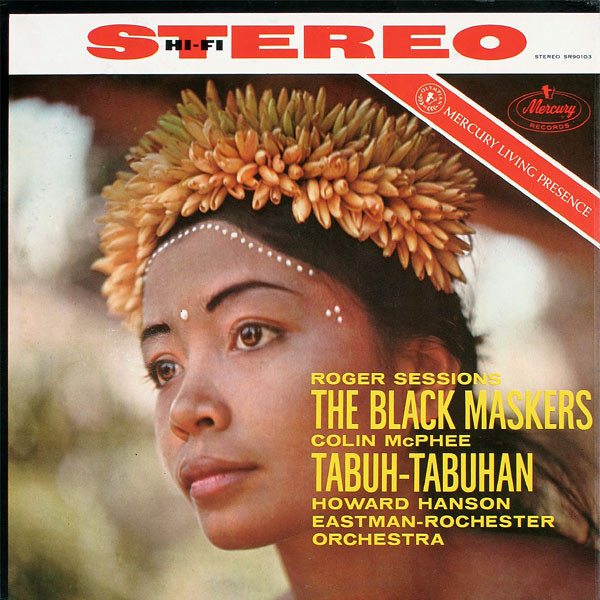 With this system, Roger Sessions's The Black Maskers was awash in tone and color. This system delivered the musical message in a way that was less than literal and more lifelike, as in life force. This music painted with emotion as much as with notes. Left-to-right spread was wide, and the music was first-row creamy, not 50th-row detached. The Super Lintons may well be capable of making measurements-ready, buttoned-down sound, but I prefer what I heard instead: Take me by the collar, shake me, and tell me the truth.
 The Scofield disc was just as present emotionally—kick-butt dynamic and rich, from drummer Bill Stewart's ample snare drum charges and cymbal filigree and Joe Lovano's belching tenor sax to Sco's black-coffee–meets–sour-tart scronch. The sound was big, mean, in your face, take no prisoners, with meat-on-the-bones, swing-punch, festival dynamics. On this recording, a touch of treble hardness was back, but it made better sense now within the whole of the music. Bass was dense and deliberate, with more weight than before. Powered by sympathetic amplification, the Super Lintons presented heart and soul like a fattening, cholesterol-rich Southern meal on a stars-and-stripes holiday.
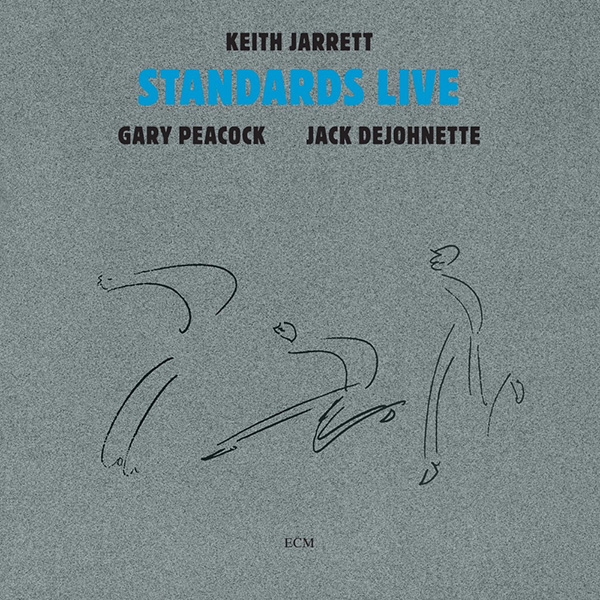
Keith Jarrett's Standards Live swung hard through the Super Lintons, with plenty of emotional weight. Some despised the now-retired Jarrett's habit of groaning and singing while playing piano, not to mention hugging the instrument like a '70s porn actor (but with a piano, not another actor), but the sound he gets and the jazz he made were second to none. With drummer Jack DeJohnette and bassist Gary Peacock, Standards Live may be the best example I know of swing played by masters, and the Super Lintons delivered every cymbal glance, every cascading piano run, and every bass line with—not neutrality but the kind of full-on punch jazz needs to establish a home in your heart and soul.
The Scofield disc was just as present emotionally—kick-butt dynamic and rich, from drummer Bill Stewart's ample snare drum charges and cymbal filigree and Joe Lovano's belching tenor sax to Sco's black-coffee–meets–sour-tart scronch. The sound was big, mean, in your face, take no prisoners, with meat-on-the-bones, swing-punch, festival dynamics. On this recording, a touch of treble hardness was back, but it made better sense now within the whole of the music. Bass was dense and deliberate, with more weight than before. Powered by sympathetic amplification, the Super Lintons presented heart and soul like a fattening, cholesterol-rich Southern meal on a stars-and-stripes holiday.
Keith Jarrett's Standards Live swung hard through the Super Lintons, with plenty of emotional weight. Some despised the now-retired Jarrett's habit of groaning and singing while playing piano, not to mention hugging the instrument like a '70s porn actor (but with a piano, not another actor), but the sound he gets and the jazz he made were second to none. With drummer Jack DeJohnette and bassist Gary Peacock, Standards Live may be the best example I know of swing played by masters, and the Super Lintons delivered every cymbal glance, every cascading piano run, and every bass line with—not neutrality but the kind of full-on punch jazz needs to establish a home in your heart and soul.
 To hear is to feel
For speakers that failed to impress out of the box, the Super Lintons eventually sang their hearts out. In the initial setup, with higher-end amplification, the scale was immense, and I heard endless airy detail, but it came at the price of occasional harshness. In a second setup—with, incidentally, less-expensive amplification—I heard the Super Lintons at their best, producing engaging sound that soulfully charmed and captured this music lover's heart. Speakers competitive in price with the Super Lintons include the JBL L100 Classic MkII, the Focal Aria Evo X No.2, the MartinLogan XT F100, and the B&W 706 S3. These are fine, sophisticated speakers, with plenty to say about your music, but I doubt any of them would play it back with the naturalism, lifelike color, emotional truthfulness, and tonal rigor of the Wharfedale Super Linton.
Footnote 1: Soon after the IAG acquisition, Luxman tried manufacturing certain products in China, but the experiment was short-lived.—Jim Austin
Still a Linton, but more SuperDesigned by Comeau in collaboration with a team of engineers across IAG's Huntingdon, UK, and Shenzhen, China, R&D offices, the Super Linton is a substantial loudspeaker. My flat-black finish review samples stood 23.8" high × 11.8" wide × 13" deep, weighing a sturdy 43.7lb each. Reported sensitivity is 90dB/2.83V/1m), nominal impedance is 6 ohms, and minimum impedance is 3.9 ohms, with specified frequency response of 39Hz–20kHz ±3dB. Bass reaches –6dB at 32Hz . "The Super Linton cabinet is formed from two 9mm layers of MDF with a layer of latex-based damping glue between them," Comeau wrote over email. "This is an improvement on the Linton cabinet mainly due to the damping glue layer, which allows the two MDF layers to provide constrained layer damping—a feature which considerably reduces the audible effects of panel resonance."
Along the rear of the Super Lintons sit a pair of generously sized gold-plated binding posts and two 3" round ports. Both the ports and the speaker's drivers are manufactured in-house by Wharfedale.
"The sealed enclosure for the midrange driver is formed from a heavy-duty, thick card tube running from the front baffle to the rear cabinet wall," Comeau explained. "It is filled with a graded amount of synthetic long-hair fiber. The damping increases in density toward the back wall to have more absorption in the lower midrange.
"The rubber surround ... for the midrange is optimized for its termination of the cone to yield a smooth, upper-midrange response, making it easier to blend its output into that of the treble unit via the crossover," Comeau continued. "By contrast, the rubber surround for the bass unit is optimized for linearity over the much greater displacement of its cone, and the larger dimensions of this surround profile allow for this."
Positioning the Super Lintons on my Anthony Abbate–before–Box Furniture Co. stands was easy enough. I found they didn't need careful placement. For example, they didn't need to be close to the front wall to produce solid bass. Treble and midrange were easy to get on the good foot soundwise. The speakers ended up about 20" from the front wall, but this is likely room-dependent. It's rare to find speakers that are so forgiving, setup-wise.
Though separated by decades, the Super Linton's substantive standmount proportions and three-way architecture invite comparison to one of my long-term in-house references, the all-round feel-good Spendor BC1. I wondered, too, if I might hear similarities between these two speakers.
Out of the box, the speakers didn't impress, sounding shut in and dull. But after an extended break-in period—weeks—the Super Lintons (in the context of this system) were producing impressive scale, fast transients, a generous soundstage, and a shimmering, glistening, exacting presentation. Detail and resolution were first rate, mids were transparent, and bass was demonstrative if not the last word in weight or warmth. Snare drum ghost notes and cymbal finery were clean and enunciated with plenty of top-end air. Layering was practically pointillistic. Treble had fire and spit, guitars gleaming and energized. Music was forensically clean, surgically explicit, full scaled. The Super Lintons impressed with their transparency to the source, be it vinyl or equipment.
On the other hand, some hardness was evident in transients that grew clustered or confused when pushed dynamically. The music was sometimes a little too hot.
I replaced the Ampsandsound/Air Tight combination with an Allnic H-5500 phono preamp and a Unison Research S6 Black Edition integrated, connected by a pair of AudioQuest Pegasus interconnects. Counterintuitively, switching to less expensive components produced better sound: more saturated, more physical, more engaging. (It probably has nothing to do with the products' relative cost; the latter group just had better synergy.) This combination dug the best from the Super Lintons, producing deep, physical tone and texture, enveloping liquidity, rich mids, and bass that sunk low, deep, and weighty.
With this system, Roger Sessions's The Black Maskers was awash in tone and color. This system delivered the musical message in a way that was less than literal and more lifelike, as in life force. This music painted with emotion as much as with notes. Left-to-right spread was wide, and the music was first-row creamy, not 50th-row detached. The Super Lintons may well be capable of making measurements-ready, buttoned-down sound, but I prefer what I heard instead: Take me by the collar, shake me, and tell me the truth.
The Scofield disc was just as present emotionally—kick-butt dynamic and rich, from drummer Bill Stewart's ample snare drum charges and cymbal filigree and Joe Lovano's belching tenor sax to Sco's black-coffee–meets–sour-tart scronch. The sound was big, mean, in your face, take no prisoners, with meat-on-the-bones, swing-punch, festival dynamics. On this recording, a touch of treble hardness was back, but it made better sense now within the whole of the music. Bass was dense and deliberate, with more weight than before. Powered by sympathetic amplification, the Super Lintons presented heart and soul like a fattening, cholesterol-rich Southern meal on a stars-and-stripes holiday.
Keith Jarrett's Standards Live swung hard through the Super Lintons, with plenty of emotional weight. Some despised the now-retired Jarrett's habit of groaning and singing while playing piano, not to mention hugging the instrument like a '70s porn actor (but with a piano, not another actor), but the sound he gets and the jazz he made were second to none. With drummer Jack DeJohnette and bassist Gary Peacock, Standards Live may be the best example I know of swing played by masters, and the Super Lintons delivered every cymbal glance, every cascading piano run, and every bass line with—not neutrality but the kind of full-on punch jazz needs to establish a home in your heart and soul.
To hear is to feelFor speakers that failed to impress out of the box, the Super Lintons eventually sang their hearts out. In the initial setup, with higher-end amplification, the scale was immense, and I heard endless airy detail, but it came at the price of occasional harshness. In a second setup—with, incidentally, less-expensive amplification—I heard the Super Lintons at their best, producing engaging sound that soulfully charmed and captured this music lover's heart. Speakers competitive in price with the Super Lintons include the JBL L100 Classic MkII, the Focal Aria Evo X No.2, the MartinLogan XT F100, and the B&W 706 S3. These are fine, sophisticated speakers, with plenty to say about your music, but I doubt any of them would play it back with the naturalism, lifelike color, emotional truthfulness, and tonal rigor of the Wharfedale Super Linton.
Footnote 1: Soon after the IAG acquisition, Luxman tried manufacturing certain products in China, but the experiment was short-lived.—Jim Austin