My DACs are taking naps. I have not played music from a digital source in at least 12 weeks. I'm having too much fun playing records from the '50s and '60s with period-correct phono cartridges and listening to 100-year-old 78s at the Hot Club of New York. When I'm walking the sidewalks, my brain is strategizing about which vintage cartridge I should try next. Cartridge-rolling is my new favorite pastime.
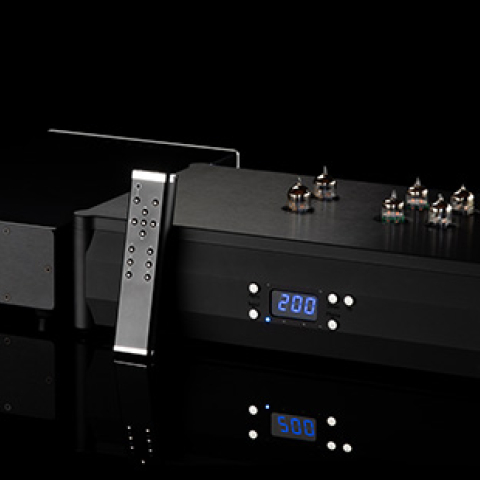
These recent adventures have reminded me how close and hands-on the relationship is between a record collector and their phono equalizer. Watching analog shaman John DeVore play 78s while tuning the sound with his EMT JPA66 phono stage/preamp, or Jazz Deejay-Supreme Matthew Rivera adjusting the EQ on his 1960 McIntosh C20 while working the crowd at the Hot Club, has shown me the value of using premium phono preamplification to show artists and their recordings in the best possible light.
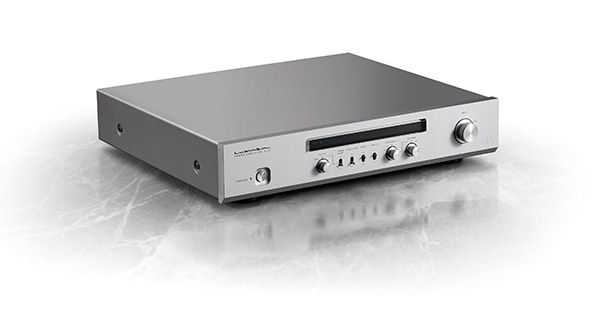
I doubt I'll ever have an EMT JPA66, or a Mac C20, or that I'll own more than 50 78s, but I do have 300 LPs, 200 45s, and a growing herd of phono cartridges that during the preparation of this report responded extremely well to the clear and steady handling of Luxman's 100th Anniversary E-07 Phono Amplifier ($7995), the arrival of which could not have been better timed.
The Luxman does not offer a selection of equalization curves for the playback of pre-RIAA phono discs. But this machine has the classic looks, serious build quality, and luxury sonics needed to anchor any modern phonograph system.
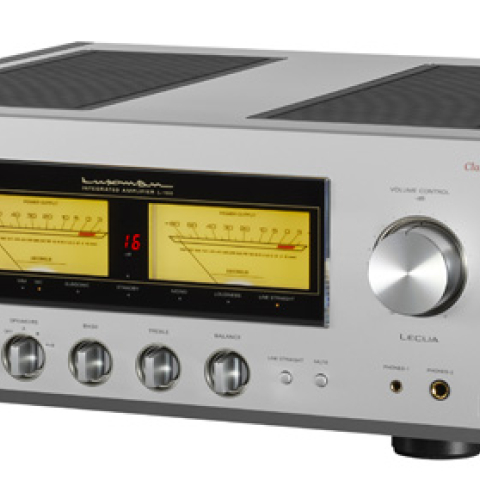
Readers note: Luxman's flagship CL-1000 line-level preamp features Bass and Treble tone controls, each governed by a three-position rotary switch that selects the frequency range over which it functions. These tone controls can be used in lieu of adjusting the equalization curve. When used together, the E-07 and CL-1000 should well represent any black disc from any era.
 Description
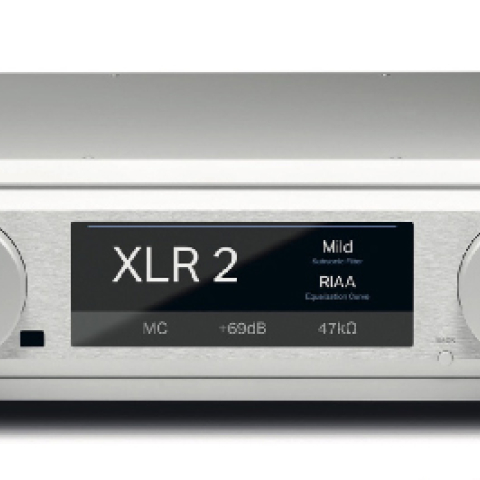
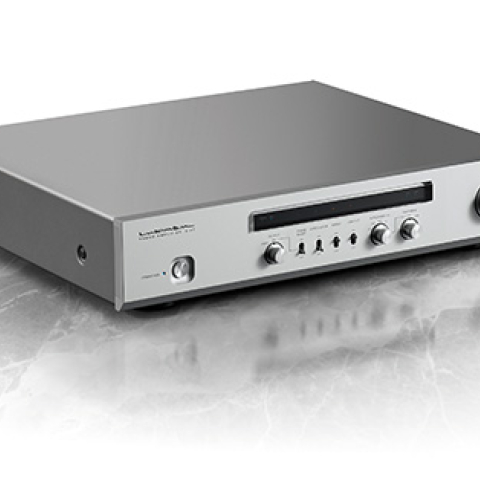
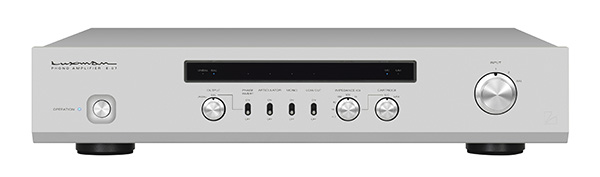
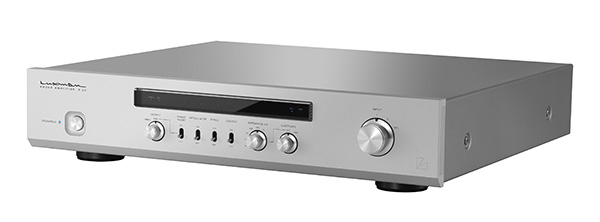
The Luxman E-07 is a solid state, dual-mono phono equalization amplifier with three power transformers and four audio-signal step-up transformers, two per channel. It has three selectable inputs: two on RCA and one balanced on XLR. Its three inputs are matched by its outputs: two RCA and one XLR. The E-07 weighs 29.7lb (13.2 kg) and measures a modest 17.3" wide × 3.6" high × 16" deep.
Run-of-the-mill phono stages typically give the impression that their boxes were afterthoughts. Not the E-07's: Its chassis presents like a venerable piece of Japanese architecture.
During my auditions, the E-07's front panel became my new friend. I established a daily relationship with its Cartridge Selector, where choosing MM or MC establishes low or high gain, and the Impedance Selector, which gives moving coil cartridge users a choice between 4.7, 10, 40, 100, 300, and 1k ohms for loading. Below 100 ohms, the loadings are all dual-mono and transformer coupled. Luxman has always favored lots of iron. So have I.
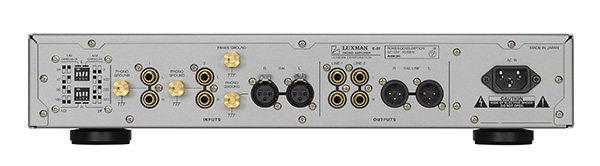 I found the E-07's coolest trick on the rear panel: a grid of sturdy DIP switches that allow users of moving magnet cartridges to choose between 34k, 47k, 56k, and 100k load impedance and 0, 100, 220, and 320pF of capacitive loading. This is a pro-level feature.
Another pro-level feature is the choice between two types of grounding. One, Phono Ground, connects the "analog player"—the quote is from the User Manual—to the star-grounded signal ground. The other, Frame Ground, connects directly to the 3.6mm–thick copper bottom panel of the E-07 enclosure. That chunk of copper across its bottom explains why when I lift it I immediately sense its low center of gravity and evenly distributed weight.
Another interesting feature is the E-07's Articulator switch, on the center of the front panel. When this switch is in the On position, record playback demagnetizes the MC cartridge and its associated step-up transformers. I'd never used a demagnetizer and was excited to try this one.
I found the E-07's coolest trick on the rear panel: a grid of sturdy DIP switches that allow users of moving magnet cartridges to choose between 34k, 47k, 56k, and 100k load impedance and 0, 100, 220, and 320pF of capacitive loading. This is a pro-level feature.
Another pro-level feature is the choice between two types of grounding. One, Phono Ground, connects the "analog player"—the quote is from the User Manual—to the star-grounded signal ground. The other, Frame Ground, connects directly to the 3.6mm–thick copper bottom panel of the E-07 enclosure. That chunk of copper across its bottom explains why when I lift it I immediately sense its low center of gravity and evenly distributed weight.
Another interesting feature is the E-07's Articulator switch, on the center of the front panel. When this switch is in the On position, record playback demagnetizes the MC cartridge and its associated step-up transformers. I'd never used a demagnetizer and was excited to try this one.
 Listening
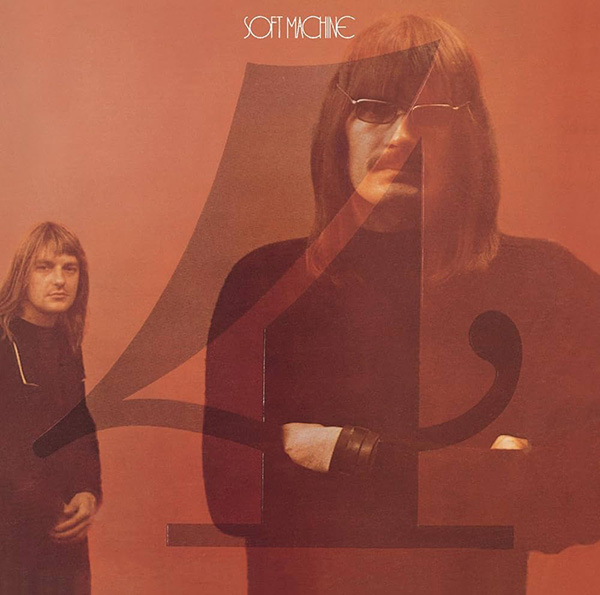
Sometimes I get an idea for a comparison I want to do, and my brain lights up: Yah man! I gotta try that! One of those "gotta try" moments happened early on in my Luxman auditions, when it hit me that I could play Soft Machine's Fourth (Columbia LP C 30754), a dense, complex recording with lots of twisty dynamics and difficult-to-decode detail, to see if Luxman's E-07 and EMT's JSD 6 moving coil could sort it all out.
The E-07 owner's manual says, "It is recommended to select an impedance equal to or slightly greater than the impedance of your cartridge to use."
With the JSD 6 loaded at 100 ohms, Soft Machine's Fourth sounded pristine, well sorted, and precisely focused. Dynamic nuance and instrumental textures were highlighted. Tone colors were adequately saturated, but reverb and atmospherics were on the dry, low-energy side.
That dull dryness disappeared when I switched the JSD 6 to the E-07's transformer-coupled 40 ohm tap, an impedance "slightly greater" than the JSD's 24 ohms. Now life was good. At 40 ohms via the Luxman SUT, reverb tails seemed dramatically longer. The Fourth sounded like a different album. More verb-y vibe-y dynamic-atmospheric and hypernuanced.
With the My Sonic Lab's Ultra Eminent Ex: I feel pretty confident in my ability to install phonograph cartridges properly—as long as I'm installing them on a detachable headshell, on my desk, under a strong light. Fixed headshells, like the one on EMT's 912-HI banana arm, make me anxious because their tender hookup wires are not fun to repair or replace.
When I installed the JSD 6, I removed the 912-HI from the Dr. Feickert Blackbird and set it on a towel on my desk to mount the cartridge. It was a crazy Halloween and Shabbat night in Bed Stuy, so I finagled steady-fingered Spin Doctor Michael Trei to relieve my anxieties and install my fanciest moving coil cartridge, My Sonic Lab's Ultra Eminent Ex ($7495). The My Sonic Lab had some miles on it, so Michael started with a very thorough cleaning and microscopic examination of its diamond. He followed this by cleaning and polishing its brilliant chrome body. Then he micro-leveled, speed-adjusted, and spit-polished the whole Blackbird, including washing its belt in seltzer. Finally, he cleaned, tightened, and re-oiled the Feickert's inverted bearing. When Mr. Trei finished, everything looked and worked like new.
The question then became, how should I load the Ultra Eminent Ex and its 0.6 ohm internal impedance? Its instructions recommend 200 to 800 ohms, "with 400 ohms being optimum." That's much more than the "at least 10:1" rule of thumb. But the largest two MC loading impedances on the E-07 are 300 ohms and 1k ohm.
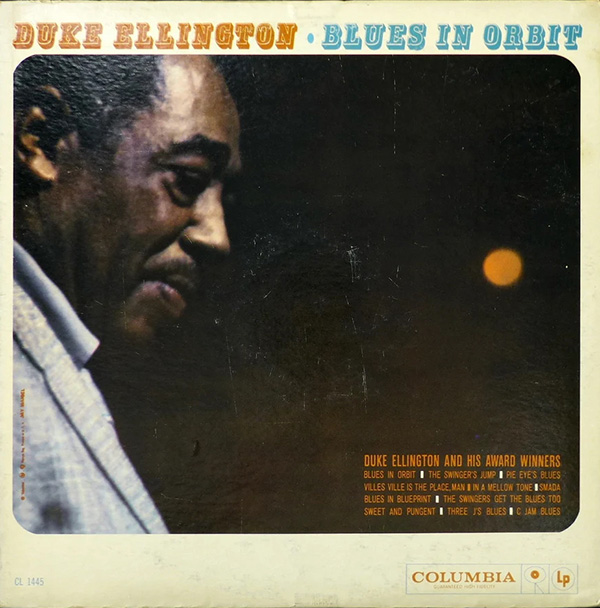 I decided to start by playing Duke Ellington's Blues in Orbit (Columbia MOVLPP443) with a 1000 ohms load and work my way down.
At 1k ohm, Duke's 1959 band (Cat Anderson, Jimmy Hodges, Ray Nance, Johnny Hodges, Paul Gonsalves, Harry Carney, Sam Woodyard, et al.) sounded small, tight, and distant. They relaxed some at 300 ohms, but at that setting the lack of swing and suppleness was a distraction. At 100 ohms, it loosened up more and showed some color and expression. Still, I wasn't hearing the Eminent Ex magic I knew there should be.
Next I tried the 40 ohm setting, which puts a step-up transformer between the cartridge and the RIAA stage. Now the sound was reverb-charged to the max, with a compelling immediacy. Ellington's band sounded solid and powerful, right there above my Falcon Gold Badge speakers. The piano decay that ends each song was savory and extended. 40 ohms with the Luxman's SUT was a spectacular improvement over a 100 ohm resistor load.
Next, I played David Lewiston's 1976 masterpiece: Mexico - Fiestas of Chiapas and Oaxaca (Nonesuch Explorer LP 72070) and felt like I'd been eating peyote and drinking tequila. The spatial mapping had a spooky, virtual-reality feel. I heard a calliope behind the voices of excited children. About 50' away I heard bottle rockets taking off, hissing. Celebrants were dancing and singing next to me. I was in a big outdoor space. I could feel the energy and volume of the crowd. This was full-on audio verité.
At 40 ohms, the Luxman E-07 was helping My Sonic Lab's Ultra Eminent Ex put on a big-screen Technicolor show. This was peak analog.
I decided to start by playing Duke Ellington's Blues in Orbit (Columbia MOVLPP443) with a 1000 ohms load and work my way down.
At 1k ohm, Duke's 1959 band (Cat Anderson, Jimmy Hodges, Ray Nance, Johnny Hodges, Paul Gonsalves, Harry Carney, Sam Woodyard, et al.) sounded small, tight, and distant. They relaxed some at 300 ohms, but at that setting the lack of swing and suppleness was a distraction. At 100 ohms, it loosened up more and showed some color and expression. Still, I wasn't hearing the Eminent Ex magic I knew there should be.
Next I tried the 40 ohm setting, which puts a step-up transformer between the cartridge and the RIAA stage. Now the sound was reverb-charged to the max, with a compelling immediacy. Ellington's band sounded solid and powerful, right there above my Falcon Gold Badge speakers. The piano decay that ends each song was savory and extended. 40 ohms with the Luxman's SUT was a spectacular improvement over a 100 ohm resistor load.
Next, I played David Lewiston's 1976 masterpiece: Mexico - Fiestas of Chiapas and Oaxaca (Nonesuch Explorer LP 72070) and felt like I'd been eating peyote and drinking tequila. The spatial mapping had a spooky, virtual-reality feel. I heard a calliope behind the voices of excited children. About 50' away I heard bottle rockets taking off, hissing. Celebrants were dancing and singing next to me. I was in a big outdoor space. I could feel the energy and volume of the crowd. This was full-on audio verité.
At 40 ohms, the Luxman E-07 was helping My Sonic Lab's Ultra Eminent Ex put on a big-screen Technicolor show. This was peak analog.
 One more record: Skip James was an American blues artist, mostly lost to history when John Fahey found him and brought him to Chicago in 1964. I discovered him then. At the record store where I worked, it was a major sales event when Skip James's Devil Got My Woman (Vanguard VSD 79273) was released, in 1968, the year before he died. This was a record I took with me to college to play for my new friends. Before that, there had been only two Skip James microgrooves, one in '66, another in '64. Then you had to go back more than 30+ years, to 1931, when Skip recorded 18 songs on nine 78s on Paramount.
I've been playing Devil Got My Woman since it came out. With My Sonic Lab's Ultra Eminent Ex moving coil loaded at 40 ohms, feeding into the brand-new 100th Anniversary Luxman E-07 phono stage, Skip's voice sounded more silver-toned and otherworldly than ever. The space in the recording studio was easy to hear. James's vibrating guitar strings were surrounded by rainbow halos. Physicality ruled.
A large portion of this record's bloom and charm vanished when I switched the load to 10 ohms—close to the value recommended by the ~10:1 rule of thumb. It sounded clean and, I suppose, refined, but tones felt too tight. Reverb was condensed, and flow felt constrained. I didn't try 4.7 ohms.
What I did try was playing Devil Got My Woman with my Stanton 681EEE moving magnet cartridge, with a stock elliptical stylus. The Skip James record sounded less vivid and transparent than it did with that high-toned Japanese moving coil—of course it did—but the E-07/Stanton combo made discs sound radio-station right. It played music with a solid underpinning. It was exceptionally clear between, say, 75 and 1000Hz.
The Stanton showed me how the E-07's RIAA played smooth, silent, and well-sorted—not solid state-y at all. The E-07 reminded me of my HoloAudio Serene preamp in that it is so invisible that I could never guess if it was tube or solid state. But the E-07 does have a feel, a quality of touch and body, that I suspect reflects the excellence of the 07's power supplies, parts, and shielding.
With the Dynavector XX2A: Ever since Ken Micallef reviewed it in 2022, I've been intrigued by Luxman's $2695 LMC-5 moving coil cartridge. Why? Because it combines an aluminum cantilever with a Shibata-shaped diamond, coupled to its own "minimized" outer chassis. For decades, I've favored the relaxed naturalness of aluminum cantilevers, which sound like home cooking with conical styli, but I like them more when they're paired with the bluegrass-friendly excitements of an elliptical stylus. The LMC-5's Shibata takes it several steps further, producing music that sounds trippy and phantasmagoric. The lush sonics of the LMC-5 and other (aluminum-Shibata) carts pulled me into a deeper, darker, quieter world, one that favors orchestras, dub, and sci-fi soundtracks.
The internal impedance of the LMC-5 is 4.7 ohms—the same as the My Sonic Lab's—and its output voltage is 0.4mV. Luxman recommends a "head amp" load of 40 ohms or more, or if a step-up transformer is used, a load of 2.5 to 10 ohms. I imagine Luxman's LMC-5 and the E-07 would flatter each other. But I didn't have the LMC-5 on hand.
What I did have was the Dynavector XX2A, which electrically is similar to the Luxman cartridge, with an output voltage of 0.28mV and a source impedance of 6 ohms. Yet, the Dynavector's recommended load impedance is much lower than the Luxman's, at 30 ohms (or more) compared to the Luxman's 400 ohms. The two cartridges have similar stylus profiles—Dynavector calls its profile "Pathfinder," but both are line-contact variations—but the Dynavector's cantilever is boron, not aluminum.
Absentmindedly, I started my XX2A auditions with the E-07's load-selector knob set at the 10 ohm step-up transformer position, and when I put on a 7" 45 of Led Zeppelin's "Black Dog" (Atlantic 45-2849), it exploded into the room. Force, rhythm, and momentum were at runaway-train levels. Reverb had high presence and definition.
Luxman calls the core material in its SUTs "super permalloy." I call it supercharged permalloy; at least that's how it felt playing Led Zep with the Dynavector cartridge.
That led me to the next question: Would the XX2A sound just as charged loaded at 100 ohms with no step-up transformer? The answer to that question is, no, it won't. With a 100 ohm shunt resistor, the sound was gentler, bigger, less tight and pushy, maybe a little grainier. Compared to how it sounded into Luxman's 10 ohm transformer input, the XX2A sounded "normal," though it did have an atmosphere-filled spaciousness and a plush elasticity that I don't normally associate with Dynavectors. I blame the parallelled FETs at the E-07s MC input.
One more record: Skip James was an American blues artist, mostly lost to history when John Fahey found him and brought him to Chicago in 1964. I discovered him then. At the record store where I worked, it was a major sales event when Skip James's Devil Got My Woman (Vanguard VSD 79273) was released, in 1968, the year before he died. This was a record I took with me to college to play for my new friends. Before that, there had been only two Skip James microgrooves, one in '66, another in '64. Then you had to go back more than 30+ years, to 1931, when Skip recorded 18 songs on nine 78s on Paramount.
I've been playing Devil Got My Woman since it came out. With My Sonic Lab's Ultra Eminent Ex moving coil loaded at 40 ohms, feeding into the brand-new 100th Anniversary Luxman E-07 phono stage, Skip's voice sounded more silver-toned and otherworldly than ever. The space in the recording studio was easy to hear. James's vibrating guitar strings were surrounded by rainbow halos. Physicality ruled.
A large portion of this record's bloom and charm vanished when I switched the load to 10 ohms—close to the value recommended by the ~10:1 rule of thumb. It sounded clean and, I suppose, refined, but tones felt too tight. Reverb was condensed, and flow felt constrained. I didn't try 4.7 ohms.
What I did try was playing Devil Got My Woman with my Stanton 681EEE moving magnet cartridge, with a stock elliptical stylus. The Skip James record sounded less vivid and transparent than it did with that high-toned Japanese moving coil—of course it did—but the E-07/Stanton combo made discs sound radio-station right. It played music with a solid underpinning. It was exceptionally clear between, say, 75 and 1000Hz.
The Stanton showed me how the E-07's RIAA played smooth, silent, and well-sorted—not solid state-y at all. The E-07 reminded me of my HoloAudio Serene preamp in that it is so invisible that I could never guess if it was tube or solid state. But the E-07 does have a feel, a quality of touch and body, that I suspect reflects the excellence of the 07's power supplies, parts, and shielding.
With the Dynavector XX2A: Ever since Ken Micallef reviewed it in 2022, I've been intrigued by Luxman's $2695 LMC-5 moving coil cartridge. Why? Because it combines an aluminum cantilever with a Shibata-shaped diamond, coupled to its own "minimized" outer chassis. For decades, I've favored the relaxed naturalness of aluminum cantilevers, which sound like home cooking with conical styli, but I like them more when they're paired with the bluegrass-friendly excitements of an elliptical stylus. The LMC-5's Shibata takes it several steps further, producing music that sounds trippy and phantasmagoric. The lush sonics of the LMC-5 and other (aluminum-Shibata) carts pulled me into a deeper, darker, quieter world, one that favors orchestras, dub, and sci-fi soundtracks.
The internal impedance of the LMC-5 is 4.7 ohms—the same as the My Sonic Lab's—and its output voltage is 0.4mV. Luxman recommends a "head amp" load of 40 ohms or more, or if a step-up transformer is used, a load of 2.5 to 10 ohms. I imagine Luxman's LMC-5 and the E-07 would flatter each other. But I didn't have the LMC-5 on hand.
What I did have was the Dynavector XX2A, which electrically is similar to the Luxman cartridge, with an output voltage of 0.28mV and a source impedance of 6 ohms. Yet, the Dynavector's recommended load impedance is much lower than the Luxman's, at 30 ohms (or more) compared to the Luxman's 400 ohms. The two cartridges have similar stylus profiles—Dynavector calls its profile "Pathfinder," but both are line-contact variations—but the Dynavector's cantilever is boron, not aluminum.
Absentmindedly, I started my XX2A auditions with the E-07's load-selector knob set at the 10 ohm step-up transformer position, and when I put on a 7" 45 of Led Zeppelin's "Black Dog" (Atlantic 45-2849), it exploded into the room. Force, rhythm, and momentum were at runaway-train levels. Reverb had high presence and definition.
Luxman calls the core material in its SUTs "super permalloy." I call it supercharged permalloy; at least that's how it felt playing Led Zep with the Dynavector cartridge.
That led me to the next question: Would the XX2A sound just as charged loaded at 100 ohms with no step-up transformer? The answer to that question is, no, it won't. With a 100 ohm shunt resistor, the sound was gentler, bigger, less tight and pushy, maybe a little grainier. Compared to how it sounded into Luxman's 10 ohm transformer input, the XX2A sounded "normal," though it did have an atmosphere-filled spaciousness and a plush elasticity that I don't normally associate with Dynavectors. I blame the parallelled FETs at the E-07s MC input.
 A friend of a friend sent me the first release from his new label, Listening Position. It was a reissue of African Skies played by one of Sun Ra's cool sidemen, Kelan Phil Cohran, working with his small orchestra, Legacy. This is a reissue of a soundtrack album, recorded to digital audio tape in 1993 for night-sky shows at Chicago's Adler Planetarium.
On my first listen, I said to myself, "This recording keeps time like an atomic clock." Its tones and textures were presented in a similarly controlled manner, making it a sensitive litmus test for how phonograph systems present the three Ts: tone, touch, tempo.
With the XX2A loaded at 100 ohms via the Luxman phono preamp, I heard a degree of relaxed spaciousness and plush elasticity that I had not previously experienced with the XX2A. Over the summer, I used this cartridge loaded with 100 ohms through no fewer than four fancy phono stages; the Dynavector never acted out of character, until now. To the E-07's credit, I found this gentler persona quite appealing.
I am sure several engineering factors contributed to the E-07's performance with shunt loads, but when I tried another of my litmus LPs, Astor Piazzolla's The Rough Dancer and the Cyclical Night (Tango Apasionado) (Nonesuch/American Clavé 075597915297), I found the XX2A's new 100 ohm persona to lack sparkle and raw energy. I switched to the Luxman's 40 ohm SUT setting. That brightened and lightened things up. But not enough to suit me. At 10 ohms, there it was again! Piazzolla's mad, morphing tempos came out like creatures of the night. Astor's music came alive and put me under its mysterious spell. The Dynavector thrived at the 10 ohm setting.
A friend of a friend sent me the first release from his new label, Listening Position. It was a reissue of African Skies played by one of Sun Ra's cool sidemen, Kelan Phil Cohran, working with his small orchestra, Legacy. This is a reissue of a soundtrack album, recorded to digital audio tape in 1993 for night-sky shows at Chicago's Adler Planetarium.
On my first listen, I said to myself, "This recording keeps time like an atomic clock." Its tones and textures were presented in a similarly controlled manner, making it a sensitive litmus test for how phonograph systems present the three Ts: tone, touch, tempo.
With the XX2A loaded at 100 ohms via the Luxman phono preamp, I heard a degree of relaxed spaciousness and plush elasticity that I had not previously experienced with the XX2A. Over the summer, I used this cartridge loaded with 100 ohms through no fewer than four fancy phono stages; the Dynavector never acted out of character, until now. To the E-07's credit, I found this gentler persona quite appealing.
I am sure several engineering factors contributed to the E-07's performance with shunt loads, but when I tried another of my litmus LPs, Astor Piazzolla's The Rough Dancer and the Cyclical Night (Tango Apasionado) (Nonesuch/American Clavé 075597915297), I found the XX2A's new 100 ohm persona to lack sparkle and raw energy. I switched to the Luxman's 40 ohm SUT setting. That brightened and lightened things up. But not enough to suit me. At 10 ohms, there it was again! Piazzolla's mad, morphing tempos came out like creatures of the night. Astor's music came alive and put me under its mysterious spell. The Dynavector thrived at the 10 ohm setting.
 Then I remembered something.
The Articulator: According to the E-07 owner's manual, "The articulator means 'tuning' and is a demagnetizer function that utilizes the music signal. When the articulator switch is in the On position, record playback will demagnetize the cartridge and step-up transformer, restoring a fresh musical expression." I switched the Articulator on for 30 seconds with Dynavector's XX2A mounted, and gosh by golly, it worked. Demagnetization cleaned up and woke up the XX2A, which has some miles on it. After the demag, the haloing effects of Dynavector's alnico magnet were easier to spot.
So of course I tried the Articulator with the My Sonic Lab Ultra Eminent Ex, remounting it and listening before and after 30 seconds of Articulation. With the Ex, which had more miles than the XX2A, the effect of demagnetization was barely noticeable. This told me that the biggest effect of the Articulator was on the E-07's SUTs, which had already been demagnetized along with the Dynavector. The only change this time was to the cartridge.
Generally, the effect of the demag function was subtle, and I couldn't tell you precisely what it actually did. But Luxman obviously believes in it enough to include the Articulator feature on all its phono products, including the legendary, now-discontinued, EQ-500 tubed phono stage.
With the Nagaoka MP-200: With PrimaLuna's all-tube EVO 100 phono equalizer, the Nagaoka MP-200 "moving permalloy" cartridge sounds as beatifically liquid and 3D as any modern moving magnets I've used. To secure all that attractive dimensionality, I have to load it with 100pF of capacitance, which adds to the AudioQuest Yosemite tonearm cable's 60pF to bring the total capacitance to around 200pF.
According to the DIP switches on the E-07's back panel, its default capacitance setting is 0pF, which puzzled me, but I dare say that even at zero the MP-200 cartridge sounded perky, punchy, and impressively clear. But it did not sound as rich of tone or deep of space as it does at 100pF with the PrimaLuna EVO 100.
So I hauled the E-07 off the rack and fiddled with its DIP switches, raising the capacitance to 100pF, whereat the MP-200 presented Astor Piazzolla with deeper space, stronger, fuller bass, and better-defined presentation of reverb, which I regard as a prime tell for phase linearity.
Here's an experiment I really wanted to try: loading the input of the RIAA circuit at 34k ohms and 100k ohms instead of the standard 47k ohms. I had never experimented with MM loads, so I was keen to see how the Nagaoka MP-200 would respond. At 34k ohms, it sounded more relaxed and natural. Details of the soundscape upstaged tone and tempo. This change in the Nagaoka's character was less noticeable than setting its capacitance to 100pF; I am sure some folks would prefer it at 47k.
At 100k, the boost kicked in on the MP-200's supercharger, making it sound like a much bigger engine. At 100k, the Nagaoka sounded fuel-dragster quick and high-revving, like a fancy Dynavector. Back at 47k, the MP-200 sounded normal—but fused with a constant reminder of how much this $509 moving magnet could sound like a Koetsu.
The E-07's ability to change both the shunt capacitance and shunt resistance on moving magnet loads allowed cartridges like my Nagaoka and Stanton to compete on a more equal footing with moving coils.
Then I remembered something.
The Articulator: According to the E-07 owner's manual, "The articulator means 'tuning' and is a demagnetizer function that utilizes the music signal. When the articulator switch is in the On position, record playback will demagnetize the cartridge and step-up transformer, restoring a fresh musical expression." I switched the Articulator on for 30 seconds with Dynavector's XX2A mounted, and gosh by golly, it worked. Demagnetization cleaned up and woke up the XX2A, which has some miles on it. After the demag, the haloing effects of Dynavector's alnico magnet were easier to spot.
So of course I tried the Articulator with the My Sonic Lab Ultra Eminent Ex, remounting it and listening before and after 30 seconds of Articulation. With the Ex, which had more miles than the XX2A, the effect of demagnetization was barely noticeable. This told me that the biggest effect of the Articulator was on the E-07's SUTs, which had already been demagnetized along with the Dynavector. The only change this time was to the cartridge.
Generally, the effect of the demag function was subtle, and I couldn't tell you precisely what it actually did. But Luxman obviously believes in it enough to include the Articulator feature on all its phono products, including the legendary, now-discontinued, EQ-500 tubed phono stage.
With the Nagaoka MP-200: With PrimaLuna's all-tube EVO 100 phono equalizer, the Nagaoka MP-200 "moving permalloy" cartridge sounds as beatifically liquid and 3D as any modern moving magnets I've used. To secure all that attractive dimensionality, I have to load it with 100pF of capacitance, which adds to the AudioQuest Yosemite tonearm cable's 60pF to bring the total capacitance to around 200pF.
According to the DIP switches on the E-07's back panel, its default capacitance setting is 0pF, which puzzled me, but I dare say that even at zero the MP-200 cartridge sounded perky, punchy, and impressively clear. But it did not sound as rich of tone or deep of space as it does at 100pF with the PrimaLuna EVO 100.
So I hauled the E-07 off the rack and fiddled with its DIP switches, raising the capacitance to 100pF, whereat the MP-200 presented Astor Piazzolla with deeper space, stronger, fuller bass, and better-defined presentation of reverb, which I regard as a prime tell for phase linearity.
Here's an experiment I really wanted to try: loading the input of the RIAA circuit at 34k ohms and 100k ohms instead of the standard 47k ohms. I had never experimented with MM loads, so I was keen to see how the Nagaoka MP-200 would respond. At 34k ohms, it sounded more relaxed and natural. Details of the soundscape upstaged tone and tempo. This change in the Nagaoka's character was less noticeable than setting its capacitance to 100pF; I am sure some folks would prefer it at 47k.
At 100k, the boost kicked in on the MP-200's supercharger, making it sound like a much bigger engine. At 100k, the Nagaoka sounded fuel-dragster quick and high-revving, like a fancy Dynavector. Back at 47k, the MP-200 sounded normal—but fused with a constant reminder of how much this $509 moving magnet could sound like a Koetsu.
The E-07's ability to change both the shunt capacitance and shunt resistance on moving magnet loads allowed cartridges like my Nagaoka and Stanton to compete on a more equal footing with moving coils.
 In sum
Lately I've been having an intimate, hands-on relationship with a truly deluxe piece of phonographic equipment, the Luxman E-07 Phono Amplifier. It's done everything I imagined it would and a lot more. The E-07 is the first phono stage I've used that made me feel like I was wringing every drop of performance out of moving coil and moving magnet cartridges. The E-07 presented each cartridge and vinyl disc in its best possible light. This spurred my desire to try more old cartridges and find more obscure records. The Luxman E-07 is an heirloom-quality product that should please the most discriminating phonophiles.
DescriptionThe Luxman E-07 is a solid state, dual-mono phono equalization amplifier with three power transformers and four audio-signal step-up transformers, two per channel. It has three selectable inputs: two on RCA and one balanced on XLR. Its three inputs are matched by its outputs: two RCA and one XLR. The E-07 weighs 29.7lb (13.2 kg) and measures a modest 17.3" wide × 3.6" high × 16" deep.
I found the E-07's coolest trick on the rear panel: a grid of sturdy DIP switches that allow users of moving magnet cartridges to choose between 34k, 47k, 56k, and 100k load impedance and 0, 100, 220, and 320pF of capacitive loading. This is a pro-level feature.
ListeningSometimes I get an idea for a comparison I want to do, and my brain lights up: Yah man! I gotta try that! One of those "gotta try" moments happened early on in my Luxman auditions, when it hit me that I could play Soft Machine's Fourth (Columbia LP C 30754), a dense, complex recording with lots of twisty dynamics and difficult-to-decode detail, to see if Luxman's E-07 and EMT's JSD 6 moving coil could sort it all out.
I decided to start by playing Duke Ellington's Blues in Orbit (Columbia MOVLPP443) with a 1000 ohms load and work my way down.
At 1k ohm, Duke's 1959 band (Cat Anderson, Jimmy Hodges, Ray Nance, Johnny Hodges, Paul Gonsalves, Harry Carney, Sam Woodyard, et al.) sounded small, tight, and distant. They relaxed some at 300 ohms, but at that setting the lack of swing and suppleness was a distraction. At 100 ohms, it loosened up more and showed some color and expression. Still, I wasn't hearing the Eminent Ex magic I knew there should be.
Next I tried the 40 ohm setting, which puts a step-up transformer between the cartridge and the RIAA stage. Now the sound was reverb-charged to the max, with a compelling immediacy. Ellington's band sounded solid and powerful, right there above my Falcon Gold Badge speakers. The piano decay that ends each song was savory and extended. 40 ohms with the Luxman's SUT was a spectacular improvement over a 100 ohm resistor load.
One more record: Skip James was an American blues artist, mostly lost to history when John Fahey found him and brought him to Chicago in 1964. I discovered him then. At the record store where I worked, it was a major sales event when Skip James's Devil Got My Woman (Vanguard VSD 79273) was released, in 1968, the year before he died. This was a record I took with me to college to play for my new friends. Before that, there had been only two Skip James microgrooves, one in '66, another in '64. Then you had to go back more than 30+ years, to 1931, when Skip recorded 18 songs on nine 78s on Paramount.
A friend of a friend sent me the first release from his new label, Listening Position. It was a reissue of African Skies played by one of Sun Ra's cool sidemen, Kelan Phil Cohran, working with his small orchestra, Legacy. This is a reissue of a soundtrack album, recorded to digital audio tape in 1993 for night-sky shows at Chicago's Adler Planetarium.
On my first listen, I said to myself, "This recording keeps time like an atomic clock." Its tones and textures were presented in a similarly controlled manner, making it a sensitive litmus test for how phonograph systems present the three Ts: tone, touch, tempo.
Then I remembered something.
The Articulator: According to the E-07 owner's manual, "The articulator means 'tuning' and is a demagnetizer function that utilizes the music signal. When the articulator switch is in the On position, record playback will demagnetize the cartridge and step-up transformer, restoring a fresh musical expression." I switched the Articulator on for 30 seconds with Dynavector's XX2A mounted, and gosh by golly, it worked. Demagnetization cleaned up and woke up the XX2A, which has some miles on it. After the demag, the haloing effects of Dynavector's alnico magnet were easier to spot.
In sumLately I've been having an intimate, hands-on relationship with a truly deluxe piece of phonographic equipment, the Luxman E-07 Phono Amplifier. It's done everything I imagined it would and a lot more. The E-07 is the first phono stage I've used that made me feel like I was wringing every drop of performance out of moving coil and moving magnet cartridges. The E-07 presented each cartridge and vinyl disc in its best possible light. This spurred my desire to try more old cartridges and find more obscure records. The Luxman E-07 is an heirloom-quality product that should please the most discriminating phonophiles.