Not to mention that the M44-7 is so strong in its presentation that it upstaged any hope of my getting to know the PLX-1000 and how it might perform in a more intimate context. Imagine trying to get friendly with a sexy French film star. You don't ask her if she wants to come home and play Xbox. Instead, you smile in French and say, Avez-vous lu Simone de Beauvoir? Then take her to New York's Bouley restaurant and order some Château Cheval Blanc (1961?). I had to apply similar maneuvers to get intimate with the PLX-1000.
I couldn't afford Château Lyra (2010?), but seeking heightened romance and more understated charm, I installed my low-output, low-compliance Zu-modified Denon DL-103 Mk.II cartridge in the PLX-1000. While I was at it, I gave the Pioneer's arm bearings a quick check and discovered they were way loose. Turntable guru Mike Trei was in the house, so I let him do the honors; in short order we fine-tuned and triple-checked the bearings on the Pioneer, on my SME 3009, and on my VPI Traveler.
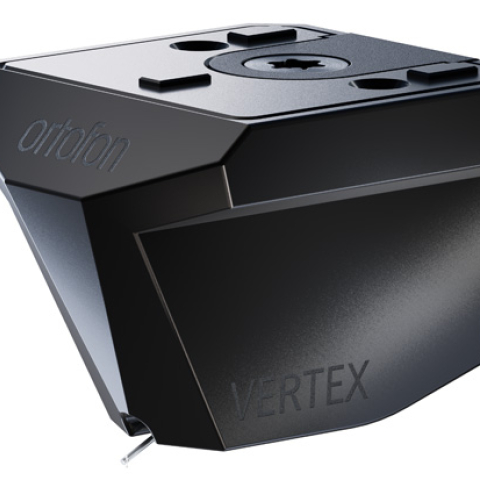
Just for fun, we played Steve Guttenberg's original pressing, bought in 1965, of Beatles for Sale (LP, Parlophone PCS 3062) on the belt-drive VPI Traveler ($1199) with an Ortofon 2M Black cartridge ($799), and on the Pioneer PLX-1000 with the Zu DL-103 ($519). Normally, the Ortofon, with its sensitive nude Shibata stylus, is a very refined, uncolored, low-distortion cartridge; and normally, the Zu DL-103, with its conical stylus, is a looser, more colorful, but more generalized-sounding cartridge. Today, those roles were reversed. Bass through the Traveler was slightly woolly and puffy, while bass through the Pioneer felt controlled, tuneful, and detailed. (I'm certain much of this difference can be attributed to the Pioneer's superior vibration isolation on my extremely rigid equipment rack.) The VPI's midrange sounded more recessed and dark than the brighter, more focused sound of the PLX-1000. During this comparison, the VPI had the most refined and enjoyable top octaves while the Pioneer the most realistic bottom octaves. Overall, the Pioneer's eager, smiling handshake made the VPI seem a little shy and dutiful.
Comparing past to present
Next, we replaced the VPI with Mike Trei's like-new Technics SL-1200MK2 and played a bunch of records using only the Zu Denon cartridge and the excellent Schiit Audio Mani phono stage ($129), designed by Mike Moffat. Out of curiosity, we used Dr. Feickert Analogue's Adjust+ test record and iPhone app to measure the speed accuracy of the SL-1200M2 and PLX-1000. Both 'tables performed better than their published specifications.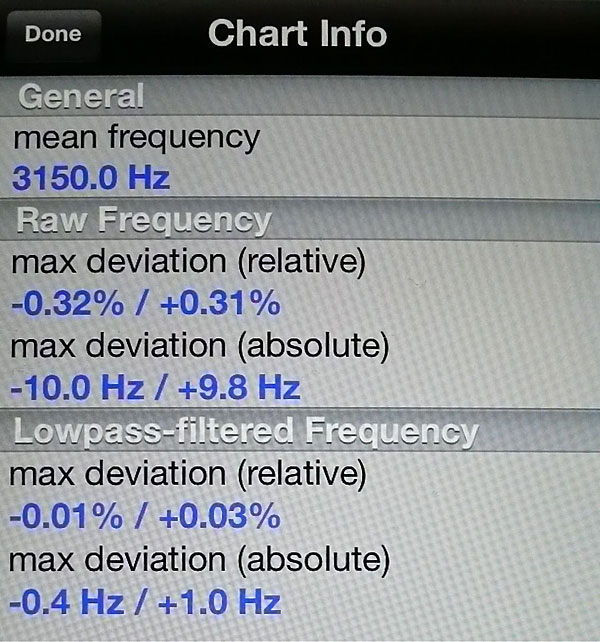 With every LP, I thought the vintage Technics presented music with a more colorful and exciting midrange energy. The best words I can think of to describe the SL-1200's midrange are bubbly and Champagne-colored! In contrast, the Pioneer's midrange was distinctly seltzer colored, but more transparent and detailed. The Technics's soundstage was wider and higher, but the Pioneer's soundstage was deeper and better articulated. The PLX-1000 sounded less resonant, more damped, and better controlled, and instrumental timbres were slightly lean to spot-on. Comparing these two record players was starting to remind me of those old tubes-vs-solid-state clichés. Until I got this wild idea.
I took the thicker Technics platter mat and put it on the Pioneer's platter, and the thinner Pioneer mat on the Technics. You won't believe what happened. That champagne midrange moved over from the Technics to the Pioneer, and a tighter, more damped sound emerged from the Technics.
The song on Beatles for Sale that I always gravitate to is Ringo's cover of Carl Perkins's "Honey Don't." Ringo is my favorite Beatle. His songs always have a simple, rock-a-bye swing, and "Honey Don't" is one of the best-ever "pace, timing, foot-tapping, fist-pumping, boogie-factor" tracks. Everyone present agreed: "Honey Don't" moved and bopped better on the Technics. But after I swapped mats, it bopped better on the Pioneer. It seems that a big part of that legendary SL-1200 midrange energy was generated by the mat/record interface—not the turntable.
Mike had also brought along a Herbie's Way Excellent mat of rubbery foam. It made the PLX-1000's sound a tiny bit softer, quieter, and more sophisticated. With the Herbie mat, the PLX-1000 played classical and vintage jazz records with a seductive, easygoing manner. The top five octaves became sweeter and more relaxed—more like the VPI Traveler, which also has a rubber mat.
When the Beatles first appeared, I thought they were for dorks and nerdy girls. But when a kind someone loaned me the new The Beatles in Mono (14 LPs, Apple 6337971). I had no choice but to use the $699 Pioneer PLX-1000 equipped with the $2800 Miyabi Mono cartridge to play every disc all the way through. Man oh man, what a fun time that was! These dorky recordings took me right back to my checkered past and put me in my black Chevelle—smoking reefer and drinking Boone's Farm with my pimple-faced, kleptomaniac girlfriend. Simultaneously, I began to finally recognize how beautiful and sophisticated these compositions are. This well-crafted boxed set is one of the few LP reissues I can proudly recommend.
With every LP, I thought the vintage Technics presented music with a more colorful and exciting midrange energy. The best words I can think of to describe the SL-1200's midrange are bubbly and Champagne-colored! In contrast, the Pioneer's midrange was distinctly seltzer colored, but more transparent and detailed. The Technics's soundstage was wider and higher, but the Pioneer's soundstage was deeper and better articulated. The PLX-1000 sounded less resonant, more damped, and better controlled, and instrumental timbres were slightly lean to spot-on. Comparing these two record players was starting to remind me of those old tubes-vs-solid-state clichés. Until I got this wild idea.
I took the thicker Technics platter mat and put it on the Pioneer's platter, and the thinner Pioneer mat on the Technics. You won't believe what happened. That champagne midrange moved over from the Technics to the Pioneer, and a tighter, more damped sound emerged from the Technics.
The song on Beatles for Sale that I always gravitate to is Ringo's cover of Carl Perkins's "Honey Don't." Ringo is my favorite Beatle. His songs always have a simple, rock-a-bye swing, and "Honey Don't" is one of the best-ever "pace, timing, foot-tapping, fist-pumping, boogie-factor" tracks. Everyone present agreed: "Honey Don't" moved and bopped better on the Technics. But after I swapped mats, it bopped better on the Pioneer. It seems that a big part of that legendary SL-1200 midrange energy was generated by the mat/record interface—not the turntable.
Mike had also brought along a Herbie's Way Excellent mat of rubbery foam. It made the PLX-1000's sound a tiny bit softer, quieter, and more sophisticated. With the Herbie mat, the PLX-1000 played classical and vintage jazz records with a seductive, easygoing manner. The top five octaves became sweeter and more relaxed—more like the VPI Traveler, which also has a rubber mat.
When the Beatles first appeared, I thought they were for dorks and nerdy girls. But when a kind someone loaned me the new The Beatles in Mono (14 LPs, Apple 6337971). I had no choice but to use the $699 Pioneer PLX-1000 equipped with the $2800 Miyabi Mono cartridge to play every disc all the way through. Man oh man, what a fun time that was! These dorky recordings took me right back to my checkered past and put me in my black Chevelle—smoking reefer and drinking Boone's Farm with my pimple-faced, kleptomaniac girlfriend. Simultaneously, I began to finally recognize how beautiful and sophisticated these compositions are. This well-crafted boxed set is one of the few LP reissues I can proudly recommend.
 After tripping with Lucy down Penny Lane, I installed the Soundsmith Carmen moving-iron cartridge ($799.95) and matching MMP3 phono stage ($649.95) and returned to my Béla Bartók obsession. Almost instantly, I became hypnotized by Pinchas Zukerman playing Bartók's Violin Concerto, with Zubin Mehta and the Los Angeles Philharmonic (LP, Columbia Masterworks 35156). This music, composed in 1938, is way more psychedelic than any of those moptop ditties. It is also fiendishly difficult for any record-playing system to navigate. I was shocked. The Pioneer PLX-1000 with Soundsmith cartridge sorted out every note, every startling dynamic swing, every weighty slam, every shift in sonority, better than I had ever experienced in my current Bed-Stuy monk's cell. This Bartók record forced me to drink full cups of Pioneer (and Soundsmith) Kool-Aid. Right now, I'm listening to Zukerman's virtuosity bow its way through that first movement (Allegro non troppo), and I'm sitting limp, stunned, and slack-jawed. How can a so-called DJ 'table be sorting out this type of ultrachromatic sophistication?
Alone again
After tripping with Lucy down Penny Lane, I installed the Soundsmith Carmen moving-iron cartridge ($799.95) and matching MMP3 phono stage ($649.95) and returned to my Béla Bartók obsession. Almost instantly, I became hypnotized by Pinchas Zukerman playing Bartók's Violin Concerto, with Zubin Mehta and the Los Angeles Philharmonic (LP, Columbia Masterworks 35156). This music, composed in 1938, is way more psychedelic than any of those moptop ditties. It is also fiendishly difficult for any record-playing system to navigate. I was shocked. The Pioneer PLX-1000 with Soundsmith cartridge sorted out every note, every startling dynamic swing, every weighty slam, every shift in sonority, better than I had ever experienced in my current Bed-Stuy monk's cell. This Bartók record forced me to drink full cups of Pioneer (and Soundsmith) Kool-Aid. Right now, I'm listening to Zukerman's virtuosity bow its way through that first movement (Allegro non troppo), and I'm sitting limp, stunned, and slack-jawed. How can a so-called DJ 'table be sorting out this type of ultrachromatic sophistication?
Alone again
When my buddies left, the first thing I discovered was: When a group of audio aficionados such as I and Mike and Steve Guttenberg start comparing this component to that and listening in that judgmental audiophile way, the results are only marginally valid. The best way for me to evaluate audio gear is to listen long and lovingly—until I get the itch to change something. Even though I keep doing it, I believe that listening critically to how something "sounds" is a nonmusical act that, in terms of "Will this component make me happy?," is nearly always irrelevant. Seeking to avoid that irrelevance, I tried to forget about the PLX-1000 and just enjoy playing records—until I got restless and began wondering how the brand-new Pioneer would compare with my ancient (idler drive) Thorens TD 124. Right now, I wish I could say something like, "The Pioneer was good, but not quite as good as my reference TD 124." But I can't. Both 'tables actively disarmed my critical facilities and let me focus on the music—which is the main reason I like them. My expertly restored Thorens was obviously noisier than the Pioneer, but even so, it seemed less noticeable in the reproduction chain than the PLX-1000. Meanwhile, the Pioneer added an extra clear octave each of bass and treble that made every record sound richer, more open, and alive. The Pioneer's added frequency extension let me look deeper into musical soundscapes. The Thorens plays jazz sax and solo piano with edifying aplomb, while the Pioneer played orchestral strings and kettledrums with disarming authority. And so on and so on . . .
Speaking in words
I am struggling to find the words to describe one extremely subtle but, I think, important aspect of the Pioneer's musical presentation. Compared to the best belt-drive turntables, the Pioneer PLX-1000 emitted a barely perceptible forced weightiness. I had to listen very carefully to hear this. The effect was like a nervous unsuppleness that pushed ever so lightly against my consciousness while music was playing. I've noticed this forced weightiness with almost every direct-drive turntable—except maybe old Mitchell A. Cotter's B-1, the Victor (JVC) TT-101, and the new VPI. Could this be what those belt-drive fanatics are complaining about? But wait! Before all you überperceptive rubber-band practitioners get too cocky, I should point out that belt-driven 'tables have their own variant of this subtle phenomenon. To my ears, all but the most elite belt-drives surround the musical flow with an unmistakable, vacuous, hollow, unnaturally relaxed, false emptiness that reminds me of an uncomfortable silence in a romantic conversation. This false emptiness can also feel slightly off the beat. The beauty of the better rim-drive and idler-drive models is that they possess a more Zen-like forward momentum that avoids both of these colorations.
Conclusions
During those soirée demonstrations back in the firehouse, I would attempt to disable opposing technocentric audiophile belief systems with a simple statement: "Everything sounds like what it is made of." I still believe this declaration. Yes, people, the Pioneer PLX-1000 plays music like a high-torque direct-drive record-playing machine. That is why I enjoyed it so much. It gave tangible force and soulful energy to pop, R&B, jazz, and electronica. Belts can't touch the PLX-1000's excitement, naturally formed detail, and clearly expressed forward momentum. And who could have imagined? This new Pioneer also showcases the complex tonal character and elegant structures of classical music better than any affordable belt-drive I've experienced. So . . . That's me you see, standing on my Bed-Stuy stoop, waving my hands and entreating you: "Give up your prejudices! You have nothing to lose but your dried-out ol' rubber bands!" Pioneer's new PLX-1000 is not only a worthy successor to the legendary Technics SL-1200MK2, it is a serious contender for the best audiophile-grade turntable for less than $2000. Unabashedly recommended.
Next, we replaced the VPI with Mike Trei's like-new Technics SL-1200MK2 and played a bunch of records using only the Zu Denon cartridge and the excellent Schiit Audio Mani phono stage ($129), designed by Mike Moffat. Out of curiosity, we used Dr. Feickert Analogue's Adjust+ test record and iPhone app to measure the speed accuracy of the SL-1200M2 and PLX-1000. Both 'tables performed better than their published specifications.
With every LP, I thought the vintage Technics presented music with a more colorful and exciting midrange energy. The best words I can think of to describe the SL-1200's midrange are bubbly and Champagne-colored! In contrast, the Pioneer's midrange was distinctly seltzer colored, but more transparent and detailed. The Technics's soundstage was wider and higher, but the Pioneer's soundstage was deeper and better articulated. The PLX-1000 sounded less resonant, more damped, and better controlled, and instrumental timbres were slightly lean to spot-on. Comparing these two record players was starting to remind me of those old tubes-vs-solid-state clichés. Until I got this wild idea.
I took the thicker Technics platter mat and put it on the Pioneer's platter, and the thinner Pioneer mat on the Technics. You won't believe what happened. That champagne midrange moved over from the Technics to the Pioneer, and a tighter, more damped sound emerged from the Technics.
After tripping with Lucy down Penny Lane, I installed the Soundsmith Carmen moving-iron cartridge ($799.95) and matching MMP3 phono stage ($649.95) and returned to my Béla Bartók obsession. Almost instantly, I became hypnotized by Pinchas Zukerman playing Bartók's Violin Concerto, with Zubin Mehta and the Los Angeles Philharmonic (LP, Columbia Masterworks 35156). This music, composed in 1938, is way more psychedelic than any of those moptop ditties. It is also fiendishly difficult for any record-playing system to navigate. I was shocked. The Pioneer PLX-1000 with Soundsmith cartridge sorted out every note, every startling dynamic swing, every weighty slam, every shift in sonority, better than I had ever experienced in my current Bed-Stuy monk's cell. This Bartók record forced me to drink full cups of Pioneer (and Soundsmith) Kool-Aid. Right now, I'm listening to Zukerman's virtuosity bow its way through that first movement (Allegro non troppo), and I'm sitting limp, stunned, and slack-jawed. How can a so-called DJ 'table be sorting out this type of ultrachromatic sophistication?
Alone againWhen my buddies left, the first thing I discovered was: When a group of audio aficionados such as I and Mike and Steve Guttenberg start comparing this component to that and listening in that judgmental audiophile way, the results are only marginally valid. The best way for me to evaluate audio gear is to listen long and lovingly—until I get the itch to change something. Even though I keep doing it, I believe that listening critically to how something "sounds" is a nonmusical act that, in terms of "Will this component make me happy?," is nearly always irrelevant. Seeking to avoid that irrelevance, I tried to forget about the PLX-1000 and just enjoy playing records—until I got restless and began wondering how the brand-new Pioneer would compare with my ancient (idler drive) Thorens TD 124. Right now, I wish I could say something like, "The Pioneer was good, but not quite as good as my reference TD 124." But I can't. Both 'tables actively disarmed my critical facilities and let me focus on the music—which is the main reason I like them. My expertly restored Thorens was obviously noisier than the Pioneer, but even so, it seemed less noticeable in the reproduction chain than the PLX-1000. Meanwhile, the Pioneer added an extra clear octave each of bass and treble that made every record sound richer, more open, and alive. The Pioneer's added frequency extension let me look deeper into musical soundscapes. The Thorens plays jazz sax and solo piano with edifying aplomb, while the Pioneer played orchestral strings and kettledrums with disarming authority. And so on and so on . . .
I am struggling to find the words to describe one extremely subtle but, I think, important aspect of the Pioneer's musical presentation. Compared to the best belt-drive turntables, the Pioneer PLX-1000 emitted a barely perceptible forced weightiness. I had to listen very carefully to hear this. The effect was like a nervous unsuppleness that pushed ever so lightly against my consciousness while music was playing. I've noticed this forced weightiness with almost every direct-drive turntable—except maybe old Mitchell A. Cotter's B-1, the Victor (JVC) TT-101, and the new VPI. Could this be what those belt-drive fanatics are complaining about? But wait! Before all you überperceptive rubber-band practitioners get too cocky, I should point out that belt-driven 'tables have their own variant of this subtle phenomenon. To my ears, all but the most elite belt-drives surround the musical flow with an unmistakable, vacuous, hollow, unnaturally relaxed, false emptiness that reminds me of an uncomfortable silence in a romantic conversation. This false emptiness can also feel slightly off the beat. The beauty of the better rim-drive and idler-drive models is that they possess a more Zen-like forward momentum that avoids both of these colorations.
During those soirée demonstrations back in the firehouse, I would attempt to disable opposing technocentric audiophile belief systems with a simple statement: "Everything sounds like what it is made of." I still believe this declaration. Yes, people, the Pioneer PLX-1000 plays music like a high-torque direct-drive record-playing machine. That is why I enjoyed it so much. It gave tangible force and soulful energy to pop, R&B, jazz, and electronica. Belts can't touch the PLX-1000's excitement, naturally formed detail, and clearly expressed forward momentum. And who could have imagined? This new Pioneer also showcases the complex tonal character and elegant structures of classical music better than any affordable belt-drive I've experienced. So . . . That's me you see, standing on my Bed-Stuy stoop, waving my hands and entreating you: "Give up your prejudices! You have nothing to lose but your dried-out ol' rubber bands!" Pioneer's new PLX-1000 is not only a worthy successor to the legendary Technics SL-1200MK2, it is a serious contender for the best audiophile-grade turntable for less than $2000. Unabashedly recommended.