Not to toot our own horns, but Stereophile magazine's reviews of the J.Sikora Initial, Reference, and Standard Max Supreme turntables helped catapult the Polish manufacturer into the audiophile spotlight.
As I wandered the circuitous corridors of High End Munich 2025 and AXPONA, J.Sikora's meteoric rise was impossible to miss—the 'tables' neo-Brutalist beauty commanded attention in room after room in Germany and Chicago.
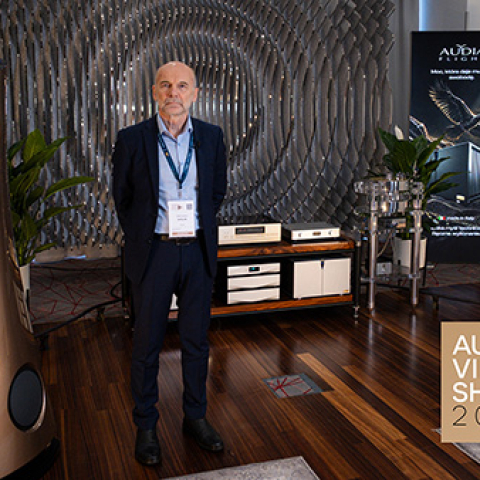
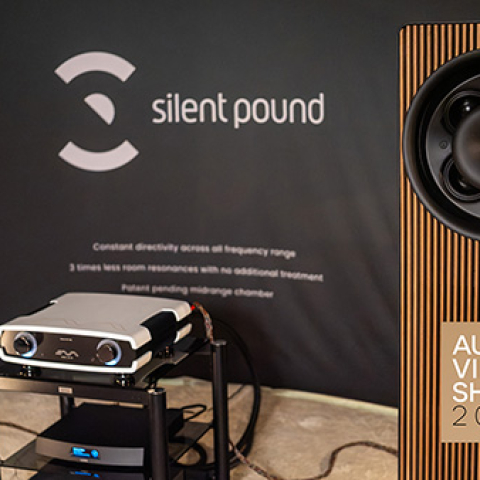
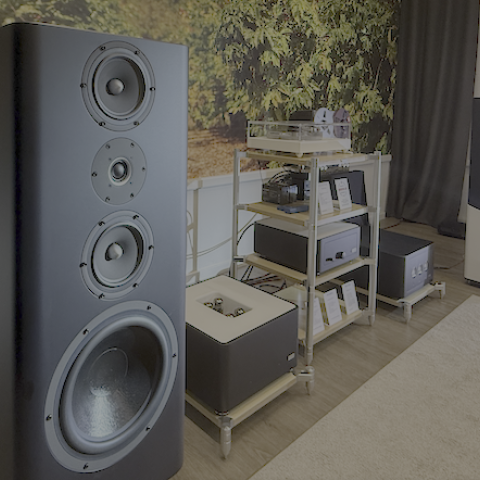
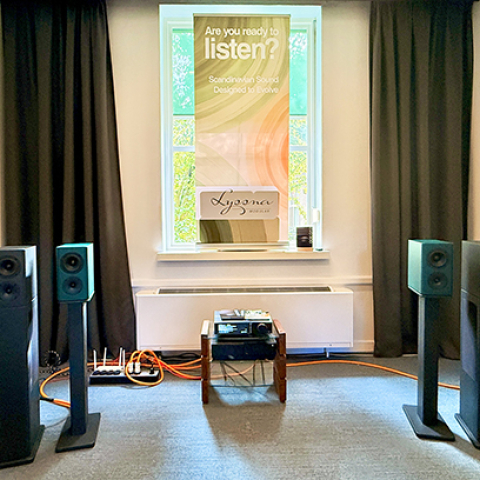
The kicker came at 2025's Capital Audiofest, where J.Sikora turntables seemed to have multiplied like audiophile rabbits. Initial Max and Standard Max Supreme models graced rooms large and intimate, spinning vinyl in stratospherIcally priced systems and approachable setups.
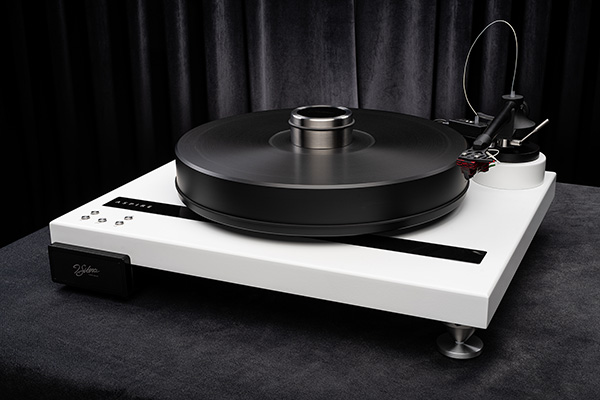
CAF is where I finally laid eyes on a turntable I'd been anticipating since before Christmas. After a series of development delays, the Aspire ($10,595), J.Sikora's latest offering, was finally playing in a couple of rooms. Its presence there ignited my curiosity like a lit eight-pin 6L6 power tube inside its ceramic base.
"The Aspire turntable is the new entry point into the J.Sikora turntable line," the company website notes. "Its construction retains J.Sikora's design philosophies and the trickle down of key technologies from the upper-end tables. The Aspire is characterized by exceptional speed stability, isolation from external resonances, and the sound that has made J.Sikora turntables so beloved around the world. It is now time to step up to a J.Sikora with the Aspire turntable."
In his review of a different J.Sikora turntable, Herb Reichert exclaimed, "The Initial made my 1957 Thorens TD 124 sound like a barrel of bolts rolling down a hill." To this lover of the vintage Thorens sound, that's high praise. "The Initial's silence has a distinct, almost subliminal presence that frames voices and instrumental sounds while exposing microtextures. ... During my auditions, J.Sikora's Initial gave me what I consider to be a majority portion of what the Porsche-Maserati turntables do at a Cadillac-Oldsmobile price."
In an earlier report from Analog Corner, Michael Fremer praised the J.Sikora Reference. "This 'table is very quiet," he wrote. "I could not find fault with any aspect of the J.Sikora Reference turntable's sonic performance or in its machining and physical presentation."
In my evaluation of the Standard Max Supreme, I called it "a remarkable turntable. ... The price is high, but the profound musicality it delivers renders the price justifiable. A triumphant turntable."
A cheaper J.Sikora
Herb noted in his Initial review that "The more expensive J.Sikora turntables use multiple motors, thicker, wider composite bases, thicker composite platters, taller composite motor and tonearm towers, using mass to dampen resonances and treat vibrations throughout."
Could J.Sikora deliver such goodies at the Aspire's much lower price? Would the company still follow its mass loading, resonance-deadening, vibration-defeating principles?
"It's still a mass loaded design," wrote distributor Jeffrey Fox of Notable Audio. "Just not as loaded."
Fox and Robert Sikora have visited my tiny NYC lair, and we've shared meals in faraway places. I asked what the challenges were in building a 'table based on J.Sikora values at a substantially lower price.
"The most difficult part was to create a table that still sounds like a J.Sikora," Robert Sikora replied over email. "It was more of what could be simplified for production. On the other hand, this gave us the opportunity to start with a clean slate on the industrial design.
"The primary goal of the Aspire, and the new Aspire tonearm, was to create a more affordable turntable that enables more people to experience a J.Sikora turntable without sacrificing our core values," Robert continued. "That means outstanding sound, unique industrial design, and a great price-to-performance ratio. We wanted to make a J.Sikora 'table that was in financial reach of a larger group of audiophiles. We see the Aspire as more of an end-game turntable for a segment of the market than an entry point into the rest of the line. This is an aspirational table rather than a stepping stone."
The Aspire, which was designed by Robert Sikora himself alongside fellow J.Sikora designer Adam Niezbecki, shares DNA from across the J.Sikora line. The same stainless steel bearing from higher-end models. The isolation feet, controller, and motor—all standard on all J.Sikora turntables. The metal cueing lever, unipivot housing, and several brass counterweights are also consistent across the broader range.
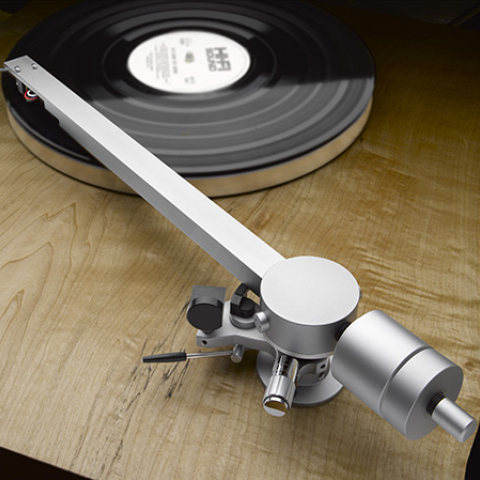
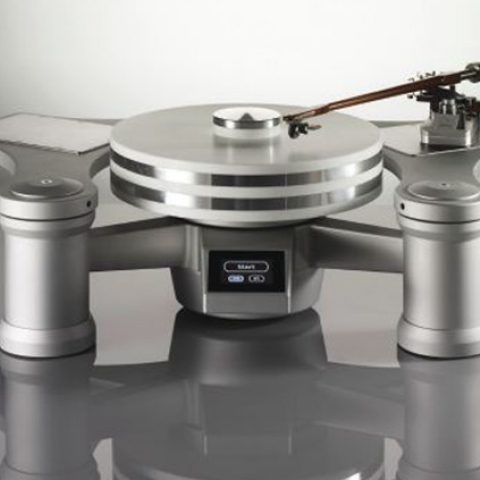
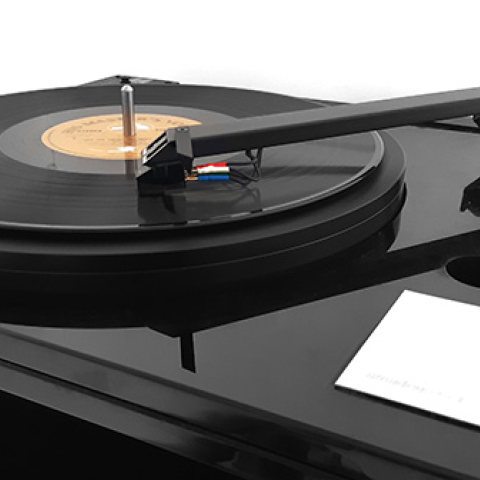
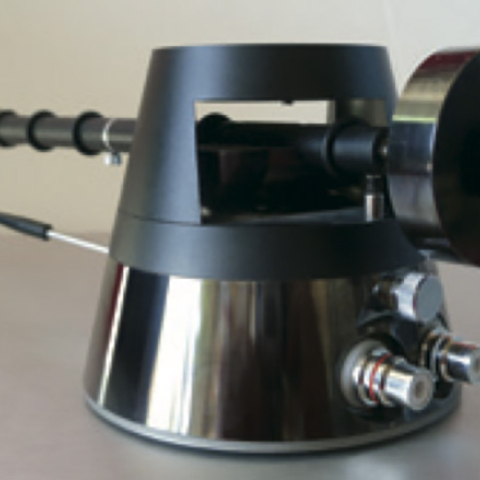
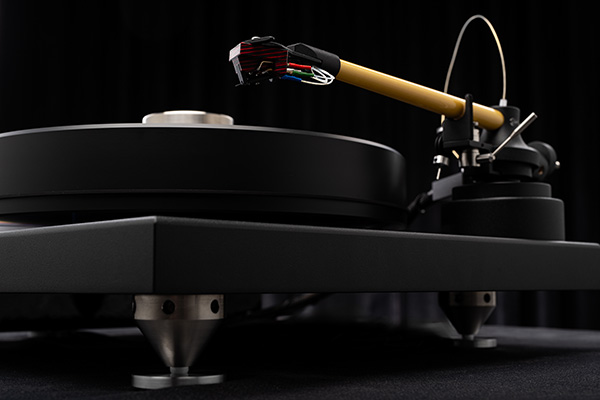 On paper, the Aspire looks like a simplified version of the $38,500 J.Sikora Standard Max Supreme. Start with the new Aspire tonearm, which looks similar to the KV9 tonearm and which is included in the price. Like the more expensive J.Sikora 'arms, the Aspire is a unipivot. It is oil-damped. It looks sleek. The most obvious difference is that the Aspire armwand is made of carbon fiber while the KV9 armwand is Kevlar.
The Aspire tonearm features an aluminum headshell and base, brass cylinder and counterweights, and that stainless steel bearing. A chunky thumb clip locks down the tonearm when not in use. On-the-fly VTA adjustment is available as an optional upgrade for an extra $2000. It works the same way as on-the-fly VTA on J.Sikora's more expensive arms. Keep in mind though that you can upgrade the Aspire tonearm to the KV9 (also without VTA) for $2200.
The internal tonearm wire is copper. It leads to hard-wired interconnects terminated in RCA or XLR connectors supplied by KáCsa of Budapest.
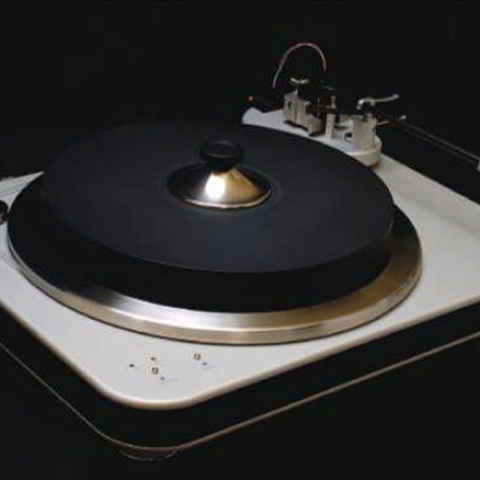
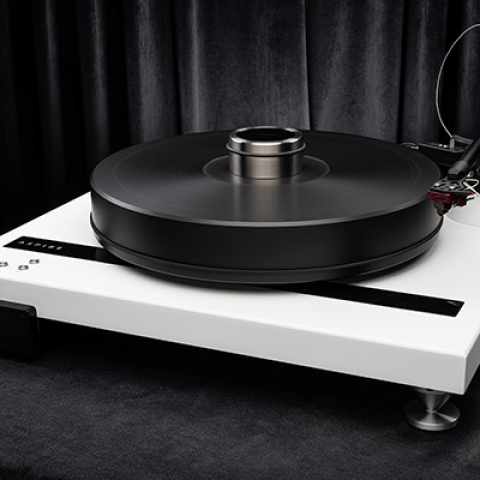
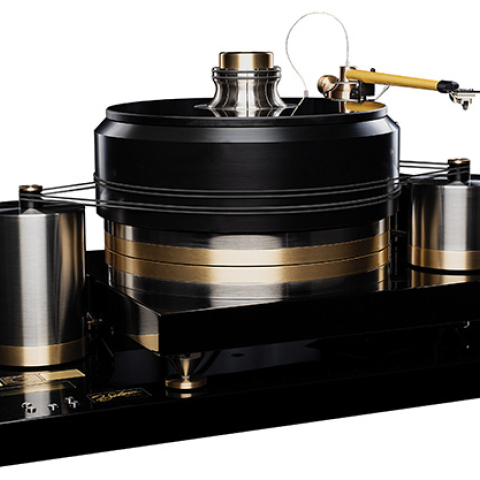
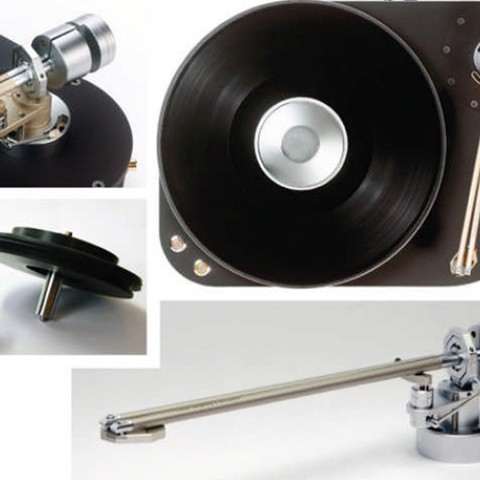
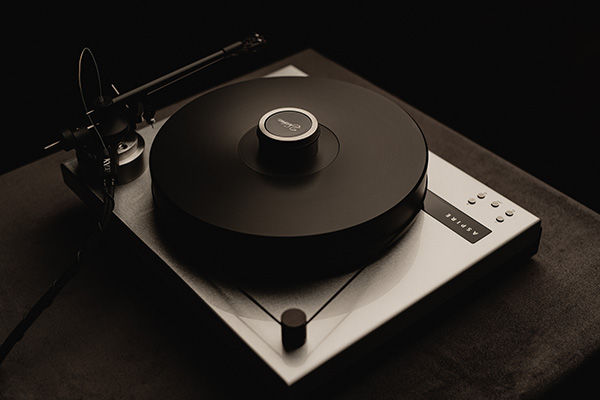
The Aspire's hefty, low-slung plinth is machined from a single aluminum billet and topped by a cast iron and stainless steel subplatter. The plinth gains visual interest from an offset horizontal silver band. The Delrin platter is 2" thick; it's the same platter used on the Initial. A custom EBM-Papst DC motor and controller (made in-house) reside within a black capsule positioned beneath the left edge of the plinth. Even farther down, three stainless steel feet rest on zirconium dioxide balls seated in aluminum pods, cushioned by three Sorbothane dampeners. The aluminum-encased external power supply, which I put on an adjacent shelf, is the same one J.Sikora supplies with the Initial, Initial Max, and Standard Max turntables. A slender, square rubber belt connects the motor to the platter. A hefty stainless steel record weight secures vinyl to the steel spindle for those who want to use it. (I didn't.)
On paper, the Aspire looks like a simplified version of the $38,500 J.Sikora Standard Max Supreme. Start with the new Aspire tonearm, which looks similar to the KV9 tonearm and which is included in the price. Like the more expensive J.Sikora 'arms, the Aspire is a unipivot. It is oil-damped. It looks sleek. The most obvious difference is that the Aspire armwand is made of carbon fiber while the KV9 armwand is Kevlar.
The Aspire tonearm features an aluminum headshell and base, brass cylinder and counterweights, and that stainless steel bearing. A chunky thumb clip locks down the tonearm when not in use. On-the-fly VTA adjustment is available as an optional upgrade for an extra $2000. It works the same way as on-the-fly VTA on J.Sikora's more expensive arms. Keep in mind though that you can upgrade the Aspire tonearm to the KV9 (also without VTA) for $2200.
The internal tonearm wire is copper. It leads to hard-wired interconnects terminated in RCA or XLR connectors supplied by KáCsa of Budapest.
The Aspire's hefty, low-slung plinth is machined from a single aluminum billet and topped by a cast iron and stainless steel subplatter. The plinth gains visual interest from an offset horizontal silver band. The Delrin platter is 2" thick; it's the same platter used on the Initial. A custom EBM-Papst DC motor and controller (made in-house) reside within a black capsule positioned beneath the left edge of the plinth. Even farther down, three stainless steel feet rest on zirconium dioxide balls seated in aluminum pods, cushioned by three Sorbothane dampeners. The aluminum-encased external power supply, which I put on an adjacent shelf, is the same one J.Sikora supplies with the Initial, Initial Max, and Standard Max turntables. A slender, square rubber belt connects the motor to the platter. A hefty stainless steel record weight secures vinyl to the steel spindle for those who want to use it. (I didn't.)
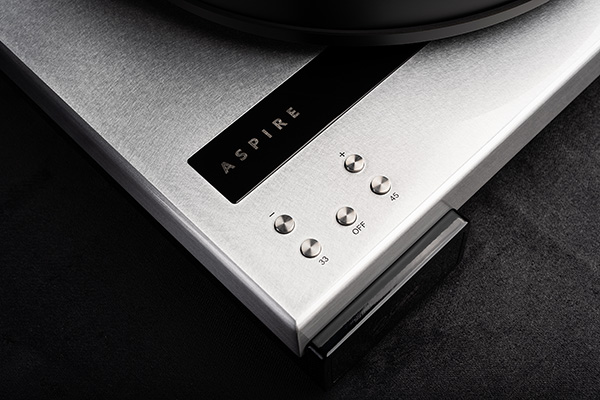 The Aspire supports 33 1/3 and 45rpm speeds; no 78. Speed can be adjusted using controls on the plinth.
Strategic choices of materials—aluminum, stainless, or cast iron rather than bronze for select components, for example—allow J.Sikora to offer this 'table at a lower price while maintaining performance integrity.
"We see the Aspire as its own entity," Sikora said. It's mostly outside the J.Sikora upgrade path. "While there are a few upgrades possible, in general the turntable has less flexible options. There's no way to upgrade this to an Initial. Nor does this table support J.Sikora's Universal Armboard, so only the Aspire and KV9 tonearms will work." While the Aspire is smaller than its bigger siblings at 16.9" wide, 13.7" deep, and 7" high and weighing 46lb, it nevertheless possesses reassuring heft.
Has the company's growth changed how it operates? No. "The 'tables are still primarily handcrafted in Lublin, Poland," Sikora told me. "The increase in popularity of the brand has led to hiring additional production staff and the introduction of our first CNC machine. In the near future, we will be expanding the square footage of the production facility, adding even more staff, and adding a second CNC machine."
Initially, J.Sikora hoped to deliver the Aspire at under $10,000. As the project neared completion, they realized that due to tariffs, exchange rates, and the rising cost of metals, to meet that goal, they'd have to cheapen the design. They chose instead to raise the retail price. "We didn't let the tariffs interfere with the design," Jeff Fox said. "We had a clear design goal and what is imposed by the government is beyond our control."
The Aspire supports 33 1/3 and 45rpm speeds; no 78. Speed can be adjusted using controls on the plinth.
Strategic choices of materials—aluminum, stainless, or cast iron rather than bronze for select components, for example—allow J.Sikora to offer this 'table at a lower price while maintaining performance integrity.
"We see the Aspire as its own entity," Sikora said. It's mostly outside the J.Sikora upgrade path. "While there are a few upgrades possible, in general the turntable has less flexible options. There's no way to upgrade this to an Initial. Nor does this table support J.Sikora's Universal Armboard, so only the Aspire and KV9 tonearms will work." While the Aspire is smaller than its bigger siblings at 16.9" wide, 13.7" deep, and 7" high and weighing 46lb, it nevertheless possesses reassuring heft.
Has the company's growth changed how it operates? No. "The 'tables are still primarily handcrafted in Lublin, Poland," Sikora told me. "The increase in popularity of the brand has led to hiring additional production staff and the introduction of our first CNC machine. In the near future, we will be expanding the square footage of the production facility, adding even more staff, and adding a second CNC machine."
Initially, J.Sikora hoped to deliver the Aspire at under $10,000. As the project neared completion, they realized that due to tariffs, exchange rates, and the rising cost of metals, to meet that goal, they'd have to cheapen the design. They chose instead to raise the retail price. "We didn't let the tariffs interfere with the design," Jeff Fox said. "We had a clear design goal and what is imposed by the government is beyond our control."
 Setup
Setup
Delivery and simple setup was carried out at my Greenwich Village walk-up by Jessie Bentley, with an assist from Nick Doshi of Doshi Audio. I swapped cartridges several times during the review. I was struck by how effortlessly they all paired with the Aspire tonearm. Adjusting VTF with this dual-counterweight system proved surprisingly simple. I didn't miss on-the-fly VTA. The system for this review included the Tavish Audio Design Adagio phono stage and three MC cartridges: EMT Pure Black, Kuzma CAR 30, and VPI Goldy. I used two different line preamps: the Ampsandsound Yosemite and Rogue Audio RP-7. Speakers were powered by Rogue Stereo 100 and Air Tight ATM-1 2024 Edition power amplifiers. I always include at least one bang-for-the-buck integrated amp in my reviewing scenario; this time I tried two: The Unison Research S6 Black Edition and AVM Evolution CS 5.3 (in for review). Speakers were the stalwart DeVore Fidelity Gibbon Super Nines. Listening
In judging turntables, simplicity in terminology either sends music flying and jumping with lizard-like PRaT (Pacing, Rhythm and Timing) or it revels in mass-loaded glory, offering a grander, more stately picture of rhythmic assertiveness. Such qualifiers often hold true. But now that I have reviewed countless vinyl spinners for Stereophile and AnalogPlanet.com, I know that such generalities sometimes fail. The devil is always in the details.
I recently reviewed the Technics SL-50C, Rega Planar 8, and Pear Audio Captain John Handy turntables for AnalogPlanet.com. I felt like a jet-setting playboy, with rhythms as nimble as larks, propulsive as an F1 racer. Drums, cymbals, and strings possessed the high-octane drama of a downhill skier juiced on Red Bull and Twizzlers.
Playing the J.Sikora Aspire after these party animals left me momentarily diminished. Who let the wind out of my bag, the juice out of my jumper?
Exhilaration is assured. What those speed-racers may lack is gravitas, liberal tone, low-end force, and soundstage scale, though the Captain John Handy acquitted itself better than most in those regards. The gravitas of the Aspire was instantly obvious, as was its scale and low end. But could it boogie? Initial indications were not reassuring.
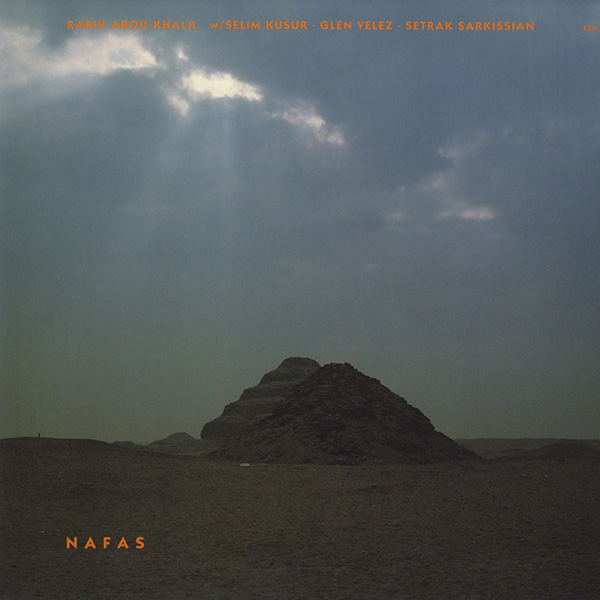 Aiming to assess the Aspire's ability to shake, rattle, and roll, I paired it at first with the EMT Pure Black cart. Musically, I returned to my rhythmic roots and brought out a favorite: oud player Rabih Abou-Khalil's Nafas (ECM Records ECM 1359), featuring vocalist Selim Kusur, frame drummer Glen Velez, and goblet drummer Setrak Sarkissian. This atmospheric music is by turns urgent, humid, and mysterious. The quartet bends and changes moods and modes. It is rhythmic and hypnotic.
The Aspire drew me in slowly, coyly, suggesting that if I kept listening, secrets would be revealed. The Aspire steadied this listener's pulse, seeming to scan my brainstem for feedback before establishing a direct, physical, tonal, and temporal connection.
The Aspire didn't just track Nafas's rhythms—it mined them for depth, girth, pressure, and focus, weaving subtle yet intense macro- and microdynamics that form music's core. I was swept up in shifting moods, riding aloft swift, rumbling fingers and sharp resonances from the resounding drum battery. It was like traversing Serengeti dunes not on a sleek snowmobile but a fast-moving sweat-soaked camel. My body felt every cascading shift in the moving sand, every streak of hot wind, every bug splattering my face. The sound was visceral and tactile, though laid-back, as if controlling its power. The Aspire portrayed rhythm as flesh and blood, as physical as those lightweight tables but with more force.
Aiming to assess the Aspire's ability to shake, rattle, and roll, I paired it at first with the EMT Pure Black cart. Musically, I returned to my rhythmic roots and brought out a favorite: oud player Rabih Abou-Khalil's Nafas (ECM Records ECM 1359), featuring vocalist Selim Kusur, frame drummer Glen Velez, and goblet drummer Setrak Sarkissian. This atmospheric music is by turns urgent, humid, and mysterious. The quartet bends and changes moods and modes. It is rhythmic and hypnotic.
The Aspire drew me in slowly, coyly, suggesting that if I kept listening, secrets would be revealed. The Aspire steadied this listener's pulse, seeming to scan my brainstem for feedback before establishing a direct, physical, tonal, and temporal connection.
The Aspire didn't just track Nafas's rhythms—it mined them for depth, girth, pressure, and focus, weaving subtle yet intense macro- and microdynamics that form music's core. I was swept up in shifting moods, riding aloft swift, rumbling fingers and sharp resonances from the resounding drum battery. It was like traversing Serengeti dunes not on a sleek snowmobile but a fast-moving sweat-soaked camel. My body felt every cascading shift in the moving sand, every streak of hot wind, every bug splattering my face. The sound was visceral and tactile, though laid-back, as if controlling its power. The Aspire portrayed rhythm as flesh and blood, as physical as those lightweight tables but with more force.
 Switching to music with a more languorous feel but that still quickens the nerves, Melanie De Biasio's oceanic spirit ruminations ranged deeply and sonorously on Gilles Peterson Presents: Melanie De Biasio - No Deal Remixed ([PIAS] Le Label – PIAS-R7652LP). This record revealed the Aspire's exceptional bass force. Its bass performance was clean and extended, as deep and revealing as on any turntable I've heard—including J.Sikora's own Standard Max Supreme. J.Sikora has redefined "trickle-down" into something like daggers-down, or shovels-down, excavating deep bass from every recording on which that info was pressed to wax.
My checklist of favorable audio traits was ticked: bass performance, tactile images, lifelike soundstage scale and depth, tonal conviction, liquidity, elastic rhythmic sensibilities. But could the Aspire swing hard, groove deep, and grind hard? Could it dispel those PRaT vs mass conspiracy theories and my early concerns?
Two favorites—Art Pepper's album Meets the Rhythm Section (Contemporary Records C 3532) and the track "Nothing Personal" from Michael Brecker's self-titled Impulse! debut (MCA Impulse! MCA-5980), featuring drummers Philly Joe Jones and Jack DeJohnette, respectively, with bassists Paul Chambers and Charlie Haden—set things straight. It's a shell game of sorts. While the 'table's speed was perfect (confirmed with the iPhone 14 Pro's RPM app and HumminGuru's LUMI Record Stabilizer), the Aspire's darker tone and demeanor made it sound slow when it was anything but; the initial impression of slowness proved transitory. Soon enough, its deep silence made drums and cymbals pop from the mix with intense detail, and the nuances and microdynamics between notes made music sound live and—more importantly—engaging. I've heard both records reproduced with more glistening top end, which imparts a sense of energy, but both rhythm sections swung hard here, with excellent resolution and plenty of forward-motion juice, courtesy of the Aspire. The Aspire is a machine of subtlety and nuance, but it gets excitement done.
Switching to music with a more languorous feel but that still quickens the nerves, Melanie De Biasio's oceanic spirit ruminations ranged deeply and sonorously on Gilles Peterson Presents: Melanie De Biasio - No Deal Remixed ([PIAS] Le Label – PIAS-R7652LP). This record revealed the Aspire's exceptional bass force. Its bass performance was clean and extended, as deep and revealing as on any turntable I've heard—including J.Sikora's own Standard Max Supreme. J.Sikora has redefined "trickle-down" into something like daggers-down, or shovels-down, excavating deep bass from every recording on which that info was pressed to wax.
My checklist of favorable audio traits was ticked: bass performance, tactile images, lifelike soundstage scale and depth, tonal conviction, liquidity, elastic rhythmic sensibilities. But could the Aspire swing hard, groove deep, and grind hard? Could it dispel those PRaT vs mass conspiracy theories and my early concerns?
Two favorites—Art Pepper's album Meets the Rhythm Section (Contemporary Records C 3532) and the track "Nothing Personal" from Michael Brecker's self-titled Impulse! debut (MCA Impulse! MCA-5980), featuring drummers Philly Joe Jones and Jack DeJohnette, respectively, with bassists Paul Chambers and Charlie Haden—set things straight. It's a shell game of sorts. While the 'table's speed was perfect (confirmed with the iPhone 14 Pro's RPM app and HumminGuru's LUMI Record Stabilizer), the Aspire's darker tone and demeanor made it sound slow when it was anything but; the initial impression of slowness proved transitory. Soon enough, its deep silence made drums and cymbals pop from the mix with intense detail, and the nuances and microdynamics between notes made music sound live and—more importantly—engaging. I've heard both records reproduced with more glistening top end, which imparts a sense of energy, but both rhythm sections swung hard here, with excellent resolution and plenty of forward-motion juice, courtesy of the Aspire. The Aspire is a machine of subtlety and nuance, but it gets excitement done.
 With the Kuzma CAR 30
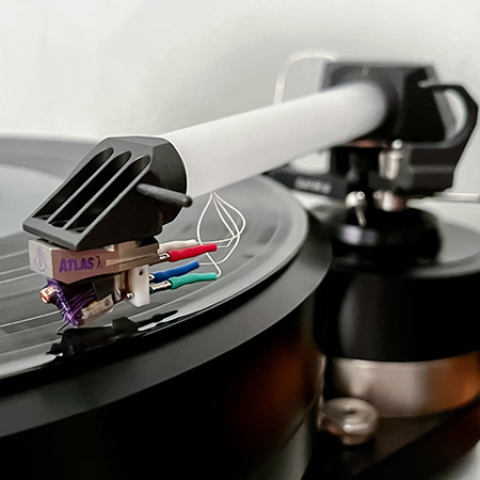
Trading the EMT for this Slovenian-made MC cartridge caused an Alfred Brendel recording of Schubert (Philips 6500 763)—a bit coarse and edgy through the EMT—to come (a)live. Tone grew rounder, fuller, and way more saturated. The music flowed. I wasn't cataloging sonic flaws; I was lost in Brendel's magic. The Pepper and Brecker records underwent a metamorphosis of their own. Instruments gained weight (not that they had lacked it before) and dimension, occupying distinct points in space with new clarity. Detail emerged not as information but as presence—Philly Joe Jones's brushwork was so vivid, I could trace each stroke across the snare drum head, feel the texture of wires on skin. The EMT was detailed in its own way but seemed surgical by comparison. Maybe the most important insight from listening to the Kuzma: The Aspire's forensic precision starkly revealed the character of each cartridge. Differences were laid bare.
With the VPI Goldy
Paired with the Aspire, the VPI Goldy, a considerably less-expensive cartridge, nevertheless bettered the others in several ways: soundstage bloom, tighter and firmer bass (which locked down the rhythm section with authority), and a sweeter, more refined top end with sustain that hung in the air like fog "rolling in like a shroud over Bleecker Street," as Paul Simon once wrote. (I've seen that fog out my window.) The midrange hit with extra clarity, while detail retrieval reached levels where I heard texture and detail from the neck of Charlie Haden's upright bass that I'd never noticed before: sinewy, tight, high up. I'm not sure what to make of the fact that on the J.Sikora Aspire, the Goldy did so well against more expensive competition. As Dino once said, "That was a kick in the head."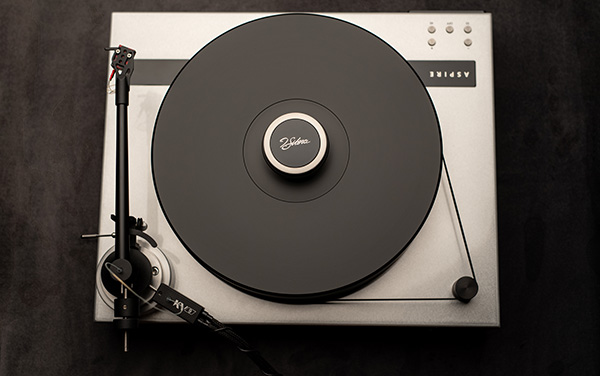 Conclusion
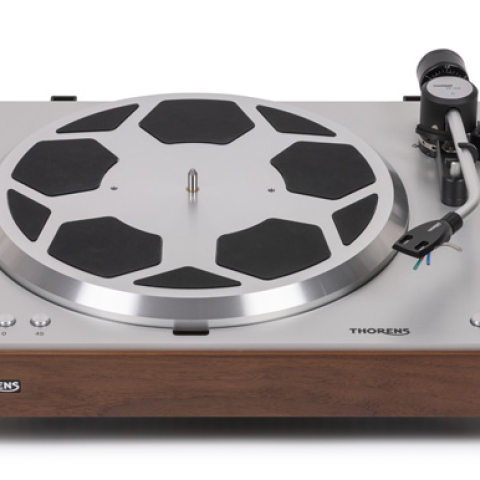
The $10,000 turntable arena, tonearm included, plays in "high cotton," as we used to say down south. While no one on the family farm would pay such a sum, my grandma Annabelle might still research the competition. That would include the somewhat-more-expensive Thorens TD 124 DD ($12,999) and Luxman PD-191A ($14,995). A better price match is the Audio-Technica Hotaru ($9999). I've reviewed the Thorens TD 124 DD (footnote 1) and found it solid and true. I'd give the Aspire the edge in flow if not sheer drive. I'd say the same in a contest against my original, vintage TD 124 as well.
But add in its cosmetic beauty, the unnervingly dark backgrounds it produces, its superquiet demeanor, its ability to expose cartridge differences, its massive bass fundamentals (fundamental as in "fundament"), and its commanding stage and scale, and the Aspire is clearly a winner.
Echoing what Herb wrote in his review of the J.Sikora Initial, I consider the Aspire to deliver much of what the glitzy Standard Max Supreme does at a pared-down Toyota-Subaru price. Test-drive it for yourself.
Footnote 1: The TD 124 DD was Stereophile's Joint Analog Product of the Year in 2021.
Herb noted in his Initial review that "The more expensive J.Sikora turntables use multiple motors, thicker, wider composite bases, thicker composite platters, taller composite motor and tonearm towers, using mass to dampen resonances and treat vibrations throughout."
On paper, the Aspire looks like a simplified version of the $38,500 J.Sikora Standard Max Supreme. Start with the new Aspire tonearm, which looks similar to the KV9 tonearm and which is included in the price. Like the more expensive J.Sikora 'arms, the Aspire is a unipivot. It is oil-damped. It looks sleek. The most obvious difference is that the Aspire armwand is made of carbon fiber while the KV9 armwand is Kevlar.
The Aspire tonearm features an aluminum headshell and base, brass cylinder and counterweights, and that stainless steel bearing. A chunky thumb clip locks down the tonearm when not in use. On-the-fly VTA adjustment is available as an optional upgrade for an extra $2000. It works the same way as on-the-fly VTA on J.Sikora's more expensive arms. Keep in mind though that you can upgrade the Aspire tonearm to the KV9 (also without VTA) for $2200.
The internal tonearm wire is copper. It leads to hard-wired interconnects terminated in RCA or XLR connectors supplied by KáCsa of Budapest.
The Aspire supports 33 1/3 and 45rpm speeds; no 78. Speed can be adjusted using controls on the plinth.
Strategic choices of materials—aluminum, stainless, or cast iron rather than bronze for select components, for example—allow J.Sikora to offer this 'table at a lower price while maintaining performance integrity.
SetupDelivery and simple setup was carried out at my Greenwich Village walk-up by Jessie Bentley, with an assist from Nick Doshi of Doshi Audio. I swapped cartridges several times during the review. I was struck by how effortlessly they all paired with the Aspire tonearm. Adjusting VTF with this dual-counterweight system proved surprisingly simple. I didn't miss on-the-fly VTA. The system for this review included the Tavish Audio Design Adagio phono stage and three MC cartridges: EMT Pure Black, Kuzma CAR 30, and VPI Goldy. I used two different line preamps: the Ampsandsound Yosemite and Rogue Audio RP-7. Speakers were powered by Rogue Stereo 100 and Air Tight ATM-1 2024 Edition power amplifiers. I always include at least one bang-for-the-buck integrated amp in my reviewing scenario; this time I tried two: The Unison Research S6 Black Edition and AVM Evolution CS 5.3 (in for review). Speakers were the stalwart DeVore Fidelity Gibbon Super Nines. Listening
In judging turntables, simplicity in terminology either sends music flying and jumping with lizard-like PRaT (Pacing, Rhythm and Timing) or it revels in mass-loaded glory, offering a grander, more stately picture of rhythmic assertiveness. Such qualifiers often hold true. But now that I have reviewed countless vinyl spinners for Stereophile and AnalogPlanet.com, I know that such generalities sometimes fail. The devil is always in the details.
Aiming to assess the Aspire's ability to shake, rattle, and roll, I paired it at first with the EMT Pure Black cart. Musically, I returned to my rhythmic roots and brought out a favorite: oud player Rabih Abou-Khalil's Nafas (ECM Records ECM 1359), featuring vocalist Selim Kusur, frame drummer Glen Velez, and goblet drummer Setrak Sarkissian. This atmospheric music is by turns urgent, humid, and mysterious. The quartet bends and changes moods and modes. It is rhythmic and hypnotic.
The Aspire drew me in slowly, coyly, suggesting that if I kept listening, secrets would be revealed. The Aspire steadied this listener's pulse, seeming to scan my brainstem for feedback before establishing a direct, physical, tonal, and temporal connection.
The Aspire didn't just track Nafas's rhythms—it mined them for depth, girth, pressure, and focus, weaving subtle yet intense macro- and microdynamics that form music's core. I was swept up in shifting moods, riding aloft swift, rumbling fingers and sharp resonances from the resounding drum battery. It was like traversing Serengeti dunes not on a sleek snowmobile but a fast-moving sweat-soaked camel. My body felt every cascading shift in the moving sand, every streak of hot wind, every bug splattering my face. The sound was visceral and tactile, though laid-back, as if controlling its power. The Aspire portrayed rhythm as flesh and blood, as physical as those lightweight tables but with more force.
Switching to music with a more languorous feel but that still quickens the nerves, Melanie De Biasio's oceanic spirit ruminations ranged deeply and sonorously on Gilles Peterson Presents: Melanie De Biasio - No Deal Remixed ([PIAS] Le Label – PIAS-R7652LP). This record revealed the Aspire's exceptional bass force. Its bass performance was clean and extended, as deep and revealing as on any turntable I've heard—including J.Sikora's own Standard Max Supreme. J.Sikora has redefined "trickle-down" into something like daggers-down, or shovels-down, excavating deep bass from every recording on which that info was pressed to wax.
My checklist of favorable audio traits was ticked: bass performance, tactile images, lifelike soundstage scale and depth, tonal conviction, liquidity, elastic rhythmic sensibilities. But could the Aspire swing hard, groove deep, and grind hard? Could it dispel those PRaT vs mass conspiracy theories and my early concerns?
Two favorites—Art Pepper's album Meets the Rhythm Section (Contemporary Records C 3532) and the track "Nothing Personal" from Michael Brecker's self-titled Impulse! debut (MCA Impulse! MCA-5980), featuring drummers Philly Joe Jones and Jack DeJohnette, respectively, with bassists Paul Chambers and Charlie Haden—set things straight. It's a shell game of sorts. While the 'table's speed was perfect (confirmed with the iPhone 14 Pro's RPM app and HumminGuru's LUMI Record Stabilizer), the Aspire's darker tone and demeanor made it sound slow when it was anything but; the initial impression of slowness proved transitory. Soon enough, its deep silence made drums and cymbals pop from the mix with intense detail, and the nuances and microdynamics between notes made music sound live and—more importantly—engaging. I've heard both records reproduced with more glistening top end, which imparts a sense of energy, but both rhythm sections swung hard here, with excellent resolution and plenty of forward-motion juice, courtesy of the Aspire. The Aspire is a machine of subtlety and nuance, but it gets excitement done.
With the Kuzma CAR 30Trading the EMT for this Slovenian-made MC cartridge caused an Alfred Brendel recording of Schubert (Philips 6500 763)—a bit coarse and edgy through the EMT—to come (a)live. Tone grew rounder, fuller, and way more saturated. The music flowed. I wasn't cataloging sonic flaws; I was lost in Brendel's magic. The Pepper and Brecker records underwent a metamorphosis of their own. Instruments gained weight (not that they had lacked it before) and dimension, occupying distinct points in space with new clarity. Detail emerged not as information but as presence—Philly Joe Jones's brushwork was so vivid, I could trace each stroke across the snare drum head, feel the texture of wires on skin. The EMT was detailed in its own way but seemed surgical by comparison. Maybe the most important insight from listening to the Kuzma: The Aspire's forensic precision starkly revealed the character of each cartridge. Differences were laid bare.
Paired with the Aspire, the VPI Goldy, a considerably less-expensive cartridge, nevertheless bettered the others in several ways: soundstage bloom, tighter and firmer bass (which locked down the rhythm section with authority), and a sweeter, more refined top end with sustain that hung in the air like fog "rolling in like a shroud over Bleecker Street," as Paul Simon once wrote. (I've seen that fog out my window.) The midrange hit with extra clarity, while detail retrieval reached levels where I heard texture and detail from the neck of Charlie Haden's upright bass that I'd never noticed before: sinewy, tight, high up. I'm not sure what to make of the fact that on the J.Sikora Aspire, the Goldy did so well against more expensive competition. As Dino once said, "That was a kick in the head."
ConclusionThe $10,000 turntable arena, tonearm included, plays in "high cotton," as we used to say down south. While no one on the family farm would pay such a sum, my grandma Annabelle might still research the competition. That would include the somewhat-more-expensive Thorens TD 124 DD ($12,999) and Luxman PD-191A ($14,995). A better price match is the Audio-Technica Hotaru ($9999). I've reviewed the Thorens TD 124 DD (footnote 1) and found it solid and true. I'd give the Aspire the edge in flow if not sheer drive. I'd say the same in a contest against my original, vintage TD 124 as well.
Footnote 1: The TD 124 DD was Stereophile's Joint Analog Product of the Year in 2021.