 Let's get to it
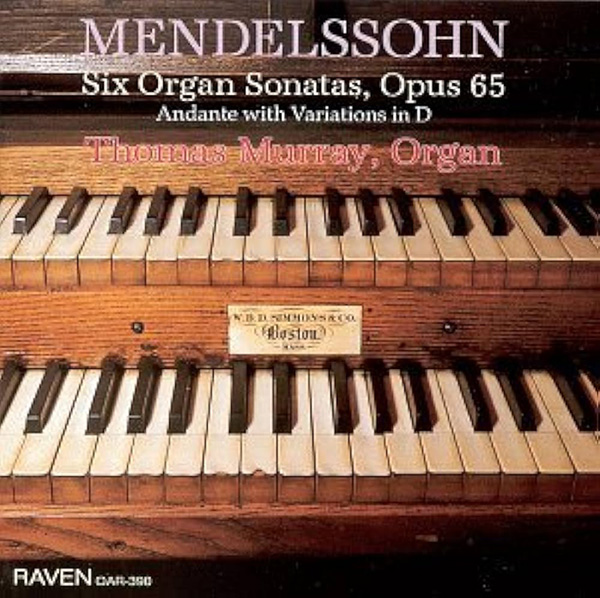
It's hard to deny that the Buckeye's specifications seem to conflict with its modest physical size and weight (slightly larger than the Benchmark but considerably lighter), so I immediately chose to stress the monoblocks with organ music, just to relieve some of that cognitive dissonance. That meant starting with two of my familiars from New England: Pipes Rhode Island (16/44.1 rip from CD, Riago CD 101) and (from Massachusetts) Mendelssohn: Six Organ Sonatas, Op.65 performed by Thomas Murray (CD, Raven 390, rip originally from LP, Sheffield Town Hall S-13). I chose these because their deep pedal tones are recorded cleanly without excessive external resonances, aside from the pipes themselves. Not only is this pleasing, but it permits me to turn up the volume to really high levels before room acoustics and personal tolerance say STOP! The opening track on Pipes is John Dunstable's Agincourt Hymn, a brief oratory where the statements are made in the reedy mid and treble ranks and underscored by the bigger pipes. With the Mendelssohn, I chose the last movement of the Sonata No.1 in F, where there are several passages of pedal tones descending into the nether reaches. With both organ recordings, all was fine and balanced at normal levels and beyond, even as I increased the volume to my ears' limit. The powerful bass was immaculate. But knowing that human ears are most sensitive in the 3–4kHz range, I used JRiver to roll off the treble beginning just below that range and found that the 1ET9040BA monoblocks could pump out more clean low-frequency sound power into the room than I (and, probably, my neighbors) would normally tolerate. That concludes my power experiment. With relief, I turned off the low-pass filter; I'll leave the power measurements to JA's Audio Precision SYS2722 system.
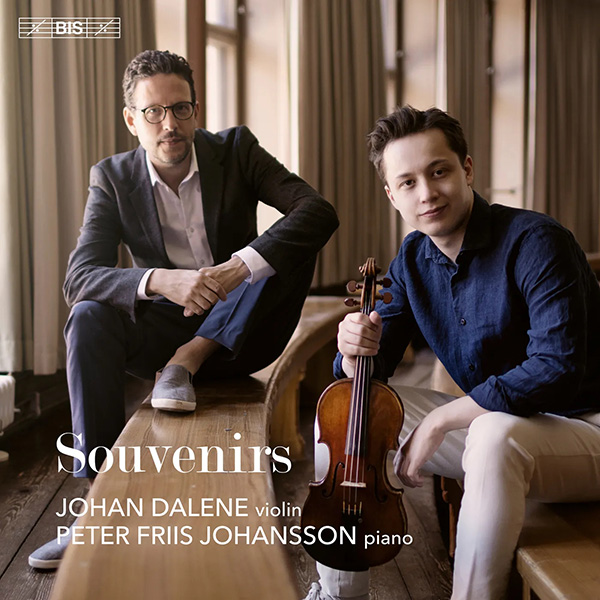 Speaking of quiet, as well as not so quiet, subtleties, I was enthralled by the opening of "Ravel's Tzigane" on an album called Souvenirs which features violinist Johan Dalene accompanied by pianist Peter Friis Johansson (24/96 download, BIS-27770, also available on SACD). For the first five minutes, my attention was locked on to Dalene's violin just to the right of my left speaker as if it was really there albeit with another 10–15' of acoustic space behind it. The Buckeye amps filtered nothing of the exquisite details, the woody body of the lower strings, the attacks revealed by the sound of intersecting bow hair and strings, and the piquant pluck of the pizzicatos. Even the empty space on the right was apparent in its emptiness until Johansson's piano appears to relieve the intense intimacy of solo player and listener. This recording of just two instruments easily makes the case for the Buckeyes as high-resolution, dynamic amplifiers capable of recreating a credible reality.
 Inevitable comparisons
I was able to compare the Buckeye with both my Benchmark AHB2 amps and a NAD M23, and it was extremely difficult to hear and, thus, to describe any differences. Despite the differences in rated power into 4 ohms (Buckeye, 750W; bridged AHB2, 460W (footnote 3); M23, 380W), I could get none of the amps to blink. Subjectively, they were equally satisfying, and I could only glimpse a fleeting sense of a difference, mostly at the frequency extremes, on direct switchover. However, the switchover typically took 30–60 seconds for a single channel, which was not an ideal A/B comparison. On switchover from the M23, the Buckeyes' treble seemed a bit lighter and more open, but that impression rapidly faded. Switching from the AHB2s, the Buckeye briefly offered a bit more weight in the bass. However, within minutes, none of those impressions remained apparent; only the characteristics of the music and recording mattered, and I never felt the need to change from one amp to another. I have not experienced all the amps reviewed in the pages of Stereophile, so there may be better amps than these Buckeye monoblocks, but I do know that there are many worse by my criteria (honesty, transparency, accuracy) and many that cost much more than the Buckeyes. That I still prefer my Benchmark amps is due mostly to matters of ergonomics and familiarity.
What is? I've already mentioned the latchless XLR jack squeezed up against the speaker posts. I found it difficult to make a secure connection using a specific pair of XLR cables, and if I moved the amp or rearranged nearby cables, the connection could become noisy, requiring reseating. I resolved that with short, tightly fitting XLR cables serving as a bridge to the Buckeyes' XLR jacks. (All of the XLRs involved, male or female, were various Neutrik models.) In addition, there was a very brief hum/noise at the beginning of play with my Merging Hapi II. I am guessing that it was due to the muting or unmuting of Hapi's D/A prior to the actual start of music from JRiver since it never occurred between tracks or with other DACs. My solution was to have JRiver insert a two-second mute before beginning play. When I described these observations to Buckeye, Launder was surprised because he has used this particular input board and its XLR jack in many amps without any complaints. I believe him and think it might be related to the CAT6 wiring that mediates my long DAC-to-amp connections. There were no problems running XLRs directly from my exaSound S88 or Okto dac8 Pro D/A processors.
Sonically, the Buckeye 1ET9040BA monoblocks are superb. To their credit, they are transparent, open and balanced, and with the right program material, thrilling. On the other hand, they will not "improve" source material, nor will they "warm" or "smooth" your system or room acoustics. Physically, they are compact, lightweight, and utilitarian in the best meanings of the word (footnote 4). I could happily adopt them into my own system. Still, it would have been easy to excuse the Buckeyes for any flaws in performance because of the low price, but I do not have to. I do admit that it will not offer the purchaser such ancillary rewards as exclusivity, a prestige name, impressive size and weight, an elegant sculpted chassis, or even a booklet extolling its goodness. In the absence of those features, its appealing price and outstanding sound do not characterize the Buckeye as "low price" but as "high value."
Footnote 3: Benchmark does not offer a 4 ohm power rating for a bridged AHB2. The quoted rating (460W) is for a 6 ohm load.