Follow-Up: New Auditions, from June 2025
The issue of how to balance and mesh measurements and subjective observations is interesting and rich. Stereophile's traditional policy is to have the subjective, listening-based report performed first, before a product is measured on the test bench. The intent is to ensure that the reviewer is not biased by prior knowledge of the test results, good or bad—but the downside is situations like this, when technical faults, which may or may not be audible, are discovered only after the subjective review is completed. Of course, there's a middle course: JA could measure the device first, then—assuming it isn't found to be defective—send it along to the subjective reviewer without sharing the measured results. We do exactly this occasionally, when review logistics allow it.
Whenever the measurements are carried out, those results provide some accountability to the subjective reviewer. I won't say it keeps me honest—I'd be honest about my observations even if Stereophile didn't conduct measurements—but knowing there will be confirmation or counterpoint to what I hear and write does impose a helpful self-awareness. The measurements are the first thing I read when I receive the page proofs of my reviews: Did I get it right?
I found the Buckeyes audibly faultless—even "thrilling"—yet JA found that at least one of the amps went into protection mode before reaching its specified maximum output power, into 8 ohms and 4 ohms, that the THD+N soared in the top two octaves, and that intermodulation distortion reached high levels. These were early samples and at least one of them was defective. I was mollified (somewhat) by this comment from JA's measurements sidebar: "The Buckeye's reduced linearity in this region will probably not have audible consequences"—and by the thought that I was listening in stereo with perhaps only one channel affected. Still, it was distressing.
When I received the replacement amplifiers, I assumed them to be technically superior to the original pair. This, too, raises questions: How to appraise them having found the previous amps "flawless." I wish I had on hand both the old amplifiers and the new so that I could compare them directly.
I installed the Buckeye amps in my system and, since the chassis and connections are the same as with the first pair, I was pleased to no longer hear a brief hum at the beginning of the first track, and that I could now defeat the 2s protective mute. Checking through the recordings used in the original review, I found myself nodding in agreement with my earlier comments about the transparency, balance, and power. Then I began to consider the technical faults in that original sample that JA's measurements had uncovered.
The first of these was high levels of intermodulation products, rising to 0.03% at 18kHz. It is extremely unlikely that any playback of acoustical instruments and human voices contains that kind of energy (19+20kHz signals at 50W peak) and quite certain that I can no longer hear fundamentals at those frequencies. Nonetheless, I felt it necessary to closely focus on how these new amps handle extreme high frequencies at high levels.
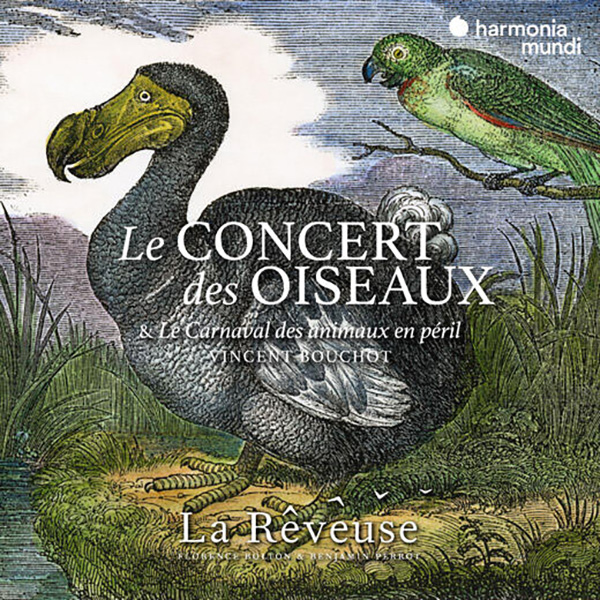 I used the live spectral analyzer in JRiver to select from my recordings some that have significant content in the 10–20kHz range. My first pick, to no one's surprise, is my favorite Ligeti disc, which opens with his delightful Six Bagatelles for wind quartet (Harmonia Mundi 905370DI, 24/96 download). The instruments spread across the front of my room; then, after the ensemble opening statement, the flute pops out on the left at the top of its range. It was pure and musical no matter how much I turned up the volume. From there, I went to an album that combines flute, harpsichord, and other instruments with actual birdsong: Le concert des oiseaux, performed by La Rêveuse with an ensemble including various flutes, bass viol, theorbo, and percussion (Harmonia Mundi HMM 902709, CD, auditioned from 16/44.1 download). The adaptations, ranging from van Eyck (1590–1657) to Benjamin Britten (1913–1976), are enchanting. Despite the abundance of very high frequency tones, a natural ensemble balance conveyed the pleasure of a virtual concert in an aviary. I cannot imagine the delicate details being more sweetly and honestly rendered than they are by the Buckeye amps. Was the sound better than before?
The other technical concern with the original amp was that it went into protection mode and shut down before it could reach the specified power output levels. However, there's no point in investigating the new Buckeyes with organ, drums, or big orchestra at high volumes, since the original amps did all that just fine. I did it anyway, choosing a time (middle of the afternoon) when my wife was away and my neighbors were more likely to be as well.
I used the live spectral analyzer in JRiver to select from my recordings some that have significant content in the 10–20kHz range. My first pick, to no one's surprise, is my favorite Ligeti disc, which opens with his delightful Six Bagatelles for wind quartet (Harmonia Mundi 905370DI, 24/96 download). The instruments spread across the front of my room; then, after the ensemble opening statement, the flute pops out on the left at the top of its range. It was pure and musical no matter how much I turned up the volume. From there, I went to an album that combines flute, harpsichord, and other instruments with actual birdsong: Le concert des oiseaux, performed by La Rêveuse with an ensemble including various flutes, bass viol, theorbo, and percussion (Harmonia Mundi HMM 902709, CD, auditioned from 16/44.1 download). The adaptations, ranging from van Eyck (1590–1657) to Benjamin Britten (1913–1976), are enchanting. Despite the abundance of very high frequency tones, a natural ensemble balance conveyed the pleasure of a virtual concert in an aviary. I cannot imagine the delicate details being more sweetly and honestly rendered than they are by the Buckeye amps. Was the sound better than before?
The other technical concern with the original amp was that it went into protection mode and shut down before it could reach the specified power output levels. However, there's no point in investigating the new Buckeyes with organ, drums, or big orchestra at high volumes, since the original amps did all that just fine. I did it anyway, choosing a time (middle of the afternoon) when my wife was away and my neighbors were more likely to be as well.
 Released in 2004, Dream of the Orient (SACD rip to DSD, Concerto Köln/Sarband, DG 474 9922) has become one of my most played discs. It includes 18th- and 19th-century European classical tracks performed by Concerto Köln as well as music from farther East and South performed by Ensemble Sarband. All are interesting, but most fascinating are the tracks where the groups and the music blend. The first track was composed in an Eastern style—an appropriate introduction to the second track, Mozart's overture to his opera "The Abduction from the Seraglio." The overture begins very much as we know it, but soon it explodes as Sarband jumps in with its Eastern instruments and percussion. The dynamic burst was startling as unleashed, with no apparent constraint from the compact Buckeye powerhouses.
 Now let us take that to an extreme by digging out an older explosion, "The Garage Door, or the Dynamic Range of Real Life," from the Hi-Fi News & Record Review Test Disc (16/44.1 CD rip, HFN003; footnote 1), released in 1985. Descriptions beggar the reality of experiencing this at levels typically set by the quiet opening announcement. What follows is a sound picture of the opening and closing of a garage door, which is terrifying and thrilling at the same time. The Buckeyes displayed the brawn to power and survive this without issue.
"Sonically, the Buckeye 1ET9040BA Monoblocks are superb," I concluded in the original review. "They are transparent, open and balanced, and with the right program material, thrilling. They will not improve source material; nor will they warm or smooth your system or room acoustics. They are compact, lightweight, and utilitarian in all the best senses of the word. I could happily adopt them into my own system."
None of that has changed as a result of this follow-up.—Kalman Rubinson
Now let us take that to an extreme by digging out an older explosion, "The Garage Door, or the Dynamic Range of Real Life," from the Hi-Fi News & Record Review Test Disc (16/44.1 CD rip, HFN003; footnote 1), released in 1985. Descriptions beggar the reality of experiencing this at levels typically set by the quiet opening announcement. What follows is a sound picture of the opening and closing of a garage door, which is terrifying and thrilling at the same time. The Buckeyes displayed the brawn to power and survive this without issue.
"Sonically, the Buckeye 1ET9040BA Monoblocks are superb," I concluded in the original review. "They are transparent, open and balanced, and with the right program material, thrilling. They will not improve source material; nor will they warm or smooth your system or room acoustics. They are compact, lightweight, and utilitarian in all the best senses of the word. I could happily adopt them into my own system."
None of that has changed as a result of this follow-up.—Kalman Rubinson
Footnote 1: Nostalgia moment: I co-produced this CD and engineered one of the tracks.—John Atkinson
I used the live spectral analyzer in JRiver to select from my recordings some that have significant content in the 10–20kHz range. My first pick, to no one's surprise, is my favorite Ligeti disc, which opens with his delightful Six Bagatelles for wind quartet (Harmonia Mundi 905370DI, 24/96 download). The instruments spread across the front of my room; then, after the ensemble opening statement, the flute pops out on the left at the top of its range. It was pure and musical no matter how much I turned up the volume. From there, I went to an album that combines flute, harpsichord, and other instruments with actual birdsong: Le concert des oiseaux, performed by La Rêveuse with an ensemble including various flutes, bass viol, theorbo, and percussion (Harmonia Mundi HMM 902709, CD, auditioned from 16/44.1 download). The adaptations, ranging from van Eyck (1590–1657) to Benjamin Britten (1913–1976), are enchanting. Despite the abundance of very high frequency tones, a natural ensemble balance conveyed the pleasure of a virtual concert in an aviary. I cannot imagine the delicate details being more sweetly and honestly rendered than they are by the Buckeye amps. Was the sound better than before?
The other technical concern with the original amp was that it went into protection mode and shut down before it could reach the specified power output levels. However, there's no point in investigating the new Buckeyes with organ, drums, or big orchestra at high volumes, since the original amps did all that just fine. I did it anyway, choosing a time (middle of the afternoon) when my wife was away and my neighbors were more likely to be as well.
Released in 2004, Dream of the Orient (SACD rip to DSD, Concerto Köln/Sarband, DG 474 9922) has become one of my most played discs. It includes 18th- and 19th-century European classical tracks performed by Concerto Köln as well as music from farther East and South performed by Ensemble Sarband. All are interesting, but most fascinating are the tracks where the groups and the music blend. The first track was composed in an Eastern style—an appropriate introduction to the second track, Mozart's overture to his opera "The Abduction from the Seraglio." The overture begins very much as we know it, but soon it explodes as Sarband jumps in with its Eastern instruments and percussion. The dynamic burst was startling as unleashed, with no apparent constraint from the compact Buckeye powerhouses.
Now let us take that to an extreme by digging out an older explosion, "The Garage Door, or the Dynamic Range of Real Life," from the Hi-Fi News & Record Review Test Disc (16/44.1 CD rip, HFN003; footnote 1), released in 1985. Descriptions beggar the reality of experiencing this at levels typically set by the quiet opening announcement. What follows is a sound picture of the opening and closing of a garage door, which is terrifying and thrilling at the same time. The Buckeyes displayed the brawn to power and survive this without issue.
"Sonically, the Buckeye 1ET9040BA Monoblocks are superb," I concluded in the original review. "They are transparent, open and balanced, and with the right program material, thrilling. They will not improve source material; nor will they warm or smooth your system or room acoustics. They are compact, lightweight, and utilitarian in all the best senses of the word. I could happily adopt them into my own system."
None of that has changed as a result of this follow-up.—Kalman Rubinson
Footnote 1: Nostalgia moment: I co-produced this CD and engineered one of the tracks.—John Atkinson