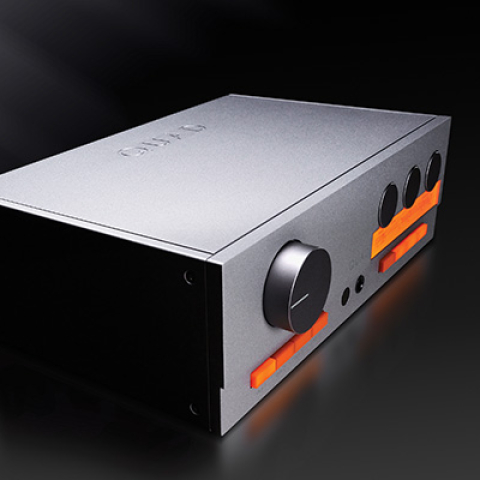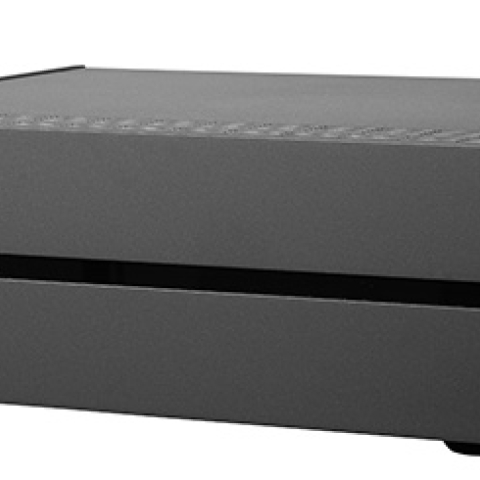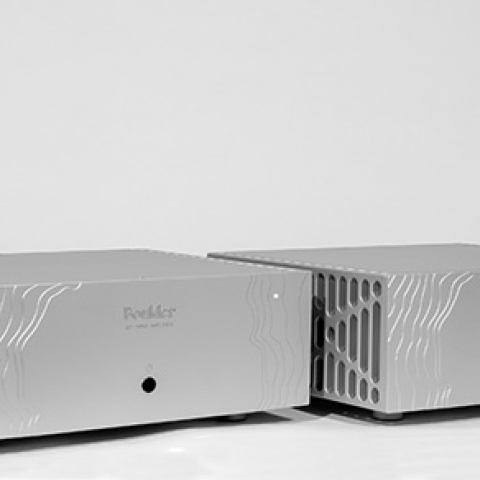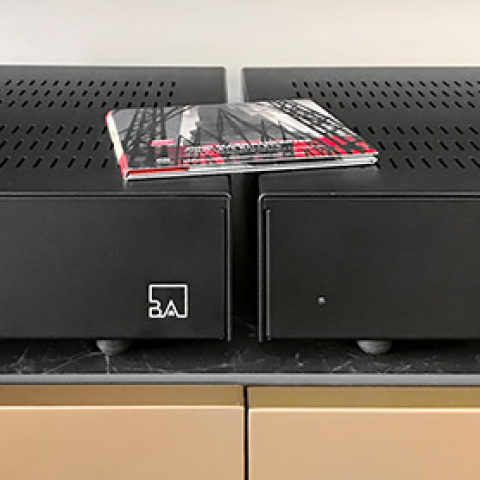
In building my listening systems over the years, my primary goal has been to hear as much of the source recordings, and as little of the system itself, as possible. Every piece of every system imposes its own sound to some degree onto what comes out of the speakers. I don't only mean obvious, measurable things like distortion, noisefloor, S/N ratio, and so on. Those matter, certainly, but there are also things we hear but aren't usually measured, likely having to do with how the components in a system interact.
I've never not heard differences when I've changed pieces in my reference systems. They may be very subtle, but I always hear differences.
Let's narrow the focus to power amplifiers. It has famously been claimed that two solid state amplifiers with very similar measurements—noisefloor near, at, or below audible levels, vanishingly low distortion, a high damping factor to control even the most stubborn speakers, and a power rating that passes muster with the new FTC "Amplifier Rule"—should sound the same. Yet every time I swap power amplifiers, my system sounds at least a little different.
From Germany, a power amp that's compact yet mighty
SPL (Sound Performance Lab), which is based in Niederkrüchten in west-central Germany, near the Dutch border, has been around since the mid-1980s. Its specialty has always been equipment for audio professionals: mastering consoles, compressors, equalizers, control interfaces, and so on. More recently, the company has sought to make inroads in consumer audio, including in the US: establishing a US subsidiary, signing on with distributor 2WA Group, and setting up exhibit rooms at audio shows (footnote 1). SPL remains one of the few high-performance audio companies led by engineers. Founder Wolfgang Neumann led the company through the end of 2022. On January, 1 2023, Bastian Neu took over Neumann's role, or part of it, becoming a managing partner and head of product development. Bastian Neu started as a developer at SPL in 2012 after completing a master craftsman's diploma in information technology and a B.Eng. degree in electrical engineering. His first project for SPL was the Phonitor 2 headphone amplifier. After that, he moved well into the pro-audio arena, working on "Mastering Universe" and "Professional Fidelity" devices. As SPL's new lead developer, Neu led the project that produced the Performer s900 power amplifier.
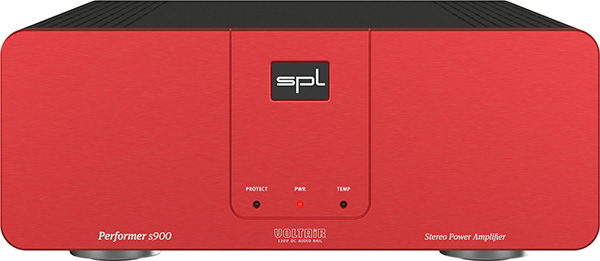
The Performer line of power amplifiers is marketed to both audio professionals and consumers. The s900 ($5500) sits in the middle of the lineup, more powerful than the similar-sized s800, smaller and less powerful than the s1200. All three amplifiers are 11" wide, which is narrower than most competitors. SPL's other components—the Director Mk2 preamplifier, Phonos and Phonos duo phono preamps, Phonitor headphone amplifier, and Crossover Mk2 active electronic crossover—are the same width, and all the components are designed to be stacked. All are offered with black, silver, or red brushed-aluminum front panels.
The Performer s900, the subject of this review, was developed with the s1200 as a starting point, incorporating much of the s1200's technology. It is specified to provide up to 200Wpc into 8 ohms, 370Wpc into 4 ohms, and 420Wpc into 2 ohms. The output stage operates in class-AB, powered by a linear supply and anchored by a large, heavy toroidal power transformer capable of handling 866VA, and 48,000µF of capacitive filtering and current reserve.
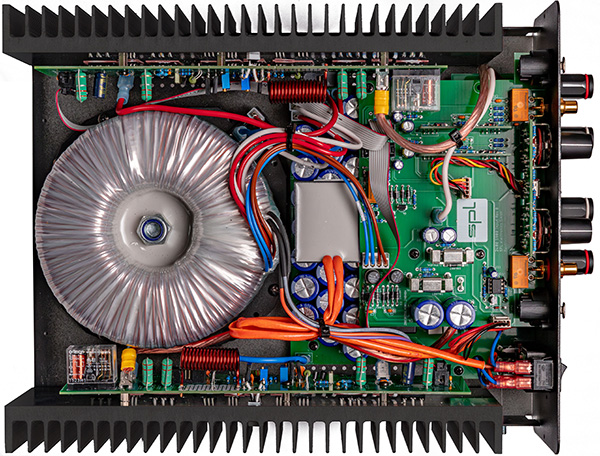 Operating at the voltage-amplification stage and unique to SPL are VOLTAiR high-voltage, discrete-parts operational amplifiers. Running at ±60VDC—much higher than the ±15V in typical monolithic (chip-based) op-amps—the VOLTAiR modules are said to offer more headroom and as wide dynamic range as any input device can deliver. "Most audio devices work with an internal operating voltage of ±15V and can thus process a maximum input level of +21.5dBu," SPL says. "If a DAC, for example, has an output level of +22dBu at 0dBFS, level peaks of the music material would already cause overloads in the input stage of the device, [meaning that] all components in the audio device often operate at their limits. The result is an unsteady sound that causes stress and faster ear fatigue.
"SPL devices with VOLTAiR technology can handle input levels of +32.5dBu thanks to the higher internal operating voltage of ±60V, thus offering 12dB more headroom. All components consequently operate continuously in (their) optimum range. The result is a very pleasant, natural, and relaxed sound experience. So you can enjoy your music in every detail."
How much does it matter? More headroom is always better, especially in solid state equipment, because once an amplifier runs out of headroom, it clips: The tops of the soundwaves are flattened. In typical solid state equipment, clipping distortion sounds nasty. Clipping distortion is an intentional, desirable affect in some music, but unintentional clipping is never desirable in a hi-fi system. In fairness, plenty of components use ±15V op-amps and don't clip at a volume of "digital zero" (0dBFS), and they don't sound like crap. It's true, however, in my experience, that ample headroom and discrete-parts op-amps can sound especially transparent and relaxed (footnote 2).
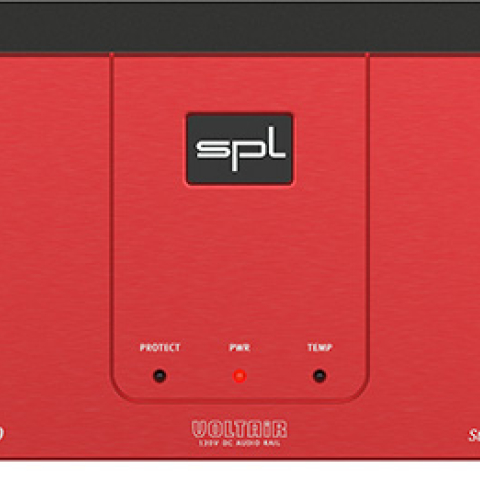
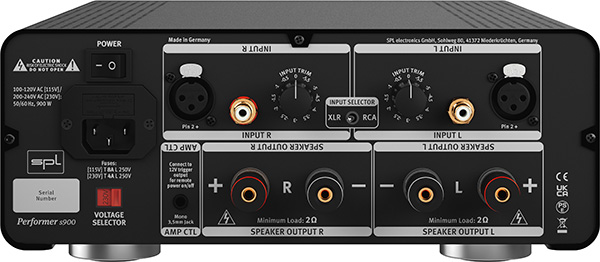
The Performer s900's front panel is handsome, in an austere way. Small LEDs indicate power-on, whether the overload protection circuit is engaged, and whether the amp has shut down due to too-high internal temperature, which never happened to me. There are no heatsink fins, just curved metal sides with ventilation holes on top. The power transformer is located toward the rear, so that's where most of the 34.4lb weight is concentrated. The back panel contains a single pair of speaker connectors for each channel (usable with bare wire, banana plugs, or spade lugs), balanced XLR and single-ended RCA inputs (one pair each), a 12V trigger input via a 1/8" socket, a three-prong IEC power cord connector, and a master on/off switch. There is an input switch (to choose XLR or RCA), and each input has a stepped trim attenuator: 0.5dB steps for up to 5.5dB input-level reduction. With the trimmers set to 0, the input sensitivity is 8dBu, similar to the lowest-level input on my reference Benchmark AHB2 power amp (8.2dBu or 2V RMS). At –5.5dB trim, the input sensitivity is close to the middle setting on the AHB2 (13.5dBu on the s900 vs 14.2dBu on the AHB2).
Operating at the voltage-amplification stage and unique to SPL are VOLTAiR high-voltage, discrete-parts operational amplifiers. Running at ±60VDC—much higher than the ±15V in typical monolithic (chip-based) op-amps—the VOLTAiR modules are said to offer more headroom and as wide dynamic range as any input device can deliver. "Most audio devices work with an internal operating voltage of ±15V and can thus process a maximum input level of +21.5dBu," SPL says. "If a DAC, for example, has an output level of +22dBu at 0dBFS, level peaks of the music material would already cause overloads in the input stage of the device, [meaning that] all components in the audio device often operate at their limits. The result is an unsteady sound that causes stress and faster ear fatigue.
"SPL devices with VOLTAiR technology can handle input levels of +32.5dBu thanks to the higher internal operating voltage of ±60V, thus offering 12dB more headroom. All components consequently operate continuously in (their) optimum range. The result is a very pleasant, natural, and relaxed sound experience. So you can enjoy your music in every detail."
How much does it matter? More headroom is always better, especially in solid state equipment, because once an amplifier runs out of headroom, it clips: The tops of the soundwaves are flattened. In typical solid state equipment, clipping distortion sounds nasty. Clipping distortion is an intentional, desirable affect in some music, but unintentional clipping is never desirable in a hi-fi system. In fairness, plenty of components use ±15V op-amps and don't clip at a volume of "digital zero" (0dBFS), and they don't sound like crap. It's true, however, in my experience, that ample headroom and discrete-parts op-amps can sound especially transparent and relaxed (footnote 2).
The Performer s900's front panel is handsome, in an austere way. Small LEDs indicate power-on, whether the overload protection circuit is engaged, and whether the amp has shut down due to too-high internal temperature, which never happened to me. There are no heatsink fins, just curved metal sides with ventilation holes on top. The power transformer is located toward the rear, so that's where most of the 34.4lb weight is concentrated. The back panel contains a single pair of speaker connectors for each channel (usable with bare wire, banana plugs, or spade lugs), balanced XLR and single-ended RCA inputs (one pair each), a 12V trigger input via a 1/8" socket, a three-prong IEC power cord connector, and a master on/off switch. There is an input switch (to choose XLR or RCA), and each input has a stepped trim attenuator: 0.5dB steps for up to 5.5dB input-level reduction. With the trimmers set to 0, the input sensitivity is 8dBu, similar to the lowest-level input on my reference Benchmark AHB2 power amp (8.2dBu or 2V RMS). At –5.5dB trim, the input sensitivity is close to the middle setting on the AHB2 (13.5dBu on the s900 vs 14.2dBu on the AHB2).
 In my reference system, I used the s900 with the trimmers set to the maximum so that the volume settings on my Benchmark LA-4 preamplifier would be in the same ballpark as they are with my Benchmark AHB2.
Mentioning the SPL and Benchmark amps at the same time is appropriate, as they are similar in some ways. Both are compact, class-AB amplifiers (the Benchmark is class-AB-ish), and both are marketed to audio pros and consumers seeking fast, neutral, dynamic sound. There are differences, too: The Benchmark uses a switching power supply; the SPL a linear one. The Performer s900 is more powerful and costs $2000 more. Considering all this, one would expect them to sound very similar, right? Read on!
Setup and the office system
In my reference system, I used the s900 with the trimmers set to the maximum so that the volume settings on my Benchmark LA-4 preamplifier would be in the same ballpark as they are with my Benchmark AHB2.
Mentioning the SPL and Benchmark amps at the same time is appropriate, as they are similar in some ways. Both are compact, class-AB amplifiers (the Benchmark is class-AB-ish), and both are marketed to audio pros and consumers seeking fast, neutral, dynamic sound. There are differences, too: The Benchmark uses a switching power supply; the SPL a linear one. The Performer s900 is more powerful and costs $2000 more. Considering all this, one would expect them to sound very similar, right? Read on!
Setup and the office system
The first Performer s900 SPL sent to me, with a red faceplate, didn't work. It went back to Germany, where it was confirmed to be defective. The second one, with a black faceplate, worked perfectly. It arrived in compact, sensibly sturdy packaging. The only step between removing the amplifier from the box and using it in my system was removing two transport screws from the bottom panel; they anchor in place the heavy toroidal transformer, which in use is supported by compliant connectors to isolate vibration. I also removed the little plastic tabs blocking the banana-plug sockets on the speaker connectors; this is necessary only if you use banana-plug speaker cables. That done, I connected it to my office system's Amphion One18 minimonitors, connected its RCA inputs to the preamp output of my McIntosh MA6500 integrated amp, and started streaming music from my Cambridge MXN10 streamer/DAC.
The SPL amplifier sounded good right away, with no break-in and little warm-up. I noticed a firmer bottom end and finer-focus stereo image compared to the MA6500's power amp section. The Performer s900 sounded like it was in full control of the little speakers and not working up any sweat. With the input trimmers at 0, the volume control on the MA6500 was in the same neighborhood as it is when I use its built-in power amplifier.
I kept the s900 hooked up to the office system for a few weeks, playing it for dozens of hours. Its sound quality didn't seem to change, indicating it leaves the factory sounding pretty much as it always will. I count that as a good thing, especially in a power amplifier, which should be as inconspicuous as possible. SPL's function-over-style approach was a good fit to this listener's values from the start.
 In the studio
The next stop for the s900 was my studio. I swapped it in for one of my Benchmark AHB2's (the other is in the reference system in my living room; footnote 3) driving a pair of Amphion Two18 studio monitors, which are supplemented with a KRK powered subwoofer. This setup is nearfield, similar to my office system but with the larger speakers more in line with my ears. This system is highly revealing, intended to enable me to make critical professional judgments about macro things—"does this sound right?"—and micro things like 0.5dB steps of equalization at a given frequency. I am very familiar with this system's sound, having listened intently for thousands of hours.
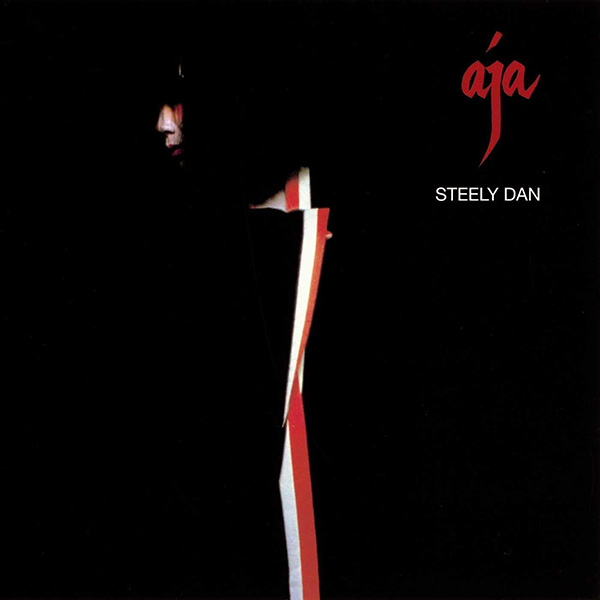
The SPL power amp sounded more different from the Benchmark than I expected. While both have a firm grip on the low end, and both move as fast as the beat and bass line take them, the SPL's low end was either richer or looser, depending on your taste. At the beginning of my remaster of Stravinsky's The Firebird with the London Symphony Orchestra conducted by Antal Dorati (24/192 FLAC, Mercury Living Presence/Qobuz, footnote 4), the double basses were in clearer detail through the Benchmark but growled louder through the SPL. Streaming the latest HD version of Steely Dan's Aja (24/192 FLAC, Geffen/Qobuz, footnote 5), the SPL brought more weight and gut punch to the beat, but the Benchmark offered clearer image and focus from the Dolby-encoded copy tape used to make this remaster. I liked it both ways.
 Streaming various other tracks from Qobuz through my digital workstation and Lynx Hilo digital interface, I preferred music that came from the studio bass-heavy or boomy through the Benchmark. Recordings that sounded thin and two-dimensional through the Benchmark sounded more robust and lively through the SPL. If I weren't already very familiar with the sound of the Benchmark, I could get accustomed enough to the sound of the SPL to make the same critical decisions I make with the Benchmark AHB2. The sound was close enough. I already described the differences in the bass. The midrange was nearly identical; the Benchmark's top end was a bit more finely detailed and perhaps a shade more pronounced.
Time for the big leagues
Streaming various other tracks from Qobuz through my digital workstation and Lynx Hilo digital interface, I preferred music that came from the studio bass-heavy or boomy through the Benchmark. Recordings that sounded thin and two-dimensional through the Benchmark sounded more robust and lively through the SPL. If I weren't already very familiar with the sound of the Benchmark, I could get accustomed enough to the sound of the SPL to make the same critical decisions I make with the Benchmark AHB2. The sound was close enough. I already described the differences in the bass. The midrange was nearly identical; the Benchmark's top end was a bit more finely detailed and perhaps a shade more pronounced.
Time for the big leagues
The next stop for the Performer s900 was my reference system, which lives in the living room upstairs. Before taking the s900 upstairs, I waited for my Bowers & Wilkins 808 speakers to be back in the system following my review of the Ø Audio Verdande speakers for the June issue of Stereophile. In this system, my go-to power amp is another Benchmark AHB2, and I occasionally substitute a circa-1990s Aragon 8002 class-AB solid state amp.
The SPL proved to be a worthy alternative, its sound between those two amplifiers, leaning more toward the Benchmark's clarity.
I spent some time with my Bass Test (footnote 6) and Imaging Test (footnote 7) playlists on Qobuz. What I heard here was similar to what I heard in the studio: The Performer s900 provided more low-frequency power and a bit less low-frequency definition. It wasn't boomy or muddy, just not quite as tight and quick as the Benchmark. Its sound would be preferable with certain full-range speakers, especially those with small woofers in need of some extra oomph to produce the deepest notes and beats realistically. On the B&Ws, the full sound of the SPL made sense: tight control of the speakers, moving the signal out quickly into the air, but without the last degree of crystal-clarity I hear from the Benchmark amplifier. It had many sound qualities I enjoy from the warmer-sounding Aragon amplifier but with more up-to-the-moment, speedy beats. It was especially pleasing with rock and jazz favorites.
I wanted to spin some records, but I worried that my Hana SL MK II cartridge, which is hardly bass-shy, would be a poor match. I need not have worried. The SPL-Hana combo didn't overdo the bass, and that solid, floor-flexing beat kept me out of my seat, fingers snapping.
Here's a partial list of favorite spins, annotated:
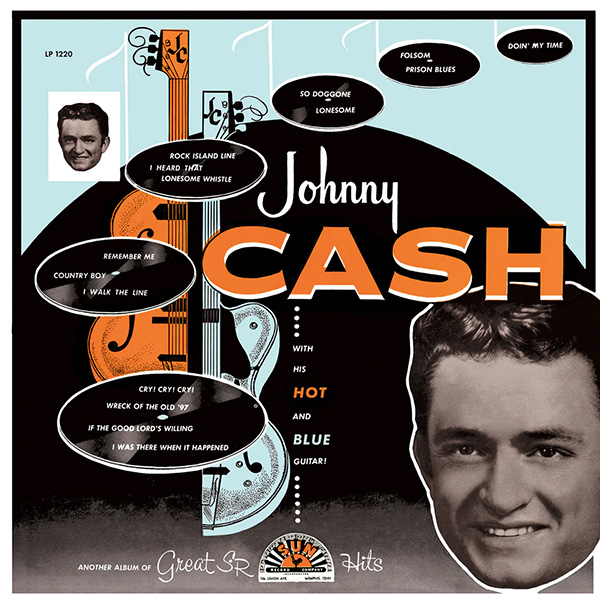 Johnny Cash with His Hot and Blue Guitar! (Sun/Intervention Records IR 039). I raved about this mono remaster last month. It was like The Man in Black was right there between my speakers, strumming, singing, and twitching as he did in those amphetamine-enhanced early years.
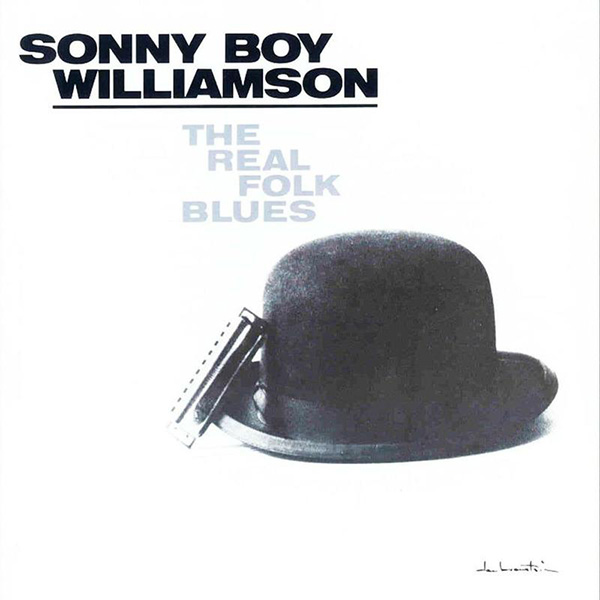 The Real Folk Blues by Sonny Boy Williamson II, aka Rice Miller (Chess/Analogue Productions 602478549069): Matt Lutthans did a really nice remaster from original mono tapes. The CD-resolution version that streams is thin-sounding, and some of its tracks are from stereo mixes. This all-mono LP better transmits the power of Williamson's harmonica chops. Willie Dixon's biographical liner notes—which as you would expect aren't available with the streaming version—are a great part of the experience.
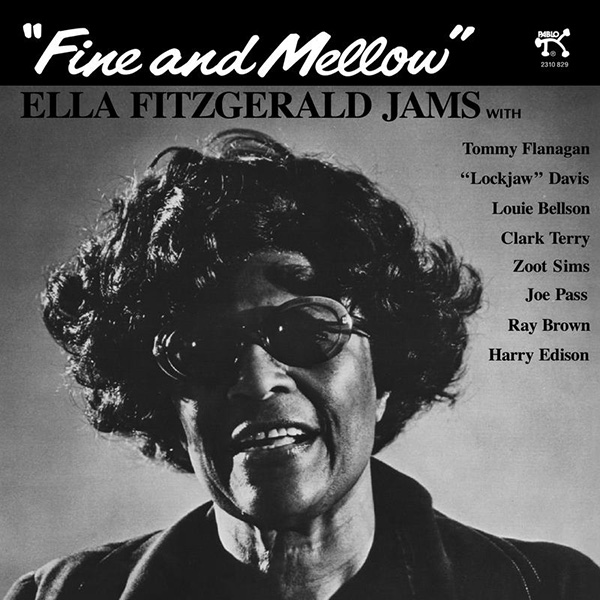 Fine and Mellow by Ella Fitzgerald (Pablo/Analogue Productions APJ-190): This is my favorite Fitzgerald album on Pablo. It's a bluesy affair, with Clark Terry and Harry "Sweets" Edison on trumpets, Zoot Sims and Eddie "Lockjaw" Davis on sax, and Joe Pass on guitar. Ella was no Billie Holiday, but she does a fine cover of the title track. Lutthans's remastering blows away the original LP, even though it was pretty darn good in its day.
The Velvet Underground & Nico (Verve/UMe VinylPhyle 602478769702). This album is resolutely low-fi. This remaster, by Joe Nino-Hernes at Sterling Sound, is one of the best-sounding versions. It is brighter and crisper than the current HD streaming version and in a whole other league of fidelity from the version I've listened to from high school until recent times: a cassette dub of an early 1980s LP that didn't even have a banana sticker on the cover, recorded immediately after it blew my mind on my first hearing.
Finally, all these years later, I absorbed and appreciated the gatefold jacket, especially the excerpts from contemporary press reviews of Andy Warhol's Exploding Plastic Inevitable "Happenings," at which the VU performed. This was new and radically different in 1966. Peel slowly and see.
Fine and Mellow by Ella Fitzgerald (Pablo/Analogue Productions APJ-190): This is my favorite Fitzgerald album on Pablo. It's a bluesy affair, with Clark Terry and Harry "Sweets" Edison on trumpets, Zoot Sims and Eddie "Lockjaw" Davis on sax, and Joe Pass on guitar. Ella was no Billie Holiday, but she does a fine cover of the title track. Lutthans's remastering blows away the original LP, even though it was pretty darn good in its day.
The Velvet Underground & Nico (Verve/UMe VinylPhyle 602478769702). This album is resolutely low-fi. This remaster, by Joe Nino-Hernes at Sterling Sound, is one of the best-sounding versions. It is brighter and crisper than the current HD streaming version and in a whole other league of fidelity from the version I've listened to from high school until recent times: a cassette dub of an early 1980s LP that didn't even have a banana sticker on the cover, recorded immediately after it blew my mind on my first hearing.
Finally, all these years later, I absorbed and appreciated the gatefold jacket, especially the excerpts from contemporary press reviews of Andy Warhol's Exploding Plastic Inevitable "Happenings," at which the VU performed. This was new and radically different in 1966. Peel slowly and see.
 Conclusions
The SPL Performer s900 power amplifier will fit well in many systems. It is designed to drive almost any speaker, with a firm grip and authority. Its sound isn't completely "neutral," but it's close—close enough to show a recording for what it is. No shade cast on great recordings, no lipstick painted on pigs.
We'll see what John Atkinson's measurements reveal, but to me the s900 sounded like it met its specs: low distortion, high output power across a wide frequency range, plenty of headroom, the two channels superbly matched.
At its price, the s900 competes in a crowded market, though it's not overbuilt. Its engineers fit a lot of amplifier into a compact package with what seemed to be sensible heat management and layout that allows it to run dead-silent. Its looks are agreeable to my aesthetics: not fancy, not clunky—in fact it looks like what I think a power amp should be: a device which lets itself shine by what it's not doing. It's not acting as a sound effect, it's not drawing attention through flakey behavior, it's not crapping out when the music gets complex and loud. In my systems, the s900 was a solid force for musical good.
Footnote 1: See Ken Micallef 's interview with SPL cofounder Hermann Gier at the latest Montreal Audiofest.
Footnote 2: In the pro audio world, there is a long tradition of discrete-parts op-amps, going back to the 1960s. Most famous was the Jensen Twin-Servo, a version of which is still made by the John Hardy Co. Jensen is now owned by Radial Engineering, which makes a microphone preamp based on the Twin-Servo. Seventh Circle Audio offers a kit for a Twin-Servo–based microphone preamp.
Footnote 3: I reviewed the Benchmark AHB2 in Tape Op magazine; see tinyurl.com/sjr53dbr. Kal Rubinson reviewed it in Stereophile.
Footnote 4: Listen at open.qobuz.com/album/wx9l570fav7eb.
Footnote 5: Listen at open.qobuz.com/album/wgxlq4u72t80a.
Footnote 6: Listen at open.qobuz.com/playlist/21395182.
Footnote 7: Listen at open.qobuz.com/playlist/22204090.
SPL (Sound Performance Lab), which is based in Niederkrüchten in west-central Germany, near the Dutch border, has been around since the mid-1980s. Its specialty has always been equipment for audio professionals: mastering consoles, compressors, equalizers, control interfaces, and so on. More recently, the company has sought to make inroads in consumer audio, including in the US: establishing a US subsidiary, signing on with distributor 2WA Group, and setting up exhibit rooms at audio shows (footnote 1). SPL remains one of the few high-performance audio companies led by engineers. Founder Wolfgang Neumann led the company through the end of 2022. On January, 1 2023, Bastian Neu took over Neumann's role, or part of it, becoming a managing partner and head of product development. Bastian Neu started as a developer at SPL in 2012 after completing a master craftsman's diploma in information technology and a B.Eng. degree in electrical engineering. His first project for SPL was the Phonitor 2 headphone amplifier. After that, he moved well into the pro-audio arena, working on "Mastering Universe" and "Professional Fidelity" devices. As SPL's new lead developer, Neu led the project that produced the Performer s900 power amplifier.
Operating at the voltage-amplification stage and unique to SPL are VOLTAiR high-voltage, discrete-parts operational amplifiers. Running at ±60VDC—much higher than the ±15V in typical monolithic (chip-based) op-amps—the VOLTAiR modules are said to offer more headroom and as wide dynamic range as any input device can deliver. "Most audio devices work with an internal operating voltage of ±15V and can thus process a maximum input level of +21.5dBu," SPL says. "If a DAC, for example, has an output level of +22dBu at 0dBFS, level peaks of the music material would already cause overloads in the input stage of the device, [meaning that] all components in the audio device often operate at their limits. The result is an unsteady sound that causes stress and faster ear fatigue.
In my reference system, I used the s900 with the trimmers set to the maximum so that the volume settings on my Benchmark LA-4 preamplifier would be in the same ballpark as they are with my Benchmark AHB2.
Mentioning the SPL and Benchmark amps at the same time is appropriate, as they are similar in some ways. Both are compact, class-AB amplifiers (the Benchmark is class-AB-ish), and both are marketed to audio pros and consumers seeking fast, neutral, dynamic sound. There are differences, too: The Benchmark uses a switching power supply; the SPL a linear one. The Performer s900 is more powerful and costs $2000 more. Considering all this, one would expect them to sound very similar, right? Read on!
Setup and the office systemThe first Performer s900 SPL sent to me, with a red faceplate, didn't work. It went back to Germany, where it was confirmed to be defective. The second one, with a black faceplate, worked perfectly. It arrived in compact, sensibly sturdy packaging. The only step between removing the amplifier from the box and using it in my system was removing two transport screws from the bottom panel; they anchor in place the heavy toroidal transformer, which in use is supported by compliant connectors to isolate vibration. I also removed the little plastic tabs blocking the banana-plug sockets on the speaker connectors; this is necessary only if you use banana-plug speaker cables. That done, I connected it to my office system's Amphion One18 minimonitors, connected its RCA inputs to the preamp output of my McIntosh MA6500 integrated amp, and started streaming music from my Cambridge MXN10 streamer/DAC.
In the studioThe next stop for the s900 was my studio. I swapped it in for one of my Benchmark AHB2's (the other is in the reference system in my living room; footnote 3) driving a pair of Amphion Two18 studio monitors, which are supplemented with a KRK powered subwoofer. This setup is nearfield, similar to my office system but with the larger speakers more in line with my ears. This system is highly revealing, intended to enable me to make critical professional judgments about macro things—"does this sound right?"—and micro things like 0.5dB steps of equalization at a given frequency. I am very familiar with this system's sound, having listened intently for thousands of hours.
Streaming various other tracks from Qobuz through my digital workstation and Lynx Hilo digital interface, I preferred music that came from the studio bass-heavy or boomy through the Benchmark. Recordings that sounded thin and two-dimensional through the Benchmark sounded more robust and lively through the SPL. If I weren't already very familiar with the sound of the Benchmark, I could get accustomed enough to the sound of the SPL to make the same critical decisions I make with the Benchmark AHB2. The sound was close enough. I already described the differences in the bass. The midrange was nearly identical; the Benchmark's top end was a bit more finely detailed and perhaps a shade more pronounced.
Time for the big leaguesThe next stop for the Performer s900 was my reference system, which lives in the living room upstairs. Before taking the s900 upstairs, I waited for my Bowers & Wilkins 808 speakers to be back in the system following my review of the Ø Audio Verdande speakers for the June issue of Stereophile. In this system, my go-to power amp is another Benchmark AHB2, and I occasionally substitute a circa-1990s Aragon 8002 class-AB solid state amp.
Johnny Cash with His Hot and Blue Guitar! (Sun/Intervention Records IR 039). I raved about this mono remaster last month. It was like The Man in Black was right there between my speakers, strumming, singing, and twitching as he did in those amphetamine-enhanced early years.
The Real Folk Blues by Sonny Boy Williamson II, aka Rice Miller (Chess/Analogue Productions 602478549069): Matt Lutthans did a really nice remaster from original mono tapes. The CD-resolution version that streams is thin-sounding, and some of its tracks are from stereo mixes. This all-mono LP better transmits the power of Williamson's harmonica chops. Willie Dixon's biographical liner notes—which as you would expect aren't available with the streaming version—are a great part of the experience.
Fine and Mellow by Ella Fitzgerald (Pablo/Analogue Productions APJ-190): This is my favorite Fitzgerald album on Pablo. It's a bluesy affair, with Clark Terry and Harry "Sweets" Edison on trumpets, Zoot Sims and Eddie "Lockjaw" Davis on sax, and Joe Pass on guitar. Ella was no Billie Holiday, but she does a fine cover of the title track. Lutthans's remastering blows away the original LP, even though it was pretty darn good in its day.
ConclusionsThe SPL Performer s900 power amplifier will fit well in many systems. It is designed to drive almost any speaker, with a firm grip and authority. Its sound isn't completely "neutral," but it's close—close enough to show a recording for what it is. No shade cast on great recordings, no lipstick painted on pigs.
Footnote 1: See Ken Micallef 's interview with SPL cofounder Hermann Gier at the latest Montreal Audiofest.