Sidebar 1: John DeVore
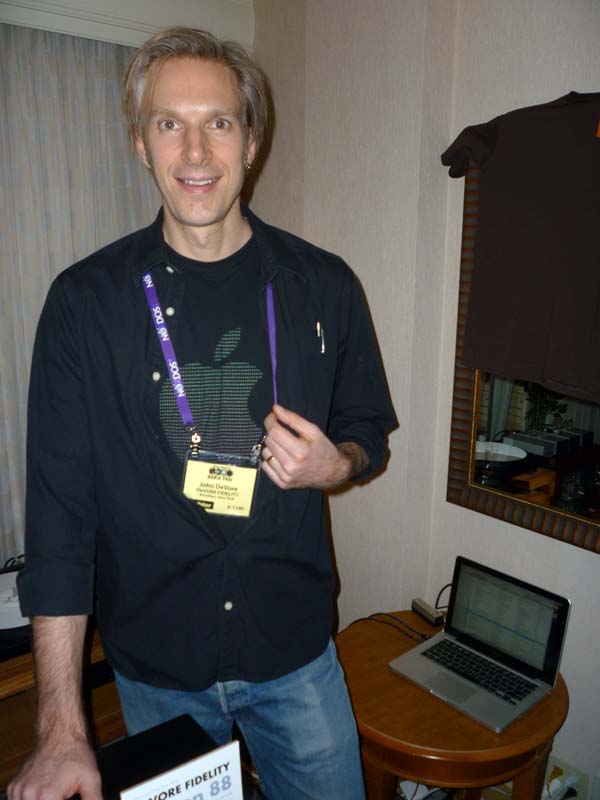 Considering John DeVore's long legs, on his person and in the industry, I thought a historical Q&A was in order.
Ken Micallef: Why did you become a loudspeaker designer?
John DeVore: I've always been an audiophile. I always had music on and my hi-fi carefully set up, even as a teenager. I loved music, loved the gear, and was meticulous about the sound. In college, I realized I would probably never be able to afford the best speakers I was listening to at hi-fi stores, and so in the 1980s, I began reading up, studying, and eventually designing and building my own.
Micallef: Did your folks play music at home?
DeVore: My mom was a concert pianist who absolutely loved chamber music. Our house was always filled with music. When it wasn't records, it was her practicing, either by herself or with the numerous chamber groups she played with over the years. A benefit of being the pianist is the other musicians tend to come to you to rehearse. Such intimate and formative exposure to live music laid the foundations of what I expected in reproduced music. It's fundamental to my taste in hi-fi.
Micallef: For a while, you made slim-profile speakers—the Gibbon series. Then, with the Orangutan series—the O/96 and O/93—you started making speakers with wide baffles. Why the change?
DeVore: The wide form of the Orangutan models was a natural development of what I was trying to achieve: high sensitivity and low-powered tube drivability. I quickly realized that these parameters required the use of much larger drivers than found in more typical narrow designs. The designs simply evolved from form following function. The design and fine-tuning for all the models is still based on my fundamental tastes and personal experiences, whether Gibbon or Orangutan models.
Micallef: Is there a throughline for your speakers? A trait they all share?
DeVore: All my designs share a naturalness of timbre and transparency to the source, in addition to being much easier than most speakers for an amplifier to drive.
Micallef: What amplifiers do you use to evaluate your designs?
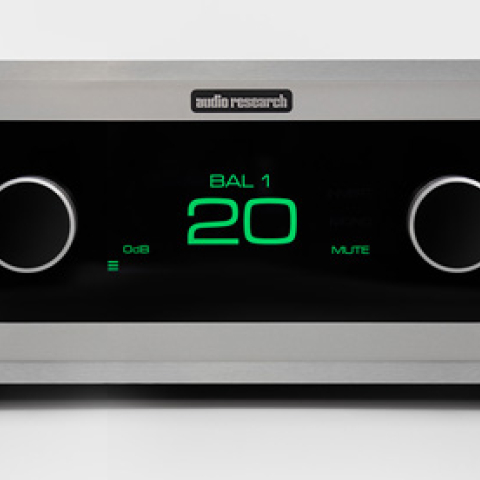
DeVore: Currently, Audio Research VT130SE, Pass Labs Aleph 3, Air Tight ATM-300R, Komuro 300B and 845 SET amps, Parasound Halo A 21, Hypex 250W class-D monoblock amps, and an Enleum AMP23-R.
Micallef: For which DeVore customer did you design the O/baby?
DeVore: I don't pretend to know who a DeVore Fidelity customer might be. The customers I've met or interacted with vary enormously.
I approached these new models with ultimate cost as an important consideration, so they will appeal to users who are not comfortable spending the money needed to build an O/96 system. Also, size and style should allow the O/babies to fit into more homes.
Considering John DeVore's long legs, on his person and in the industry, I thought a historical Q&A was in order.
Ken Micallef: Why did you become a loudspeaker designer?
John DeVore: I've always been an audiophile. I always had music on and my hi-fi carefully set up, even as a teenager. I loved music, loved the gear, and was meticulous about the sound. In college, I realized I would probably never be able to afford the best speakers I was listening to at hi-fi stores, and so in the 1980s, I began reading up, studying, and eventually designing and building my own.
Micallef: Did your folks play music at home?
DeVore: My mom was a concert pianist who absolutely loved chamber music. Our house was always filled with music. When it wasn't records, it was her practicing, either by herself or with the numerous chamber groups she played with over the years. A benefit of being the pianist is the other musicians tend to come to you to rehearse. Such intimate and formative exposure to live music laid the foundations of what I expected in reproduced music. It's fundamental to my taste in hi-fi.
Micallef: For a while, you made slim-profile speakers—the Gibbon series. Then, with the Orangutan series—the O/96 and O/93—you started making speakers with wide baffles. Why the change?
DeVore: The wide form of the Orangutan models was a natural development of what I was trying to achieve: high sensitivity and low-powered tube drivability. I quickly realized that these parameters required the use of much larger drivers than found in more typical narrow designs. The designs simply evolved from form following function. The design and fine-tuning for all the models is still based on my fundamental tastes and personal experiences, whether Gibbon or Orangutan models.
Micallef: Is there a throughline for your speakers? A trait they all share?
DeVore: All my designs share a naturalness of timbre and transparency to the source, in addition to being much easier than most speakers for an amplifier to drive.
Micallef: What amplifiers do you use to evaluate your designs?
DeVore: Currently, Audio Research VT130SE, Pass Labs Aleph 3, Air Tight ATM-300R, Komuro 300B and 845 SET amps, Parasound Halo A 21, Hypex 250W class-D monoblock amps, and an Enleum AMP23-R.
Micallef: For which DeVore customer did you design the O/baby?
DeVore: I don't pretend to know who a DeVore Fidelity customer might be. The customers I've met or interacted with vary enormously.
I approached these new models with ultimate cost as an important consideration, so they will appeal to users who are not comfortable spending the money needed to build an O/96 system. Also, size and style should allow the O/babies to fit into more homes.
Considering John DeVore's long legs, on his person and in the industry, I thought a historical Q&A was in order.
Ken Micallef: Why did you become a loudspeaker designer?
John DeVore: I've always been an audiophile. I always had music on and my hi-fi carefully set up, even as a teenager. I loved music, loved the gear, and was meticulous about the sound. In college, I realized I would probably never be able to afford the best speakers I was listening to at hi-fi stores, and so in the 1980s, I began reading up, studying, and eventually designing and building my own.
Micallef: Did your folks play music at home?
DeVore: My mom was a concert pianist who absolutely loved chamber music. Our house was always filled with music. When it wasn't records, it was her practicing, either by herself or with the numerous chamber groups she played with over the years. A benefit of being the pianist is the other musicians tend to come to you to rehearse. Such intimate and formative exposure to live music laid the foundations of what I expected in reproduced music. It's fundamental to my taste in hi-fi.