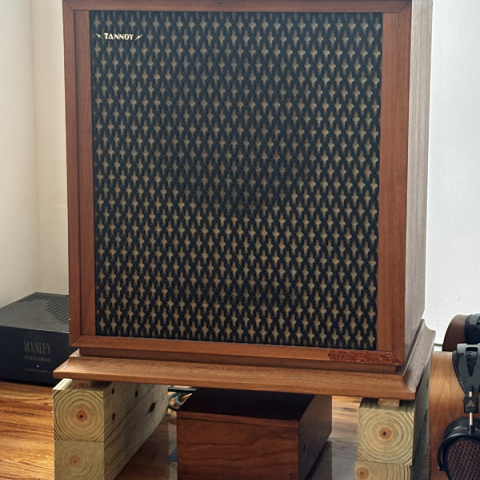
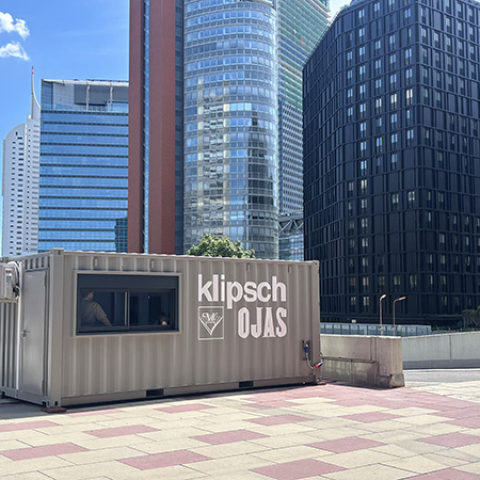
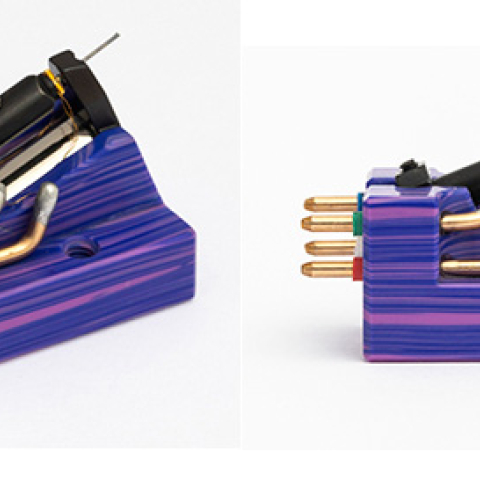
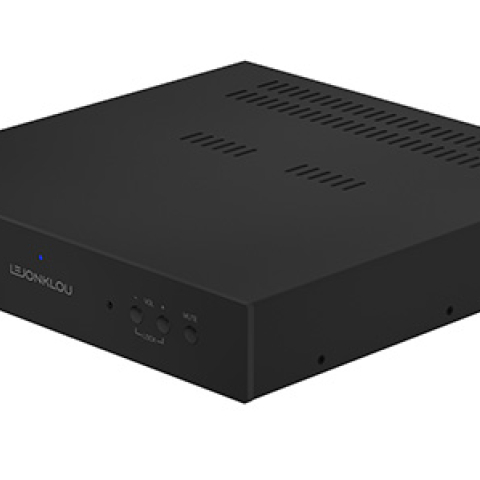
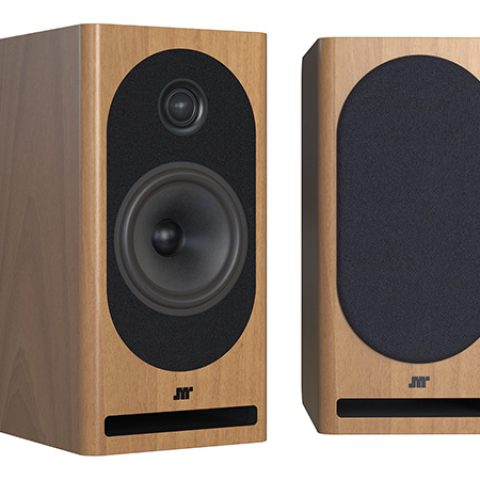
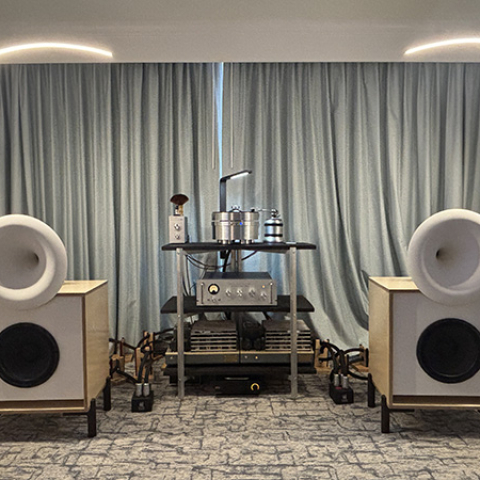
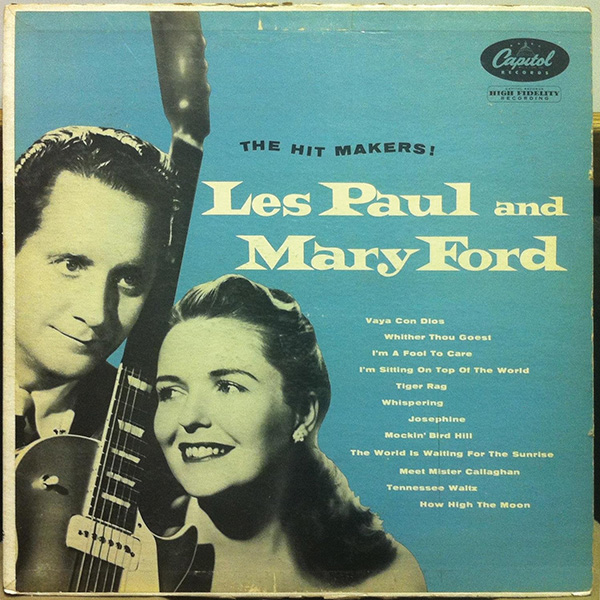
 This undoubtedly neat effect was something I partly expected. What I didn't expect is the hair-raising dynamic expression the Miyajima coaxed from familiar recordings, which betters that of every other cartridge I've heard. On "I'm a Fool to Care" from a 1955 pressing of Les Paul and Mary Ford's The Hit Makers! (Capitol T-416), Ford's reverb-drenched voice and the chords from Paul's electric solid-body guitar leapt from the full-range Klipsch horns with a life force and snap that I hadn't previously experienced.
Even more memorable was the track's world-beating presence: The reverb trails of Paul's solid-body guitar were so palpable as to be downright spooky. Listening to this classic mono recording with a mono cartridge cleared away layers of sonic fussiness that I hear with stereo cartridges and cut to the very bone of the music. My friend Stephen Mejias once called this kind of sound "bloody," and I was hearing some of the bloodiest notes to ever emerge from my hi-fi.
Of course, from a technical perspective, what I was hearing makes sense: a mono cartridge dispenses with more than vertical motion. It also ignores crosstalk, phase anomalies, the need for antiskating, tracking errors, and other forms of noise and distortion that affect stereo cartridges. Their absence contributes to the Miyajima's remarkable way of making instruments, voices, and all manner of ambient information sound so vividly, richly, physically embodied.
This undoubtedly neat effect was something I partly expected. What I didn't expect is the hair-raising dynamic expression the Miyajima coaxed from familiar recordings, which betters that of every other cartridge I've heard. On "I'm a Fool to Care" from a 1955 pressing of Les Paul and Mary Ford's The Hit Makers! (Capitol T-416), Ford's reverb-drenched voice and the chords from Paul's electric solid-body guitar leapt from the full-range Klipsch horns with a life force and snap that I hadn't previously experienced.
Even more memorable was the track's world-beating presence: The reverb trails of Paul's solid-body guitar were so palpable as to be downright spooky. Listening to this classic mono recording with a mono cartridge cleared away layers of sonic fussiness that I hear with stereo cartridges and cut to the very bone of the music. My friend Stephen Mejias once called this kind of sound "bloody," and I was hearing some of the bloodiest notes to ever emerge from my hi-fi.
Of course, from a technical perspective, what I was hearing makes sense: a mono cartridge dispenses with more than vertical motion. It also ignores crosstalk, phase anomalies, the need for antiskating, tracking errors, and other forms of noise and distortion that affect stereo cartridges. Their absence contributes to the Miyajima's remarkable way of making instruments, voices, and all manner of ambient information sound so vividly, richly, physically embodied.
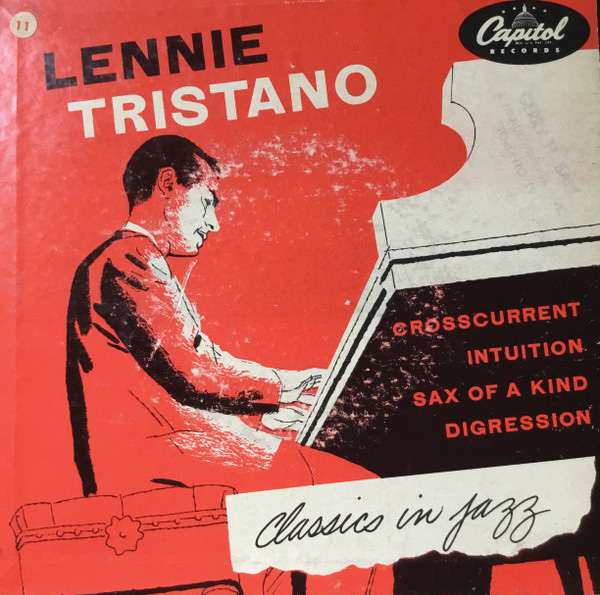 The genuinely eye-opening insight came while I listened to "Intuition" from an EP by Lennie Tristano called Classics in Jazz (Capitol EAP 1-491). Issued in 1954, the hugely influential session it captured was recorded on tape in 1949. I've listened to this sweet, noisy little 7" for years, largely because two of its tracks, "Intuition" and "Digression," are the first recorded examples of freely improvised jazz, played without pre-existing parameters of time, melody, or tonality, issued nearly a decade before Ornette Coleman's first records. "Digression" sounds a bit like Satie. Blind since birth, Tristano was also arguably the first musician to graft the sounds and methods of avant-garde classical music into jazz, a process carried on by Jimmy Giuffre, Charles Mingus, Eric Dolphy, and others.
Sonically, the Tristano disk comes across as, well, historical. The mix is foggy, buried in the murk of the early tape-recording era, and its pleasures are mainly musical rather than illusionistic. Yet, listening to the first few notes of "Intuition" reproduced by the Zero Mono confounded me. The session—particularly the sound of Lee Konitz's and Warne Marsh's saxophones and Tristano's piano—now sounded like it was recorded during a later decade. Vivid, life-sized, and timbrally accurate, these instruments popped out of the mix in a way that brought to mind the admittedly hoary term "high-fidelity."
The genuinely eye-opening insight came while I listened to "Intuition" from an EP by Lennie Tristano called Classics in Jazz (Capitol EAP 1-491). Issued in 1954, the hugely influential session it captured was recorded on tape in 1949. I've listened to this sweet, noisy little 7" for years, largely because two of its tracks, "Intuition" and "Digression," are the first recorded examples of freely improvised jazz, played without pre-existing parameters of time, melody, or tonality, issued nearly a decade before Ornette Coleman's first records. "Digression" sounds a bit like Satie. Blind since birth, Tristano was also arguably the first musician to graft the sounds and methods of avant-garde classical music into jazz, a process carried on by Jimmy Giuffre, Charles Mingus, Eric Dolphy, and others.
Sonically, the Tristano disk comes across as, well, historical. The mix is foggy, buried in the murk of the early tape-recording era, and its pleasures are mainly musical rather than illusionistic. Yet, listening to the first few notes of "Intuition" reproduced by the Zero Mono confounded me. The session—particularly the sound of Lee Konitz's and Warne Marsh's saxophones and Tristano's piano—now sounded like it was recorded during a later decade. Vivid, life-sized, and timbrally accurate, these instruments popped out of the mix in a way that brought to mind the admittedly hoary term "high-fidelity."
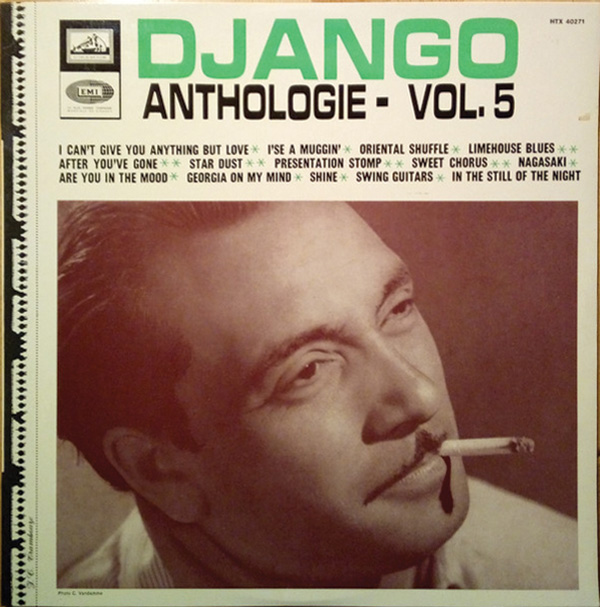 Curious to find out whether the Zero Mono's knack for reanimating vintage recordings would hold up with music from the shellac era, I cued up one of those immortal recordings that should be sealed in a capsule and launched into the black expanses of space: Django Anthologie Vol. 5 (La Voix De Son Maître HTX 40271) by Django Reinhardt et Le Quintette du Hot Club de France. Recorded between 1934 and 1936, these sessions contain some of Reinhardt's most mesmerizing playing, a star turn by a young Coleman Hawkins, and suave, cheeky vocals by Freddy Taylor, the singer and dancer who got his start earlier in that decade at Harlem's Cotton Club.
No, the Miyajima didn't turn Reinhardt into Angus Young, but it made "I Can't Give You Anything but Love" as forceful, textured, detailed, life-sized, and quiet as I've heard it, and clothed the sometimes spectral sound of the band with flesh, bone, and color. In practical terms, the Miyajima was proving to be a game changer: Suddenly, hundreds of musically indispensable records made prior to the hi-fi era that—let's be honest—aren't always fun to listen to were imbued with the potential for realistic and genuinely enjoyable sound.
Curious to find out whether the Zero Mono's knack for reanimating vintage recordings would hold up with music from the shellac era, I cued up one of those immortal recordings that should be sealed in a capsule and launched into the black expanses of space: Django Anthologie Vol. 5 (La Voix De Son Maître HTX 40271) by Django Reinhardt et Le Quintette du Hot Club de France. Recorded between 1934 and 1936, these sessions contain some of Reinhardt's most mesmerizing playing, a star turn by a young Coleman Hawkins, and suave, cheeky vocals by Freddy Taylor, the singer and dancer who got his start earlier in that decade at Harlem's Cotton Club.
No, the Miyajima didn't turn Reinhardt into Angus Young, but it made "I Can't Give You Anything but Love" as forceful, textured, detailed, life-sized, and quiet as I've heard it, and clothed the sometimes spectral sound of the band with flesh, bone, and color. In practical terms, the Miyajima was proving to be a game changer: Suddenly, hundreds of musically indispensable records made prior to the hi-fi era that—let's be honest—aren't always fun to listen to were imbued with the potential for realistic and genuinely enjoyable sound.
 Let's have a 45 party!
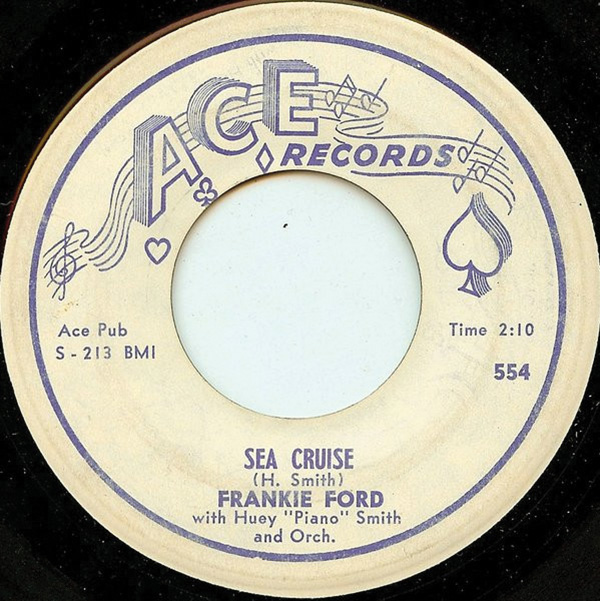
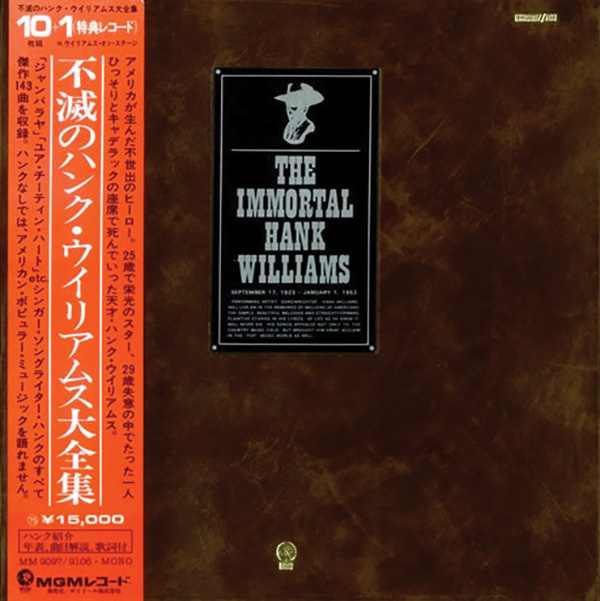
Which brings me to the last thing I'd like to say about the Miyajima Zero Mono, which is worth pausing over: It is the single most fun cartridge I've lived with, if for no other reason that it is better than any I've heard at playing 45s. For me, these records are the MDMA of the vinyl world: Nothing sounds more beguiling than a good rockabilly or soul 45, a conviction I share with my colleague Herb Reichert. Speaking broadly, audiophiles enjoy being at home more than most people, and it can be hard to entice Herb from the comforts of his small but well-stocked Bed-Stuy lair. So when I called him, I spoke words I knew might do it: "Let's have a 45 party!" Herb arrived a few days later with a splendid gift: a clean 45 of Frankie Ford's "Sea Cruise" on Jackson, Mississippi's, Ace Records. It was pressed in 1958 and still had a juke box number attached to the label. For most of that evening, we played one 45 after the next, making amazed faces at each other and hollering like a pair of 12-year-olds. We played "Tumbling Tumbleweeds" by the Sons of the Pioneers on green vinyl (RCA 48-0005), the glorious version of "Muleskinner Blues" by the Fendermen (Soma 1137), Gladys Knight's "Got Myself a Good Man" (Soul S-35063), Hank Snow's "The Gal Who Invented Kissin'" (RCA 47-5034), and many more. The wheels really came off when we pulled out an 11-LP Hank Williams set pressed on virgin vinyl in Japan (The Immortal Hank Williams, MGM Records MM 9097/9106) and played "Honky Tonkin'," basking in Hank's nasal whine supersized by the big-toned Miyajima.
 The fun we were having listening to mono got a little out of hand, as did this column. So let me gather myself and attempt a conclusion. The Miyajima Zero Mono does everything a mono cartridge should, in sparkling fidelity, and adds its own rich, corporeal, tonally saturated voice. Yes, it plays mono reissues more compellingly than any stereo cartridge I've heard, but really comes into its own with older recordings, celebrating them and sometimes sonically reviving them in Lazarus-like fashion.