Sidebar 2: Measurements
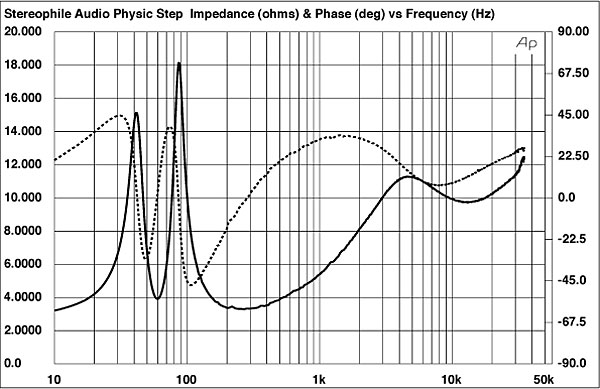
The Step was moderately sensitive for a tiny speaker, at an estimated 84dB/W/m (B-weighted). Its impedance characteristic, however, will make demands on the partnering amplifier, as shown by the plot of impedance magnitude and phase against frequency (fig.1). The magnitude drops below 4 ohms throughout the lower midrange, reaching a minimum value of 3.4 ohms at 200Hz. In the treble, however, the impedance stays above 10 ohms. The shape of the plot suggests that tube amplifiers with high output impedances will make the Step sound up-tilted. There are a few wrinkles in the traces, presumably due to resonances of various kinds.
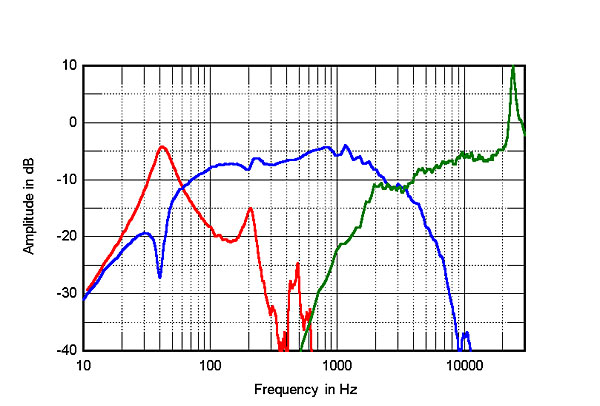 To the right of fig.2 is shown the Step's quasi-anechoic response on the tweeter axis, averaged across a 30° horizontal window. The upper midrange appears to be somewhat boosted in level, which normally correlates with a subjective impression of "forwardness." As JE found the balance to sound distant, however, I suspect he was responding to the relative lack of energy in the lower mids—the saddle in fig.2 between the upper-bass and upper-midrange prominences—but perhaps more so to the mid-treble suckout.
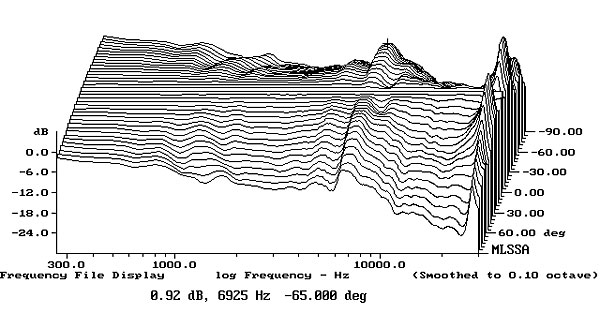
As JE noted, this is an on-axis phenomenon, the cursor position in fig.3 showing that the suckout fills-in to the speaker's sides. (Only the differences between the on- and off-axis responses are shown in this graph, which is why the reference response in the center appears to be a straight line.) Other than that, the Step's horizontal dispersion appears to be typical of a minimonitor: an even rolloff of the highs as the listener moves to the speaker's sides. (The apparent ultrasonic peak in fig.3 is again due to an on-axis notch filling to the speaker's sides.)
To the right of fig.2 is shown the Step's quasi-anechoic response on the tweeter axis, averaged across a 30° horizontal window. The upper midrange appears to be somewhat boosted in level, which normally correlates with a subjective impression of "forwardness." As JE found the balance to sound distant, however, I suspect he was responding to the relative lack of energy in the lower mids—the saddle in fig.2 between the upper-bass and upper-midrange prominences—but perhaps more so to the mid-treble suckout.
As JE noted, this is an on-axis phenomenon, the cursor position in fig.3 showing that the suckout fills-in to the speaker's sides. (Only the differences between the on- and off-axis responses are shown in this graph, which is why the reference response in the center appears to be a straight line.) Other than that, the Step's horizontal dispersion appears to be typical of a minimonitor: an even rolloff of the highs as the listener moves to the speaker's sides. (The apparent ultrasonic peak in fig.3 is again due to an on-axis notch filling to the speaker's sides.)
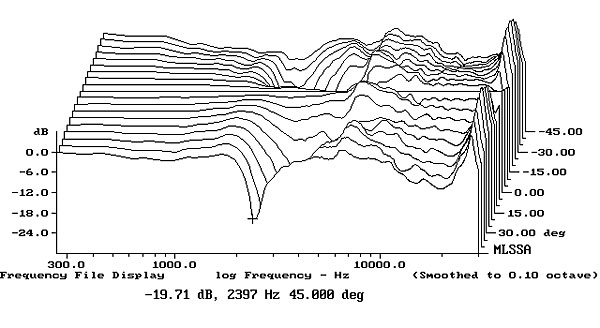
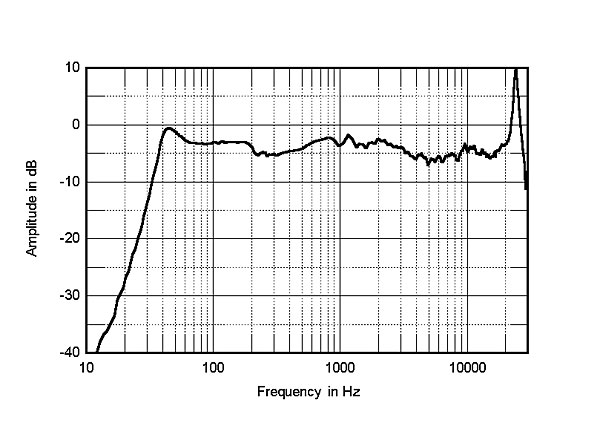
 Vertically (fig.4), the Step's tonal balance does change quite a lot with listener height. Listen too high and a monstrous suckout occurs, centered on 2.5kHz (the crossover frequency, I assume). Move down just below the tweeter, as would be the case with the speaker on its back-tilted stands, and the mid-treble suckout fills in, giving the flattest treble response. This can be seen in fig.5, which shows the overall response on an axis 10° below the tweeter, which is that provided by the dedicated stand's tiltback. While the upper midrange is still a little forward, the treble is much smoother, overall. Sit much below the woofer axis, however, and the crossover notch reappears.
 In the time domain, the Step's step response on the tweeter axis (fig.6) suggests that the drive-units are connected in opposite acoustic polarity—as would be required by a second-order crossover. The tweeter's output is the negative-going spike; the woofer's is the slower, broader, positive-going pulse. Moving the microphone down to the optimum axis gave a better step response (fig.7), due to the approximated drive-unit time alignment this gives. The speaker will still not be 100% phase-coherent on this axis, due to the conflicting drive-unit/crossover polarities, but I measured no more than –70° of excess phase in the mid-treble, which is good. The speaker's cumulative spectral-decay, or waterfall, plot (fig.8) reveals a degree of treble and upper-midrange hash, but the first 12dB or so of decay is clean.
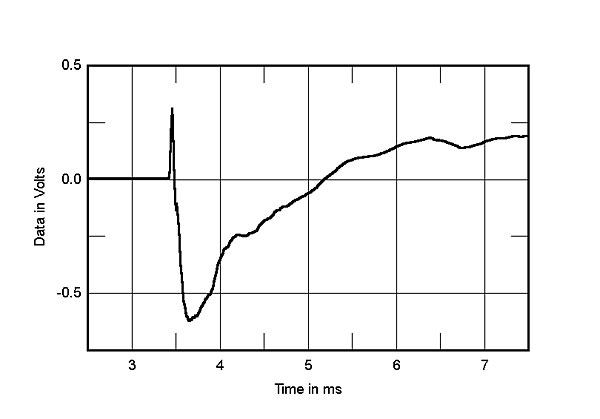
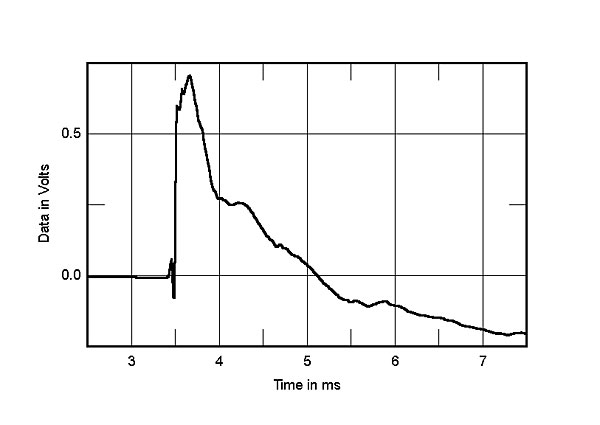
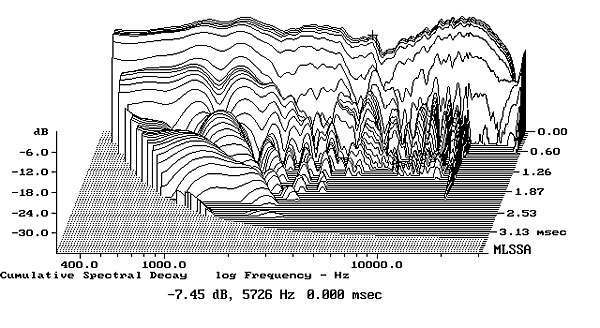
Fig.1 Audio Physic Step, electrical impedance (solid) and phase (dashed) (2 ohms/vertical div.).
The tuning of the Step's rear-facing port is revealed by the valley between the twin bass peaks to lie at a highish 60Hz. This is confirmed by the responses of the woofer and port, measured in the nearfield (ie, with the microphone almost touching the radiating surface). These are shown to the left of fig.2: the port response is the bandpass peaking between 60 and 70Hz—this commendably free of midrange pipe resonances—while the woofer is the trace with a null in this region. The third low-frequency trace in fig.2 is the complex sum (magnitude and phase) of the woofer and port outputs. Slightly underdamped, this rises to a slight peak between 70 and 100Hz compared to the lower-midrange level, with then a steep rollout. The –6dB point (ref. the 200Hz level) lies at 53Hz, which is actually quite low for such a small speaker.
Fig.2 Audio Physic Step, anechoic response on tweeter axis at 45" averaged across 30° horizontal window and corrected for microphone response, with nearfield woofer and port responses below 300Hz and 1kHz, respectively, and their complex sum.
Fig.3 Audio Physic Step, horizontal response family at 45", normalized to response on tweeter axis, from back to front: differences in response 90°–5° off-axis; reference response; differences in response 5°–90° off-axis.
Fig.4 Audio Physic Step, vertical response family at 45", normalized to response on tweeter axis, from back to front: differences in response 45°–5° off-axis above; reference response; differences in response 5°–45° off-axis below.
Fig.5 Audio Physic Step, anechoic response on axis 10° below tweeter at 45", corrected for microphone response, with complex sum of nearfield woofer and port responses below 300Hz.
Fig.6 Audio Physic Step, step response on tweeter axis at 45" (5ms time window, 30kHz bandwidth).
Fig.7 Audio Physic Step, step response on optimum axis at 45" (5ms time window, 30kHz bandwidth).
Fig.8 Audio Physic Step, cumulative spectral-decay plot at 45" (0.15ms risetime).
Although there were some wrinkles suggestive of resonances in the Step's impedance plot, using a simple PVDF-tape accelerometer to examine the vibrational behavior of the speaker cabinet's surfaces revealed it to be quite inert. The only significant resonant mode I could find was on the top, but that lay at 586Hz—high enough in frequency not to be excited by sustained musical notes.—John Atkinson