 The phono input
I auditioned the ARCAM's moving magnet–only phono input with three well-known, well-respected cartridges, two moving magnets—Ortofon's $695 2M Black and Audio-Technica's $69 AT-VM95E—and Grado Labs' $400 Platinum3 High Output moving iron. I started with the Ortofon because I wanted to see how refined the A25's phono stage could sound. The 2M Black uses a nude Shibata stylus to scrape disc grooves clean and make listeners feel like they are getting all the micro-information they paid extra for. Ortofon's 2M Black is the smoothest, quietest, best-tracking, most-detailed moving magnet cartridge I know, but it is rarely the most expressive. With Prima Luna's $3695 EVO 100 phono stage, the 2M Black sounds a little dark and serious but produces an extremely deep soundspace with dense galaxies of detail and naturally saturated tones. Most audiophiles would love it. With the Prima Luna, the 2M's dynamics are good, and its speed is good, but thrills and engagement-wise, it's not Dorothy-in-Oz wondrous.
 No one would accuse Audio-Technica's AT-VM95E of being left-brain micro-specific or right-brain luxurious, but no one who's ever used it doubts its ability to "get the music out" of the grooves. This nearly free moving magnet plays records in a consistently exciting and satisfying manner. I played Barbra Streisand's first album, The Barbra Streisand Album (Columbia LP CL2007), and all the "Barbra" most folks would hope for came bursting out of my speakers. On "Who's Afraid of the Big Bad Wolf?," her voice, attitude, and dramatic phrasing were presented with Vegas-level energy and enough Barbra Streisand heart to make female vocal aficionados smile and nod in appreciation.
To my taste, the 2M Black seemed a little too refined for the ARCAM. The AT-VM95E delivered high-energy excitements but was maybe a little under-refined. But, but, but! Grado's $300 High Output Platinum3 moving iron made a perfect match. The Platinum3's Technicolor sonics complemented the ARCAM phono's punch and solidity while adding a measure of glow and warmth to its overall effect.
No one would accuse Audio-Technica's AT-VM95E of being left-brain micro-specific or right-brain luxurious, but no one who's ever used it doubts its ability to "get the music out" of the grooves. This nearly free moving magnet plays records in a consistently exciting and satisfying manner. I played Barbra Streisand's first album, The Barbra Streisand Album (Columbia LP CL2007), and all the "Barbra" most folks would hope for came bursting out of my speakers. On "Who's Afraid of the Big Bad Wolf?," her voice, attitude, and dramatic phrasing were presented with Vegas-level energy and enough Barbra Streisand heart to make female vocal aficionados smile and nod in appreciation.
To my taste, the 2M Black seemed a little too refined for the ARCAM. The AT-VM95E delivered high-energy excitements but was maybe a little under-refined. But, but, but! Grado's $300 High Output Platinum3 moving iron made a perfect match. The Platinum3's Technicolor sonics complemented the ARCAM phono's punch and solidity while adding a measure of glow and warmth to its overall effect.
 The A25 DAC
Unlike ARCAM's A5 and A15 integrated amplifiers, which offer only optical and coaxial digital inputs, the A25 adds a USB-C input, which I wired directly to my Mac mini, allowing me to stream Qobuz through the A25's DAC. The resulting sound was strong, bright, fast, and clean. Images were firmly outlined with above-average body and presence. The Budapest String Quartet performing the Adagio ma non troppo from the Harp Quartet, Op.10, from The Complete String Quartets of Ludwig van Beethoven (24/192 FLAC, Columbia/Qobuz) sounded direct (as in slightly raw) and emotionally accessible but also less rich and atmospheric than it was with the $750 Denafrips Ares II DAC. Interestingly, this clean, "slightly raw" effect played well into my Falcon Gold Badges, as it put a little light and edge-definition into what had seemed dark and a little soft with the Ares II. Now I was curious to hear another ancient LP, a forever-loved Herb-favorite, Egyptian oud player Hamza El Din's 1964 stereo issue (Vanguard LP VSD-79164) of Music of Nubia (16/44.1 FLAC Vanguard/Qobuz). With this recording, the A25's DAC made a good impression: It showed El Din's righteous string work enlarged and enhanced, framed by the harmonics of real wood emanating very obviously from his oud's soundboard (wajh). Oud means wood, and in addition to its mesmeric rhythms, a chief pleasure of El Din's oud playing is the presence of the oud's wood body hovering between the speakers. With the A25 DAC, oud string transients felt not too sharp or dull, in just the right 1:1 balance with the soundboard. Reverb was reproduced cleanly and relatively unmolested.
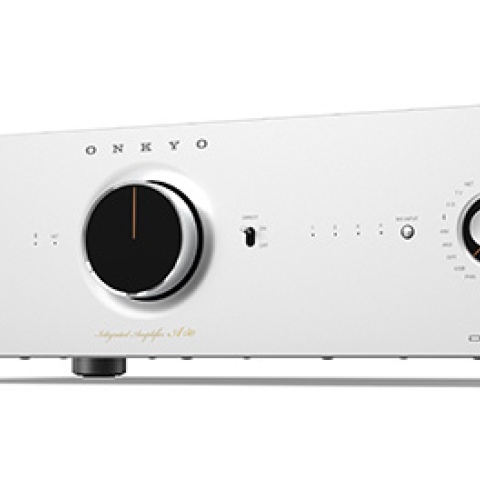
 Clarity, solidity, and beat-keeping were prominent with Onkyo's C-7030 driving the ARCAM's DAC, but more importantly, how Monk was playing—all the gillion twisty Monk things he was doing—was easy to apprehend and appreciate. As always, Monk's jazz invited my attention, but ARCAM's ES9280A Pro–based DAC caused it to beckon even more persuasively.
When I switched the C-7030's digital output to my Denafrips Ares II DAC (input via the A25's Analogue 1 input), the sound of Monk became wetter, a tiny bit rounder at the edges, and more hue-saturated. These differences were easy to hear and recognize, but they were not dramatic.
Clarity, solidity, and beat-keeping were prominent with Onkyo's C-7030 driving the ARCAM's DAC, but more importantly, how Monk was playing—all the gillion twisty Monk things he was doing—was easy to apprehend and appreciate. As always, Monk's jazz invited my attention, but ARCAM's ES9280A Pro–based DAC caused it to beckon even more persuasively.
When I switched the C-7030's digital output to my Denafrips Ares II DAC (input via the A25's Analogue 1 input), the sound of Monk became wetter, a tiny bit rounder at the edges, and more hue-saturated. These differences were easy to hear and recognize, but they were not dramatic.
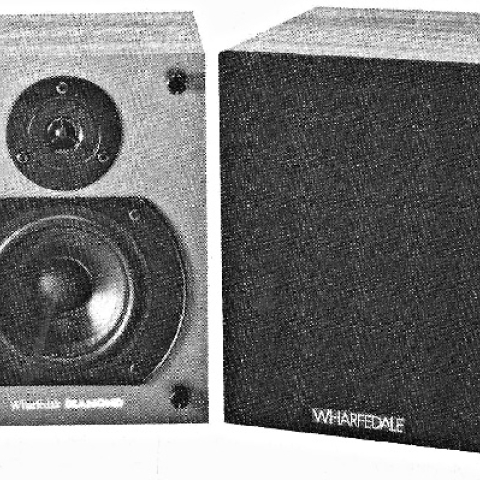
ARCAM's original A60 integrated was a high-value working person's amplifier. It became legend by driving Wharfedale's famously musical, 9"-high Diamond standmount. I remember the Diamond as the British budget classic, one that was (when I last heard it) exceptionally faithful to core listening priorities including natural tone and rhythmic drive. But my faded memory says the Diamond didn't sparkle or deliver the transparency or lightning transients of Klipsch's $649/pair RP600M II standmount/bookshelf speakers. As I expected, the Klipsch speakers showed ARCAM's amplifier's sound in a brighter, clearer, more contemporary light than my Falcon Gold Badges did.
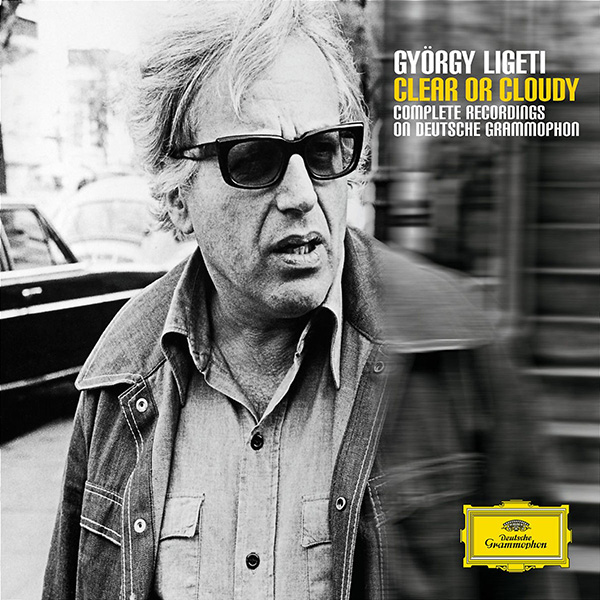 Using Onkyo's C-7030 CD player as a transport into the A25's DAC, I played Hungarian composer György Ligeti's 1988 composition Mysteries of the Macabre off a treasured 4-CD set entitled Clear or Cloudy (CD, Deutche Grammophon 00289 477 6443). The sound I experienced was more lucid and resolved—and more straight-out powerful—than I imagined possible at the price point. Mysteries of the Macabre came through with raw, affecting force, but tone-wise it strayed to the gray, slightly hard side of neutral. As did this DG recording.
If this was a Wilson review, the reviewer would say, "These speakers are highly resolving and poor recordings will sound poorly recorded." This Ligeti recording is slightly gray, raw, and hard.
Using Onkyo's C-7030 CD player as a transport into the A25's DAC, I played Hungarian composer György Ligeti's 1988 composition Mysteries of the Macabre off a treasured 4-CD set entitled Clear or Cloudy (CD, Deutche Grammophon 00289 477 6443). The sound I experienced was more lucid and resolved—and more straight-out powerful—than I imagined possible at the price point. Mysteries of the Macabre came through with raw, affecting force, but tone-wise it strayed to the gray, slightly hard side of neutral. As did this DG recording.
If this was a Wilson review, the reviewer would say, "These speakers are highly resolving and poor recordings will sound poorly recorded." This Ligeti recording is slightly gray, raw, and hard.
Rogue Audio's Sphinx V3 integrated is a vacuum tube–solid state hybrid stereo amplifier capable of outputting 100Wpc into 8 ohms for $1595. In my 2020 report, I stated that "the Sphinx V3 displayed a fun, taut energy the original did not have." The Sphinx V3 features an exceptionally natural-sounding moving magnet/moving coil phono stage, which I thought made Ortofon's 2M moving magnet sound more awake and exciting than it did with stand-alone phono stages costing $1000 or more. The Sphinx has no DAC, but with my Falcons and the Ares II DAC, its class-D amplifier used its exceptional bass-midrange prowess to reproduce large acoustic spaces with satisfying depth and detail. In comparison, the A25's class-G amp was less eager and expressive but more refined, detailed, and even keeled. The ARCAM came across as smoother, more intimate, and more nuanced than the Rogue—but maybe not as real sounding. Both amps played dark with the Falcon Gold Badges but brighter and livelier with the Heretic AD614 and the Klipsch RP600M II loudspeakers. Both amps favored all genres of music. In sum
During my auditions, the Radia A25 excelled at what ARCAM calls "its core competence": amplification. It drove three very different speaker loads with effortless, grainless, tone-truthful aplomb—like a first-quality power amplifier costing several times its $1499 asking price. For that, it earned an A+.
Footnote 3: Expected because, in my experience, CDs almost always sound more solidly three-dimensional and force-driven than streamed music. I'm still waiting for all you smarties to tell me why.