 BBC Radio 3's Night Tracks program, streamed with Roon, alerted me to Corin, an electronica artist with whom I was completely unfamiliar. After an ambient choral beginning, the title track from her Lux Aeterna (24/44.1 FLAC, UIQ/Qobuz) features a sequence with high-level, low-frequency synth notes. The Q Acoustics had no problem playing this passage with sufficient authority—not what I was expecting from a pair of relatively inexpensive speakers with 5" woofers.
I was careful to keep the sound pressure level at the listening seat below 87dB(C), slow ballistics. These are 5" woofers, after all. Even so, the low-frequency downward sweeps on the synth on "Fit Song," from Cornelius's Sensuous: la musique du 21o siécle (16/44.1 ALAC file, ripped from CD, Everloving/Warner Bros. EVE016), were cleanly reproduced. And the drum samples on this track had excellent clarity.
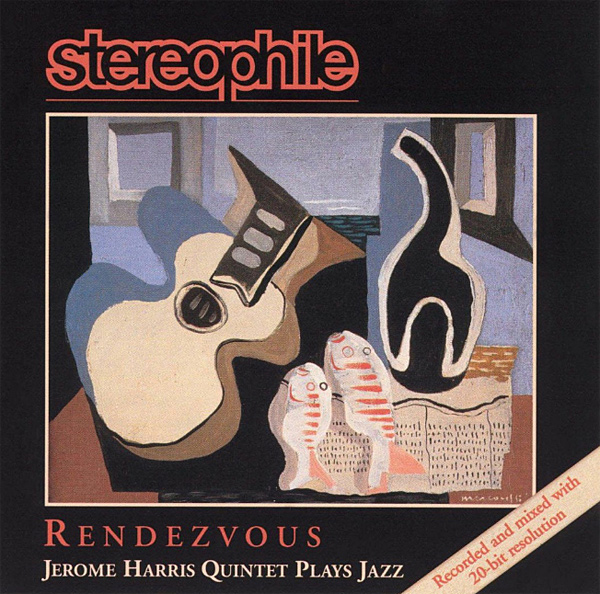
At the other end of the spectrum, Cornelius's sampled cymbals had a little too much HF "swish." Was it the speakers? Was it the Musical Fidelity amplifier? Was it the recording? I played a track from the Jerome Harris Quintet's Rendezvous (16/44.1 ALAC file, Stereophile STPH013-2), which I had recorded and mixed (footnote 3). Billy Drummond's cymbals on "Decision Point" also had a touch too much top-octave energy, more than I remember from when I listened to this track on the Q Acoustics Concept 50s and definitely more than with my reference KEF LS50s. I tried reducing the toe-in angle, as recommended in the manual, but this slightly blurred the stereo image.
BBC Radio 3's Night Tracks program, streamed with Roon, alerted me to Corin, an electronica artist with whom I was completely unfamiliar. After an ambient choral beginning, the title track from her Lux Aeterna (24/44.1 FLAC, UIQ/Qobuz) features a sequence with high-level, low-frequency synth notes. The Q Acoustics had no problem playing this passage with sufficient authority—not what I was expecting from a pair of relatively inexpensive speakers with 5" woofers.
I was careful to keep the sound pressure level at the listening seat below 87dB(C), slow ballistics. These are 5" woofers, after all. Even so, the low-frequency downward sweeps on the synth on "Fit Song," from Cornelius's Sensuous: la musique du 21o siécle (16/44.1 ALAC file, ripped from CD, Everloving/Warner Bros. EVE016), were cleanly reproduced. And the drum samples on this track had excellent clarity.
At the other end of the spectrum, Cornelius's sampled cymbals had a little too much HF "swish." Was it the speakers? Was it the Musical Fidelity amplifier? Was it the recording? I played a track from the Jerome Harris Quintet's Rendezvous (16/44.1 ALAC file, Stereophile STPH013-2), which I had recorded and mixed (footnote 3). Billy Drummond's cymbals on "Decision Point" also had a touch too much top-octave energy, more than I remember from when I listened to this track on the Q Acoustics Concept 50s and definitely more than with my reference KEF LS50s. I tried reducing the toe-in angle, as recommended in the manual, but this slightly blurred the stereo image.
 As I had noted with the Concept 50s, Drummond's kickdrum and Harris's acoustic bass guitar were reproduced by the 5040s with excellent upper-bass articulation, even with the ports open. Also like the Concept 50s, the 5040s offered impressive clarity and excelled when it came to stereo-imaging accuracy. The dual-mono pink noise track on Editor's Choice was reproduced as a narrow, stable central image, with no splashing to the sides at any frequency and only some slight "vertical venetian blind" effect (comb filtering) as I moved my head from side to side. The soundstage on Borders, a new album of orchestral works by Norwegian composer Henning Sommerro performed by the Trondheim Symphony Orchestra and conducted by Nick Davies (24/352.8 MQA, 2L 2L-173-SABD), was stable, wide, and deep. More significantly, the images of the individual instruments were superbly well-focused. The solo harmonica in the three movements of Solkverv (Solstice) was appropriately small. (Too many orchestral recordings exaggerate the size and loudness of the solo instrument—I am looking at you, Jascha Heifetz.)
It was time to return the Musical Fidelity amplifier to the distributor, so I replaced it with the Audio Research I/50 integrated amplifier. I used the I/50's 4 ohm output transformer taps, as I was already aware that the 5040 was a current-hungry load. (See the Measurements sidebar.) I played the Jerome Harris track again. The sound was sweeter than it had been with the Musical Fidelity—in fact it was too sweet. I measured the frequency response of one of the speakers while it was driven by the Audio Research and found that the 5040's output in the top octave was attenuated up to 5dB compared with the Nu-Vista 800.2. This was due to the fact that the I/50's output impedance rises to 2.3 ohms in the top octave and the Q Acoustics's impedance in the same region drops to 3 ohms.
As I had noted with the Concept 50s, Drummond's kickdrum and Harris's acoustic bass guitar were reproduced by the 5040s with excellent upper-bass articulation, even with the ports open. Also like the Concept 50s, the 5040s offered impressive clarity and excelled when it came to stereo-imaging accuracy. The dual-mono pink noise track on Editor's Choice was reproduced as a narrow, stable central image, with no splashing to the sides at any frequency and only some slight "vertical venetian blind" effect (comb filtering) as I moved my head from side to side. The soundstage on Borders, a new album of orchestral works by Norwegian composer Henning Sommerro performed by the Trondheim Symphony Orchestra and conducted by Nick Davies (24/352.8 MQA, 2L 2L-173-SABD), was stable, wide, and deep. More significantly, the images of the individual instruments were superbly well-focused. The solo harmonica in the three movements of Solkverv (Solstice) was appropriately small. (Too many orchestral recordings exaggerate the size and loudness of the solo instrument—I am looking at you, Jascha Heifetz.)
It was time to return the Musical Fidelity amplifier to the distributor, so I replaced it with the Audio Research I/50 integrated amplifier. I used the I/50's 4 ohm output transformer taps, as I was already aware that the 5040 was a current-hungry load. (See the Measurements sidebar.) I played the Jerome Harris track again. The sound was sweeter than it had been with the Musical Fidelity—in fact it was too sweet. I measured the frequency response of one of the speakers while it was driven by the Audio Research and found that the 5040's output in the top octave was attenuated up to 5dB compared with the Nu-Vista 800.2. This was due to the fact that the I/50's output impedance rises to 2.3 ohms in the top octave and the Q Acoustics's impedance in the same region drops to 3 ohms.
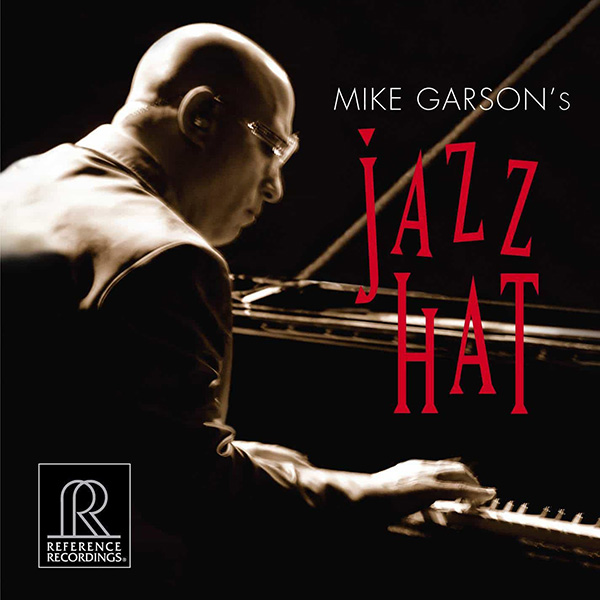 Yes, the treble balance sounded overly sweet with this amplifier, but the Q Acoustics speaker's midrange was still impressively transparent. I played Mike Garson's arrangement of Miles Davis's "All Blues" from Jazz Hat (16/44.1 FLAC, Reference Recordings/Qobuz). Garson's piano sounded uncolored, though projected slightly forward in the soundstage. I confirmed this behavior with one of my own piano recordings, Robert Silverman performing Liszt's Liebestraum (16/44.1 ALAC, Stereophile STPH-008-2). Silverman's Steinway was superbly articulate, though its image was indeed more forward than I am used to, with some upper midrange notes slightly emphasized.
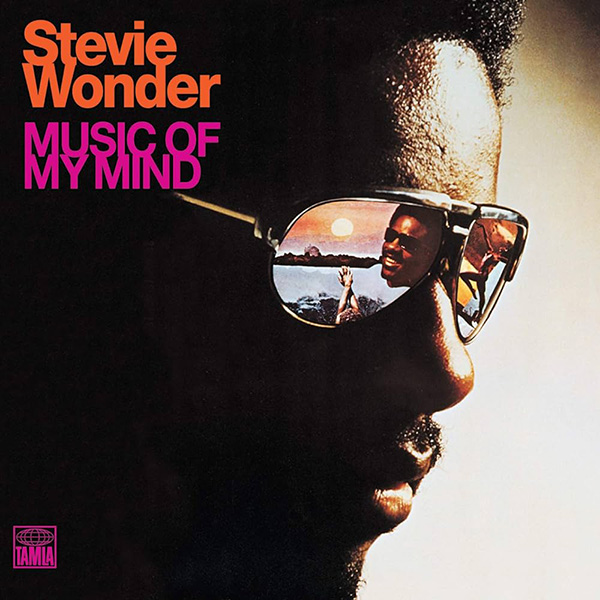 Listening to the Jerome Harris Quintet's Rendezvous reminded me that Art Baron, the trombonist on this album, had also been featured on "Love Having You Around" from Stevie Wonder's Music of My Mind (Motown). I finished my auditioning of the Q Acoustics 5040s by streaming Music of My Mind in 24/192 resolution from Qobuz, sticking with the NAD amplifier. The synth bass line was evenly balanced, the cymbals didn't sound too hot, Wonder's multitracked vocals were compelling, and when Art Baron's blatty-sounding 'bone takes flight around the 5-minute mark, the Q Acoustics 5040s transported me back 50 years to when this groundbreaking album was in heavy rotation chez Atkinson.
I wasn't sure what to expect from the Q Acoustics 5040. Other than the GoldenEar BRX, which costs $1900/pair, and the KEF LS50 Meta, which costs $1599.99/pair, the 5040 is the least expensive speaker I have reviewed in more than four years. The Q Acoustics is a tower speaker while those other two are standmounts, which means the cost of a pair of good-quality stands needs to be added to their prices. But even without taking its affordable price into consideration, Q Acoustics's 5040 offers superb sound quality. It combines sufficient low-frequency extension and articulation with excellent clarity and imaging and low coloration. As the 5040 won't play deafeningly loudly, it will work best in smallish to medium-sized rooms, and amplifier choice will be critical in getting the best from this speaker. Highly recommended.
Footnote 3: This CD is out-of-print but the files can be downloaded or streamed from jeromeharris.bandcamp.com/album/rendezvous.