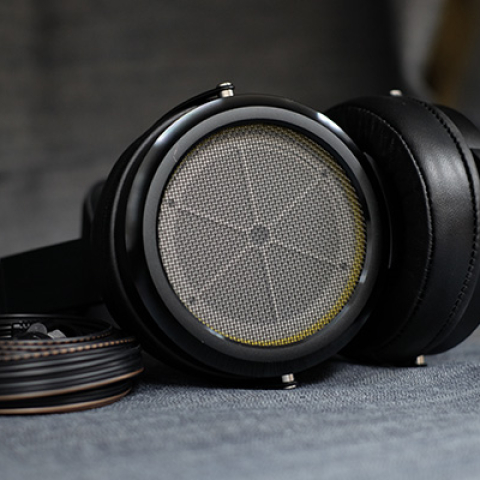
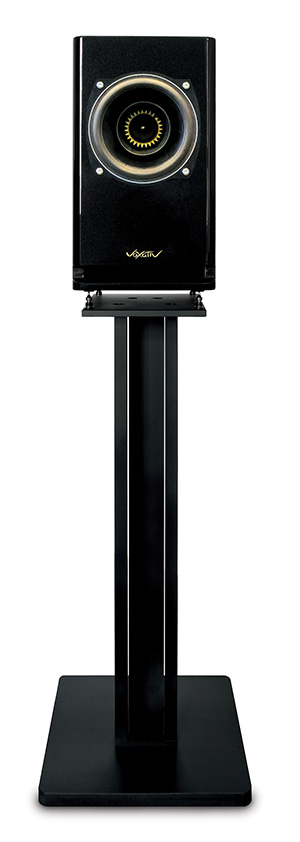
 Immediately, the Hagen2's flaunted their transient prowess and ability to track complex, high-velocity signals. Powerful tempos and finely wrought textures came through from both digital formats, but the Voxativ's phase-correct paper cones showed the CD version to have deeper spaces, thicker bones, and more hue-saturated tones.
Accurate-as-possible tone and conspicuously corporal textures are what paper cones activated by powerful magnets specialize in. The strategy behind using paper cones is to impose some measure of forest-nurtured naturalness on instruments and voices. The reputations of loudspeakers from Audio Note, DeVore Fidelity, and Stenheim (to name a few) are built on the belief that it might not be possible to make plastic sound like wood or human flesh.
The worst possible paper cone experience is when the cone "cries." Its stiff "paper-ness" becomes bright and glary, upstaging the organic material's intrinsic naturalness. Many audiophiles have experienced this "cone cry" and closed their minds to paper. Well, forget that. The Hagen2 cones did not cry. At all. Ever.
Immediately, the Hagen2's flaunted their transient prowess and ability to track complex, high-velocity signals. Powerful tempos and finely wrought textures came through from both digital formats, but the Voxativ's phase-correct paper cones showed the CD version to have deeper spaces, thicker bones, and more hue-saturated tones.
Accurate-as-possible tone and conspicuously corporal textures are what paper cones activated by powerful magnets specialize in. The strategy behind using paper cones is to impose some measure of forest-nurtured naturalness on instruments and voices. The reputations of loudspeakers from Audio Note, DeVore Fidelity, and Stenheim (to name a few) are built on the belief that it might not be possible to make plastic sound like wood or human flesh.
The worst possible paper cone experience is when the cone "cries." Its stiff "paper-ness" becomes bright and glary, upstaging the organic material's intrinsic naturalness. Many audiophiles have experienced this "cone cry" and closed their minds to paper. Well, forget that. The Hagen2 cones did not cry. At all. Ever.
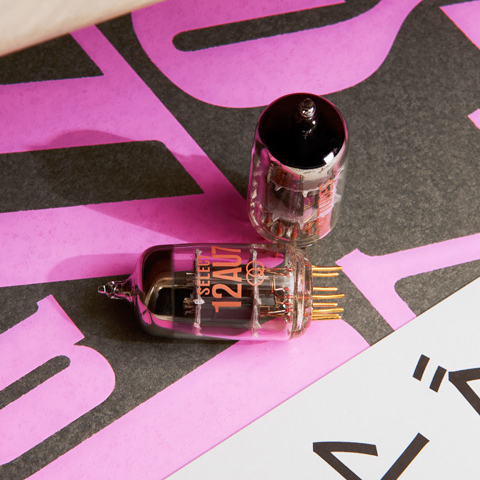
When I inserted Elekit's TU-8900 single-ended 300B/2A3 amp, the channel balance was slightly off. It evened out when I swapped the Brimar 6067/ECC82 driver tubes for the left and right channels. This was an exciting moment, as I was hoping the 300Bs would really light up the Hagen2s. Which they did, with awesome authority. It felt like the beginning of a new era in my studio. For years, that Elekit amp has made my Falcons sound almost Japanese in their burnished clarity. The Russian Bs in the Japanese amp made these German speakers come totally alive—more alive than the SIT-4 or the 300W Parasound had managed.
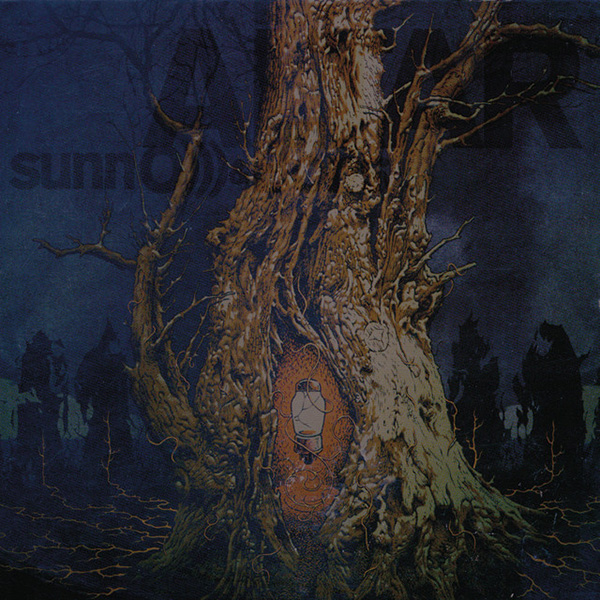 This was especially obvious when I played Sunn O))) & Boris's 2006 masterpiece Altar (Southern Lord CD Sunn62). The energy was imposingly large and expansive. I simply enjoyed the bass, not critiquing or wishing for more, though Boris fans with rooms bigger than mine would say the bass was not large or powerful. But in my little room, it went deep enough to cause me to enjoy Altar's bass-centric power ambient. With the Hagen2s, the insides of those sound fogs appeared like microdetailed mystery realms. Not once—not even on Altar's giant bass expansions—did I wish for more bass. The Hagen2's treble-to-bass balance satisfied me completely, with only 4W of single-ended 300B power.
I'm in a period where I'm fascinated by how the size and musculature of a violinist or pianist's body affects the sounds they extract from their instruments. This body-to-instrument fascination began watching Yuja Wang perform on YouTube. Wang's power stands in contrast to a lifetime of listening to Egon Petri on record. Petri was a large man who played violin and piano, but I know him only as a pianist. He played the piano eagerly, with powerful, surging momentums. The volume of Egon's chest and the length and muscle of his arms are communicated by the force of his touch. His power came through clearly playing Brahms's Variations on a Theme of Paganini Op.35, from the seven-CD compilation APR 7701. With SE 300Bs driving the Hagen2s, Egon's left hand activated not only the soundboard but also the frame of the piano, especially its left side. Tones made by wood and steel were clear and seemed faithfully rendered. His touch showcased drama and gravitas. His right hand played keys that sounded bell-clear and whizzer-cone brilliant. With the Hagens, Petri's high notes appeared, floated in air, and faded just right. The Hagen2s felt like the small 300B-friendly speaker I'd waited my whole life for.
This was especially obvious when I played Sunn O))) & Boris's 2006 masterpiece Altar (Southern Lord CD Sunn62). The energy was imposingly large and expansive. I simply enjoyed the bass, not critiquing or wishing for more, though Boris fans with rooms bigger than mine would say the bass was not large or powerful. But in my little room, it went deep enough to cause me to enjoy Altar's bass-centric power ambient. With the Hagen2s, the insides of those sound fogs appeared like microdetailed mystery realms. Not once—not even on Altar's giant bass expansions—did I wish for more bass. The Hagen2's treble-to-bass balance satisfied me completely, with only 4W of single-ended 300B power.
I'm in a period where I'm fascinated by how the size and musculature of a violinist or pianist's body affects the sounds they extract from their instruments. This body-to-instrument fascination began watching Yuja Wang perform on YouTube. Wang's power stands in contrast to a lifetime of listening to Egon Petri on record. Petri was a large man who played violin and piano, but I know him only as a pianist. He played the piano eagerly, with powerful, surging momentums. The volume of Egon's chest and the length and muscle of his arms are communicated by the force of his touch. His power came through clearly playing Brahms's Variations on a Theme of Paganini Op.35, from the seven-CD compilation APR 7701. With SE 300Bs driving the Hagen2s, Egon's left hand activated not only the soundboard but also the frame of the piano, especially its left side. Tones made by wood and steel were clear and seemed faithfully rendered. His touch showcased drama and gravitas. His right hand played keys that sounded bell-clear and whizzer-cone brilliant. With the Hagens, Petri's high notes appeared, floated in air, and faded just right. The Hagen2s felt like the small 300B-friendly speaker I'd waited my whole life for.
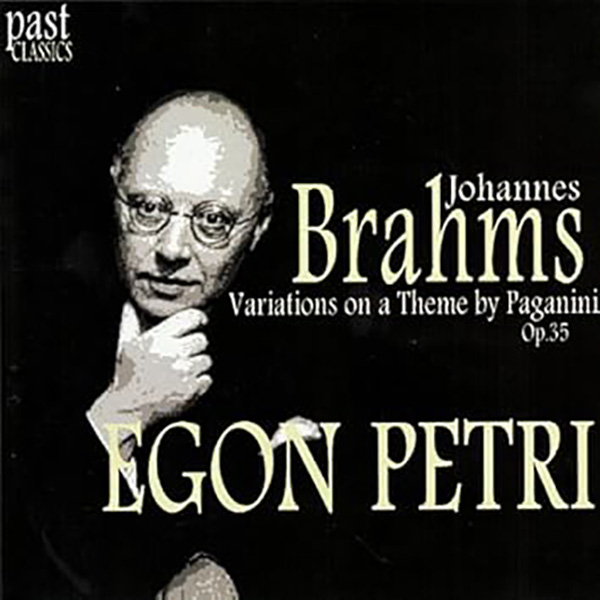 I played the first Petri disc all the way through before I remembered I was supposed to listen for stuff to write about. Neither the 4W amp nor the 5" speakers distracted me; I noticed only Petri's performance. When the disc ended, I was delighted by how freely 4W operated the Hagen2's voice coils. It was a memorable listening moment.
I knew in advance that if the Hagen2s could sing and play freely with 2A3s, I'd be doing zoomies and dancing my happy dance. My chief disappointment with my Falcon LS3/5a's is that they don't play loud, lively, or totally satisfying with 2A3s. But the Hagen2 Monitors did. With the clean-voiced 2A3s, the Voxativs played loud and free and clear but sounded thinner than they did driven by 300Bs. The lowest octave seemed to fade out higher. Still, dynamic compression was minimal. Midrange textures were crisply rendered. Tone with black-plate Sylvania 2A3s was rich 1940s-saturated. With the Elekit TU-8900, these 2W triodes gave more density to the Hagen's top five octaves than the bottom four, but all nine octaves played lively and supremely transparent. Putting the Falcons back in
For a month, I listened with Voxativ's Hagen2s exclusively. When I replaced them with my long-serving Falcon Gold Badges, I was pleased to see how clear and loud the Falcons played with single-ended 2A3s: better than I remembered but not enough juice for everyday use. So to make this comparison fair, I put Cossor WE300Bs (made by LinLai) into the Elekit TU-8900.
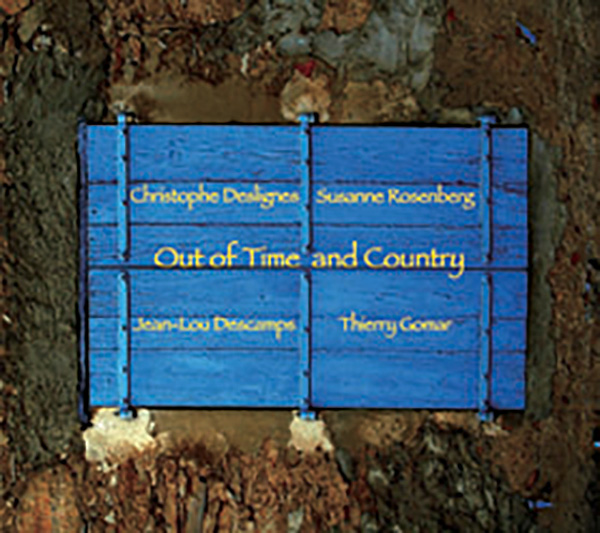 To start my Falcon-Hagen2 comparison, my choice of simple, quiet, well-recorded program was to see which of the two boxes made Out of Time and Country (CD, MA Recordings M080A) sound the most beautiful. This album is a wonderfully subtle creation, an elegant, contemporary mashup of medieval folk traditions from Sweden and France resulting in something new and delightfully poetic. The disc's 19 songs touch on every kind of music imaginable, but every track is low-key, meditative, and full of hidden compositional surprises. The core magic of these songs lies in the resonating tones from Christopher Deslignes's organetto and Susanne Rosenberg's seductive voice.
With my Falcons playing at modest volumes, the LinLai B's flashed their incredible transparency and purity of tone, exposing the fact that the Gold Badges are not quite as "open window" transparent as the Hagen2s.
When I switched from 1940s 2A3s to new-manufacture Cossor WE300Bs, the sound from the Falcons and the Hagens relaxed and flowed riverlike under a new kind of light that made me think our planet is somehow orbiting a larger sun.
To start my Falcon-Hagen2 comparison, my choice of simple, quiet, well-recorded program was to see which of the two boxes made Out of Time and Country (CD, MA Recordings M080A) sound the most beautiful. This album is a wonderfully subtle creation, an elegant, contemporary mashup of medieval folk traditions from Sweden and France resulting in something new and delightfully poetic. The disc's 19 songs touch on every kind of music imaginable, but every track is low-key, meditative, and full of hidden compositional surprises. The core magic of these songs lies in the resonating tones from Christopher Deslignes's organetto and Susanne Rosenberg's seductive voice.
With my Falcons playing at modest volumes, the LinLai B's flashed their incredible transparency and purity of tone, exposing the fact that the Gold Badges are not quite as "open window" transparent as the Hagen2s.
When I switched from 1940s 2A3s to new-manufacture Cossor WE300Bs, the sound from the Falcons and the Hagens relaxed and flowed riverlike under a new kind of light that made me think our planet is somehow orbiting a larger sun.
 It's true
According to my father, I come from a long line of grizzled German peasants, which means that I grew up fearing Krampus and myths and fairy tales are an essential part of my Teutonic birthright. It also means I was introduced to the vassal Hagen in the epic poem Nibelungenlied, where I discovered the cloak of invisibility. I now believe: Siegfried's magic cloak has been passed down to the Voxativ Hagen2 Monitor. It's the most transparent speaker I've ever used.
 Postscript
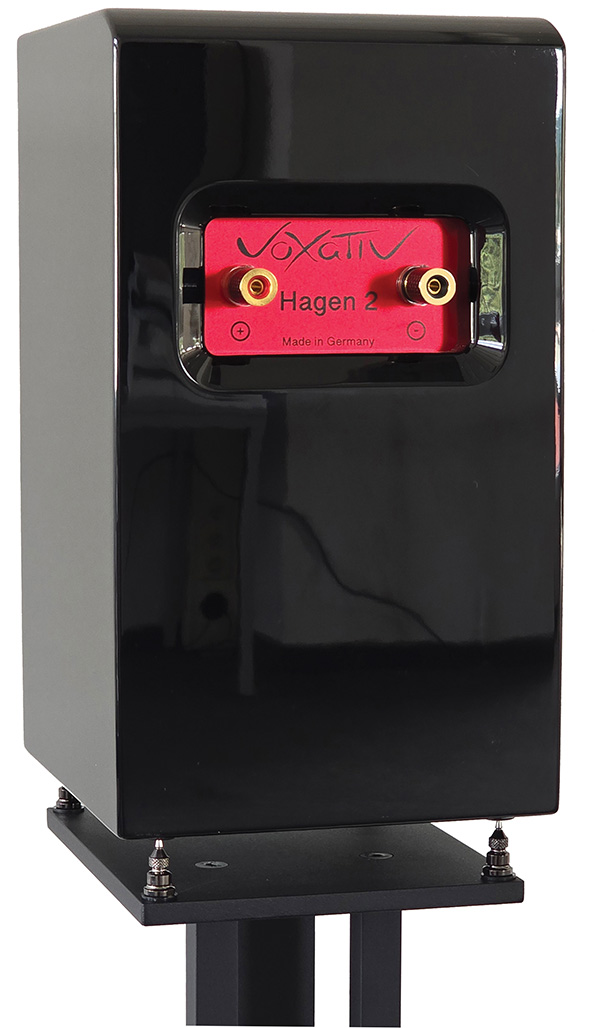
The Hagen2 Monitors are, as I've already said, a "perfect Herb speaker," an engineering achievement I've spent almost 50 years searching for. I sit back and smile knowingly, recognizing how differently these Voxativs must sound from John and Kal's KEF speakers or Jim and Jason's Wilsons, or Ken and Alex's horns. I encourage readers to picture the diversity of these Stereophile reviewers' rooms and corresponding taste in loudspeakers and place my room and taste in the lineup with theirs.