 Listening
Whenever I play records through my sound system, I need to feel the personas of the artists coming through. I want some authentic John Fogerty attitude. I want as much edgy John Lennon as I can get. I want to
feel Tina Turner's moves. I want Aaron Neville's sacred voice to haunt me 'til we meet by the river.
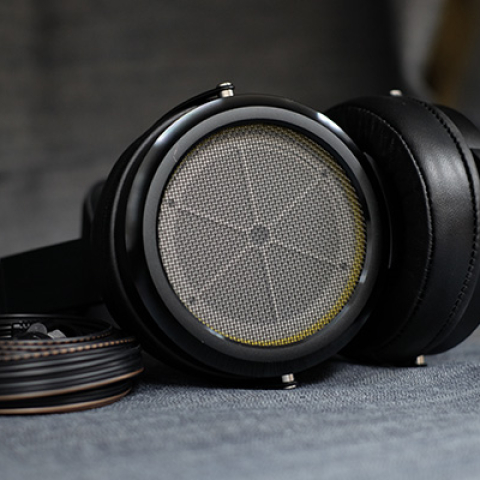
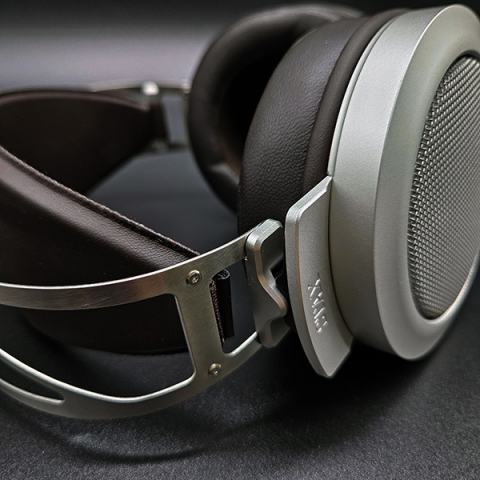
As I sat listening with the Stax SR-007S, it took only a few seconds for Aaron Neville singing John Hiatt's sexy dreamy "Feels Like Rain" (16/44.1 FLAC A&M/Qobuz) to lope its way into my heart and choke me up.
Down here the river meets the sea
And in the sticky heat I feel you open up to me
Love comes out of nowhere, baby,
And it feels like rain
And it feels like rain
"Where the river meets the sea" is the place I want to be.
Through the 007S, sourced by the
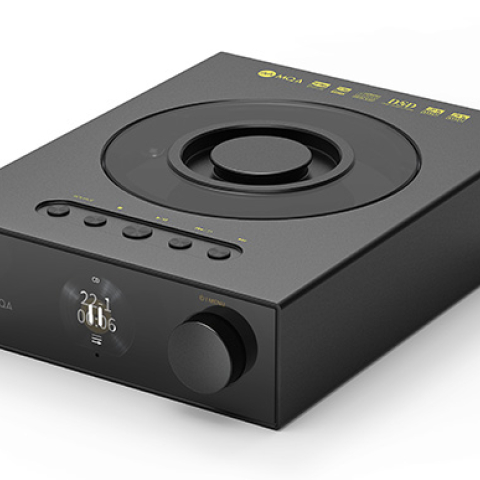
dCS Lina DAC, and driven by
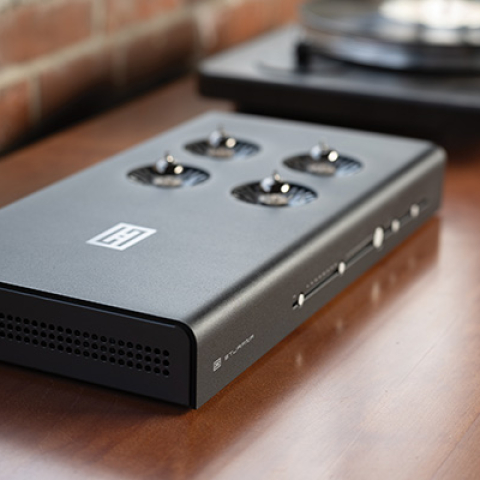
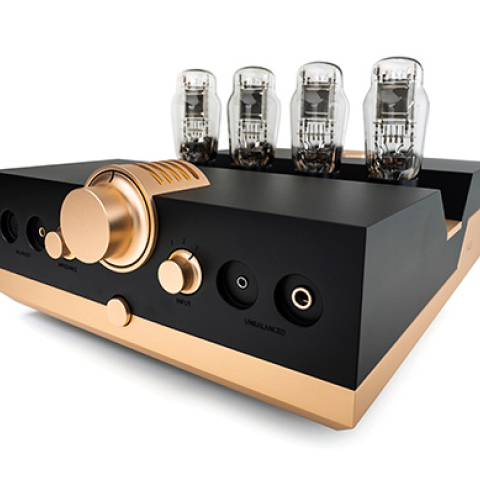
Linear Tube Audio's Z10e, the sound was smooth-flowing and evenly lit in a dreamy, vibrant, colorful way that felt tactile and sexy. There was no etched, static-y, overemphasized detail to distract my mind from the Mississippi delta—just sweat-drenched, eyes-closed Aaron Neville.
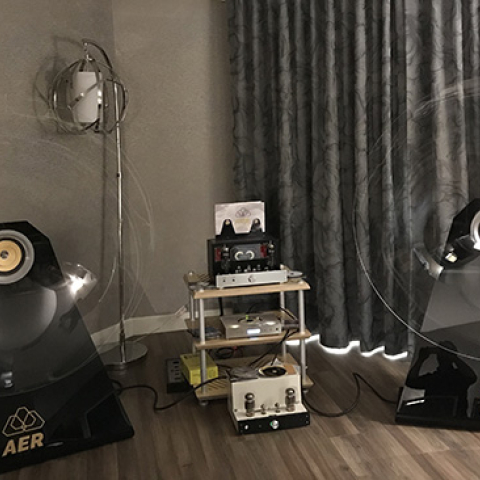
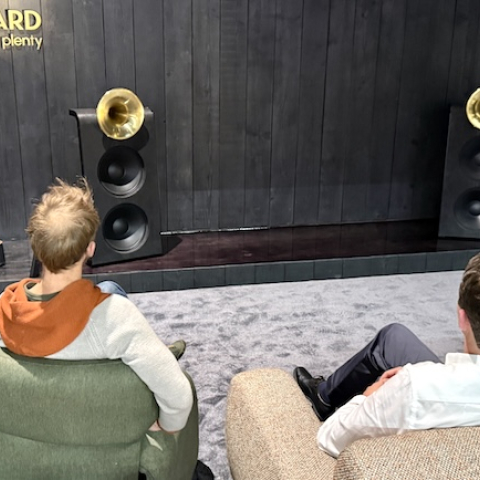
No one would accuse Voxativ's standmount, single-driver
Hagen2 or Stax's SR-007S headphone of being warm or soft, or pink-tinted, or fuzzy, or dull—least of all dull—but with the LTA Z10e integrated amplifier, I was able to flip a toggle switch back and forth between the Voxativ Hagen2 standmounts and the Stax headmounts. Dang me if, as I played "Cargo culte," the last track on Serge Gainsbourg's
Histoire de Melody Nelson (Mercury LP 6397 020), these two transducers didn't sound amusingly alike. With the Stax and the Voxativ it boils down to what Tom Norton said: "If you want to know what's on the recording ..."
With the Hagen2 and the 007S driven by the same LTA Z10e amplifier, the tones, textures, and densities of vocal forms were a dead-on match. When I noticed this remarkable similarity, I smirked with pride, because I like floorspeakers that sound like headspeakers (and vice versa), and I have deliberately steered my system toward that type of studio monitor/electrostatic headphone sound. With the SR-007S and the Hagen2s, there's no crossover to thicken the sound or compress dynamics and reduce transparency. There are no capacitors, resistors, or coils. No overloaded dome tweeters. No DSP deceptions—just straight-up rawness, with no phase-tampered peculiarities. That's my kind of transducing.
I test my hearing frequently. There is no question: My ability to discern the highest frequencies is curtailed. But my timing and phase sensitivities are more acute now than when I was young. As a result, I feel more confident than ever about my ability to accurately describe what my transducers are up to.
AudioQuest's Bill Low told me in an email that "a phase lag causes people to think the treble is rolled off, even if it's ruler flat. And a phase
lead causes people to think the treble is tipped up." He was referencing Professor Milind Kunchur's lecture at AXPONA 2025, "The Science of Human Hearing." Bill's take on Professor Kunchur's main points was that "as humans age, their natural amplification in the mechanics of hearing fades and high-frequency amplitude sensitivity becomes diminished.
"But timing and phase sensitivity remain undiminished and more important than ever—not only because phase becomes a larger percentage of aural acuity but also because phase is more revealed, as though amplitude is a kind of masking noise at the neurological level," Low continued. I think we should all read that last sentence again.
"My 1970s retail days taught me that people with compromised hearing, usually taking out their hearing aids before listening, were the best judges of audio. They have less to no margin for error and never fell for the kind of hi-fi that's designed to grab attention on a sales floor.
"That wasn't at all about just playing music louder, which they more often didn't do, but about the preservation of phase."
Bill Low and I agree: When it comes to critical listening, "oldsters have an advantage and need good hi-fi more, not less, than the youngsters."
A smart Euro-dude once told me, "Western Electric found that phase linearity was critical to voice intelligibility while amplitude linearity didn't matter."
Back in my youth
My first experience with Stax's electrostatic
floorspeakers was totally memorable. It happened around 1990, when a friend in Jersey invited me to compare his long-serving
Quad ESL-57s to his newly acquired
Stax ELS-F81Z. After listening to a few discs, my friend asked what I was noticing about the Stax panels. I told him, "They supercharge the sound!" "Make it super open and spacious." "Less compressed." "More transparent."
Anyone listening through Stax F81s will have the words
speed and
transparency flashing on their brain screens. Which is exactly what I experienced with the SR-007S
earspeakers. Just like the F81s, the 007S forced me to an awareness of how transients should sound completely formed and
instantaneous.
I don't need deep bass, and I don't
want loud bass. What I want is fit, tuneful bass that doesn't spoil the midrange. To my delight, the bass made by the SR-007S was so clean that it enhanced the midrange. It was deep and quick on its feet, with only enough bloom to not be considered dry. It had just the right amount of spectral weight in the critical upper-bass through the lower midrange (~75–300Hz), which clarified all the other octaves. This is a Stax product, so of course the SR-007S has a scintillating vocal range (~300Hz–5kHz; footnote 3). For the same reason, its top two octaves rivaled the
RAAL SR1a ribbon headphones for ether-like clarity.
I reviewed Stax's
SR-X9000 ($6200) and SR-009S ($4545) and found them both to be mastering-lab, reference-quality neutral. There is no question: Those top-line Staxes are more detailed and transparent than this one is. They can describe complex musical forms with greater authority than the $2390 SR-007S. But that does not mean they can present singers and their songs more pleasurably.
The 007S Stax makes voices extra-appealing by sounding richer, smoother, and more silky-supple than the Stax SR-009S, which sounded smoother and more pliant than its predecessor, the SR-009. Writing about the SR-X9000, I said, "It left no veils unlifted." When amplified by LTA's Z10e integrated, the SR-007S exhibits a few gossamer veils, but they are made of sheer, undyed silk and, like fine lingerie, present flesh and its vicissitudes with enhanced appeal.
The new SR-007S earspeakers satisfied both sides of my brain equally and made me want to use no others.
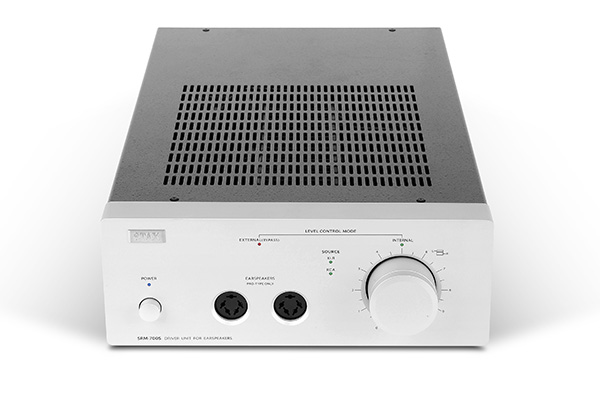 The Stax SRM-700S amplifier
The Stax SRM-700S "driver unit" arrived double boxed. Its outer box was sealed with paper tape featuring the Edifier logo, which reminded me that in 2011, Chinese loudspeaker manufacturer Edifier acquired 100% of the equity of Stax of Japan. I had forgotten this.
I've been following Stax products since the 1980s, and the only changes I've noticed since 2011 have all been steps up in engineering prowess and industrial design. Starting with the SR-009 in 2011, I thought each succeeding flagship moved slightly toward a silkier, more refined presentation.
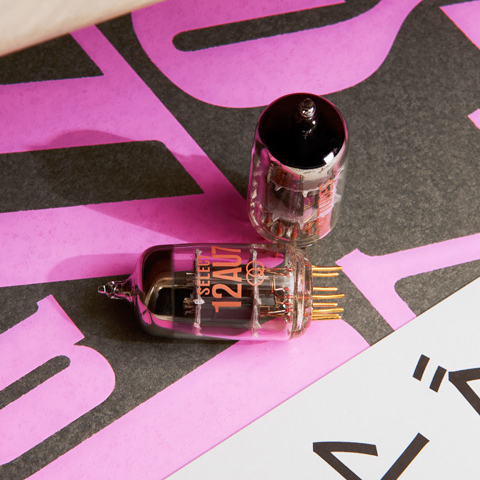
Linear Tube Audio's Z10e uses EL84 tubes. Stax's SRM-700S driver unit is all JFET, and it is so transparent I swear that in the quiet passages I could hear its JFETs flowing current. Which suggests the 700S is a simple, naturally clean design with minimal feedback.
Listening to Serge Gainsbourg's
Histoire de Melody Nelson, my attention kept focusing on how Serge and Jane Birkin pronounced their words. With the 700S powering the 007S, each word had its own shape and internal structure.

This is my first time using Stax headphones with a Stax amplifier. In the past, I reviewed Stax Earspeakers with either HeadAmp's $4995 Blue Hawaii, Linear Tube Audio's $6950 Z10e integrated, or Woo Audio's 300B-based 3ES electrostatic headphone amplifier/preamplifier ($9999). The DC-coupled SRM-700S costs $3400, weighs a hefty 13.9lb (6.3kg), and measures a nicely proportioned 9.4" (240mm) wide × 4" (103mm) high × 15.5" (393mm) deep. This little power block makes 60dB of gain with a maximum output voltage of 450V RMS, measured at 1kHz. It runs class-A, room-heating hot and has two pairs of line-level inputs, one RCA and one XLR.
I am familiar with the sound character of Stax SR-X9000 with all the above-listed amplifiers, but I have never used a solid state Stax driver unit. With the SRM-700S, I expected more hardness and probably less flow. What I heard was not hard at all and flowed like a deep creek. The Stax amp's extreme clarity dominated my experience of every recording. The character of this amp may be summed up in one word: purity. It showed me everything on every recording. It played a 2014 remastering of a 1959 recording of soprano Maria Callas portraying Verdi heroines (Werner Classics LP 0190295844431) and exposed every hair-raising shift in dynamics. On all of Callas's highest notes, I grinned and said
Wow!
I watched bursting clouds of note energy rising above Maria's face and microphone, vivid to the max and utterly transparent. A defining moment.
Compared to the Susvara
Spending time with the Stax SR-007S showed me how bright, open, and transparent electrostatics sound when compared to even the best planar magnetic drivers, which, with my cohort of amps, present denser and darker than stats.
HiFiMan's original
Susvara ($6000) planar magnetic is still my reference for ultimate data preservation. With its gold-leaf, nano-thick diaphragms, recordings come through fully rendered. The Susvara exposed the chest and head of Callas and put a human with a powerful air-moving voice in front of the microphone.
In contrast, and tellingly, the Stax SR-007S let me see through the 2014 digital remastering to the original 1959 recording. While I listened, I felt like I was hearing both recordings at once. I probably imagined it, but I swear I could hear analog tape whirling ahead of Warner Classics' analog-to-digital converter.
Conclusions
The new SR-007S and SRM-700S are proof that Stax is engaged in what I call "perfectionist engineering," working steadily, in an unrushed manner, to improve and refine quality and performance and make the best products they can possibly make. In audio, this is a rare and estimable trait. Therefore, I nominate Stax's "Advanced & Reimagined" SR-007S as
Stereophile's headphone Product of the Year (footnote 4).
Footnote 3: In terms of the fundamental frequency, the top of the vocal range is not much above 1100Hz (though the very highest voices may go above 1300Hz). But that doesn't account for harmonics, and fricatives—hard consonant sounds—rely on much higher frequencies, and the sense of presence arises from frequencies approaching 5kHz.—
Jim Austin
Footnote 4: I'm sure the Stax SR-007S will be a strong competitor—but not until the 2026 contest, since eligibility for the current year's contest ended with the October 2025 issue.—
Jim Austin