There are faster ways to start an online fight, but not many. Say "$10,000 DAC" and watch audio-forum commenters descend like pigeons on a dropped hot dog, flapping and furious. They'll tell you the designers are crooks, the buyers are dupes, and anyone not DIY-ing with AliExpress kits is a poseur.
Building high-end hi-fi equipment costs serious coin, but you wouldn't know it from the Anger, Smugness, and Rigidity found on certain objectivist audio forums, where anything north of, say, $5000 is deemed a ripoff or a status buy. To posters in those snark-infested waters, expensive equals unfair. Margins and migraines
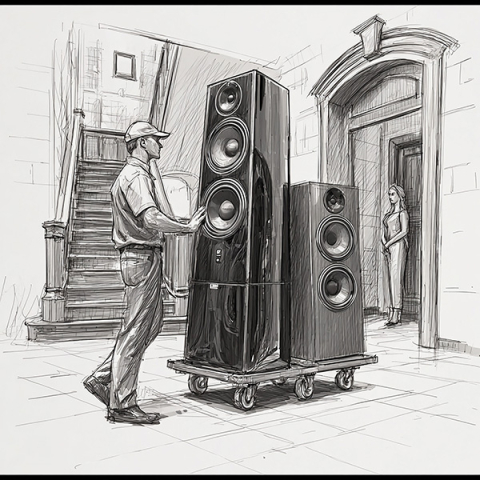
Here's the reality. Let's say you want to build loudspeakers. That means renting, buying, or erecting a building, investing in precision tooling, buying high-quality electronic parts and cabinet materials, and making various prototypes. You'll need CNC machines and measuring setups. You'll also need people: engineers, designers, craftspeople, and eventually, operations managers and logistics staff. You'll be on the hook for salaries and benefits, electricity, insurance, travel expenses, accounting fees, corporate taxes, custom packaging, and whatever the shipping company decides to charge this month. You'll endure supply-chain droughts the way sailors wait for wind. Once you're in production, you'll file forms, fight tariffs, and pray the resistors you ordered for the next product batch don't arrive four months late in unmarked baggies, poorly sorted and with a sticky note that says "Sorry." You'll have to whisper sweet nothings to customs agents, some of whom might appreciate a little baksheesh. After shipping your products to distributors and dealers, you'll chase invoices through multiple time zones, probably after sending several emails beginning with "Gentle reminder."
And through it all, the product that you make must sing. You'll need to showcase your gear at costly audio expos. There, while popping Tylenols for your spasming back, you'll stand beside your best work as a guy with a hearing aid asks whether you've tried lifting your power cords off the carpet. You'll spend real money on advertising and marketing. And if you're lucky enough to sell in volume, you'll need to hire more people and build more inventory, which carries its own risk. Welcome to the audio business.
Most companies in high-end audio aren't cranking out units by the thousands. They build small batches—five, or 10, or 20. Or two. Or one. That changes everything. Economies of scale no longer apply. The manufacturing costs are much, much higher.
Some high-end firms employ 10, 20 people, sometimes fewer. They can't offset costs through volume the way Apple or Sony can. The high end can be profitable, but if it's money you want, there are easier ways. Few manufacturers are doing it so that they can afford to jet off to St. Barts or hire a personal blood boy. They build what they can, how they can, with bottom lines that would make a Samsung exec cackle. Most audio builders are just trying to innovate, have fun, honor the music—and stay solvent.
Sure, some products are priced sky-high because the market will bear it—no other reason. And it's true: Shenanigans aren't unheard of. Who could forget that time when Lexicon put a $500 Oppo player, case and all, inside its own aluminum chassis and sold it for $3500? Some "MkII" upgrades are just cash grabs aimed at anxious audiophiles chasing the latest badge—or redesigns aimed at making a product cheaper to build instead of better. But most of the time, prices are tethered, by market forces if not by policy, to real costs of doing business (footnote 1)—and to years of iteration, trial, error, and invisible labor that never makes the spec sheet.
Dupe? Nope.
If you've bought paint, lumber, eggs, or a mattress lately, you know that prices have gone feral. So why is high-end audio singled out for moral outrage? Don't forget that the manufacturer doesn't receive the full sticker price. Distributors and dealers often take 40–60%, which means that by the time a component is boxed, shipped, and on display, the maker sees less than half of what the buyer pays. Still, high-end hi-fi is a high-margin business. It must be, when so few units are sold.
At the end of all that—the failed prototypes, the compromises weighed and rejected, the bleary-eyed nights and stretched credit lines—we can picture a quiet living room somewhere. A record is cued up. The first note hits like a struck bell. It's in the room.
That's what all this buys.
We don't flinch when a car costs 50, 60 grand or more. It's useful, and it can be a joyous purchase. But a car only gets you from A to B. The right stereo can take you everywhere else—into memory, emotion, time. You can hear it in that living room when someone drops a needle and a favorite song opens up like a window. Don't tell me that doesn't matter. Don't tell me it's trivial to be transported to a Tokyo concert hall, or to a summer night 30 years ago in the arms of someone you still ache for.
It's past time to stop treating audio buyers like suckers just for spending money on what they love. No one's being duped. Rather than buying Veblen goods for bored millionaires, they're choosing machines made with care by people who still lose sleep over getting a cymbal fade or a cello swell just right. That kind of commitment deserves respect, even from the cheap seats.
Footnote 1: I wrote in my November 2018 As We See It that if an audio manufacturer has to gross a certain amount of revenue each quarter to cover fixed expenses and meet payroll (as well as investing in parts for the next quarter's production, and pay the interest on any capital they've borrowed), the least risky business strategy is to bring to market a very small number of very expensive products. That applies even more to small companies; see the linked essays in that As We See It.—John Atkinson
Building high-end hi-fi equipment costs serious coin, but you wouldn't know it from the Anger, Smugness, and Rigidity found on certain objectivist audio forums, where anything north of, say, $5000 is deemed a ripoff or a status buy. To posters in those snark-infested waters, expensive equals unfair. Margins and migraines
Here's the reality. Let's say you want to build loudspeakers. That means renting, buying, or erecting a building, investing in precision tooling, buying high-quality electronic parts and cabinet materials, and making various prototypes. You'll need CNC machines and measuring setups. You'll also need people: engineers, designers, craftspeople, and eventually, operations managers and logistics staff. You'll be on the hook for salaries and benefits, electricity, insurance, travel expenses, accounting fees, corporate taxes, custom packaging, and whatever the shipping company decides to charge this month. You'll endure supply-chain droughts the way sailors wait for wind. Once you're in production, you'll file forms, fight tariffs, and pray the resistors you ordered for the next product batch don't arrive four months late in unmarked baggies, poorly sorted and with a sticky note that says "Sorry." You'll have to whisper sweet nothings to customs agents, some of whom might appreciate a little baksheesh. After shipping your products to distributors and dealers, you'll chase invoices through multiple time zones, probably after sending several emails beginning with "Gentle reminder."
If you've bought paint, lumber, eggs, or a mattress lately, you know that prices have gone feral. So why is high-end audio singled out for moral outrage? Don't forget that the manufacturer doesn't receive the full sticker price. Distributors and dealers often take 40–60%, which means that by the time a component is boxed, shipped, and on display, the maker sees less than half of what the buyer pays. Still, high-end hi-fi is a high-margin business. It must be, when so few units are sold.
Footnote 1: I wrote in my November 2018 As We See It that if an audio manufacturer has to gross a certain amount of revenue each quarter to cover fixed expenses and meet payroll (as well as investing in parts for the next quarter's production, and pay the interest on any capital they've borrowed), the least risky business strategy is to bring to market a very small number of very expensive products. That applies even more to small companies; see the linked essays in that As We See It.—John Atkinson