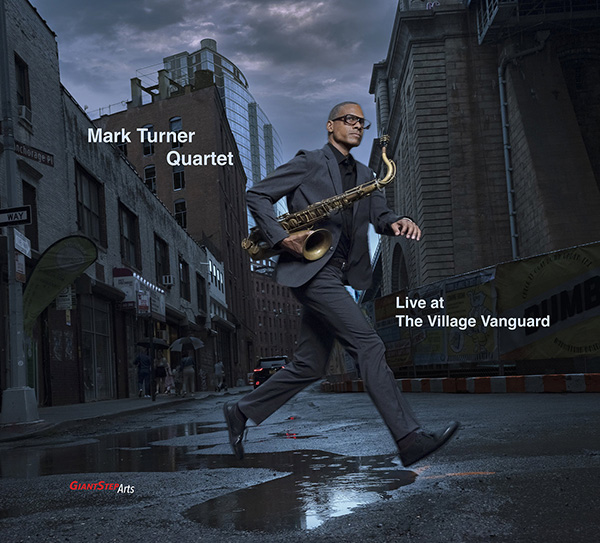
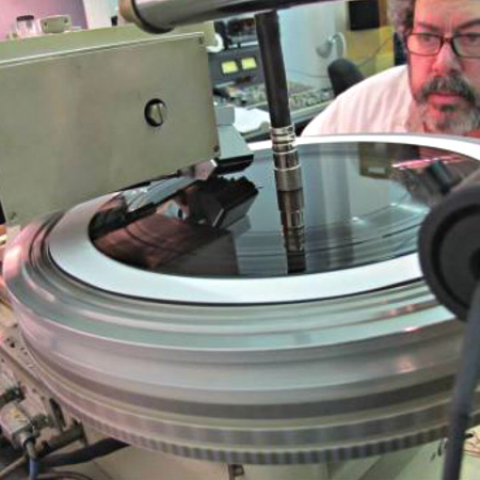
Photo and Recording by Jimmy Katz
In the April 2024 issue of this magazine, a piece by Editor Jim Austin appeared in the "As We See It" space. It was titled "
On assessing sonic illusions," and it has haunted me for more than a year. Jim's thesis was that a music recording is a "synthetic, whole-cloth creation ... a complete fabrication." He writes: "Very few recordings correspond to an actual performance. Most are studio concoctions with pieced-together instrumental tracks and artificial ambience that document no sonic event that ever occurred."
When it came to rock and pop and classical music, I could accept Jim's idea. Most pop records are indeed "pieced together" in the studio. Oddly enough, so are a great many classical albums because of the classical world's current obsession with perfection. But when it came to the music nearest and dearest to me—jazz—I recoiled. Could it really be said that jazz recordings, even live jazz recordings, were original creations that did not correspond to an actual musical event? For me that was a bridge too far.
Later Jim wrote, "It is often ... written, including in this magazine, that a recording can be a time machine, ... moving you through space and time to experience things you couldn't otherwise, like Thelonious Monk playing at the It Club. ..." I plead guilty. I have often avowed in the pages of
Stereophile, in my reviews of live jazz recordings, that I have been imaginatively transported to the It Club in Los Angeles or the Penthouse in Seattle (both long gone) or the Black Hawk in San Francisco (where Miles Davis once lit the night on fire, but which is now a parking lot). But Jim says that even a live recording is "so far removed" from what happened in the real world "that it makes sense to think of it as something new."
I accepted, of course, that reproduced music is an illusion. So what was my problem? Was my fondness for time travel sentimental self-indulgence or an allegiance to deeper truth? I decided to seek the counsel of two experts. I provided a copy of Jim's "As We See It" to
Joe Harley and Jimmy Katz.
Harley's body of work as a producer includes many sonically extraordinary albums for labels like AudioQuest, Telarc, Groove Note, Enja, and ECM. The great saxophonist
Charles Lloyd was the first to call Harley the "Tone Poet," and that became the name of the Blue Note label's audiophile vinyl reissue series, which Harley oversees. The classic Blue Note albums of the 1950s and 1960s were recorded by the legendary engineer Rudy Van Gelder. Rudy developed techniques intended to make recorded music sound closer to the live experience, such as close miking, plate reverb, and recording "hot." Rudy was an example of an engineer who, to use Jim's term, "intervened."
But Harley believes that, even so, Rudy's recording sessions approximated live gigs. He told me, "Jim is right that things start to change as soon as the wave form hits a microphone. But those Blue Note sessions were
performances. There was very little editing. Rudy recorded live to two-track. The mix is going down as they're playing, and the mix is the mix. There was no isolation and no headphones. The cats are playing in a room, like they're on a gig." As for Harley's own recordings as producer, they are remarkably successful examples of "intervention." Harley uses isolation and multitracking to get his amazingly clear sound. Is it more clear than what you would hear in a live performance? Good question.
Katz is
the first-call jazz photographer, and he moonlights as an engineer specializing in live recordings. No one in current jazz is better at them. He told me, "I agree with Jim that pop music is often completely created in the studio. But what I'm doing is different. We don't do edits. My attitude is, if you make a mistake, live with it. I use condenser mikes for saxophones and ribbon mikes for trumpets. I am not trying for a 'good sound.' I am trying to capture the actual sound of, say, Mark Turner's tenor saxophone. When I pan the drums, I try to recreate the actual size of the kit. I attempt to position the musicians on the recording in a way that reflects their real placement on the stage. I want to create a soundscape that immerses the listener in the live experience."
Katz, in seeking this immersion, seems to share my fondness for time travel. Neither Harley nor Katz seems to doubt that their recordings document actual events. Yet the more I contemplated the question of "sonic illusions," the more relative and elusive the concept of "truth" became.
Surprisingly, the answer was right in front of me. After I first encountered Jim's piece, I kept the April 2024 issue on top of my
Stereophile stack, for rereading. But I had not fully internalized the ramifications of Jim's second-to-last paragraph. He wrote, "Once we've embraced the notion that a recording is a complete fabrication, we get to decide for ourselves how convincing that illusion is." He calls this idea "liberating."
I think he's onto something. If, in Jim's words, I don't need to "worry much about whether the connection to live music is real," I am set free. I can accept that reproduced music is an illusion and still use a live album for time travel. When the illusion is convincing enough, suspension of disbelief is not only possible, it is a revelation. Is Jimmy Katz's recording of Mark Turner's
Live at the Village Vanguard "truthful"? Who knows? Who cares? I live 2500 miles from that fabled funky basement in Greenwich Village, but in a moment, I can journey cross-country. I can go down that famous stairway, those 15 steps that John Coltrane and Bill Evans descended. Turner's set begins, and I can feel the room around me. His saxophone, almost close enough to touch, owns the night. I believe. I am there.