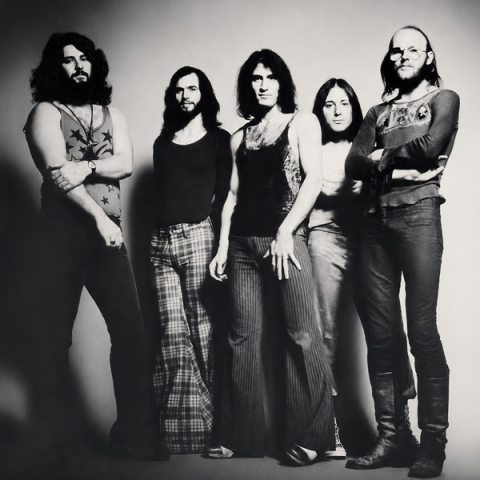
Photo: Piper Ferguson
Listening to music inspires us to take action. Upon hearing an I.E.—Instant Ear-worm—we must then determine the best way we can go about listening to it again (and again) at our convenience. Prior to the free-for-all streaming era, our I.E. follow-through measures typically meant seeking out a specific playback medium for our favorite music, initially based on budgetary constraints. In those formative, pre-employment preteen years, 45s—and/or, depending on how far back we're talking here, possibly even 78s—fit the literal dollar bill before we could afford to move up the media ladder and begin purchasing LPs en masse. Our then-limited playback options tended to start with those self-contained, close-and-play record players and/or our parents' living-room consoles before we could afford to acquire separate components for more personal, higher-fidelity listening sessions. We were, to be blunt, obsessed.
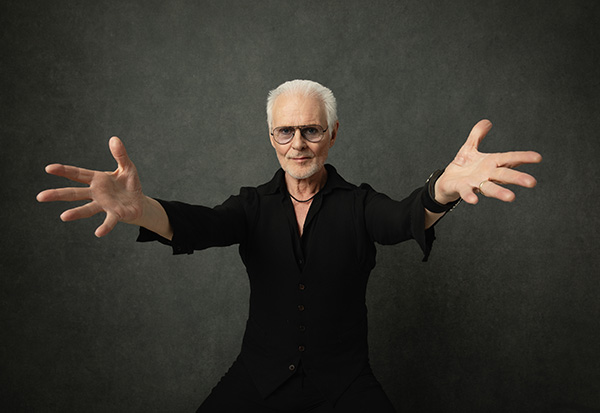
Across the pond, hungry young listeners were eager to do the exact same thing. Take garage/punk glam-pop vocalist Michael Des Barres (aka MDB), who had duly been shuffled off to Repton School in Derbyshire, England, as a lad in the 1950s and found his initial aural inspiration by listening to his mates' records, since he couldn't yet afford to buy any of his own. "A friend of mine at boarding school had a Sonny Boy Williamson record, and I just lost my mind," Des Barres recalls. "That's how it began for those of us who grew up in England in the '50s and '60s. It was all blues-based and Motown to start, because American music was what turned us on. And then it was dressed up in velvet and mutated into something else."
Des Barres soon became addicted to finding and spinning records by the likes of Chuck Berry, Little Richard, Sam Cooke, and The Rolling Stones. In turn, those foundational listening lessons led him to want to make music himself, whether it was by fronting bands in the trenches like Silverhead and Detective in the '70s, Chequered Past, and (briefly) The Power Station in the '80s, or by taking full charge as a solo artist. Lately, Des Barres—who recently celebrated the 10-year marker of his morning deejay shift on Little Steven's Underground Garage channel on SiriusXM—has felt compelled to find ways to give back to the artform that made his bones, as well as look toward reaching newer generations perhaps not as familiar with the rock-era tableau as we are. MDB's initial foray into his multitiered plan to serially span multiple decades of music is a new, 12-song '70s-centric covers album, It's Only Rock 'n' Roll, which is currently available via Rock Ridge Music on all major digital outlets (footnote 1).
Footnote 1: As of presstime, Des Barres is researching how to best get It's Only Rock 'n' Roll onto vinyl where it belongs, most likely as a special edition with newly recorded bonus tracks. Footnote 2: Animotion is one of the many synth-pop outfits to have emerged from Los Angeles in the 1980s. Their version of "Obsession," which was driven by a suggestive, of-era performance-oriented video that garnered heavy rotation on MTV, reached No. 6 on the Billboard Hot 100 singles chart in late 1984.