In last month's As We See It, I offered some reminiscences of my almost half-century of being involved in audio magazine publishing, as well as some thoughts on the Law of Diminishing Returns as it applied to the prices of hi-fi products. As I was compiling this issue's Records 2 Live 4, it struck me that my interest not just in audio but in recording live music started 10 years earlier, when my parents bought me a mono Grundig tape recorder for my birthday. I first used the Grundig to record the high school rock group in which I played bass guitar, then replaced it with a stereo Sony tape recorder as my opportunities to make live recordings expanded.
Although I excelled in the sciences at school and university, music was my first love. I played in bands, first semiprofessionally, then professionally, and I ended up in the mid-1970s as the house bass guitarist at a recording studio in Cornwall, England. Working at that studio with producer Tony Cox and legendary engineer Jerry Boys, I became familiar with the studio environment and how recordings are created.
I continued my recording activities throughout the rest of my life, at least until the pandemic brought them to a close. These days my only recording activities involve producing recordings, where I don't have to schlep a truckload of equipment to the venue, just the scores, a notepad, and multicolored pens. (The most recent of these projects was an album of works for singers and a jazz orchestra composed by Sasha Matson, where I was privileged to work with renowned engineers James Farber and Chris Allen at Sear Sound Studio in Manhattan. Fillmore Street/Little Woodstar will be released on 180gm LP, CD, and as a hi-rez download in February on Parma Recordings' Albany/Troy label.)
Over the decades I engineered, produced, or played various instruments on more than 40 commercially released albums. I recorded pianists Anna Maria Stanczyk, Robert Silverman, Marc Copland, and Hyperion Knight, violinists Ida Levin and Pinchas Zukerman, clarinetist Anthony Michaelson, guitarist John Abercrombie, bass player and band leader Jerome Harris (footnote 1), drummers Billy Hart and Billy Drummond, Minnesotan male voice choir Cantus (footnote 2), the Santa Fe Chamber Music Festival, the Portland State University Chamber Choir, and the late Bob Reina's free-jazz ensemble Attention Screen. A highlight was being invited by Quad's founder, the late Peter Walker, to record a performance of Edward Elgar's massively scored oratorio The Dream of Gerontius in England's Ely Cathedral in 1984. (An excerpt from Gerontius was included on Stereophile's Test CD 2, but as all the test CDs are sold out, readers are welcome to download the complete recording here.)
At first, I took it for granted that microphones and recorders were neutral observers. However, after recording a band in the early 1970s with a pair of Shure SM57 cardioid microphones, I tried a pair of Reslo figure-8 ribbon mikes. I was astonished at the difference made by the different mikes at capturing the realism of live sound.
In 1981, I contributed an article on stereo microphone techniques to the English magazine Hi-Fi News, since reprinted on the Stereophile website. But my attitude to recordings has changed since I wrote that article. Up to the early 1980s, I believed that the recordist's role was simply to document the live performance, to take a photograph as it were. The musicians or singers perform together in the same space, and the role of the engineer is simply to capture their performance and sound in as honest a manner as possible.
However, the recording process itself both interferes with and changes the act of making music. Rather than the recording session being a documentary of a live performance, it instead becomes a voyage of discovery toward the performance.
Importantly, in most performing venues it was almost impossible to place a single pair of microphones in the perfect spot to capture a truthful document of the sound. Instead, I would end up using up to 10 different microphones, and even direct feeds from electronic instruments, recording each on a separate track of my recorder. Only when I was back in the tranquility of my listening room could I mix all those individual recordings, balancing their levels and selectively using equalization, compression, and artificial reverberation, to recreate a stereo impression of the live event.
This creative process is therefore nothing like a snapshot, nor even the equivalent of an Ansel Adams photograph. It is more akin to a painting! With literal honesty an unattainable goal, engineering thus becomes art, with artifice used to create a recorded sound that can convince listeners that they are present at the live event. Recording engineer Jim Watson expressed this best on a pro-audio mailing list: "All recordings are lies. The best recording/mix engineers are the best liars."
How, then, can such recordings be used to judge the performance of an audio component? This problem is the basis for what Floyd Toole called the "Circle of Confusion," which was discussed at a Stereophile Writers Conference in the summer of 1991: when you insert a new component into your system and listen to a specific recording, you have no way of knowing whether what you hear is a characteristic of the recording or of the product.
One way to step around the Circle is to use recordings of known provenance. If you play a dual-mono pink noise track, for example, you can hear departures from perfect stereo imaging, and you will be aware of colorations. If you play a series of half-step–spaced tonebursts, you can detect the presence or absence of distortion and resonances. If you play 1/3-octave warble tones, you can determine a speaker's low-frequency extension. I created these signals for the magazine's Editor's Choice CD, but I am now offering them to readers free of charge (footnote 3).
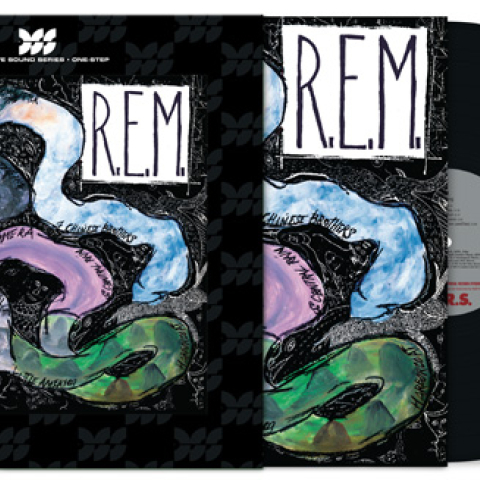
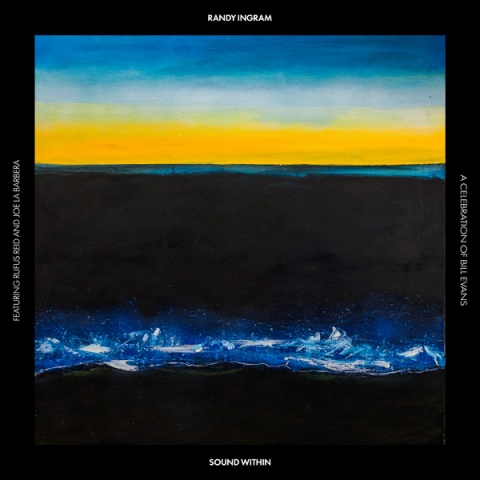
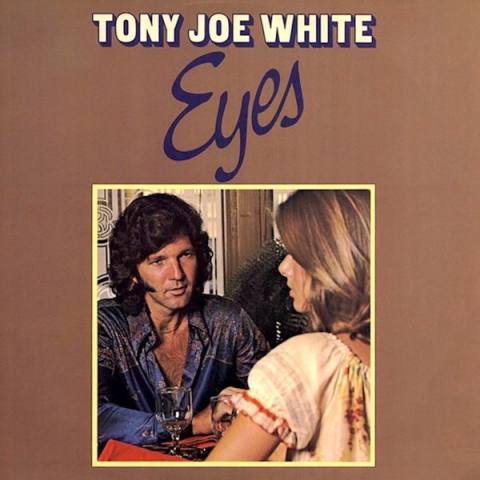
It's one thing to talk about the Circle of Confusion when using recordings to judge audio components, but when people sit down to listen to their recorded music, like the albums listed in this issue's Records 2 Live 4, they are not judging, they're enjoying. That's what this hobby is all about!
Finally, because Editor Jim Austin has been on medical leave following a procedure last October, both this issue and the January issue were put together by AVTech Editorial Director Paul Miller, Stereophile Managing Editor Mark Henninger, and myself. I welcome Jim Austin back to the captain's chair for the March issue onward.
Footnote 1: The Jerome Harris Quintet's Rendezvous album, which I recorded in 1998 at Chad Kassem's Blue Heaven Studio in Salina, Kansas, is out-of-print, but the tracks can be downloaded or streamed from jeromeharris.bandcamp.com/album/rendezvous. Footnote 2: The 8 albums I recorded with Cantus between 2001 and 2008 are still available from cantussings.org/albums/.
Footnote 3: Stereophile's on-line store for CDs and LPs was closed in August 2022. I donated the remaining stock of CDs to the featured musicians, to audio societies, and to local Little Free Libraries.
Footnote 1: The Jerome Harris Quintet's Rendezvous album, which I recorded in 1998 at Chad Kassem's Blue Heaven Studio in Salina, Kansas, is out-of-print, but the tracks can be downloaded or streamed from jeromeharris.bandcamp.com/album/rendezvous. Footnote 2: The 8 albums I recorded with Cantus between 2001 and 2008 are still available from cantussings.org/albums/.