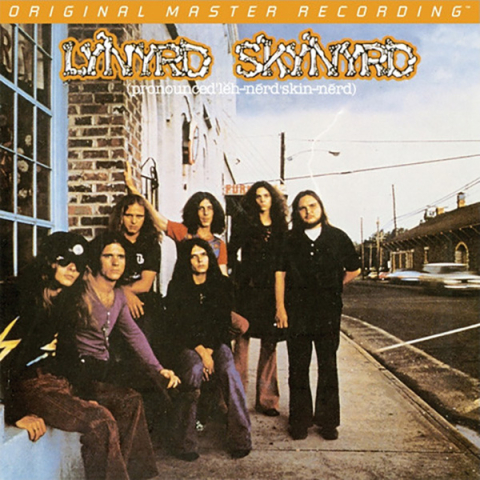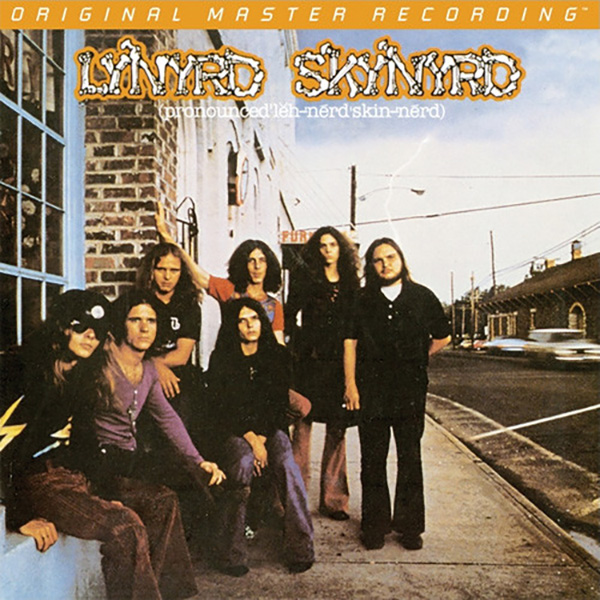
Recently, my good friend Bryan invited himself over for a "critical listening session" at my place. This was out of character. Typically our listening sessions are not of the "critical" variety. They take place late at night after several cocktails, neat bourbon in hand. Volume knobs are torqued. The choice of recorded material tends toward early Lynyrd Skynyrd (Pronounced 'Lĕh-'nérd 'Skin-'nérd), that one Hank Williams Jr. album that doesn't suck (The Almeria Club Recordings), and one of two Def Leppard albums (Pyromania or (Hysteria). A certain Jerry Jeff Walker album (Viva Terlingua) was spun frequently in years past but is avoided these days because it often leads to singing, God help us all.
Those late-night listening sessions are fun, but the only thing "critical" about them is wives who are trying to sleep.
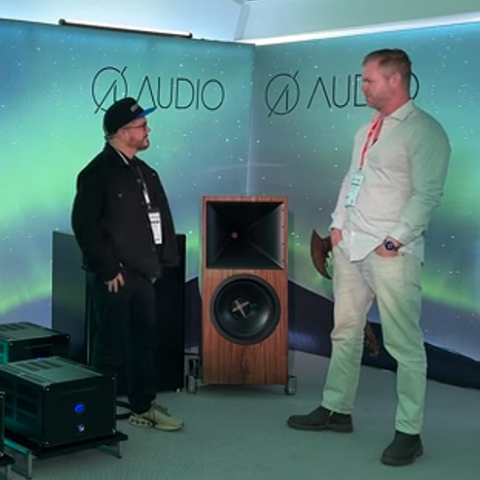
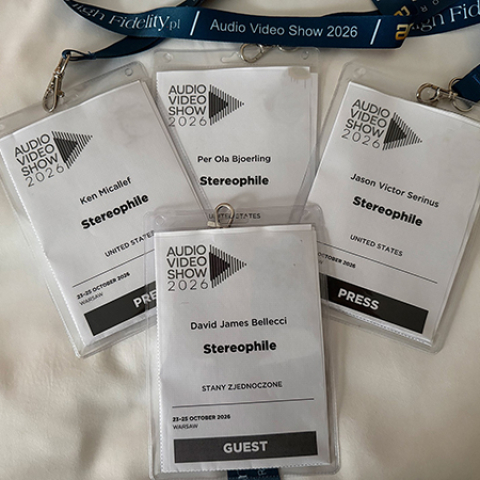
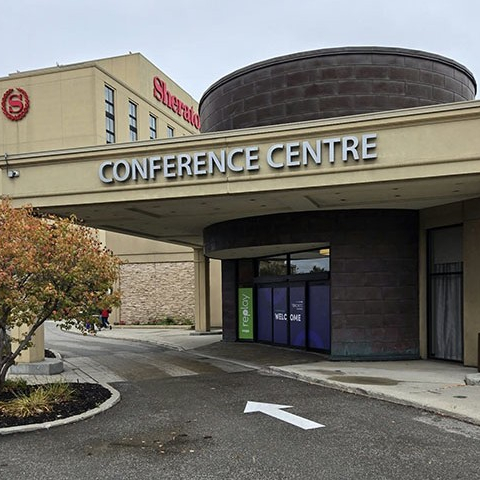
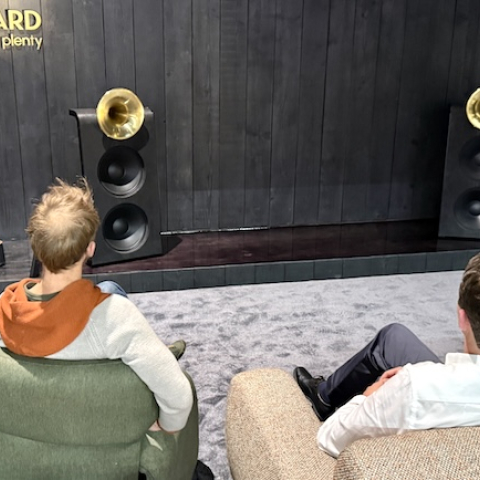
In Bryan's request I sensed something like a desire for self-improvement. Bryan had decided (or so I speculate) that he could learn something from me about assessing the performance of hi-fi components. I see where he was coming from: I am the editor of Stereophile, after all. I have walked into hundreds of rooms at hi-fi shows (far fewer than John Atkinson, Kalman Rubinson, Herb Reichert, or Jason Victor Serinus, but still quite a few) and sat down to listen, knowing that someone probably cares what I think about the sound in that room (footnote 1).
Bryan, though, has been an audiophile for longer than I have, and he has a very good ear. He often notices things that I haven't, until he points them out. I'd been editor of Stereophile for years before I started to feel that my general knowledge of hi-fi—of manufacturers and their products of the present and the past—surpassed Bryan's. I told Bryan he should not expect to learn much from me. He persisted, though, so we scheduled the event.
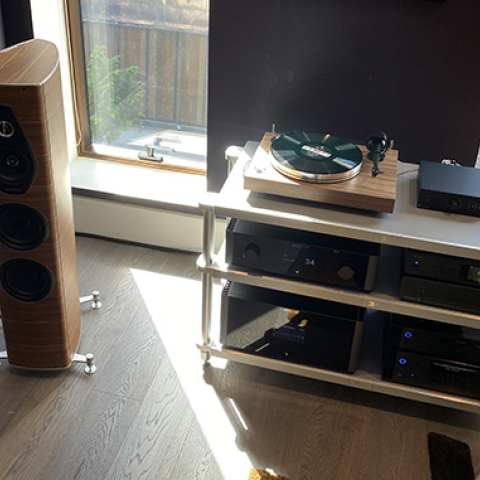
The other piece of this story, not yet stated, is that I'd recently installed a whole, single-branded hi-fi system in my Maine house, which is where this session would take place. Which means that there was something new to assess. This isn't the right time to discuss that project, but I will write about it at the appropriate time.
Predictably, the event, which took place on a Sunday afternoon, was not very educational. We compared two very different-sounding streaming versions of Lynyrd Skynyrd's "Gimme Back My Bullets." We agreed that the hi-rez version lacked pop, that it sounds like a flat master. The CD-rez "(Album Version)" (from the Expanded Edition) sounds much more like the LP, but we weren't quite hearing the bass slam we were used to from the LP.
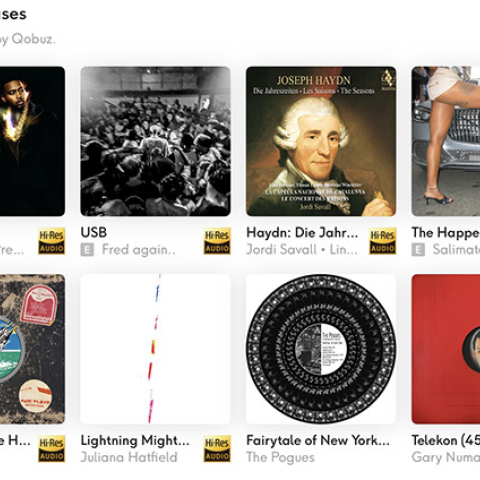
We ended up mostly listening for bass. We played bass-heavy tracks, one after the other: Röyksopp; Trentemøller; The Chemical Brothers; Bassnectar. We made ample use of Tom Fine's excellent and varied Bass Test playlist, which features tracks by musicians as diverse as Bob Marley, St. Vincent, Paramour, The Rolling Stones, Carly Simon, The Beatles, Grateful Dead, plus more obvious choices for a bass-heavy playlist: Yello; Hans Zimmer; Bassotronics (footnote 2).
It was just a fun afternoon (despite being booze-free). I didn't lecture Bryan on listening skills, or not much. Still, I thought: If I were called on to teach Bryan or anyone something about my listening methodology—though "methodology" sounds too pompous to my mind's ear—what would I say? I needed a topic for As We See It, so here we are.
The first thing I do when I enter a listening space is empty my mind as best I can. I set aside prejudgments, stop thinking about reviews, appointments, and other small matters. I relax into the sound. I let the music wash over me. I listen, respond to the music, and as I do so, I observe my own responses.
I listen, and I observe myself listening. It's something that actors do routinely: They act and watch themselves acting. There's a dualism there that's not the easiest thing to achieve—it's not something most people are called on to do—but it isn't rocket science, either. Try it; it's easier than you might think.
As I listen and observe, the first question I consider is simple and obvious: Is the music pleasing? Do I, or do I not, like what I'm hearing? Partly it depends on the music—not just whether I like it (although that does matter) but whether it has ingredients capable of providing pleasure. Certain kinds of recordings—a wide range, but not everything—reveal more about the character of a system than other kinds of recordings. If I don't like it, that's a thing I have to notice: What's repelling me? Is it the sound of the system or the choice of music?
Another thing that repels me—and I'm talking now about hi-fi shows—is noise. I don't mean hiss or a hum. I mean conversation. I often ask talkers in neighboring seats to be quiet. Unless they've had too many beers at lunch, they usually comply. What's most annoying—in part because it sets expectations for the room—is when the room's proprietor carries on a conversation in the middle of a demo. It's a sign of disrespect for serious listeners, the hobby—even their own demo system. (I admit that I have myself been involved in such conversations. I am sorry. I'll do better.)
The next question I ask myself (as I observe myself responding) is, what properties of the sound are responsible for my response? What is it about the sound that pleases or displeases? The more specific I can be, the better. This part is harder than the first part, yet the evidence is in front of you.
That's a big part of the art of listening right there. "The sound in this room affected me like this. It did so because of the following characteristics."
Does this amount to "critical listening"? I think "attentive listening" describes it better. "Self-aware listening," maybe. Whatever you want to call it, it's my listening bread and butter.
That session with Bryan reminded me of something. It's relatively easy for a system to produce pleasing sound. It doesn't need to be highly detailed or have world-beating imaging. If the sound is of a piece, with no parts sticking out, it is pleasing. Even a modest system can meet that standard. In fact, it's harder for more ambitious systems. Still, "sounds simple" is high praise.
Footnote 1: Although after seven years at Stereophile's helm, I can occasionally still sneak into a room without being recognized. Footnote 2: You, too, can experience Tom's excellent Bass Test playlist, at open.qobuz.com/playlist/21395182. And don't forget to check out his Imaging Test playlist at open.qobuz.com/playlist/22204090.
The first thing I do when I enter a listening space is empty my mind as best I can. I set aside prejudgments, stop thinking about reviews, appointments, and other small matters. I relax into the sound. I let the music wash over me. I listen, respond to the music, and as I do so, I observe my own responses.
Footnote 1: Although after seven years at Stereophile's helm, I can occasionally still sneak into a room without being recognized. Footnote 2: You, too, can experience Tom's excellent Bass Test playlist, at open.qobuz.com/playlist/21395182. And don't forget to check out his Imaging Test playlist at open.qobuz.com/playlist/22204090.