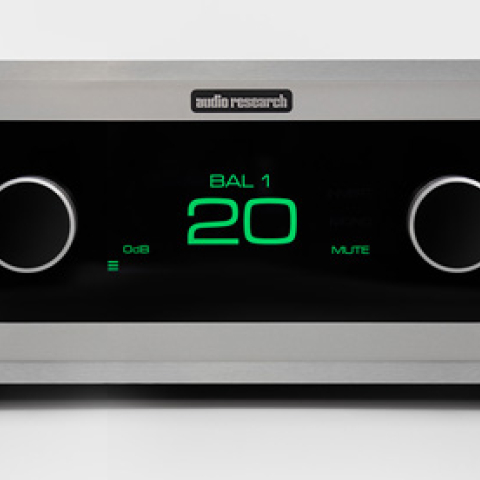
How does the Dos Locos compare to the Manley Steelhead I've been using so happily for the past several years? To start with, the comparably priced Dos Locos creates a greater impression of transparency and resolves a ridiculous amount of information, particularly with ultrahigh-definition cartridges like the My Sonic Lab. It reproduces bass with extension, heft, and grip that the hybrid Steelhead can't quite match. And it is marginally quieter, though both units are extraordinarily good at controlling noise.
On the other hand, the Dos Locos cannot equal the Steelhead's musical ease and flow, its slightly more colorful presentation, or its uncommon versatility. Then there's the matter of, well, beauty. As with the best tube gear, through the Manley music unfolds with an effortless, see-through luminosity that I can't help but admire, whereas for me the sound of even top-notch solid state gear, like the Sutherland, evokes a sense of force and control, of the music being chiseled from a block of slightly opaque matter. Of course you may hear it differently.
Though it comes at a substantial price, the Dos Locos offers more than exemplary sound. It's also an astoundingly musical piece of gear, capable of providing hours of fun, engagement, and insight. Better yet, it offers the dedicated mono listener a great-sounding, no-hassle solution that also cuts the price in half. Hats off to Ron Sutherland and his friends for making something so sweet to listen to.
 Manley Oasis Phono Stage
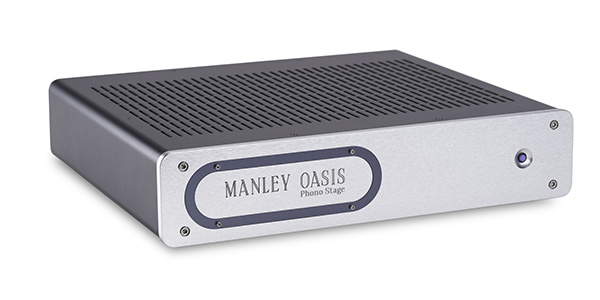
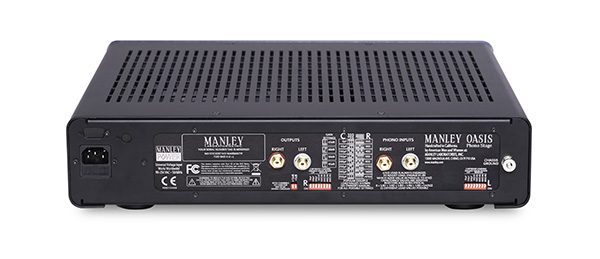
EveAnna Manley may be our hobby's Greta Garbo, or its Warren Buffett. She exists some distance apart from the hand-wringing, tweak-loving world of the audiophile, making most of her living in pro audio, and regards us with well-deserved amusement. Her no-nonsense approach and keen ears tend to result in practical, reasonably priced tube gear that prioritizes the optimization of music listening at home over emitting impressive sound effects or standing industrial design on its ear. The Manley Laboratories product line doesn't change often and doesn't seem overly concerned with either press coverage or the pursuit of dubious "innovations" (footnote 2). And the whole project is infused with EveAnna Manley's weird humor, love of puns, and obvious fish fetish. These are refreshing things in an industry characterized by product names like "Ultimate" and "Relentless," the sorry residue of middle-aged male imaginations. So when Manley mentioned that the well-regarded Chinook phono stage was being replaced with a new model called the Oasis, I was curious to know why. It turns out that the major change is the addition of the Manley Power switch-mode power supply designed by Bruno Putzeys and used in some of the company's pro gear. Manley said the power supply made the phono stage sound better, and would I be interested in hearing it. There are a handful of other differences worth mentioning. The Oasis comes in a larger, more handsome chassis than the Chinook and offers more versatility. While the front offers a power switch and a logo surrounded by an inset racetrack design, the action happens around the back. That's where you will find DIP switches allowing you to set the phono stage's capacitive loading (8 settings from 0 to 350pF), resistive loading (32 settings from 26 ohms to 47k ohms), and gain (4 settings from 45 to 65dB). Thankfully, the gain switches have been moved to the rear panel from the circuit board, so setting gain no longer requires opening the unit.
 There's one change that I admit to being unhappy about, and that's the name. According to EveAnna Manley, the new phono stage was named after Oasis Mastering in Studio City, California, which she and her then-husband David Manley were hired to design and build in the mid-1990s. Two forthcoming preamps, the Gateway and the Precision, are also named after well-known studios. That sentimental choice may be fine for her, but for me it's a sorry retreat from the seafood names I've grown to expect and enjoy, like the Stingray, the Snapper, and the Jumbo Shrimp. With these new products, I was hoping for a Moray Eel or a Lumpsucker or even a Bumphead Parrotfish, and feel sorely let down.
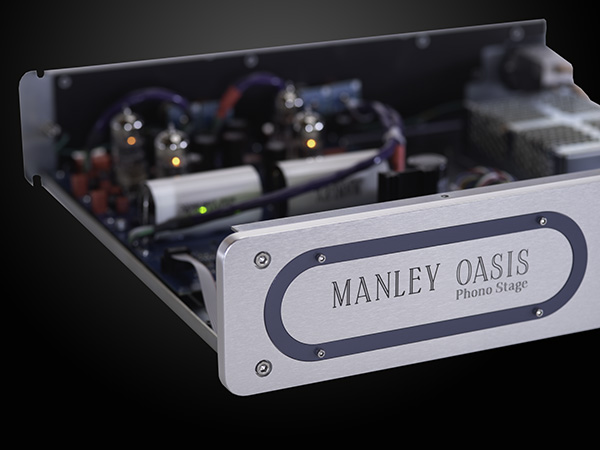
I had an opportunity to compare the Oasis ($3999) with the Chinook ($3199), both hybrid designs that rely on FETs and 6922 dual triodes for amplification duties. Given that the gain and RIAA circuitry remain largely unchanged in the Oasis, I expected to hear small but possibly meaningful differences. What I encountered instead was something more distinct and significant.
The Chinook has an inviting, ingratiating presentation I associate with tube designs. While sounding extended and agile overall, it offers palpable textures and vivid tone colors but also a slight propensity for warmth and a rather ample bass section.
There's one change that I admit to being unhappy about, and that's the name. According to EveAnna Manley, the new phono stage was named after Oasis Mastering in Studio City, California, which she and her then-husband David Manley were hired to design and build in the mid-1990s. Two forthcoming preamps, the Gateway and the Precision, are also named after well-known studios. That sentimental choice may be fine for her, but for me it's a sorry retreat from the seafood names I've grown to expect and enjoy, like the Stingray, the Snapper, and the Jumbo Shrimp. With these new products, I was hoping for a Moray Eel or a Lumpsucker or even a Bumphead Parrotfish, and feel sorely let down.
I had an opportunity to compare the Oasis ($3999) with the Chinook ($3199), both hybrid designs that rely on FETs and 6922 dual triodes for amplification duties. Given that the gain and RIAA circuitry remain largely unchanged in the Oasis, I expected to hear small but possibly meaningful differences. What I encountered instead was something more distinct and significant.
The Chinook has an inviting, ingratiating presentation I associate with tube designs. While sounding extended and agile overall, it offers palpable textures and vivid tone colors but also a slight propensity for warmth and a rather ample bass section.
 In comparison, the Oasis sounded like the Chinook's grown-up brother who has gone away to college, gotten a job, bought a Barbour jacket, and opened a Roth IRA. Which is to say that it sounds more even-handed, polished, and sonically neutral. In fact, if I listened to it blindfolded, I'm not sure I could guess whether I was listening to a solid state or tube component.
Comparing the bracing "Incinerate" from Sonic Youth's Rather Ripped (Goofin' Records goo-011) through the Chinook and then the Oasis proved instructive. Through the Oasis, Lee Ranaldo's bass notes sounded faster and free from overhang and tonal emphasis, a welcome change that made the song sleeker and more dangerous. And the flurry of beats from Steve Shelley's drums sounded more separated and distinct.
In comparison, the Oasis sounded like the Chinook's grown-up brother who has gone away to college, gotten a job, bought a Barbour jacket, and opened a Roth IRA. Which is to say that it sounds more even-handed, polished, and sonically neutral. In fact, if I listened to it blindfolded, I'm not sure I could guess whether I was listening to a solid state or tube component.
Comparing the bracing "Incinerate" from Sonic Youth's Rather Ripped (Goofin' Records goo-011) through the Chinook and then the Oasis proved instructive. Through the Oasis, Lee Ranaldo's bass notes sounded faster and free from overhang and tonal emphasis, a welcome change that made the song sleeker and more dangerous. And the flurry of beats from Steve Shelley's drums sounded more separated and distinct.
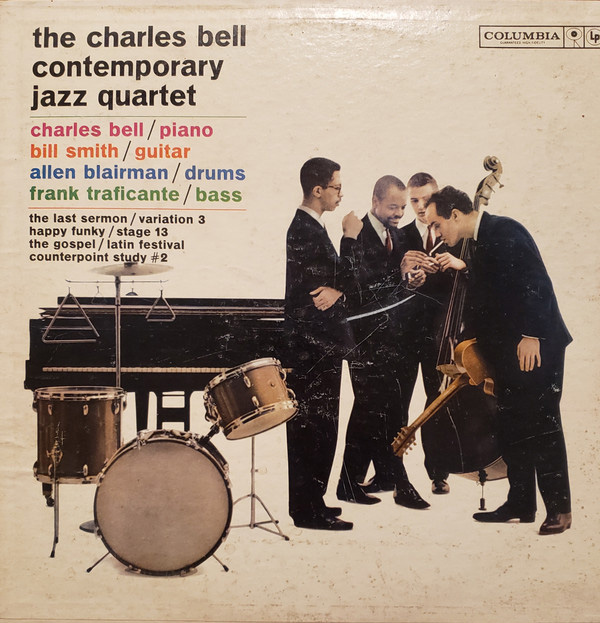 To get a surer grip on what I was hearing, I listened to "The Last Sermon" from the eponymous 1961 album by the Charles Bell Contemporary Jazz Quartet (Columbia CS 8382, with liner notes by John Hammond!). I've been discovering Bell's music after reading about the mostly forgotten pianist in an article by New Yorker film critic Richard Brody. Bell brought a classical sensibility and background to his jazz explorations, and his driving, recursive, rhythmically complex playing is reminiscent of both Lennie Tristano and Andrew Hill. Though his recording career lasted less than a decade, the searching, distinctive music he left behind deserves a reappraisal.
Bell's keyboard sounded terrific through the Oasis. The phono stage rendered the furious clusters of notes with terrific dynamics, plenty of space, and admirable separation. It excavated plenty of excitement from this music, and proved remarkably quiet, in this respect besting the Chinook handily. There's no question that EveAnna Manley is correct: the Oasis sounds better than the Chinook.
I found it more difficult to decide which of the two was more engaging. For all my admiration of the Oasis's neutral, faster, more exciting presentation, I sometimes missed the Chinook's more "colored" approach, which struck me as slightly more embodied and emotive. Go figure.
Of course, comparing the two phono stages amounts to harping on small differences. Like its predecessor, the Manley Oasis pulls off the rather difficult trick of combining terrific performance and a beautifully judged tonal balance with compulsive listenability and class-leading versatility, all at person-with-a-job price. Enthusiastically recommended.
To get a surer grip on what I was hearing, I listened to "The Last Sermon" from the eponymous 1961 album by the Charles Bell Contemporary Jazz Quartet (Columbia CS 8382, with liner notes by John Hammond!). I've been discovering Bell's music after reading about the mostly forgotten pianist in an article by New Yorker film critic Richard Brody. Bell brought a classical sensibility and background to his jazz explorations, and his driving, recursive, rhythmically complex playing is reminiscent of both Lennie Tristano and Andrew Hill. Though his recording career lasted less than a decade, the searching, distinctive music he left behind deserves a reappraisal.
Bell's keyboard sounded terrific through the Oasis. The phono stage rendered the furious clusters of notes with terrific dynamics, plenty of space, and admirable separation. It excavated plenty of excitement from this music, and proved remarkably quiet, in this respect besting the Chinook handily. There's no question that EveAnna Manley is correct: the Oasis sounds better than the Chinook.
I found it more difficult to decide which of the two was more engaging. For all my admiration of the Oasis's neutral, faster, more exciting presentation, I sometimes missed the Chinook's more "colored" approach, which struck me as slightly more embodied and emotive. Go figure.
Of course, comparing the two phono stages amounts to harping on small differences. Like its predecessor, the Manley Oasis pulls off the rather difficult trick of combining terrific performance and a beautifully judged tonal balance with compulsive listenability and class-leading versatility, all at person-with-a-job price. Enthusiastically recommended.
 A Latin Rediscovery on Vinyl
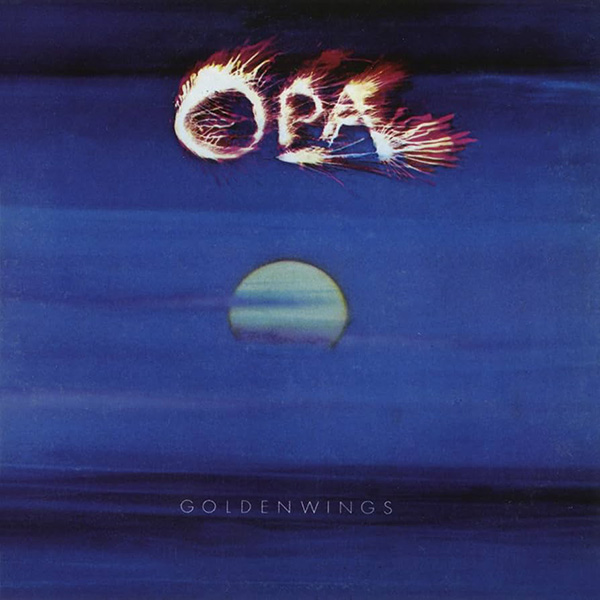
Few discoveries are as gratifying as stumbling across an unfamiliar record that reveals new musical frontiers. That's what happened recently when I put on a reissue of a 1976 LP by an unknown-to-me Uruguayan trio named Opa. Goldenwings is part of Craft Recordings' Jazz Dispensary series, which focuses on the 1970s, with a particular emphasis on fusion. To my ears, fusion is a genre prone to particularly volatile swings, treading a fine line between the sublimity of Miles Davis's Jack Johnson or Soft Machine's Third and the despair-inducing noodling tedium and bombast of, well, too many releases to mention here. Goldenwings is one of the keepers. After the three members of Opa—brothers George and Hugo Fattoruso along with bassist Ringo Thielmann—moved from Uruguay to Manhattan in 1970, they were discovered by Brazilian percussionist Airto Moreira, who recruited them to work as his rhythm section. Moreira produced their two studio albums, which made little commercial impact and soon disappeared from print. Which only goes to show the unreliability of the listening public. The first of the albums, Goldenwings features the flutes of Brazilian prodigy Hermeto Pascoal and the stellar songwriting, playing, and singing of the Fattorusos. Amid spacey fusion reminiscent of Azymuth and Tangerine Dream and Moreira's blistering percussion, the heart of the album are the band's close harmonies on sunlit ballads like "Paper Butterflies (Muy Lejos Te Vas)." As with all great records, the whole exceeds the sum of its parts, and Goldenwings opens a door into a musical dimension that feels like nothing else. Issued on vinyl for the first time since 1977, this version was cut from the master tapes by Kevin Gray and pressed at RTI, and happens to sound glorious.
Footnote 2: Manley Laboratories, Inc., 13880 Magnolia Ave., Chino, CA 91710. Tel: (909) 627-4256. Web: manley.com.
Manley Oasis Phono StageEveAnna Manley may be our hobby's Greta Garbo, or its Warren Buffett. She exists some distance apart from the hand-wringing, tweak-loving world of the audiophile, making most of her living in pro audio, and regards us with well-deserved amusement. Her no-nonsense approach and keen ears tend to result in practical, reasonably priced tube gear that prioritizes the optimization of music listening at home over emitting impressive sound effects or standing industrial design on its ear. The Manley Laboratories product line doesn't change often and doesn't seem overly concerned with either press coverage or the pursuit of dubious "innovations" (footnote 2). And the whole project is infused with EveAnna Manley's weird humor, love of puns, and obvious fish fetish. These are refreshing things in an industry characterized by product names like "Ultimate" and "Relentless," the sorry residue of middle-aged male imaginations. So when Manley mentioned that the well-regarded Chinook phono stage was being replaced with a new model called the Oasis, I was curious to know why. It turns out that the major change is the addition of the Manley Power switch-mode power supply designed by Bruno Putzeys and used in some of the company's pro gear. Manley said the power supply made the phono stage sound better, and would I be interested in hearing it. There are a handful of other differences worth mentioning. The Oasis comes in a larger, more handsome chassis than the Chinook and offers more versatility. While the front offers a power switch and a logo surrounded by an inset racetrack design, the action happens around the back. That's where you will find DIP switches allowing you to set the phono stage's capacitive loading (8 settings from 0 to 350pF), resistive loading (32 settings from 26 ohms to 47k ohms), and gain (4 settings from 45 to 65dB). Thankfully, the gain switches have been moved to the rear panel from the circuit board, so setting gain no longer requires opening the unit.
There's one change that I admit to being unhappy about, and that's the name. According to EveAnna Manley, the new phono stage was named after Oasis Mastering in Studio City, California, which she and her then-husband David Manley were hired to design and build in the mid-1990s. Two forthcoming preamps, the Gateway and the Precision, are also named after well-known studios. That sentimental choice may be fine for her, but for me it's a sorry retreat from the seafood names I've grown to expect and enjoy, like the Stingray, the Snapper, and the Jumbo Shrimp. With these new products, I was hoping for a Moray Eel or a Lumpsucker or even a Bumphead Parrotfish, and feel sorely let down.
I had an opportunity to compare the Oasis ($3999) with the Chinook ($3199), both hybrid designs that rely on FETs and 6922 dual triodes for amplification duties. Given that the gain and RIAA circuitry remain largely unchanged in the Oasis, I expected to hear small but possibly meaningful differences. What I encountered instead was something more distinct and significant.
The Chinook has an inviting, ingratiating presentation I associate with tube designs. While sounding extended and agile overall, it offers palpable textures and vivid tone colors but also a slight propensity for warmth and a rather ample bass section.
In comparison, the Oasis sounded like the Chinook's grown-up brother who has gone away to college, gotten a job, bought a Barbour jacket, and opened a Roth IRA. Which is to say that it sounds more even-handed, polished, and sonically neutral. In fact, if I listened to it blindfolded, I'm not sure I could guess whether I was listening to a solid state or tube component.
Comparing the bracing "Incinerate" from Sonic Youth's Rather Ripped (Goofin' Records goo-011) through the Chinook and then the Oasis proved instructive. Through the Oasis, Lee Ranaldo's bass notes sounded faster and free from overhang and tonal emphasis, a welcome change that made the song sleeker and more dangerous. And the flurry of beats from Steve Shelley's drums sounded more separated and distinct.
To get a surer grip on what I was hearing, I listened to "The Last Sermon" from the eponymous 1961 album by the Charles Bell Contemporary Jazz Quartet (Columbia CS 8382, with liner notes by John Hammond!). I've been discovering Bell's music after reading about the mostly forgotten pianist in an article by New Yorker film critic Richard Brody. Bell brought a classical sensibility and background to his jazz explorations, and his driving, recursive, rhythmically complex playing is reminiscent of both Lennie Tristano and Andrew Hill. Though his recording career lasted less than a decade, the searching, distinctive music he left behind deserves a reappraisal.
A Latin Rediscovery on VinylFew discoveries are as gratifying as stumbling across an unfamiliar record that reveals new musical frontiers. That's what happened recently when I put on a reissue of a 1976 LP by an unknown-to-me Uruguayan trio named Opa. Goldenwings is part of Craft Recordings' Jazz Dispensary series, which focuses on the 1970s, with a particular emphasis on fusion. To my ears, fusion is a genre prone to particularly volatile swings, treading a fine line between the sublimity of Miles Davis's Jack Johnson or Soft Machine's Third and the despair-inducing noodling tedium and bombast of, well, too many releases to mention here. Goldenwings is one of the keepers. After the three members of Opa—brothers George and Hugo Fattoruso along with bassist Ringo Thielmann—moved from Uruguay to Manhattan in 1970, they were discovered by Brazilian percussionist Airto Moreira, who recruited them to work as his rhythm section. Moreira produced their two studio albums, which made little commercial impact and soon disappeared from print. Which only goes to show the unreliability of the listening public. The first of the albums, Goldenwings features the flutes of Brazilian prodigy Hermeto Pascoal and the stellar songwriting, playing, and singing of the Fattorusos. Amid spacey fusion reminiscent of Azymuth and Tangerine Dream and Moreira's blistering percussion, the heart of the album are the band's close harmonies on sunlit ballads like "Paper Butterflies (Muy Lejos Te Vas)." As with all great records, the whole exceeds the sum of its parts, and Goldenwings opens a door into a musical dimension that feels like nothing else. Issued on vinyl for the first time since 1977, this version was cut from the master tapes by Kevin Gray and pressed at RTI, and happens to sound glorious.
Footnote 2: Manley Laboratories, Inc., 13880 Magnolia Ave., Chino, CA 91710. Tel: (909) 627-4256. Web: manley.com.