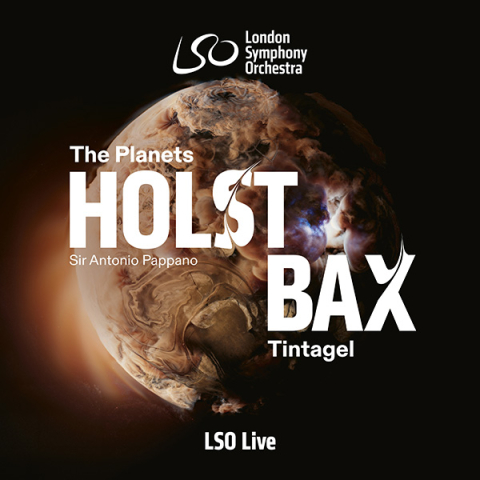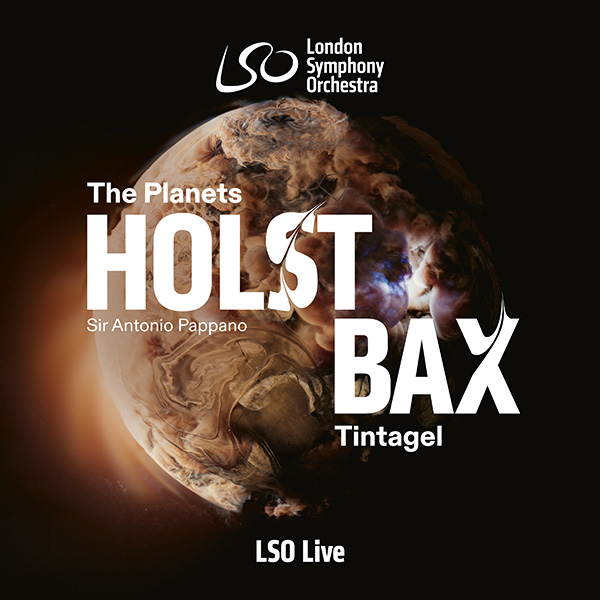
Holst: The Planets
Bax: Tintagel
London Symphony Orchestra, Tenebrae/Sir Antonio Pappano, cond.
LSO Live LSO0904 (CD). 2026. Stephen Johns, Andrew Cornall, prods.; Jonathan Stokes, eng.
Performance ***
Sonics **** This is The Planets' second go-round on LSO Live, which, decades ago, brought us one conducted by Sir Colin Davis. I'd forgotten this label has been around as long as that! Sir Antonio's take on the score has more distinctive moments than Sir Colin's. The solo reeds' legato dovetails in the scurrying Mercury are breathtaking. In the solemn, inexorable Saturn, Pappano carefully teases hairpin dynamics in the gorgeous midrange strings; the tempo feels a hair quick, but the effect remains dignified.
The conductor vividly projects Holst's pointillistic scoring in Uranus. A close focus in Neptune causes the playing (and singing) to lose the wanted mystery, but the fragmented motifs emerge bound by a tighter through line than most.
But too many other opportunities are fumbled. Mars moves along at a nice clip—the strings' upbeats swell impressively—but the second theme turns stodgy, dropping the momentum. (The landing on the final peroration is also badly smeared.) Venus is pretty, but cold and comfortless. The introductory bars of Jupiter, which ought to suggest the universe blossoming into a belly laugh, are just notes; the movement is impressive but never truly grand.
Tintagel is a novel makeweight, especially for American listeners. Its program is maritime rather than pastoral, though here it doesn't sound much like either. The gradual opening into a surging tutti reminded me of Ravel's depiction of dawn in Daphnis et Chloé. The lyrical string theme that follows is expressive and optimistic. It all works well as a piece of abstract music, but I got little pictorial sense of it.
The sound is fine. Some horn calls in Jupiter are a bit recessed, and some punctuating chords a bit fierce; conversely, the brass octaves that launch Uranus emerge with a wonderful depth.—Stephen Francis Vasta
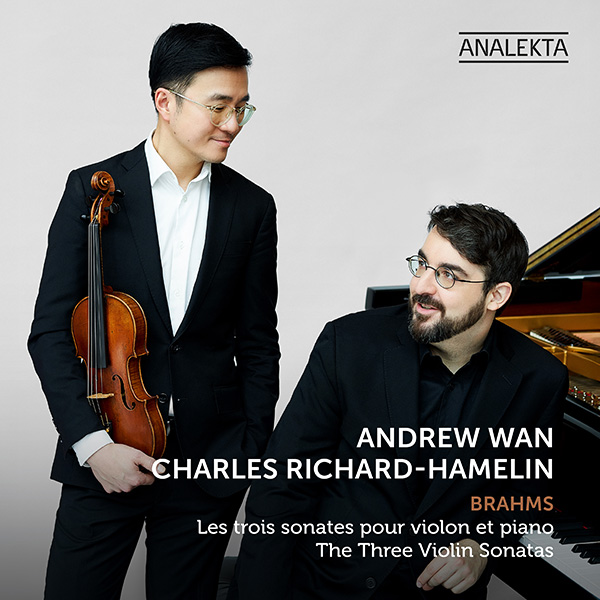 Brahms: The Three Violin Sonatas
Andrew Wan, violin; Charles Richard-Hamelin, piano
Analekta AN 2 9027 (CD; reviewed as 24/192). 2026. Carl Talbot, prod.; Talbot, Philippe Bouvrette, engs.
Performance ****
Sonics ***** If you encounter periods when the heartfelt longing, deep sadness, churning passion, and ultimate resignation and acceptance at the core of Johannes Brahms's music speak to you, this recording may be what you need. The playing is full and sonorous, the sound natural, and the interpretations unfailingly centered in the heart.
Both performers are well known in Canada. Violinist Andrew Wan has been Concertmaster of L'Orchestre symphonique de Montréal since 2008, and pianist Charles Richard-Hamelin was the silver medalist and Krystian Zimerman Prize winner at the 2015 International Chopin Piano Competition. They may not have the same cachet as Itzhak Perlman, Leonidas Kavakos, Jascha Heifetz, Vladimir Ashkenazy, Yuja Wang, and Artur Rubinstein (to name but a few), but they are highly accomplished musicians who sound at one with each other and with Brahms's sensibilities.
From the first notes of Sonata No.1 in G Major, Wan and Richard-Hamelin play as if from the center of Brahms's heart. Other violinists sound more vulnerable, with more give and take, but the essence of this duo's playing is so right that all I could do was sit and sigh. The opening of the Sonata's middle movement Adagio is beautiful, distinguished by a seemingly intuitive understanding of the rubato that makes Brahms's music sing as deeply as it does. The final Allegro is, once again, right in the groove, with an extremely endearing close.
Only once does the playing falter. In the opening Allegro of Sonata No.3, Wan sounds unsure what to make of the lighter-voiced passages. The two musicians compensate with a melodious Adagio that reminds us that Brahms composed over 200 songs and a churning final Presto that ends strongly. Warmly recommended for both musicianship and sound.—Jason Victor Serinus
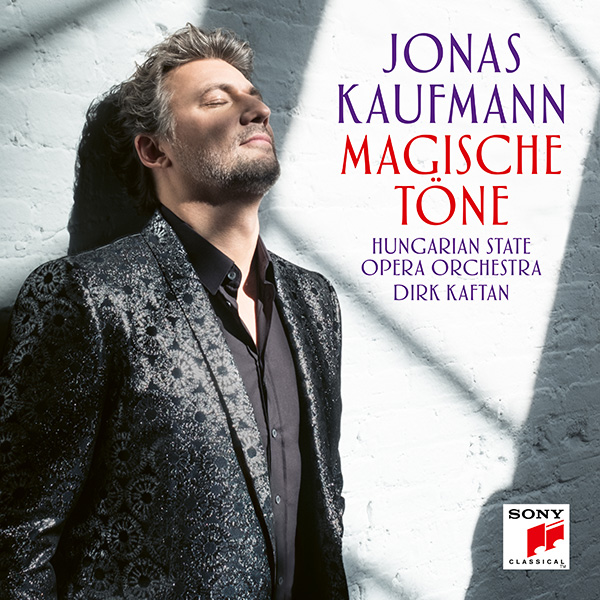 Jonas Kaufmann: Magische Töne
Jonas Kaufmann, tenor; Nikola Hillebrand, soprano (on six tracks); Hungarian State Opera Orchestra, Dirk Kaftan, cond.
Sony Classical 19958413542 (CD; reviewed as 24/96). 2026. Jakob Händel, prod.; Jakob Händel, Tamás Horváth (Eiffel Art Studios), ádám Matz (Palace of the Arts Müpa Budapest), engs.
Performance ****½
Sonics ***½ In his third delight-filled foray into operetta, tenor Jonas Kaufmann continues his journey from Berlin and Vienna to Hungary, the birthplace of Franz (Ferenc) Lehár and Emmerich (Imre) Kálmán. Joined by the Hungarian State Opera Orchestra, whose musicians, and conductor Dirk Kaftan, have this idiom in their blood, Kaufmann sings, smiles, and romances his way through 22 selections that leave no question as to why European-rooted operetta paved the way for the classic Broadway musicals of the past 100 years. One of the many treats of this recording is to hear, in addition to 11 arias by the irresistibly frothy Kálmán and deeper Lehár, music from six other composers whose creations dominated the stages of the Austro-Hungarian empire: Paul Abraham, Fred Raymond, Jenö Huszka, Nico Dostal, Károly Goldmark, and Ferenc Erkel. While there's only so much schmalz many of us can indulge in in one sitting before it causes us to bloat or disrupts our capacity for reverie, for those who know how to pace themselves, this album is a treasure.
Another joy is to discover how much voice and spirit Kaufmann has left to share with us. His voice has always embraced contradictions: a throaty lower midrange married to a gleaming top. Here, limiting likely tailored for earbud listening diminishes the full glories of that top, yet most of it is still there to savor. There are occasional signs of wear, and none of the great Richard Tauber's ability to freely spin his head tones from here to the magical kingdom, but Kaufmann takes every note of this music to heart. The enchanting title song, saved for last, will bowl you over with its impeccable control and meltingly soft highs. A must for dreamers and lovers.—Jason Victor Serinus
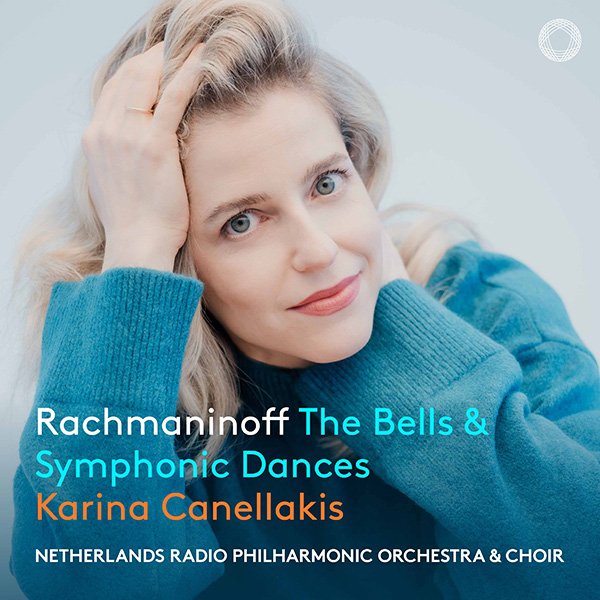 Rachmaninoff: The Bells; Symphonic Dances
Kristina Mkhitaryan, soprano; Dmytro Popov, tenor; Alexander Vinogradov, bass; Netherlands Radio Philharmonic and Choir/Karina Canellakis, cond.
Pentatone Classics PTC5187523 (CD). 2026. Everett Porter, prod.; Wirre de Vries, eng.
Performance ****
Sonics ****½ These two scores, like the symphonies, allow us to appreciate Rachmaninoff 's more venturesome idiom—beyond the straightforward framework he uses in the popular concerti. Here the writing, with sinuous, ambivalent figurations finding their place alongside beautiful themes, allows him access to a more nuanced emotional palette.
Canellakis lays out a vital, engaged account of The Bells, a cantata setting a Russian translation of Edgar Allan Poe. The opening lacks atmosphere, but the bustle and crispness is all to the good, with articulate tremolos intensifying the inner string motifs. The patient, weighted unfolding of the "wedding bells" movement feels strangely ominous until weaving legato strings open into yearning. The chorus's shrieking entry in "alarum bells" doesn't sound quite tuned, and the movement wanders a bit. The finale, with its tolling funeral bells, is quietly elegiac.
The soloists are good. Mkhitaryan's top note thins out, but better that than the flapping vibratos heard elsewhere in this music. Vinogradov doesn't escape a touch of bass bluster, but his pronouncements sound authoritative. The chorus mostly makes good, healthy sounds; the piano entry in the second movement sounds tentative, but the mood it evokes is prayerful.
The heavy scoring of the Symphonic Dances is an unequivocal triumph: The incisive attacks and buoyant rhythms of Karina Canellakis balance the sound while avoiding aural fatigue. The reverberation is generous, appropriate for the writing's open spaces.
The clear, vivid sound incorporates an oddly quirky perspective, apparently throwing the woodwinds in front. There's slight congestion in choral peaks.—Stephen Francis Vasta
Bax: Tintagel
London Symphony Orchestra, Tenebrae/Sir Antonio Pappano, cond.
LSO Live LSO0904 (CD). 2026. Stephen Johns, Andrew Cornall, prods.; Jonathan Stokes, eng.
Performance ***
Sonics **** This is The Planets' second go-round on LSO Live, which, decades ago, brought us one conducted by Sir Colin Davis. I'd forgotten this label has been around as long as that! Sir Antonio's take on the score has more distinctive moments than Sir Colin's. The solo reeds' legato dovetails in the scurrying Mercury are breathtaking. In the solemn, inexorable Saturn, Pappano carefully teases hairpin dynamics in the gorgeous midrange strings; the tempo feels a hair quick, but the effect remains dignified.
Brahms: The Three Violin SonatasAndrew Wan, violin; Charles Richard-Hamelin, piano
Analekta AN 2 9027 (CD; reviewed as 24/192). 2026. Carl Talbot, prod.; Talbot, Philippe Bouvrette, engs.
Performance ****
Sonics ***** If you encounter periods when the heartfelt longing, deep sadness, churning passion, and ultimate resignation and acceptance at the core of Johannes Brahms's music speak to you, this recording may be what you need. The playing is full and sonorous, the sound natural, and the interpretations unfailingly centered in the heart.
Jonas Kaufmann: Magische TöneJonas Kaufmann, tenor; Nikola Hillebrand, soprano (on six tracks); Hungarian State Opera Orchestra, Dirk Kaftan, cond.
Sony Classical 19958413542 (CD; reviewed as 24/96). 2026. Jakob Händel, prod.; Jakob Händel, Tamás Horváth (Eiffel Art Studios), ádám Matz (Palace of the Arts Müpa Budapest), engs.
Performance ****½
Sonics ***½ In his third delight-filled foray into operetta, tenor Jonas Kaufmann continues his journey from Berlin and Vienna to Hungary, the birthplace of Franz (Ferenc) Lehár and Emmerich (Imre) Kálmán. Joined by the Hungarian State Opera Orchestra, whose musicians, and conductor Dirk Kaftan, have this idiom in their blood, Kaufmann sings, smiles, and romances his way through 22 selections that leave no question as to why European-rooted operetta paved the way for the classic Broadway musicals of the past 100 years. One of the many treats of this recording is to hear, in addition to 11 arias by the irresistibly frothy Kálmán and deeper Lehár, music from six other composers whose creations dominated the stages of the Austro-Hungarian empire: Paul Abraham, Fred Raymond, Jenö Huszka, Nico Dostal, Károly Goldmark, and Ferenc Erkel. While there's only so much schmalz many of us can indulge in in one sitting before it causes us to bloat or disrupts our capacity for reverie, for those who know how to pace themselves, this album is a treasure.
Rachmaninoff: The Bells; Symphonic DancesKristina Mkhitaryan, soprano; Dmytro Popov, tenor; Alexander Vinogradov, bass; Netherlands Radio Philharmonic and Choir/Karina Canellakis, cond.
Pentatone Classics PTC5187523 (CD). 2026. Everett Porter, prod.; Wirre de Vries, eng.
Performance ****
Sonics ****½ These two scores, like the symphonies, allow us to appreciate Rachmaninoff 's more venturesome idiom—beyond the straightforward framework he uses in the popular concerti. Here the writing, with sinuous, ambivalent figurations finding their place alongside beautiful themes, allows him access to a more nuanced emotional palette.