Brandi Carlile: Returning to Myself
Interscope Records (auditioned as an LP). 2025. Andrew Watt, prod.; Paul LaMalfa, eng.
Performance ****
Sonics ***** There's a quiet irony in Brandi Carlile's decision to release an intimate, inward-looking album after the visibility she's built up over the past several years. Returning to Myself feels like a step inward, her own personal Nebraska. Like that Springsteen album, Returning slows the pace, strips away excess, and allows Carlile and listeners to catch their collective breath. After spending time with Joni Mitchell discussing creative process, Carlile retreated to upstate New York to begin work on the album. Joni's influence is felt throughout, in songs that prioritize clarity, space, and restraint. The production is warm and intimate, allowing her narratives to unfold without distraction.
"No One Knows Us," tracked second-to-1ast, is the record's emotional peak. Built around a confident, guitar-driven pulse, the song moves steadily forward while wrestling with themes that recur throughout the album: sadness, loss, uncertainty. When it opens up into a full-bodied anthem, the drums land with the weight of a fist hitting a table.
Carlile's conversational delivery recalls that of Mary Chapin Carpenter, particularly in how the songs feel less like performances, more like long-distance check-ins meant to remind listeners of their own resilience.
The album benefits greatly from the subtlety of longtime collaborators Phil and Tim Hanseroth, whose playing brings depth and nuance. "A Long Goodbye" is a standout in this respect, its layered guitars creating a sense of quiet momentum. It rewards close listening.
Though Carlile remains a powerhouse vocalist, Returning to Myself finds its strength in restraint. Not all of these 10 tracks lands fully, but nearly all come close, and in their cumulative effect, they reaffirm Carlile's instincts as a thoughtful, emotionally precise songwriter.—Ray Chelstowski
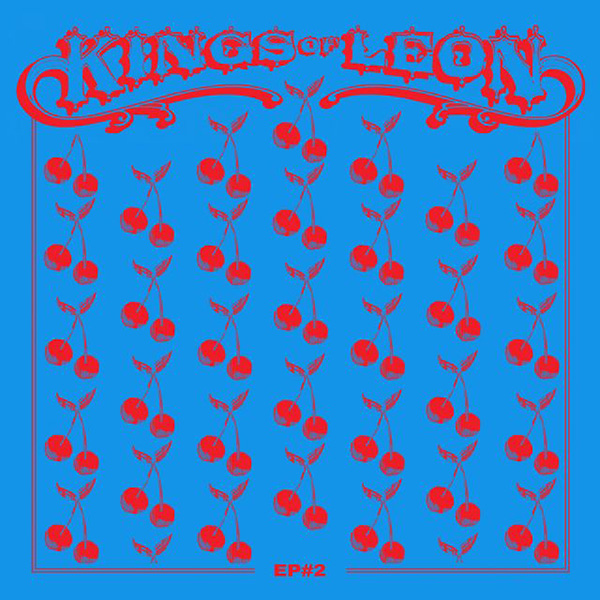 Kings Of Leon: EP #2
Love Tap Records (auditioned as an EP). 2025. Kings of Leon, prods., engs.
Performance ****
Sonics ***** The EP was once considered a throwaway format, a half-hearted offering from artists unwilling or unable to commit to a full musical statement. Streaming culture has rewritten that narrative. The EP is now viewed as a focused canvas for expressing concise ideas. Kings of Leon make a strong case for that vision with EP #2, a four-song release that signals a sharp, confident shift back toward the Southern rock–inflected roots that defined the band.
Released independently on the band's Love Tap Records, EP #2 marks Kings of Leon's first self-produced effort. That freedom seems to have loosened something creatively. While the runtime is brief, the songs feel open, varied, and unburdened. There's a sense of rediscovery reminiscent of their earliest work, where groove and atmosphere mattered most.
The EP is bookended by upbeat, fast-moving rockers. The closer, "The Wolf," is especially effective. Propelled by driving drums, guitars weave through the groove, creating a dynamic backdrop for Caleb Followill's vocal phrasing, sliding into the beat and lingering a fraction longer than expected. That subtle push-pull remains central to the band's best material.
"To Space" is the standout. Pulsating and hypnotic, it leans into ambient textures and drum-driven momentum, crafting a bouncy, open-ended form of neo-psychedelia that longtime fans will latch onto quickly.
At the emotional center sits "Pit to the Rind," a slow, somber track built around restraint and reverberant guitar. Stripped-back production heightens the impact of its chorus. Followill often sounds as though he's singing through tears.
For Kings of Leon, EP #2 is a useful recalibration, swift and welcome. It offers exactly what fans have hoped for while still managing to surprise. It demonstrates that even a small chunk of music can dig deep and satisfy.—Ray Chelstowski
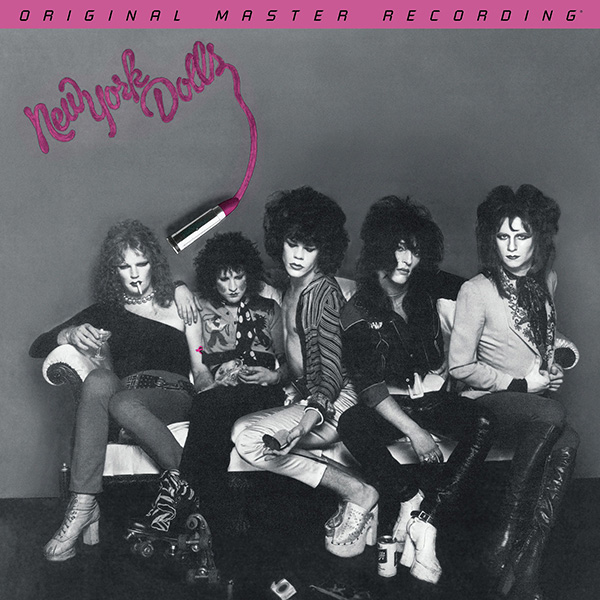 New York Dolls: New York Dolls
Mobile Fidelity MFSL 2-580 (45rpm, two LPs). 1973/2025. Todd Rundgren, orig. prod.; Jack Douglas, Ed Sprigg, orig. engs.; Kreig Wunderlich, reissue mastering eng.
Performance ****
Sonics ****
Influential in so many ways, the self-titled debut album by the New York Dolls has also been an unending sonic battleground since its release. Tracked at The Record Plant in NYC in April 1973, the controversies began almost immediately when producer Todd Rundgren disliked the sound of the studio. Recorded over eight days, the album was mixed in one. Eventually, Johnny Thunders complained about that mix. Rundgren complained that the band was uninterested in mixing, that the process was rushed, that the mastering lab was subpar. On the other side of the ledger, David Johansen thought the final mix accurately portrayed the band as it sounded live.
Described by Johansen as "a little jewel of urban folk art," the album, which holds 10 original tunes and a Bo Diddley cover, was a critical hit but a commercial failure. Hailed as one of the foundational documents of punk rock, the album is also one of the few truly great glam-rock albums. With its glorious, hilarious cover image of the band in drag, the album's middle-finger attitude, raw playing, and barked vocals, it was the polar opposite of the excesses of then-dominant arena rock bands. From the unhinged joy of the opener, "Personality Crisis," to the whispered tease of "Lonely Planet Boy," beyond to the mighty din of "Bad Girl" and the jumpy "Trash," this snarling collection earns its 2007 distinction in Mojo magazine as one of the "100 Records That Changed the World."
This recent MoFi reissue, the first US remastering, adds to the album's sonic lore. Drums have been brought up in the mix, a move that seems a de rigueur remastering touch in the 21st century. Those who love the album's sonic rough edges may think it too polished. Ears that abhor those same edges will prefer this version. Sonically, to echo an immortal adage, sometimes you just can't win.—Robert Baird
 Tyler Childers: Snipe Hunter
Hickman Holler Records (auditioned as an EP). 2025.
Performance ****
Sonics ***** Tyler Childers emerged in 2017 as a singular voice in country and roots music, armed with a story that felt personal and deeply regional. His father worked in the coal industry, and he grew up in a trailer parked beside a Baptist church. Those details once framed the narrative around him, but on his latest record, that familiar context loosens its grip. Enter Rick Rubin, who reshapes Childers's approach, allowing the songs to drift freely. The result is Childers's most adventurous and pleasantly weird album to date, blending vintage balladry, rockabilly swagger, and touches of psychedelia with new artistic confidence. Like Sturgill Simpson, Childers has resisted the arena-ready country sound favored by today's Music Row. That defiance hasn't kept him from headlining major festivals, and that expanded audience has, presumably, provided space for a recalibration. This album feels more welcoming and broader in the ground it covers without sacrificing the qualities that made Childers compelling in the first place. Two of the record's best moments are on "Oneida" and "Nose on the Grindstone," both songs long beloved in live performances. Rubin's studio treatment doesn't dilute their power; it frames them as touchstones that remind listeners where Childers began while signaling how far he's traveled. That evolution is clearest on "Getting to the Bottom," a layered reflection on nearly six years of sobriety, delivered with humor and hard-earned perspective.
The album announces its broader ambitions early, with the gleefully profane rocker "Eatin' Big Time." It's a sort of off-kilter cousin to Kenny Loggins' "I'm Alright." It's fun to hear Childers loosen up and let songs spill past the edges. Even when he leans fully into Bakersfield territory on "Cuttin' Teeth," the mood remains buoyant, built for smiles and sing-alongs.—Ray Chelstowski
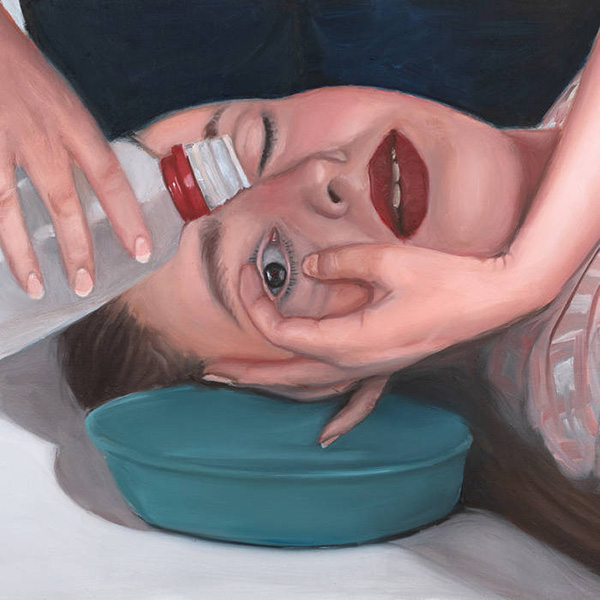 Dry Cleaning: Secret Love
4AD 4ADO868LP (LP). 2026. Cate Le Bon, prod.; Samur Khouja, Heba Kadry, Jeff Tweedy, engs.
Performance *****
Sonics ****½ Five years after Dry Cleaning's debut album New Long Leg and three years after their second, Stumpwork, comes Secret Love, the band's third. It's a belter.
Since the band's 2021 arrival, labels such as "No Wave" and "Post Punk" have attached to them as securely as any garment-care instruction label. Labeling has its uses. Here it tells prospective listeners not to expect vocals that sound like Barbra Streisand. There's danger in labeling too though: Such pigeonholing makes a band seem retro, old-fashioned, which Dry Cleaning definitely isn't.
This is a vital album, which is to say, an album of vitality and nowness, though it is still recognizably a Dry Cleaning album: Thanks to Florence Shaw's distinctive vocal style, it's impossible to mistake this band for any other.
Secret Love is a progression, not a break. Still center stage are Shaw's surreal lyrics on the mundanities of life, fractured observations of everyday, such as housework in "My Soul/Half Pint" Who'd like a song about being a cruise ship designer? Shaw's vocal delivery remains primarily spoken, although there's more singing than on the previous albums. In the abstract, that might seem to run the risk of being boringly monochrome, but it isn't—far from it.
This is the sound of a band hitting its stride, growing in confidence and ambition, facilitated by Cate Le Bon's brilliant production. Tom Dowse's guitar is up front, given more space, allowing it to be even more epic, moving sharply around Shaw like a half-crazed tango dancer trapped in some Futurist painting. Up-tempo numbers such as "Rocks" streak out of the speakers like shards of color, full of motion and angular sounds. In contrast, the acoustic guitars swirl and circle on the slower "Let Me Grow and You'll See the Fruit." These elements combine and cohere to form one remarkable album.—Phil Brett
Interscope Records (auditioned as an LP). 2025. Andrew Watt, prod.; Paul LaMalfa, eng.
Performance ****
Sonics ***** There's a quiet irony in Brandi Carlile's decision to release an intimate, inward-looking album after the visibility she's built up over the past several years. Returning to Myself feels like a step inward, her own personal Nebraska. Like that Springsteen album, Returning slows the pace, strips away excess, and allows Carlile and listeners to catch their collective breath. After spending time with Joni Mitchell discussing creative process, Carlile retreated to upstate New York to begin work on the album. Joni's influence is felt throughout, in songs that prioritize clarity, space, and restraint. The production is warm and intimate, allowing her narratives to unfold without distraction.
Kings Of Leon: EP #2Love Tap Records (auditioned as an EP). 2025. Kings of Leon, prods., engs.
Performance ****
Sonics ***** The EP was once considered a throwaway format, a half-hearted offering from artists unwilling or unable to commit to a full musical statement. Streaming culture has rewritten that narrative. The EP is now viewed as a focused canvas for expressing concise ideas. Kings of Leon make a strong case for that vision with EP #2, a four-song release that signals a sharp, confident shift back toward the Southern rock–inflected roots that defined the band.
New York Dolls: New York DollsMobile Fidelity MFSL 2-580 (45rpm, two LPs). 1973/2025. Todd Rundgren, orig. prod.; Jack Douglas, Ed Sprigg, orig. engs.; Kreig Wunderlich, reissue mastering eng.
Performance ****
Sonics ****
Tyler Childers: Snipe HunterHickman Holler Records (auditioned as an EP). 2025.
Performance ****
Sonics ***** Tyler Childers emerged in 2017 as a singular voice in country and roots music, armed with a story that felt personal and deeply regional. His father worked in the coal industry, and he grew up in a trailer parked beside a Baptist church. Those details once framed the narrative around him, but on his latest record, that familiar context loosens its grip. Enter Rick Rubin, who reshapes Childers's approach, allowing the songs to drift freely. The result is Childers's most adventurous and pleasantly weird album to date, blending vintage balladry, rockabilly swagger, and touches of psychedelia with new artistic confidence. Like Sturgill Simpson, Childers has resisted the arena-ready country sound favored by today's Music Row. That defiance hasn't kept him from headlining major festivals, and that expanded audience has, presumably, provided space for a recalibration. This album feels more welcoming and broader in the ground it covers without sacrificing the qualities that made Childers compelling in the first place. Two of the record's best moments are on "Oneida" and "Nose on the Grindstone," both songs long beloved in live performances. Rubin's studio treatment doesn't dilute their power; it frames them as touchstones that remind listeners where Childers began while signaling how far he's traveled. That evolution is clearest on "Getting to the Bottom," a layered reflection on nearly six years of sobriety, delivered with humor and hard-earned perspective.
Dry Cleaning: Secret Love4AD 4ADO868LP (LP). 2026. Cate Le Bon, prod.; Samur Khouja, Heba Kadry, Jeff Tweedy, engs.
Performance *****
Sonics ****½ Five years after Dry Cleaning's debut album New Long Leg and three years after their second, Stumpwork, comes Secret Love, the band's third. It's a belter.