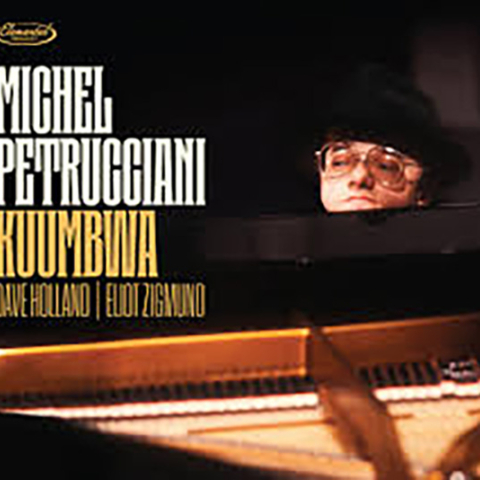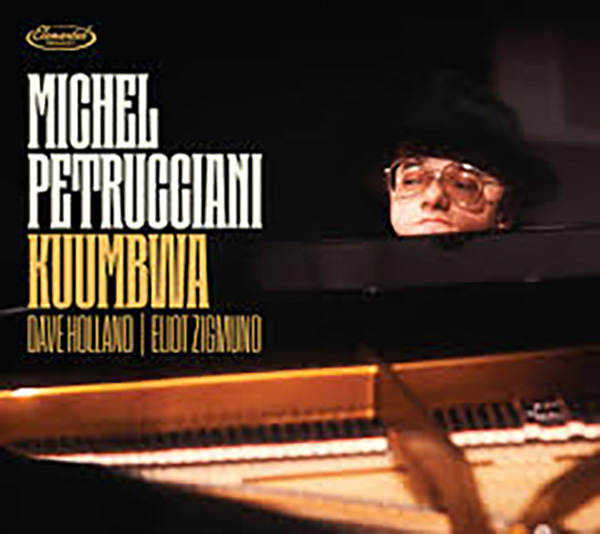
Michel Petrucciani: Kuumbwa
Petrucciani, piano; Dave Holland, bass; Eliot Zigmund, drums
Elemental 5990459 (2 CDs; also available as 2 LPs). 1987/2026. Zev Feldman, prod.; Russell Greene, eng.; Marc Doutrepont, remastering.
Performance *****
Sonics ****½ Osteogenesis imperfecta afflicted Michel Petrucciani, the brilliant French jazz pianist who died in 1999 at the age of 36. Just 3' tall, Petrucciani used a special attachment to reach the piano pedals. Despite constant pain, he played with captivating verve, in a style influenced by Bill Evans but more exuberant. This double album captures a never-before-released 1987 performance at the Kuumbwa Jazz Center in Santa Cruz, California. It's the only known recording of Petrucciani's short-lived trio with drummer Eliot Zigmund, who'd worked with Evans, and bassist Dave Holland. The set list includes five vintage standards, all recorded by Miles Davis, four Petrucciani originals, and compositions by Davis, Wayne Shorter, and Charles Lloyd. The package includes extensive liner notes and interviews with musicians and others, including Petrucciani's son Alexandre. Playing with superb technique but little blues or bebop flavor, Petrucciani projects warmth and intensity, adapting melodies to suit his buoyant disposition. On "My Funny Valentine," he briefly nods to the familiar tune before launching into cascading ripples of notes in a fanciful vein. He can wax pensive, as on his own "The Prayer," or wistful, as on "Someday My Prince Will Come," but he's most engaging at full tilt, as on Shorter's "Limbo," where he works up a dazzling head of steam, or Lloyd's "Sweet Georgia Bright," where he scampers up and down the keyboard.
Shadowing Petrucciani's every move and soloing on every track, the virtuosic Holland is so prominent in the mix that he might be taken as the group's co-leader. The supportive Zigmund stays in the background. The audio is crystal clear, accentuating the pianist's luminous tone.—Larry Birnbaum
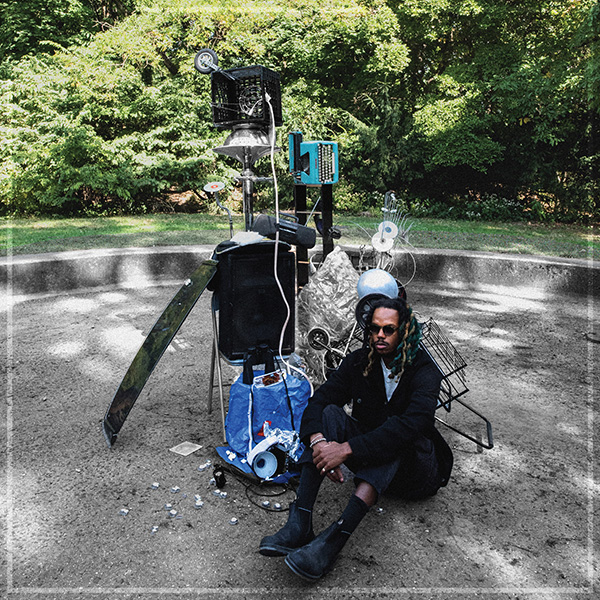 Tyrone Allen: Upward
Allen, basses; Neta Ranaan, tenor saxophone; Aidan Lombard, trumpet; Lex Korten, keys; Samantha Feliciano, harp; Abe Nouri, live effects; Kayvon Gordon, drums
Dreams & Fears DF 0101 (CD). 2026. Allen, Nouri, prods.; Alex Conroy, Nouri, Allen, engs.
Performance ****
Sonics ***½ Upward is emblematic of where jazz is right now, and where it is going. It features rising stars like Neta Ranaan, Lex Korten, Kayvon Gordon, and, in his impressive debut as a leader, Tyrone Allen II. Like so much new-generation jazz, it blurs genres. Its central aesthetic assumption is jazz, but it touches many modes. It departs from historical precedent. Jazz has mostly been discrete: discrete instruments playing discrete styles incorporating discrete solos. But much new jazz is continuous. On Upward, everything mixes together. Tracks spill into one another. Styles are unstable. Personnel are fluid. Discrete instruments are often not identifiable. Allen and his co-producer Abe Nouri electronically generate looped motifs, audio manipulations, and ambiguous sonorities. Press notes state that "Allen's background is soundscape production." On soundscapes, things spread out and flow.
What is most notable about Upward is not what Allen does but how he does it. Few young artists combine diverse elements as organically and intelligently as Allen. Ranaan, Korten, and Aidan Lombard, a newer name, contribute startling personal ideas as elaborations of Allen's soundscapes. For all of the boldness of these players, there is a contemplative, even plaintive quality to this music.
Allen says that the creative origins of the project go back several years, to the pandemic, when he was "longing to be in communion with others" but was still "cherishing times of stillness."
Another defining sound of this album is the harp of Samantha Feliciano. Her delicate but incisive details illuminate the layered atmospheres of Upward.—Thomas Conrad
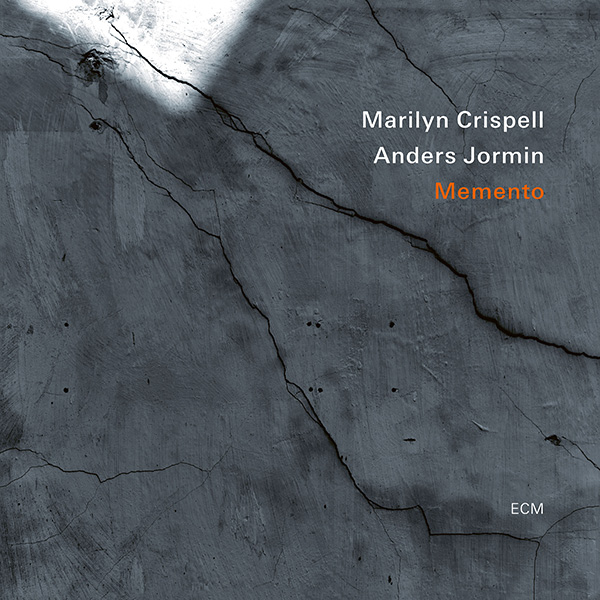 Marilyn Crispell/Anders Jormin: Memento
Crispell, piano; Jormin, bass
ECM 2867 (auditioned in WAV; available as CD). 2026. Manfred Eicher, prod.; Stefano Amerio, eng.
Performance ****
Sonics ****½ The ECM label has long been associated with a certain kind of atmospheric inner stillness. It is easy to find exceptions to this stereotype. The ECM catalog of approximately 1800 titles includes a vast variety of music. But, as novelist Stephen King is famous for pointing out, the reason a cliché becomes a cliché is that it's true. Memento is a quintessentially ECM album, because of its quietude and also because of its concentrated creativity. Marilyn Crispell's journey in art began in classical music, passed through a hard-core avant-garde period (she was Anthony Braxton's pianist for a decade), and, partly because of her affiliation with ECM, has arrived at arcane lyricism. Anders Jormin has played bass with many of the major jazz figures of our time, including Don Cherry, Charles Lloyd, Tomasz Stanko, and Bobo Stenson. Crispell and Jormin have crossed paths before, but Memento is their first duo project. Clearly, they trust and inspire one another. Their capacity for shared expression is revealed in the very first track, "For the Children." Jormin says that this entirely improvised piece "is in memory of innocents caught in the crossfire ... from Sudan to Gaza and Ukraine." Jormin's high arco notes are cries within the darkness of Crispell's solemn, droning piano. The list of places where children are caught in the crossfire keeps growing. Since Memento was recorded, Iran joined the list.
In the remainder of the album, Crispell and Jormin slowly search and probe together. Even in the notated pieces, fresh melodies happen in the moment. The two array their discoveries in open musical space, as bare, molecular forms.
Because this album celebrates sound itself, its immaculate sonic quality is critical. Producer Manfred Eicher and engineer Stefano Amerio are the third and fourth artists of Memento.—Thomas Conrad
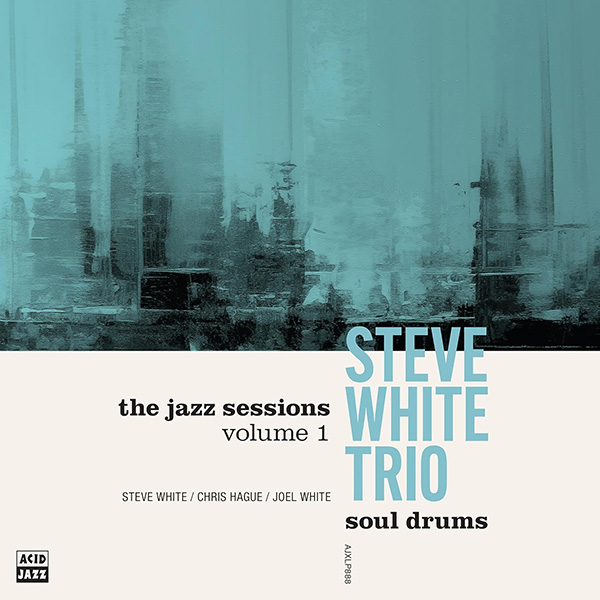 Steve White Trio: Soul Drums
Acid Jazz Records AJXLP888 (16/44.1 Qobuz stream). 2026. Chris Hague, prod.; Hague, Matt Richens, engs.
Performance ****
Sonics ****
Probably best known for his work with the Style Council and Paul Weller—and for his fashion sense—Steve White is one of the foremost UK drummers. His style is not flashy. White is more interested in the groove, in how his playing propels the song. He is equally adept at soul, pop, funk, and jazz.
Soul Drums is solidly jazz. This is White's first album as leader, though the trio—Steve White on drums, Joel White (no relation) on piano and organ, and Chris Hague on guitar—has recorded previously as Hague & White. (Hague also produced this album.) A few others, notably Steve Beighton on sax, horns, and flute, make appearances.
Soul Drums was recorded in just two days, which may account for the freshness and vitality in the performances and the sonics. Soul Drums is an apt title because Steve White's drumming does indeed have a soul. (The title is shared by a renowned 1967 album by funk drummer Bernard "Pretty" Purdie.)
White's Soul Drums isn't marked by a single jazz style. There's a lounge feel on "Songs for Us Dads"; "Changes" leans Latin funk. There's a Style Council cover—"My Ever Changing Moods"—with Joel White's Hammond at the forefront. (Steve White played it on the Style Council original.) It's easy to imagine hearing "Something" at Ronnie Scott's, the famous London jazz club, in 1965.
The feel of the tracks may differ, but there is an overarching vibe of 1960s film soundtrack. Occasionally, White's drums claim the spotlight, as on "Throwing a Whitey," but in the main, while the trio may bear his name, this is a collective endeavor, and the musicians sound like they were having fun. This listener certainly was. Soul Drums is an album as sharp as Steve White's fashion sense.—Phil Brett
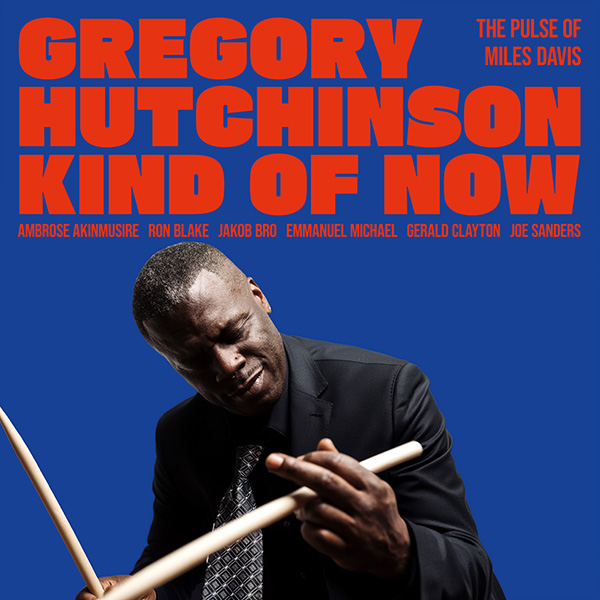 Gregory Hutchinson: Kind of Now: The Pulse of Miles Davis
Hutchinson, drums; Ambrose Akinmusire, trumpet; Ron Blake, reeds; Jakob Bro, Emmanuel Michael, guitars; Gerald Clayton, piano; Joe Sanders, bass
Warner Music 5026854173122 (auditioned as CD; available as LP). 2026. Hutchinson, prod.; James Farber, eng.
Performance ****½
Sonics ****
Tribute albums for the Miles Davis Centenary have started coming in. This one kills. The group is largely an all-star band. Ambrose Akinmusire is the most important trumpet player to enter jazz in 20 years. Gerald Clayton is a top-five pianist. Jakob Bro and Joe Sanders are not far off those heights. Ron Blake is not famous but is an exciting tenor saxophone player. Guitarist Emmanuel Michael is, according to Gregory Hutchinson, "what Miles was always looking for—the next voice."
Hutchinson is the hero of this project. He is one of the great drummer sidemen in jazz, with almost no experience as a leader. With Kind of Now, he has conceived a wildly adventurous fresh encounter with Miles's music. Every track defies expectation. It is fascinating to hear an innovator like Akinmusire, on Miles's instrument, in a setting that imposes a historical context. He never sounds like Miles. His stunning solos sound like Miles displaced in time, blasted forward into a new century. Clayton is given a piano feature on "Fran-Dance" that becomes a deep treatise on theme and variation. Even in this fast company, the two guitarists are so good they nearly steal the show.
But the solo firepower serves a larger purpose: The band starts over with classic Miles texts and reimagines them. "Orbits," from the 1967 album Miles Smiles, was advanced in its day, with its off-balance intervallic head and its ambiguous harmonic environment. The explosive free-form version here makes the original sound almost quaint. In 1970, "Bitches Brew" was a breakthrough, 27 minutes of floating, ambient mystery. The stripped-down seven-minute rendering on Kind of Now is jagged, volatile, and even more ominous.—Thomas Conrad
Petrucciani, piano; Dave Holland, bass; Eliot Zigmund, drums
Elemental 5990459 (2 CDs; also available as 2 LPs). 1987/2026. Zev Feldman, prod.; Russell Greene, eng.; Marc Doutrepont, remastering.
Performance *****
Sonics ****½ Osteogenesis imperfecta afflicted Michel Petrucciani, the brilliant French jazz pianist who died in 1999 at the age of 36. Just 3' tall, Petrucciani used a special attachment to reach the piano pedals. Despite constant pain, he played with captivating verve, in a style influenced by Bill Evans but more exuberant. This double album captures a never-before-released 1987 performance at the Kuumbwa Jazz Center in Santa Cruz, California. It's the only known recording of Petrucciani's short-lived trio with drummer Eliot Zigmund, who'd worked with Evans, and bassist Dave Holland. The set list includes five vintage standards, all recorded by Miles Davis, four Petrucciani originals, and compositions by Davis, Wayne Shorter, and Charles Lloyd. The package includes extensive liner notes and interviews with musicians and others, including Petrucciani's son Alexandre. Playing with superb technique but little blues or bebop flavor, Petrucciani projects warmth and intensity, adapting melodies to suit his buoyant disposition. On "My Funny Valentine," he briefly nods to the familiar tune before launching into cascading ripples of notes in a fanciful vein. He can wax pensive, as on his own "The Prayer," or wistful, as on "Someday My Prince Will Come," but he's most engaging at full tilt, as on Shorter's "Limbo," where he works up a dazzling head of steam, or Lloyd's "Sweet Georgia Bright," where he scampers up and down the keyboard.
Tyrone Allen: UpwardAllen, basses; Neta Ranaan, tenor saxophone; Aidan Lombard, trumpet; Lex Korten, keys; Samantha Feliciano, harp; Abe Nouri, live effects; Kayvon Gordon, drums
Dreams & Fears DF 0101 (CD). 2026. Allen, Nouri, prods.; Alex Conroy, Nouri, Allen, engs.
Performance ****
Sonics ***½ Upward is emblematic of where jazz is right now, and where it is going. It features rising stars like Neta Ranaan, Lex Korten, Kayvon Gordon, and, in his impressive debut as a leader, Tyrone Allen II. Like so much new-generation jazz, it blurs genres. Its central aesthetic assumption is jazz, but it touches many modes. It departs from historical precedent. Jazz has mostly been discrete: discrete instruments playing discrete styles incorporating discrete solos. But much new jazz is continuous. On Upward, everything mixes together. Tracks spill into one another. Styles are unstable. Personnel are fluid. Discrete instruments are often not identifiable. Allen and his co-producer Abe Nouri electronically generate looped motifs, audio manipulations, and ambiguous sonorities. Press notes state that "Allen's background is soundscape production." On soundscapes, things spread out and flow.
Marilyn Crispell/Anders Jormin: MementoCrispell, piano; Jormin, bass
ECM 2867 (auditioned in WAV; available as CD). 2026. Manfred Eicher, prod.; Stefano Amerio, eng.
Performance ****
Sonics ****½ The ECM label has long been associated with a certain kind of atmospheric inner stillness. It is easy to find exceptions to this stereotype. The ECM catalog of approximately 1800 titles includes a vast variety of music. But, as novelist Stephen King is famous for pointing out, the reason a cliché becomes a cliché is that it's true. Memento is a quintessentially ECM album, because of its quietude and also because of its concentrated creativity. Marilyn Crispell's journey in art began in classical music, passed through a hard-core avant-garde period (she was Anthony Braxton's pianist for a decade), and, partly because of her affiliation with ECM, has arrived at arcane lyricism. Anders Jormin has played bass with many of the major jazz figures of our time, including Don Cherry, Charles Lloyd, Tomasz Stanko, and Bobo Stenson. Crispell and Jormin have crossed paths before, but Memento is their first duo project. Clearly, they trust and inspire one another. Their capacity for shared expression is revealed in the very first track, "For the Children." Jormin says that this entirely improvised piece "is in memory of innocents caught in the crossfire ... from Sudan to Gaza and Ukraine." Jormin's high arco notes are cries within the darkness of Crispell's solemn, droning piano. The list of places where children are caught in the crossfire keeps growing. Since Memento was recorded, Iran joined the list.
Steve White Trio: Soul DrumsAcid Jazz Records AJXLP888 (16/44.1 Qobuz stream). 2026. Chris Hague, prod.; Hague, Matt Richens, engs.
Performance ****
Sonics ****
Gregory Hutchinson: Kind of Now: The Pulse of Miles DavisHutchinson, drums; Ambrose Akinmusire, trumpet; Ron Blake, reeds; Jakob Bro, Emmanuel Michael, guitars; Gerald Clayton, piano; Joe Sanders, bass
Warner Music 5026854173122 (auditioned as CD; available as LP). 2026. Hutchinson, prod.; James Farber, eng.
Performance ****½
Sonics ****