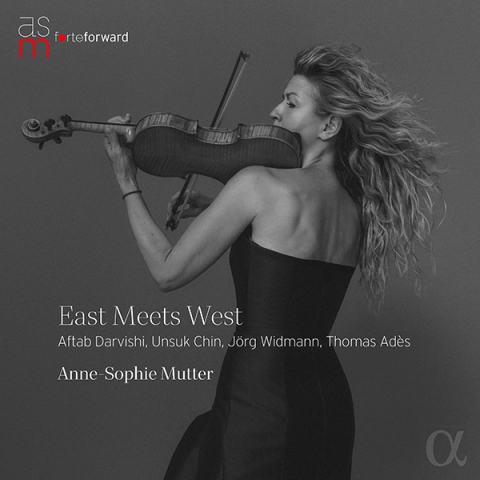
Anne-Sophie Mutter: East Meets West
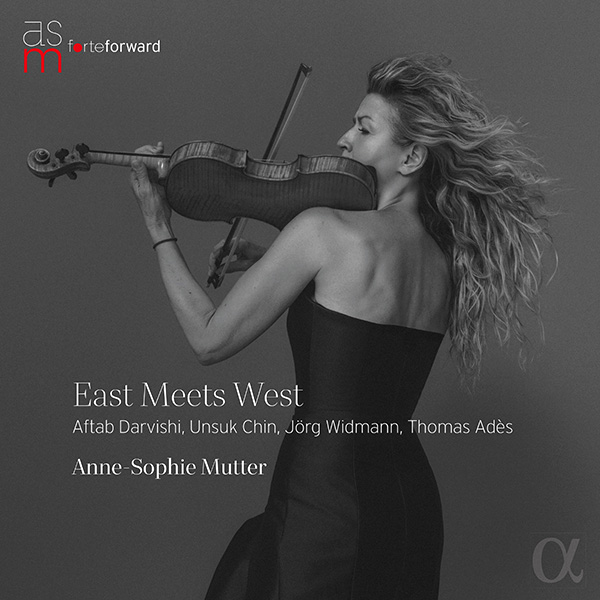
Works by Aftab Darvishi, Unsuk Chin, Jörg Widmann, Thomas Adès
Anne-Sophie Mutter, violin; London Symphony Orchestra, Adès, cond. (in his piece)
Alpha1244 (CD; reviewed as 24/192). 2026. Bernhard Güttler, prod.; various engineers.
Performance *****
Sonics ****½ Fabulous music. Fabulous playing. Excellent mastering. That sums up this issue of four works composed for the great violinist Anne-Sophie Mutter, 63, to mark the 50th anniversary of her 1976 stage debut at the Lucerne Festival. The first in a series of recordings of premieres that have slipped through the industry's ever-widening cracks, this album honors an inspirational artist whose gifts were noticed by conductor Herbert von Karajan then shared in recordings for Deutsche Grammophon. Dismiss any notion that this repertoire is inferior to newer works by Penderecki, Dutilleux, Lutoslawki, Previn, Gubaidulina, or others Mutter has recorded for DG. Darvishi's beautiful Likoo, for violin solo honors J.S. Bach with its heart-touching melding of Western harmonies with the sorrow of traditional Baluchi songs from southeastern Iran. South Korean expat Chin's Gran Cadenza, for two violins (with Nancy Zhou) reflects Chin's penchant for adamance, conflict, and their opposites. I've heard many a "to be continued ..." musical ending, but the way Chin trails off midstream in some intentional silly chattering is unique.
Some may expect Widmann's Studie über Beethoven (String Quartet No.6) to reflect the late Alfred Schnittke's penchant to meld contemporary harmonies with quotes from the great masters, but Widmann's music complements rather than parodies. I sat in awe as his fascinating musical language ceded to excerpts from Beethoven's String Quartet in B-flat major, Op.18, No.6. I never thought Beethoven could sound more beautiful than Beethoven, but Widmann's framing sets each brief quotation as a precious jewel. As for Adès's Air - Homage to Sibelius, for violin and orchestra, the soaring, gorgeous, and heartfelt words only hint at its beauty.—Jason Victor Serinus
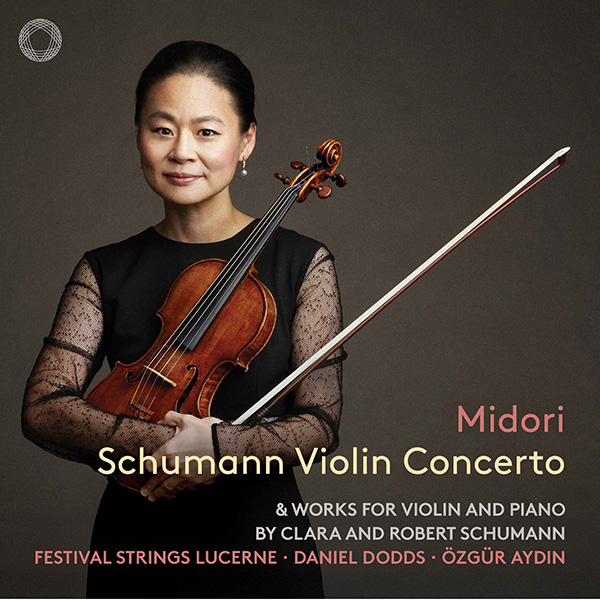 Robert Schumann: Violin Concerto
Robert & Clara Schumann: Chamber Works
Midori, violin; Festival Strings Lucerne/ Daniel Dodds; Özgür Aydin, piano
Pentatone Music PTC5817496 (CD). 2026. Wolfram Nehls, prod.; Max Molling, Thomas Bösl, Nehls, engs.
Performance ****
Sonics **** Schumann's Violin Concerto has never gained much traction, either in concert or on record. The themes and the general aesthetic are echt-Schumann, but structural anomalies—a development that's unrelated to the double exposition; a finale too brief to round things off—render it unsatisfying.
After a turbulent introduction, Midori attacks her opening phrases incisively—appropriate, but the tone is thinner than I expected. Her dynamics and inflections are sensitive, and as she settles more lyrically, her tone expands. In the development, she begins to soar, and the recap's triplet double-stops are impeccable. Schumann himself causes problems in the central Langsam with its tricky orchestral syncopations, but Midori's fervent tone salvages it, and she maintains a nice, light manner in the quirky polonaise finale. Dodds lets those syncopations sound like oozy imprecision; otherwise, he keeps the "Festival Strings Lucerne"—which clearly includes winds—in good order, supporting Midori in the finale with cushiony pizzicatos.
Three violin-and-piano sets complete the program. The Five Pieces in Folk Style carry touches of Gypsy rhythms along with bits of deliberately ambiguous scansion. They interested me less, however, than the earlier Three Romances, where the piano sings out nicely, with figurations similar to those of the Piano Concerto; the central piece is uncharacteristically sunny. Finally we get wife Clara's Three Romances, in which the piano writing resembles those of Robert's solo pieces, with hints of Mendelssohn in the third piece.
Midori's beautiful, varied cantabile phrasing expertly straddles introspection and sentimentality. Özgür Aydin, a full partner, provides solid, well-balanced support, lavishing a warmer, mellower sound on Clara's pieces.—Stephen Francis Vasta
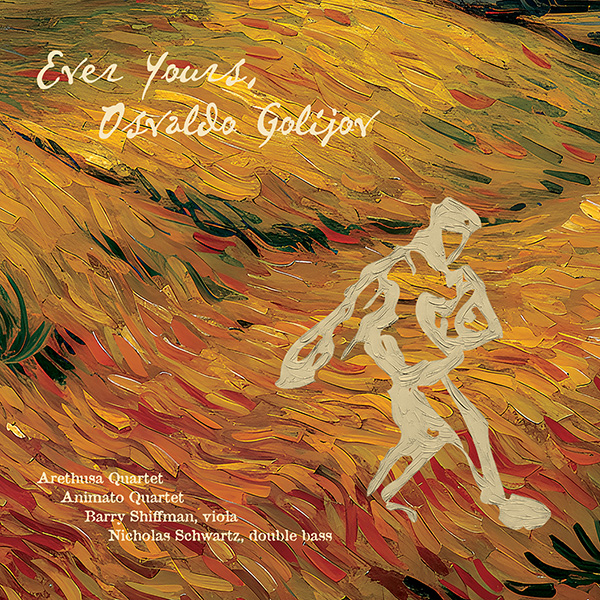 Osvaldo Golijov: Ever Yours
Arethusa Quartet; Animato Quartet; Barry Shiffman, viola; Nicholas Schwartz, double bass
Phenotypic Recordings (CD and LP; reviewed as 24/96 WAV). 2025. Stephen Prutsman, prod.; Joeri Saal, Studio 150 Bethlehemkerk, Amsterdam, engs.
Performance *****
Sonics ****½ Augmenting recent recordings of classic octets by Mendelssohn, Enescu, and Schubert, Ever Yours presents four vital and accessible works by Argentinean-American composer Osvaldo Golijov (b. 1960). The title work is a 24-minute tour de force for augmented octet inspired by and dedicated to the late violinist Geoff Nuttall, who cofounded the now-disbanded St. Lawrence String Quartet and was dying of pancreatic cancer while Golijov was writing the piece. Its title derives from the words "Ever Yours," with which Vincent van Gogh signed his letters to his brother Theo. Some sections reflect String Quartet, Op.76, No.2 by Franz Joseph Haydn, the composer Nuttall loved and admired the most. Performed by the Arethusa and Animato Quartets augmented by Barry Shiffman's viola and Nicholas Schwartz's double bass, Ever Yours opens with "Sowing Fifths." Built on two pairs of notes, A-D and E-A, its forever-on-the-move kinetic energy mirrors how the vital Nuttall looked and played onstage every time I saw him. The second movement, "Starbound," which receives inspiration from van Gogh's "Starry Night," is one of the loveliest, most profoundly touching tributes I've ever heard. The succeeding movements include brief references to works by Beethoven and Haydn. Wonderful, engaging, and enrapturing in turn, it's a work to be played over and over.
The three-movement Tintype, also from 2024, and the single-movement K'vakarat from 1993, both played by the Arethusas plus Shiffman, reflect Golijov's love for the Hebrew melodies he was raised with. Esperanza—Love Theme from the Soundtrack for Megalopolis (2024) may be only four minutes long, but it's as touching as all that proceeds it. You'll be all the richer for playing this recording.—Jason Victor Serinus
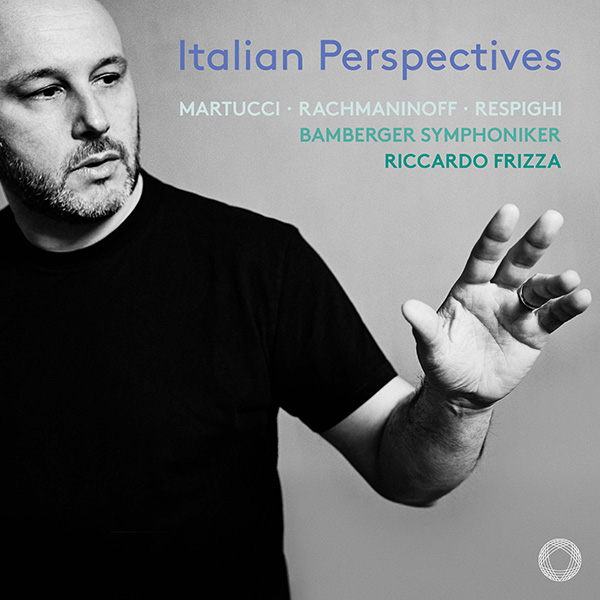 Riccardo Frizza: Italian Perspectives
Works by Rachmaninoff-Respighi, Respighi, Martucci
Bamberg Symphony/Riccardo Frizza
Pentatone Music PTC5187419 (CD). 2026. Dagmar Birwe, prod.; Christian Jaeger, eng.
Performance *****
Sonics ***** Solo piano music, including Rachmaninoff's Études-Tableaux, doesn't always adapt well to the orchestra. But these five pieces, as orchestrated by Respighi, become expressive tone poems. The wide string leaps of The Sea and Seagulls become mysterious and translucent; Little Red's rapid forte bass figures are smooth instead of banged. And we hear the harmonic idiom of Rachmaninoff's symphonies more than once. This is arguably the first recording of the set that has fully "worked."
The expressive heart of Respighi's own Botticelli Triptych is the central "Adoration of the Magi," in which stark reed octaves (on "O Come, O Come Emmanuel") and a rocking string theme (the Italian carol "Tu scendi dalle stelle") evoke a reverent, otherworldly mood. The outer movements—a joyous, dancing first and a finale marked by gentle, Vivaldian pulsing—provide a fine setting for it.
Martucci's relatively conservative First Symphony (1895), in four movements, is unapologetically tonal. Like Respighi, he has a particular ear for wind colors, both alone and in unique combinations. The Romantic orchestra is large, but many passages are light in texture. The churning developments of both outer "sonata" movements verge on rhetorical fustian, but quieter lyrical passages salvage them both. In between, we get a chorale-like Andante with a Brahmsian cello solo and an initially delicate intermezzo that erupts explosively.
Throughout, Frizza leads with buoyancy and sure direction, drawing lovely, polished playing from the Bambergers, with particularly gorgeous winds. The sonics encompass big tutti climaxes and more intimate textures with equal finesse, in a pleasing, unobtrusive ambience.—Stephen Francis Vasta
Works by Aftab Darvishi, Unsuk Chin, Jörg Widmann, Thomas Adès
Anne-Sophie Mutter, violin; London Symphony Orchestra, Adès, cond. (in his piece)
Alpha1244 (CD; reviewed as 24/192). 2026. Bernhard Güttler, prod.; various engineers.
Performance *****
Sonics ****½ Fabulous music. Fabulous playing. Excellent mastering. That sums up this issue of four works composed for the great violinist Anne-Sophie Mutter, 63, to mark the 50th anniversary of her 1976 stage debut at the Lucerne Festival. The first in a series of recordings of premieres that have slipped through the industry's ever-widening cracks, this album honors an inspirational artist whose gifts were noticed by conductor Herbert von Karajan then shared in recordings for Deutsche Grammophon. Dismiss any notion that this repertoire is inferior to newer works by Penderecki, Dutilleux, Lutoslawki, Previn, Gubaidulina, or others Mutter has recorded for DG. Darvishi's beautiful Likoo, for violin solo honors J.S. Bach with its heart-touching melding of Western harmonies with the sorrow of traditional Baluchi songs from southeastern Iran. South Korean expat Chin's Gran Cadenza, for two violins (with Nancy Zhou) reflects Chin's penchant for adamance, conflict, and their opposites. I've heard many a "to be continued ..." musical ending, but the way Chin trails off midstream in some intentional silly chattering is unique.
Robert Schumann: Violin ConcertoRobert & Clara Schumann: Chamber Works
Midori, violin; Festival Strings Lucerne/ Daniel Dodds; Özgür Aydin, piano
Pentatone Music PTC5817496 (CD). 2026. Wolfram Nehls, prod.; Max Molling, Thomas Bösl, Nehls, engs.
Performance ****
Sonics **** Schumann's Violin Concerto has never gained much traction, either in concert or on record. The themes and the general aesthetic are echt-Schumann, but structural anomalies—a development that's unrelated to the double exposition; a finale too brief to round things off—render it unsatisfying.
Osvaldo Golijov: Ever YoursArethusa Quartet; Animato Quartet; Barry Shiffman, viola; Nicholas Schwartz, double bass
Phenotypic Recordings (CD and LP; reviewed as 24/96 WAV). 2025. Stephen Prutsman, prod.; Joeri Saal, Studio 150 Bethlehemkerk, Amsterdam, engs.
Performance *****
Sonics ****½ Augmenting recent recordings of classic octets by Mendelssohn, Enescu, and Schubert, Ever Yours presents four vital and accessible works by Argentinean-American composer Osvaldo Golijov (b. 1960). The title work is a 24-minute tour de force for augmented octet inspired by and dedicated to the late violinist Geoff Nuttall, who cofounded the now-disbanded St. Lawrence String Quartet and was dying of pancreatic cancer while Golijov was writing the piece. Its title derives from the words "Ever Yours," with which Vincent van Gogh signed his letters to his brother Theo. Some sections reflect String Quartet, Op.76, No.2 by Franz Joseph Haydn, the composer Nuttall loved and admired the most. Performed by the Arethusa and Animato Quartets augmented by Barry Shiffman's viola and Nicholas Schwartz's double bass, Ever Yours opens with "Sowing Fifths." Built on two pairs of notes, A-D and E-A, its forever-on-the-move kinetic energy mirrors how the vital Nuttall looked and played onstage every time I saw him. The second movement, "Starbound," which receives inspiration from van Gogh's "Starry Night," is one of the loveliest, most profoundly touching tributes I've ever heard. The succeeding movements include brief references to works by Beethoven and Haydn. Wonderful, engaging, and enrapturing in turn, it's a work to be played over and over.
Riccardo Frizza: Italian PerspectivesWorks by Rachmaninoff-Respighi, Respighi, Martucci
Bamberg Symphony/Riccardo Frizza
Pentatone Music PTC5187419 (CD). 2026. Dagmar Birwe, prod.; Christian Jaeger, eng.
Performance *****
Sonics ***** Solo piano music, including Rachmaninoff's Études-Tableaux, doesn't always adapt well to the orchestra. But these five pieces, as orchestrated by Respighi, become expressive tone poems. The wide string leaps of The Sea and Seagulls become mysterious and translucent; Little Red's rapid forte bass figures are smooth instead of banged. And we hear the harmonic idiom of Rachmaninoff's symphonies more than once. This is arguably the first recording of the set that has fully "worked."