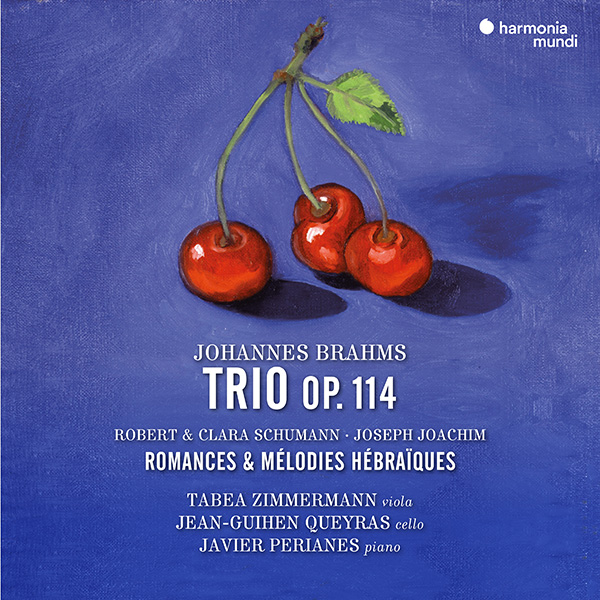
Brahms: Trio Op.114
Robert & Clara Schumann: Three Romances
Joachim: Hebrew Melodies
Tabea Zimmermann, viola; Jean-Guihen Queyras, cello; Javier Perianes, piano
Harmonia Mundi HMM 902789 (24/96 FLAC). 2026. Magnolia Classics, prod.; Julian Schwenkner and Sebastian Nattkemper, eng.
Performance ****½
Sonics ****½ Joseph Joachim suggested that 20-year-old Johannes Brahms introduce himself to his instant champion, the influential composer/critic Robert Schumann, and his wife Clara. Though Joachim's Hebrew Melodies for viola and piano are the weak part of the album—their generic romanticism obscures their Jewish influence—they further highlight the brilliance of Brahms's Clarinet Trio Op.114 in the composer's version for viola, cello, and piano, and the beauty of violist Tabea Zimmermann's arrangements of Robert Schumann's Three Romances Op.94 and Clara's Three Romances Op.22. The Brahms is the centerpiece, and it is gorgeous. With Javier Perianes's modern Steinway engineered into the background, Zimmermann's impassioned, immensely pleasing sound is front and center. She and Jean-Guihen Queyras, who plays a Stradivarius cello, are maximally expressive and nuanced as they underscore the moving sadness of the opening movement. As the next three movements unfold, Zimmermann and crew's freedom with tempo left me wondering if the sonata's inspiration, clarinetist Richard Mühlfeld, could have played as expressively. If he did, it's no wonder that Brahms emerged from a period of silence to compose the Trio and gift Mühlfeld the manuscript, performing rights, and fees.
Robert's Three Romances, here imbued with old world richness, exude heartfelt longing. Bravo to the artists for underscoring their songful expressiveness, which in the third movement is tinged with soulful regret. Clara's pieces are equally lovely, even if the middle movement seems a bit "parlor music" trite. Highly recommended.—Jason Victor Serinus
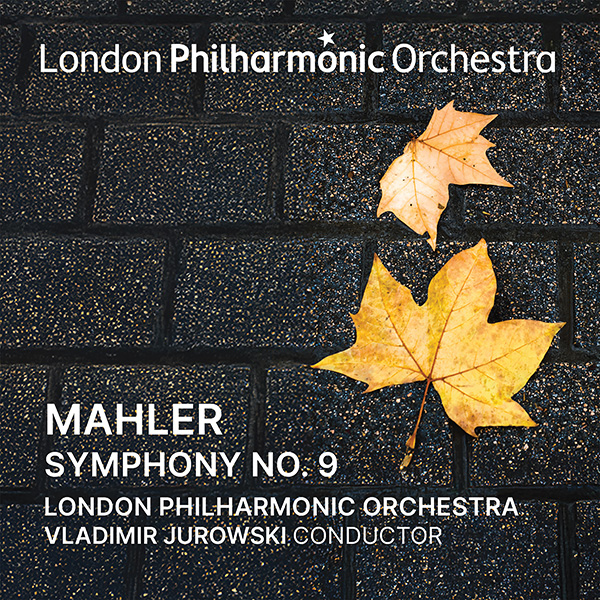 Mahler: Symphony 9
London Philharmonic Orchestra/Vladimir Jurowski
LPO0139 (CD). 2026. Andrew Walton, prod.; Deborah Spanton, eng.
Performance ****
Sonics ***** Jurowski plays the Ninth's long first movement for clarity, keeping all the rushing interior counterpoint under control. All the musical elements are clear, but he doesn't organize them into a layered texture. Only at the tremulous arrival of the development does he spring to life, setting the pungent bass clarinet and ominous muted brass in sharp relief, drawing real yearning from the solo oboe. A little unmarked "setup" comes as a surprise at the recap, which, despite the aching, restless clarinet solo, settles into a lovely repose.
If the first movement was relatively direct, the Ländler is less so. Jurowski's weighted manner underlines the first theme's quirkiness, though the distended upbeats become a mannerism. He maintains that weight into the second, faster section, but the reflective third theme is, simply, becalmed: the conductor, trying for languor, achieves torpor.
The start of the Rondo-Burleske is mostly straightforward, with the winds well forward. Later, the triplets have a nice swing, and the second theme's clarinet is unusually prominent. Here, the reflective passage only relaxes slightly, and its climax doesn't expand or fill out as it ought. Distended pickups interfere with the coda's headlong drive.
Jurowski falls into the Adagio's now-standard trap: A "perfect" tempo for the warm, vibrant opening chorale proves slightly too fast for the embellished returns, where the inner string parts become frantic and shaggy. Even if the climaxes "slash" a bit, however, the intensity is appropriate. The surprise is that the final pages achieve the needed repose, though Jurowski draws out the final bars unduly.
Sonics are excellent. The first movement's solo flute is crisp; at the start of the Rondo, the trumpet's distinctly on the right, the horn on the left.—Stephen Francis Vasta
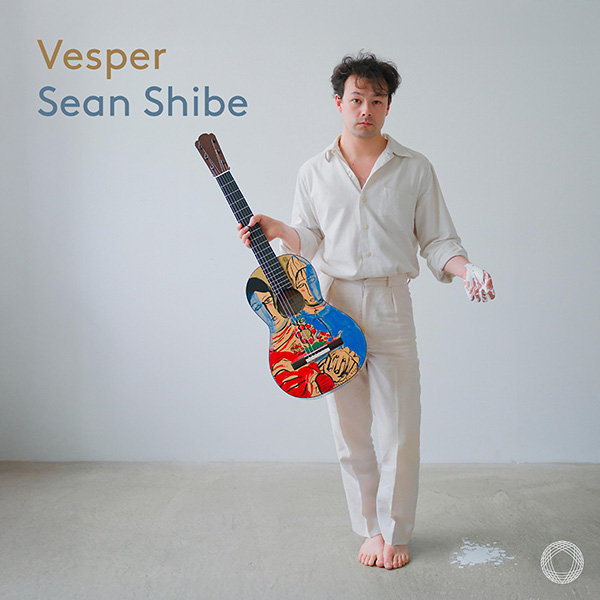 Sean Shibe: Vesper
Sean Shibe, guitar
Pentatone 5187518 (reviewed in 24/192 WAV). 2026. Matthew Swan, prod.; Oscar Torres, eng.
Performance *****
Sonics ****½ After five albums for Pentatone and a recording history that dates back 10 years, it's high time we gave praise to 34-year-old Scottish guitarist Sean Shibe. One of the foremost advocates for contemporary music for guitar, and adventurous to the extreme, Shibe's discography ranges from Bach to Reich, with dollops of Lang, Wolfe, Peter Maxwell Davies, Ginastera, and Villa-Lobos thrown into his genre-bending mix.
On Vesper, whose title derives from the last of the six Forgotten Dances by Thomas Adès (b. 1971), Shibe gives us an entire album of world premiere recordings. What holds together these nine pieces by Adès, Harrison Birtwistle (1934–2022), and James Dillon (b. 1950) is that none of the composers ever played guitar. Birtwistle, however, benefitted from and sometimes did battle with the feedback and dictates of an earlier generation's champion of new music for guitar, Julian Bream. Adès, in turn, consulted with Shibe on his compelling and haunting arrangement of "Habanera" from his opera, The Exterminating Angel.
Hats off to Pentatone, Hugh Morris, and Jonathan Leathwood for the most extensive liner notes on a solo instrument recital that I can recall. While I'd like to think that it's unnecessary to read nine huge paragraphs in order to understand Adès's tuneful, progressively more fascinating and enveloping Forgotten Dances, everything you might wish to know about their genesis is reported. Three of these dances have dedicatees: painter Max Ernst and composers Hector Berlioz and Henry Purcell.
I've yet to find my way into Birtwistle's mature compositions, but some of the guitar transcriptions of his earlier music included here are quite lovely. So are Dillon's short 12 Caprices—the longest is 1:39, and the shortest is a whole 28 seconds—which I found delightful and charming. Warmly recommended.—Jason Victor Serinus
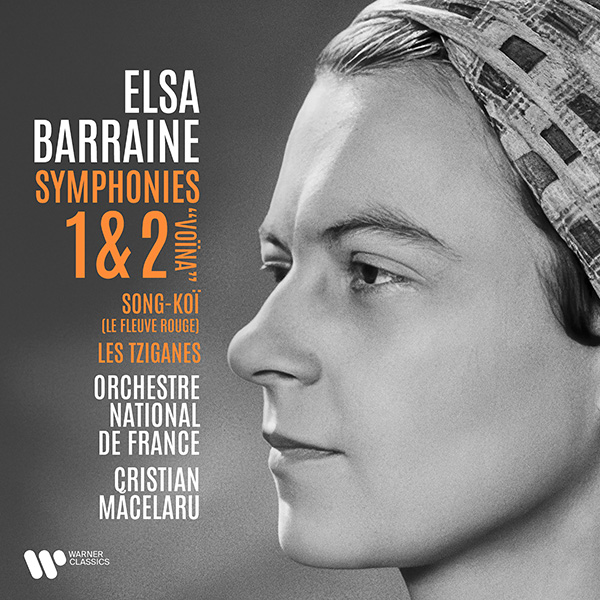 Elsa Barraine: Symphonies 1 & 2; Song-Koï; Les Tziganes
Orchestre National de France/Cristian Măcelaru
Warner Classics 5021732555199 (CD). 2026. Étienne Pipard, prod.; Yves Baudry, eng.
Performance *****
Sonics ***** In 1929, Elsa Barraine won the Grand Prix de Rome, age 19. Her well-wrought music displays the influence of her French compatriots, deploying instruments in choirs and as shafts of solo color; rhythmic propulsion anticipates the neoclassical Stravinsky. But she sounds like two different composers! The Second Symphony sounded like three imaginative but unrelated movements strung together. Commissioned in 1938, it reflects the looming prospect of war. Searching high woodwinds are answered by dramatic, angular gestures; reed soli over horns introduce a jocular second theme. The contrasting Marche funèbre juxtaposes imposing motifs with a plaintive oboe solo; after an aspiring, dissonant chorale, it reaches an uneasy repose. The perky Finale foreshadows the propulsive energy of the postwar American symphonists.
The tone poem Les Tziganes is another winner, from its bright, scintillating opening, with brass themes riding below and cutting through all the lively busywork. The solo violin's Gypsy-ish rhythms are spiced by mild dissonances; a few interjections suggest Stravinsky.
Against these, both the First Symphony and the Song variations are marked by insistently linear writing, with soloists and sections skittering along. The harmonic palette becomes acerbic, which, with the less compact sonorities, leaves you nowhere to hang your ear.
They are characterful. The symphony's Adagio offers a lovely interlude with a soothing, rocking flute over strings, while its Finale is crisp, angular, and unstable. Song-Koï offers Debussyan chords, spacious textures, and some ominous stomping; after some feints, it ends in affirmation.
Măcelaru and forces do fine, alert work; sonics offer vivid definition, with plenty of depth in the brass choir.—Stephen Francis Vasta
Robert & Clara Schumann: Three Romances
Joachim: Hebrew Melodies
Tabea Zimmermann, viola; Jean-Guihen Queyras, cello; Javier Perianes, piano
Harmonia Mundi HMM 902789 (24/96 FLAC). 2026. Magnolia Classics, prod.; Julian Schwenkner and Sebastian Nattkemper, eng.
Performance ****½
Sonics ****½ Joseph Joachim suggested that 20-year-old Johannes Brahms introduce himself to his instant champion, the influential composer/critic Robert Schumann, and his wife Clara. Though Joachim's Hebrew Melodies for viola and piano are the weak part of the album—their generic romanticism obscures their Jewish influence—they further highlight the brilliance of Brahms's Clarinet Trio Op.114 in the composer's version for viola, cello, and piano, and the beauty of violist Tabea Zimmermann's arrangements of Robert Schumann's Three Romances Op.94 and Clara's Three Romances Op.22. The Brahms is the centerpiece, and it is gorgeous. With Javier Perianes's modern Steinway engineered into the background, Zimmermann's impassioned, immensely pleasing sound is front and center. She and Jean-Guihen Queyras, who plays a Stradivarius cello, are maximally expressive and nuanced as they underscore the moving sadness of the opening movement. As the next three movements unfold, Zimmermann and crew's freedom with tempo left me wondering if the sonata's inspiration, clarinetist Richard Mühlfeld, could have played as expressively. If he did, it's no wonder that Brahms emerged from a period of silence to compose the Trio and gift Mühlfeld the manuscript, performing rights, and fees.
Mahler: Symphony 9London Philharmonic Orchestra/Vladimir Jurowski
LPO0139 (CD). 2026. Andrew Walton, prod.; Deborah Spanton, eng.
Performance ****
Sonics ***** Jurowski plays the Ninth's long first movement for clarity, keeping all the rushing interior counterpoint under control. All the musical elements are clear, but he doesn't organize them into a layered texture. Only at the tremulous arrival of the development does he spring to life, setting the pungent bass clarinet and ominous muted brass in sharp relief, drawing real yearning from the solo oboe. A little unmarked "setup" comes as a surprise at the recap, which, despite the aching, restless clarinet solo, settles into a lovely repose.
Sean Shibe: VesperSean Shibe, guitar
Pentatone 5187518 (reviewed in 24/192 WAV). 2026. Matthew Swan, prod.; Oscar Torres, eng.
Performance *****
Sonics ****½ After five albums for Pentatone and a recording history that dates back 10 years, it's high time we gave praise to 34-year-old Scottish guitarist Sean Shibe. One of the foremost advocates for contemporary music for guitar, and adventurous to the extreme, Shibe's discography ranges from Bach to Reich, with dollops of Lang, Wolfe, Peter Maxwell Davies, Ginastera, and Villa-Lobos thrown into his genre-bending mix.
Elsa Barraine: Symphonies 1 & 2; Song-Koï; Les TziganesOrchestre National de France/Cristian Măcelaru
Warner Classics 5021732555199 (CD). 2026. Étienne Pipard, prod.; Yves Baudry, eng.
Performance *****
Sonics ***** In 1929, Elsa Barraine won the Grand Prix de Rome, age 19. Her well-wrought music displays the influence of her French compatriots, deploying instruments in choirs and as shafts of solo color; rhythmic propulsion anticipates the neoclassical Stravinsky. But she sounds like two different composers! The Second Symphony sounded like three imaginative but unrelated movements strung together. Commissioned in 1938, it reflects the looming prospect of war. Searching high woodwinds are answered by dramatic, angular gestures; reed soli over horns introduce a jocular second theme. The contrasting Marche funèbre juxtaposes imposing motifs with a plaintive oboe solo; after an aspiring, dissonant chorale, it reaches an uneasy repose. The perky Finale foreshadows the propulsive energy of the postwar American symphonists.