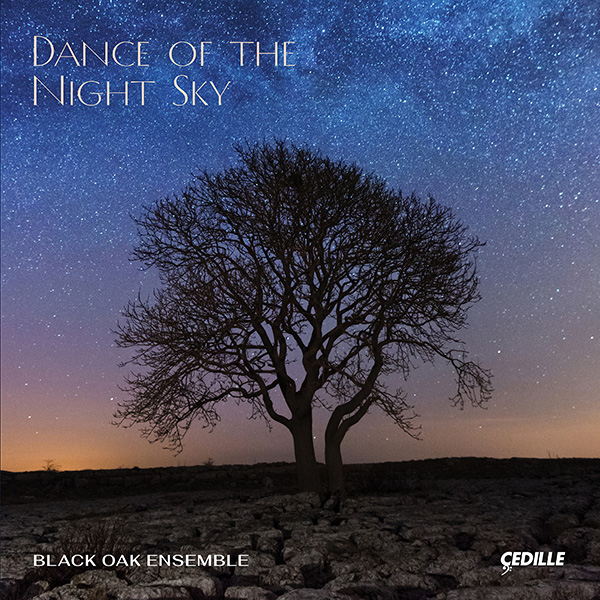
Black Oak Ensemble: Dance Of The Night Sky
Cedille CR 90000 237. CD (reviewed as 24/96 FLAC). 2025. James Ginsburg, prod.; Bill Maylone, eng.
Performance ****
Sonics **** Forgive the pun: Scores of women are active today as classical composers, but we pay attention to relatively few. To right that imbalance, check out the eight works by British women on Dance of the Night Sky, the Black Oak Ensemble's third release—all of them intriguing—from Chicago-based nonprofit label Cedille Records. According to Elinor Olin's liner notes, these compositions offer "a sense of British elegance and adventure." I'm not sure about the elegance, but each woman—including former Master of the King's Music Judith Weir, current Master of the King's Music Errollyn Wallen, and the similarly celebrated Sally Beamish—tells a compelling story.
Although the recording is too closely miked and lacks ultimate transparency, my favorite work on the album is Insight by Dobrinka Tabakova. Composed when Tabakova was 22, this gorgeous 10-minute composition explores imaginative "visualization" through sound. Using the techniques of repetition, dynamic contrast, and subtly shifting harmonies, Insight begins softly. A little more than halfway through, it breaks open with exuberance and joy.
Beamish's The King's Alchemist takes inspiration from John Damian, the daring alchemist to the 16th century court of King James IV of Scotland. Damian failed to transmute ordinary metals into gold, but that failure paled before his attempts to fly to France from the ramparts of Stirling Castle. The four-section work, whose final movement translates as "Bird Man," tells quite the wordless tale.
Four world-premiere recordings deserve special mention and attention: Bulawayo Railway by Carol J. Jones (b. 1993); the footstomping, danceable, and thoroughly compelling Dance of the Night Sky by Shirley J. Thompson (b. 1958); Into the Abyss, I Throw Roses by Grace-Evangeline Mason (b. 1994); and Wallen's extremely beautiful and energetic Making Hay.—Jason Victor Serinus
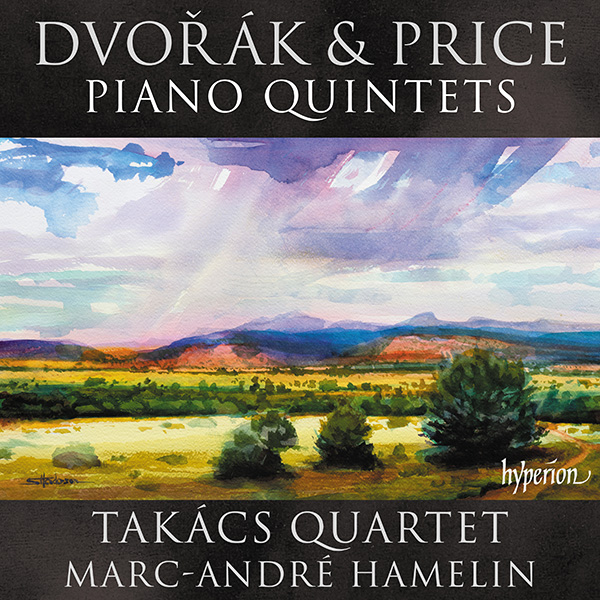 Dvořák Piano Quintet 2
Price: Piano Quintet
Marc-André Hamelin, piano; Takács Quartet
Hyperion CDA68433 (CD). 2025. Andrew Keener, prod.; David Hinitt, eng.
Performance ****
Sonics ***** Dvořák's Op.81 Piano Quintet still attracts high-level performers. Starting things off, Hamelin's firm triplets are surprisingly laid-back; the strings introduce the intense Allegro proper with a brief lyrical reprieve. The movement is cosmopolitan; only its air of melancholy hints at its Bohemian origins, more obviously reflected in the pensive Dumka and its gently wistful return. The Scherzo, a furiant, has a nice, quick swing; its main theme continues into the calmer Trio. Jaunty afterbeats bring back a Bohemian flavor in the finale. Florence Price's A Major Quintet, which prefaces the Dvořák, is quite the surprise. Her appealing symphonic music can sound like a pale imitation of—well, Dvořák. But this score is substantial and compelling. The incisive, dramatic first movement goes full-out Brahms; an angular cadenza-like solo for the first violin generates the development, rounded off with an extended coda. The Andante con moto, which is simpler and songful, provides repose. The cheerful, scampering Juba, a scherzo, feels like an uptempo spiritual, with a warmer, smoother second Trio. At under three minutes, the finale is almost too concise, ending before it has really gotten started.
Hamelin's excellent playing takes the palm here. In the Dvořák, his delicate pianos and tasteful accompaniments make the estimable Rubinstein (RCA, with the Guarneri) seem generic by comparison, and his quick scales and runs in the Price are scintillating. The Takács players, as always, have the style down, covering a full range of moods. But compared to earlier installments in the series, the execution is less breathtaking: Fast phrases feel slurry, vertical coordination is less clean. It's still high-quality playing, it just doesn't meet my perhaps unreasonable expectations!
Hyperion's unobtrusive ambience is predictably excellent.—Stephen Francis Vasta
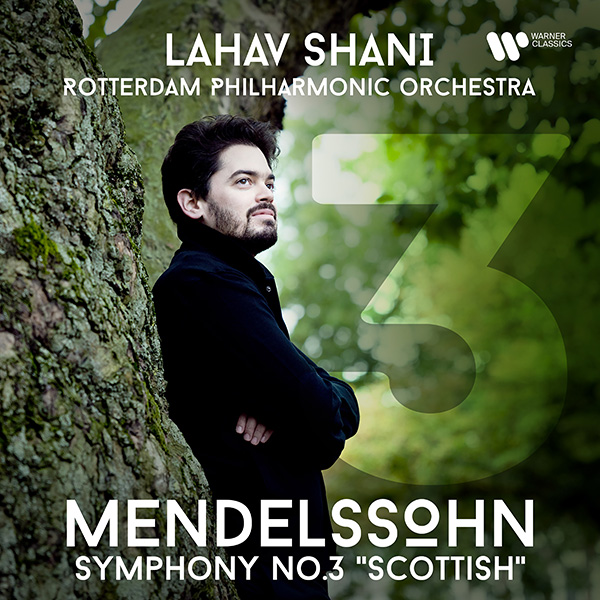 Mendelssohn: Symphony 3 (Scottish); Meeresstille und glückliche Fahrt; Three Lieder ohne Worte
Rotterdam Philharmonic/Lahav Shani
Warner Classics 5021732723253 (CD). 2025. Karel Bruggeman, prod.; Clémence Fabre, Erdo Groot, engs.
Performance ****
Sonics **½ Lahav Shani considers everything afresh in the once-familiar Scottish, taking nothing for granted. The first-movement development turns up a wealth of rhythmic motifs neglected even in classic performances (Maag, Munch), enriching the textures without upstaging the contrapuntal themes. He also actively shapes the recap's countertheme. The scherzo could be more genial, but Shani projects it with bracing rhythmic address, moving attacca into the patiently unfolding Adagio, with its ominous outbursts. Incisive, springy dotted rhythms, lean accents, and crisp articulations propel the finale, despite a few unhelpful (and unmarked) ritards.
The Rotterdam orchestra runs a few desks lighter than its counterpart in Amsterdam: In the slow introduction, the oboe consistently dominates the first violins. Otherwise, the string tone has enough body, the winds are nicely unified, and the players respond alertly to the conductor.
The sound, however, is frustrating. The quieter and the more lightly scored passages come across with airy clarity, allowing us to savor the supple clarinet and bassoon. But the tuttis are simply a harsh, unmusical din. This especially spoils the coda, which begins so fervently and finishes like tinny AM radio. This is not progress.
The sound is less of a problem in the fillers. The duetting trumpets in the home stretch of the Overture—a nice change from the once-ritual Hebrides—are vivid and pillowy. Earlier, the "becalmed sea" is spacious and concentrated; a clear flute sets the wind going to gain momentum, though I wouldn't swear the fast staccatos are precisely aligned. Many of the Songs Without Words suggest orchestral textures, and Shani has so arranged three of them. Lost Happiness, with its tricky elided returns, works best.—Stephen Francis Vasta
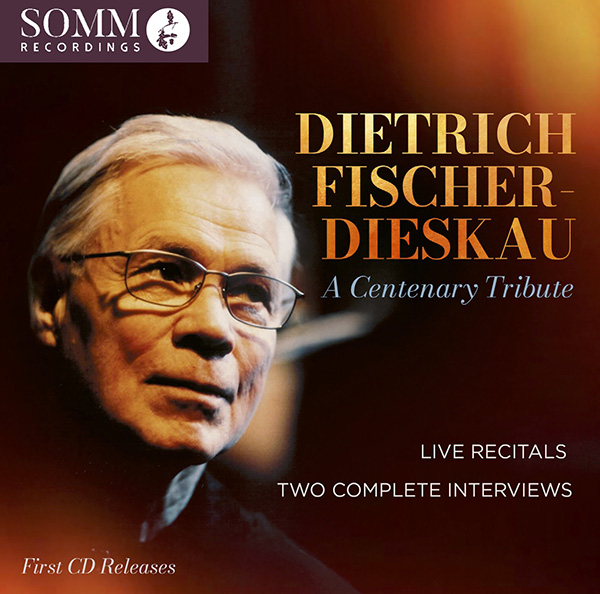 Dietrich Fischer-Dieskau: A Centenary Tribute
Dietrich Fischer-Dieskau, baritone; various accompanists and orchestra
SOMM ARIADNE 5038-2 (reviewed as 24/96 & 24/44.1 WAV). 2025. Jon Tolansky, prod.; Paul Baily, eng.
Performance *****
Sonics **** Despite the huge number of live recordings of the most famous baritone interpreter of art song in the latter half of the 20th century, this new issue is a must. Released to honor Dietrich Fischer-Dieskau's centenary, this "two-CD" set, also available as a high-resolution download and streaming, complements four performances from his mature prime with a full CD of enlightening English-language interviews conducted on his 75th and 80th birthdays. The artistry is extraordinary. The rarest selections, from 1960, find the great baritone singing 33 minutes of songs by the great Zoltán Kodály, the composer himself conducting the London Symphony Orchestra. Fischer-Dieskau demonstrates an uncanny ability to sing with urgency, intensity, and honesty while communicating sadness, the devastation of war, a broken heart, and death. Fischer-Dieskau negotiates with ease high-lying passages that would shred many voices. Equally arresting are four late-career songs by Busoni, to poetry by Goethe, that Fischer-Dieskau recorded with Gerald Moore in London in 1962. These recordings derive from an off-air BBC rebroadcast of a Finnish radio recording that no longer survives, yet the beauty and power of the voice bridge the divide. Again, the emotional intensity and vocal beauty take the breath away.
The six Mahler selections, accompanied by Karl Engel in 1970, balance three of Mahler's rare exercises in humor with three of the 5 Rückert-Lieder. It's a treat to discover Fischer-Dieskau, that most serious and intellectually probing of artists, lightening things and changing voices without hamming it up. He pushes a bit at the top of his range in one of Mahler's greatest songs, but you will be hard pressed to find another recording of "Um Mitternacht" as gripping as this.—Jason Victor Serinus
Cedille CR 90000 237. CD (reviewed as 24/96 FLAC). 2025. James Ginsburg, prod.; Bill Maylone, eng.
Performance ****
Sonics **** Forgive the pun: Scores of women are active today as classical composers, but we pay attention to relatively few. To right that imbalance, check out the eight works by British women on Dance of the Night Sky, the Black Oak Ensemble's third release—all of them intriguing—from Chicago-based nonprofit label Cedille Records. According to Elinor Olin's liner notes, these compositions offer "a sense of British elegance and adventure." I'm not sure about the elegance, but each woman—including former Master of the King's Music Judith Weir, current Master of the King's Music Errollyn Wallen, and the similarly celebrated Sally Beamish—tells a compelling story.
Dvořák Piano Quintet 2Price: Piano Quintet
Marc-André Hamelin, piano; Takács Quartet
Hyperion CDA68433 (CD). 2025. Andrew Keener, prod.; David Hinitt, eng.
Performance ****
Sonics ***** Dvořák's Op.81 Piano Quintet still attracts high-level performers. Starting things off, Hamelin's firm triplets are surprisingly laid-back; the strings introduce the intense Allegro proper with a brief lyrical reprieve. The movement is cosmopolitan; only its air of melancholy hints at its Bohemian origins, more obviously reflected in the pensive Dumka and its gently wistful return. The Scherzo, a furiant, has a nice, quick swing; its main theme continues into the calmer Trio. Jaunty afterbeats bring back a Bohemian flavor in the finale. Florence Price's A Major Quintet, which prefaces the Dvořák, is quite the surprise. Her appealing symphonic music can sound like a pale imitation of—well, Dvořák. But this score is substantial and compelling. The incisive, dramatic first movement goes full-out Brahms; an angular cadenza-like solo for the first violin generates the development, rounded off with an extended coda. The Andante con moto, which is simpler and songful, provides repose. The cheerful, scampering Juba, a scherzo, feels like an uptempo spiritual, with a warmer, smoother second Trio. At under three minutes, the finale is almost too concise, ending before it has really gotten started.
Mendelssohn: Symphony 3 (Scottish); Meeresstille und glückliche Fahrt; Three Lieder ohne WorteRotterdam Philharmonic/Lahav Shani
Warner Classics 5021732723253 (CD). 2025. Karel Bruggeman, prod.; Clémence Fabre, Erdo Groot, engs.
Performance ****
Sonics **½ Lahav Shani considers everything afresh in the once-familiar Scottish, taking nothing for granted. The first-movement development turns up a wealth of rhythmic motifs neglected even in classic performances (Maag, Munch), enriching the textures without upstaging the contrapuntal themes. He also actively shapes the recap's countertheme. The scherzo could be more genial, but Shani projects it with bracing rhythmic address, moving attacca into the patiently unfolding Adagio, with its ominous outbursts. Incisive, springy dotted rhythms, lean accents, and crisp articulations propel the finale, despite a few unhelpful (and unmarked) ritards.
Dietrich Fischer-Dieskau: A Centenary TributeDietrich Fischer-Dieskau, baritone; various accompanists and orchestra
SOMM ARIADNE 5038-2 (reviewed as 24/96 & 24/44.1 WAV). 2025. Jon Tolansky, prod.; Paul Baily, eng.
Performance *****
Sonics **** Despite the huge number of live recordings of the most famous baritone interpreter of art song in the latter half of the 20th century, this new issue is a must. Released to honor Dietrich Fischer-Dieskau's centenary, this "two-CD" set, also available as a high-resolution download and streaming, complements four performances from his mature prime with a full CD of enlightening English-language interviews conducted on his 75th and 80th birthdays. The artistry is extraordinary. The rarest selections, from 1960, find the great baritone singing 33 minutes of songs by the great Zoltán Kodály, the composer himself conducting the London Symphony Orchestra. Fischer-Dieskau demonstrates an uncanny ability to sing with urgency, intensity, and honesty while communicating sadness, the devastation of war, a broken heart, and death. Fischer-Dieskau negotiates with ease high-lying passages that would shred many voices. Equally arresting are four late-career songs by Busoni, to poetry by Goethe, that Fischer-Dieskau recorded with Gerald Moore in London in 1962. These recordings derive from an off-air BBC rebroadcast of a Finnish radio recording that no longer survives, yet the beauty and power of the voice bridge the divide. Again, the emotional intensity and vocal beauty take the breath away.