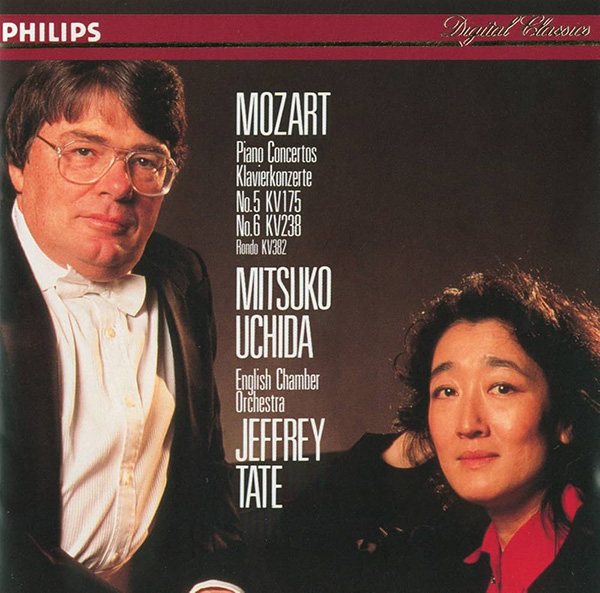
 Piano recordings are very revealing of midrange coloration. I followed Sasha's piece with a more naturally recorded piano, Mitsuko Uchida performing Mozart's Concerto No.5 in D with the English Chamber Orchestra conducted by Jeffrey Tate (16/44.1 FLAC, Philips/Qobuz). I have been a fan of Ms. Uchida's since Stereophile's then-publisher Larry Archibald and I saw her in concert the February 1986 night we agreed that I would replace J. Gordon Holt as the magazine's editor. The balance on this recording is rich and warm and was well-served by the B&Ws. I was intending to use just the first movement to form an opinion on how the 805 D4 Signatures handled the piano, but I got so caught up in the performance, with its unexpected improvisations, that I listened all the way through.
Having noticed how uncolored the B&Ws sounded with piano, I searched my Roon library for diagnostic vocal recordings. I had recorded Minnesotan male voice ensemble Cantus live in concert in Minneapolis's Southern Theater in 2008; the resultant CD, Outside the Box (CTS-103), starts with an arrangement of Curtis Mayfield's "It's All Right." In the mix, I placed dueling soloists Gary Ruschman and Michael Jones center right and center left, with the bass "doo-wop" voices in the center, all in front of the rest of the singers. When I played the CD's 16/44.1 master files, the images of the voices were stably positioned in the intended places, and when the audience starts to clap along with the music, it was unambiguously placed across the rear of the stage. The 805 D4 Signatures reproduced the singers with no discernible coloration.
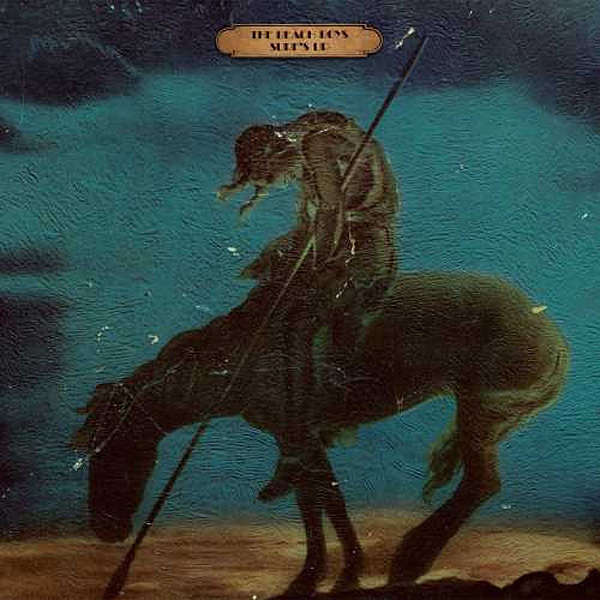
Outside the Box includes a version of the timeless Brian Wilson classic "God Only Knows"; playing this, I was inspired to cue up the title track from The Beach Boys' Surf's Up. Mike Love's and Al Jardine's hokey "Student Demonstration Time" is awful—but the other tracks on this album have been in heavy rotation since I first heard them in 1972. Listening to "Surf's Up" on the 805 D4 Signatures, I realized for the first time that the indistinct, ghostly voices that interject the verses were singing "My God, My God," rather than "Wipe Out, Wipe Out," as I had thought for the past half-century. But even with the B&Ws' clarity, I still don't have a clue what Van Dyke Parks's lyrics mean, other than they have nothing to do with surfing. Listening to Brian Wilson's solo version on The SMiLE Sessions (24/88.2 ALAC files, Capitol) was no help, though again the B&Ws' vocal reproduction was free from coloration.
Piano recordings are very revealing of midrange coloration. I followed Sasha's piece with a more naturally recorded piano, Mitsuko Uchida performing Mozart's Concerto No.5 in D with the English Chamber Orchestra conducted by Jeffrey Tate (16/44.1 FLAC, Philips/Qobuz). I have been a fan of Ms. Uchida's since Stereophile's then-publisher Larry Archibald and I saw her in concert the February 1986 night we agreed that I would replace J. Gordon Holt as the magazine's editor. The balance on this recording is rich and warm and was well-served by the B&Ws. I was intending to use just the first movement to form an opinion on how the 805 D4 Signatures handled the piano, but I got so caught up in the performance, with its unexpected improvisations, that I listened all the way through.
Having noticed how uncolored the B&Ws sounded with piano, I searched my Roon library for diagnostic vocal recordings. I had recorded Minnesotan male voice ensemble Cantus live in concert in Minneapolis's Southern Theater in 2008; the resultant CD, Outside the Box (CTS-103), starts with an arrangement of Curtis Mayfield's "It's All Right." In the mix, I placed dueling soloists Gary Ruschman and Michael Jones center right and center left, with the bass "doo-wop" voices in the center, all in front of the rest of the singers. When I played the CD's 16/44.1 master files, the images of the voices were stably positioned in the intended places, and when the audience starts to clap along with the music, it was unambiguously placed across the rear of the stage. The 805 D4 Signatures reproduced the singers with no discernible coloration.
Outside the Box includes a version of the timeless Brian Wilson classic "God Only Knows"; playing this, I was inspired to cue up the title track from The Beach Boys' Surf's Up. Mike Love's and Al Jardine's hokey "Student Demonstration Time" is awful—but the other tracks on this album have been in heavy rotation since I first heard them in 1972. Listening to "Surf's Up" on the 805 D4 Signatures, I realized for the first time that the indistinct, ghostly voices that interject the verses were singing "My God, My God," rather than "Wipe Out, Wipe Out," as I had thought for the past half-century. But even with the B&Ws' clarity, I still don't have a clue what Van Dyke Parks's lyrics mean, other than they have nothing to do with surfing. Listening to Brian Wilson's solo version on The SMiLE Sessions (24/88.2 ALAC files, Capitol) was no help, though again the B&Ws' vocal reproduction was free from coloration.
 Stereophile's founder, the late J. Gordon Holt, wrote in 1985 that "Since there is more middle range in live music than anything else, it would seem logical to assume that the accuracy of middle-range reproduction is the most important part of music reproduction. ... If a system can't reproduce this range properly—if it can't even get the notes right—then any other positive attributes that system may have are irrelevant."
With all the piano and vocal recordings I played, the Bowers & Wilkins 805 D4 Signature reproduced the midrange "properly."
What about the high frequencies? Recent generations of B&W speakers have a reputation for being a touch bright. My hearing doesn't extend above 12kHz these days and then only in the morning (footnote 1). But even after I had done the measurements and was aware of the elevated level of the B&W's tweeter, I wasn't bothered by any brightness. Yes, in direct comparisons with the GoldenEar BRX and KEF LS50 standmounts I use as my long-term reference speakers, the balance had more top-octave energy, more "air" than was strictly accurate. Even so, the sound was clean and clear. The cymbals on Molto Molto didn't have too much sizzle. And the 805 D4 Signature was more forgiving of the "grains of rice dropped onto a taut paper sheet" quality of early digital recordings than the GoldenEar T66 floorstander I reviewed in the August issue, which has a similar measured top-octave response. The Mitsuko Uchida Mozart performance was recorded in 1990, but its high frequencies were clean.
Stereophile's founder, the late J. Gordon Holt, wrote in 1985 that "Since there is more middle range in live music than anything else, it would seem logical to assume that the accuracy of middle-range reproduction is the most important part of music reproduction. ... If a system can't reproduce this range properly—if it can't even get the notes right—then any other positive attributes that system may have are irrelevant."
With all the piano and vocal recordings I played, the Bowers & Wilkins 805 D4 Signature reproduced the midrange "properly."
What about the high frequencies? Recent generations of B&W speakers have a reputation for being a touch bright. My hearing doesn't extend above 12kHz these days and then only in the morning (footnote 1). But even after I had done the measurements and was aware of the elevated level of the B&W's tweeter, I wasn't bothered by any brightness. Yes, in direct comparisons with the GoldenEar BRX and KEF LS50 standmounts I use as my long-term reference speakers, the balance had more top-octave energy, more "air" than was strictly accurate. Even so, the sound was clean and clear. The cymbals on Molto Molto didn't have too much sizzle. And the 805 D4 Signature was more forgiving of the "grains of rice dropped onto a taut paper sheet" quality of early digital recordings than the GoldenEar T66 floorstander I reviewed in the August issue, which has a similar measured top-octave response. The Mitsuko Uchida Mozart performance was recorded in 1990, but its high frequencies were clean.
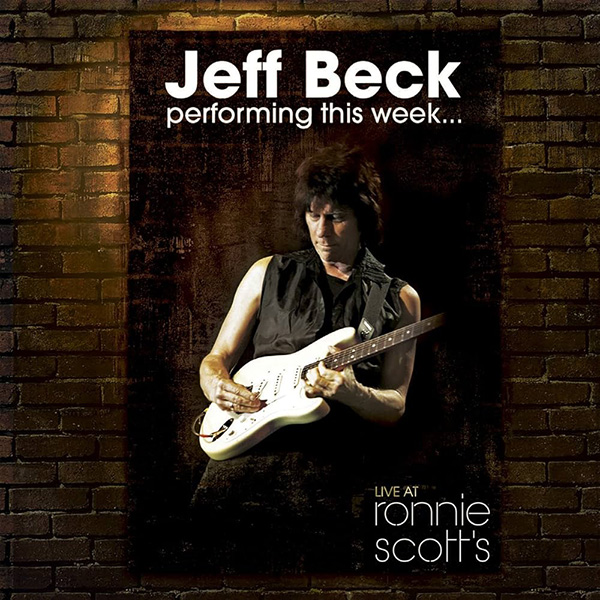 At the other end of the spectrum, as I mentioned earlier, the limitation on placement meant that the lowest frequencies were somewhat shelved down. One of my favorite tracks for revealing bass behavior is "The Trader," from the Beach Boys' under-rated Holland (24/192 AIFF needle drop from Brother/Reprise K54008), which features dropped-octave synth bass notes. These were hinted at by the B&Ws rather than being reproduced in full measure, though bass guitarist Tal Wilkenfeld's virtuosic solo on "Cause We've Ended as Lovers" from Jeff Beck's Performing This Week ... Live at Ronnie Scott's (16/44.1 FLAC, Mercury Studio/Qobuz) had enough midbass weight and sufficient tonal separation from Vinnie Colaiuta's rather overcooked kickdrum to be compelling.
Toward the end of the time the B&W 805 D4 Signatures lived in my listening room, my wife and I saw Daryl Hall in concert at New York's Radio City Music Hall. Our seats were just in front of the sound engineers' mixing console; they had done a superb job in what I had always felt was a difficult hall. Notably, they avoided the ubiquitous "make the kickdrum louder than everything else" syndrome; bass guitar, kickdrum, and the lower register of Hall's piano were in perfect balance. No John Oates, of course, but not only did the band rock, the rich blending of their backing harmonies sublimely supported Hall's lead vocals.
At the other end of the spectrum, as I mentioned earlier, the limitation on placement meant that the lowest frequencies were somewhat shelved down. One of my favorite tracks for revealing bass behavior is "The Trader," from the Beach Boys' under-rated Holland (24/192 AIFF needle drop from Brother/Reprise K54008), which features dropped-octave synth bass notes. These were hinted at by the B&Ws rather than being reproduced in full measure, though bass guitarist Tal Wilkenfeld's virtuosic solo on "Cause We've Ended as Lovers" from Jeff Beck's Performing This Week ... Live at Ronnie Scott's (16/44.1 FLAC, Mercury Studio/Qobuz) had enough midbass weight and sufficient tonal separation from Vinnie Colaiuta's rather overcooked kickdrum to be compelling.
Toward the end of the time the B&W 805 D4 Signatures lived in my listening room, my wife and I saw Daryl Hall in concert at New York's Radio City Music Hall. Our seats were just in front of the sound engineers' mixing console; they had done a superb job in what I had always felt was a difficult hall. Notably, they avoided the ubiquitous "make the kickdrum louder than everything else" syndrome; bass guitar, kickdrum, and the lower register of Hall's piano were in perfect balance. No John Oates, of course, but not only did the band rock, the rich blending of their backing harmonies sublimely supported Hall's lead vocals.
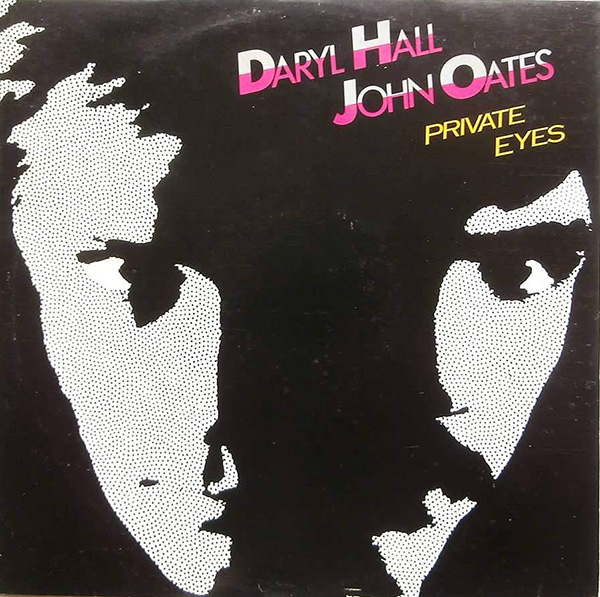 The following evening, still jazzed from that live music experience, I cued up "I Can't Go for That (No Can Do) (Extended Club Mix)" from Hall & Oates's Private Eyes (16/44.1 FLAC, RCA-BMG Heritage/Qobuz). The relentless bass line had good weight, underpinning that early 1980s drum machine rhythm. Backing voices and the synthesizer halo were placed behind and around Hall's lead vocal and Oates's damped guitar riffs. Charlie DeChant's saxophone solo was as compelling as it had been live at Radio City Music Hall, and—don't tell my children—the B&Ws had me on my feet dancing to this track.
 Summing up
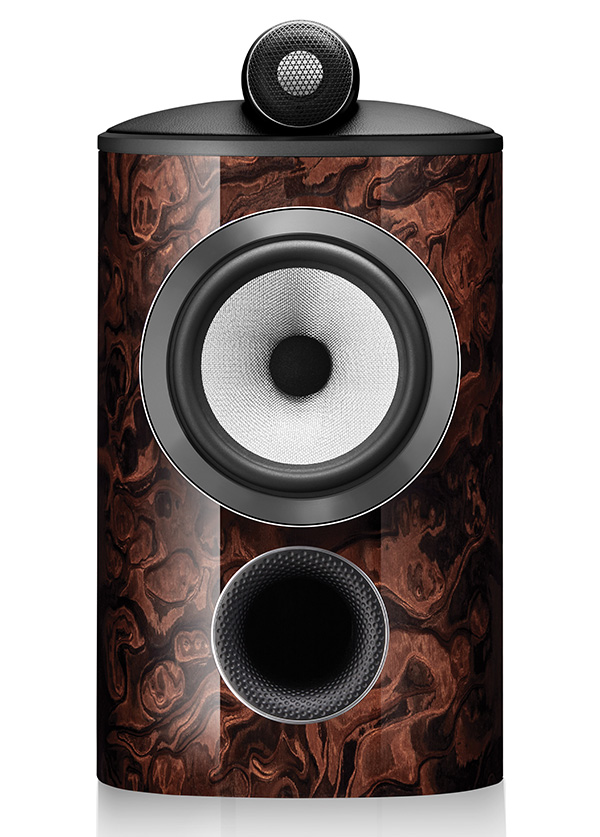
Company founder John Bowers used to say that "the best loudspeaker isn't the one that gives the most, it's the one that loses the least." While the Bowers & Wilkins 805 D4 Signature does lose the very lowest frequencies and ultimate loudness, it doesn't subtract anything else from the musical message. I very much enjoyed my time with these speakers—highly recommended for those with small-to-medium-size listening rooms who want an elegant-looking loudspeaker that steps out of the way of the music.
Footnote 1: Consider however that JA can still hear clearly the third harmonic of a piano's highest note.—Jim Austin