CD Player/Transport Reviews

Sort By:  Post Date TitlePublish Date

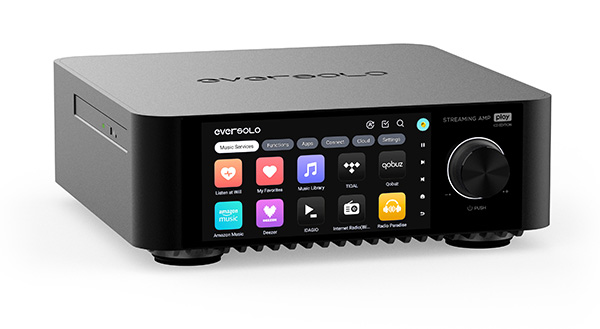
Eversolo Play CD Edition streaming integrated amplifier

The all-in-one stereo component occupies the same territory as those Italian restaurants that also serve sushi and Texas barbecue. Every instinct says it's a dubious overreach: Few chefs master two or more distinct cuisines. But then you experience that rare eatery that somehow nails the California roll, the carbonara, and the brisket, and you realize that dismissing it on principle could mean missing something that's genuinely excellent.

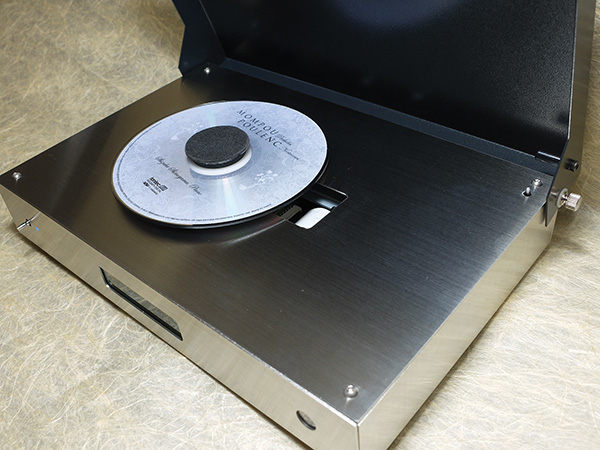
Gramophone Dreams #94: Sparkler Audio S515t CD transport, Beyerdynamic DT 1990 PRO MKII and DT 1770 PRO MKII headphones

I am a lucky person. I've been writing monthly audio columns since 1992, and the chief benefit of that privilege has been that each month my mind is free to visit distant shores searching for exotic artifacts that readers might never encounter at their local audio emporium. This month, my raft drifted again onto Japan's metaphorical shores.

I was cordially greeted by an international cohort: Victor Kung (VK Music in Canada), Yoshi Segoshi (the American distributor for 47 Labs), Junji Kimura (47 Labs' founder and chief engineer), and Kazutoshi Tsukahara, formerly associated with 47 Labs (in Japan) and now founder and chief engineer of Sparkler Audio, which is also based in Japan. Sparkler Audio makes modestly priced components including the model S515t "ballade II" CD transport, which I am about to describe.

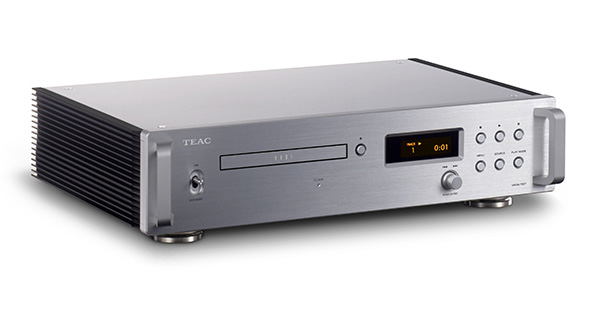
Gramophone Dreams #88: TEAC VRDS-701T CD transport

It's the late 1980s, and I'm soldering tube amplifiers on a plywood bench. I decide on a whim that it's time to break down and buy a CD player to supplement the Dynaco tuner and Dual cassette deck in my workroom music system.

I was a slow starter with digital because of my early take on CD sound: It was emotionally drained with grumbling distortions in the bass and an off-timbre midrange, crowned by a thin, artificial treble, and penetrated by an eerie, unnatural silence whenever the musicians stopped playing. I thought cassettes had higher fidelity and that CDs would be a passing fad, but I kept browsing CDs at Tower Records, and the itch to buy some was getting pretty strong.

One of my friends said, "Maybe it's not the conversion principle that's to blame but something else, like an imperfect CD player?" That interesting thought had not occurred to me, and it obviously occurred to lots of engineers, because they are still trying to improve the quality of CD playback by adjusting the mechanism.

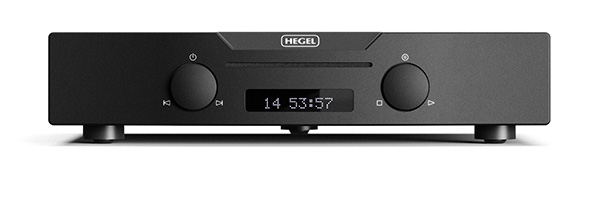
Hegel Music Systems Viking CD player

The pleasures of reviewing a new CD player reside in its light weight, compact dimensions, and, most of all, its ABC-simple installation: no cartridge to mount, no stylus to break, no step-up trans formers or cartridge-load values to explore. No server, no Ethernet switches, no digital processor or outboard clock, no NOS, OS, filter choices, or upsampling (usually), no DSD or DXD, no specialized cables, and-especially-no garish, billboard-sized LCD menu to trigger anxiety. Just plug the player in, connect it to a preamp, and choose a CD to play first.

Yes, folks, digital audio was once that simple.

I'm pleased to be reviewing a new CD player, the Viking from Hegel Music Systems, in part because Hegel's founder and chief engineer Bent Holter appears to feel the same way I do.

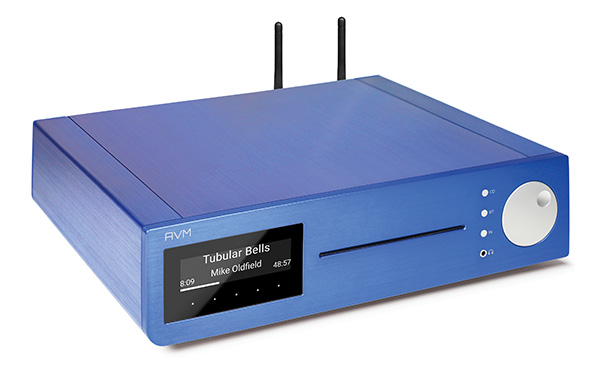
AVM Inspiration CS2.3 CD receiver

In the 1960s, my dad gave me a Panasonic receiver with two cube speakers, just in time for the advent of FM stereo radio in the San Francisco Bay Area. Out of the blue one night, he just walked in with it. The receiver allowed me to plug in a record player, though I only had a few LPs. Later, when I went off to college, my mom took me shopping for a new stereo. I chose a Kenwood integrated amplifier—without a tuner but with the capability to plug in a tape deck, which I did. During my undergrad years, it served me well. Later, I switched to an NAD receiver, which allowed me to listen to the radio again.

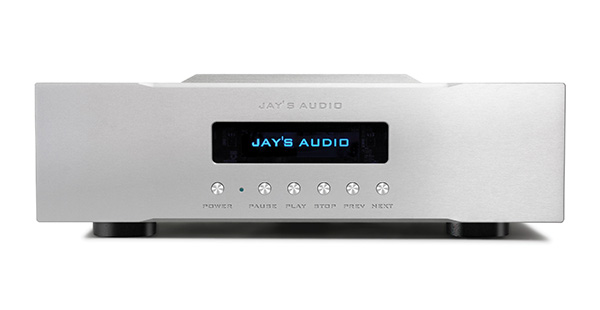
Jay's Audio CDT3-MK3 CD transport

They say a jack of all trades is the master of none. While this expression is typically used to describe people, it also works for machines that play 5" optical discs.

The Compact Disc was launched in 1982, but the four decades since have seen an alphabet soup of similar-looking shiny discs including major formats like DVD, SACD, DVD-A, and Blu-ray Audio. As each new format arrived, hardware manufacturers scrambled to keep up, developing machines that could play just about any disc you could throw at them (or, rather, insert in them). The result was a bunch of "jack of all trades" disc spinners...

But what if we gave up the notion of universal compatibility and concentrated on building a player dedicated to squeezing the best possible results from the very first, and by far the most common, shiny 5" disc, the good old-fashioned "Red Book" Compact Disc? Would we get better performance?

Advertisement
Advertisement
Advertisement