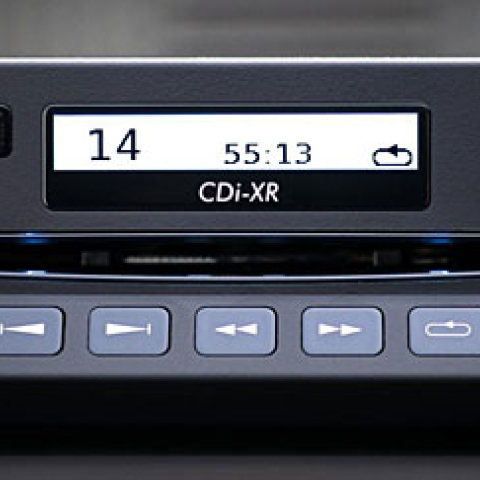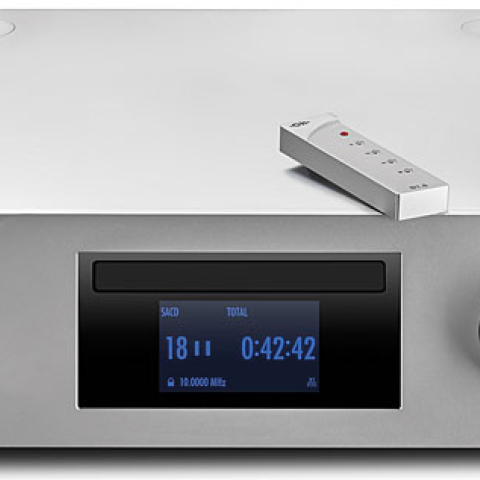
Like many vinyl obsessives, I've amassed a considerable CD collection—a 10' × 15' wall of them, behind dark blue curtains in my listening room. It is almost as if I was concealing a dirty secret from purist analog snobs, including me.
Between 1990 and 2010, CDs ruled. Some titles released during that era were never released on vinyl. Peek behind those curtains and you'll find a mix of such music—music released only on CD: Dim Lights, Thick Smoke & Hillbilly Music. Country and Western Hit Parade 1959. Paul Motian's six-disc, self-titled ECM epic. Philip Glass's Koyaanisqatsi, a Tom Jobim anthology called Fotografia, and Miles Davis's All Stars from JVC's exceptional XRCD series. I bet your shelves hold digital-only treasures, too.
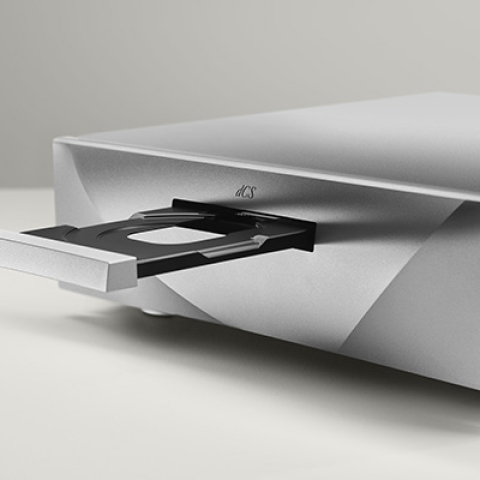
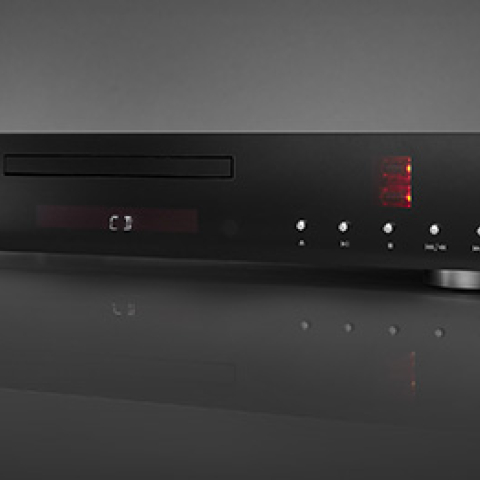
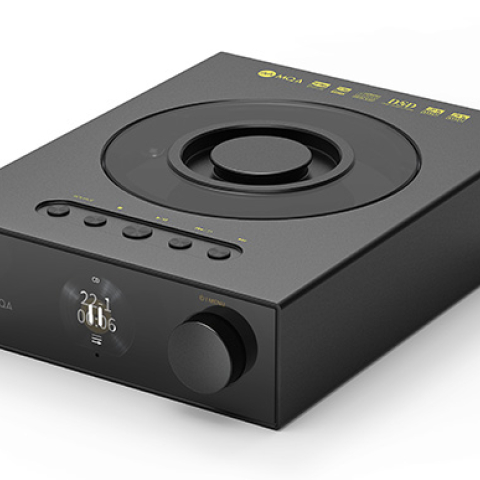
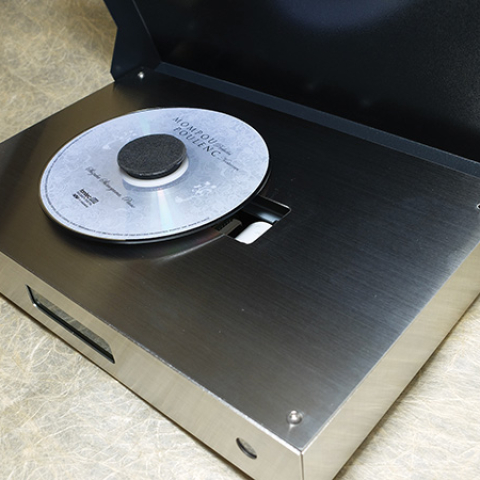
CD players are still available, with new ones issued often, even if they're not flooding the market like they did in the '90s. Savvy manufacturers still cater to a loyal niche; no "CD resurgence" hype is needed to get them to sell.
The appeal of CDs is undeniable: practically instant playback, no finicky setup, no servers, no buffering or network hassles, no "terms and conditions" to scroll through as your song waits to load. Just drop a disc in the tray, press play, and enjoy reliable sound from a machine that's typically slim and squat. In a world where music is cloud-based for so many, the CD is an enduring, user-friendly physical object, a shiny disc that slides into the machine with the assurance of a library book into its spot on the shelf. The sound may not be "perfect forever"—no sound is—but you know your favorite album will sound exactly as it did the last time you played it, with—usually—no need to update the firmware. Call it old-fashioned, though it's obviously not as old-fashioned as vinyl, cassette, or reel-to-reel.
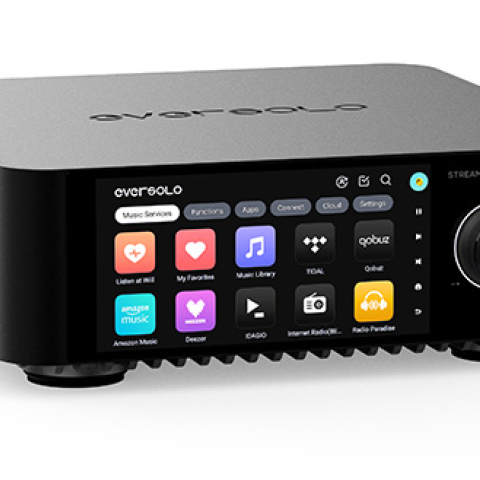
When it works, which is almost always, streaming is effortless, but it has its faults. For one thing, sometimes it doesn't work. It may be the fault of your internet connection or some messed-up setting on your local network, but the end result is that your music won't play. The whole experience can seem synthetic—and for me sometimes the sound follows suit: synthetic, over-polished, lacking the feeling of a real, corporeal, visceral presence. The sense of flow and harmonic complexity can be—or at least seem—sacrificed on the altar of ultimate resolution. Vinyl is, to me, the ultimate physical medium in that its grooves are literal impressions of sound waves, but among formats that might be considered mainstream—that is, leaving out reel-to-reel—a top-notch CD player comes in a solid second.
My CD player of choice is a Tascam CD-200iL, though I typically use it as a transport, connected to a HoloAudio May or Denafrips Ares II DAC. I'm pleased to be reviewing an affordable new CD player from an established French brand. The Advance Paris X-CD9 CD player is attractively priced at $1399.
Advance Paris
Advance Paris isn't the best-known French hi-fi company, at least not in the US. Think French hi-fi and you think Focal, Triangle, Cabasse, Jadis, Devialet. But Advance Paris has quietly carved out its own spot in France's audio scene. When it was founded in Toulouse in 1995, Advance Paris was called Advance Acoustic. It was a passion project of two audio obsessives: engineer Bernard Noiret and electronics designer Jean-Christian Gesson. They started by designing and distributing the Spanish-made Hartley XL1000 and XL500 loudspeakers in France. In 2005, Advance Acoustic was acquired by Charles Jacquard and Jean Béchard. By 2013, rebranded as Advance Paris, they added electronics and broadened their lineup. In 2022, former Citroën executive Dimitri Peucelle and product manager Cédric Léon took the helm. That's about when we started hearing about them in the US. Currently, Advance Paris has 48 US dealers. "I was hired to be responsible for the new projects," Léon wrote in an email. "I am an audio enthusiast and have worked in the hi-fi business, developing audio products, for almost 20 years.
"I oversee all products and product designs," Léon elaborated. "We have a small team of designers and engineers working for Advance Paris in France." All have been involved with mechanical, acoustical, and electronics design for other French hi-fi companies. "We have three engineers, Sébastien Gailleton, Adrien Stachowicz, and myself, who have worked for French companies including Elipson, Focal, Micromega, and Triangle, to name a few."
Advance Paris's product range includes integrated amplifiers, power amplifiers, preamplifiers, CD players, and streaming amplifiers. There's a monoblock amplifier, the X-A1200. Many feature the company's trademark blue VU meters. The products come in several ranges including the compact Smart Line; the X-CD9 is part of the Classic Line. There is also an affordable cable line called "Link."
Advance Paris's best sellers include the A10 Classic ($2999) and A12 Classic ($4499), both integrated amplifiers. The A12 is a hybrid, with two ECC81 tubes in the preamp stage and 280W of solid state power at the output. Both feature those blue meters and have built-in DACs, though they do not stream.
"We are known for making 'all-in-one' products but with an 'audiophile' taste, such as the MyConnect range: MC60, MC150, and MC250," said Léon. "They are class-AB integrated amplifiers including a CD player, FM/DAB tuner, and network capability. The MC150 and MC250 integrateds use tubes for the preamp section, a point that stands out for all-in-one type products."
"We will not say there is a 'French' audio aesthetic," Léon mused. "But we like our amplifiers to sound dynamic without being aggressive. Many manufacturers will push limits on distortion, on power value. We are not aiming for that. Our amplifier products use tubes to get a musical, easy-to-listen-to, nonaggressive sound. We use great power supplies and transistors for dynamics. This is our goal and the definition of the Advance Paris sound."
"We are trying to get something musical and nonaggressive," said Léon. "Tubes are a great way to achieve that. Adding a tube section was the design goal of the X-CD9. Tubes add some 'life' to the sound; our clients are really responding to this. Even with a higher price tag, the X-CD9 is selling more than the X-CD7 ($999). CD players are not our core business, but we take great pride in designing good power supplies and great analog outputs."
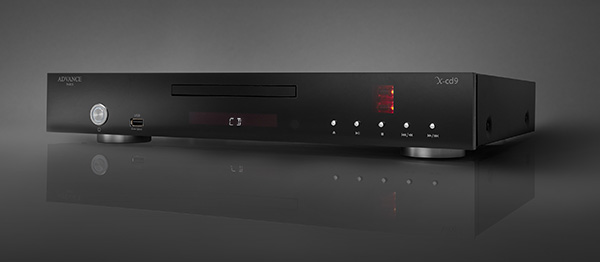
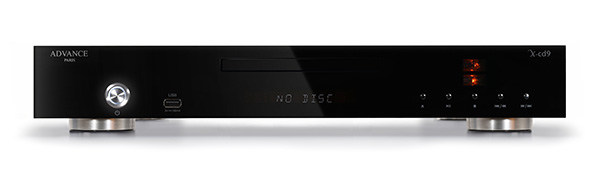 The X-CD9 CD player has tubes: two new old stock Raytheon-branded subminiature 5744 signal tubes used as a buffer after a Wolfson DAC. It uses a CD mechanism from Sanyo.
"Reliability is a major reason for the selection of the Sanyo CD mechanism," Léon explained. "We have tested a few CD mechanisms—not a lot are available nowadays—and this Sanyo CD mechanism is the one we use in many of our products."
Why is it called the X-CD9? "Our sources are odd numbered," replied Léon. As the number increases, price and quality increase, too. "There is the CD3, CD5, CD7, and now CD9." The CD3 and CD5 appear to be discontinued. There is also a CD transport, the X-D500.
The X-CD9 oversamples incoming data to 24/96 or 24/192; this oversampling is not defeatable. It is on the smaller side but not miniature—16.9" wide, 2.87" high, and 10.2" deep—and weighs 9lb. Its sleek, piano-black front panel is constructed of acrylic; its bottom chassis and top cover are made of folded steel.
The X-CD9 includes Chinese-made Samcom/Leaguer aluminum electrolytic capacitors, two-sided circuit boards with flame-retardant, glass-reinforced epoxy laminate material and copper traces, and a Chinese-made NRE toroidal transformer. Toroidals are known for low noise and less interference with other devices.
That Wolfson DAC chip is the WM8762. Why choose it? "It's a high-performance DAC with a reasonable price," Léon told me. "THD+N is down to 0.005%. Signal/noise is better than 100dB."
The X-CD9 was designed at Advance Paris's main design shop in Brie-Comte-Robert, which is located just south of Paris. (The headquarters is in central Paris.) It is manufactured in China. Its internal wiring, VU meters, and input and output jacks are all sourced from Chinese suppliers, a reflection of the state of global supply chains and not of parts quality.
Popping the lid on the X-CD9 revealed a large CD mechanism flanked by a good-sized toroidal transformer and numerous circuit boards, all connected by short runs of wire. The 5744 tubes are hidden behind a circuit board, so no tube rolling.
The X-CD9 CD player has tubes: two new old stock Raytheon-branded subminiature 5744 signal tubes used as a buffer after a Wolfson DAC. It uses a CD mechanism from Sanyo.
"Reliability is a major reason for the selection of the Sanyo CD mechanism," Léon explained. "We have tested a few CD mechanisms—not a lot are available nowadays—and this Sanyo CD mechanism is the one we use in many of our products."
Why is it called the X-CD9? "Our sources are odd numbered," replied Léon. As the number increases, price and quality increase, too. "There is the CD3, CD5, CD7, and now CD9." The CD3 and CD5 appear to be discontinued. There is also a CD transport, the X-D500.
The X-CD9 oversamples incoming data to 24/96 or 24/192; this oversampling is not defeatable. It is on the smaller side but not miniature—16.9" wide, 2.87" high, and 10.2" deep—and weighs 9lb. Its sleek, piano-black front panel is constructed of acrylic; its bottom chassis and top cover are made of folded steel.
The X-CD9 includes Chinese-made Samcom/Leaguer aluminum electrolytic capacitors, two-sided circuit boards with flame-retardant, glass-reinforced epoxy laminate material and copper traces, and a Chinese-made NRE toroidal transformer. Toroidals are known for low noise and less interference with other devices.
That Wolfson DAC chip is the WM8762. Why choose it? "It's a high-performance DAC with a reasonable price," Léon told me. "THD+N is down to 0.005%. Signal/noise is better than 100dB."
The X-CD9 was designed at Advance Paris's main design shop in Brie-Comte-Robert, which is located just south of Paris. (The headquarters is in central Paris.) It is manufactured in China. Its internal wiring, VU meters, and input and output jacks are all sourced from Chinese suppliers, a reflection of the state of global supply chains and not of parts quality.
Popping the lid on the X-CD9 revealed a large CD mechanism flanked by a good-sized toroidal transformer and numerous circuit boards, all connected by short runs of wire. The 5744 tubes are hidden behind a circuit board, so no tube rolling.
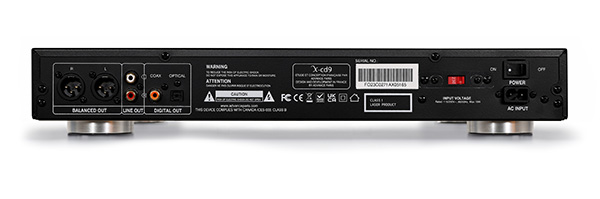 The player's front panel features a prominent backlit aluminum power button, a USB input, and dedicated buttons for eject, play, stop, fast forward, and reverse. The oversized remote—reminiscent of those that come with televisions—mirrors the front-panel functions; a dozen other buttons go unused. The rear of the X-CD9 is streamlined with just two pairs of output jacks: XLR and RCA, coaxial and optical digital outputs, a master power switch, and an AC input. Four sturdy aluminum feet with rubber inserts provide stable support.
What components were used in voicing the X-CD9? Several Advance Paris amplifiers were used: the X-i75, X-A160 EVO, and A12. Loudspeakers included the Advance Paris XL1000, Focal Sopra No2, and Advance Acoustic EL-600 loudspeakers. Advance Paris's own Link cables were used throughout.
Setup was effortless. The X-CD9 slipped into my black Salamander rack, I connected a pair of Triode Wire Labs Spirit interconnects to the RCA outputs, plugged in the power, and pressed the button.
The player's front panel features a prominent backlit aluminum power button, a USB input, and dedicated buttons for eject, play, stop, fast forward, and reverse. The oversized remote—reminiscent of those that come with televisions—mirrors the front-panel functions; a dozen other buttons go unused. The rear of the X-CD9 is streamlined with just two pairs of output jacks: XLR and RCA, coaxial and optical digital outputs, a master power switch, and an AC input. Four sturdy aluminum feet with rubber inserts provide stable support.
What components were used in voicing the X-CD9? Several Advance Paris amplifiers were used: the X-i75, X-A160 EVO, and A12. Loudspeakers included the Advance Paris XL1000, Focal Sopra No2, and Advance Acoustic EL-600 loudspeakers. Advance Paris's own Link cables were used throughout.
Setup was effortless. The X-CD9 slipped into my black Salamander rack, I connected a pair of Triode Wire Labs Spirit interconnects to the RCA outputs, plugged in the power, and pressed the button.
 Listening
Lately I've been on a deep Billie Holiday kick, studying her music and her life. Robert G. O'Meally's book Lady Day: The Many Faces of Billie Holiday lit a spark. One Saturday evening, after work at the Jazz Record Center, I headed uptown to Harlem. There, untouched by gentrification, behind a black iron gate, stands the regal 168 West 133rd Street, Billie Holiday's first New York home. There's a Baptist church in the basement.
The blocks between 133rd and 141st Streets hum with the ghosts of Depression-era jazz: across the street, the Nest Club, where Holiday performed as Eleanora Fagan; Pod's and Jerry's; the Renaissance Ballroom & Casino; Smalls Paradise; the Savoy Ballroom. These blocks were once the heartbeat of jazz, and walking them late at night, I swore I saw Freddie Green and Jo Jones, Count Basie's rhythm section, stomping their old turf.
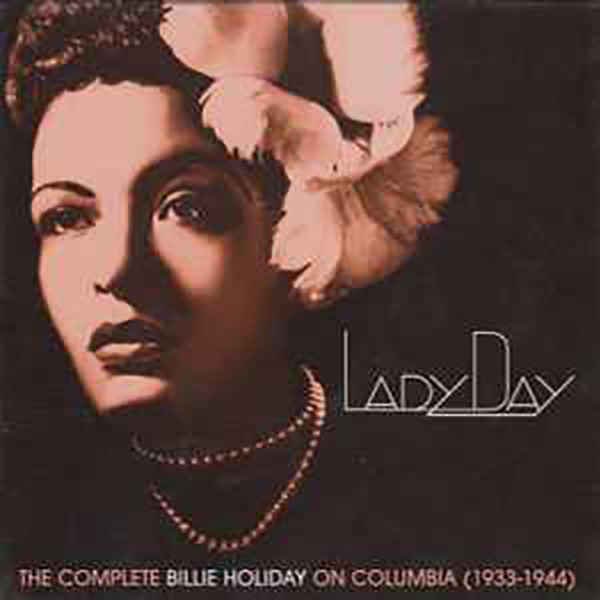
Taking the A train home, I dug into the 10-CD 2001 promo Lady Day: The Complete Billie Holiday on Columbia 1933-1944 (Columbia ACXK 85470). This remarkable set documents Holiday in her prime performing with the orchestras of Benny Goodman, Teddy Wilson, Benny Carter, Eddie Heywood, Count Basie, and her own large ensemble. The set was remastered by Mark Wilder and Seth Foster, with sound restoration and analog-to-digital transfers by Darcy Proper, Harry Coster, Ken Robertson, and Matt Cavaluzzo. I cannot recommend this set strongly enough. It's transportive.
The X-CD9 captured Billie Holiday's artistry—her nuanced phrasing, feeling for elastic tempi, and the richness of her sinewy voice, which stands as one of the 20th century's greatest—or any era's greatest. I own several vinyl LPs from this era, but none rival the clarity or immersive quiet of this exceptional CD collection.
With the X-CD9, I felt I was missing nothing. It captured every inflection, every swinging sigh. I felt the tow of her enigmatic genius. Musicians revered Holiday because of how she breathed new life into standards, reinventing each song with novel phrasing and thematic insights that made the familiar seem revolutionary. When Holiday was sad, as she was so often, the whole world felt her pain. When she sang unburdened, there was no more sublime singer on earth. The X-CD9 got the guts of this set.
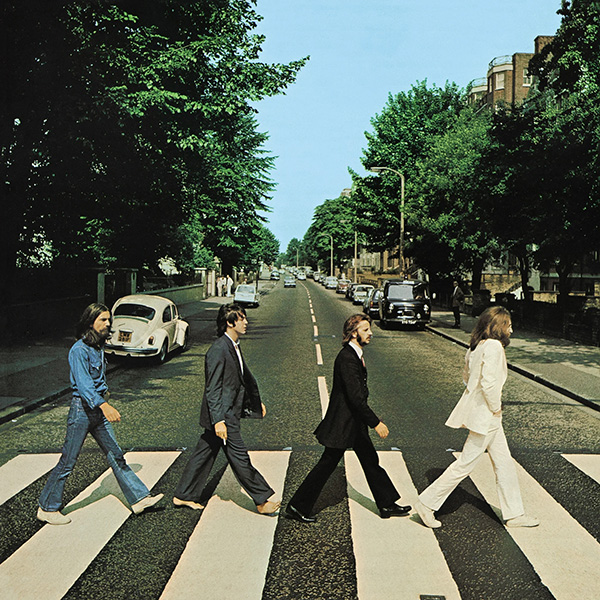 Fast forward some 40 years. The Abbey Road Anniversary Edition, a three-CD box set from—yes—the Beatles (Apple Records 0602577921124), played with more gripping detail, layered resolution, and more of that sludgy time feel than any of my early vinyl copies. I marveled at previously unheard voices in "Come Together," the impeccable sheen of the massed strings in "Here Comes the Sun," and the skull-rattling climax of "She's So Heavy." The X-CD9 recovered loads of detail from this 56-year-old recording. It also exposed the set's limits as a sonic document.
The X-CD9 proved a purist's tool, revealing each recording with honest depth. It never romanticized. Take Miles Davis's The Original Mono Recordings (Columbia/Legacy 88883 75664 2), also remastered by Wilder. If anything should sound transcendent, it's this.
"To duplicate the sound of the original mono albums on the nine CDs in this set, all of the A- and B-reels were pulled from Sony's Vaults," the liner notes state. "Then the best-sounding reels were selected and a series of digital remastering techniques were applied—using pristine copies of the original LPs as audio benchmarks."
This set contains my beloved Miles Ahead, Milestones, and Porgy and Bess, which sounded gutless, small, and lifeless, as if the music had bled out. My original mono Milestones roars like a backroom jam at Minton's (210 118th St.), while Miles Ahead, with Gil Evans, shimmers like a 3am cityscape: intimate, luminous, alive. Wilder's remaster was a sad shadow of Miles's intentions. Sorry, Mark.
The X-CD9 captured Billie Holiday in all her regal beauty, the Beatles at their final zenith, and the hard truth of the Miles Davis's mono box. It did what any good CD player should: translate 1s and 0s into music in the clear light of day without editorializing.
Fast forward some 40 years. The Abbey Road Anniversary Edition, a three-CD box set from—yes—the Beatles (Apple Records 0602577921124), played with more gripping detail, layered resolution, and more of that sludgy time feel than any of my early vinyl copies. I marveled at previously unheard voices in "Come Together," the impeccable sheen of the massed strings in "Here Comes the Sun," and the skull-rattling climax of "She's So Heavy." The X-CD9 recovered loads of detail from this 56-year-old recording. It also exposed the set's limits as a sonic document.
The X-CD9 proved a purist's tool, revealing each recording with honest depth. It never romanticized. Take Miles Davis's The Original Mono Recordings (Columbia/Legacy 88883 75664 2), also remastered by Wilder. If anything should sound transcendent, it's this.
"To duplicate the sound of the original mono albums on the nine CDs in this set, all of the A- and B-reels were pulled from Sony's Vaults," the liner notes state. "Then the best-sounding reels were selected and a series of digital remastering techniques were applied—using pristine copies of the original LPs as audio benchmarks."
This set contains my beloved Miles Ahead, Milestones, and Porgy and Bess, which sounded gutless, small, and lifeless, as if the music had bled out. My original mono Milestones roars like a backroom jam at Minton's (210 118th St.), while Miles Ahead, with Gil Evans, shimmers like a 3am cityscape: intimate, luminous, alive. Wilder's remaster was a sad shadow of Miles's intentions. Sorry, Mark.
The X-CD9 captured Billie Holiday in all her regal beauty, the Beatles at their final zenith, and the hard truth of the Miles Davis's mono box. It did what any good CD player should: translate 1s and 0s into music in the clear light of day without editorializing.
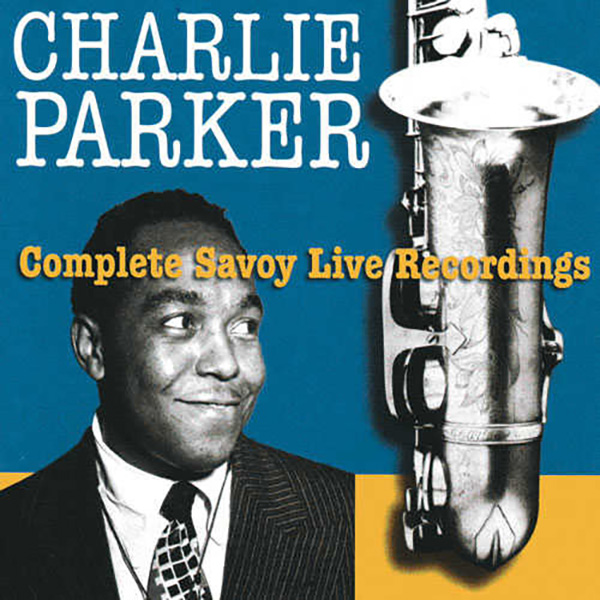 I didn't stop there. The X-CD9 plumbed the depths of Charlie Parker's fiery bebop in The Complete Live Performances on Savoy (Savoy Jazz SVY-17021-24) and The Complete Savoy and Dial Studio Recordings (Atlantic 92911-2), ripping through Bird's angular chaos with a relentless, no-mercy attack. The sound was occasionally ear-grating, brash, because that's what these discs hold.
Could I have craved more rhythm, swagger, or a bigger, bolder soundstage? Maybe—but the dead-silent background, precise imaging, and digital precision more than made up for any shortcomings—sins of omission, not commission, as hi-fi critics often say. At $1399, even a vinyl purist hugging his Blue Notes like a security blanket could justify the splurge.
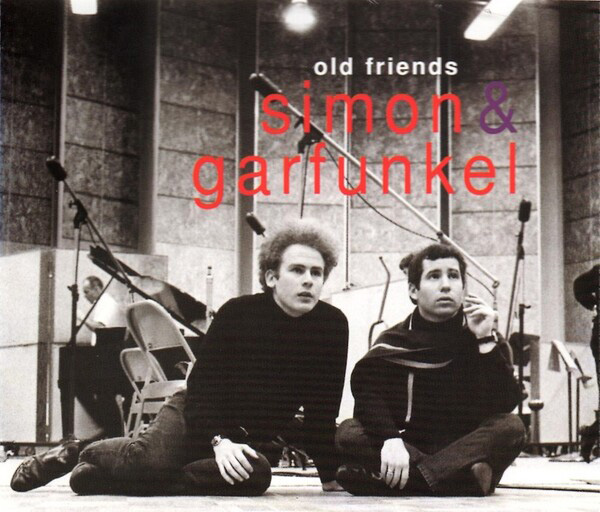
The X-CD9 nailed Simon & Garfunkel's three-CD set Old Friends (Columbia 489447 2), framing Paul Simon's bittersweet, complex folk rock and producer Roy Halee's grand soundscapes. The presentation was far more descriptive than what my top-notch vinyl reader manages to pull from my original LP. Providing grand reissues of old rock records is easily CD's most valuable service, even if sometimes those digital recordings make the flaws more obvious.
Next, I installed my Tascam CD-200iL CD spinner, which sold for $449 when reviewed by John Marks in 2014. It includes an iPod charging dock and is heavier than the Advance Paris—11lb compared to the AP's 9lb—more metal inside, presumably. An online source said the 200iL utilizes an AKM AK4384 DAC chip. The Tascam has a visibly chunkier CD tray mechanism.
A comparison of the two players highlighted stark differences, especially with the Simon & Garfunkel set. I compared "Baby Driver," "So Long, Frank Lloyd Wright," and the epic "Bridge Over Troubled Water." The differences were not subtle.
I didn't stop there. The X-CD9 plumbed the depths of Charlie Parker's fiery bebop in The Complete Live Performances on Savoy (Savoy Jazz SVY-17021-24) and The Complete Savoy and Dial Studio Recordings (Atlantic 92911-2), ripping through Bird's angular chaos with a relentless, no-mercy attack. The sound was occasionally ear-grating, brash, because that's what these discs hold.
Could I have craved more rhythm, swagger, or a bigger, bolder soundstage? Maybe—but the dead-silent background, precise imaging, and digital precision more than made up for any shortcomings—sins of omission, not commission, as hi-fi critics often say. At $1399, even a vinyl purist hugging his Blue Notes like a security blanket could justify the splurge.
The X-CD9 nailed Simon & Garfunkel's three-CD set Old Friends (Columbia 489447 2), framing Paul Simon's bittersweet, complex folk rock and producer Roy Halee's grand soundscapes. The presentation was far more descriptive than what my top-notch vinyl reader manages to pull from my original LP. Providing grand reissues of old rock records is easily CD's most valuable service, even if sometimes those digital recordings make the flaws more obvious.
Next, I installed my Tascam CD-200iL CD spinner, which sold for $449 when reviewed by John Marks in 2014. It includes an iPod charging dock and is heavier than the Advance Paris—11lb compared to the AP's 9lb—more metal inside, presumably. An online source said the 200iL utilizes an AKM AK4384 DAC chip. The Tascam has a visibly chunkier CD tray mechanism.
A comparison of the two players highlighted stark differences, especially with the Simon & Garfunkel set. I compared "Baby Driver," "So Long, Frank Lloyd Wright," and the epic "Bridge Over Troubled Water." The differences were not subtle.
 The X-CD9 delivered superior detail, exposing more of the music's embellishment and filigree. Dynamic peaks via the Tascam were brash and annoying; the Advance Paris box rendered them serene and silken. Critically, the AP projected a larger soundstage with more bloom. However, the new French player lacked the Tascam's force, with less dramatic impact. The AP sounded more recessed, though the X-CD9's images were better defined, the lines easier to follow.
I hooked up the Denafrips Ares II DAC ($798), using the Tascam as a transport. The Ares II is an R-2R ladder DAC. I ran it in nonoversampling mode, which Herb Reichert preferred in his review of the Ares II DAC. (Jonathan Scull, on the other hand, preferred OS mode. It's good that the Ares II offers both.)
Herb compared the Ares II to the Mytek Liberty DAC, writing, "The Liberty played light and airy with a pacey, vivacious, dancing quality that, in comparison, made the Ares II sound a bit dark and tepid."
My comparison yielded similar results. The Ares II DAC's presentation was energetic and open with superior definition, longer sustain, and more opulent tone. Its soundstage was deeper, the ambience more distinct. The Advance Paris sounded smaller. Still, this $1400 CD player delivered gobs of satisfaction.
Conclusion
The X-CD9 delivered superior detail, exposing more of the music's embellishment and filigree. Dynamic peaks via the Tascam were brash and annoying; the Advance Paris box rendered them serene and silken. Critically, the AP projected a larger soundstage with more bloom. However, the new French player lacked the Tascam's force, with less dramatic impact. The AP sounded more recessed, though the X-CD9's images were better defined, the lines easier to follow.
I hooked up the Denafrips Ares II DAC ($798), using the Tascam as a transport. The Ares II is an R-2R ladder DAC. I ran it in nonoversampling mode, which Herb Reichert preferred in his review of the Ares II DAC. (Jonathan Scull, on the other hand, preferred OS mode. It's good that the Ares II offers both.)
Herb compared the Ares II to the Mytek Liberty DAC, writing, "The Liberty played light and airy with a pacey, vivacious, dancing quality that, in comparison, made the Ares II sound a bit dark and tepid."
My comparison yielded similar results. The Ares II DAC's presentation was energetic and open with superior definition, longer sustain, and more opulent tone. Its soundstage was deeper, the ambience more distinct. The Advance Paris sounded smaller. Still, this $1400 CD player delivered gobs of satisfaction.
Conclusion
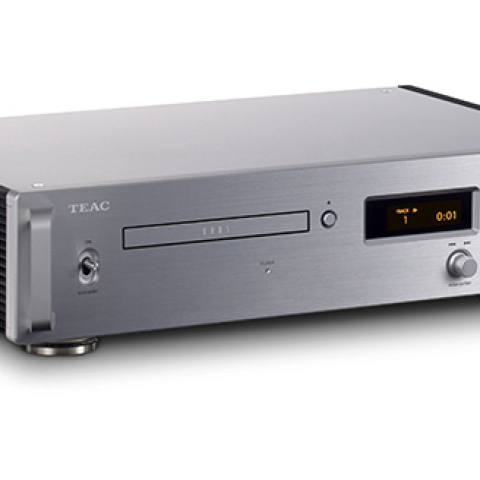
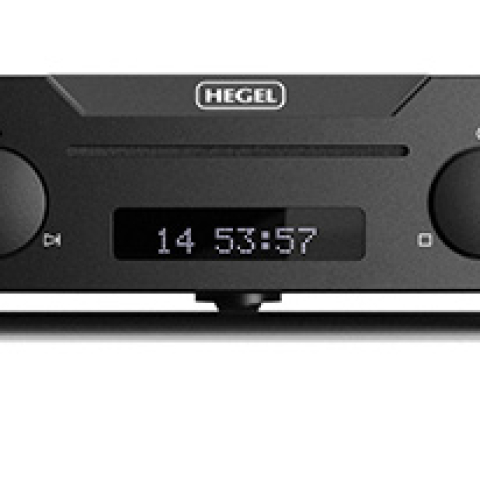
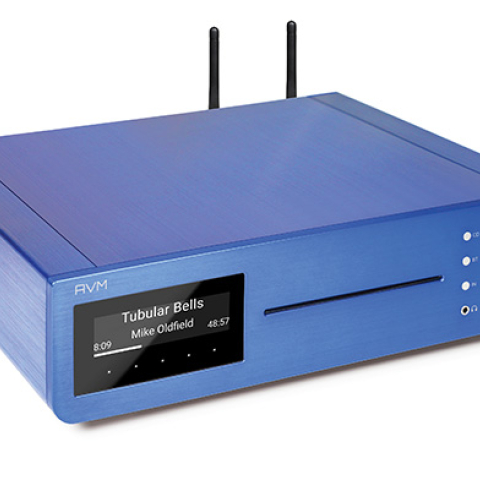
The X-CD9 delivered all the high-level performance parameters you'd expect from a CD player in 2025, for a price affordable to all but the stingiest audiophile. The $1000 to $1500 bracket for CD players presents some stiff competition to the X-CD9, with similarly priced alternatives from Marantz, Cambridge Audio, Audiolab, Leak, Denon, and Rotel, but I believe the X-CD9's superb imaging, resolute layering, sweet tone, and rhythmic pacing—combined with its relatively low price—will win admirers well beyond its Paris home
Advance Paris isn't the best-known French hi-fi company, at least not in the US. Think French hi-fi and you think Focal, Triangle, Cabasse, Jadis, Devialet. But Advance Paris has quietly carved out its own spot in France's audio scene. When it was founded in Toulouse in 1995, Advance Paris was called Advance Acoustic. It was a passion project of two audio obsessives: engineer Bernard Noiret and electronics designer Jean-Christian Gesson. They started by designing and distributing the Spanish-made Hartley XL1000 and XL500 loudspeakers in France. In 2005, Advance Acoustic was acquired by Charles Jacquard and Jean Béchard. By 2013, rebranded as Advance Paris, they added electronics and broadened their lineup. In 2022, former Citroën executive Dimitri Peucelle and product manager Cédric Léon took the helm. That's about when we started hearing about them in the US. Currently, Advance Paris has 48 US dealers. "I was hired to be responsible for the new projects," Léon wrote in an email. "I am an audio enthusiast and have worked in the hi-fi business, developing audio products, for almost 20 years.
The X-CD9 CD player has tubes: two new old stock Raytheon-branded subminiature 5744 signal tubes used as a buffer after a Wolfson DAC. It uses a CD mechanism from Sanyo.
"Reliability is a major reason for the selection of the Sanyo CD mechanism," Léon explained. "We have tested a few CD mechanisms—not a lot are available nowadays—and this Sanyo CD mechanism is the one we use in many of our products."
Why is it called the X-CD9? "Our sources are odd numbered," replied Léon. As the number increases, price and quality increase, too. "There is the CD3, CD5, CD7, and now CD9." The CD3 and CD5 appear to be discontinued. There is also a CD transport, the X-D500.
The player's front panel features a prominent backlit aluminum power button, a USB input, and dedicated buttons for eject, play, stop, fast forward, and reverse. The oversized remote—reminiscent of those that come with televisions—mirrors the front-panel functions; a dozen other buttons go unused. The rear of the X-CD9 is streamlined with just two pairs of output jacks: XLR and RCA, coaxial and optical digital outputs, a master power switch, and an AC input. Four sturdy aluminum feet with rubber inserts provide stable support.
ListeningLately I've been on a deep Billie Holiday kick, studying her music and her life. Robert G. O'Meally's book Lady Day: The Many Faces of Billie Holiday lit a spark. One Saturday evening, after work at the Jazz Record Center, I headed uptown to Harlem. There, untouched by gentrification, behind a black iron gate, stands the regal 168 West 133rd Street, Billie Holiday's first New York home. There's a Baptist church in the basement.
Fast forward some 40 years. The Abbey Road Anniversary Edition, a three-CD box set from—yes—the Beatles (Apple Records 0602577921124), played with more gripping detail, layered resolution, and more of that sludgy time feel than any of my early vinyl copies. I marveled at previously unheard voices in "Come Together," the impeccable sheen of the massed strings in "Here Comes the Sun," and the skull-rattling climax of "She's So Heavy." The X-CD9 recovered loads of detail from this 56-year-old recording. It also exposed the set's limits as a sonic document.
The X-CD9 proved a purist's tool, revealing each recording with honest depth. It never romanticized. Take Miles Davis's The Original Mono Recordings (Columbia/Legacy 88883 75664 2), also remastered by Wilder. If anything should sound transcendent, it's this.
I didn't stop there. The X-CD9 plumbed the depths of Charlie Parker's fiery bebop in The Complete Live Performances on Savoy (Savoy Jazz SVY-17021-24) and The Complete Savoy and Dial Studio Recordings (Atlantic 92911-2), ripping through Bird's angular chaos with a relentless, no-mercy attack. The sound was occasionally ear-grating, brash, because that's what these discs hold.
Could I have craved more rhythm, swagger, or a bigger, bolder soundstage? Maybe—but the dead-silent background, precise imaging, and digital precision more than made up for any shortcomings—sins of omission, not commission, as hi-fi critics often say. At $1399, even a vinyl purist hugging his Blue Notes like a security blanket could justify the splurge.
The X-CD9 nailed Simon & Garfunkel's three-CD set Old Friends (Columbia 489447 2), framing Paul Simon's bittersweet, complex folk rock and producer Roy Halee's grand soundscapes. The presentation was far more descriptive than what my top-notch vinyl reader manages to pull from my original LP. Providing grand reissues of old rock records is easily CD's most valuable service, even if sometimes those digital recordings make the flaws more obvious.
The X-CD9 delivered superior detail, exposing more of the music's embellishment and filigree. Dynamic peaks via the Tascam were brash and annoying; the Advance Paris box rendered them serene and silken. Critically, the AP projected a larger soundstage with more bloom. However, the new French player lacked the Tascam's force, with less dramatic impact. The AP sounded more recessed, though the X-CD9's images were better defined, the lines easier to follow.
The X-CD9 delivered all the high-level performance parameters you'd expect from a CD player in 2025, for a price affordable to all but the stingiest audiophile. The $1000 to $1500 bracket for CD players presents some stiff competition to the X-CD9, with similarly priced alternatives from Marantz, Cambridge Audio, Audiolab, Leak, Denon, and Rotel, but I believe the X-CD9's superb imaging, resolute layering, sweet tone, and rhythmic pacing—combined with its relatively low price—will win admirers well beyond its Paris home