Media Server Reviews

Sort By: Post DateTitle Publish Date

Sony DMP-Z1 digital music player
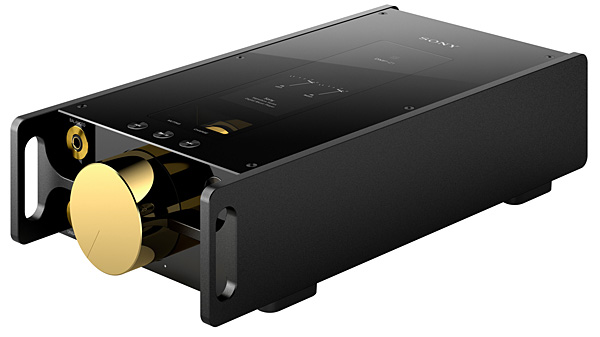
Apple may not have been the first to market with a portable digital audio player, but its original iPod defined the genre: a device small enough to fit into a shirt pocket. When companies like Acoustic Research, Astell&Kern, Fiio, HiFiMan, and Questyle introduced portable players that could play high-resolution files, they echoed the iPod's form factor. The exception was the Toblerone-shaped PonoPlayer, but even that was small. The subject of this review is another exception: The DMP-Z1, from Sony's Signature Series, is comparatively enormous—almost the size and weight of a regular preamplifier. At $8500, it's also considerably more expensive than other players.
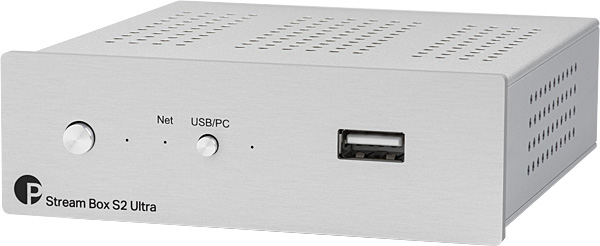
Pro-Ject Audio Systems Stream Box S2 Ultra network bridge

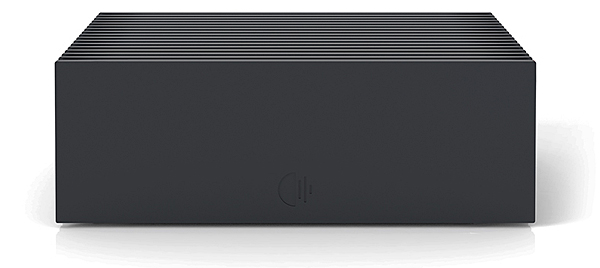
I have reviewed several network-connected music servers in recent years, from Antipodes, Aurender, and NAD. All performed well but are relatively expensive, and their associated player apps didn't equal Roon's user friendliness in terms of interface, organization of the library, and inclusion and updating of metadata. So when Roon Labs introduced their own server, the Nucleus+, I first reviewed and then purchased it, along with a lifetime subscription to Roon. But at $2498 without an internal drive for storing music files, the Nucleus+ is still relatively expensive, and even Roon's less-powerful Nucleus costs $1398. I was still on the lookout for a server that would be more accessible to our budget-minded readers.

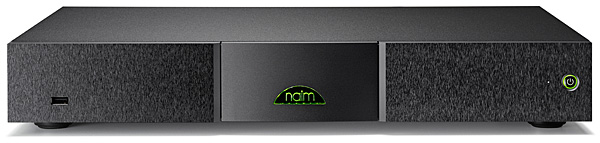
Naim ND5 XS 2 media player

The late Julian Vereker, the sharp-minded former racing driver who founded Naim Audio and designed its first products, did so because he wanted audio amplification of a quality he felt no one else was making at the time, reasoning that if he wanted such a thing, so might others. Thus came about Naim's first domestic-audio product, the distinctive NAP200 solid-state amp (1973).

Music in the Round #96: Roon & Dolby Atmos

One of the recurring themes of this column has been my search for servers that will support the playback of high-resolution multichannel files with DSP for speaker/room equalization (EQ), as well as the format conversion and downsampling that are often part of those processes. Because most EQ software is PCM-based, format comversion is needed to convert DSD files to PCM. In addition, because most EQ products work within a limited range of sampling rates, PCM files sampled at high rates may have to be downsampled before being subjected to EQ. Those of us who use home-theater preamplifier-processors and audio/video receivers (AVRs) should be familiar with such constraints.

Music in the Round #95: Wolf & NAD

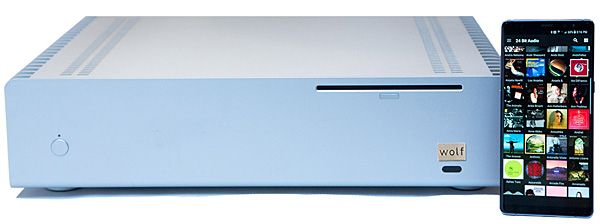
Although I no longer attend the audio pageant that was once the annual Consumer Electronics Show, I now seem to be traveling more, in hopes of recapturing the excitement CES had once provided. Last May I attended High End, in Munich, and found that while it was entirely as advertised, there was, alas, not enough emphasis on the playback of high-resolution files, and hardly any attention paid to multichannel music.

Esoteric N-01 network audio player

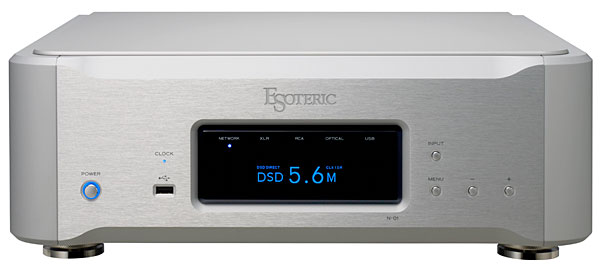
Ever since the Tokyo Electro Acoustic Company (TEAC) founded its Esoteric division, in 1987, Esoteric's slogan has been "state of the art." Given Esoteric's impressive displays at audio shows, which reflect a consistency of ownership, staff, and philosophy of engineering, design, and manufacturing, I have longed to evaluate one of their hand-assembled models in my reference system. Any brand named Esoteric, and whose top line of products is named Grandioso, had better make superior products.

Apple HomePod smart speaker

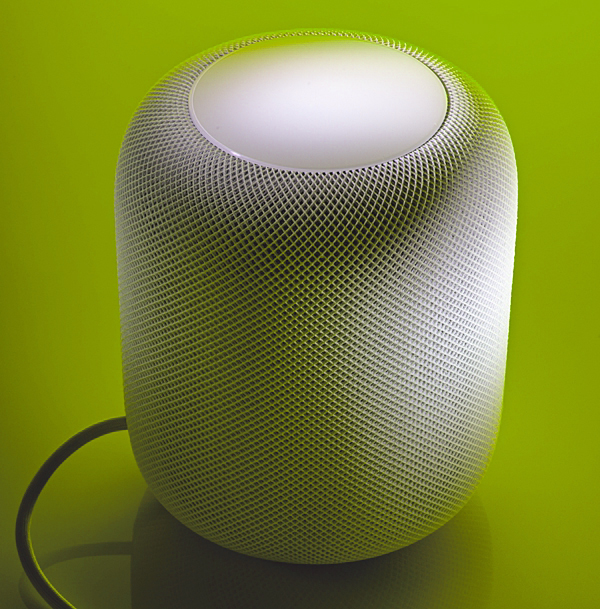
It's after 5pm on Wednesday, and I'm finishing up the listening part of my review of Apple's wireless speaker, the HomePod ($349). On a whim, I've just asked Siri to play me some drinking songs.


I mention this because the HomePod's "smart" features—its integration with Siri and the Apple Music streaming service—is a big part of its appeal. In its natural element, the HomePod provides a way of accessing music that, although as old as our century, to me is still new and unfamiliar: Forget your hoary music collection, your Rolling Stones and Beethoven. Decide what kind of music you want to hear—a genre or a mood—then leave the choice to Siri and her algorithmic minions.

Roon Labs Nucleus+ music server


Sssssshhhhhh—I forget what music was playing, but as the sound faded away, I could hear a loud hissing coming from the 2011 i7 Mac mini I was operating headless with Roon 1.3 to play files over my network. Checking the mini's shared screen on my MacBook Pro revealed that it was completely unresponsive, so I yanked its AC cord, after which it wouldn't boot up.


This was the second time the Mac mini had died. The first time, in 2015, the local Apple Genius Bar had repaired it. This time, the hipster at the Genius Bar turned me away: "We don't offer repair work on vintage computers."

Music in the Round #92: Digibit Aria Piccolo +

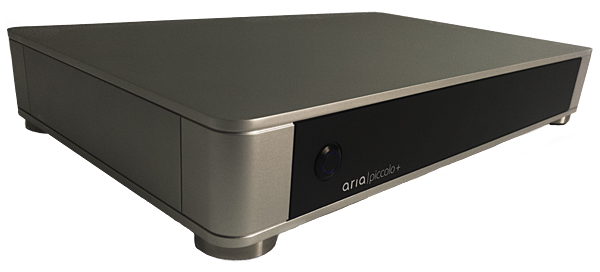
Lovers of high-resolution multichannel sound still don't have it easy. While the two-channel market is replete with snazzy, efficient music servers in stylish boxes, the only multichannel equivalents are Merging Technologies' Merging+Player Multichannel-8, and a handful of stereo devices that are rumored to do multichannel, though no such claims are made in print. To be candid, the latter will play multichannel tracks via USB, Ethernet, or HDMI outputs to suitable DACs (but that's another story), but because they're aimed at the two-channel market, they tend to skimp on the CPU horsepower and RAM needed to handle higher-resolution multichannel files. Even the Merging+Player Multichannel-8 ($13,500), with its Intel i3 CPU running Roon, couldn't entirely keep up with everything in my library.

LG V30 Hi-Res smartphone with MQA

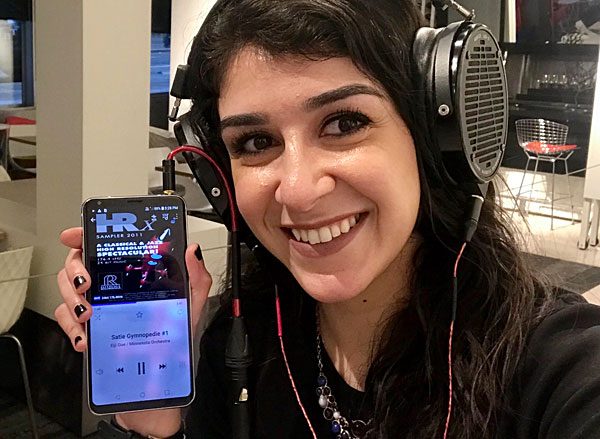
"Phones are the gateway device," proclaimed Marc Finer, executive producer of the Hi-Res Pavilion, at the start of the 2018 Consumer Electronics Show. When he pointed to LG Electronics' V30 Hi-Res+MQA smartphone, which includes streaming apps for Qobuz, Tidal, and YouTube, I sensed the truth in his words. The latest stats from survey company MusicWatch confirm that at least 87% of smartphone owners use a music-streaming service, including the largest, YouTube. Twenty percent of owners said that they stream music/music-related content daily, and 39% stream five or more days per week.
Advertisement
Advertisement
Advertisement