Media Server Reviews

Sort By: Post DateTitle Publish Date

Questyle Audio QP1R hi-rez portable player
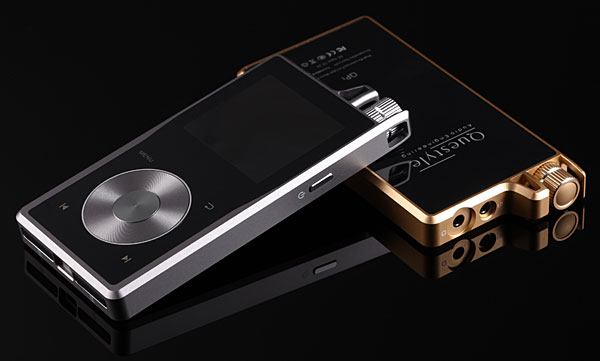
The 2015 T.H.E. Show in Southern California clashed with my having to be in the office to ship our August issue to the printer, so I wasn't able to attend. But in devouring the online coverage on www.stereophile.com and its sister sites, on InnerFidelity.com I found a report by Tyll Hertsens about two new hi-rez portable players that made their debuts at T.H.E. Show: Questyle Audio Technology's QP1 ($599) and QP1R ($899).
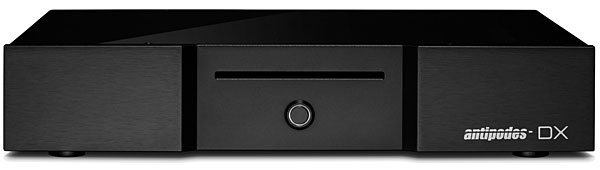
Antipodes DX Reference music server

Perhaps because I grew up in post-WWII England, with austerity and food rationing the norm, I learned at an early age the value of frugality. It was a financial stretch for me to buy, in the late 1960s, my first real audio system: Garrard SP25 turntable with Audio-Technica cartridge, Kenwood integrated amplifier, Wharfedale Super Linton speakers. Even when I could afford to upgrade the system, other than replacing the Garrard with a Thorens TD 150 and the Audio-Technica with a Shure, I went the DIY route. Back then, in the early '70s, I assumed that the advent of op-amp chips like the Fairchild Semiconductor µA741 would make it possible for me to design and make, for example, a good-sounding preamplifier for a lot less than it cost to buy one from an established manufacturer. That assumption turned out to be wrong, of course, but frugality was, by then, a habit: too ingrained for me to shake entirely.

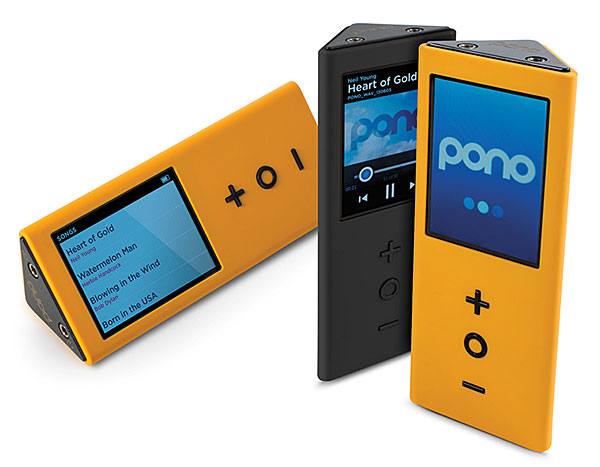
Pono PonoPlayer portable music player

In the 1960s, musical giants walked the earth. I vividly remember the first time I heard a song called "Expecting to Fly," in a UK record store. The vast, reverberation-drenched sound was extraordinary; the frail, shaky alto voice of the singer riveting.


"Who is that?" I asked the clerk.


"It's a new American band, Buffalo Springfield . . . but they've already broken up."


I bought all I could find of the Springfield, which wasn't much, and learned that the singer and composer of "Expecting to Fly" was a Canadian, Neil Young.

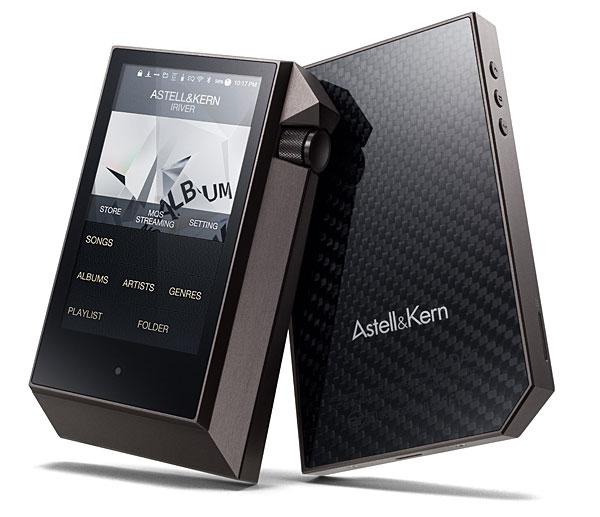
Astell&Kern AK240 portable media player

Do you travel? Commute, perhaps? Just like to listen to music privately around the house? No matter—the Astell&Kern AK240 is the luxury choice in high-resolution portable music players (footnote 1). It even comes with a lovely leather case that beautifully cradles its angular beauty. The AK240 can play all of your PCM files, up to a resolution of 24-bit/192kHz, as well as DXD and single- and double-rate DSD, natively, and can do so from its internal storage, from a microSD card, or from your computer via WiFi or a wired connection. It can also function as a DAC or USB-to-TosLink converter. I'm not so sure there's much left wanting.

Music in the Round #68

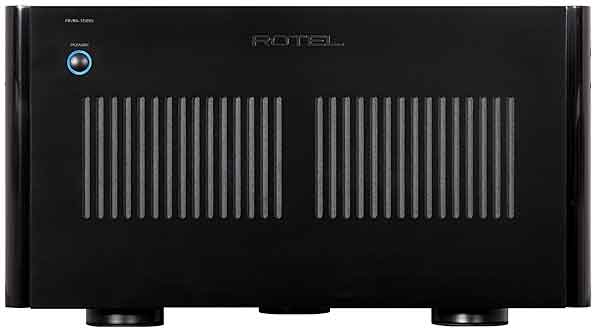
Power amplifiers are unglamorous but essential. In theory, they have only one task. But, according to audio sage Yogi Berra, "in theory, theory and practice are the same. In practice, they are not." Amplifiers must take a voltage input signal and provide an output of somewhat higher voltage but of substantially higher current, the product of which is power. The task is complex in that this output must be applied to electrical interfaces whose characteristics vary widely from speaker to speaker—across the audioband and, for some, even at different power levels. There are no control mechanisms or feedback signals to help. The power amp must just stand and deliver.

Audio Streams #1

I'm the editor of AudioStream.com, Stereophile's sister website devoted to computer audio. We review all manner of hardware, software, and music related to file-based playback, and offer helpful (we hope) "How To" articles as well as interviews with industry people—all designed to ease your journey to and through the world of computer audio. I envision my new Stereophile column, "Audio Streams," as an extension of this mission—and the addition of that trailing, plural s gives me some leeway to explore a wider range of hi-fi topics.

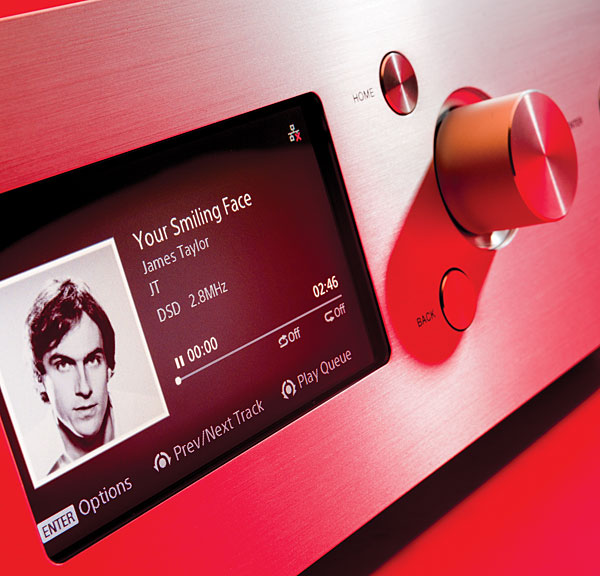
Sony HAP-Z1ES high-resolution file player

I've said it before and I'll say it again: High-end audio is the tail of the dog that is the consumer audio business. We have little leverage in determining where the technology is going, even though we undoubtedly know more about it than the average buyer. On the other hand, after the mainstream has determined where it's going (or thinks it's going), the high-end business must accept that, and try to optimize it for those of us who care deeply about getting the best sound. The ubiquitous iPod and its fellow MP3 players kicked off the playing of music files and allowed listeners to carry around their music wherever they went.

NAD Masters Series M50 Digital Music Player & M52 Digital Music Vault

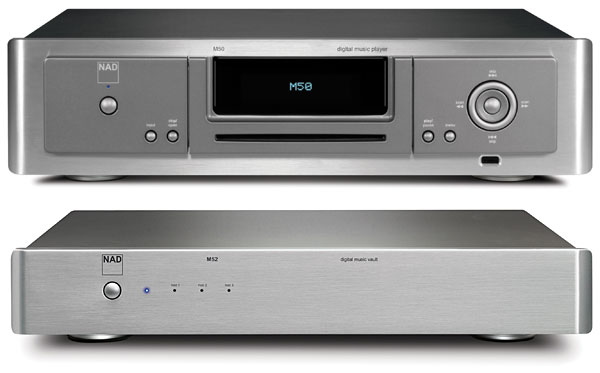
"Physical discs are so 20th century," I wrote back in 2006, when I began experimenting with using, in my high-end rig, a computer as a legitimate source of music. These days I rarely pop a disc into my Ayre Acoustics C-5xeMP disc player, unless it's an SACD I want to hear, or a CD I haven't yet ripped into my library. But many audiophiles, even if attracted to the idea of using a file-based system as a primary music source, do not want a computer in their listening rooms. Nor do they want to be bothered by the fact that a computer demands too intimate a relationship with its user.

Marantz Reference NA-11S1 Network Audio Player/DAC

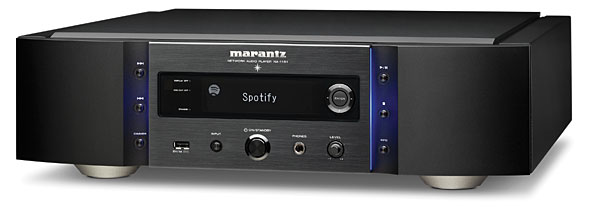
In March, to celebrate Marantz's 60th anniversary, the company launched the subject of this review, the Reference NA-11S1 network player ($3499), which Ken Ishiwata described to me as "a new start, a new era" for Marantz. Michael Fremer attended the European press conference announcing the NA-11S1, and I subsequently talked to Ishiwata via Skype.

Astell&Kern AK100 portable media player

Apple's iPod came of age in the fall of 2003, when, with the release of iTunes 4.5, the player was no longer restricted to lossy compressed MP3 or AAC files. Instead, it could play uncompressed or losslessly compressed files with true "CD quality"; users no longer had to compromise sound quality to benefit from the iPod's convenience.


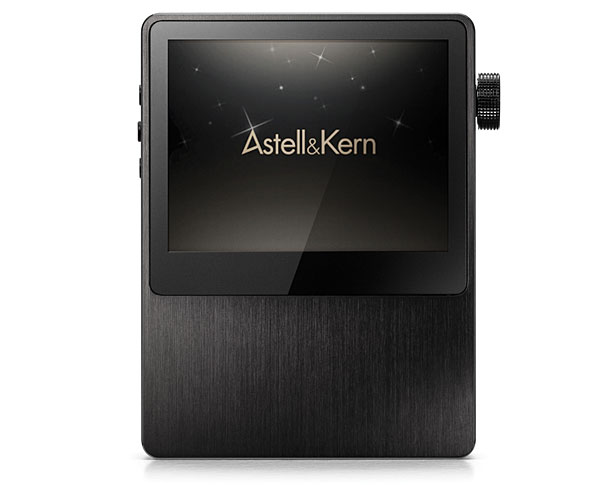
Enter Astell&Kern. At the beginning of 2013, this brand from iRiver, a Korean portable media company, introduced its AK100, a portable player costing a dollar short of $700 and capable of handling 24-bit files with sample rates of up to 192kHz.

Advertisement
Advertisement
Advertisement